Category: Travel

  • The NJ to NH Run

    As a road warrier, I’m used to long drives.  Honestly, I don’t even blink when I drive 6-7 hours anymore.  The one exception to that is the drive back from New Jersey to New Hampshire.  The timing of the drive is critical, and so is the weather.  This afternoon neither worked in my favor.

    From New Jersey, there are basically two viable options over the Hudson River; the Tappan Zee Bridge or George Washington Bridge.  When you drive over the GW you assume the worst, no matter what time of day it is.  Heavy traffic and a rough and bumpy road surface are a given 90% of the time.  Usually crossing the GW means placing all your chips on I-95 all the way to New Haven.  That’s a scary bet.

    The Tappan Zee is less predictable, but generally lighter than the GW.  I’ve always found it to be an interesting and enjoyable bridge to cross, largely because of the width of the Hudson at this point, and the beautiful cliffs that line the shores, particularly at Hook Mountain State Park.  The challenges come after you cross the Hudson.  You either roll the dice on the Sawmill Parkway or on the Merritt Parkway.  Parkways sound lovely, but they’re narrow, unforgiving roads built at a time when cars were driving 35-40 MPH.  Quaint.  Of the two parkways the Merritt is more appealing, with rest areas, a tunnel and importantly, no traffic lights.  The Sawmill has multiple traffic lights along the parkway, which puts the park in parkway.

    From the parkways you’ve eventually got to get through or around Hartford before you finally catch a cruise control breather on I-84 from Manchester, Connecticut to the Mass Pike.  This moment of bliss is usually interrupted by the realities of the Pike.  Channeling thousands of drivers from from parts west with thousands of drivers from parts south can lead to epic traffic on the turnpike.  Summer and holiday traffic is especially delightful along this stretch of Americana.

    Life at highway speed isn’t all its cracked up to be, but its still better than bumper-to-bumper speed.  The math has never worked taking the train or a plane to New Jersey.  So we all enter the grinder and hope for the best.

  • Mount Hope Bridge

    Bristol, Rhode Island is home to the first and thus oldest 4th of July parade in America.  The stripe down the middle of the road is red, white and blue.  This town is patriotic and quaint.  It’s home to Roger Williams University and the America’s Cup Museum, but my favorite thing in this town is the bridge between Bristol and Portsmouth.  The Mount Hope Bridge is a two lane suspension bridge over Narragansett Bay.  It’s a tall, narrow bridge that runs 135 feet above the high tide mark.  There are no sidewalks on this bridge – one lane each way at no wider.  It’s on the National Register of Historic Places because there’s quite a history to it.

    The Mount Hope Bridge was proposed in 1920, supported by the wealthy and influential William Henry Vanderbilt III and finally completed four days before the 1929 Stock Market crash that started the Great Depression.  It’s named for the bay that it spans, which in turn is named for the 209 foot hill Mount Hood.  There’s incredible history in this area.  The Wampanoags held meetings at a rock formation called King Phillips Seat near Mount Hood.  Thankfully this is preserved by Brown University, which owns the land in that area.  That history is a blog (or a few blogs) for another day.  Today is about the bridge.

    Timing the ride over the bridge well, you may be lucky enough to see a spectacular sunset over Narragansett Bay and Jamestown.  It’s one of the rare times when I wish there was traffic so I could just watch the sunset.  Sadly there are no pedestrian walkways on the bridge, though in theory I could ride a bike across the bridge.  In practice that’s a scary thought.  The lanes are narrow and there isn’t much forgiveness between moving vehicles and the bay.  I’m not risk-averse but that doesn’t seem like a recipe for success.

    I’ve had an affinity for bridges for a long time.  It may have been all those trips across the Sagamore Bridge going to the Cape as a kid.  It may have been those long rows from Lowell to the Tyngsboro Bridge in college.  Or memorable trips across the Brooklyn Bridge, Golden Gate Bridge and recently the Vasco De Gama Bridge in Lisbon.  Beyond their utility and architectural beauty, bridges represent connection.  The Mount Hope Bridge may be named after a hill, but I prefer to think of the name as nod to optimism.  Connection and Hope.  We could use more of each in this strange world we live in.

  • Dogtown

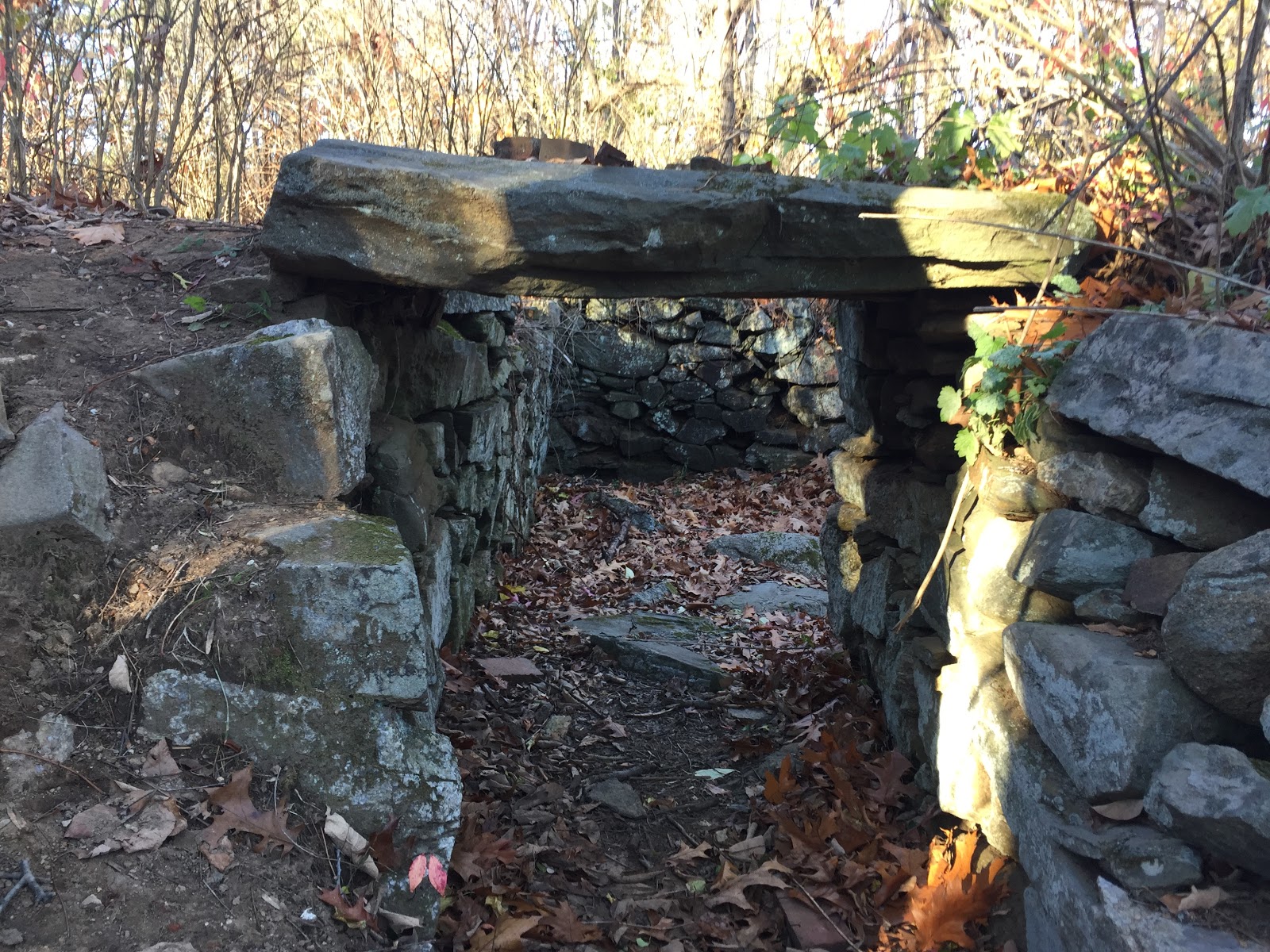
    New England is deeply rooted in its colonial past.  Walking through the woods in most towns in the area, you’ll come across miles of stone walls, old cellar holes and forgotten road beds.  But there is no walk in the woods quite like Dogtown Common.  I had an opportunity to take a walk through this abandoned village yesterday, a bright February Tuesday.  While it was a beautiful day for a walk in the woods, I didn’t see another soul in the two hours I spent there.

    Dogtown is located in Gloucester, Massachusetts, right on the edge of the town of Rockport, on Cape Anne.   It was once a small community of settlers who cleared and farmed the land as so many other communities did in New England.  Unfortunately, they chose a tough spot for this.  As the name Rockport indicates, this area is basically arid piles of loose granite sitting on top of ledge, sprinkled with some dirt.  Once the trees were cleared and the livestock grazed the remaining vegetation to the ground, there wasn’t much left to work with.  Compounding things, Dogtown was sited in an exposed area near the sea, making it an easy target for the British in the Revolutionary War and the War of 1812.  So over time residents moved on, abandoning the area for easier living elsewhere.

    Sheep continued to graze in this area into the early 20th century, but as with so much of New England    the farmers and herders passed on, leaving the land to return to the woods.  Dogtown 100 years ago was a rocky land sprinkled with grass and shrubs.  Today it’s a forest with a bed of boulders, ledge, old stone walls and cellar holes, similar to what you’d see in forests throughout the region.  What makes Dogtown unique is the work of Roger Babson, who commissioned unemployed stonecutters to carve words and numbers into the granite boulders that litter Dogtown.  Babson was an interesting guy; he was a Prohibition Party member, he predicted the market crash that led to the Great Depression, and he founded Babson College.  As a tenth generation Babson from Gloucester Dogwood Common was figuratively in his blood.


    Walking through the woods of Dogtown on a bright winter day, the work of Babson resonated with me.  I chose a Tuesday when most people are working to visit, and had the place to myself.  Aside from seeing mountain bike tire prints, the sounds of commuter trains on the tracks that cut through Dogtown and the sounds of construction encroaching on the woods at the nearby office park betraying the current century, my visit was timeless.  The stonemasons and the settlers to this area have come and gone from this place and it was my turn, alone amongst the boulders.
    Babson spoke to me from the past with his choice of words and phrases carved into the boulders.  “Get A Job” is highly relevant for me as I leave the struggles of one job for the hope of another.  “Truth” challenges me to be honest with myself about where my own strengths and weaknesses lie.  “Courage” shoves me in the chest and knocks me back a step, urging me to be bold today.  And “Prosperity Follows Service” reminds me that to earn anything worthwhile you’ve got to give much more of yourself.  While some view the messages as a strange curiosity, Babson’s boulders for me are a humbling reminder of what I can be.
    I came to the woods knowing of this place.  Perhaps because I was alone on this brilliant winter day, or maybe because of the place I’m at in my own life, but Dogtown resonated as I walked its quiet paths.  They say that when the student is ready the teacher will appear.  Maybe it was the woods, with voices of the past whispering in my ear as I walked.  Maybe it was me moving on from one job to the next and working that through in my mind.  Or maybe it was a message from a tenth generation Gloucester Babson who died a year after I was born.


  • Ambient Light

    Last night was one of those nights you hope for when you’re a stargazer.  Brilliantly clear skies, with cold air providing sharp focus.  Just a quick glance at the sky showed old friends Orion, Ursa Major and Ursa Minor, and down low in the southern sky, Canis Major with the brilliant Sirius a beacon on the constellation.  Sadly, the neighborhood was lit up like a prison yard as several of the neighbors chose to leave their outdoor lights on.  Another celestial show foiled again by the neighbors…

    I seek out the sky, and often walk looking up, sometimes started when I step off the pavement onto the shoulder of the road.  I once sailed from Norfolk, Virginia to Newburyport, Massachusetts, and eagerly watched the night sky when we were well offshore.  Cape Cod in winter offers some good viewing.  Any large body of water serves to subtract ambient light, simply because there usually aren’t lights shining there.  A favorite place in southern New Hampshire is Big Island Pond, where many a late night boat ride was spent marveling at the night sky.  Another spot I have fond memories of is the Robert Frost Farm in Derry.  Back in the late 1990’s I joined a couple of friends for a late night viewing of the Hale-Bopp comet in these Frost fields.  I think old Bob would have approved and joined us for a turn at the telescope had he been alive.  The next comet will be Halley’s Comet in 2062.  I would be 96 in 2062.  I hope I’m around to see it, and have my wits about me to recognize it.

    In search of dark skies, I came across The International Dark Sky Association, which lists Mont-Mégantic (Québec) as the closest, and first-in-the-world, International Dark Sky Reserve.  I’ll confess I wasn’t aware of this distinction prior to today.  Mont-Mégantic is roughly a four hour drive, directly through the White Mountains of New Hampshire, past the Connecticut Lakes region and into Quebec.  This region is familiar country for me.  I’ve visited the area to see moose, canoe on First Connecticut Lake and see and hear loons.  It’s an area that stays in my memory even after a quarter century.  If I was going to pick a part of New England that would have the darkest skies, this corridor between Franconia Notch and Pittsburgh would be on the short list.  Shifting northeast into Maine, I’d pick the Hundred Mile Wilderness along the Appalachian Trail as a likely dark sky candidate, and of course the unnamed wilderness to the north.

    Curious about where the darkest places in New England actually are, I came across this helpful site called Dark Sky Finder, (http://www.jshine.net/astronomy/dark_sky/index.php?lat=40.384212768155045&lng=-74.300537109375&zoom=8).  As this image shows, the darkest areas are in the north-easternmost corner of New Hampshire northeastward through a large swath of remote wilderness in Maine between Baxter State Park and the Allagash Wilderness Waterway that runs along the Canadian border.

    It was an easy guess picking the wilderness of Maine as the darkest skies in the northeast.  My memories of hiking the Hundred Mile Wilderness aren’t filled with a lot of ambient light.  Another memory comes to me.  The first time I hiked the Appalachian Trail through Mahoosuc Notch I was in my early 20’s.  A bunch of us set up camp at the Speck Pond Campsite, had dinner and swapped stories from our day through the Notch.  After dinner we hiked halfway up the trail to Old Speck Mountain and settled in for star gazing.  There was a meteor shower that night and the clear dark skies gave us the perfect canvas for a stunning show.  That night is what I think about when I look to the skies.  I guess I’m still chasing stars.

  • What’s in a Name, Part II

    Driving through the Southern Tier in Upstate New York is like time travel in slow motion.  You can see the change that time brings.  The wooded hills aren’t as tall as they were when the Oneida and Mohawk tribes ruled this land, but the woods have re-established themselves in many areas.  And with the trees the whispers of the mighty Iroquois Confederacy float through the valley.  The  Mohawk, Onondaga, Oneida, Cayuga, Seneca and Delaware tribes that populated Upstate New York will never return, but in some ways they’ve never left.  Their names live on as counties, towns, rivers and other place names like monuments to the tragic past of disease and violent displacement that stole them from these lands.  The remnants of the Seneca Nation reside mostly in three reservations in the area.

    Place names may honor our own past or be borrowed from those who came before us.  Towns and villages are often named for the settlers who first cleared and farmed the land, or to honor a notable person from the time, like Washington, Franklin, or Madison.  Upstate New York was settled at a time when names pointed towards Greek or Roman culture or mythology.  Ithaca, Greece, Rome, Ulysses, Syracuse all point to this practice from the 1800’s.  Perhaps the best story of the randomness of naming a town comes from Utica, where the name was literally pulled out of a hat.

    Today’s rural Upstate New York is dominated by corn and dairy farms, but the life of a farmer is difficult, and many of the old farms are returning to the land.  Rotted and falling barns and silos dot the land.  Farmhouses advertise the poverty level of the region with flaking paint, sagging porches and and blue tarp roofs.  Villages along Route 206 like Whitney Point, Triangle, Greene, Coventry and Bainbridge proudly point to their roots between the Revolutionary War and the War of 1812 while looking towards an uncertain future.  Technology or population growth may one day bring growth and prosperity to this region, but I hope the land returns to nature and the names fade like whispers on the wind.


  • Chasing Waterfalls

    I seek out waterfalls.  And sunrises… and sunsets… and just about anything else that makes magic out of the ordinary.  If I’m in a place with something to see then, well, I’m going to try to see it.  I’ve chased down steamed cheeseburgers in Connecticut, lighthouses in Maine, Heady Topper in Vermont and driven halfway across Portugal to see the end of the world. Like Thoreau, I want to live deep and suck the marrow out of life.

    Today I found myself hunkered down in a hotel in Ithaca, NY.  For a snow town they do a lousy job plowing this city during a storm.  Ithaca is known for its hard winters, its hills, and its gorges.  And of course the gorges are where you’ll find the waterfalls.  Like this one, Cascadilla Falls, from the creek that bears the same name.

    It’s no wonder Cornell chose this location for his land grant college.  Ithaca is unique and interesting, and largely undiscovered for me.  Driving around gives you a sense of this, but there’s no substitute for walking.  Even if walking today meant shuffling through eight inches of snow on uncleared sidewalks.  Sometimes living deeply is more work than at other times.

    There’s never enough time for these detours from the routine.  But I manage to squeeze in a few memorable moments each week.  I’ve grown to love Upstate New York over the years.  It’s more than cows and corn at 70 MPH on I-90.  I hope to convey that in future posts.


  • What’s in a Name?

    I live in Southern New Hampshire in a town that used to be part of Massachusetts.  Borders changed a lot back in the day.  The area I’m likely saw many turf wars between the Pennacook and Abenaki over the centuries.  Both tribes were part of the Webanaki Confederacy.  Webanaki means “People of the Dawn Land” because, well you know, they lived along the Eastern coast.  I think we should adopt that name again, both to honor the native population we displaced and frankly because it’s way cooler than “Yankee”.

    The name “New Hampshire” didn’t come along until 1629, when Captain John Mason, previous Governor of Newfoundland, split Northern New England with another well-connected gent named Captain Gorges and named the region between the Merrimack River and the Piscatagua River – you guessed it – New Hampshire.  Back then explorers and settlers didn’t venture too far into the wilderness, so Mason wasn’t envisioning the shape of the Granite State back then.  In fact, he never set foot in New Hampshire.  He died before he could sail over to check out his new stomping grounds.  But plenty of other folks did.  And of course, this brought violent conflict and atrocities hard to imagine today.

    There are hints to the past if you look closely enough.  Massacre Marsh in Rye, NH marks the site of a raid that killed 13 settlers.  Worlds End Pond in Salem NH once marked the end of civilization and the edge of the vast northern wilderness.  The Dustin Garrison in Haverhill MA was built to defend the region from Indian Raids.  It was a harsh, unforgiving world.  The people who settled here had to be tough, resourceful and resilient, or they simply didn’t survive.

    The name New Hampshire wasn’t an accident.  Mason had lived in Hampshire, England and it probably seemed like a logical choice to tack on New.  And the New World was looking for settlers, and naming the region after places familiar to the population back in the Old World was a nice marketing trick designed to entice settlers to drop everything they knew, risk life and limb sailing across the North Atlantic and find a piece of land to clear and farm.  And hopefully grow some food, hunt some game and fend off raids, wars and the brutal cold of winter long enough to put down roots.  New Hampshire, Nova Scotia, New Brunswick, New France, New England…  and on.  Most people never think about the names of the places they live, or the life and death struggles of the people who came before us.  The bones of the past are all around us, if we only open our eyes to see.

  • Portugal: The End of the World

    Started strong on this blog, then petered out as the realities of a job spiraling downhill combined with an irony-filled sales kick off meeting in Portugal left me with not much to say.  Which of course is not the case at all with all that going on.  I’ll work to be more consistent.

    The sales kick off meeting was the usual stuff that goes on when a company goes to great lengths to inspire a sales team.  Well prepared executives telling us how great things are.  Product Managers telling us how great things are going to be.  Sales awards for the past and optimistic spin on the future.  And a dose of ass-kissing and opportunistic positioning by the sleazy element.  Still, as with most companies the majority of employees are truly great people who work hard, are ethical and want to do good things.  I wish them well, and hope they clear the hurdles ahead of them.

    The real adventure in Portugal began when the meeting was over.  I drove from Lisbon to Sagres for some hiking along the coast, fresh seafood and time to reflect in a place completely new to me.  The drive down from Lisbon began on the extraordinary Vasco da Gama Bridge over the Tagus River, continued across a changing landscape of vineyards and cork tree groves that gave way to more arid climate as I approached the Algarve Region.  My destination was the end of the world.

    Sagres was once called that – the end of the world.  The rocky cliffs of Cape St Vincent were the southwestern corner of “civilization”.  And no wonder they thought so.  The rolling waves of the Atlantic Ocean crashing into the cliffs of Western Europe certainly felt that way.  Ships rounding the Cape of St Vincent looked to the treacherous cliffs and prayed for favorable winds to keep them from being bashed against them.  Many of their prayers were unanswered and countless sailors perished along this coast.  Imagining the New World beyond the horizon was likely beyond the scope of many of the people living in the Middle Ages.

    Sagres today is a sleepy surf town, full of beautiful vistas and great seafood.  The world back then, as in many places, was a lot more violent and uncertain.  Sagres is incredibly rich in history.  Pirates and privateers raided this coast to rape and pillage and enslave those they didn’t kill outright.  Explorers setting sail from this region mapped the African coast, opened up the sea route for spice trade and eventually circumnavigated the world.  Sagres was the home and final resting place of Henry the Navigator (Prince Henry the Navigator – Wikipedia) who changed the narrow view of Europeans in this time and fueled the Age of Discovery.

    Hiking a portion of the Rota Vicentina in the offseason provided me with a glimpse into the past.  I was struck by the powerful waves of the Atlantic colliding with the sheer cliffs along the coast, and the splendid isolation as the trail moved towards the interior.  For much of my hike I was alone.  Fishermen and tourists were clustered at the lighthouse on Cape St Vincent, but after that I saw five other people on the rest of my 12 mile hike.  Offseason for sure.  Soon after passing the last of the fisherman precariously dangling their poles over the cliffs near Cape St Vincent I found myself virtually alone in the harsh, beautiful terrain.  The footing is challenging; alternating between red sand and sharp limestone and sandstone ready to trip and greet the careless walker who dares to enjoy the stunning scenery for more than a step or two before validating the path.

    Portugal, like Newfoundland, offers seclusion mixed with warm encounters with friendly people.  It’s still relatively unknown as a vacation destination, but that will change.  As indicated by the graffiti I saw throughout Portugal and the broken glass on the trail, not everyone embraces leaving no trace.  I hope that the cultural intolerance for these things increases in the years to come.  I fell in love with this place and hope it never becomes the overbuilt, resort-clogged destination that some other parts of the Algarve have become.

    And now I’m back, with memories, pictures and video of this incredible place.  As with all solo travel I felt the conflicting emotions of savoring the meditative qualities of going it alone with the longing to have shared it with family and friends.  Hopefully I’ll see you again Sagres.


  • Fogtown

    Fogtown

    A few weeks back, with time to kill before my flight home from Newfoundland, I drove to the top of Signal Hill and walked out to North Head.  Signal Hill offers stunning views of St. John’s Harbor and The Narrows, and East to the Atlantic Ocean.  It’s a place I’d love to linger at on a warm summer day.  But this was December, and the wind stung as I took in the view from the top of the hill.  Not a beach day at all, but the overcast skies cooperated enough to give me a view.  Looking out at North Head, I noticed a couple of red Adirondack chairs in two spots along the North Head Trail, cleverly placed to draw the eye, give walkers a place to rest a spell and at that moment to stir my wanderlust.  Not very far at all, perhaps 20 minutes or so, and despite the wind and the raw day I felt the urge to visit those chairs.

    In the time it took me to walk down the boardwalk stairs and out to North Head the fog that gives St. John’s it’s nickname rolled in fast and hard.  The last couple of people out on North Head hurried past me on their way back to their car, leaving me alone out on the trail, with visibility rapidly decreasing and nothing but the blaring foghorn marking the Narrows to keep me company.  That foghorn reminded me of the horns blowing on the Wall on Game of Thrones as the White Walkers approached, and frankly, I wouldn’t have been surprised to see one walking out of the mist towards me.  Or perhaps the ghosts of Leif Erickson, the lost-to-history Beothuk tribe, the French or British soldiers who fought here in the last battle of the Seven Years War or maybe just the countless tourists who stumbled away from George Street long enough to walk these cliffs before me.  

    Alone out on North Head with the fog swirling and the horn calling out its warning, it was easy to imagine them all marching by me, and the moment stays with me still, almost a month later.  I hope to visit St. John’s many times over the years ahead, but we all know that men make plans and God laughs.  Here’s hoping that fate brings me back for a longer spell next time.

  • Alexander’s Map

    Alexander’s Map

    A new year, and a new pursuit; this blog.  So why the name?

    Alexander’s Map is a rare map published in 1624 to encourage colonization of the lands granted to William Alexander.  The map gives an early, if inaccurate, glimpse at this region that I’m so fascinated with.  Alexander’s Map stretches from present-day Massachusetts to Newfoundland to the northeast and Quebec (“New France”) to the north.  
    My blog will cover observations from living in this region, and will also include observations from as far west as Buffalo and as far south as New Jersey.  This is where I spend much of my time, and with so much history, food, sports and geological and cultural diversity to explore it will be fun to explore this in writing.  I hope you’ll enjoy the journey with me.