Category: Walking

  • Getting Outside

    “Go out, go out I beg of you, And taste the beauty of the wild. Behold the miracle of the earth with all the wonder of a child.” – Edna Jaques

    Getting outside to nature cures all things. Stress, fogginess, illness—all are tempered or eliminated by getting deep into nature. When I’m not feeling well, the first thing I try to do is get out into the cold, crisp New Hampshire air and breathe deeply. Inevitably this is the beginning of recovery.

    Driving around California tor 11 days, I was most at home in the wildest places. The rugged coastlines, the redwood forests and the dunes of Marin all served to restore whatever was lost in city traffic. Even in Los Angeles, there are mountains around you that make you believe nature isn’t far away… if only that smog wasn’t pressing down on you so relentlessly. New England is the same in many ways (though thankfully without the smog). The ocean rules the coastline, the mountains and the forests rule the interior. Cities are full of modern wonder but also a fair share of ugliness. Step away when you can, for it’s only in nature that we find balance.

    If there’s irony in writing this post, it’s that I came inside from a walk to do it. But that’s the tradeoff we all make, isn’t it? Work, family time and the constant draw of screens keep us indoors more than we ought to be. There’s a place for the indoor life, but it shouldn’t dominate your life. Shouldn’t tasting the wild dominate our time? It seems to me that getting outside is the only way to find your center. And the more time you’re away from the outdoors, the more unbalanced we become.

    Get outside.
  • Finding Relative Quiet at Muir Woods

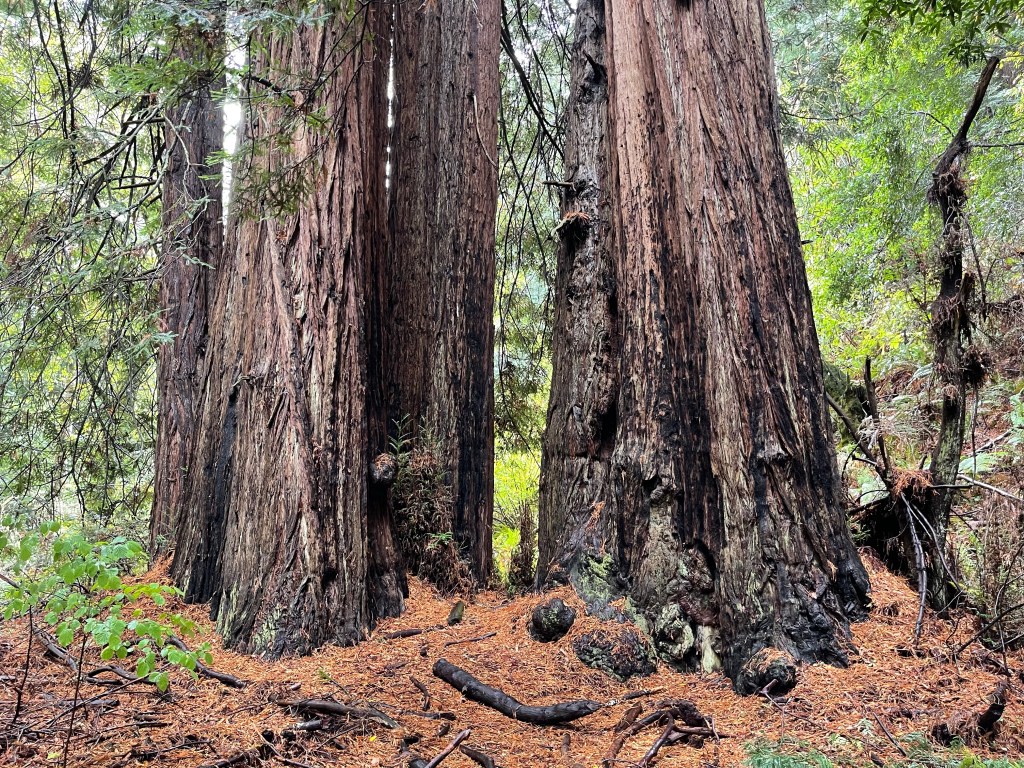
    Taking a long, slow walk amongst the Redwoods in Muir Woods, I deliberately slowed down, lingered, and sometimes stood still to feel the forest. Looking straight up I watched water drops formed in the tree tops from the light mist fall a few hundred feet. There are trees here that have stood here for more than a thousand years, my visit was just one blip in their lifespan. And here I found what I’d been looking for, what I’d hoped I’d find on this twisting drive through the hills. Here were the ancient forests of my imagination.

    Seeking quiet, reverent space amongst the giants is tricky business if you only stay on the main path. No matter how much signage they put up, tourists chat like they’re at the mall, oblivious to the glorious silence. You must go there expecting this careless chatter, but you don’t have to participate in it. The best option for silence is to take the paths less taken, and Muir Woods offers these opportunities. Take any trail that scares the masses – be it mud or the promise of exertion or even a dead end sign and you quickly find yourself in relative quiet.

    There are other old growth redwood forests, not enough of them we might agree, but they’re out there as state and national parks throughout the region. These offer more opportunities for isolation. Muir Woods is both the most famous and the most crowded. The trees won’t ever disappoint you, but your fellow man might.

    If we lost all the money we have and saved these trees, it would be worthwhile, wouldn’t it?” – William Kent

    William Kent purchased this land and fended off those who planned to log the redwoods to rebuild San Francisco after the 1906 earthquake and then flood the valley as a reservoir. He might have named it after himself but chose to honor John Muir. Modest? No doubt, but there’s an element of brand recognition at work here too. Since 1908, the Muir Woods National Monument has stood as protected land, surely thrilling Kent and those who worked so hard to save the trees, and capturing the imagination of reverent pilgrims ever since.

    If you visit, make a parking reservation well in advance. Go as early as possible to avoid the worst of the crowds. Wear appropriate footwear for hiking the side trails. And save the casual conversation for later. For you’ll have plenty to talk about.

  • A Coastal Walk in San Francisco

    San Francisco is known for many things, but the Golden Gate Bridge has to be near the top of that list we make in our heads. Without being a tourist checking boxes, shouldn’t you try to see the sites that make a place unique? But seeing doesn’t have to mean doing what everybody else does.

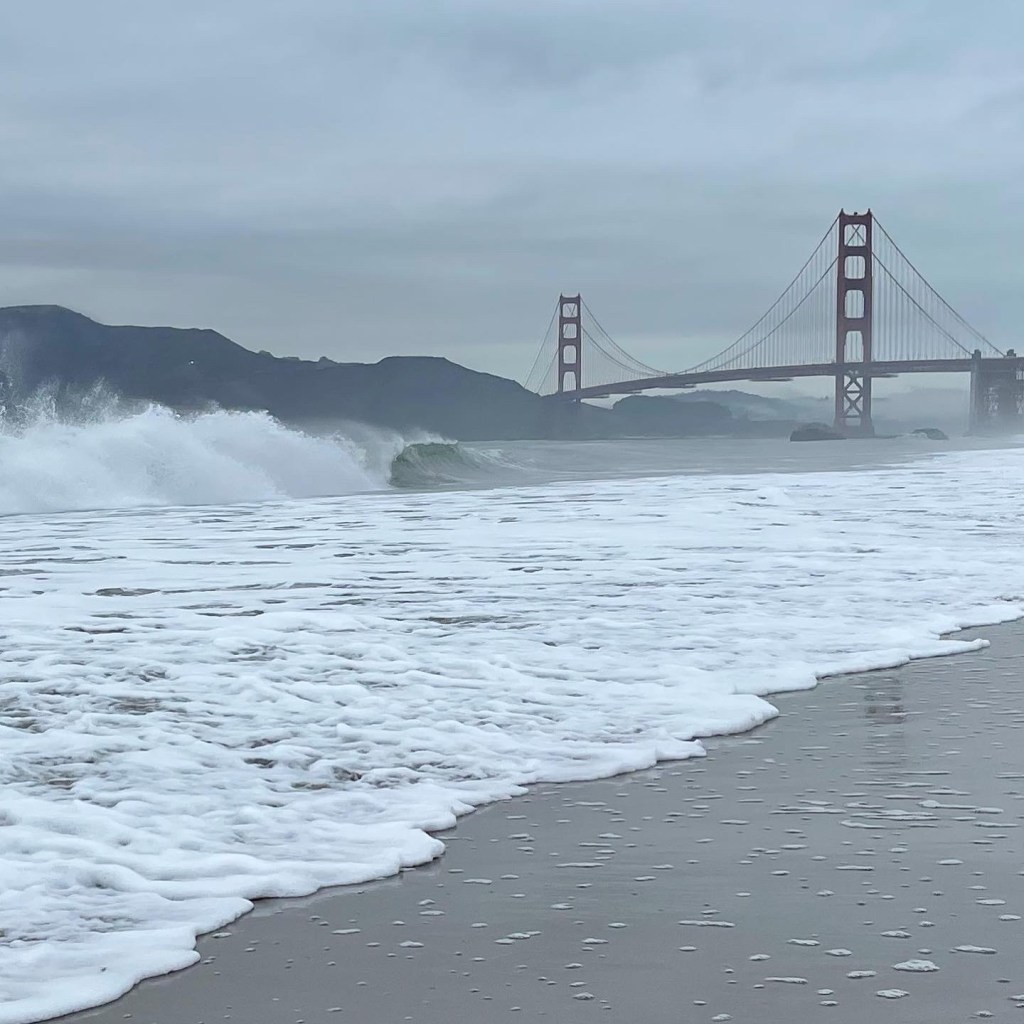
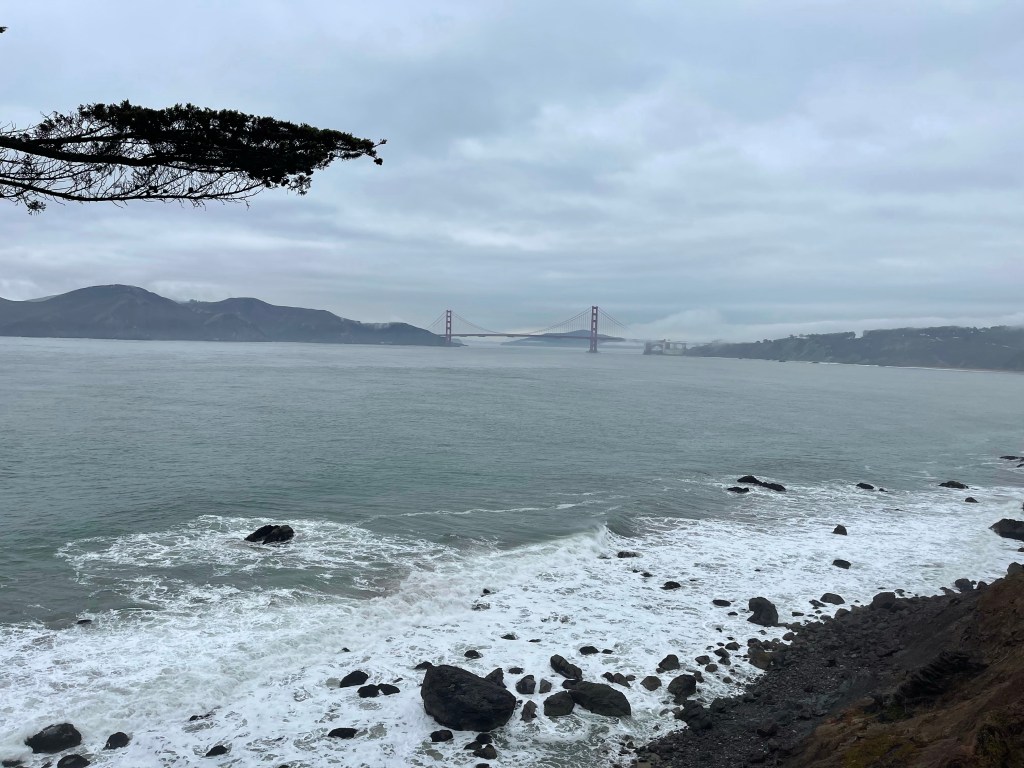
    So how do you see something as famous as the Golden Gate Bridge in a different way? You let it come to you gradually. The perfect way to do that is with a walk from Lands End to the bridge. This walk takes you along a diverse landscape of rocky cliffs, spectacular beaches with crashing surf, high end neighborhoods, past defensive fortifications dating from the world wars and finally to the bridge itself.

    You can Google the route and map it out neatly, but maps only offer a one-dimensional view. Even Street View, for all its delights, can’t convey everything. You don’t experience the clumpy clay in the sand after a light rain, or the shear cliffs that claim the lives of the careless adventurers looking for that perfect vantage point, or the spa-like aromas emanating from the wet flora, or the cheap plastic Halloween decorations adorning multi-million dollar homes. No, you’ve got to walk it to experience these things.

    The walk itself is a good workout, with a lot of climbing and long stretches on soft sand, but it’s not the Appalachian Trail, you can get by with a moderate fitness level and good walking shoes. The bridge and the roar of crashing waves will be your constant companion. Were it not for the bridge you might think you were in another place.

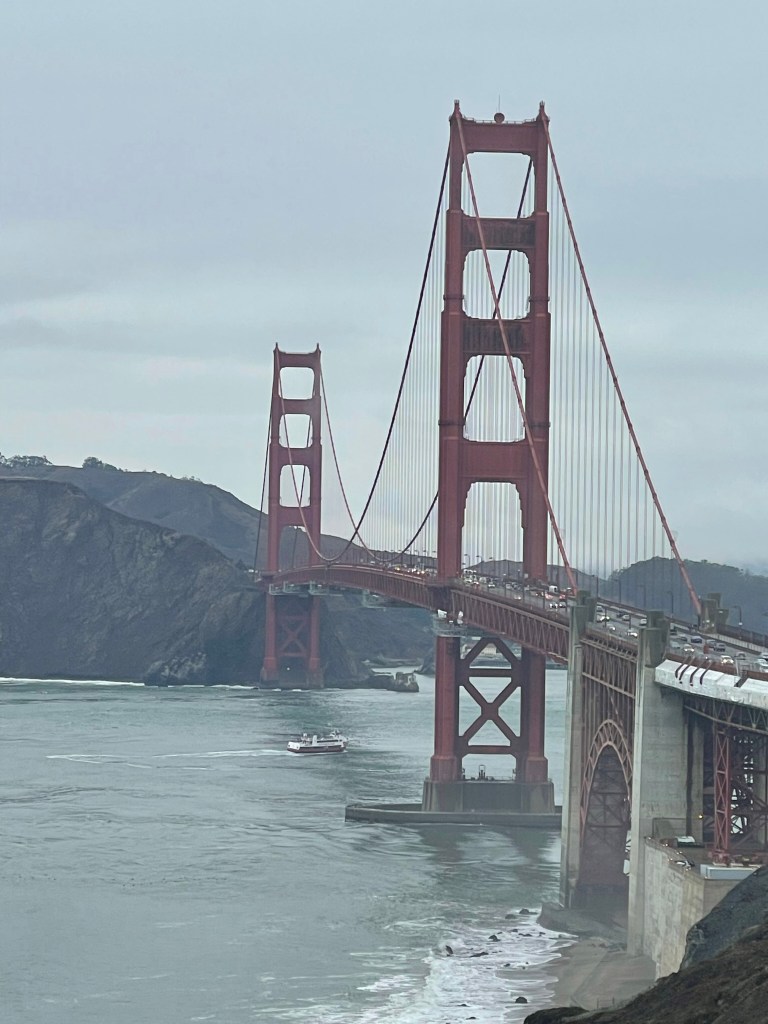
    The bridge comes at you from different vantage points. One of those vantage points is mental. We can all visualize the Golden Gate Bridge in our minds. So it can be invigorating when you see the real thing. It was thought impossible to build by many, but 84 years after opening she looks as good as you imagine she would.

  • A Hike to Waterville Cascades

    This hike was meant to be a compromise to myself. No salt water weekend, no longer hikes to knock off another 4000 footer or three. But still spectacular, still a light workout on a beautiful trail, and the real payoff; seven waterfalls in a relatively short span.

    I had my doubts. You walk to the trailhead at Waterville Valley Resort and see right away that this hike is going to start between the road and some of the village condos. But you cross a road and leave most of that behind you. From then on you are hiking a pleasant trail to the first waterfall and not really seeing many people (for me, a Saturday afternoon).

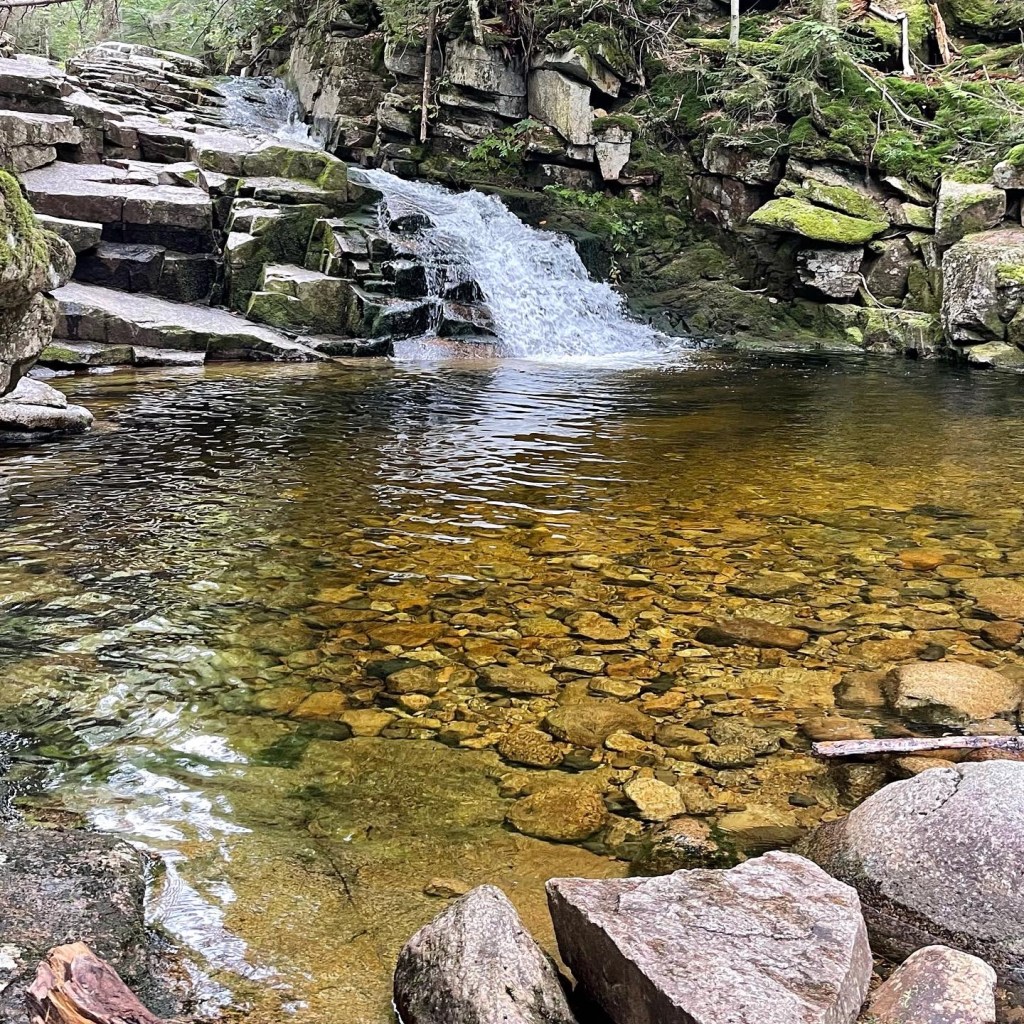
    The Cascade Trail is a 3 mile round trip to the Waterville Cascades. The silence of the forest is notable and welcome. You quickly forget that you’re in close proximity to a ski resort, and instead immerse yourself in hiking relatively pristine second growth forest that wraps itself around you and shuts out the outside world. Before you know it the hike brings you to the first cascade on Cascade Brook, a series of seven plunges that feel bigger and more remote than they really are.

    But there are reminders of the alternative paths to the falls. We met a group we’d seen in the parking lot that opted to ride the chairlift up instead of hiking. We spoke to another couple of guys on mountain bikes who had ridden up to the falls to soak in the swimming holes. Both conversations reminded us that there were other faster ways to reach the cascades than hiking. We saw sad proof of this when we passed a pyramid of empty Bud Lite cans that some fools had stacked alongside the brook. Without a backpack for this short hike I had to leave this mess for someone else to deal with. Not everyone who ventures into the woods leaves them as they found them. This is the price of proximity.

    But the falls themselves were each wonders, and we celebrated the unique beauty of each as we climbed higher and higher up the trail. When you reach the last big cascade there’s a bridge for a mountain bike trail that you can cross to descend the other side and return you to the Cascade Trail and your hike back down.

    I’m interested in how people meet the falls. Some are reverent and respectful, some more nonchalant about the experience. I think it’s relative to how much work you put in towards reaching them, and the path you chose for yourself. But that may seem dismissive and smug when a hiker says it. More specifically, it’s not the work you put into reaching it, it’s how your attitude when you reach it that matters most.

    The work-to-reward ratio of the Waterville Cascades makes it an easy choice. The proximity of that resort comes in handy for lunch or dinner and a restroom afterwards. The entire experience reminds you that finding beautiful in this world isn’t all that hard if you just put yourself out there to meet it.

  • When We Walk

    “When we walk like (we are rushing), we print anxiety and sorrow on the earth. We have to walk in a way that we only print peace and serenity on the earth… Be aware of the contact between your feet and the earth. Walk as if you are kissing the earth with your feet.” – Thich Nhat Hanh

    “When we walk, we naturally go to the fields and woods: what would become of us, if we walked only in a garden or a mall?” – Henry David Thoreau, Walking

    I’ve been walking on pavement too often recently. The mileage is good but the spirit is muted. Your feet have a hard time connecting you to the earth when there’s three inches of asphalt separating you from it. Still, walking on asphalt is better than being indoors all day, and to be honest, I’ve experienced too much of that lately.

    One recent walk took me along the Cape Cod Canal for six miles. Visually it was striking with a parade of yachts and commercial vessels streaming past on a particularly busy day. And the company was certainly good. But that connection to the earth was missing on those paved bike paths.

    Maybe walks on pavement are better than nothing, but like Henry I wonder what becomes of us when we aren’t off in the fields and woods. The more we connect our feet to the earth and cover ground the more we hear our own voice. Walking flushes the toxins out of your body and soul. Sitting all the time, as we do these days with our desk jobs and a return to commuting robs us of that flushing and the ick pools up inside of us until we once again get up and out.

    Today is a good day for a walk.

  • An Early Morning Walk on South Beach

    “the ocean calls for you
    in waves”

    – Kat Lehmann, Small Stones from the River

    South Beach has a mix of cool, wild & crazy and a hint of desperation at the edges where the homeless sleep in the shadows of pricy real estate. Taking an early morning walk, the ocean was amazingly calm, mirroring the stillness of the city. There were enough people to feel you were on a city beach, but not anywhere near the craziness the rest of the day will bring.

    South Beach is filled with storage sheds for chaise lounges, colorful life guard stands with unique designs and a cast of characters with unique personalities. Sprinkled into this scene are small swathes of sand blocked off with orange tape and stakes that designated places where sea turtle made nests. Walking past these rare undisturbed squares of sand I wondered at the momma turtle’s thoughts on this spot they chose to lay eggs as they navigated the visual feast that is South Beach.

    Walking on soft sand offers its own unique workout, and my calves felt it as I made the turn 35 minutes into the walk. This was meant to be a quick walk after all, and duty called. But what a way to begin a day in Miami. As the sun rose the call of Cuban coffee took over, and sand gave way to classic Cuban-American culture. And so began a memorable morning on South Beach.

    Sunrise on South Beach
  • A Walk on Cahoon Hollow Beach

    “The sea-shore is a sort of neutral ground, a most advantageous point from which to contemplate this world. It is even a trivial place. The waves forever rolling to the land are too far-travelled and untamable to be familiar. Creeping along the endless beach amid the sun-squall and the foam, it occurs to us that we, too, are the product of sea-slime.” – Henry David Thoreau, Cape Cod

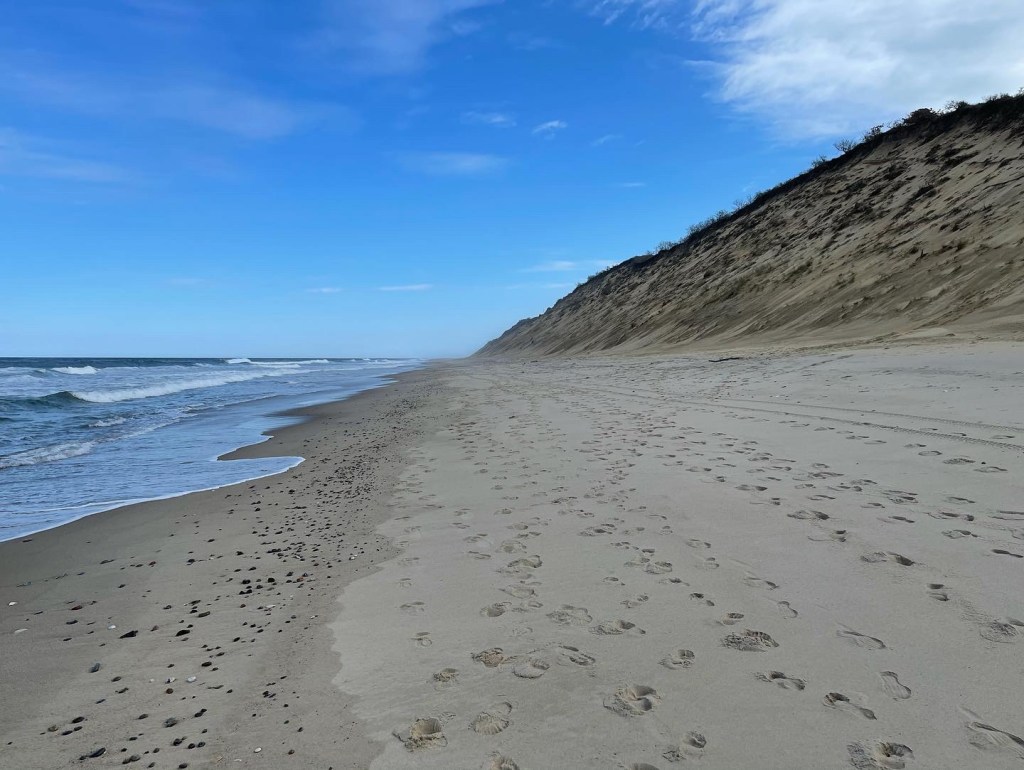
    Between the massive dunes and the crashing Atlantic Ocean in Wellfleet is a strip of sandy beach bearing the brunt of the relentless assault from wind and sea. The surf in warmer months is a feeding ground for Great White Sharks, who have modified their hunting style to chase grey seals right into the churning shallows that swimming humans like to frolic in during the warmer months. Great Whites don’t hunt humans, but sometimes they mistake humans for seals.

    In April you don’t see many seals bobbing in the surf on Cape Cod. So the sharks move on to other hunting grounds and leave this stretch of wild ocean to the occasional surfer and the beach walkers. A walk on the Cape Cod National Seashore can happen just about anywhere with an access path down the 100-foot dunes. Sand is dangerous stuff that can bury a reckless trespasser in no time at all. Sticking to the access paths preserves the dunes and just might preserve you too. The access paths themselves inform in their soft give. This is not a place for the meek. If you can’t handle the access path don’t walk this beach.

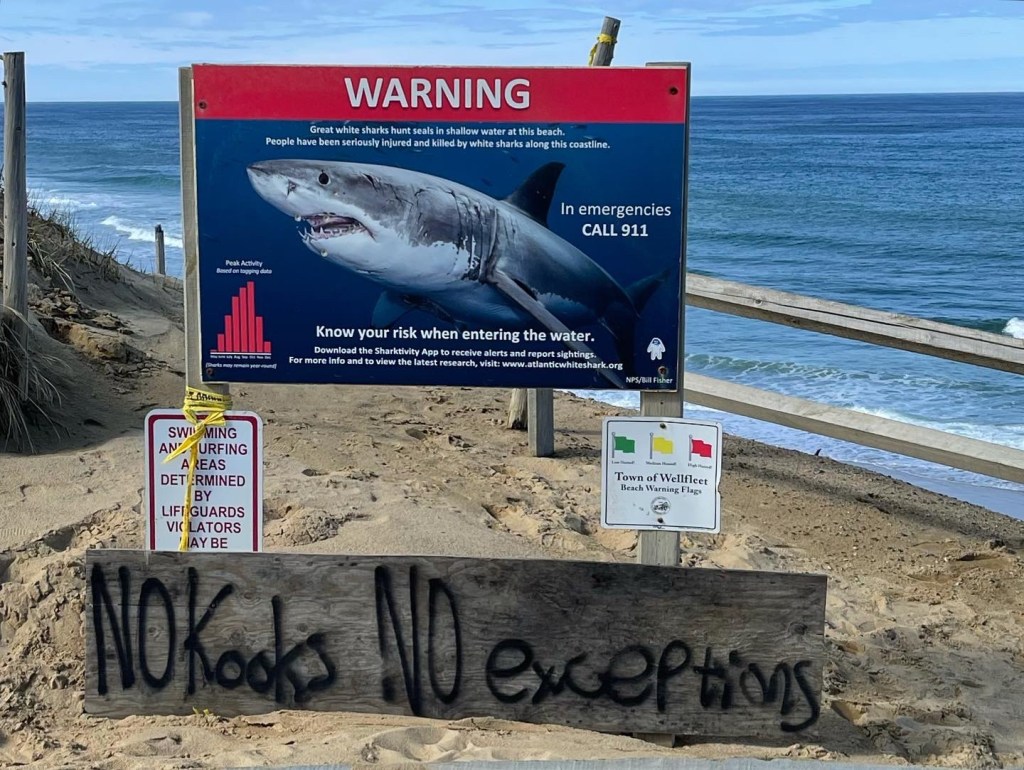
    For an off-season walk, we chose to park at the Beachcomber in Wellfleet and walk a stretch of soft sand known as Cahoon Hollow Beach. The Beachcomber is a trendy cool place at the height of summer. In mid-April it’s a convenient parking spot for easy access to the beach. A sign of the times is a shark warning with a handmade sign added to the bottom sharply suggesting “No kooks, no exceptions”. Wellfleet has had just about enough of the worst representatives of shark tourism.

    The National Seashore has a 40 mile stretch of beach that would test the strongest of walkers. When you say you’ll walk just to the bend you soon realize that bend keeps disappearing ahead of you. We walked about a mile, following the curve of the dunes around the forearm of Cape Cod. Walkers tend to gravitate towards the surf line where shells and smooth rocks offer themselves up for consideration. Soon your pockets are full and you recognize the folly of treasure hunting when every receding wave reveals another treasure.

    Thoreau walked the entire length from Chatham to Provincetown in the mid-1850’s and wrote about it for lectures that would end too soon in his abbreviated life. It would be published after his death in 1865 – the same year the Civil War ended. I think often about Thoreau, dying at 45 with so much left to do and see and write about. And here I was following him again, walking the beach between dune and sea, thinking it might just go on forever. Knowing it won’t.

  • A Walk in Dense Fog

    The dense fog presses up against the glass, tapping on the window lightly, wanting to come inside. Or calling me outside. I listen and layer up for a walk to the bay. I know it’s out there, if only from memory. And walk slowly to the water.

    The fog comes
    on little cat feet.
    It sits looking
    over harbor and city
    on silent haunches
    and then moves on.
    Carl Sandburg, Fog

    The birds carry on their morning song, but not so many today. Early still. What does 98% humidity sound like? It sounds like it looks; muted and disorienting. I close my eyes and let my bearings reset. I’m the only human outside this morning. Or possibly one of thousands – who can tell in the gray billowing dance?

    Down by the water, surprising wave action on a still morning. The bay is restless, like a sleeping child with a fever. Fog blurs hard lines. Instead I focus on what it amplifies. The lapping sounds of the waves slapping on the beach. A loon hidden from view out there somewhere calling its kind. Reaching me.

    Walking up from the shore, the sweet smell of dune grass requests a moment of my time. I gladly linger and thank the grass for the invitation. The air feels different as you walk away from the beach. The waves recede, birdsong grows and the world brightens. Dawn is approaching even as the fog asserts its hold on the world.

    Much later, fog lifting, you see the details fill in. I admit I liked the ambiguity of the fog just a bit more. If only for a momentary change in perspective. And, ironically, the clarity it brought. Swirling in the darkness by the bay.

  • A Meaningful Walk

    If you’re counting walking as a workout, at what point does it really count? When you reach 10,000 steps? By how many flights of stairs it equates to? Or is simply getting out and walking enough to count? It depends, doesn’t it? It depends on fitness level, on injuries or disabilities you’re working with, and on state of mind. Every walk counts for something. Every walk can be meaningful.

    Any walk of substance, whether hiking a mountain or a long walk on a bike path, could be called a workout. And a walk with the stars or a dog curious about the world can be especially meaningful. A walk filled with an abundance of steps and curiosity can be both. I think the point is to get out there and do something. To experience the world on her terms.

    This month I’m in a challenge to do 25 workouts in the month of April. Given my fitness level, which is decent but not Olympian, I count a walk as a workout when I hit 10,000 steps (5 miles), and the walk itself is brisk. Sometimes I don’t have the time to do 5 miles in one walk and I’ll walk again at night to finish the steps. It’s my workout, these are the rules I put in place.

    Walking as a workout isn’t the most efficient use of your time. I can row 5000 meters in half the time that I can walk 10,000 steps. If I broke that 10K into meters I could have a killer workout of 5x2K or 10x1K. And I can quickly raise my heart rate swinging a kettle bell, and mix in those workouts too for the pure intensity they offer. But sometimes you don’t care about efficiency. Sometimes you just want to walk.

    I’m doing the math on those 25 workouts in the month challenge and figure I need to do a few double sessions this coming week to make the total. I’m having my second vaccine on the 27th and would like to be done by then just in case I have side effects. I haven’t done double sessions in some time, but I’m drawn to the idea. A mix of rowing, kettle bell swinging but especially those brisk walks. A micro burst of meaningful workouts to get across the finish line. And a burst into spring.

  • Friends with the Sky

    “One of the many ways we have made ourselves lonely without gaining the deeper nourishment and intimacies of true aloneness, is the way we have lost the greater supporting circle of friendship available to us in the created, natural world: to be friends with the sky, the rain, the changing light of a given day and the horizon always leading us beyond the circle we have drawn too readily for ourselves.” – David Whyte, from the forward of Essentials

    I’ve often wondered at loneliness. I’m rarely lonely, but I’m often alone. I think the root of it lies in Whyte’s observation about the greater supporting circle – a connection to the world around you and with your own inner voice. Nothing awakens your relationship with the world like lingering with it on its terms.

    One of the things I miss about having a dog is that forced connection with the outside, no matter the weather. It’s easy to just stay inside when it’s raining sideways or bitter cold. But having a dog forces your hand – they’ve gotta go, and you must connect them with the place they go. Letting them out is a cop-out. You must walk as a true offering to the pet gods.

    This connection to the outdoors doesn’t require a dog, I’ve had similar connection with hiking, rowing and sailing where you’re forced to deal with nature as it comes to you. When you’re a small part of the natural world you tend to see it differently than you might looking at a screen from the comfort of a favorite chair. Nature demands that we meet it with respect and reverence, and in return we awaken something deeper in us.

    I suppose a circle drawn around us feels like a hug or the blankets you pull over yourself on the coldest nights. The problem with a tight circle is that it’s inherently limiting. Getting out under the open sky and feeling the elements, you recognize that you’re alone, yet a part of something bigger than yourself. When you see the world outside that old circle, you’re never quite the same.

    Loneliness is a state of isolation derived from looking inward. Connection is looking outward, and beyond yourself. Stepping outside the circle is a courageous act if you haven’t spent much time there, but it leads to a world that is alive with wonder. A sensory world of conversations in many dimensions. A world where we can become more than whatever it was you were when contained in that circle. That’s where you’ll find larger possibility. You’ll never be lonely outside your comfort zone.