Tag: French and Indian War

  • Favorites From a Year of Reading

    This might go down as my favorite year of reading.  I made it a goal to read more the last two years, and the momentum from 2018 definitely carried over into 2019.  Reading inspired my travel to new places and offered side trips of meaning in places I’ve been many times before.  It kicked me in the backside with work, writing, exercise and diet, and it inspired me to be a better version of myself than I previously had been.  I’m still a work in progress, but aren’t we all?  In all I read 23 books cover-to-cover in 2019, and dabbled in chapters of a few more.  Here are my ten favorite books this year:

    Atomic Habits by James Clear was by far the most impactful book on self-improvement that I’ve read in many years.  Strongly recommend this if you’re looking to make meaningful changes in your life.  I’m going to re-read it again in January to get a jump-start on 2020.  Habits that are now part of my identity include reading, writing, walking and drinking water.  Habits that went by the wayside include daily burpees and drinking less.  2020 (every day really) offers a chance to reset on habits, with new possibilities with learning language(s) and a few notable work goals.

    The Gift by Hafiz is a stunningly beautiful collection of poems.  Why it took me until 2019 to find Hafiz I don’t know…  but I’m glad I got here.

    Dream Work by Mary Oliver is another collection of brilliant poetry that it took me way too long in life to discover.  Maybe Oliver’s passing this year put a spotlight on her work, or maybe the student was finally ready.  Either way I’m glad I’ve immersed myself in the world of Mary Oliver.

    To Shake the Sleeping Self: A Journey from Oregon to Patagonia by Jedidiah Jenkins is a travel book on the one hand, and a journey of self-discovery one the other as Jenkins wrestles with his religious upbringing and his sexual identity during an epic biking trip across North and South America.  The book reinforces my belief that most people are good while acknowledging some good fortune along the way.  As a bonus, Jenkins pointed me towards one Hafiz poem, Tim Ferriss pointed me towards another, and soon I was reading The Gift (above).

    Awareness by Anthony De Mello is not the kind of book I ever would have picked up, as it feels self-helpy and overly religious at first glance.  And it does have a healthy dose of both things, but this books is an incredible call to action for the self, and backed up with tremendous insight into human nature.  Another book I wish I’d read years ago that I’m glad I got to in 2019.

    How the Scots Invented the Modern World by Arthur Herman is a book I’ve had on the shelf for years that I finally got to in 2019.  Perhaps inspired by my then upcoming trip to Scotland, I burned through the book quickly, learning a lot about the Scottish people who made a massive impact on the world we live in today.  It also prompted me to add a few places to my trip that I might not otherwise have gone to.

    The Map Thief by Michael Blanding poured gasoline on my burning fascination with old maps, and fired me up in another way; as someone who is passionate about historical artifacts like maps and old books, and also in a career based on securing people and assets from criminals like Forbes Smiley, this book was highly relevant for me.

    The French and Indian War: Deciding the Fate of North America by Walter R. Borneman offered me more insight into the place I live than any history book in a long time.  The Northeast corner of North America is where most of this fighting took place, and I took the opportunity to visit many historically important sites in my travels that were inspired by this book.

    Benedict Arnold’s Navy: The Ragtag Fleet That Lost the Battle of Lake Champlain But Won the American Revolution by James L. Nelson is a look at the complex individual that is Benedict Arnold.  And it goes well beyond the Battle of Lake Champlain, with a detailed account of Arnold’s epic raid of Quebec through the wilderness of Maine.  The retreat from Quebec opened up the St Lawrence River to the British, which put Lake Champlain and Lake George in their sites as the critical water route to the Hudson River. Arnold’s fleet delayed the British just long enough to set up the victory at Saratoga (where Arnold played a critical role as well).  I followed this book by reading Valiant Ambition by Nathanial Philbrick, another excellent book with even more detail on complicated life of Benedict Arnold.  Benedict Arnold’s Navy inspired that read, so it gets the nod here in the top ten.

    The Daily Stoic: 366 Meditations on Wisdom, Perseverance, and the Art of Living by Ryan Holiday is, as the title indicates, meant to be read daily, one quick dose of stoic medicine at a time.  After immersing myself in Marcus Aurelius’ Meditations in 2018, I felt that The Daily Stoic would be a great way to add a little daily stoicism to my life.  And it became part of my morning routine, where I’d read this before other books.  I’ll continue this habit by re-reading The Daily Stoic one day at a time in 2020 and on into the future.

    So there you go, my top ten favorite reads in 2019.  I’m a better person for having read them all, and look forward to revisiting several of them again and again in the years to come.  I’m a better writer for having read them all (still a work in progress).  And there’s a big stack of exciting books to tackle waiting patiently beside them.  So here’s to some great reading in the year ahead!

  • Stumbling Across Amherst

    I was thinking about Jeffrey Amherst yesterday. Or rather, Amherst was thrust upon me as I walked through the National Portrait Gallery in London and his face jumped out at me in three paintings. Two were “face in the crowd” works that ensured you knew that yes, HE was there, so was that other HE… and so on. It’s like a snapshot taken at an event, painted over a long period of time. Ego strokes and, to me, tedious. But portraits offer something different, a glimpse into the person. And few people got your attention during the French and Indian War like Jeffrey Amherst.

    No matter what you think of Amherst, and there’s plenty of reason to question his tactics, he helped shift momentum of the war with decisive, ruthless action (giving smallpox infected blankets to Native Americans is certainly ruthless and ethically highly questionable). That victorious campaign positioned him for accolades at home, place names in the New World, and one elite liberal arts college bearing his name. And a portrait in the National Portrait Gallery. I don’t celebrate the life of Amherst, but I acknowledge that he got the job done when the English needed someone to step up.

  • His Majesty’s Pleasure: The Expulsion of the Acadians

    During the French and Indian War the British looked at Nova Scotia, New Brunswick and Prince Edward Island and saw a threat.  The Acadians, original settlers to this area from France, had been allowed to remain for 40 years after France had conceded this territory after the capture of Port Royal in 1713.  But the Acadians had never pledged an oath to Britain, and the resumption of hostilities in the French and Indian War became the tipping point.  How many in North America suffered because the French and English couldn’t get along?  Too many.

    Beginning on August 10, 1755 the British began rounding up Acadians and expelling them.  Often families were separated, with husbands and wives, mothers and children being sent to different places.  It reminds me of what happened to Japanese Americans in World War II, and what’s happening now on the Mexican border.  The weakness of moral character in people in power causing immense suffering for those who are powerless.  You can have homeland security without being an asshole.

    Henry Wadsworth Longfellow heard about the expulsion of the Acadians from Nathaniel Hawthorne.  There’s a moment when I’d have loved to be a fly on the wall listening in.  Longfellow then wrote a poem called Evangeline that told the plight of a fictional character of the same name trying to reunite with her husband.  The poem brought attention to the expulsion then, and still offers insight into their suffering now.  The Acadians were lured into church to hear at announcement, only to find out that they were prisoners, and their world was being turned upside down.

    “Then came the guard from the ships, and marching proudly among them
    Entered the sacred portal. With load and dissonant clangor
    Echoed the sound of their brazen drums from ceiling and casement, –
    Echoed a moment only, and slowly the ponderous portal
    Closed, and in silence the crowd awaited the will of the soldiers.
    Then uprose their commander, and spake from the steps of the altar,
    Holding aloft in his hands, with its seals, the royal commission.
    “You are convened this day,” he said, “by his majesty’s orders.
    Clement and kind he has been; but how you have answered his kindness,
    Let your own hearts reply! To my natural make and my temper
    Painful the task is I do, which to you I know must be grievous.
    Yet must I bow and obey, and deliver the will of our monarch:
    Namely that all your lands, and dwellings, and cattle of all kinds
    Forfeited be to the crown; and that you yourselves from this province
    Be transported to other lands. God grant you may dwell there
    Ever as faithful subjects, a happy and peaceable people!
    Prisoners now I declare you, for such is his majesty’s pleasure!”
    – Henry Wadsworth Longfellow, Evangeline

    Many of the Acadians would end up in Louisiana, and their descendants are Cajuns.  Others would go to the thirteen colonies.  Some would eventually go back to Nova Scotia, New Brunswick and Prince Edward Island.  Many others died before they reached a destination.  It a dark stain in the history of a beautiful place.  And it offers a lesson we often forget.  The decisions of a few can disrupt the lives of many.


  • Keep Your Head Down and Sap That Fort

    The northeast United States is dotted with old forts that once played a critical role in our history.  Four of the most famous during the French and Indian War and the Revolutionary War were Fort Duquesne, Fort William Henry, Fort Niagara and Fort Stanwix.   They were famous because they each occupied a critical point in the waterway transportation of the day, and because of their strategic important each was attacked (sometimes on multiple occasions).  Because they were protecting waterways, each was located on relatively flat land.  Without the high ground and hard ledge that prevented digging, each of these forts was attacked using the same tactic; siege trenching called sapping.

    The act of laying siege on a fort requires significant manpower, patience and a willingness to continue pressing forward towards the enemy, thus pressuring them to surrender.  A well-entrenched enemy isn’t going to wave the white flag and come out if they’ve got strong enough fortifications, enough food, enough manpower of their own, and enough ammunition to continue the fight… in short, if they have enough hope that they’ll prevail in the fight.  To diminish this hope, an army laying siege would deploy multiple strategies – negotiation, bombardment, psychological warfare, and sapping.  Sapping was the act of digging trenches closer and closer to the fortification, where bombs could be set to open up the walls.  Trenches were dug in a zig-zag towards the fort to avoid enfilading, which is devastating fire directed directly down the trench killing many people at once.

    “By persistently hanging on the enemy’s flank, we shall succeed in the long run in killing the commander-in-chief.” – Sun Tzu, The Art of War

    There are two ways to fire on the enemy; defilade was firing straight into the face of the force attacking you, and enfilade, which is flanking fire.  Enfilading is a favorite tactic for any army or navy as its lethally efficient.  One cannonball can take out a hundred soldiers as it flies down the column destroying everything in hits.  In the Battle of Trafalgar raking fire shot into the stern of the French ship Bucentaure resulted in 195 killed and another 85 wounded – simply stunning casualties in any battle, but particularly on a ship.  Enfilading creates carnage quickly.

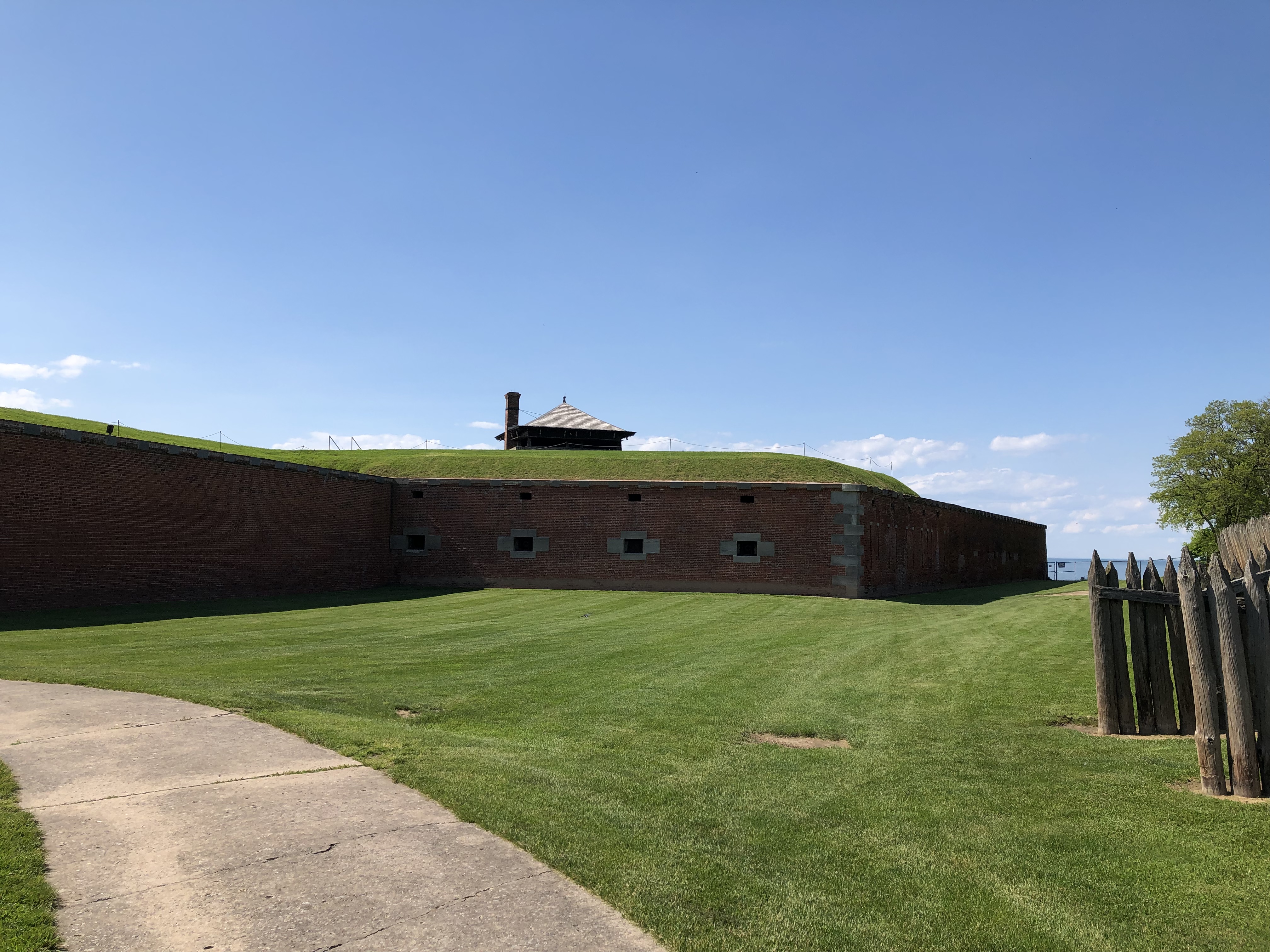
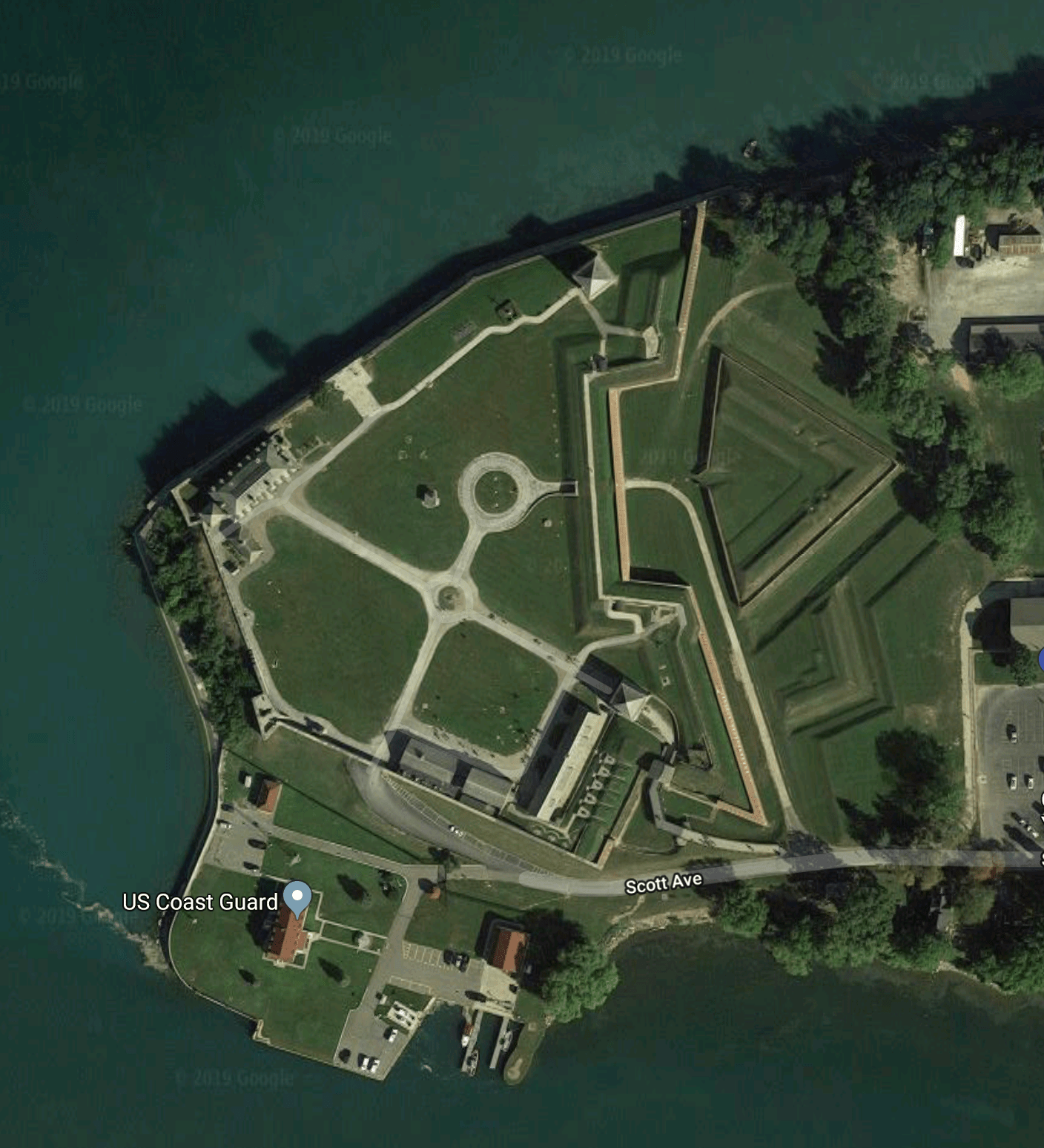
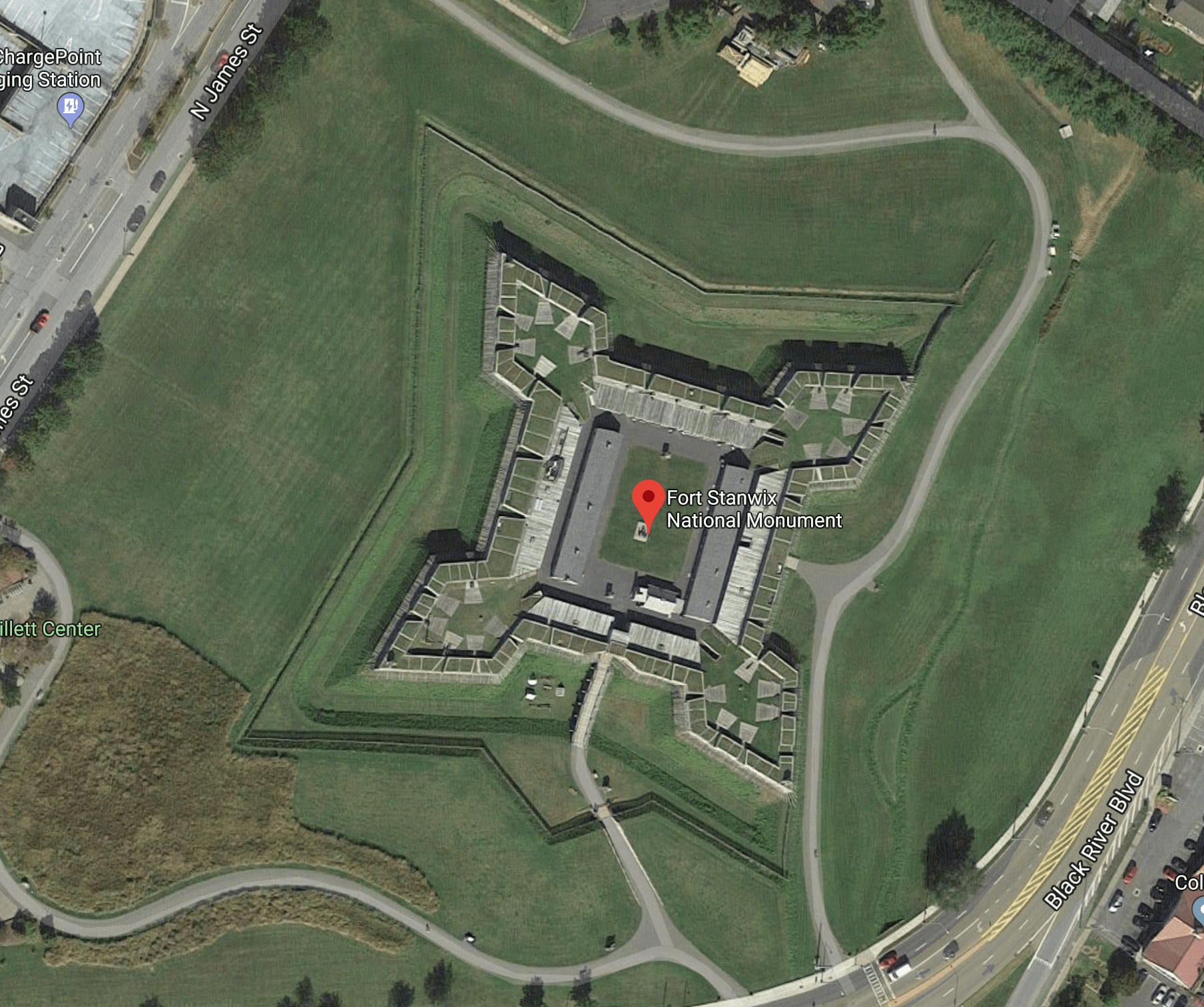
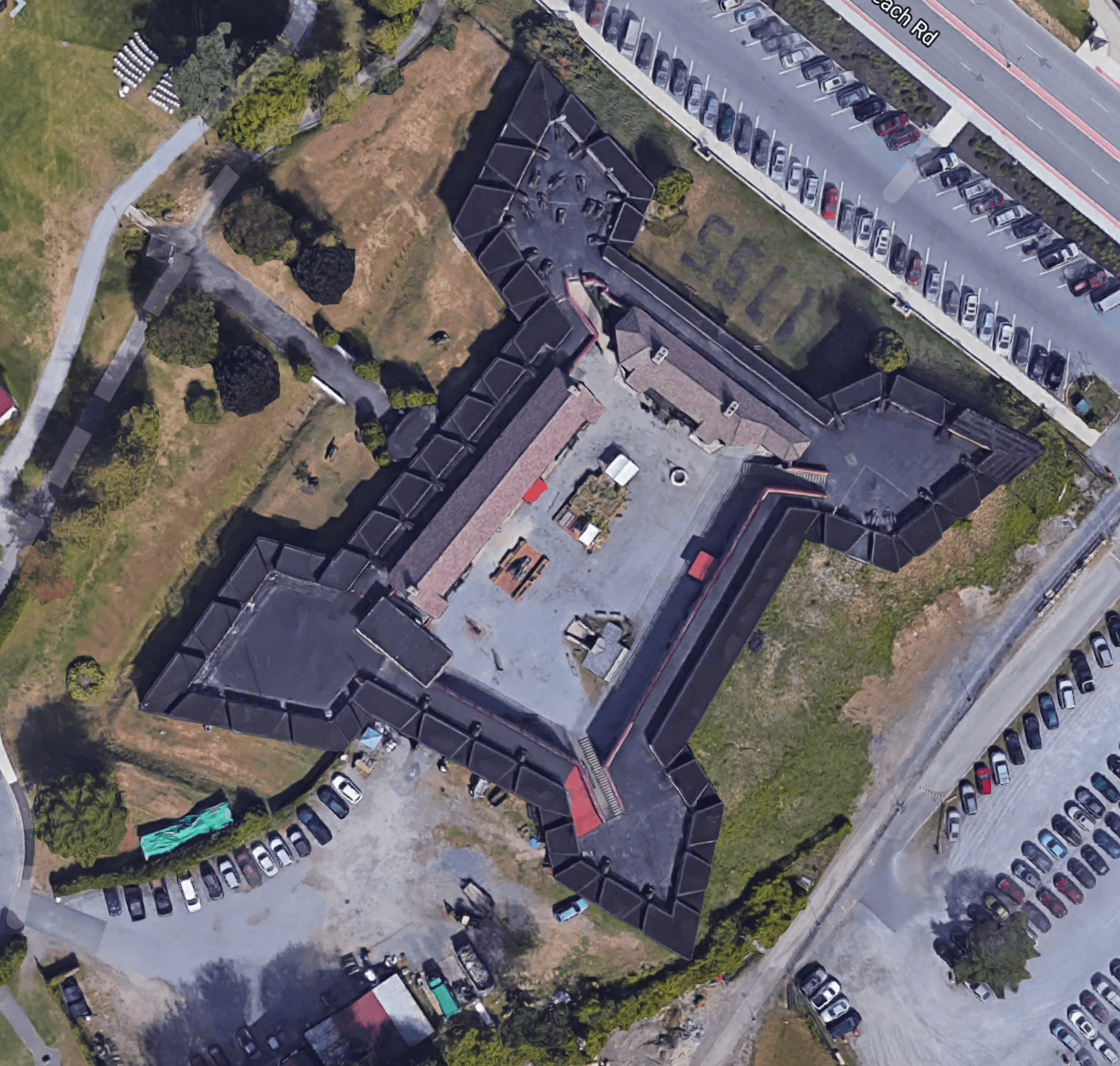
    Forts were built with enfilading in mind.  Bastions protruding at the corners opened up fields of fire by eliminating blind spots, making them very challenging to approach.  Bastions provided defenders with an opportunity to apply cross fire into attackers, creating an enfilade.  A quick look at the Google Earth images for Fort Niagara, Fort Stanwix and Fort William Henry (rebuilt on original footprint) show the shape of the forts.  Fort Niagara, pressed up against a point on Lake Ontario, didn’t have the complete star shape because it didn’t have the threat of armies rolling up on their flank, but you can see how the walls offered fields of fire consistent with enfilading attackers.

    So sappers – trench diggers – had to contend with steady musket and cannon fire raining down on them from many angles.  This had to be one of the worst jobs in the army, especially in soil with heavy rocks and roots, to be digging a trench while someone is trying to kill you from an elevated position.  But sapping worked, and throwing bodies at a problem has historically been appropriate behavior with European armies.  To give sappers a fighting chance of finishing the trench, they used mantlets and other protective structures to shield them from enemy fire.  Eventually the fort they were digging towards would run out of ammunition, or the besieged would grow exhausted from constant bombardment, and momentum would shift from the inside to the outside of the fort.  There’s another definition for sapping, and that’s gradually draining the strength and energy from someone, and that’s exactly what a siege would do to the inhabitants of the fort.  Watching the enemy get closer and closer must have been incredibly stressful, especially when you knew some of those enemy chose not to take prisoners.

    Fort Duquesne, in what is now Pittsburgh, wasn’t the most robust fort to begin with, and quickly fell to the French siege to begin hostilities in the French and Indian War in North America.  At Fort William on Lake George, the British and American forces held until their cannon began to overheat and fail.  A failing cannon was a dangerous thing indeed, often exploding and killing the crew that was manning it.  During the Revolutionary War, Fort Stanwix famously held the siege off, but largely because the British, loyalists and Iroquois laying siege on them were scared off prematurely by Benedict Arnold’s deception (fed a rumor that he was much closer and with a much larger force than he actually had).  If it weren’t for Arnold’s ploy the fort may have fallen within a day or two.

    Sappers got the enemy to your walls, but cannon was the great equalizer.  Without cannon to pulverize walls and the people behind them, armies had to play a waiting game.  Basically starving the besieged out.  With enough stores the army might run out of time before they were able to get through.  The Shawnee tried this tactic on Boonesborough in Kentucky; burning crops and killing cattle to starve the settlers out.  When it didn’t work quickly enough they dug a tunnel towards the settlers walls to plant British gunpowder.  Heavy rains collapsed that tunnel killing many of the Shawnee and saving the settlers.  Tunneling, or mining, was different from sapping in that you’re completely underground and vulnerable to these types of collapses.  The most famous mining attack took place at the Battle of Messines in Belgium during World War One when upwards of 10,000 German soldiers were killed when a million pounds of explosives mined below the German lines were exploded.  Clearly, digging towards the enemy didn’t end with the Revolutionary War, and no war proved that like World War One.

    Having walked through a few forts in my time, I’m struck by the amount of work that went into their construction.  It must have been formidable and more than a little terrifying to be on the outside trying to fight your way in.  But being trapped on the inside surely wasn’t much better.  When you hear about the defenders of Fort Stanwix or Fort William Henry fighting to exhaustion, knowing the fate of many who surrendered to the Native American warriors in other battles, its clear there wasn’t much pleasure rendered on that side of the wall either.  Troops sent to relieve the besieged were often vulnerable to ambush, which is exactly what happened at La Belle-Famille during the siege on Fort Niagara and at Oriskany during the siege on Fort Stanwix.

    Sapping offered refuge from the designed killing fields that star shaped forts created.  It was a harsh, horrific, exhausting slog digging under fire from the perimeter to the fort walls.  The alternative was an exposed, high-casualty ground level attack.  Given the choice, I’d probably have grabbed a shovel myself.  Thankfully, I can just stroll the grounds and contemplate the violence that took place around these forts early on in our history.

  • Time Capsules

    A couple of weeks ago I stopped at Rogers Island Visitor Center in Fort Edward, New York.  I knew the place wasn’t open but I wanted to at least stop for a moment, look around and give a nod to the legacy of Robert Rogers, who used this island as a launching place for much of the fighting his Rangers did during the French and Indian War to the north of this place.  Rogers Island is strategically situated on the Hudson River and well known to the Native American, French, British and Americans who travelled these waters to “The Great Carrying Place” where you’d need to portage your canoe or Bateau boat on your trek to Lake George and points north.

    Rogers Island is considered the birthplace of the US Army Special Forces and holds a special place in the hearts of US Army Rangers to this day.  I wasn’t in the Rangers myself, but recognize the significance of the tactics developed by Rogers.  They essentially mirrored the tactics used by Native American warriors and added a few wrinkles of their own.  That’s a post for another time.

    While walking around I spent a few minutes reading the historical signs placed around the property and considering the commemorative garden that was just starting to bud on the April day I visited.  My eye was naturally drawn to the monument dedicated to those who fought and died in wars engaged in by the United States and I walked up to better view it.  While there I noticed the tablet on the ground marking the time capsule commemorating the 250th anniversary of the French and Indian War.  This capsule is scheduled to be opened in the year 2055.

    Time capsules are a message to future generations.  Schools do these all the time, and add things that are meaningful to the people who are participating in the event.  But the funny thing about time capsules is that in all likelihood you won’t be around when they open it.  Sure, 50 years gives you a fighting chance, but life is full of twists and turns and there’s no guarantee of anything except death.  So burying the artifacts of life is akin to a message in a bottle thrown in the ocean.  You’ll likely never see it again, but you hope that someone will and whatever message you give to them will be meaningful in some way.

    Time capsules are all around us, and you don’t have to bury some safe in the ground to make one.  My time capsules to future generations are the lilacs I planted along the property line, or the trees I planted out front.  They’re the bathroom I renovated in Pocasset and the words I’m writing now.  By this measure I look for similar offerings from those who came before me. Mostly my time capsule is the way I conduct myself and how that influences others for the better or worse as others continue to influence me.  I won’t be here forever but I hope my legacy will be positive beyond the generations who actually know me.  Time will tell, but it won’t tell me.

  • From Bloody Pond to Winter Street

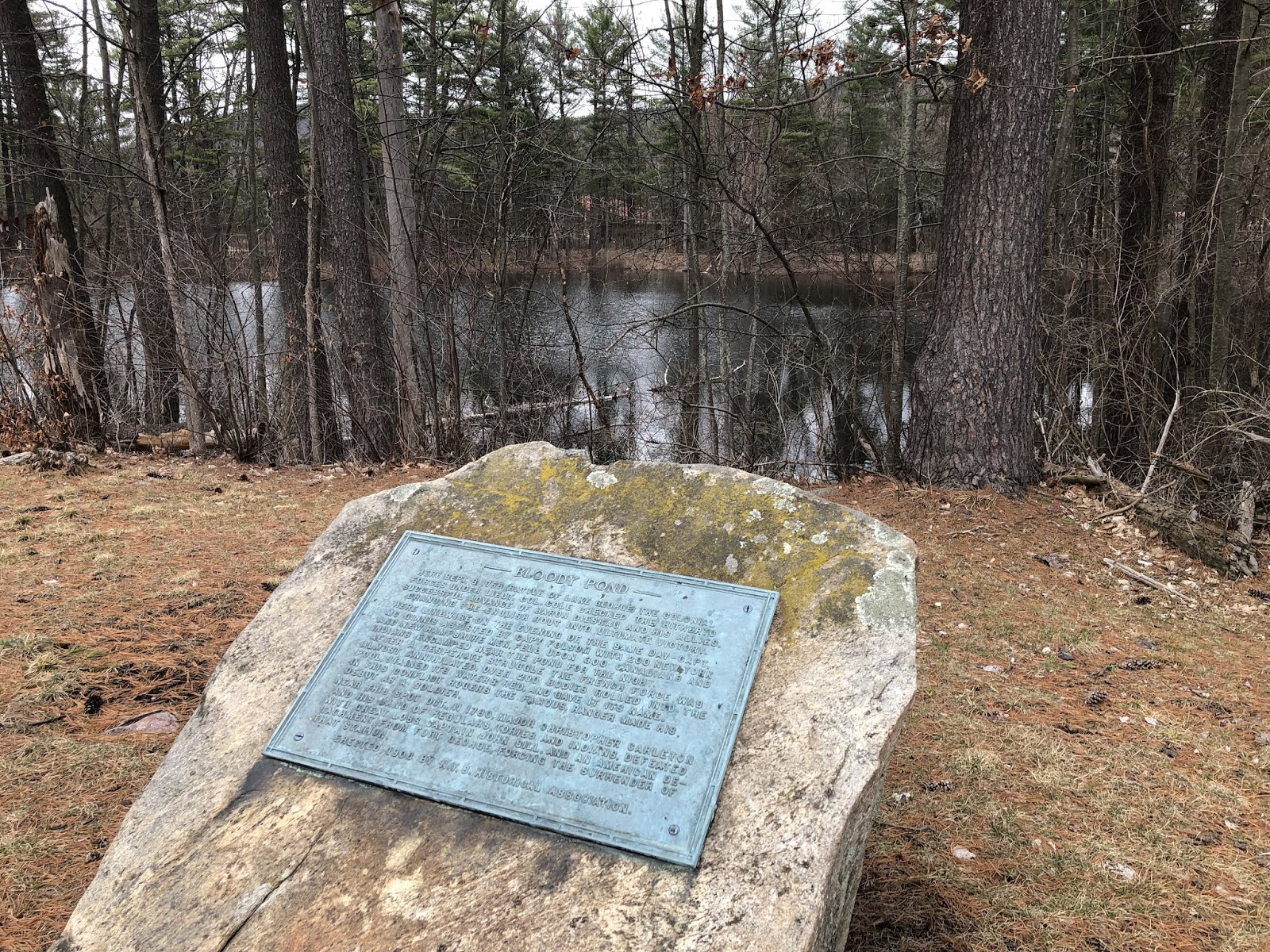
    During the French and Indian War the pristine Lake George saw some horrific battles for control of the lake.  The British and French continued attempts to push each other out of the region with force.  The Battle of Lake George in 1755, the siege on Fort William Henry in 1757, the Battle on Snowshoes in 1758 and countless skirmishes in between let to high body counts on both sides.  One relatively small battle in 1755 illustrates just how bloody the fighting was.

    The New Hampshire Provincial Regiment, consisting of a company of men led by Colonel Nathaniel Folsom (including Robert Rogers in his first battle) plus another 40 New York Provincials under Capt. McGennis came across the baggage and ammunition that the French had left protected with a guard.  They quickly overwhelmed the guard and waited for the larger force of French Canadians and their Indian allies to return.  Late in the afternoon a combined force of roughly 300 returned to the camp and walked into a field of fire from the New Hampshire and New York milita.  In this battle over two hundred men were killed, and subsequently rolled into the pond, which turned red as the blood of the French, Canadians, Native Americans, and colonial militia mixed together in the water.  Enemies returning to the earth together.

    McGennis didn’t survive the battle.  Folsom did, and would go on to participate in other battles of the French and Indian War, and then took up arms in the Revolutionary War.  Folsom and John Stark were both leaders in the New Hampshire Militia.  Folsom  was a delegate representing New Hampshire in the the Provincial Congress and ultimately the Continental Congress.  By all accounts I’ve read he led a life of service to New Hampshire and the country.

    I visited the Winter Street Cemetery to visit Major General Nathaniel Folsom.  I wasn’t sure where his gravestone was when I got there, but looking around I noticed that there weren’t that many that had American flags posted next to them so I used that as my starting point.  I walked around that cemetery for 40 minutes reading each gravestone.  Most of the Revolutionary War veterans had a similar shape and size, with the unique badge carved in the front.  And yet I couldn’t find Folsom’s gravestone.  Folsom was a hero of two wars for the American Colonies, he must have a flag, right?  No flag.  Perhaps it blew over in the wind, or someone took it, or someone forgot to place one next to his gravestone to honor him.  Who knows?

    My time was limited, and I still hadn’t found Nathaniel Folsom.  But I did find the graves of his fellow Revolutionary War veterans, and read the family names of the people who were his neighbors and friends.  And finally it was time to go, and as I stood near the gate I thought I’d just walk down the middle one last time and try an area I hadn’t recalled walking past in my search… and there he was.  His was quite literally one of the very last gravestones I came across.  It’s almost like he wanted me to pay my respects to the rest of the people in the cemetery before coming to see him.

    Like other roadside monuments, the small memorial on Route 9 in Lake George, New York, crowded by motels, auto parts stores and a sushi restaurant, called out to me as I drove by.  It led me to read more about Nathaniel Folsom and eventually to my visit to his home town and final resting place.  For all that he did for his state and his country, his grave is modest – no different than those of other soldiers from the Revolutionary War buried nearby.  If these two modest monuments bookend his life, they served their purpose by helping me get acquainted with this gentleman from Exeter.

  • Lake George, 1757

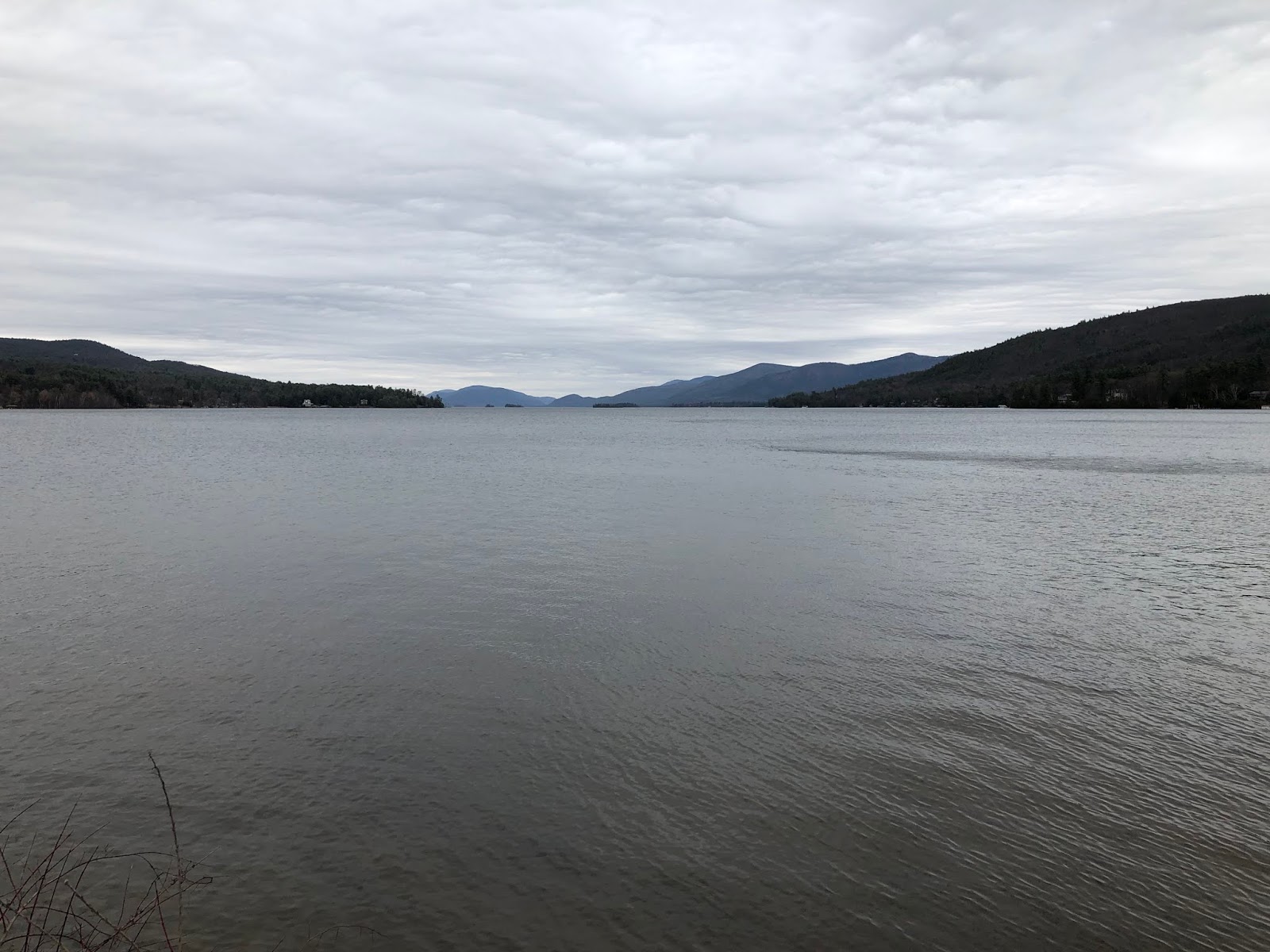
    When you stand along the shore of Lake George and look to the northeast on a quiet April day as I did recently, you’re struck by how beautiful the lake is.  Lake George still looks pristine, surrounded by conservation land and state parks.  The Adirondacks rise up in the distance.  Lake George, like the finger lakes to the west and Lake Champlain to the north, is a long and sometimes narrow body of water, very much like a river.  It was the primary transportation channel for countless generations of Native Americans and the French and English settlers who came after them.  A relatively short portage to the Hudson River to the south and Lake Champlain to the north made this body of water a critical link in the chain.

    There were several battles and skirmishes on this lake in the early colonial period, but two stand out during the French and Indian War.  Just beyond the farthest point of the lake you can see in this picture the lake jogs eastward and narrows to a point of land where it turns northward again.  This spot is called Sabbath Day Point, and it was here on July 23, 1757 that 350 New Jersey provincial soldiers (the “New Jersey Blues”) on a reconnaissance mission were surprised by hundreds of Indians who paddled out and attacked them in their boats.

    “The whoops of our Indians impressed them with such terror, that they made but a feeble resistance; two barges only escaped; all the others were captured or sunk. I have 160 prisoners here, 5 of whom are officers. About 160 men have been killed or drowned.” — M. de Montcalm to M. de Vaudreuil. 

    On August 3, 1757 this pristine view of the lake terrified the troops stationed at Fort William Henry, as hundreds of bateau boats and canoes filled the lake forming a massive fleet rowing and paddling right towards where I was standing when I took this picture.  They laid siege on the fort for six days until they forced the British to surrender as their cannon began to overheat and fail and the French artillery breached the walls.  During the surrender a horrific massacre ensued as the Indians descended on the men, women and children surrendering to them looking for their plunder and scalps.  That’s a story for another day, but there’s an excellent account of it from The Lake George Examiner worth reading.

    I’ve looked out on this view of Lake George a few times over the years and it always fills me with awe at how beautiful the lake is.  It’s hard to imagine the horror experienced by those soldiers in the summer of 1757 close to where I’d been standing.  The Indians who committed the massacre – or their tribes – would suffer their own horrors in the years to come.  There’s an inevitable friction that comes with expansion, and as Native Americans, the French, English and others wrestled for control of this continent violence would continue to escalate.  This beautiful waterway, as with so many other beautiful places around the world, was once the center of violent conflict.  And 1757 was a particularly dark time for this lovely place.


  • The Great Carrying Place

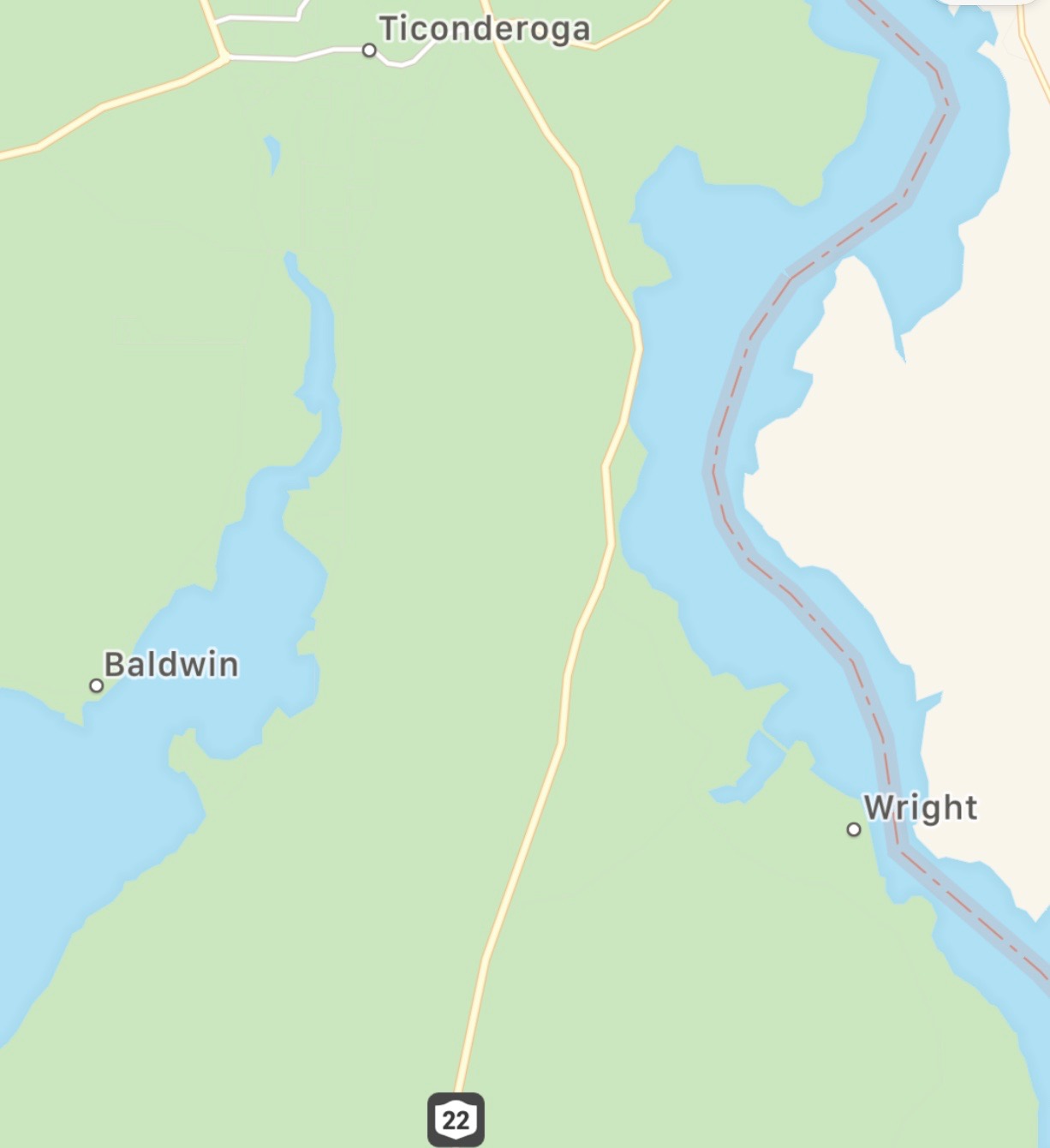
    There’s an almost unbroken stretch of navigable water from New York City up the Hudson to Lake George to Lake Champlain to the St. Lawrence Seaway, which in turn leads back to the Atlantic Ocean or deep into the interior of North America to the Great Lakes.  The “almost” part is a couple of stretches of land that must be portaged where the La Chute River is unnavigable.  This two mile stretch of land between Lake George and Lake Champlain is the place the Native Americans called “the great carrying place”.  There are other portages with the same name, notably a stretch of trail in Maine that Benedict Arnold used to invade Quebec, but this stretch in New York is arguably much more strategic.

    In the years before and during the French and Indian War this was one of the most strategically important and thus heavily contested patch of wilderness in North America.  Navigable water was the most efficient and fastest way to travel at the time, and aside from this stretch of land navigable water was close to unbroken.  During the Revolutionary War this place was the site of significant naval and land battles led by Benedict Arnold.

    I’ve been to Glens Falls and Saratoga many times.  I’ve been to Lake George once or twice.  And I’ve been on and most of the way around Lake Champlain.  But I’ve never viewed the region with the educated eyes of a historian.  It’s not that I didn’t know the rough history of the region, it’s that I was apathetic towards it.  I’m not longer apathetic.  The next time I make my way through the region I’m going to spend a little time immersing myself in the history of the region.  Fort Ticonderoga, Mt. Defiance, Saratoga and so much epic history happened right in this area.  I can’t very well ignore it now can I?

  • Robert Rogers

    Robert Rogers

    Robert Rogers was born in Methuen, Massachusetts – twenty minutes from where I currently live.  His family moved to what was then the wilderness of Dunbarton, New Hampshire a few years later.  Rogers is famous for leading a group of colonists in the French and Indian War.  There are some who will point to his debts, drinking and war atrocities committed against women and children.  These are very much the darker part of his story.  But Rogers was very good at what he did, which is taking the fight to the French and Native America populations during war.  In war you need strong leaders, and Rogers was certainly that, leading Roger’s Rangers to fame that lasts to this day.

    I first learned about Roger’s Rangers when I was a kid watching the movie Northwest Passage.  I haven’t seen that movie in 40 years, but I’ve read up on Rogers, and everything I read makes me want to learn more about this guy.  Rogers and his Rangers wore green uniforms and did epic raids and scouting missions across vast and hostile wilderness.  Roger’s Rangers were the origin of what is now the United States Army Rangers.  Live off the land, shrug off hardship and discomfort and get the job done.

    Perhaps the most epic story I read about Rogers Rangers – and there are many – is a mission when they skated across Lake George, switched to snowshoes and trekked across snow covered forest for miles.  These were tough, athletic and versatile men who never saw a mission that they didn’t want to tackle.  On another snowshoeing mission they ambushed the enemy deep in hostile territory, only to be ambushed themselves.  Rogers and many of the Rangers managed to escape by holding off the French and Native Americans until dark, separating into smaller groups and melting into the wilderness.

    By all accounts, Rogers was a brilliant soldier who adopted Native American tactics to create his own form of fighting.  Today people talk about Navy Seals with awe.  Frankly I do as well.  Rogers Rangers would hold a place of honor at the table of military heroes in America’s history.  Many of the tactics used in the armed forces today originated with Robert Rogers.  In fact, Rogers “Rules of Ranging” are still followed by the U.S. Army Rangers of today.

    Rogers was a hero of the French and Indian War, but like many soldiers he struggled after the war.  Debt, scandal, alcoholism and war crimes muddied his reputation after the war and in the years since.   During the Revolutionary War he took the British side, and it’s said that he was the one who recognized Nathan Hale (“I only regret that I have but one life to lose for my country.”) when he was spying on the British in New York.  Hale was hanged soon afterwards.  New Hampshire, which Rogers did as much to protect as anyone during the French and Indian War, expelled him as a Tory.  He would die in poverty in London.