Tag: Leo Tolstoy

  • Naturally Next

    “Remember that there is only one important time and that is now. The present moment is the only time over which we have dominion. The most important person is always the person you are with, who is right before you, for who knows if you will have dealings with any other person in the future? The most important pursuit is making the person standing at your side happy, for that alone is the pursuit of life.” ― Leo Tolstoy, The Emperor’s Three Questions

    What next? I’ve heard the question over and over again since summer ended. Is it because I’m asking it myself? Or because we reach the same point in life where such questions become increasingly important? I think if I ask one more question in this paragraph I’ll lose a few subscribers in rapid succession. What’s next is blessedly the next paragraph.

    We navigate our place in the world, run into obstacles we learn to get around or stall behind indefinitely. Habits are obstacles, and so is a closed mind. Sometimes we get so focused on the obstacle in front of us we don’t step back to see the many ways around it. When writing stops flowing I simply walk away for a few minutes, make a coffee or throw the frisbee to the pup and the obstacle drifts away.

    I think Tolstoy had it mostly right with his focus on the present moment, and the most important person being the one we’re engaged with right now. But is our most important pursuit making that person happy? I think this itself becomes an obstacle, for happiness is a fickle thing, and serving the whims of another’s state is slavery.

    We’ve all got to find our own path to whatever is next for us. Helping others to see is a fine thing indeed, but they must learn to reconcile their obstacles in their own life. Maybe that obstacle is us. To give space and time for others to find their own way may be the most generous gift we can give them.

    What’s next? The sky filled with migratory birds noisily chatting about the commute. Maple leaves turning yellow and orange and red as the sun gradually reminds them that their time is almost over. Montauk Daisies budding so very long after the rest of the garden fades. Cherry tomatoes bursting in the autumn sun because we cannot possible keep up with the harvest. Next is always right in front of us, showing us the way around whatever we imagined was impossible to get beyond. Dare I say we must pay attention to now? Or is that one question too many?

    Then how about this? Answers come from doing. Stop worrying about the obstacle and simply do what calls for attention today. Like writer’s block, simply doing something pulls us inevitably to possibility. Look around, it’s all around us—everywhere except that place we were stuck in. We may simply do what is naturally next, and see where it takes us.
  • The Most Important Pursuit

    “Remember that there is only one important time and that is now. The present moment is the only time over which we have dominion. The most important person is always the person you are with, who is right before you, for who knows if you will have dealings with any other person in the future? The most important pursuit is making the person standing at your side happy, for that alone is the pursuit of life.” — Leo Tolstoy, The Emperor’s Three Questions

    Tolstoy’s story resonates because it’s timeless. Consider: What is the best time to do each thing? Now, because we are not timeless ourselves. Who are the most important people to work with? The person we’re with in this moment, because there is no guarantee that the person we are interacting with is not the very last person we’ll ever interact with. What is the most important thing to do at all times? The most essential thing we can do in our brief dance together is to find happiness right here and now.

    I am an active practitioner of the three questions because of how I was raised, not because I sought the advice of Tolstoy, but his philosophy resonates because of the universal truth in the words. Shouldn’t we be present in this moment, with full attention directed towards the person we’re with, with the sincere objective of making the moment joyful for both parties?

    Consider the most recent interaction you had with a stranger. Say, the person who served you breakfast the last time you went out for it. Do you treat that person as a servant or as a fellow traveler on this trip around the sun? If the roles were reversed, how would you expect to be treated by them? Shouldn’t the golden rule apply in every such situation?

    The thing is, I have people in my life who roll their eyes when I engage in conversation with random strangers—there he goes again. But the point of each of these engagements is to acknowledge that we’re all in the same orbit at the same moment. We may never pass this way again. In most cases, the chances are extremely high that we won’t. So we ought to make the most of that moment.

    We know the world is full of angry people. I often get spun up at the unfairness in the world, and the sheer cruelty of some people who don’t see the worth in anyone but themselves. We all witness bad behavior that is the antithesis of the golden rule. But we don’t have to swim in that sea of misery ourselves. Why splash around where so many have drowned?

    Here’s the thing: We all want to live a fulfilling and joyful life. To be actively engaged in living is to be in the game in every moment, not just a few chosen highlights. So embrace the opportunity to be fully alive now, whatever now brings to you. The thing about those nows is that they tend to string together into a pretty amazing life.

  • ChatGPT (as?) Me

    ChatGPT can be seen as a tool to enhance productivity or to accelerate the end of days. The optimist in me sees the potential in Artificial Intelligence (AI). As with any technology, it’s people who weaponize it. The moment you can create a nuclear weapon out of household goods is the day we all should contemplate the afterlife. Assuming controls are in place, we might actually find value in AI. Then again, it might just steal all of our jobs. As a creative type, I have to admit to being both delighted and humbled by the speed and accuracy of ChatGPT when I started using it.

    Consider my chat, “summarize War and Peace in one paragraph”:

    “War and Peace” is a classic novel by Leo Tolstoy, set in 19th-century Russia during the Napoleonic era. The epic story revolves around the lives of five aristocratic families and their experiences during times of war and peace. It delves into themes of love, ambition, fate, and the human condition. The narrative masterfully interweaves the personal journeys of its characters, showcasing the effects of war on society and individuals, while also exploring profound philosophical reflections on life and historical events. The novel’s vast scope and intricate character development make it a timeless exploration of the human spirit, offering profound insights into the complexities of human relationships, the consequences of our actions, and the pursuit of personal and societal meaning.

    Now consider something far more personal for me, “summarize the content of alexandersmap.com in one paragraph”:

    “Live with intention, embrace the journey, and seek a deep connection with the world around you. Be curious, explore new places, and appreciate the beauty of nature. Cultivate gratitude for the small moments and cherish the relationships with loved ones. Embrace challenges as opportunities for growth, and find balance between work, leisure, and reflection. Understand that life is a continuous learning process, and wisdom comes from experiences, failures, and self-awareness. Strive to leave a positive impact on others and the planet, fostering a sense of community and global consciousness. Ultimately, find purpose in living authentically, mindfully, and with a sense of wonder, making the most of every moment on this extraordinary journey through life.”

    Wow. Lovely summary, and great advice! But it raises a serious question: Why go on writing? If AI can tap into everything we’ve ever done and write in our style, why should we create anything at all? Well, because we are each processing our own data aren’t we? Life is a string of days figuring things out at our own pace, and writing offers a way to create something beyond ourselves. We ought to continue writing our own verse, not just in spite of it all, but because the ripple matters. ChatGPT didn’t create my words, it summarized them from an admittedly modest ripple across the Internet. Somewhere within there is my contribution. Somewhere in there is me.

    In the context of infinity none of this matters a great deal anyway, but it matters just enough to keep at it. We aren’t nihilists, we’re artists. Art is an expression of something profoundly unique deep within us. Maybe AI can mine a large enough sample size to offer a close-enough copy, but it’s still nothing but a derivative of the original work. So keep doing the work.

  • Orange and Order

    “Rejoice! The purpose of life is joy. Rejoice at the sky, the sun, the stars, the grass, the trees, animals, people. If this joy is disturbed it means that you’ve made a mistake somewhere. Find your mistake and correct it. Most often this joy is disturbed by money and ambition.”
    — Leo Tolstoy (via Poetic Outlaws)

    “No one is singular, that no argument will change the course, that one’s time is more gone than not, and what is left waits to be spent gracefully and attentively, if not quite so actively.” — Mary Oliver, Winter Hours

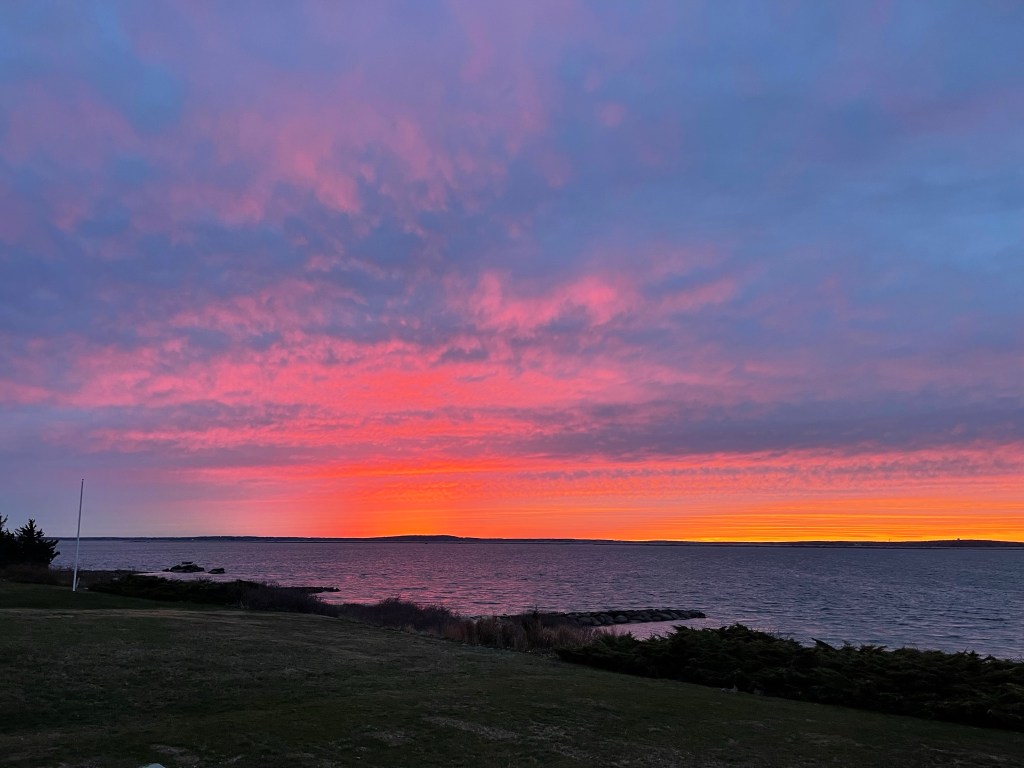
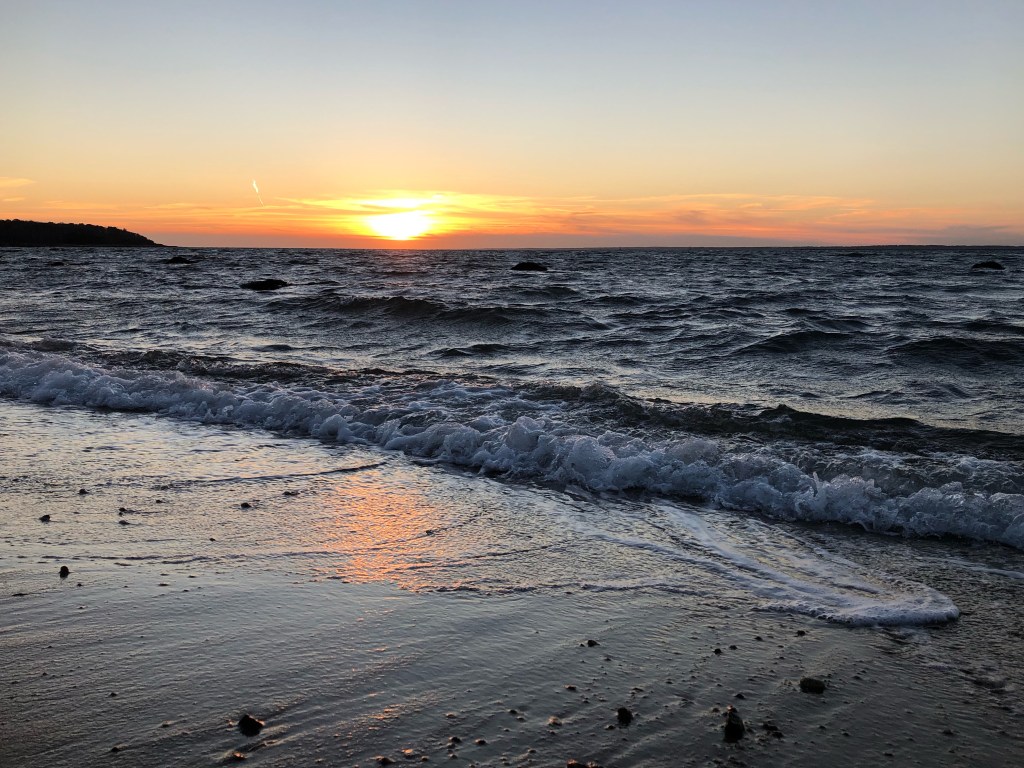
    Productivity and bold action have their place in this world, for progress depends on it. Progress for humanity, surely, but also for the individual. But we must remember too that we skate a line between Yin and Yang, and balance is the key. If Yang represents boldness and action, Yin represents temperance and reflection. It’s quite figuratively day and night, which may be why some of us find the orange hour in between to be our happiest place.

    Our best life is found in balance, and we feel the urge to lean in to both extremes now and then when our body and soul remind us of our imbalance. This disturbance of the Force (if you will) creates restlessness, which in turn triggers change. We all feel it in our own way. For me, it’s often the nagging question of “what’s next?” wrestling with the emphatic reply of “here and now”. Action calls, joy reminds. What will we listen to today?

    Somewhere along the way I’ve put aside some goals I’d been chasing for a lifetime. Somewhere along the way I’ve leaned into different objectives for the balance of my time. We are each in the process of becoming what’s next, and possibly even savoring what it is we’ve become thus far. Life is balance between the two, represented by orange and order. That balance is where the joy is.

    Orange Hour
  • Meaning Abides

    “Let us consider the way in which we spend our lives.” — Henry David Thoreau

    “If you want to be happy, be.” – Leo Tolstoy

    “Happiness is transient, but meaning abides.” — James Hollis

    We are all in the process of becoming whatever it is we’ll evolve into next. Blogging documents much of my own becoming, along with a few reckless photos of myself that others insist on releasing into the wild. When you document everything, the documenter captures while seemingly avoiding capture. This is a fools game, everything documented speaks, if we listen and observe closely enough. The trick is to listen closely enough to ourselves.

    The three quotes above naturally clung to each other in the course of a few weeks of reading and writing and sorting out life as it comes to you. We must consider the way in which we spend our lives, for the routines and habits offer a path to meaning and, dare we say, happiness. We are what we repeatedly do, as Aristotle reminds us (For those keeping score that’s four quotes in one relatively brief blog post—just what has gotten into this writer??).

    Perspective, of course. And an inclination to write whatever damned way suits the moment, I suppose. But don’t let me stray too far off the point here. The point is, we must spend our days chipping away at the marble to reveal the secret masterpiece hidden within each of us. Like so many of those unfinished masterpieces you see in museums, we too may run out of time. No, that’s not right—we will certainly run out of time. But we must attempt to draw as much of ourselves out of that cold marble as we possible can before we reach the end of our runway and crash into the abyss.

    We must attempt that which speaks to us. Becoming means to come to a place—what will that place be? Let it be meaningful.

  • From This Moment

    “How quietly I
    begin again

    from this moment
    looking at the
    clock, I start over

    So much time has
    passed, and is equaled
    by whatever
    split-second is present

    from this
    moment this moment
    is the first”
    – Wendell Berry, Be Still In Haste

    Two weeks into the New Year. About as distracting a beginning to a New Year as I can ever recall. We know where we’ve been, where we’ve come from. But what comes next? We change from moment to moment with the ticking of the clock, but what do we do with that change?

    Start over. Again.

    “Time does not exist. There is only a small and infinite present, and it is only in this present that our life occurs. Therefore, a person should concentrate all his spiritual force only on this present.” – Leo Tolstoy

    Sometimes it feels like we’re marching on a treadmill, especially during a lockdown, but you look back and see progress despite the illusion. A pile of actions that didn’t work. A few, sifted through the remains, that did. What do we make of it? All that has passed, has passed. This moment is the one that counts. This moment is the first.

    Keep trying. Again. And again.


  • Doing More

    “The world as we have created it is a process of our thinking. It cannot be changed without changing our thinking.” – Albert Einstein

    Change happens slowly, one habit reinforced at a time. Some reach 10,000 views in one post, but most of us chip away for a few years of daily writing to get that first 10,000. Tolstoy filled War and Peace with 587,287 words. By that standard I’ve got a ways to go. I’ve only published 401K.

    Diet, for all intents and purposes, is one morsel shoved in your mouth to the next. You want to eat better? Don’t make an exception for that tasty treat you’re eying. Want to get fit? Move more, and more consistently. Simple, right?

    We all have reasons for the habits and beliefs we linger in. Life is a grind, after all. Sometimes the best you can do is walk to the refrigerator to see what inspires you that day. The world, as we’ve created it, can eat you up.

    Yesterday was a great day to be outside in New Hampshire, and I took full advantage of that with a hike up Mount Jackson. A hike like that, with friends and on a beautiful winter day, leaves a mark inside. It reinforces who you are in some ways, but alters your thinking as well. Standing on the summit of Jackson and looking up at Mount Washington, I thought it well within reach. I’ve climbed Washington before, but not lately. Looking up at Washington yesterday, cold breeze chilling my sweaty clothes, I thought it possible to do more.

  • Filling the Lantern

    “You should be a lantern for yourself. Draw close to the light within you and seek no other shelter.” – Buddhist Wisdom (according to Leo Tolstoy)

    I waited in the darkness for the sunrise. When you wake early that can be a long wait. The sunset last night was way down the bay and just after 4 PM, making this a long wait indeed. Such is winter in New England.

    But I walked outside and find it really isn’t all that dark at all. The moon is bright, a few stars shine through, and we’re well into nautical twilight start. Were I to let my eyes adjust I could get about quite well outdoors, even if it looks dark from inside the comfortable house. Perspective, on such things as light and time and relationships with others, offers insight.

    For all the darkness in this year of years, there’s still plenty of light even now. It starts from within, and shines outward on the world, reflecting and amplified by others back towards us. But sometimes it feels like the bowl is empty. If your own light is dimmed in the darkest moments, add fuel and oxygen. Seek reflection. And venture out. It’s brighter than you might believe it to be.

    December means early sunsets
  • Good Forever

    There is no past and no future; no one has ever entered those two imaginary kingdoms. There is only the present. Do not worry about the future, because there is no future. Live in the present and for the present, and if your present is good, then it is good forever.” – Leo Tolstoy

    Here is the present, such that it is. On the whole you’d call it good (we woke up didn’t we?), yet more challenging than other days we might remember. But that’s the trap, isn’t it? Comparison to fond memories robs the present as much as dreams of the future does. There’s only today, buttercup. Dance to the song the band is playing now.

    I walked outside to a red dawn and a chorus of nuthatches noisily haw-hawing their way up and down the tree trunks. They know where the party is: it’s right here, right now! Nothing lives in the moment like a wild animal. It’s the humans who get all wound up in past moments, or stirred up about what may come to pass in the future. These are stories we tell ourselves. If I’ve learned anything balancing 5-6 books I’m reading at a time, it’s that you can’t read them all at once. So stick to the story of the present.

    The flip side of the present being good is that it isn’t very good at all. If that’s the case, then it seems we must accept what we’ve got and work on making something of this moment that is better than it might have been. Those nuthatches would probably prefer an endless summer of warm days and tasty bugs. They woke up to a leaf-less, cold November morning. But they were singing away in the trees this morning like it was Whoville on Christmas morning. You can learn a lot about living from a nuthatch.

  • Calm

    “Real power is not in momentary desires, but in complete calmness.” – Leo Tolstoy

    I have a bit of nervous energy as I write this. I’m traveling tomorrow for the first time in seven months and there’s a vibrating exhilaration deep inside knowing that I’m getting on a plane again, going to another state and driving around to places new to me. Mind you, its not like I’m flying to Antarctica for an extended climate change study, I’m going to Cleveland. I’ve been to Cleveland at least a half dozen times that I can recall and maybe a time or two beyond that. But it’s travel in a time of no travel, and this year that alone creates a buzz.

    I got the same vibration hiking solo up Mount Tecumseh earlier this summer. Not because it was a particularly challenging hike, but because I was hiking it alone late in the day. Just enough risk to raise the level of uncertainty, but calculated risk. Hiking alone at night inherently offers risk to the hiker. You just don’t have people walking by you to offer assistance. So you take extra care or alternatively, you charge ahead brazenly challenging fate.

    Calmness in the face of potential stressors is a superpower. In an age of talking heads stirring the pot of anxiety for advantage, of a pandemic ramping up for killing season, of a time when we teeter on the brink of a deeper recession or a depression and irreversible climate change should we get this wrong, in this time the calm prevail. We can take the bait and react, or swim calmly in the present storm.

    “Do not be concerned too much with what will happen. Everything that happens will be good and useful for you.” – Epictetus

    The posters used early on during the Blitz, “Keep Calm and Carry On” naturally come to mind. Those posters weren’t successful at the time as people viewed them as patronizing, but the expression has exploded in popularity in the last twenty years. Whether you view it as patronizing or nostalgic now, the expression does carry weight as a stoic reminder to keep your head about you. For in calmness we find clarity.

    During that time when the British were facing down Nazi aggression, Viktor Frankl was living a nightmare in a succession of Nazi prison camps, ending at Auschwitz before finally being freed at the end of the war. He observed that state of mind had a lot to do with who survived and who didn’t as much as the whim of fate. Some people were in the wrong place at the wrong time, but others just gave up in the face of hopelessness and horror. Some people survived simply because they had a purpose for living. Based on this experience, he wrote the extraordinary book Man’s Search for Meaning after the war.

    “Everything can be taken from a man but one thing: the last of the human freedoms – to choose one’s attitude in any given set of circumstances, to choose one’s own way.”
    – Viktor Frankl, Man’s Search for Meaning

    Today we live in a time when everything is hyper-scrutinized, everything is a perceived affront, everything is designed to invoke a spark of fear or outrage. But when we swim in our sea of calmness, we overcome the efforts of those who would inspire a follow or a like or another cycle of commercials before they tell you the rest of the story. A calm mind sees the truth in the world and in ourselves. It remains the best foundation for a life of purpose and happiness. Want to improve the state of world? Be calm. And yes; carry on.