Tag: Mary Oliver

  • A Hunger for Eternity

    “Certainly there is within each of us a self that is neither a child, nor a servant of the hours. It is a third self, occasional in some of us, tyrant in others. This self is out of love with the ordinary; it is out of love with time. It has a hunger for eternity.” — Mary Oliver, Upstream: Selected Essays

    We wrestle with the ordinary, biding our time for moments of blissful vibrancy. In a creative lifespan that is so very brief, what is it about time that has such a hold on us? This third self Oliver describes, and which many of us know to be true, must feel the urgency of the moment and scramble where it might lead us. Doesn’t our creative work lead us out of our fragile self into something more eternal? We don’t have to reach mastery to feel this, but we do need to be present with our work and giving the best of ourselves in that moment.

    “The most regretful people on earth are those who felt the call to creative work, who felt their own creative power restive and uprising, and gave to it neither power nor time.” — Mary Oliver, Upstream: Selected Essays

    We must jealously protect our time, that we may do something with it. To be productive with it, whatever that means to each of us. We only have so much life force in the well, so make it matter.

    “Dost thou love life? Then do not squander Time; for that’s the Stuff Life is made of.”— Benjamin Franklin, Poor Richard’s Almanack

    Lately I’ve been accused of giving my time to others who desperately need it. We all need it, of course, for time is all we have. We must always ask ourselves what we give up for the life we say yes to. Would this time be better served in service to our art, or to our loved ones? To our careers or ourselves? These are decisions with consequences. For what will become of us next? Giving isn’t squandering, not when we give it freely. Yet we must give time to the other stuff that calls for our attention.

    There are reasons I write early in the morning. It’s mostly because it’s the only time I can claim as my own. Let them all sleep, as lovely and essential they may be, and leave me to my work. The rest of the day will be yours. Just as soon as I click publish once again. Is this enough to satiate the muse? Let’s hope not. But it’s enough for now.
  • The Magic of Applied Attention

    “We’re all going to die, all of us, what a circus! That alone should make us love each other but it doesn’t. We are terrorized and flattened by trivialities, we are eaten up by nothing.” — Charles Bukowski

    There is a Persian lime tree growing in a large pot on the sunny deck behind my house. This spring there were more than a hundred blossoms on this tree, each developing into tiny fruit that promised a bumper crop of limes. But after a particularly angry thunder storm and torrential downpour dozens of those tiny fruits scattered the deck, their tart potential over before they really began. While mourning the loss of so may limes, I took solace in the dozens of fruit still developing on the tree. It seems the tree had culled itself that it might focus on the ripe potential of the fruit that remained.

    We each bear so much in our lifetime, holding on to things we ought to shed to focus on the essential few. It’s okay to let go of the trivial, that we might nurture the truly important things in our lives. Letting go is painful, but not as painful as diminishing our best work by carrying more than we should.

    Little by little,
    as you left their voice behind,
    the stars began to burn
    through the sheets of clouds,
    and there was a new voice
    which you slowly
    recognized as your own,
    that kept you company
    as you strode deeper and deeper
    into the world,
    determined to do
    the only thing you could do —
    determined to save
    the only life that you could save.

    — Mary Oliver, The Journey

    The night after the thunderstorm, I spent an evening with friends, throwing axes at a target drawn on a wooden wall and building fragile wooden castles in the air (Jenga). There is a unique strategy for each, naturally, being so very different from each other in practice. But there are also similarities. Besides each pursuit using wood, it was the act of applied attention that is common to both. To be good at either you must simply get out of your own head and focus on successfully completing the task at hand. One might utilize this in every pursuit, from writing to navigating any of the essential tasks that fill one’s day.

    We ought to cherish our time together, forgetting the trivial affronts that life throws at us. We ought to find our own voice in a world full of people waiting for us to shut up that they may say something clever. We ought to direct our attention inward, to the ripe potential of our own ideas, calling us to truth and clarity. We know, deep down, that we won’t survive this, but if we give ourselves the time to focus, we may just yet produce something substantial anyway.

  • Stillness Instead

    Have I lived enough?
    Have I loved enough?
    Have I considered Right Action enough, have I come to any conclusion?
    Have I experienced happiness with sufficient gratitude?
    Have I endured loneliness with grace?

    I say this, or perhaps I’m just thinking it.
    Actually, I probably think too much.

    Then I step out into the garden,
    where the gardener, who is said to be a simple man,
    is tending his children, the roses.
    — Mary Oliver, The Gardener

    Just this morning, I opted for the garden instead of a hike. I’ve done that a lot recently, choosing just about anything instead of a hike. Last week it was finishing a book I’d wanted to dive into, and I celebrated my time not doing something else I love. For it isn’t that I don’t love hiking, I surely do, it’s more a case of wanting something else instead. When you have free will you get to choose, within reason, such things as where to be and what to do.

    When it comes to such things as checklists of books read and summits climbed, we sometimes opt for none of the above. Life is a series of days where anything is possible if we just persist, or nothing gets done if we resist. What leads to resistance in a world that rewards action? Are we the lesser for having opted out? Or do we find something else in stillness?

    Lately I’ve wanted nothing more than time in the garden. It’s June, after all, and even a raw and wet June is still a month of growth and possibility. Slowing down enough to find the beauty in my own backyard seems the best use of this time.

    “It is the beauty within us that makes it possible for us to recognize the beauty around us. The question is not what you look at but what you see.” ― Henry David Thoreau

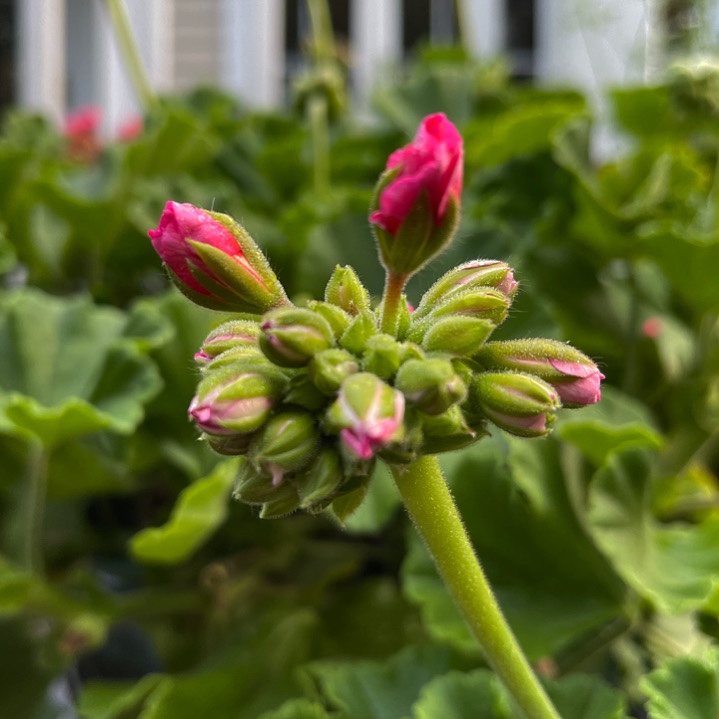
    That old expression, “when the student is ready, the teacher will appear”, applies equally well with the geraniums as with the mountains. When this student is ready I’ll attend to that checklist of summits once again, or perhaps I won’t. For today there are other lessons to learn.

    Geranium
  • Sea Foam Consultation

    I go down to the shore in the morning
    and depending on the hour the waves
    are rolling in or moving out,
    and I say, oh, I am miserable,
    what shall—
    what should I do? And the sea says
    in its lovely voice:
    Excuse me, I have work to do. — Mary Oliver

    The ocean is indifferent to our schemes and stumbles. We go to her for consultation or consolation, and she offers all the time in the world. But the answers are ours to find.

    Every morning, when the ocean is nearby, I walk down to the surf line and think about the day ahead. I wonder at my solitude as the sun rises to meet me. Why doesn’t everyone seek what I seek? The ocean whispers her reply: we each have our time. We only have agency to question our own.

  • Through the Darkness and the Light

    And consider, always, every day, the determination
    of the grass to grow despite the unending obstacles.
    — Mary Oliver, Evidence

    We are change agents, creating new iterations of ourselves with every action. But so is everyone and everything else, which makes change exponential and complicated. There are some things we simply can’t control. One moment we’re celebrating what we’ve accrued and the next we’re mourning what has passed. The moments in between are often confusing and stressful. Mostly, we can only control how we react.

    “Accept the things to which fate binds you, and love the people with whom fate brings you together, but do so with all your heart.” ― Marcus Aurelius, Meditations

    Life is change, which means accepting the two sides of that coin. Amor fati. There will be obstacles and setbacks. Life is a series of such lessons, learned and forgotten and re-learned again. The lessons are unending, meaning we must learn to endure. We must find a way, despite it all.

    “The nature of the rain is the same and yet it produces thorns in the marsh and flowers in the garden.” — Arab saying (via Anthony De Mello)

    Through everything, there is growth, but isn’t it fair to ask ourselves, what are we growing towards? What are we rooted in, to sustain us in troubled times? What are we reaching for, when times are better? These are our days, through the darkness and the light, to do with what we will.

  • My Earth Day Reckoning

    And we died of the future,
    of calling and mission only we could keep,
    leaping into every favorite season;
    sinking into roots, dreams, and books.
    — Li-Young Lee, First World

    “I am losing precious days. I am degenerating into a machine for making money. I am learning nothing in this trivial world of men. I must break away and get out into the mountains to learn the news” — John Muir

    Looking back, it seems quite natural to be locked into this routine of daily obligations—of work and chores and driving from here to there. Things fall apart and must be fixed. We must be fixed too. We are what we repeatedly do, as I repeatedly remind myself. So when is there time for nature and hiking? When is there time for long walks in the woods?

    There is no other time than now. We must go, and see, and take something of it with us for eternity. Not a rock or a leaf or even a flower, but a memory of who we were when we found the truth. Earth is far bigger and more beautiful than we’ll ever fully realize, no matter the frequent flyer miles accumulated. Earth is fragile yet resilient, and will wait an eternity to shrug herself of humanity. It may take a million years, but Earth will fix itself in time. We’re the ones who suffer for our neglect.

    Yet we are a small ripple in this big pond. Whether I recycle or not makes little difference, not when we see the crisis of leadership in the bigger things happening in the world. Nonetheless, we all make a small difference. We might pile on or opt in to the mission of making the planet a better place for our children’s children. Our small daily actions aren’t meant for others to see, they affirm who we tell ourselves we want to be in this world. We’re part of a larger chorus, and our accumulation of voices make a difference even when we can’t see it. A forest is made up of thousands of trees and millions of leaves. There is power in numbers.

    “I would say that there exist a thousand unbreakable links between each of us and everything else, and that our dignity and our chances are one. The farthest star and the mud at our feet are a family; and there is no decency or sense in honoring one thing, or a few things, and then closing the list. The pine tree, the leopard, the Platte River, and ourselves—we are at risk together, or we are on our way to a sustainable world together. We are each other’s destiny.”
    — Mary Oliver, Winter Hours

    Earth Day is a reckoning, a day when we take stock of what we’re doing to the Earth, but also a day when we take stock of what we’re doing with our own brief time on this planet. There are things we say yes to in this world, which means we say no to many other things. In the end, we must choose, what dreams will die with us? What will we stand for? What will we stand up against?

    We all see the changes in the world, but forget we have some agency in the matter. Is this a year of incremental improvement or reckless abandonment of what we believe we ought to be. These are questions for society, surely, but also for each of us in our daily lives. The question is always the same: who are we becoming?

  • A Dip Towards the Immeasurable

    “Who knows what is beyond the known? And if you think that any day the secret of light might come, would you not keep the house of your mind ready? Would you not cleanse your study of all that is cheap, or trivial? Would you not live in continual hope, and pleasure, and excitement?” — Mary Oliver, Winter Hours

    I woke up much earlier than usual, mind still processing the noise of the previous few days, and reached for a familiar voice in Mary Oliver. In the quest to live a larger life, sometimes we find ourselves overloaded with responsibilities, frenzy and noise. Like a wave crashing on the beach, the chaos will recede but inevitably return again. Life is ebb and flow, and we must find a place of peace away from the churn. Meditation and prayer come in many forms, for me best found in nature, motion and poetry. We are at our best when we leave ourselves and focus on the universe instead. When we stay within ourselves we forget the connection.

    We’re forever walking in the churn, seeking reassurance and a clear path. Sometimes the answer is to step away from the madness, and sometimes we must wade deeper still, but we often won’t know for sure. Simply taking the next step is better than trying to stand still as our footing erodes beneath our feet. The universe respects active participation.

    “And as with prayer, which is a dipping of oneself toward the light, there is a consequence of attentiveness to the grass itself, and the sky itself, and to the floating bird. I too leave the fret and enclosure of my own life. I too dip myself toward the immeasurable.” — Mary Oliver, Winter Hours

    We tend to confuse the structure of organized religion for spirituality and purpose. There may be a net benefit to knowing the rules of the game, but we often lose sight of our reason for being in the game at all. Life is a brief dance with the light, the brilliance of which we barely understand when we step aside for the next dancer. We forget that we are all collectively a part of this lean into understanding. It will continue long after we’re gone. And so it is that what comes next is not for us to dwell on. Our attentiveness to now is all that really matters.

  • The Gestures With Which We Honor

    the path to heaven doesn’t lie down in flat miles.
    It’s in the imagination
    with which you perceive
    this world, and the gestures
    with which you honor it

    — Mary Oliver, The Swan

    Heaven is right here, friends. Whatever comes later is unknown to all of us, no matter how much faith we hold. The trick is to be here, now, and love what we have (Amor fati). What comes next has never been in our control, but how we react in this moment is all ours. Not impetuous, not cynical, but earnestly open to all that comes to us in this lifetime.

    I’m excited about the day ahead. Are you? So full of potential, so ready to be experienced. Full of challenges and tests of our will to be sure, but also full of wonder and fresh perspective. That wonder is all around us, a spark of insight into the universe instantly recognized when we pay attention. Pay attention, for it’s there we find delight.

    Don’t wait for heaven. We must find what we can of it today. Tomorrow will take care of itself. It always does.

  • Orange and Order

    “Rejoice! The purpose of life is joy. Rejoice at the sky, the sun, the stars, the grass, the trees, animals, people. If this joy is disturbed it means that you’ve made a mistake somewhere. Find your mistake and correct it. Most often this joy is disturbed by money and ambition.”
    — Leo Tolstoy (via Poetic Outlaws)

    “No one is singular, that no argument will change the course, that one’s time is more gone than not, and what is left waits to be spent gracefully and attentively, if not quite so actively.” — Mary Oliver, Winter Hours

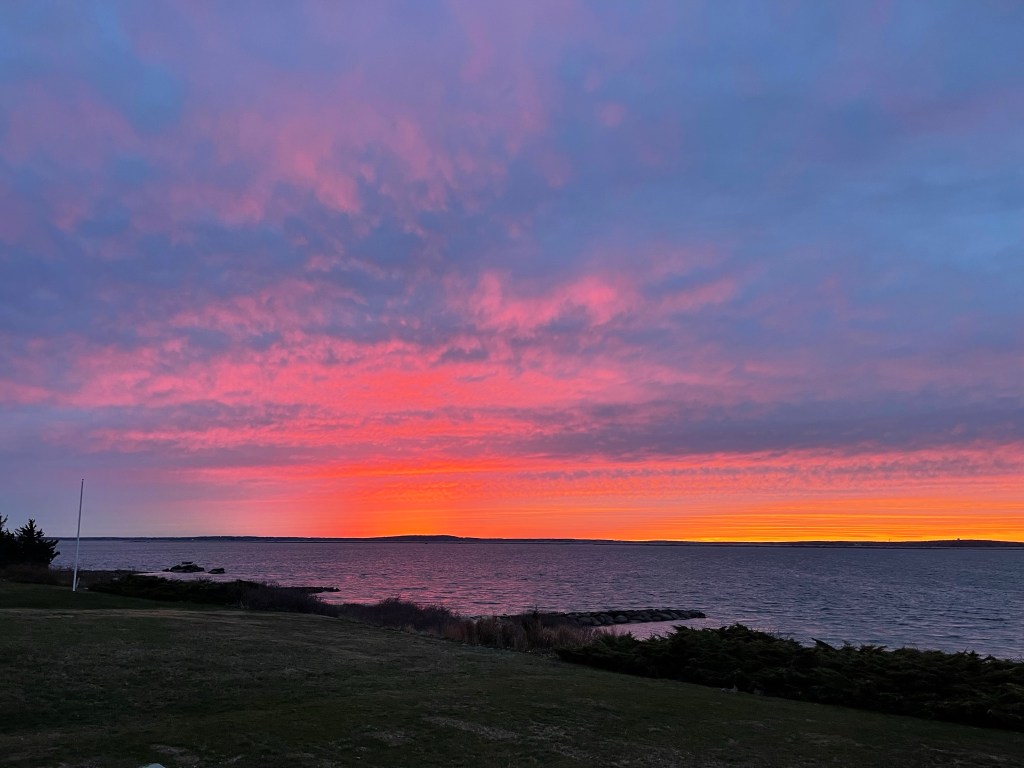
    Productivity and bold action have their place in this world, for progress depends on it. Progress for humanity, surely, but also for the individual. But we must remember too that we skate a line between Yin and Yang, and balance is the key. If Yang represents boldness and action, Yin represents temperance and reflection. It’s quite figuratively day and night, which may be why some of us find the orange hour in between to be our happiest place.

    Our best life is found in balance, and we feel the urge to lean in to both extremes now and then when our body and soul remind us of our imbalance. This disturbance of the Force (if you will) creates restlessness, which in turn triggers change. We all feel it in our own way. For me, it’s often the nagging question of “what’s next?” wrestling with the emphatic reply of “here and now”. Action calls, joy reminds. What will we listen to today?

    Somewhere along the way I’ve put aside some goals I’d been chasing for a lifetime. Somewhere along the way I’ve leaned into different objectives for the balance of my time. We are each in the process of becoming what’s next, and possibly even savoring what it is we’ve become thus far. Life is balance between the two, represented by orange and order. That balance is where the joy is.

    Orange Hour
  • Words

    “Every word is a messenger. Some have wings; some are filled with fire; some are filled with death.” — Mary Oliver, Sand Dabs, Six

    “A word is no light matter. Words have with truth been called fossil poetry, each, that is, a symbol of a creative thought.” — Edith Hamilton, The Greek Way

    Some of us admit to being word geeks. It’s not the complexity of the word, not even its origin (itself a delicious riddle), but the meaning packed into the deliberate placement of that word that draws us in. We become more deliberate readers as a result. This is where the magic in poetry, in music, and in prose resides. Surely something to aspire to in our own writing, and in our very conversations. Words matter a great deal.

    When someone says they would like to have a word with you, why does it have a negative connotation? Is it the singularity inferred in the statement? It’s not a conversation, it’s a word. What they mean, of course, is they want to tell you something while you actively listen to them. We have two ears and one mouth: we should always be actively listening more than we talk. The loudest talkers are rarely the most powerful people in the room, would you agree? We should learn to find the clues hidden in plain sight. Active listening is a superpower.

    As it is with people, so too with words. If writing has taught me anything, it’s to read more deliberately. Every word, placed just so, means something to a great author or poet. So it should mean something to us.