Tag: Memento Mori

  • That Better Character

    “In uncertainty I am certain that underneath their topmost layers of frailty men want to be good and want to be loved. Indeed, most of their vices are attempted short cuts to love. When a man comes to die, no matter what his talents and influence and genius, if he dies unloved his life must be a failure to him and his dying a cold horror. It seems to me that if you or I must choose between two courses of thought or action, we should remember our dying and try so to live that our death brings no pleasure to the world.” ― John Steinbeck, East of Eden

    Most people remember the latter half of this quote, but I love the entire paragraph. Perhaps because it’s a reminder that we’re all deeply-layered characters, with good bits and not-so-good. Life is a journey of discovering each layer and being proud or chagrined by what we find. In the end, how we’re remembered is for what we show the world of ourselves.

    Memento mori. So show up. Be that better character in the time that we have left. Not to be remembered differently, but to be more engaged and interested in all that we encounter, top to bottom. This is our life, such that it is. So what of it will we double down on? Set the course accordingly.

  • Our Ever After

    “Whoever is too well off always wants to try something different!” — Jacob and Wilhelm Grimm, The Mouse, the Bird, and the Sausage

    This strange little fairy tale about a bird, mouse and a sausage living together is undeniably odd (beginning with the sausage), yet it carries important lessons. When did we stop paying attention to the lessons? Adults always forget them, which is why the world feels that it’s a step or two away from disaster. Yet somehow we carry on anyway.

    For those inclined not to follow random links in blog posts, the lesson is essentially the quote above. And maybe to not let your sausage friend wander around in the woods. Or to choose friends that aren’t so tasty to others. Really, the lessons are where you find them. But for our purposes, let’s stick with the quote above.

    There’s a whole lot of people who are so comfortable in their lives that they feel compelled to find things to be outraged about. Call it smug indignation if you like. We’ve learn who they are because they’re inclined to tell us just how terrible things are. Life is outrageous. Life is unfair. Don’t we deserve better than this?

    Life will eat us alive one day (Memento mori). We ought to know that by now. Just what are we going to do about it? It’s all a matter of focus. Instead of scarcity and unfairness, why not try gratitude for what is going well for us today. Tomorrow will take care of itself. If we arrive there to see it.

    Being grateful and content with where we are is something we grow into as we experience life. The restlessness of our youth may be replaced by the wisdom of our age. At least if we stop listening to talking heads telling us how outraged we ought to be. Life is nothing but a big fairy tale. We believe the stories we want to believe, and that largely determines whether we’ll live happily ever after. In case anyone missed the lesson, our ever after is largely up to us.

  • Stay in Touch

    I was talking with my bride about a close family member who is slipping into his final days. She wondered if, having outlived many of his friends, his funeral and wake would be well-attended. The most crowded funerals are for the young, aren’t they? Those who die too soon leave behind a mass of people who know who they were in that moment. But what of the old? Are we doomed to live a lonely “too long”, like a character in Eleanor Rigby?

    I don’t believe it to be so. We should keep refreshing our mass of people right to the end. Our ripple is a lifetime obligation of making and maintaining connection. Not for a crowded funeral, but for the ripple that carries on well after the ceremony is a memory. And more, for the ripple that courses through us for having known the people we form relationships with.

    When we lose touch with people, they slip away from our lives. Sometimes this is desired, sometimes life just gets in the way. It’s up to us to stay in touch. Of course, it’s up to them too. The phone works both ways, as they say. But I believe we each ought to lead the charge on such things. Instead of saying the phone works both ways, why not say, if not us, then who? We have agency. If that person we wish to stay connected with opts out, well, we honored our part. And life goes on.

    When I think about people I used to know who are no longer in my life, I think of them just the same whether that person is alive or has passed away. Our time together has ended, but the memories remain. Hopefully there’s enough joy in those memories that we are warmed in our recollection. It’s unfinished business that haunts us, not the good memories. Relationships aren’t meant to be transactional—’tis always best to finish our business before we say goodbye, perhaps for the last time.

    The streak that was this blog being published every day ended earlier this week. Honestly, I didn’t expect to be back so soon with two posts this week. I’ve decided that the streak isn’t what matters to me anymore, it’s having something to say and writing it that matters to me. Like reaching out to an old friend, we have agency over how we approach everything that resonates in our lives. The blog is less a daily ritual to me now than it was when I paused it. Perhaps this and future posts are simply my way to stay in touch.

    We’ll have to see if it ripples.

  • Rules to Live By

    In the morning, always hydrate before caffeinating, always do both before eating anything.

    Later in the day, always hydrate and eat something before drinking alcohol.

    Eat protein before carbs. Make those carbs as complex as palatable.

    Write before the day becomes insane. Even when you feel you’ll have time later, life doesn’t play by the same rules.

    Same goes for exercise.

    Breath through your nose far more than your mouth.

    Learn CPR.

    Focus on one task at a time. Multi-tasking is nothing but partial focus on too many things.

    Listen. When two people are talking at the same time, nothing is heard. If two people are attempting to talk to you at the same time, make eye contact with the one who initiated the conversation until they’ve stated what they wanted to say, then make eye contact with the other. They’ll both feel heard, and maybe learn to respect boundaries.

    Chaos knows no boundaries. Back away from chaos.

    Know where the exits are. Not just the door you walked in through, but the other exits. If you don’t see another viable exit, you are in the wrong place.

    There is energy in a crowd, but never be caught in the middle should things go terribly wrong. Don’t live in fear, simply be aware.

    Always read a book before turning on the television or doom-scrolling. Ten pages a day will change your life. More as time allows.

    Read classic books. They’re classics for a reason.

    Stretch more frequently than you believe you need to.

    Schedule physicals, dental appointments and physical therapy first thing in the morning, before life beats you and them down.

    Pack light. Layers. Socks stuffed in the shoes. Leave half of what you want to take behind so you have room in your bag to bring something home with you.

    Don’t buy souvenirs that won’t make you miss the place you bought it at. This automatically eliminates airport gift shops and Soft as a Grape stores.

    Call your mother. She’ll appreciate it more than she’ll let on.

    Call your father too. Don’t just ask Mom to pass the phone. He’d call you more often himself, but he wants you to stop clinging to the nest and fly (He loves to watch you soar).

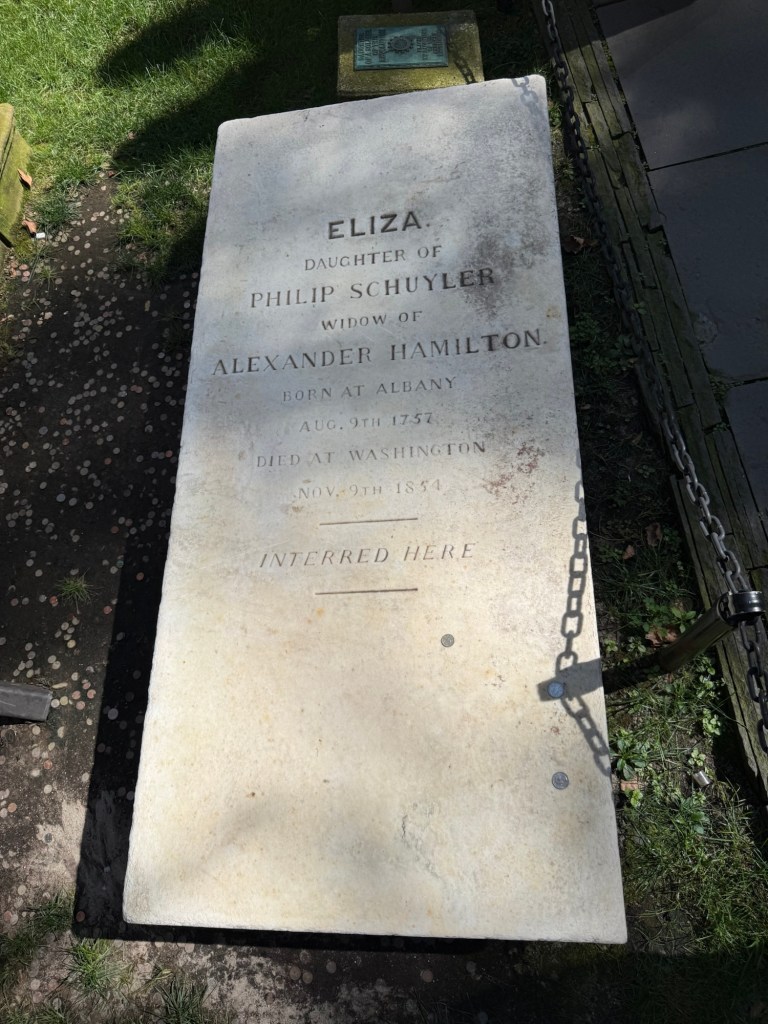
    Visit a cemetery and remember those who are no longer with us. Memento mori.

    Live as if you were dying. You don’t have to listen to the song to embrace the philosophy.

    Instead of sleeping in, go to bed earlier.

    Take all advice given freely for what it’s worth.

  • Let Go, and Let’s Go!

    “All great changes are preceded by chaos.” — Deepak Chopra

    If the opposite of chaos is order, then if follows that living an orderly life—what we may call our ordinary life—leads to more of the same. We find ourselves in a comfortable state and remain there, sometimes for years, until something changes. That change may feel chaotic, because it has disrupted what was our status quo. A rapid decline in health, job loss, death of a loved one, a politician who represents all that we feel is wrong in the world ascending to power—each represents rapid change dressed in what feels like chaos. What was orderly now feels chaotic. What’s so great about that?

    When chaos sweeps over us because of things out of our control, we feel the full weight of that change. It follows that it’s far better to implement change than to have change implemented upon us. The time to implement change is when things feel quite ordinary and rather comfortable. We must learn to introduce chaos to our routine far sooner than we’d like to. But it doesn’t have to feel chaotic if we change soon enough. It simply feels like a small step in a different direction. Repeat that step enough times and extraordinary things may happen. And what is extraordinary but a place far beyond ordinary?

    Ah, but this frenetic world we live in doesn’t always have the patience to wait for our precious habit formation to take shape. Fortune favors the bold, as they say. The alternative to incremental change may be to jump right into the deep end far sooner than we may be comfortable with. But what is comfort but an embrace of the status quo? Everything changes, including us.

    To change one’s life:
    1. Start immediately.
    2. Do it flamboyantly.
    3. No exceptions.
    — William James

    The thing is, we all die eventually (Memento mori). But why die incrementally, watching our lives erode, when we may boldly take the reigns on building a better life despite (and through) all the changes? Bold is immediate, it’s viewed as flamboyant, and it leads us to exceptional. The best way to remove a bandaid is to rip it right off. The moment of shock will wear off, and we adjust to the new normal. To embrace the chaos that ensues in rapid change is to align with Friedrich Nietzsche’s famous phrase, “That which does not kill us makes us stronger”.

    Seek stronger. Making chaos ordinary is nothing but embracing change as it comes. More, it’s being an agent of change in our own lives through deliberate action. Deciding what to be and going on to be it, again and again. Just think of the exciting stories we may write as bold change agents surfing the chaos of a lifetime, right to the end. Let go, and let’s go!

  • Still in the Game

    Isn’t it strange
    That princes and kings,
    And clowns that caper
    In sawdust rings,
    And common people
    Like you and me
    Are builders for eternity?

    Each is given a bag of tools,
    A shapeless mass,
    A book of rules;
    And each must make—
    Ere life is flown—
    A stumbling block
    Or a stepping stone.
    — R.L. Sharpe, A Bag of Tools

    This poem has been lingering in my life for decades. I don’t know when, really, for it sat quietly on the page of a book, corner folded over and book cover flap also marking the page, awaiting its time to be rediscovered. Welcome back.

    Life surely has flown. In fact it’s actively flying quite rapidly. And we are still in the game. We, with our bags of tools and our grand ideas taking shape, following the rules or breaking them. What matters in the end is how we use the time. Ben Franklin reminded us not to squander it, for it is the stuff of life. Has life been fully stuffed or are we feeling a little unfulfilled? What’s done is done, and what will be will be. Do something with what all that’s left.

    There are so many ways to stumble or to squander. Ah, but there remains so many ways to climb ahead to something greater for ourselves. We ought to rise to meet the moment, don’t you think? Surely, this time capsule of a poem, this gift from a forgotten day brought to the present and now shared with you, dear reader, offers some clue for what to do now. This is no time to clown around.

  • Learning to See

    How you learn to see
    The hope eternally
    When you’re sure to leave
    Oh, leave at last
    — The Avett Brothers, Morning Song

    This blog post is being written exactly one hour later than normal, and yet at the same time as yesterday. Someone’s idea of daylight savings time flips the clock forward or backward in their respective seasons, and we all wonder why. Like most foolish rituals, it sticks because some people don’t like change. So here we are once again, changing the clocks and the morning ritual of writing before the madness of the day. What time is it really? It’s time to let go of what was.

    Lately the house has experienced changes. As the days grow longer, the communal vibe felt around the holidays fades further from memory. We often don’t stop our own scramble through the days long enough to feel the changes. Work and family commitments, a relentless winter and the rapidity of a finite life hold our attention. The day-to-day routine feels the same, but there are subtle changes.

    The dog, normally walking effervescent joy, has a look in her eyes that says something is off. Her appetite is off, her walks are more distracted. Something has changed in her mind. And then there’s the cat, normally a little ball of hate around the dog anyway, she’s gone out of her way to express it lately. Is the dog being bullied by the cat? Are they both feeling scarcity of attention and expressing it through their interaction with each other? When exactly did I become a pet psychiatrist? Pets react to change just as we humans do. They’re usually at least one paw ahead of us.

    There are forces larger than ourselves at work in the universe. Take that to mean whatever you want it to mean in your own march to infinity, but to me, some measure of hope begins with stepping away from the self and connecting with others. We are here on this brief dance through time together. Tell me, what do we really see? The changes are within us, seeking expression in the time we are given. Life goes on, and so to must we. One subtle step towards the infinite after the other.

  • It’s Our Time Now

    “The final mystery is oneself. When one has weighed the sun in the balance, and measured the steps of the moon, and mapped out the seven heavens star by star, there still remains oneself. Who can calculate the orbit of his own soul?” — Oscar Wilde, De Profundis

    The end of the Winter Olympics brought with it the usual mixed feelings. On the one hand, there’s a glow from witnessing the pursuit of excellence that inspires and stimulates one’s own pursuit of arete. When we see elite athletes performing at a high level, it’s natural to ask what in the world we’re doing with our own precious life.

    The answer, friend, is the best that we can given the circumstances. We are on our own path of discovery. We are on our own climb to better. We may celebrate the excellence of others, but don’t dare to compare, for we know that comparison is the death of joy.

    The end of the Olympics also releases us from watching them, that we may go forth and do our own thing once again. We are in the business of optimization of the self, first and foremost, because that’s who we’ve got to spend the rest of this lifetime with. So take stock of what’s working and keep moving in that direction, but surely, also make note of what’s not working and begin to reinvent, remove and restore accordingly. For it’s our time now.

  • Extending the Joyride

    “Death is not an evil, because it frees us from all evils, and while it takes away good things, it takes away also the desire for them. Old age is the supreme evil, because it deprives us of all pleasures, leaving us only the appetite for them, and it brings with it all sufferings. Nevertheless, we fear death, and we desire old age.” — Giacomo Leopardi, Pensieri (Thoughts)

    Leopardi wrote this in his latter years, with understanding of the sufferings of old age. As his work goes, Pensieri was published unfinished. We all leave something unfinished when we leave this life. If our legacy is what we leave behind us, our unfulfilled potential is all that we never got around to. Thoreau’s “quiet desperation” is knowing the gap exists between the two.

    I’m one of those people who say to the world that I will live to be 100. I know the statement is foolhardy, brash and unrealistic. It’s said tongue-in-cheek, like many things I say. We simply don’t know when our expiration date is. Given the rate of decline in our latter years that I’ve observed in the generations ahead of mine, I aspire only for good health and sound mind for as long as possible, that I may kick the sufferings of old age down the curb right to the end of this joyride.

    Each day we wrestle with fear and desire. The trick to aging gracefully is to focus on filling those gaps in our potential with applied experience. We produce and share and move on to the next stage of our lives to the end of our days. If our health span allows, we may expand our legacy. So above all else, it seems, focus on increasing that health span. Fitness and mental acuity are far better desires than simply growing old.

  • Life and Love and Wings

    i thank You God for most this amazing
    day: for the leaping greenly spirits of trees
    and a blue true dream of sky; and for everything
    which is natural which is infinite which is yes

    (i who have died am alive again today,
    and this is the sun’s birthday; this is the birth
    day of life and of love and wings: and of the gay
    great happening illimitably earth)

    how should tasting touching hearing seeing
    breathing any—lifted from the no
    of all nothing—human merely being
    doubt unimaginable You?

    (now the ears of my ears awake and
    now the eyes of my eyes are opened)

    — E. E. Cummings, i thank You God for this amazing

    We dwell so often on our limitations; Limited time, limited capacity for learning new things or for being patient with the things in our life that overstay their welcome. We are bound by commitments, with reasons, with a lack of imagination for breaking free from all of that and living an expansive life. We are locked into routine and measure our days incrementally. How are we to grow when we are forever held captive by a lack of audace créatrice (creative audacity)?

    To be unbounded and unlimited is of course a fantasy. We all will die one day (memento mori). Infinite growth is not for mere mortals. And yet we may live a far more expansive life than we mortals usually attempt. We are no more and no less than what we do with our time.

    Why worry about all that today when we can simply do what must be done and defer hopes and dreams indefinitely? Because now is all we have. Growing into our possibility begins now. It always has and always will be so. But thinking in terms like “always” is its own trap. Because it lets us off the hook of immediacy. We must steer clear of such traps and simply think of now. For this is the birth day of life and of love and wings. So do begin.