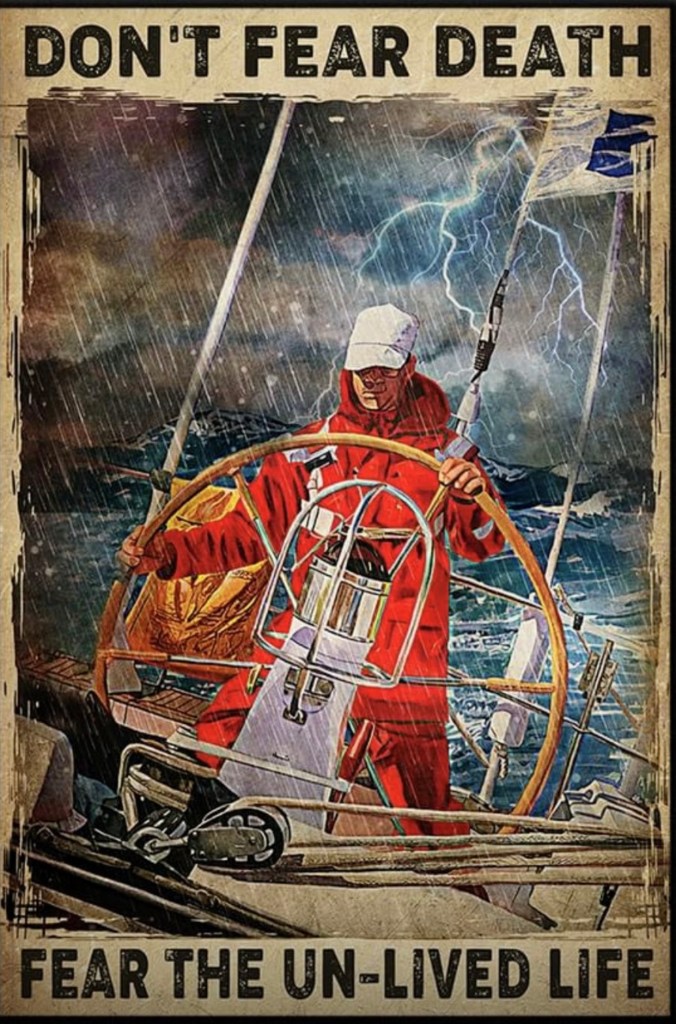
Tag: Memento Mori

  • Soundtrack Memories

    In the last few days, a trio of musicians have passed away. They say these things happen in threes, and there you go. Jimmy Buffett, Steve Harwell from Smash Mouth and Gary Wright all passed away within a couple of days of each other. Each is a part of our soundtrack in their own way, and certain songs remind us of special moments in our lives when it was playing. Memories are funny things, and songs, like scents, bring the past back in waves.

    Well, I think it’s time to get ready
    To realize just what I have found
    I have lived only half of what I am
    It’s all clear to me now
    My heart is on fire

    — Gary Wright, Love Is Alive

    There always seemed to be a Gary Wright song playing for awhile there. Especially Dream Weaver but Love is Alive wasn’t far behind. Together they’re an integral part of the life of anyone who listened to popular music in the 70’s. Gary was a musician on George Harrison’s All Things Must Pass album, which seems appropriate to bring up at the moment. We keep seeing examples of it, and our lesson is clear: Memento mori, friend. Carpe diem…

    So much to do, so much to see
    So what’s wrong with taking the back streets?
    You’ll never know if you don’t go
    You’ll never shine if you don’t glow
    Hey now, you’re an all star
    Get your game on, go play
    Hey now, you’re a rock star
    Get the show on, get paid
    And all that glitters is gold
    Only shooting stars break the mold

    — Smash Mouth, All Star

    Smash Mouth was a shooting star at a time when the entire music industry was swirling with exciting new music. I’ve often thought I’d use these lyrics one day, I just didn’t anticipate it would be at the death of their lead singer. The thing about shooting stars is that they burn out quickly. Harwell’s lifestyle apparently led to his early demise at 56. I know someone trying to kill themselves with alcohol and had a cousin who did. Alcohol can be a demon that grabs ahold of its victim and drags them down to depths unexpected when they start dancing with it. I feel for his family and friends.

    Most mysterious calling harbor
    So far but yet so near
    I can see the day when my hair’s full gray
    And I finally disappear
    — Jimmy Buffett, One Particular Harbor

    Jimmy Buffett had twenty years on Harwell, but it still felt like he passed way too soon. His impact on my own soundtrack is obvious, as I’ve inserted him into three blog posts in the three days since I heard that he’d passed away. Each of these musicians filled some part of our lives, and by extension the lives of those who live on the periphery and catch the tune as they’re making their own memories. Music and memories are viral in that way. The music lives on, as we all say, but the world feels a bit emptier today than it did just a few days ago. Each of them filled the world with song. Doesn’t it fall on us to pick up where they left off?

  • Winds of Time

    I’m growing older but not up
    My metabolic rate is pleasantly stuck
    Let those winds of time blow over my head
    I’d rather die while I’m livin’ than live while I’m dead
    — Jimmy Buffett, I’m Growing Older But Not Up

    Two events happened concurrently over the last few days that rocked the boat for me. Jimmy Buffett passed away, following Gordon Lightfoot, Harry Belafonte and several other performers to Rock & Roll heaven, while signaling once again that the party doesn’t go on indefinitely. And less important to the world at large, a building I once worked at with many motivated change agents was announced to be closing. The subsequent rehashing of memories from people I haven’t seen in years triggered even more nostalgia for me. When things are subtracted from the sum of our lives, we inevitably feel the loss. But those winds of change keep blowing, and we must learn to navigate them as best we can.

    Nothing drives change like time. And we have blessedly little control over the sweeping changes it inflicts upon us all. Realizing this is either the moment that panic sets in and we scurry to grab control over things we will never control or the moment we accept the circumstances of being born into this mad situation. Amor fati: love of fate. The universe isn’t ours to control, only our reaction to the forces blowing over us.

    The thing we sometimes forget about growing older is how lucky we are for the gift of time. Those extra days offer an accumulation of memories and experiences that make life more complete. Alternatively, we might resist change and hold on for dear life to things that were never meant to be forever things. We ourselves aren’t forever things. Memento mori. So don’t postpone living. We can’t live when we’re dead.

  • To All That Is Great in Us

    “Death destroys a man, but the idea of death saves him—that is the best account of it that has been yet given. Squalor and tragedy can beckon to all that is great in us; and strengthen the wings of love.” ― E.M. Forster, Howards End

    We are, each of us, on borrowed time. There’s no denying that, even as we prefer to focus on other things in our lives. The reminder, Memento mori, necessarily prods us to the urgency of action. It’s now or never.

    We all, each of us, have greatness within us. There’s no denying the unique mix of billion year old carbon, energy and magic that came together to spit each of us out onto the dance for for our singular tango with life. We either draw upon that greatness or squander it in all the ways humans are great at squandering: procrastination, distraction, sloth, mis-directed prioritization, etc. We are the sum of what we put in to the time we have, divided by the forces that act upon us. We can’t control everything, but we can control some things.

    I don’t have all the answers. In fact, I really have no idea how today will turn out, let alone the balance of my time on this planet. But I know I can influence certain outcomes with my full attention. Maybe that’s enough to tap into that evasive greatness. Surely I may get closer for having tried.

  • Expanding the Fullness

    “Five decades ago, some very kind people in Japan slipped me the secret: you can dramatically extend life—not by multiplying the number of your years, but by expanding the fullness of your moments.” ― Shinzen Young, The Science of Enlightenment: How Meditation Works

    “Pay more attention to every moment, however mundane: to find novelty not by doing radically different things but by plunging more deeply into the life you already have.” — Shinzen Young

    I don’t meditate, not in the traditional sense anyway. Instead I remain present with whatever the world offers me. With a new puppy I’m very much in her moments as she learns her new environment and sorts out the complexity of living with two cats who aren’t yet pleased to share the limelight with a new being. Some things take time.

    The trick is in savoring our presence right here and now. We ought to immerse ourselves in whatever we’re doing, but we get caught up in the minutia of everyday living instead. We react instead of absorb, and in doing so, sometimes miss the nuance of the moment. But seeing how a new puppy navigates the garden changes how you look at it yourself. Zooming out a bit, you also see how the world reacts to the new puppy. Fellow humans gush, while felines feign annoyed indifference. House wrens chirp threateningly when the pup gets too close to their nest, betraying something else happening there that I wasn’t previously aware of. When we pay attention to the world it opens up for us in fascinating new ways.

    The other day I sat in the sun while my brother slept, exhausted from sleepless nights from the pain he finds himself in as he undergoes a third round of radiation. He’s got limited time now, and the quality of the time he does have is greatly diminished by the treatment plan he’s chosen. Despite the underlying tragedy of his situation, my own in that moment was rather pleasant, and I was struck by the contrast as the two of us occupied a small corner of the world in very different phases of our respective health spans. Contrast aside, or perhaps serving as an amplifier, I found myself very much in the moment.

    It isn’t lost on me, the end of life struggles of one person against the beginning of life awakening of a puppy. And me? Somewhere in between, living day-by-day and doing my best to savor the plunge.

  • Now Happening

    “It’s the very last thing, isn’t it, we feel grateful for: having happened. You know, you needn’t have happened. You needn’t have happened. But you did happen.” — Douglas Harding

    My brother was told he had six months left to live. This was naturally shocking to him, less so for some of us who have watched his decline. Early on I used to speak in stoic terms about memento mori and such things, but he doesn’t need such reminders, he’s processing it in the moment. So why don’t we? Because we aren’t told in such concrete terms what our expiration date is. Yet it’s there, lingering in the distance, someday much sooner than we might believe.

    Sometimes we over-complicate this existence thing, forgetting the gift for all the friction and pettiness of living. Gratitude for having happened at all is a wonderful sentiment, and one we ought to embrace more. Make each day a celebration worthy of the gift. For it’s more than just happening, it is a happening. Dance with it.

  • The Right Time

    I spent a lifetime
    Waiting for the right time
    Now that you’re near
    The time is here, at last
    It’s now or never
    Come hold me tight
    Kiss me my darling
    Be mine tonight
    — Elvis Presley, It’s Now or Never

    What is your five year plan? Do you have one? Or should we simply live in the moment? Is there purpose in the moment or only intent? Intent can cause all kinds of problems if it conflicts with purpose. Some say that five years is too long a period of time, entire cultures (looking at you, Japan) may think it too limited a scope. A long view is seeing the forest for the trees and setting the compass heading, while a short view is the immediacy of successfully executing this next step. It’s equally fair to say that we must know our general direction or we’ll walk in circles as it is to say it doesn’t matter where we were heading if we stumble and fall off the cliff.

    The lens of a lifetime is simply too broad a focus because there are only so many things we can focus on at any given time. Given this, it’s better to set auto-pilot whenever possible so we can get back to the business of now. 401(k) plans are helpful because you set it and forget it. We can say the same about healthy lifetime habits like exercise and flossing. Such tasks are best left to auto-pilot, but we can’t very well live our life on auto-pilot, for one day we’ll look around and find we’ve missed everything that mattered.

    Using the lens of time buckets becomes a way of understanding what our priorities ought to be in this particular phase of our lives. We only have so many years to do physical things, only so many years to be a parent, only so many primary earning years… it all adds up to a lifetime of only so many years. Within that lens of time buckets, our reason for being, raison d’etre, becomes more focused. Asking big questions about the entirety of our lives is impossible to answer, because we change so much over our lifetime. My raison d’etre at 20 was entirely different from my raison d’etre at 40. Looking ahead to someday 60 or 80 (if we’re so bold as to believe we’ll reach it), you see the reason changing dramatically over and over again. Sure, family and friendships will matter at any age, but a purposeful hike of the Appalachian Trail is rapidly shrinking down in relevance. It’s fair to say it’s now or never for such a life goal.

    Waiting for the right time seems counterintuitive when we become hyper aware of our own mortality. Memento mori naturally leads to carpe diem, doesn’t it? It turns out it mostly doesn’t. Most people just live their lives as best they can. We can’t do everything, but we can surely try to do the most important things within the context of the time bucket we’re currently residing in. The time is always here for something. Prioritizing the really essential things for this time lends focus and urgency to the moment, enabling us to seize the day.

  • The Magic of Applied Attention

    “We’re all going to die, all of us, what a circus! That alone should make us love each other but it doesn’t. We are terrorized and flattened by trivialities, we are eaten up by nothing.” — Charles Bukowski

    There is a Persian lime tree growing in a large pot on the sunny deck behind my house. This spring there were more than a hundred blossoms on this tree, each developing into tiny fruit that promised a bumper crop of limes. But after a particularly angry thunder storm and torrential downpour dozens of those tiny fruits scattered the deck, their tart potential over before they really began. While mourning the loss of so may limes, I took solace in the dozens of fruit still developing on the tree. It seems the tree had culled itself that it might focus on the ripe potential of the fruit that remained.

    We each bear so much in our lifetime, holding on to things we ought to shed to focus on the essential few. It’s okay to let go of the trivial, that we might nurture the truly important things in our lives. Letting go is painful, but not as painful as diminishing our best work by carrying more than we should.

    Little by little,
    as you left their voice behind,
    the stars began to burn
    through the sheets of clouds,
    and there was a new voice
    which you slowly
    recognized as your own,
    that kept you company
    as you strode deeper and deeper
    into the world,
    determined to do
    the only thing you could do —
    determined to save
    the only life that you could save.

    — Mary Oliver, The Journey

    The night after the thunderstorm, I spent an evening with friends, throwing axes at a target drawn on a wooden wall and building fragile wooden castles in the air (Jenga). There is a unique strategy for each, naturally, being so very different from each other in practice. But there are also similarities. Besides each pursuit using wood, it was the act of applied attention that is common to both. To be good at either you must simply get out of your own head and focus on successfully completing the task at hand. One might utilize this in every pursuit, from writing to navigating any of the essential tasks that fill one’s day.

    We ought to cherish our time together, forgetting the trivial affronts that life throws at us. We ought to find our own voice in a world full of people waiting for us to shut up that they may say something clever. We ought to direct our attention inward, to the ripe potential of our own ideas, calling us to truth and clarity. We know, deep down, that we won’t survive this, but if we give ourselves the time to focus, we may just yet produce something substantial anyway.

  • The World Lies Waiting

    “Between the wish and the thing the world lies waiting.“ — Cormac McCarthy, All the Pretty Horses

    “The world is quite ruthless in selecting between the dream and the reality, even where we will not.” — Cormac McCarthy, All the Pretty Horses

    When those who have achieved mastery in their craft leave this world, what are we to do but reflect on their work? But something else stirs in their passing: Memento mori. A whispered reminder that we too will slip away one day, work and dreams of what might be be damned. It’s now or never, friend. Carpe diem.

    This is the urgency of living. This is the call to produce that which must be finished in our time. Between the wish and the thing the world lies waiting. But the world deals in reality, not dreams. We must realize the best in us through our actions.

    We must make the most of our days.

  • Aware in the Moment

    “Später ist zu spät.“ (Later is too late) — Peter Altenberg

    This morning I’m driving my daughter to the airport. Once again our time together was all too brief. We each pack a lot into our days, which means never enough time in the same attentive moment, but we make the time that we do have matter. None of us is perfect in our efficiency: We all waste time on unimportant things at the expense of the essential. But awareness helps with prioritization.

    Memento mori—Remember we all must die, one day hopefully many years from now. Or perhaps sooner, we simply don’t know for sure. But we ought to embrace that realization and do something about it. If not now, then when? Anything but now is a fool’s game.

    Whatever we are deferring that matters a great deal must be done now. There’s simply no guarantee for tomorrow. What would we do if we knew this was our last day together? We’d up our game, linger in moments, hug harder and be hyper-aware of everything. Let’s all hope for a longer timeline, but live with that urgency today anyway. Be aware in the moment. For it’s all that matters.

  • Optimizing the Interval

    “Several hours or several years of waiting is all the same when you have lost the illusion of being eternal.” — Jean-Paul Sartre, The Wall

    “Those who are truly decrepit, living corpses, so to speak, are the middle-aged, middle-class men and women who are stuck in their comfortable grooves and imagine that the status quo will last forever or else are so frightened it won’t that they have retreated into their mental bomb shelters to wait it out.” — Henry Miller

    On the face of it, this pair of quotes might feel morbid and dark, but they’re simply pointing out the obvious. Memento mori: we all must die, so what will we do with the time left to us? We ought to make it something worthwhile. And so it is that at some point in our lives we truly recognize that someday our time will end. That moment of realization until the last moment of our lives is our interval. We owe it to our fragile selves to optimize that interval.

    Given the outcome, shouldn’t we stack as many healthy, fully vibrant and alive days into that interval as possible? Lean in to consistent exercise and good nutrition, that we might not one day surprisingly soon erode into a shell of ourselves. Read the great books now, that we might build our foundation stronger, and sit at the table of the greatest minds awaiting our arrival. Contribute something tangible in this world, not to be remembered, but to sustain the positive momentum the best of humanity offers. These are worthy goals for an interval as shockingly brief as this.

    Several hours or several years are just the same, friends, we must seize what flees.