Tag: New Hampshire

  • Hiking Mount Willey, Mount Field and Mount Tom (and Back)

    I didn’t think this one through enough. An out and back using the same trail to hike three 4000 footers necessarily means you’re actually hiking five 4000 footers in a day. Ambitious. A bit reckless. A bit exhausting.

    10 miles round trip, with 4400 feet of elevation gain seems easy on paper. In practice the rock scrambles and ladders bridging impossibly steep sections made it a test of willpower. Some of those rock scrambles were borderline ladder territory as well. As wake-up calls go climbing the Willey Range Trail served as a good one. My heart was racing and my layers were shedding in no time. My mood bounced between exhilaration, despair and frustration with myself for not planning this hike a little better. But it was a quickly drafted plan B, and in hindsight, a good hike. Even if I wasn’t mentally ready for it.

    Mount Willey is 4255 feet tall and named after Samuel Willey and his family, who were killed in a landslide in 1926. Mount Field is 4327 feet and named after Darby Field, who made the first known ascent of Mount Washington in 1642. Mount Tom is 4052 feet tall and named after Thomas Crawford of Crawford Notch fame. The three peaks are relatively tame, other than the hike up the Willey Range Trail to the summit of Mount Willey. Approaching from the south, Willey is a tough ascent. It also makes a challenging descent. Starting and ending my hike with this trail set me up for a tough day. But I finished relatively healthy. And healthy with three more 4K’s checked off is enough for me.

    If you go, consider an approach from Crawford Notch or Mount Hale. The people who I ran into didn’t seem to have the same endurance test of ascending the Willey Range trail. For views, Willey and Field have some good observation spots, Tom not so much. But views are only part of the story. Finishing this hike and summiting these three 4000 footers was its own reward.

  • Walking the Frost Farm

    Sunday restlessness prompted a short road trip up to an apple orchard for some apples and pumpkins. This proved to be too brief, so it seemed a good day to revisit the Robert Frost Farm. Maybe it was his poem October that inspired me, or maybe the beautiful fall day, but either way he whispered to come over and stay awhile.

    The last visit to the Robert Frost Farmhouse was during a different time when you could actually walk about with a group of strangers and not think about the risk associated with doing so. This time we skipped the farmhouse and just walked the property and the adjacent Grinnell Farm conservation land. Walking slowly, reading the poems and biographical information that lined the path on the Robert Frost Farmhouse property, it was still a quick walk even with the extended walk through the conservation land. But still altogether necessary to be outside in the world, and especially in Frost’s former world.

    A lot changes over time. The farm was used after Frost sold it as an auto graveyard for a time, with the top soil scraped away and car parts scattered all through the property. Thankfully all that is gone now, and though the farmland itself isn’t what it once was, it’s grown back into a field that feels largely feel like you’re walking the land that Frost would have known. The land that inspired his writing. The auto parts are gone, but the wildlife, the farmhouse, and especially the stone walls remain largely as they were for Frost during his formative years as a poet. Having visited the farm on several occasions, I manage to draw something new out of the experience each time. I’ve toured the farmhouse and recommend it for a first-time visitor, but for me walking the path is what makes you feel like you’re a part of Robert Frost’s world, if only for a short time.

    Frost lived at the farmhouse from 1900 to 1911, honoring his grandfather’s wish to maintain the farm for at least a decade. It proved formative for him as a writer: “the core of all my writing was probably the free years that I had there.” He would leave this farm and rise to fame and relative fortune (for a poet) in the years that followed. He would read a poem he wrote at John F. Kennedy’s inauguration. And his words would ring in the minds of millions, including mine. And really, it all started here at a little farm in Derry, New Hampshire.

  • Autumn Leaves

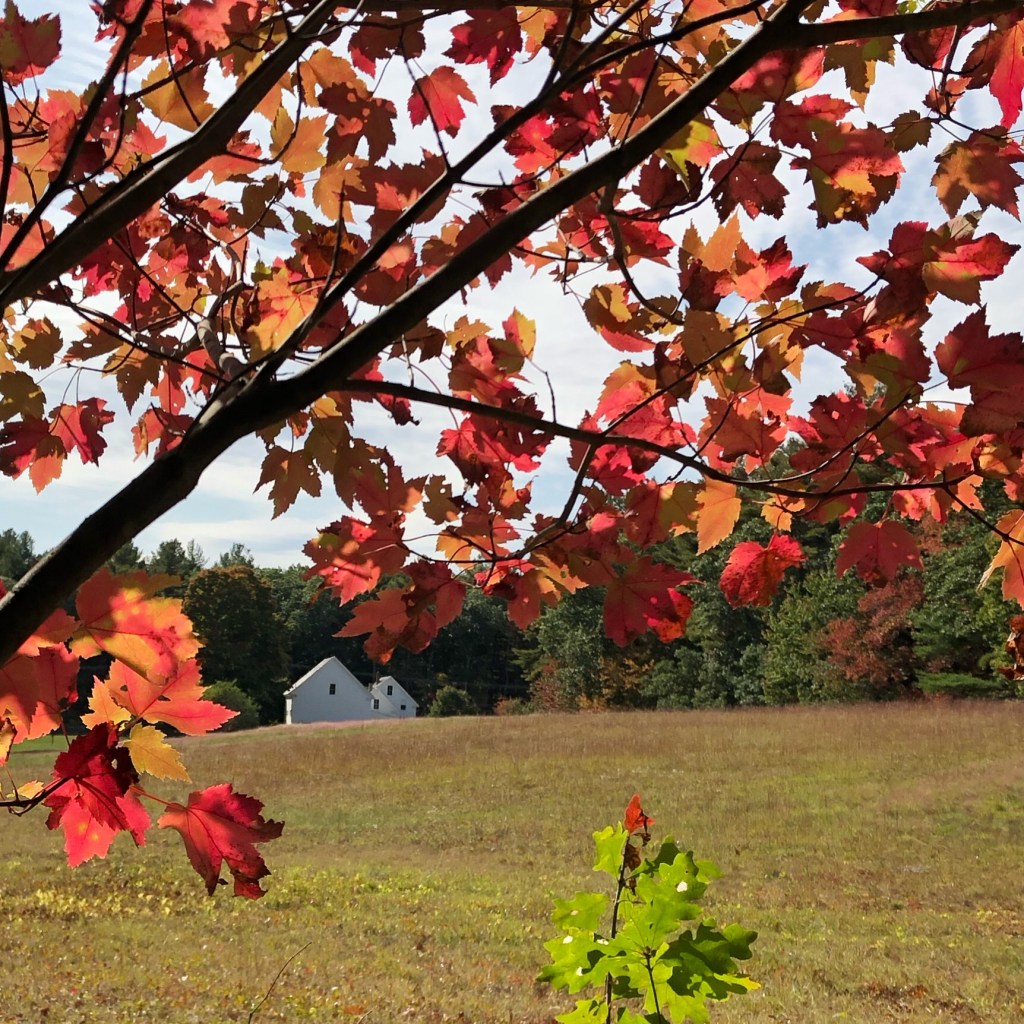
    It always happens this way. The leaves start to turn, and suddenly accelerate into a burst of color. Meanwhile, you’re busy with life, knowing the wave is washing over you but not getting out there enough to see it. The rains come, often with wind gusts, and it ends before you really noticed.

    The alternative is to notice. To walk away from the computer screen and see the foliage, feel the crisp air, smell the freshly fallen leaves mingle with the harvest. To experience the world on more than just the weekends. It seems to me a better way, noticing, and we ought to do more of it.

    Still, I have this stack of responsibilities that keep me at bay. Three big projects due for work, and home projects to finish, and other such to-do commitments. Those seem like compelling reasons to skip a walk amongst the trees today, don’t they? No?

    We remain reckless with our time, we humans, and it flies by regardless of our attention to the urgency of the matter. The autumn leaves come and go whether you linger amongst them or not. But the journey is more pleasant when you linger awhile.

    The image that stays with me most after a weekend in Acadia is not the rocky shore or the stunning sunrise on Cadillac or the lighthouse, but a single brilliant red tree along the Carriage Road. I imagine that the leaves have fallen off that tree in the stormy few days since I was there, but in my mind they remain, fluttering like Cardinals at a social event. And there’s the fleeting magic of fall foliage. The Autumn leaves are here today, gone tomorrow. Go have a look then.

  • For One September

    This is a good year to think about how we use our time. Working is necessary, but so is recreation. And family time. And all the rest of the segmented buckets of time. Use it well or lose it forever. I don’t suppose its a good time for international travel. Or going to concerts. Or standing in line at crowded amusement parks. But there are plenty of good uses of time that don’t involve those things, aren’t there? I think time with those you love is the best time investment you can make. I don’t believe that makes me an outlier.

    “We are actually awash with time and profligate in its abuse.” – Richard Koch, The 80/20 Principle

    Looking up from the frenzy of life and it’s the end of September. Granted, a lot has happened in September. And candidly I’ve personally had better Septembers. But this is the September I was given, and so I’m pressing on with finishing the month as best I can and, if Fortune favors me, moving on to October. If we’re all lucky we’ll make it to October and maybe even 2021 with some measure of hope for the future. But one day at a time. We’ve still got today to contend with.

    I think about the Koch quote: awash with time and profligate in its abuse. And tend to reflect on the abuses more than glow in the best uses. But isn’t that human nature? For all the wasted hours of opportunity, there have been moments of wonder sprinkled in too. And isn’t that the point? Life comes at us one way or the other, make your lemonade out of the lemons and your margaritas out of the limes. But rise to the occasion this day offers. Regrets are living in the past. Make use of now, before you squander this day too.

    “If you enjoyed it, time was well-spent.” – Orange Book Tweet

    When I look back on this month ten years from now, assuming I’ll still be dancing to the music in a decade, I’ll think of September for the loss of one remarkable man, hiking with friends and family, the home nest becoming full again as the fourth bird flew home, and for some remarkable moments in Acadia National Park. The rest – good and bad alike – blurs for me even now, even while we’re still in the month. But maybe that’s enough for one September.

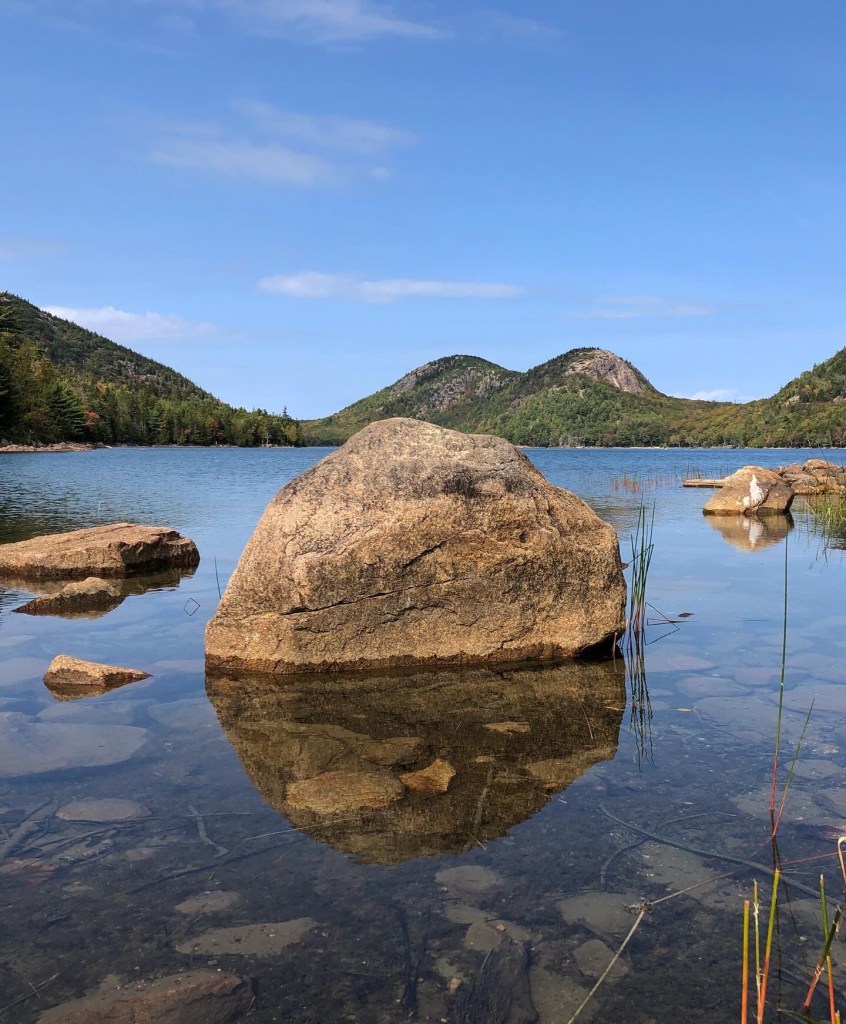
    Jordan Pond
  • In Search of a Border Marker

    In 1622 Captain John Mason was granted the land between the Kennebec River and the Merrimack River and the territory was named New Hampshire. The border with Massachusetts wasn’t the middle of the river, but a distance three miles north of the river’s shore. This made for an interesting, zig-zagging border that meanders along as the Merrimack River has from long before settlement by the English. That’s 398 years of continuous service as the official border between two similar yet completely different states. Barring wholesale changes in the borders that virtual sharp point should remain forever.

    Today, instead of eating lunch like a normal person I drove over to find the sharpest point on the border between Massachusetts and New Hampshire at a spot that on a map looked to be accessible in two directions. Using Google I zoomed in on the satellite image and decided the easiest possible way to get to this point was to walk the maintenance “road” that ran under the power lines adjacent to Route 213 in Methuen, Massachusetts. This worked out well until I reached the place where I needed to head north to the border point and scanned a swampy mess overgrown with cattails and impenetrable brush. This hike turned into a dead end but a good education on the lay of the land.

    Next option was to drive to the town transfer station, which was the next closest public land, to see if I could get to the woods that the border ran through that way. I had a great conversation with the woman weighing trucks in at the entrance, and she was politely curious about the quest that I was on, but received a no-go from the decision-makers on the other end of the radio. Not to be on this day. And that leaves me two options. Find another way in, potentially across private land, or to simply wait for the heart of winter when the ground is frozen solid to attempt the power line route again. I suppose there’s a third option of just dropping this pursuit of a border marker that may not even be there, but tell me, what’s the fun in that?

  • Collapsing the Space Between Us

    “Walkers pass tight lipped, eyes averted
    Only dogs tugging on leashes want to collapse the space between us”
    – Ken Burns, In the Social Distance

    A couple of days ago I had the audacity to post an opinion on Facebook and immediately faced the crush of for and against dialog that’s lasted far longer than the typical family picture flurry of activity. And those were friends, family and acquaintances, not anonymous Twitter trolls. But that’s the world we live in right now – divisive and reactionary. And yet we’re all basically the same people with a few differences of opinion.

    Ken Burns wrote a poem that describes the time we’re living in, and read it on a NY Times podcast. You can find the transcript here. This bit about collapsing the space between us got me thinking about a guy we met hiking on the Carter Dome last weekend. Or rather, we met his year old retriever Emma, who was way ahead of me on the list of 48 4000 footers. I’ve completed 10 since I started re-tracking this year. She’s completed 40! Her owner was an older gentleman, I’d place him at 70, but he was incredibly fit from hiking all the time. He mentioned that his last dog hiked Mount Adams 65 times!

    It occurred to me that I never learned his opinion on politics, nor he mine. Just people talking longer than they might have otherwise because of the dynamo swirling about us. Sure there was hiking in common, but really Emma was the bridge between us. When we parted her exuberance was the part that remained on my mind, apparently still, for there remains a glow of joy when I think about her rolling in the dirt. The world could use more dogs collapsing the space between us, and less media driving us apart.

  • Hiking the Carters

    A bit removed from the crowded trails of the Presidentials in the White Mountains, there are four summits in the Carter-Moriah Range with the name Carter. There’s a story that says the Carters were named for a man who used to hunt in these mountains, and that nearby Mount Hight is named after his hunting partner. Whether that’s actually true seems to be lost to history, but its as good a story as any and it sticks harder to fact with every retelling. Hight is where the views are, but not on this day. With the summit of Hight socked in we stuck with the Carters on a Sunday morning hike that lasted well into the afternoon. Our hike was a 14 mile endurance test for a sore ankle, and generally I was pleased with the results.

    Carter Dome is the southernmost summit and the tallest of the four. Running northeasterly from Carter Dome are South Carter, Middle Carter and North Carter Mountains. Each was deep in cloud cover and gusty wind on our hike, but Carter Dome seemed to be spared from the winds blasting the rest of the range. There are remnants of an old fire tower on Carter Dome, with scattered window glass on the ground right around the base. That glass, the concrete footings and a few rusted steel bolts are all that remain of a steel tower built in 1924. The tower lookout had a hut a mile away that became the AMC hut. The tower itself was replaced by spotter planes after World War II.

    The Carters feature several bald faces along the ridge line that offer beautiful views. But not on this day. Still, there’s something stunningly beautiful about being amongst the wind-whipped firs deep in the clouds. We felt a bit of ice mixed into the mist swirling about us, a clear sign that summer is drawing to a close. This was the first hike of the summer that I used every layer I brought, and it had me thinking about using a bigger pack as we shift towards autumn. The sun eventually came out in the valley below the range on our descent, warming and drying us off.

    One of my hiking partners informed me after the hike that we had over 4300 feet of elevation gain on the 14 mile hike. I believe it, but the challenge for me was the descent down the Imp Trail, which had me thinking about Game of Thrones while I navigated a nasty stretch of boulders, rocks and roots on the descent. Classic New Hampshire trail, this Imp Trail, and it tested the ankle and my new hiking boots synched up tight to support it. Not wanting to be left out, my knees both started complaining about halfway down the descent. This was about 12 miles into the 14 mile day, and they’d had just about enough of my aspirations. But we made it down to Route 16, walked the shoulder back to the cars, and headed to Gorham for some much needed pizza and beer.

    I love a good solo hike as much as anyone, but I was grateful for the company on this day. In fact, were it not for the invitation from my power-hiking friends I probably would have skipped the weekend altogether to give my ankle another week of rest. But sometimes we get a little too soft on ourselves, and the morning after the hike I believe I’m not the worse for wear. Good boots and hiking poles made all the difference for the ankle, and persistent friends made all the difference in my getting back on the trails. Another good lesson on living, with a nod to the couple who prompted me to shelve the excuses and get back out there.

  • Hiking the Franconia Ridge Trail: Little Haystack, Lincoln and Lafayette

    Today’s epic hike began with a 4 AM wake-up call (late by some hiker’s standards) and a drive two hours north to Lincoln, New Hampshire accompanied by Venus flirting with the crescent moon and old friend Orion pivoting in the sky.  A lot has happened since I last saw Orion, and we have a lot to catch up on.  But I focused on the road and the surprising number of cars driving north with me.  Who are all these people driving at 4:30 on a Saturday morning?  Are they up early or wrapping up a late Friday?  At least one car drifting out of their lane multiple times indicated the latter.

    The reason for the early morning was to beat the swarm of hikers that inevitably descend on the Falling Waters Trail.  This is one of the easiest  trailheads to get to, and one of the prettiest returns on your hiking investment with multiple waterfalls along the trail (even in a dry August) and a beautiful ridge line hike across Little Haystack Mountain to Mount Lincoln to Mount Lafayette along the Franconia Ridge Trail, which is a section of the Appalachian Trail (surely one of the AT’s most beautiful sections).  A short detour takes you down to Shining Rock, which lives up to its name with water flowing down a large granite face.  That detour doesn’t feel short when you turn around to hike the tenth of a mile back to the trail junction, but its worth the time.

    So knowing the trail would be crowded, I had my cloth mask at the ready and utilized it many times on the hike.  The majority of hikers brought masks with them and used them in tight quarters as you were passing each other.  I found myself wishing I’d brought a balaclava instead of a mask just for the ease of quickly pulling it up and down as you came across other hikers, and I came across a lot of hikers on this one, particularly on my descent of Lafayette to the Greenleaf Hut, which is open for business once again but requires a mask when you walk inside.  I was very ready for a cup of coffee when I visited, and a visit to the restrooms before beginning the descent down the Old Bridle Path.

    One thing that annoys me about crowded trails is trail etiquette.  In particular the people who leave their toilet paper after peeing next to or on the trail.  Pack it out with you, or if that grosses you out dig a cathole.  But don’t leave it clumped there for all to see.  A friend tells me that there are three times the normal number of people hiking this year because of COVID-19.   After my experience on Pierce/Eisenhower and now Little Haystack/Lincoln/Lafayette, I believe it.  But that doesn’t mean you shouldn’t respect the mountains.  Leave no trace people!

    Mount Lincoln is of course named after Abraham Lincoln.  As peaks go its pretty easy, sitting between Little Haystack and Lafayette.  Little Haystack is 760 feet above the 4000 foot mark but doesn’t qualify because its less than 200 feet to Lincoln, which is 5089 feet. As the taller of the two mountains, Lincoln gets the nod for the official 4000 footer list, but I can’t help but feel hiking Little Haystack and not getting credit for it makes up for hiking Tecumseh (3′ short of 4000) and getting credit.  The 48 giveth, the 48 taketh away…

    Mount Lafayette is named after Gilbert du Motier, Marquis de Lafayette, the French hero of the Revolutionary War and a heck of a singer in the Hamilton musical.  The mountain is 5249 feet and the most prominent of the three.  I lucked out with the weather, which offered beautiful views and a refreshing light breeze.  On my descent it started raining a bit, which didn’t amount to much.  But I bet it made some of the granite and basalt slippery.  Thankfully I was well past that by the time those few drops started falling.

    The loop up Falling Waters to Franconia Ridge Trail/AT to Old Bridle Path back to the parking lot is nine miles.  I’d like to say I did it solo, but I had a lot of company on the trail from my start at 6:15 to the return to the car at 1 PM.  I took a few photos of waterfalls, detoured to Shining Rock overlook, lingered for “brunch” on the summit of Lincoln, for some trail mix on the summit of Lafayette, and for coffee at the Greenleaf Hut and still completed the loop in under seven hours.  Not bad.  I didn’t set any speed records on the trail, and I’m just fine with that.  But I did lose five pounds in a day, even with rehydration and grazing on trail mix the entire drive back.  All-in-all a wonderful day in the White Mountains.

    img_8554

  • Change of State: Crickets & Krummholz

    In late July the crickets start chirping again, announcing the height of summer in New Hampshire. Early mornings just feel different month-to-month.  Sure, temperatures and the progress of the garden are a consideration, but beyond that the soundtrack at 5:30 is completely different in late July than it was in May or June.  Its all different really, beginning with those crickets.  But I’ve been here before, and know the seasons and the changes that will come over the next few months.  Changes come, but its all familiar change.

    Saturday, as I began my ascent above treeline, I took a few breaths of Balsam Fir-scented air and thought of Christmas.  When you get up in between the boreal and alpine zones where the 4000 footers dance in the windblown snow and ice, the trees are stunted and twisted and tough as nails.  Trees in this zone are called Krummholz, regardless of the species, and sometimes the term Krummholz describes this in-between zone too.  At treeline they’re typically Black Spruce and Balsam Firs and a few adventurous others like an occasional birch looking for a way out of the madness it rooted itself to.  Spruce are stoic but don’t flavor the air with aroma.  Firs make you feel like its Christmas in July.  Both struggle for footing and survival in the acidic, hard ground.  I’m a guest in their home, and silently offer gratitude for allowing me a visit.

    Hiking reinforces for me what I don’t know.  I can sit in my backyard in New Hampshire and pick out different trees and birds and bugs and generally know what they are because I live with them every day.  I can feel or hear the changes in seasons just by hearing some crickets announcing they’re back.  But my visits to the mountains are infrequent in comparison, and I’m less familiar with the migration patterns of birds and the trees themselves across the northern forest.  I heard a few bird calls on my last few hikes that are unfamiliar.  I looked at the forest and sedges and rushes and Mountain Cranberries and recognize that I don’t really know them all that well and couldn’t tell you one from the other.  I scanned the peaks on a clear day and recognize the famous Presidents, but not many of the others.  I was in the same state (New Hampshire), but in a completely different state (uncertainty).

    I’m feeling restless in the familiar lately – a sure sign that I need to get out and see more.  A few hours in a different zone reminded me that the unfamiliar isn’t all that far away.  And I’m reminded again of something Pico Iyer wrote that I quoted a few posts ago: “ecstasy” (“ex-stasis”) tells us that our highest moments come when we’re not stationary”.  To honor the restless spirit inside of us and just get out there to find our highest moments.  It seems a noble pursuit on this random Monday.  The crickets have announced that time is indeed moving along, and the Krummholz remind us that life isn’t always easy but if you hold on you might just survive long enough to see a few things.  Surely a good reminder for this crazy year when the familiar isn’t all that familiar and we’re all a bit restless.

  • Hiking Pierce and Eisenhower

    201 years ago, in 1819, a father and son team of Abel and Ethan Allen Crawford cut an 8.5-mile hiking trail from what is today called Crawford Notch to the summit of Mount Washington’s summit.  A year later, Ethan Allen would guide an expedition up that trail, which became known then and to today as Crawford’s Path.  That group would name most of the mountains they saw after the early United States Presidents: Washington, Adams, Jefferson, Madison and Monroe. That we hiked on the oldest continuously maintained hiking trail in the United States wasn’t lost on me.  People have been walking or riding horses on this path since many of the Founding Fathers were alive.  The Crawford Path is a bridge of sorts, and 200 years later I hiked part of it to traverse the summits named for two Presidents who came after the trail was first cut: Mount Pierce and Mount Eisenhower.

    Franklin Pierce was the 14th man to be President, and the only one ever born in New Hampshire.  He was President between 1853 and 1857, and was well aware of the threat that the abolitionists from the southern states posed to the young United States of America.  Pierce was a compromise candidate nominated to appease the south, but he wasn’t a particularly popular President, making controversial decisions like nullifying the Missouri Purchase (if we can have anti-slavery Maine be a state we let pro-slavery Missouri be one too) by signing the Kansas–Nebraska Act.  That may be a post for another day, but the act essentially fueled the vigorous anti-slavery movement that led to the Civil War.

    “After the White House what is there to do but drink?” – Franklin Pierce

    Pierce wasn’t a great President when the United States needed one.  He was also a vocal critic of Abraham Lincoln, which didn’t endear him to most northerners then or today.  But he is a native son, and New Hampshire named a 4310 peak in his honor.  It would be the first of two 4000 footers I’d climb for the day.  The second would be the 4780 foot Mount Eisenhower.

    Dwight D Eisenhower was, like George Washington, a great General who became a relatively great American President.  He opposed McCarthyism, promoted civil rights, expanded Social Security and built the nations interstate Highway System.  He was a two-term war hero President who bridged the relatively peaceful decade between the Korean War and American escalation in Vietnam.  When he passed away New Hampshire took an existing mountain in the Presidential Range, Mount Pleasant, and re-named it Mount Eisenhower in his honor.

    “This world of ours… must avoid becoming a community of dreadful fear and hate, and be, instead, a proud confederation of mutual trust and respect.” – Dwight D Eisenhower

    Enough history, let’s get to the hiking.  Hiked up the Crawford Connector Trail to meet up with the Crawford Path, and made a point of stopping for a look at Gibbs Falls. I rarely pass up a visit to a waterfall, and today wasn’t going to be an exception.

    From there we hiked up to Pierce and then Eisenhower. There was a lot of company on each summit (being a beautiful Saturday) but we managed to find a spot to stop for a quick break at each before moving on. Checked two peaks off the list of 48 and had a great day with three great people. We left Crawford’s Path for the Eisenhower Loop, summiting relatively quickly, had our quick lunch and descended via the Edmands Path, a rocky, wet trail that wasn’t a favorite. But it did the job of bringing us back to the quiet road that led to our car and cold beverages and hot showers. A long day, but a heck of a day. And I’ll publish this and enjoy the rest of a great Saturday.