Tag: New Hampshire

  • Hawks and Squirrels, Bears and Goats

    As the leaves fall the big reveal begins. What exactly have the neighbors across the way been doing all summer with all that building and landscaping? We’ll know soon enough. The golden leaves of fall are quickly conceding to fate and weather, dropping in abundance to coat the ground in a blanket of yellows and reds. And suddenly we see what was screened for months.

    I watched a red-tailed hawk flying rapid spirals up and down a white pine tree, wondering for a moment if it was injured, then recognizing the reality of what was happening. The hawk chased a gray squirrel that was scrambling up, down and around the trunk trying to reach the relative safety of the branches above, but found itself stuck in the long exposed trunk. Its only chance was this spiraling scramble. And this is where the hawk proved to be an expert flyer, keeping pace with the squirrel for what seemed like forever. But suddenly it was over, the hawk flying to a nearby branch, exhausted perhaps, but having the food that would keep it alive to fight another day. I picked my jaw up off the ground and left the hawk to its meal.

    The big reveal brought another surprise. I knew the neighbor’s didn’t have a dog, but caught a glimpse of an animal walking back and forth on their patio. A look over the fence confirmed it was a goat pacing back and forth near the patio door. A text to the neighbor to inform them of the visitor and a visit from Animal Control and the goat’s owner revealed the truth of the matter: this goat was a survivor, having run away from a black bear that’s been breaking into animal pens for a week now killing chickens and goats. Dangerous, unusual behavior for the bear. And the State of New Hampshire has taken notice, setting traps to try to move this dangerous character out of the area.

    And so it is that I finally put a wildlife camera out in the woods, beyond the old stone fence that separates land that I pay taxes on from land that is preserved and funded by all taxpayers. After close encounters with deer, coyotes, fox, opossum, skunks, raccoons, groundhogs, bobcats, fisher cats, snapping turtles, assorted rodents, bear and now a domesticated animal I’ve finally taken the hint. That preservation land is an animal highway between the brook on one side and the larger forest on the other. The land that I pay taxes on was once part of that highway, until I put up a fence to keep the dog from meeting this parade of characters marching by. Having shifted the corridor over to the other side of the wall the least I could do is capture images of the travelers. And I wonder what will we find stored on the memory card? There’s still some time left in 2020, what haven’t we seen yet? Unicorn? Centaurs? Griffons? In this year of years nothing surprises me anymore.

  • A Bear in the Night

    Sunday night, while sitting around the fire in conversation, a large wild creature moved through the woods, announcing its presence with the crunch of dried leaves and crack of fallen twigs. Not a deer. Not a raccoon or a skunk. Definitely not a squirrel. I quietly walked into the house for the big flashlight and walked out to the edge of the fence and switched it on. Nothing but leaves glowed back at me, but the crunching and cracking continued on and away from us. The speculation on what had visited stayed with us. But we knew.

    The next day someone up the hill posted that three goats had been killed in her yard, and there was talk of a bear up to 800 pounds being the culprit. Was this our visitor? We wondered at the possibility. I walked deep into the woods in daylight looking for tracks, but quickly realized the folly of my search. I’d guess we had a solid layer of leaves blanketing any possible evidence of bear tracks. I contemplated purchasing a wildlife camera set in the woods to track future visitors. It would be good to know the neighbors a bit better. We’ve seen just about everything in our time at the edge of the woods, but haven’t yet seen a bear. But others in town have. This would be our closest encounter.

    Bear encounters have increased in New Hampshire over the years, and there have been three bear attacks over the last decade, including one this year when a man was attacked from behind while getting an air conditioner out of his car. There are reasons for this. First, the bear population has grown significantly over the years as they outpace efforts to cull them through hunting. Second, some people actively feed bears, making them less fearful of humans. And then we have the drought that New Hampshire is currently in, which forces the bears to wander further into populated areas for food. There’s a fascinating article about the increase in bear encounters in the September issue of NH Magazine.

    Bear populations, like squirrels, apparently increased with the bumper crop of acorns a couple of years ago. Well-fed bears want to stay well-fed. And so they come. I can’t help but compare the increase in bear encounters to the increase in Great White Shark encounters on the beaches of New England. Limit hunting seals and sharks and the population explodes in places we’d gotten used to having the beaches to ourselves. Something similar is happening with bear populations (and every other wild animal for that matter). Fewer hunters, more comfort with humans and drought-fueled hunger means more bears in the suburbs.

    Standing in the woods, looking back towards the house, you get the perspective of the wild things. As much as you could I suppose, given my free access to the comforts of a home just on the other side of the border. I considered my desire to get out in the wild so often, and here I was, standing in bear country, 200 feet from my back door. I looked around one last time for tracks and walked back to the other side, closing the gate behind me. But I’ll be back. I suspect the bear(s) will be too.

  • Past Peak

    Normally this weekend in New Hampshire is peak foliage season. But a sustained drought has stressed the trees just enough to pull peak ahead by two weeks. So the thousands of people plugging up the roadways of the Mount Washington National Forest were seeing the forest muted in dynamic impact. And yet they came. And they saw enough. For the mountains offer their own ruggedly stunning backdrop. I considered the tourists on my afternoon commute home from a day of hiking. Clusters taking a photo next to the roadside sign announcing you were in the MWNF, picture-taking all around you. Cars parked in odd assortments along the sides of the road, as if clung together by magnets the way the metal dust would clump together in the old Wooly Willy toy would clump into beards and eyebrows with a magnetic stick. Funny what you think about when you observe tourists in the wild.

    To be amongst the mountains is relatively easy when you live in New Hampshire. Less so, I suppose, if one were to live in Florida. But they have that tropical water hugging them on three sides, and I suppose the amusement parks and fresh oranges to consider too. But you can’t swim in a pond in Florida without risk of being dragged down by an alligator. There are no alligators in the mountains of New Hampshire. Maybe the occasional bear or mountain lion, but they mostly want the food in your pack, not you as food. The bigger threat to your well-being are the damned rocks. New Hampshire is the granite state, and as if to hammer that point home every trail is worn down to ankle-bending, knee-twisting rock. And in October those land mines are covered over in a bed of beautiful leaves. So a descent becomes a shuffle of sorts, as you work to avoid catastrophic injury on remote yet well-traveled trails.

    I have a friend who points out my tendency to pick overindulgent goals for myself. Really though; all my friends point this out. Like rowing a million meters on an erg in three months, or taking my family on a hike up the toughest mile of the Appalachian Trail, or peak-bagging three out-and-back peaks in one day, as I did yesterday with Mounts Willey, Field and Tom. I might have taken a hint from my hiking pro friend who refers to these three as the WTF hike. I chose to experience it on my own, with an extra helping of previous injuries I was nursing. WTF indeed.

    The morning after a hike like the WTF hike, the first step is to get out of bed without incident. Plant your feet and gradually put weight on the ankles and knees that you abused so ruthlessly the day before. Assess how much they resent you, and then shuffle to the bathroom for relief and some Motrin. This isn’t a walk of shame as much as a recognition of all you’d done, in the form of some tender moving parts and sore muscles. And I wonder in those moments of truth, am I past peak myself? Or simply overindulgent? I’d like to think the latter. All I can do is keep moving. Perhaps with a bit of moderation next time. I suppose that’s a perfectly reasonable request.

    Past Peak
  • Hiking Mount Willey, Mount Field and Mount Tom (and Back)

    I didn’t think this one through enough. An out and back using the same trail to hike three 4000 footers necessarily means you’re actually hiking five 4000 footers in a day. Ambitious. A bit reckless. A bit exhausting.

    10 miles round trip, with 4400 feet of elevation gain seems easy on paper. In practice the rock scrambles and ladders bridging impossibly steep sections made it a test of willpower. Some of those rock scrambles were borderline ladder territory as well. As wake-up calls go climbing the Willey Range Trail served as a good one. My heart was racing and my layers were shedding in no time. My mood bounced between exhilaration, despair and frustration with myself for not planning this hike a little better. But it was a quickly drafted plan B, and in hindsight, a good hike. Even if I wasn’t mentally ready for it.

    Mount Willey is 4255 feet tall and named after Samuel Willey and his family, who were killed in a landslide in 1926. Mount Field is 4327 feet and named after Darby Field, who made the first known ascent of Mount Washington in 1642. Mount Tom is 4052 feet tall and named after Thomas Crawford of Crawford Notch fame. The three peaks are relatively tame, other than the hike up the Willey Range Trail to the summit of Mount Willey. Approaching from the south, Willey is a tough ascent. It also makes a challenging descent. Starting and ending my hike with this trail set me up for a tough day. But I finished relatively healthy. And healthy with three more 4K’s checked off is enough for me.

    If you go, consider an approach from Crawford Notch or Mount Hale. The people who I ran into didn’t seem to have the same endurance test of ascending the Willey Range trail. For views, Willey and Field have some good observation spots, Tom not so much. But views are only part of the story. Finishing this hike and summiting these three 4000 footers was its own reward.

  • Walking the Frost Farm

    Sunday restlessness prompted a short road trip up to an apple orchard for some apples and pumpkins. This proved to be too brief, so it seemed a good day to revisit the Robert Frost Farm. Maybe it was his poem October that inspired me, or maybe the beautiful fall day, but either way he whispered to come over and stay awhile.

    The last visit to the Robert Frost Farmhouse was during a different time when you could actually walk about with a group of strangers and not think about the risk associated with doing so. This time we skipped the farmhouse and just walked the property and the adjacent Grinnell Farm conservation land. Walking slowly, reading the poems and biographical information that lined the path on the Robert Frost Farmhouse property, it was still a quick walk even with the extended walk through the conservation land. But still altogether necessary to be outside in the world, and especially in Frost’s former world.

    A lot changes over time. The farm was used after Frost sold it as an auto graveyard for a time, with the top soil scraped away and car parts scattered all through the property. Thankfully all that is gone now, and though the farmland itself isn’t what it once was, it’s grown back into a field that feels largely feel like you’re walking the land that Frost would have known. The land that inspired his writing. The auto parts are gone, but the wildlife, the farmhouse, and especially the stone walls remain largely as they were for Frost during his formative years as a poet. Having visited the farm on several occasions, I manage to draw something new out of the experience each time. I’ve toured the farmhouse and recommend it for a first-time visitor, but for me walking the path is what makes you feel like you’re a part of Robert Frost’s world, if only for a short time.

    Frost lived at the farmhouse from 1900 to 1911, honoring his grandfather’s wish to maintain the farm for at least a decade. It proved formative for him as a writer: “the core of all my writing was probably the free years that I had there.” He would leave this farm and rise to fame and relative fortune (for a poet) in the years that followed. He would read a poem he wrote at John F. Kennedy’s inauguration. And his words would ring in the minds of millions, including mine. And really, it all started here at a little farm in Derry, New Hampshire.

  • Autumn Leaves

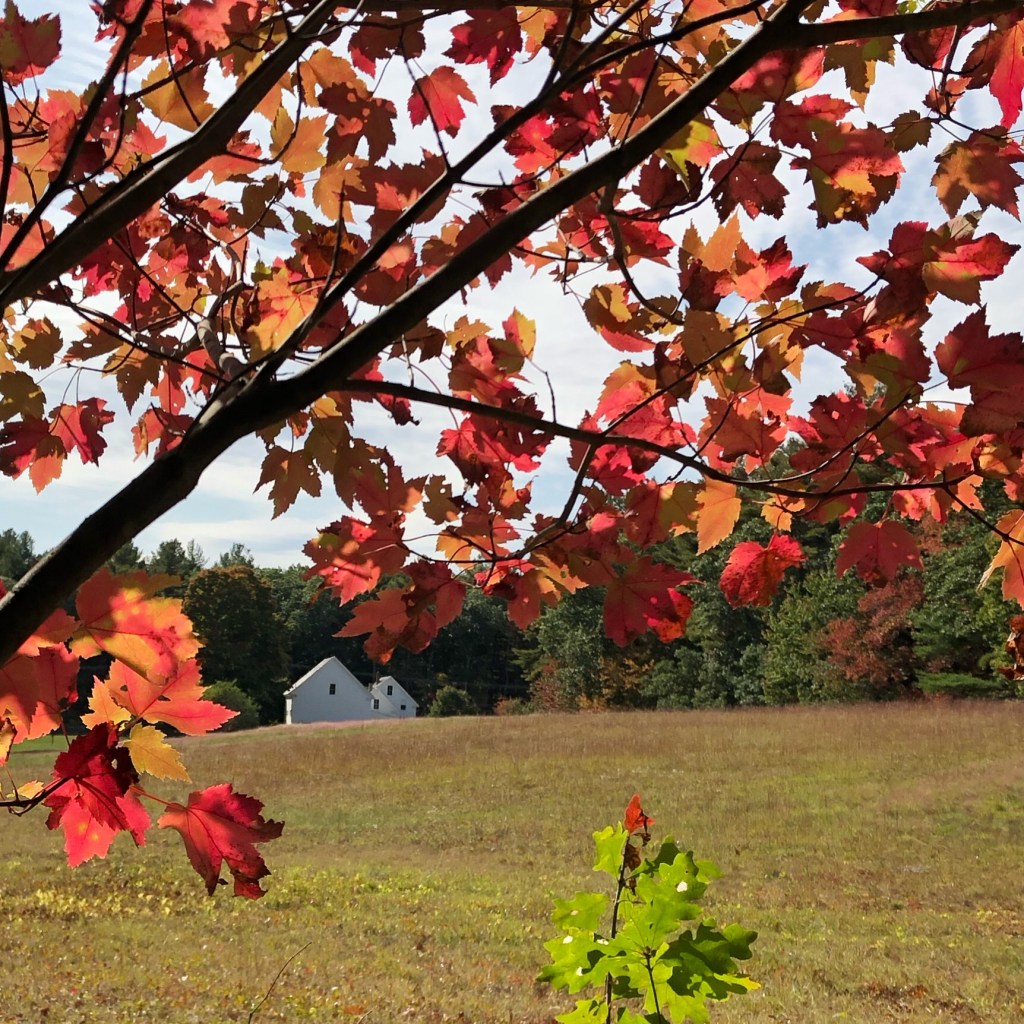
    It always happens this way. The leaves start to turn, and suddenly accelerate into a burst of color. Meanwhile, you’re busy with life, knowing the wave is washing over you but not getting out there enough to see it. The rains come, often with wind gusts, and it ends before you really noticed.

    The alternative is to notice. To walk away from the computer screen and see the foliage, feel the crisp air, smell the freshly fallen leaves mingle with the harvest. To experience the world on more than just the weekends. It seems to me a better way, noticing, and we ought to do more of it.

    Still, I have this stack of responsibilities that keep me at bay. Three big projects due for work, and home projects to finish, and other such to-do commitments. Those seem like compelling reasons to skip a walk amongst the trees today, don’t they? No?

    We remain reckless with our time, we humans, and it flies by regardless of our attention to the urgency of the matter. The autumn leaves come and go whether you linger amongst them or not. But the journey is more pleasant when you linger awhile.

    The image that stays with me most after a weekend in Acadia is not the rocky shore or the stunning sunrise on Cadillac or the lighthouse, but a single brilliant red tree along the Carriage Road. I imagine that the leaves have fallen off that tree in the stormy few days since I was there, but in my mind they remain, fluttering like Cardinals at a social event. And there’s the fleeting magic of fall foliage. The Autumn leaves are here today, gone tomorrow. Go have a look then.

  • For One September

    This is a good year to think about how we use our time. Working is necessary, but so is recreation. And family time. And all the rest of the segmented buckets of time. Use it well or lose it forever. I don’t suppose its a good time for international travel. Or going to concerts. Or standing in line at crowded amusement parks. But there are plenty of good uses of time that don’t involve those things, aren’t there? I think time with those you love is the best time investment you can make. I don’t believe that makes me an outlier.

    “We are actually awash with time and profligate in its abuse.” – Richard Koch, The 80/20 Principle

    Looking up from the frenzy of life and it’s the end of September. Granted, a lot has happened in September. And candidly I’ve personally had better Septembers. But this is the September I was given, and so I’m pressing on with finishing the month as best I can and, if Fortune favors me, moving on to October. If we’re all lucky we’ll make it to October and maybe even 2021 with some measure of hope for the future. But one day at a time. We’ve still got today to contend with.

    I think about the Koch quote: awash with time and profligate in its abuse. And tend to reflect on the abuses more than glow in the best uses. But isn’t that human nature? For all the wasted hours of opportunity, there have been moments of wonder sprinkled in too. And isn’t that the point? Life comes at us one way or the other, make your lemonade out of the lemons and your margaritas out of the limes. But rise to the occasion this day offers. Regrets are living in the past. Make use of now, before you squander this day too.

    “If you enjoyed it, time was well-spent.” – Orange Book Tweet

    When I look back on this month ten years from now, assuming I’ll still be dancing to the music in a decade, I’ll think of September for the loss of one remarkable man, hiking with friends and family, the home nest becoming full again as the fourth bird flew home, and for some remarkable moments in Acadia National Park. The rest – good and bad alike – blurs for me even now, even while we’re still in the month. But maybe that’s enough for one September.

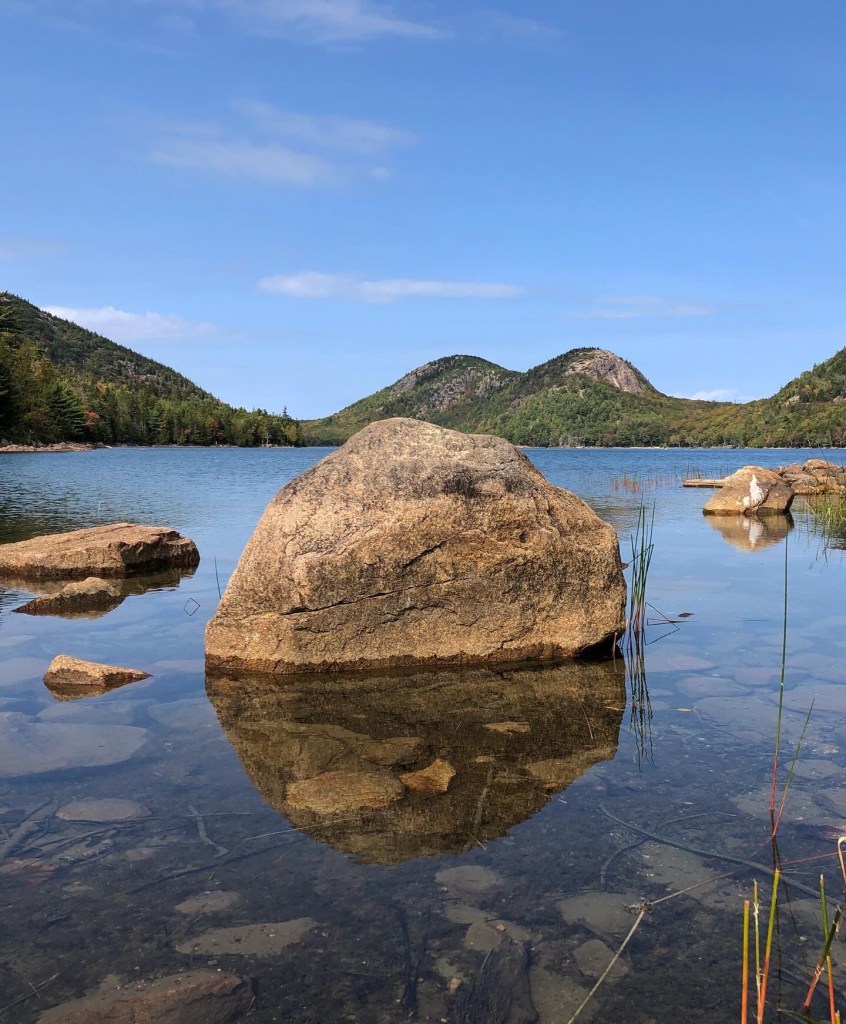
    Jordan Pond
  • In Search of a Border Marker

    In 1622 Captain John Mason was granted the land between the Kennebec River and the Merrimack River and the territory was named New Hampshire. The border with Massachusetts wasn’t the middle of the river, but a distance three miles north of the river’s shore. This made for an interesting, zig-zagging border that meanders along as the Merrimack River has from long before settlement by the English. That’s 398 years of continuous service as the official border between two similar yet completely different states. Barring wholesale changes in the borders that virtual sharp point should remain forever.

    Today, instead of eating lunch like a normal person I drove over to find the sharpest point on the border between Massachusetts and New Hampshire at a spot that on a map looked to be accessible in two directions. Using Google I zoomed in on the satellite image and decided the easiest possible way to get to this point was to walk the maintenance “road” that ran under the power lines adjacent to Route 213 in Methuen, Massachusetts. This worked out well until I reached the place where I needed to head north to the border point and scanned a swampy mess overgrown with cattails and impenetrable brush. This hike turned into a dead end but a good education on the lay of the land.

    Next option was to drive to the town transfer station, which was the next closest public land, to see if I could get to the woods that the border ran through that way. I had a great conversation with the woman weighing trucks in at the entrance, and she was politely curious about the quest that I was on, but received a no-go from the decision-makers on the other end of the radio. Not to be on this day. And that leaves me two options. Find another way in, potentially across private land, or to simply wait for the heart of winter when the ground is frozen solid to attempt the power line route again. I suppose there’s a third option of just dropping this pursuit of a border marker that may not even be there, but tell me, what’s the fun in that?

  • Collapsing the Space Between Us

    “Walkers pass tight lipped, eyes averted
    Only dogs tugging on leashes want to collapse the space between us”
    – Ken Burns, In the Social Distance

    A couple of days ago I had the audacity to post an opinion on Facebook and immediately faced the crush of for and against dialog that’s lasted far longer than the typical family picture flurry of activity. And those were friends, family and acquaintances, not anonymous Twitter trolls. But that’s the world we live in right now – divisive and reactionary. And yet we’re all basically the same people with a few differences of opinion.

    Ken Burns wrote a poem that describes the time we’re living in, and read it on a NY Times podcast. You can find the transcript here. This bit about collapsing the space between us got me thinking about a guy we met hiking on the Carter Dome last weekend. Or rather, we met his year old retriever Emma, who was way ahead of me on the list of 48 4000 footers. I’ve completed 10 since I started re-tracking this year. She’s completed 40! Her owner was an older gentleman, I’d place him at 70, but he was incredibly fit from hiking all the time. He mentioned that his last dog hiked Mount Adams 65 times!

    It occurred to me that I never learned his opinion on politics, nor he mine. Just people talking longer than they might have otherwise because of the dynamo swirling about us. Sure there was hiking in common, but really Emma was the bridge between us. When we parted her exuberance was the part that remained on my mind, apparently still, for there remains a glow of joy when I think about her rolling in the dirt. The world could use more dogs collapsing the space between us, and less media driving us apart.

  • Hiking the Carters

    A bit removed from the crowded trails of the Presidentials in the White Mountains, there are four summits in the Carter-Moriah Range with the name Carter. There’s a story that says the Carters were named for a man who used to hunt in these mountains, and that nearby Mount Hight is named after his hunting partner. Whether that’s actually true seems to be lost to history, but its as good a story as any and it sticks harder to fact with every retelling. Hight is where the views are, but not on this day. With the summit of Hight socked in we stuck with the Carters on a Sunday morning hike that lasted well into the afternoon. Our hike was a 14 mile endurance test for a sore ankle, and generally I was pleased with the results.

    Carter Dome is the southernmost summit and the tallest of the four. Running northeasterly from Carter Dome are South Carter, Middle Carter and North Carter Mountains. Each was deep in cloud cover and gusty wind on our hike, but Carter Dome seemed to be spared from the winds blasting the rest of the range. There are remnants of an old fire tower on Carter Dome, with scattered window glass on the ground right around the base. That glass, the concrete footings and a few rusted steel bolts are all that remain of a steel tower built in 1924. The tower lookout had a hut a mile away that became the AMC hut. The tower itself was replaced by spotter planes after World War II.

    The Carters feature several bald faces along the ridge line that offer beautiful views. But not on this day. Still, there’s something stunningly beautiful about being amongst the wind-whipped firs deep in the clouds. We felt a bit of ice mixed into the mist swirling about us, a clear sign that summer is drawing to a close. This was the first hike of the summer that I used every layer I brought, and it had me thinking about using a bigger pack as we shift towards autumn. The sun eventually came out in the valley below the range on our descent, warming and drying us off.

    One of my hiking partners informed me after the hike that we had over 4300 feet of elevation gain on the 14 mile hike. I believe it, but the challenge for me was the descent down the Imp Trail, which had me thinking about Game of Thrones while I navigated a nasty stretch of boulders, rocks and roots on the descent. Classic New Hampshire trail, this Imp Trail, and it tested the ankle and my new hiking boots synched up tight to support it. Not wanting to be left out, my knees both started complaining about halfway down the descent. This was about 12 miles into the 14 mile day, and they’d had just about enough of my aspirations. But we made it down to Route 16, walked the shoulder back to the cars, and headed to Gorham for some much needed pizza and beer.

    I love a good solo hike as much as anyone, but I was grateful for the company on this day. In fact, were it not for the invitation from my power-hiking friends I probably would have skipped the weekend altogether to give my ankle another week of rest. But sometimes we get a little too soft on ourselves, and the morning after the hike I believe I’m not the worse for wear. Good boots and hiking poles made all the difference for the ankle, and persistent friends made all the difference in my getting back on the trails. Another good lesson on living, with a nod to the couple who prompted me to shelve the excuses and get back out there.