Month: July 2018

  • Boomtown: Lawrence, Massachusetts

    Boomtown: Lawrence, Massachusetts

    In 1845 the land along the Merrimack River that would soon be called Lawrence had a population of 104.  Five years later the population had exploded to 8,358.  By 1920 the population had swelled to a high of 94, 270.  All these people arrived in Lawrence as the river was dammed, canals were dug, brick buildings were constructed, and water was diverted to fuel the entire enterprise.  Water power moved everything, including the people who moved here for the work the mills provided. 
    Lawrence is ten miles downstream from Lowell, which was the most successful textile city in North America.  The Essex Company wanted to duplicate that success using the same Merrimack River water that Lowell used.  The first step was to build the great stone dam in Lawrence to better regulate the flow of water to the mills.  Next, as in Lowell, a power canal was built to channel the energy of that water to the mills.  This powerful water had to go somewhere, and it was directed through turbines that turned gears that turned leather belting that turned the looms that thousands of factory workers tended.

    And it didn’t stop with the loom workers.  The mills had to be maintained and grow.  The workers had to eat, and live somewhere, and go to church, and their children had to go to school.  Banks and hospitals and trolleys and parks and stores and houses and roads to connect it all grew like concentric rings out from the turbines.  Lawrence, like Lowell before it, became a boomtown.  Like Lowell, it thrived until cheap electricity and labor pulled textile jobs to the South and eventually overseas.

    Unlike Lowell, which has a major university and political clout in the Commonwealth of Massachusetts that enabled it to rebound more quickly, Lawrence was lost without the manufacturing jobs for decades.  The loss of jobs led to an exodus of many of the people who were the backbone of the community, and that void was filled with poverty, helplessness, riots in the 1980’s, insurance scamming in the form of staged accidents and arson, and drugs and crime led to Lawrence being one of the least attractive places to live in New England.

    And yet the bones of the city are strong.  There’s beauty in the mill buildings and homes that the textile wealth brought to the community.  Looking beyond the criminal element, there is a vibrant immigrant community that is family-oriented, hard-working and chasing the American dream.  Lawrence is a city poised for explosive growth, just waiting for the next economic turbine to power it all.

  • Sensory Awareness

    Sensory Awareness

    While walking through the garden early this morning deadheading flowers and pulling weeds my left hand brushed up against the leaves of the potted Jasmine and the water resting on the leaves from the overnight rain ran down the back of my hand.  I didn’t see the water, nor did I see the leaves of the Jasmine, but I knew exactly what was happening at that moment.  The senses, when open to the world, inform us in ways both delightful or discomforting.  And both are valuable depending on that moment.  The senses detect a change of state and tell our brains when we ought to pay attention to something.

    Sometimes in summer I’ll walk Bodhi barefoot down the street at night.  This is of course fraught with peril as stones, acorns, glass or any number of other things may be lying in wait to encroach upon my naked feet.  But the payoff is feeling the warmth radiating off the pavement on a cooling summer night, and the variations as you walk from what was, hours before, a shaded part of the street to a part that had been in full sun.  Combined with the celestial show above and the ever-changing  sounds of a wooded nighttime New Hampshire Cul-de-sac in late July it becomes…. well, sensational.

    I’ve written before about the feeling of the water current flowing across your skin as you swim.  Or the rustling of leaves or pine needles on a breezy evening.  The sound of ice crackling on branches as the first light of day stirs the air.  The smell of tropical rain or winter snow well before you see anything falling.  The hot summer sun warming your skin as you air dry after a swim.  The scent of flowers hidden from view but announcing their presence.  The quiet stillness of a hike in the White Mountains alone with your thoughts.  The enticing smell of a wood fire at night, the mouth watering aromas coming when something is cooking on the grill, or the irritating smell of a neighbors cigarette smoke invading my space when I’m in my backyard (damned prevailing wind).

    The senses come alive when you’re outside.  So much more to take in of course, but its also being removed from the things that pull your attention away.  But for many walks outside in the past I’d have my earbuds plugged in and music blasting, and I’d be deep in my thoughts or in the lyrics as I power walked my way to whatever level of fitness I achieved.  And there’s a place for that too.  But so much of our lives today is electronic noise; political banter, pharmaceutical advertisements, canned sitcom laughter and electronic notification pings.  I’ve found that turning off the noise releases me from that burden, and I’ve taken to removing myself from as much of that as possible.

    America’s media diet is changing.  Mobility is everything now.  Traditional sources of information continue to evolve with winners and losers announced seemingly daily.  This week the New York Daily News laid off roughly half their staff in a cost cutting move by the firm that owns them.  Facebook lost $120 Billion in Market Value when they announced slowing growth.  Grabbing our attention is more critical for the survival of media than ever, and as a result the noise gets more shrill all the time.  Click bait “articles” and political extremism seem to get more in your face every day.  I’ve gotten to a point where I choose to turn it off and think, listen to music or a long-form podcast or read a book.

    I’m at an age where I’m living notable state changes.  The kids are grown up and doing their thing, building their lives and becoming more and more independent.  Friends are living through similar changes and time with them wanes as they focus on new businesses or checking off bucket list items.   Remarkable people in my life are passing away, living through divorce or separation, fighting cancer or depression or unemployment or the effects of aging.  And remarkable people are entering my life as our individual ripples across this surface of life intersect and change our trajectories.  Like a stone dropped into a still pond carries ripples across the surface long after they’ve disappeared from sight I still feel the ripple of people I haven’t seen in years influence my life and by extension those of people I interact with.

    I watch the ripples change their size
    But never leave the stream
    Of warm impermanence
    And so the days float through my eyes
    But still the days seem the same
                                              – David Bowie
                                                Changes

    Social media is a way to stay in touch, but its not the same as spending a day on the side of a soccer field together, or gathered around a picnic table or a fire late into the night.  Such is change, and its not my first rodeo.  Similar changes happened when we went off to and then graduated from college.  Similar changes happened when we moved and raised children and built our lives around their activities.  The world is constant change, and I’ve come to accept that.  I take the additional quiet time as an opportunity to open up the other senses and feel what the world has been saying all along.  One thing I know for sure is it won’t be quiet for very long.

  • Dragonflies and Cormorants

    Dragonflies and Cormorants

    Today was a day of heavy rain in much of New England.  During a break in the rain I took a walk around the garden to assess things.  When you get a couple of inches of rain quickly it tends to knock down some plants and tree branches.  While I was looking at the garden I noticed a dragonfly clinging to a flower stem, wings spread wide and head moving around looking for predators or prey.  I think it thought of me as the former, but who knows?  Maybe it’s a really confident dragonfly and it was thinking of me as prey.

    The dragonfly reminded me of Cormorants spreading their wings to dry.  I’m sure the dragonfly was doing that as well.  I’m sure there are a lot of birds and flying bugs that exhibit the same behavior, but I honestly can’t think of any others.  Ducks and geese don’t seem to hang out with their wings spread wide.  Butterflies and moths may do it, but I wouldn’t know the difference.

    So to me dragonflies and cormorants have a connection.  Evolution has brought us to this moment when they’re both displaying a trait, while entirely practical, still seems rare in their respective species.  Does this interest anyone besides me?  Perhaps not.

  • Hummingbird Moths

    Hummingbird Moths

    The late July garden is buzzing with activity.  Even as the Bee Balm fades, the hummingbirds and bees are all over it, as well as the other flowers in the garden.  And there’s another visitor frequenting the garden lately; the Hummingbird Moth (Clearwing Moth).

    This moth looks and flies like a smaller hummingbird, and at one time I thought it was a really small hummingbird, but nope, it’s a moth.  Most moths are out at night.  Hummingbird moths are a daytime creature, and I’m grateful for that, as they’re beautiful and fascinating to watch as the flitter from one flower to the next.  Lately they’ve taken a liking to the purple balloon flowers, which get their name from their appearance just before they open up.

    Looking and flying like a hummingbird is both functional as well as great camouflage for this moth.  It’s not what it appears to be, but its built to be highly efficient as it dines on the nectar from the flowers in the garden.  There’s a lesson or two in this of course.  Sometimes you need to look closer at something to see what it really is.  Making assumptions about things offers little opportunity to understand what’s in front of you.

  • The Albany Plan of Union

    The Albany Plan of Union

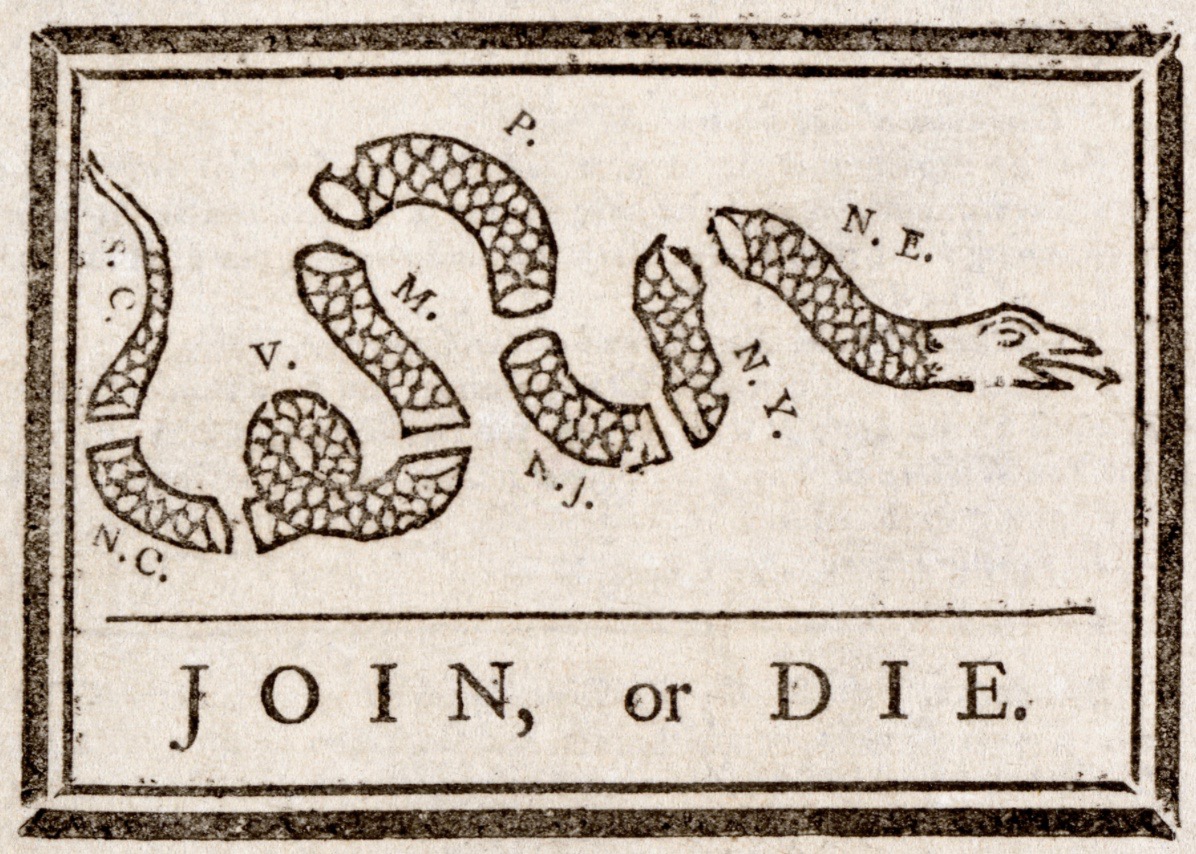
    Ben Franklin looked around the colonies and saw that they were each operating independently from each other.  With the looming threat of the French and Indian War presenting a clear and present danger to all of the colonies, it made sense to form alliances for each of the colonies to support the other should a threat arise.  Franklin’s experience in Philadelphia, where he organized a militia and defensive positions on the Delaware River to protect the city from French Privateers who taking the opportunity to pillage coastal settlements.  He saw strength in unity, and used the example of the Iroquois as inspiration for likeminded individuals to organize and discuss the prospect of united the colonies.  Franklin published articles and the cartoon above in his Philadelphia Gazette newspaper, which had the desired effect of bringing together likeminded individuals to push for the unified colonies.

    Albany was chosen as a central place, and in 1754 delegates were chosen from several of the colonies to form the Albany Congress to discuss the union.  Of the 13 colonies, New York, Connecticut, Massachusetts, New Hampshire, Rhode Island, Maryland and Pennsylvania participated in the Albany Congress.  The delegates met at the Albany “Stadt Huys”, the original state house in the region.  This plan of unification was the first formal meeting on this topic amongst the colonies.  Ultimately England and the governors of the colonies proved too much to overcome and the proposal developed in Albany was refused, but the concepts discussed during the Albany Congress was the root of the United States that would form twenty years later with the Declaration of Independence.

    At Albany the delegates proposed a “Grand Council” and a “President General” from England as leader.  Concepts that would later become the United States’ Congress and President.  Another key concept that Franklin was developing around this time was representation as a prerequisite for taxation.  The colonies were either “English” and warranted representation, or they were an “enemy state” annexed by England.  This proved a catalyst for what happened two centuries later.

    While Ben Franklin was the most famous of the delegates in the Albany Congress, there were many influential people chosen as delegates.  One of the delegates from New Hampshire was Theodore Atkinson, who had risen to be a Chief Justice in the colony and also a Colonel in the militia.  Theodore Atkinson owned a farm in Plaistow, New Hampshire.  In 1767 the land that the farm was on split from Plaistow to form a new town called, of course, Atkinson.

    As a resident of Atkinson for 24 years I’d heard stories of Theodore Atkinson, but never made the connection to Benjamin Franklin that the Albany Congress represented.  It seems that my 2H18 reading list is already paying dividends.

  • Reading List for 2H18

    Like many people I have a list of books I’ve been meaning to get around to.  Some have been on the list for years, others for a month or two.  Some I’ve chipped away at recently, hoping to complete them and check that box.  Others I’ve ignored indefinitely.  Three of the books in this stack are books I’ve been meaning to get to for years.

    Reading lists are deeply personal things.  My reading list is a stack of books I want to read to feel like I’ve accomplished something significant.  I read all the time and love to immerse myself in a great book, but some books are more evasive than others.  Representing 5,001 total pages of non-fiction and fiction, these books are my ultra-marathon reading challenge.  With 169 days left in the year that represents just under 30 pages per day to complete this reading list.  Simple right?  Some reading is easier than other reading.  There’s a reason a few of these have been sitting on the shelf for awhile.

    Here’s my list for the balance of 2018:

    • Benjamin Franklin – Edmund S Morgan
    • Antifragile – Nassim Nicholas Taleb
    • Mindwise – Nicholas Epley 
    • Surveyors of Empire – Stephen J Hornsby
    • Meditations – Marcus Aurelius
    • Cultural Amnesia – Clive James
    • The Count of Monte Cristo – Alexander Dumas
    • Ulysses – James Joyce
    • Don Quixote – Miquel de Cervantes
    • Letters to a Young Poet – Rainer Maria Rilke

    Some heavyweight business books, some classics, a biography, some history and stoic philosophy.  Like most things I do, it’s got a dose of eclectic in it.  So be it.  Averaging 30 pages a day is attainable, and candidly I’ve been putting several of these off for too long.  I’ve got a stack of books after this to tackle too, but these are the books I’m going to finish in 2018.  Ready?  Let’s go.

  • Filling the Void

    Filling the Void

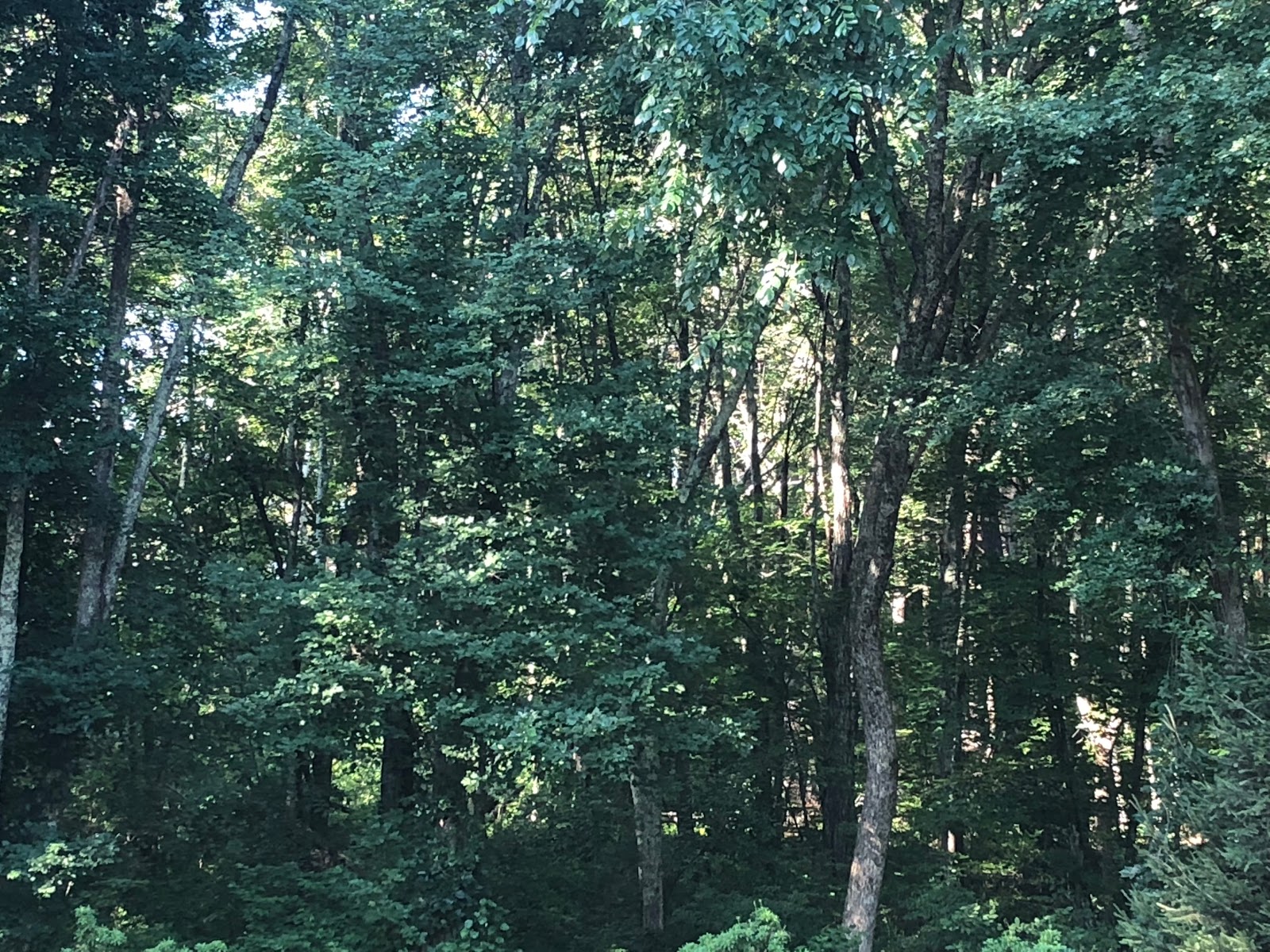
    Looking out into the woods behind my house you might see a thick stand of trees, deep green leaves, and dappled sunlight.  I see the void.  That dappled sunlight shines through a clearing made when a massive oak tree snapped in two during a storm earlier this year.  The morning after it happened I walked out to survey the tree, and posted a picture of it on Instagram at the time.

    Months later we have sunlight streaming down to the ground where for years there was nothing but shade.  The natural order of things if for the void to be filled, and over time that sunlight will spur growth in the woods as trees that patiently waited their turn accelerate their growth.  There’s an excellent book about this that describe it better than I could.

    At this point in my life, I’ve seen enough people depart this earth to understand the analogy that this big oak tree represents.  As the giants in our lives pass we must fill the void left in their absence.  People drift apart or we lose loved ones.  Staying connected is challenging, and ironically the technology that connects us more easily creates disconnections in other ways.  Having a conversation and making eye contact with someone is in our DNA.  Texting or liking a post on Facebook isn’t quite enough.  As I get older I recognize my own role in filling the void more than ever.  Empathy and love are the cornerstones, but being present to recognize and help fill that void are essential.  So I’m trying to be more present and see the voids that I previously hadn’t.

    Earlier this month I glanced over at the empty flower box on the shed in my backyard.  The builder wasn’t thinking about gardeners when he or she built it, they were thinking about quickly tacking something on the front of the shed and moving on to the next shed.  As a result the flower box is undersized, which requires extra care in watering and feeding plants you put in it.  Compounding this is that the shady corner of the yard the shed sits in doesn’t give enough light for many annuals that you might put in a flower pot like this.  As a result I usually hadn’t bothered with planting anything in it.

    This year I decided to fill this little void in my backyard garden and sought out shade loving plants that could thrive in this tiny ecosystem stapled to vinyl siding.  Buying plants for me is a lot like playing music.  With music I usually know what to play at the time based on the mood of the room and the audience (well, as long as the audience likes music I like).  With gardening I usually know it when I see it.  Sometimes I get it horribly wrong, but most of the time the garden forgives me (even if teenagers won’t forgive my playlists at times).

    The resulting fuchsia and coleus combination has indeed thrived in this flower box.  A once blank space in the garden has become a favorite spot for me.  And the hummingbirds seem to appreciate the addition as well.  Sometimes the voids in our lives announce themselves abruptly, and sometimes they’re right in front of you for years.  I’m glad to have filled this one.

  • Past Peak

    Past Peak

    It’s hard to believe, but the flowers in the garden are past peak.  While still beautiful, it’s clear that the vibrant burst of color seen just days ago is waining.  In particular, the Yucca and Tiger Lillies have faded slightly, and some of the bee balm is starting to fade as well, though still putting their best face forward.

    Such are the seasons.  We still have a long way to go of course.  Sunflowers, daisy’s, sedum, dahlias and many more mid-to-late season bloomers are all still vigorous and ready to join the fray.  Indeed there are many blooms to go.  But just as the days are getting steadily shorter, so too the garden changes its complexion as July marches onward.

    At 52 I can certainly see this in myself as well.  Perhaps past peak, but still – hopefully – a long way to go.  But just as the garden suffers when neglected, so the body breaks down when I eat poorly and don’t exercise.  The garden serves as a reminder and an example.  Best to listen.

  • Potato Donuts

    Potato Donuts

    While in Portland, Maine on business today I had a thought bubble creep above my head: Potato donuts!  I know, your Portland area thought bubble might have been lobster or blueberries or beer, and generally I might have thought the same thing.  But today it was potato donuts.

    This didn’t just come to me out of nowhere.  I remember watching an episode of Chronicle where they visited a potato donut shop in Portland and I thought at the time that I’d have to remember that next time I visited Portland.  Well, today was that day.  The mind surely works in mysterious ways, but there’s nothing mysterious about donuts.  They’re a guilty pleasure for sure.  Donuts are trendy right now, taking over where cupcakes left off.  Yeast donuts are tasty…  at least if they aren’t from the pink and orange place.  Apple cider donuts are heavenly.  But potato donuts?  New to me.

    A quick Google search yielded three potato donut shops nearby.  They were all The Holy Donut, which is the place featured on Chronicle.  I chose the closest one, which was the original on Park Street.  I got there around 1 PM, which is relatively late in the day for donuts, but they still looked great and I still had to wait in a line to get them.  The things I do for research.

    Not wanting to be a glutton, or at least not wanting to appear that I was a glutton, I ordered a half dozen in flavors ranging from dark chocolate sea salt to fresh lemon to triple berry glaze.  I gazed at the maple bacon donut but talked myself out of it.  These flavors were provoking!  Indeed, they provoked me into buying a seventh donut, a toasted coconut with coconut milk glazed delight that was taunting me from the rack.

    First impression; very moist, not as sweet as I would have expected, and chewier than a yeast donut.  But tasty.  On second thought, I haven’t had a big enough sample to really know for sure.  I need to try another one for desert tonight to really get a better handle on these things.

  • The Best Available at the Time

    Today I took this picture of a hummingbird.  Well, I took many pictures of a couple of hummingbirds and this one was good enough to post.  I know several photographers in my Facebook community who will look at this and bite their lip at my amateurish use of filters or aperture or whatever.  That’s okay with me.  While I wish the body wasn’t as blurry as it is, these suckers move fast, I don’t have 10,000 hours to dedicate to mastering the craft and at 52 I don’t really care whether someone harshly judges a picture I took.  Photos are time stamps of what I was looking at in a particular moment.  The 25 other photos I took to get this one go into the recycle bin.

    I recently heard a Tim Ferriss podcast interview with Brandon Stanton, creator of Humans of New York in which Stanton readily acknowledged that he’s not the best photographer, but that’s never been the point of it anyway.  His real strength lies in pulling stories out of the people he photographs.  And really that’s why people follow Stanton’s work.  He’s a master at going deep with his subjects.  He also mentioned that he’s interviewed and photographed thousands of people over the years, and most never make the final photoblog.  Those cut either hold back, decide they’re not comfortable with what they said, or perhaps Stanton didn’t find it as interesting as another person he photographed.

    Facebook is where we post pictures of the best of ourselves.  Great sunsets or vacations, adventures we’re on, fun times with friends and family, etc.  And I try to keep up as best I can, though I’ve toyed with the idea of deleting my Facebook account for years.  I don’t because it’s the only way to keep in touch with people I grew up with, worked with years ago, moved far away or simply don’t see regularly.  Some people hate Facebook because they feel like they’re not living as good a life as someone else.  I believe most people will post the good stuff and not the challenges they may be going through in their lives.  Which is why I appreciate those who open up about their struggles.  Chasing perfection is a fools game.  None of us are perfect.  Judging yourself based on how many likes you get is a dead end game.

    I was at two events over the weekend.  The first was a Celebration of Life ceremony for my Aunt Debby.  She was a remarkable, beautiful person who always got me smiling no matter how self-absorbed in teen angst I may have been at the time.  She was incredibly perceptive and could see when you were struggling with something and give you a shoulder to cry on if you needed it, or infect you with her laughter until you forgot whatever the hell you were spun up about in the first place.  I’m a better person for having known her, and strive to be better still.

    The second event I went to was a party with my wife’s work friends.  I didn’t know anyone but Kris there, but I make a living building bridges with people and rolled with the opportunity to get to know a lot of people in different stages of life.  All good people, and I was struck by how close they were as a group.  This was partly because they shared a common struggle to maintain dignity while working with two narcissistic VP assholes.  Having worked for or with some truly narcissistic tools before it was easy to sympathize with them.  I’ve learned not to blindly respect people just because they have a title, but for who they are and how they treat people.

    The hummingbirds are constantly in the garden right now.  Bee balm in particular is a hummingbird magnet.  Wait a few minutes and you have one or two hummingbirds buzzing around.  That meant I had plenty of chances to get a perfect picture, and yet never quite got there.  Hummingbirds are curious creatures, and while I lingered near the garden waiting to check them out they would swoop in, hover a few feet from me and check ME out.  Turnaround is fair play I guess.  They didn’t seem overly concerned about my photos of them and whether I was getting their good side.  If my photography and writing proves anything, its that perfection is… evasive.  So be it.  Sometimes you just need to go with the best available at the time and move on.  This post is far from perfect, but I think it’s time to post it and move on to other things.