Month: April 2019

  • Crown Point

    The strategic importance of Lake Champlain during the early colonial years when the French and British and later the Americans and British were wrestling for control of this region is well documented.  Controlling the flow of supplies and men along the lake was critical, and the French chose a point of land where the lake narrowed significantly on the southern end to build Fort Saint-Frédéric in 1734.  This gave them both a foothold of consequence at a choke point on the lake and a launching place for attacks into British territory.  They held this ground until 1759, when Jeffrey Amhert’s 10,000 man army marched northward from Albany to take it.  The French destroyed Fort Saint-Frédéric as they retreated, but the strategic importance of the location wasn’t lost on the British.

    When Amherst’s army reached the destroyed French fort, they immediately set to building a much larger fort next to the location of the original.  In fact, if you look at satellite  image of the location you can see the faint outline of the French fort right next to the larger British fort that replaced it.

    Walking around on this site you feel just how exposed you are to the elements.  For the soldiers stationed here, it must have been brutally cold in the winter.  The large fireplaces for the upper and lower floors in the officer’s quarters must have been heavily utilized during those winter months.  Officer’s quarters were much nicer and the fireplaces much bigger than those of the enlisted men.


    Ultimately Crown Point fell into disrepair as the threat from the French disappeared and threats from the Native American population moved further and further west.  The strategic importance of Crown Point was also diminished by the decision to strengthen Fort Ticonderoga closer to where Lake Champlain and Lake George overlap.  The other concern about Crown Point was that it was set on a peninsula, and thus soldiers manning the fort would become trapped there should the land it connected to be controlled by the British and their Native American allies.  That proved a salient point as the Continental Army was barely controlling the lake at this time let alone the western lands adjacent to Crown Point.

    Walking along the top of the earthworks the British built, it’s easy to see just how clear the sight lines were for the cannon overlooking the lake.  Ironically the fort was never directly assaulted and never fired a shot at a passing ship as far as I can tell.  The Green Mountain Boys overwhelmed a skeleton crew manning the fort in 1775, shipped many of the cannon to Boston (along with many from Ticonderoga), and then the Continental Army opted to abandon Crown Point in favor of what they believed to be stronger ground at Ticonderoga and Fort Independence in 1777.  The British took back control of Crown Point and held it until the end of the Revolutionary War in 1783.  This was the last hurrah for Crown Point, and it fell further into disrepair until it was declared a National Historic Site.
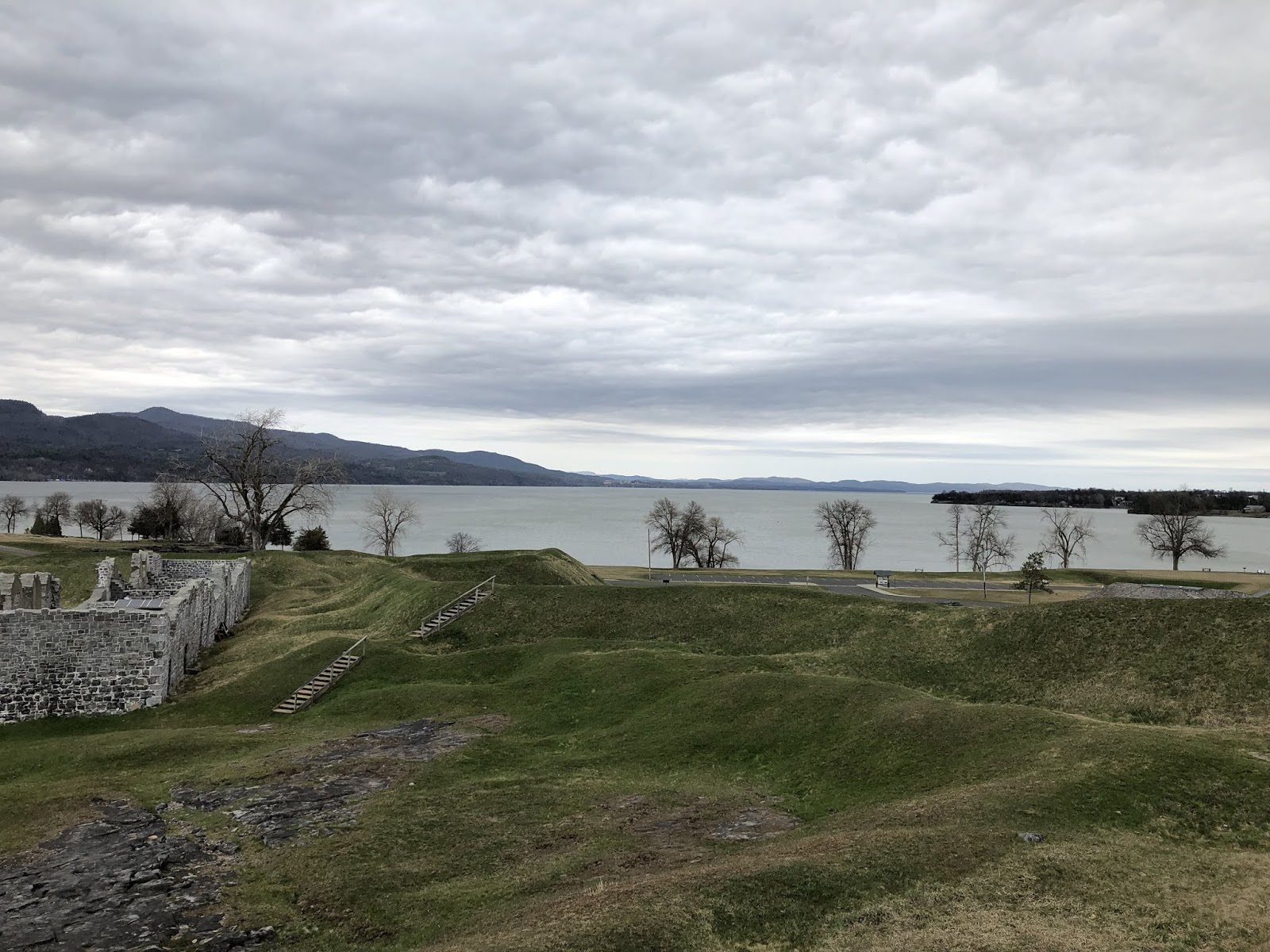
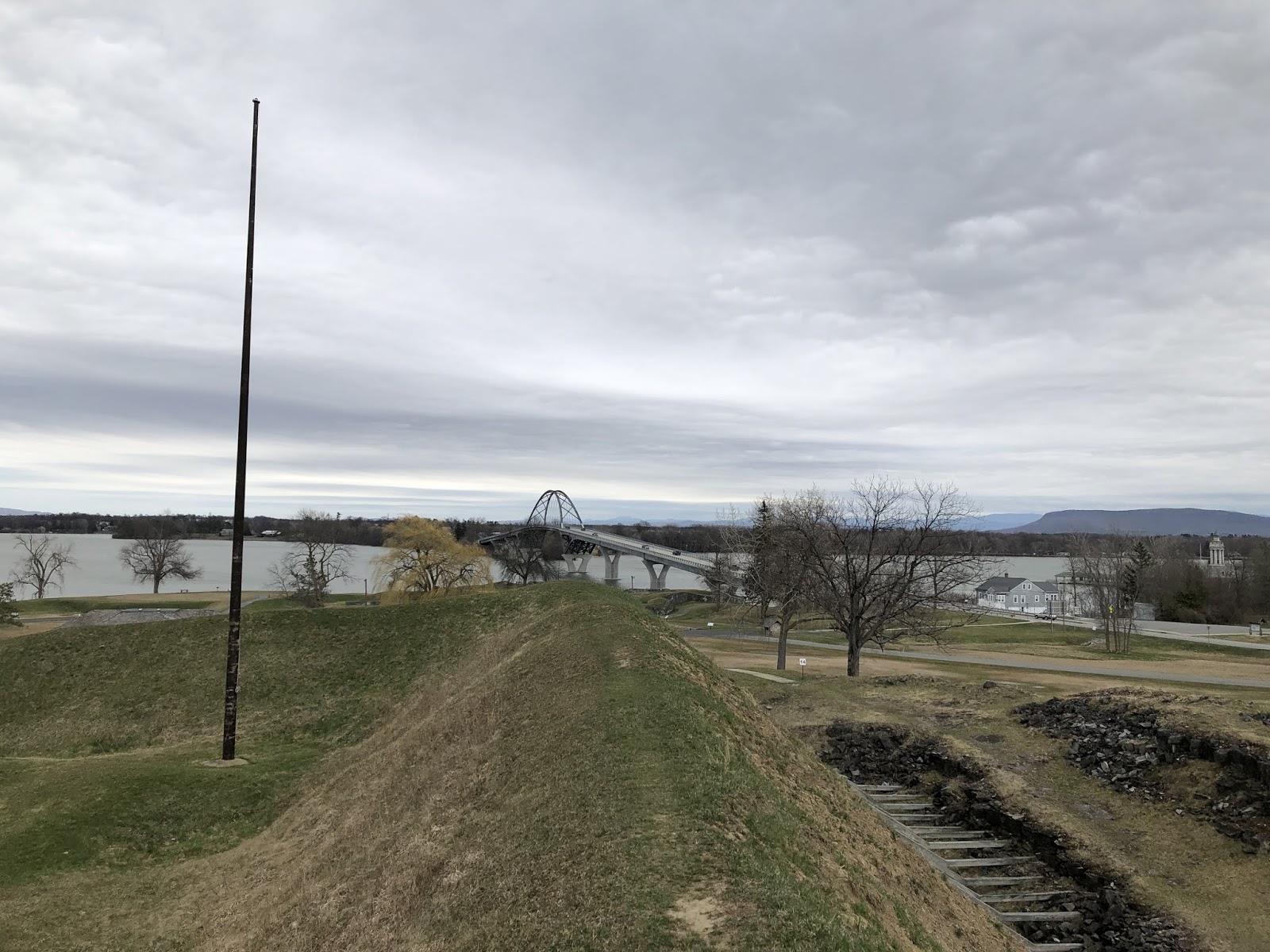
    I’ve walked the grounds of Crown Point once in the spring, and hope to get back there sometime when they’re open for tours.  Perhaps I can combine a visit with one I’m planning later this year for Fort Ticonderoga and Fort Independence.  I’d also like to hike up Mount Defiance to round out my knowledge of the campaign and to complete my tour of this region.
     

  • Backyard Observations on this Easter Sunday

    The deer are 50 yards away moving silently in the woods.  Their movement betrays them as much as their flicking white tails.  Another few weeks of spring buds leafing out and I won’t see them at all.  We glance at each other occasionally just to keep tabs, but otherwise go about our business in our own ways.

    The red wing blackbirds call out in the forest, no doubt telling each other how close I am to the feeders they hungrily raid.  They travel in packs, those blackbirds, and they make quick work of the seed.  There’s a chorus of other songbirds surrounding the yard.  I can pick out a few, others blend together.  A lot of conversations this morning.

    Writing this I’m buzzed by a fat bumblebee flying over to the flowering Mountain Laurel.  A squirrel circumvents the yard eying me warily as it makes its way to the base of the feeder, looking for the seed the blackbirds toss aside as they pick through for the juiciest meal.  A chipmunk scurrying along the fence joins the squirrel for an easy meal.

    Human neighbors are using this time for chores.  I can hear the hum of a pressure washer a few doors down, and hammering of something or other nearby.  My chain smoking neighbor’s phlegmy cough invaded my space and I brace for the smell of her cigarette wafting over the fence.  Some things aren’t welcome.

    The air cools quickly as the warm sunshine gives way to overcast skies.  The day changes quickly, and I’ll take it as it comes.  We have places to go, family to see.  I’m reluctantly getting up and heading inside.  So much to do on this Easter Sunday.

  • Pruning

    “Relentlessly prune bullshit, don’t wait to do things that matter, and savor the time you have.” – Paul Graham

    Spring is a good time to assess the yard, clean up the debris that accumulates over winter that was covered over in snow, fix things that need fixing, and prune the trees and shrubs to clean up any winter kill and promote growth of healthy new shoots.  I’ve gotten better at pruning over the years.

    I watch less television than ever.  I moved all my social media apps into a file called Time Suckers.  I deleted Words With Friends and other such games.  I steer clear of negative people who infect the air with poisonous rhetoric.  I eliminate a meal more often.  I’m not a monk mind you, but I’ve gotten better at pruning over the years.

    Instead, I write more than I’ve written since college.  I exercise every morning even if just a little bit.  I read immediately after exercise, even if just a little bit.  I research the places I go and look for interesting things to see and do there and try to get to those places and then write about them to help me remember what I saw and learned during my visit.

    I’m more present in the moment.  Not just the easy stuff like smelling the roses when they’re in bloom, but the harder stuff that’s easy to ignore.  I wash the dishes, sweep the floor and do the laundry.  I call old friends and family more often, and try to see them when I can.  And in work break out of the familiar routines and make new contacts, learn new skills and push myself out of the comfort zone.  I’ve gotten better promoting growth over the years.  And savoring the time that I have.

    I was going to end this blog post right there, and in fact did publish it.  Then I read Brain Pickings today and apparently I’m not the only one thinking this way today.  Maria Popova tackled time management in her own way, with quotes from Walt Whitman, Seneca and others.  So instead of ending this post on my own observations, I’ll lean in on Seneca to wrap up this post:

    “Set yourself free for your own sake; gather and save your time, which til lately has been forced from you, or filched away, or has merely slipped from your hands…  Certain moments are torn from us… some are gently removed…. others glide beyond our reach.  The most disgraceful kind of loss, however, is that due to carelessness.” – Seneca

  • Lake George, 1757

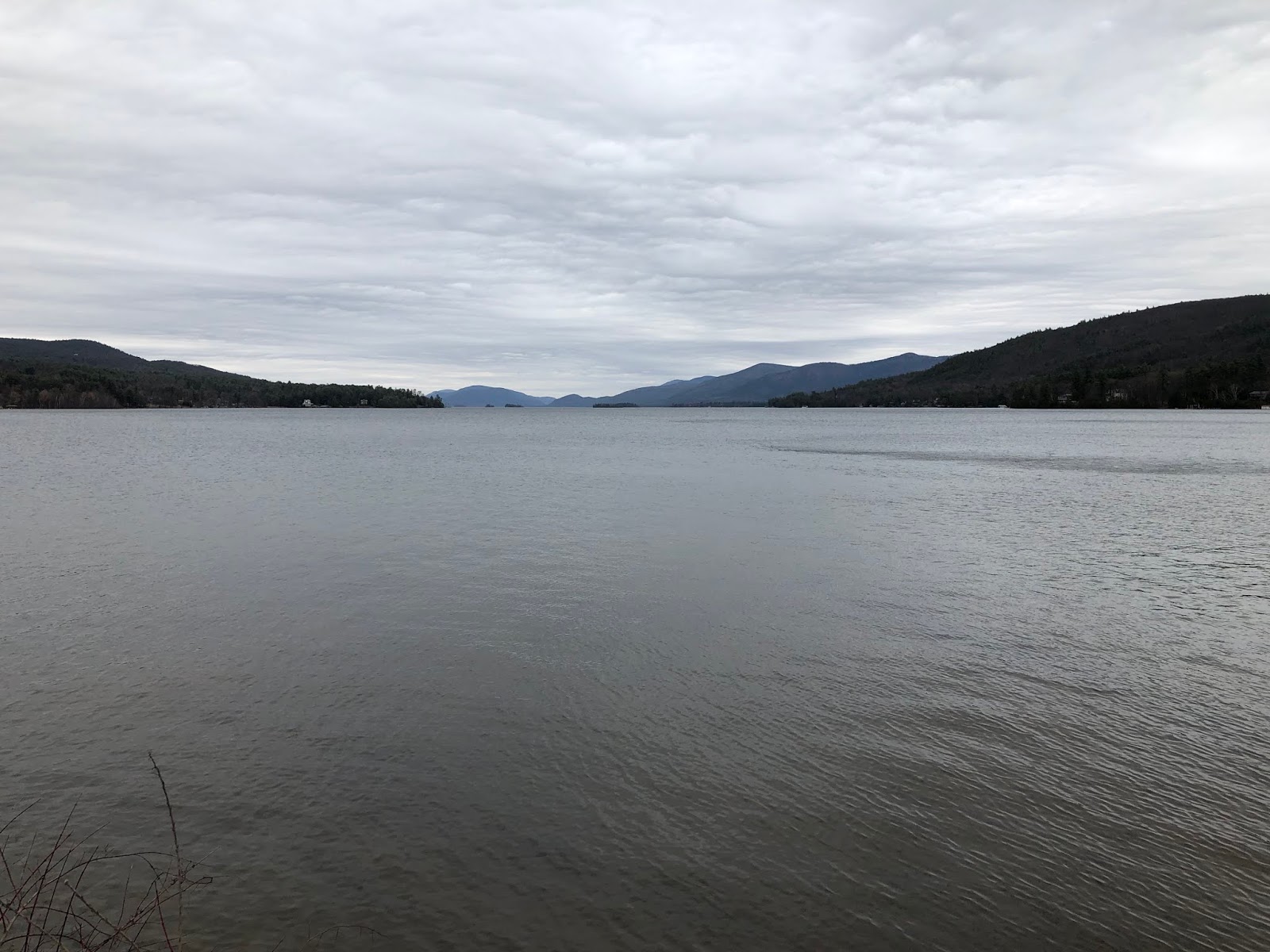
    When you stand along the shore of Lake George and look to the northeast on a quiet April day as I did recently, you’re struck by how beautiful the lake is.  Lake George still looks pristine, surrounded by conservation land and state parks.  The Adirondacks rise up in the distance.  Lake George, like the finger lakes to the west and Lake Champlain to the north, is a long and sometimes narrow body of water, very much like a river.  It was the primary transportation channel for countless generations of Native Americans and the French and English settlers who came after them.  A relatively short portage to the Hudson River to the south and Lake Champlain to the north made this body of water a critical link in the chain.

    There were several battles and skirmishes on this lake in the early colonial period, but two stand out during the French and Indian War.  Just beyond the farthest point of the lake you can see in this picture the lake jogs eastward and narrows to a point of land where it turns northward again.  This spot is called Sabbath Day Point, and it was here on July 23, 1757 that 350 New Jersey provincial soldiers (the “New Jersey Blues”) on a reconnaissance mission were surprised by hundreds of Indians who paddled out and attacked them in their boats.

    “The whoops of our Indians impressed them with such terror, that they made but a feeble resistance; two barges only escaped; all the others were captured or sunk. I have 160 prisoners here, 5 of whom are officers. About 160 men have been killed or drowned.” — M. de Montcalm to M. de Vaudreuil. 

    On August 3, 1757 this pristine view of the lake terrified the troops stationed at Fort William Henry, as hundreds of bateau boats and canoes filled the lake forming a massive fleet rowing and paddling right towards where I was standing when I took this picture.  They laid siege on the fort for six days until they forced the British to surrender as their cannon began to overheat and fail and the French artillery breached the walls.  During the surrender a horrific massacre ensued as the Indians descended on the men, women and children surrendering to them looking for their plunder and scalps.  That’s a story for another day, but there’s an excellent account of it from The Lake George Examiner worth reading.

    I’ve looked out on this view of Lake George a few times over the years and it always fills me with awe at how beautiful the lake is.  It’s hard to imagine the horror experienced by those soldiers in the summer of 1757 close to where I’d been standing.  The Indians who committed the massacre – or their tribes – would suffer their own horrors in the years to come.  There’s an inevitable friction that comes with expansion, and as Native Americans, the French, English and others wrestled for control of this continent violence would continue to escalate.  This beautiful waterway, as with so many other beautiful places around the world, was once the center of violent conflict.  And 1757 was a particularly dark time for this lovely place.


  • Battle Hill at 50 MPH

    Located on Route 4 in Fort Ann, New York between the Champlain Canal and Battle Hill is an unusual monument to the Revolutionary War battle that took place here on July 8, 1777.  You’d be forgiven if you miss it as you cruise on past at highway speed.  I only knew about it from a rest area attendant who described exactly what to look for.  As with many historical markers, it tells a story if you stop long enough to listen.

    While the tablet is barely noticeable as you speed along, Battle Hill is of course much larger, and the land above the highway sign is in the beginning stages of historic preservation.  For now, there’s only this simple marker, mounted on the ledge cut into Battle Hill in 1927, when cars came by much less frequently than they do now.  The tablet is decorated with American flags, which serve both as a tribute to those who fought here and as a way to visually find the tablet recessed into the ledge as you’re driving by.  I had to double back and park across the highway from the sign in a small pull-off.

    The Battle of Fort Anne started with defeat and retreat, as the Continental Army (mostly New Hampshire met) retreated from Fort Ticonderoga and then Skenesborough.  General Burgoyne hoped to cut off this retreat and landed 200 soldiers let by Lieutenant Colonel John Hill.  The American’s made a stand at Fort Anne, bolstered by the arrival of reinforcements led by Colonel Henry Kiliaen Van Rensselaer, who provided key leadership in the battle despite being wounded.

    While not the largest battle in the war, Fort Anne served to delay the British on their march to take Albany and create an unbroken water route from Canada to Manhattan.  This delay was critical for the Americans.  It’s was Burgoyne’s biggest mistake; instead of sailing his army right down Lake Champlain and Lake George and storming into Albany, he got sidetracked chasing retreating soldiers.  He won the battle, but helped lose the war as the delays of Fort Anne and defeat at Bennington set the stage for a larger defeat at Saratoga.  That set the dominoes in motion as the French would eventually join forces with the Americans, upping the ante significantly.

    Two interesting footnotes from the Battle of Fort Anne were the use of deception on both sides.  The Americans planted a fake deserter who convinced the British that the Americans had more than 1000 soldiers at Fort Anne waiting for them, which led them to wait for reinforcements instead of attacking.  Not to be outdone, when the British were running out of ammunition and on the verge of being overrun in the battle, a British quartermaster named John Mone used Indian war cries to make the Americans think that a much larger force of reinforcements were rushing in.  This allowed most of the British to retreat safely.  I’ve read about some of these events, but as with everything a visit helps you get a lay of the land and if you’re lucky hear the whispers of history over the roar of the traffic wizzing by.

  • We May Never Pass This Way Again


    What good is livin’ a life you’ve been given
    If all you do is stand in one place? – Lord Huron, Ends of the Earth

    I was in Rutland, Vermont today and had to be in Burlington several hours later.  So naturally I wanted to check off some historical ghost dancing while I was in the area.  There’s a direct route to Burlington from Rutland – drive up Route 7.  I chose a more roundabout way to get there that added an hour of driving and another hour of walking around and seeing what I came for.  I’ll write about each stop over the next few days.

    One stop that proved futile was the primary objective of my side trip.  I’d hoped to make a quick stop at Fort Ticonderoga to look around a bit.  Unfortunately it doesn’t open until May, which of course means I’ll have to find another reason to detour through this part of the world.  The Lake Champlain/Lake George waterway was the superhighway into the interior and served to transport several armies back and forth between the French and Indian War and the Revolutionary War.  Fort Ticonderoga was an important link in the chain of fortifications defending this route.  Alas, I’ll have to dance with it another time.

    One of the joys of travel is finding the unexpected.  I found plenty of unexpected on this trip, and that hour of driving out of the way turned into two extra hours in the car.  I don’t regret the extra time, and will gladly trade off some of my evening hours tonight and some of my day off tomorrow to pay back that time for work.   Seals and Crofts had a soapy hit song in the 70’s called We may never pass this way again.  That’s how I feel about these side trips: I’m there anyway, why not dance with the local ghosts?

    Such is the freedom a sales job affords me.  As long as I don’t abuse the privilege, a side trip when I’m in an interesting place is a worthwhile investment.  Making calls along the way means that I’m killing two birds with one stone.  The inner critic tells me not to waste valuable selling time on such pursuits.  Will side trips make me rich in sales?  Definitely not.  Will it give me something more important than money?  I think so.  Balance is the key of course.  Work hard, play hard and all that.  Or at least make the most of your opportunities on both sides.

  • Sunbeams and White Oak

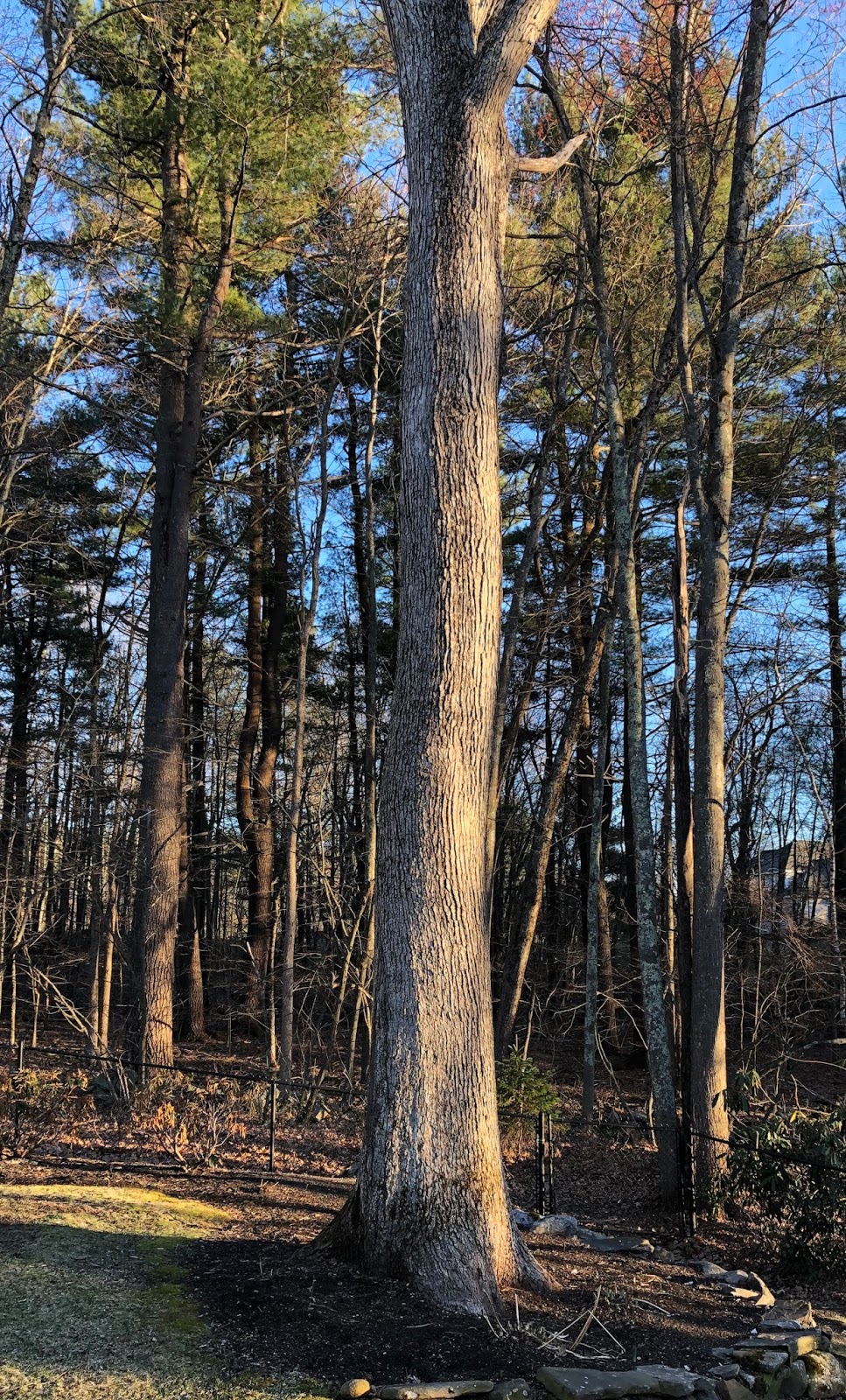
    There’s something about the angle of the sun at dawn and dusk that is magical.  The sun hasn’t dropped down to the horizon yet, but seems to be shining through a magnifying glass to illuminate everything it reaches.  Western faces of trees become bleached in sunshine and eastern faces dimmed in shadows that cast deep into the forest behind.

    My favorite tree in my backyard is a massive white oak.  It was once hidden by young white pine trees and scrawny maples.  When we cleared the smaller trees in front of it the white oak jumped out as the star of the backyard.  It’s times like dusk with the natural spotlight of the sun shining bright upon the light gray bark of this old veteran of the forest really – and literally – shines.


    The sun has long since set, but I’m still thinking about the glow in the forest tonight.  And I’m grateful for having been there to witness it.  For the glow has reflected back on me.
  • Chin Up

    Rowing is a great exercise, and as I’ve mentioned I’ve gotten reacquainted with it the last couple of weeks as I work to re-establish my morning exercise habit.  When you row alone in a basement there are a few ways to pass the time on long rows; play music, listen to a podcast or some other audio program, or watch something on television.  More often than not I opt out of all of these and just row in silence.  Or more appropriately, I listen to myself.

    During a million meter rowing campaign I did a few years ago as a fundraiser for a friend of mine, I injured myself somewhat early on in my attempt by overextending.  In rowing that means coming up to the catch position and lunging forward for a bit more.  The only way to do this is to drop your head, kick your seat back and extend your hands forward.  When I was younger I thought this gave me an extra 2-3 inches of drive.  But the cost isn’t worth the benefit.  Over-extension on the erg enforces bad habits on the water where balance and swing are critical, and they expose you to potential injury.

    So as I row since then, I remind myself to keep my chin up.  Sometimes physically looking up at the ceiling to emphasize it.  There’s an obvious metaphor about keeping one’s chin up in the sense of being positive.  But in this case I think of “chin up” as reinforcing good habits; not reaching for things that aren’t worthwhile and focusing on things that will bring you benefit in the long run.  I know my weaknesses at this point in my life, but I also know my strengths, and I work to emphasize those instead.  Sometimes I just need to remind myself to make adjustments and stop lunging for things that don’t matter in the long run.

  • Car Stickers

    Today I was driving through Connecticut when I passed a car with seven or eight stickers on various rear and side windows.  The one that caught my attention was a profile of a backpacker with a dog on a leash.  Another one that interested me was an Ithaca College sticker.  I didn’t know the driver of this car, but I’m confident that I’d have an interesting conversation with them if the opportunity ever presented itself.  Stickers say a lot about the driver.

    The vast majority of drivers – myself included – have no bumper stickers or their magnetic cousins on their cars.  Maybe a parking sticker for work or school, but nothing that announces who they are or what they believe in.  Contrast that with the in-your-face nature of the overtly political advocate’s car.  Pro-Trump and anti-Hilary.  Anti-Trump and pro-Hilary.  Either way I see the stickers on their car and I definitely don’t want to have a beer with them.

    Stickers announce affiliation with a school, a sports team, a community, military branch, or a favorite vacation spot.  I have no problem with this.  Embrace your tribe and be proud.  You want to show how many kids and pets you have with stickers?  Have at it.

    I do have a problem with antagonists and posers.  You want to put an extra-large bumper sticker on your car telling the world what you believe?  You’ll be noticed, but you’ll be thought poorly of by the majority of people you’re sharing the road with.  You’re probably blocked or muted by your Facebook friends too.  The world is seemingly full of antagonists lately.  Sorry, I have no time for your agenda.

    Posers are another troubling lot.  Your kids got into four of the best colleges in the northeast?  Good for you.  I’m not having a beer with you, but good for you.  Stickers are innocent enough on their own.  It’s the driver’s approach to this rolling art that makes me shake my head.  Such are the roadways of 2019 America.


  • Patriots Day

    While national holidays are commonly observed by an entire country, state holidays obviously differ from place to place.  Some places, like Boston, celebrate their own holiday too, as Boston does with Evacuation Day every March 17th.  The Commonwealth of Massachusetts and the State of Maine, once part of Massachusetts, celebrate Patriots Day.

    If you aren’t from the area Patriots Day may seem strange to you.  But the name hints at its roots as a day to celebrate the first shots fired in the Revolutionary War at Lexington and Concord.  This occurred on April 19, 1775, and Patriots Day is celebrated on the third Monday in April to commemorate the events of that day.  Re-enactments take place in various places in Massachusetts, most notably in Lexington and Concord, but also Boston.

    For Massachusetts, Patriots Day also coincides with the Boston Marathon and the Boston Red Sox hosting a game at 11 AM.  These combined events make being in the City of Boston, or along the Marathon route, a special occasion.  Patriots Day is one of the great days to be in Boston.

    Participating in the Boston Marathon is a Holy Grail experience for most runners, and the race is a point of pride for anyone from the region.  That’s why it was such an affront when two brothers targeted the race with two bombs in 2013.  While they succeeded in creating initial panic and immediate attention from the world, they failed to sustain it as they completely underestimated the resolve of the people of Boston.  Like the nation as a whole, if you want to unify us against you attack us.  As in 1775 in Lexington and Concord, so again in 1941 at Pearl Harbor, on 9/11/2001 in New York and Washington and in Boston in 2013, you’ll find out that this community that is divided on so many issues unites when you bloody our nose.

    Boston is back to celebrating Patriots Day, but the city remembers 2013.  Security has significantly increased and people are more aware of what’s around them than they were then.  The race is stronger for having survived the bombing, and so is the city.  So here’s a toast to the runners, to the Red Sox, to our ancestors who faced the British that April 19th in 1775, and for those who rallied together to unite in a common effort when things got rough.  That’s what Patriots Day is about.