Blog

  • December Bay

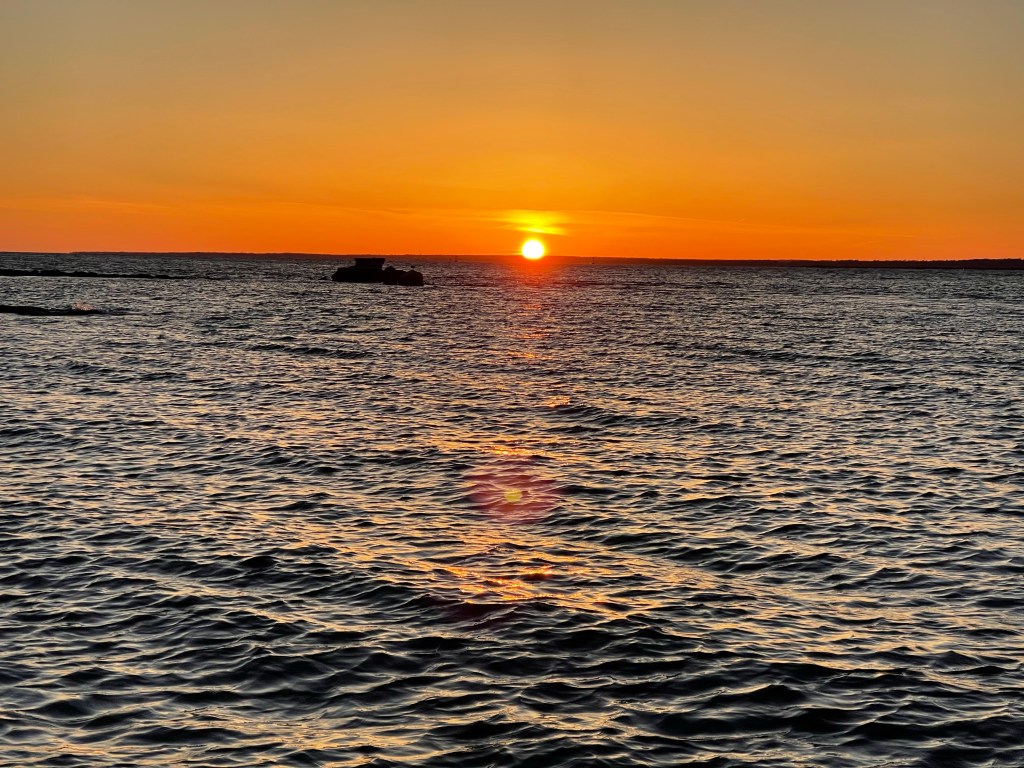
    Sunsets must be earned in winter. There are no casual seaside deck conversations with a few pictures between sips of rum. No, you must seek out December sunsets by going to where it falls into the bay while bracing against biting cold winds galloping towards you in a stampede of frothy fury. Still, it makes a pretty picture and another memory.

    Micro-adventures and stolen moments of dancing with life count just the same as big trips and scheduled events. Life is our collection of all such experiences. We ought to sprinkle a bit more salt on our days to make them savory. For our best days are savored, aren’t they?

    Not as warm as it looks
  • Listen Carefully, Spend Wisely

    Colm Doherty: I just have this tremendous sense of time slipping away from me, Pádraic. And I think I need to spend the time I have left thinking and composing. Just trying not to listen to any more of the dull things that you have to say for yourself.
    Pádraic Súlleabhain: Are you dying?
    Colm Doherty: No, I’m not dying.
    Pádraic Súlleabhain: But then you’ve loads of time.

    Colm Doherty: For chatting?
    Pádraic Súlleabhain: Aye.

    Colm Doherty: For aimless chatting?
    Pádraic Súlleabhain: Not for aimless chatting. For good, normal chatting.

    Colm Doherty: So, we’ll keep aimlessly chatting, and me life’ll keep dwindling. And in twelve years, I’ll die with nothing to show for it, bar the chats I’ve had with a limited man, is that it?
    — Martin McDonagh, The Banshees of Inisherin

    There’s a darkness in this film that is borne of desperation. The characters react to the bleak reality of their lives in different ways. Colm and Pádraic’s sister, Siobhan Súilleabháin, desperately seek something beyond their relentlessly trivial existence. Pádraic sees nothing at all wrong with living out his days one exactly the same as the one before. And this raises the central question of the film, one we all faced at the height of the pandemic: what are we actually doing with our time? Is this all there is for us, or might we create something meaningful that lives beyond us before we pass? These are questions many of us wrestle with, while others contentedly choose more of the same. We each reconcile our brief dance with the world in our own way.

    These questions are timeless, even if we aren’t. Indeed, this temporary shelf life drives us to find answers. Our old friend Thoreau famously observed in the beginning pages of Walden that “the mass of men live lives of quiet desperation”. We bear the weight of these questions still, amplified by that realization that time is slipping away. Memento mori, friends. Carpe diem.

    The thing is, we shouldn’t despair at the thought. There ought to be freedom in that realization. We have an opportunity to amplify our living, and make it resonate in our time. We have the opportunity to create something that lives beyond ourselves, something that ripples. Alternatively, we might simply live. Neither choice is wrong, unless we’re quietly telling ourselves it is. The answer for each of us is to listen carefully, and spend wisely.

  • We Are Growing Volcanoes

    “Countless things that humanity acquired in earlier stages, but so feebly and embryonically that nobody could perceive this acquisition, suddenly emerge into the light much later... All of us harbor concealed gardens and plantings; and, to use another metaphor, we are, all of us, growing volcanoes that approach the hour of their eruption; but how near or distant that is, nobody knows—not even God.” — Fredrich Nietzsche, The Gay Science

    “I prefer to understand the rare human beings of an age as suddenly emerging late ghosts of past cultures and their powers—as atavisms of a people and its mores: that way one really can understand a little about them. Now they seem strange, rare, extraordinary; and whoever feels these powers in himself must nurse, defend, honor, and cultivate them against another world that resists them, until he becomes either a great human being or a mad and eccentric one—or perishes early.” — Fredrich Nietzsche, The Gay Science

    Most of us feel the changes within ourselves, pushing us beyond our previous boundaries. Change is uncomfortable yet necessary, for aren’t we meant to grow? Nurtured or resisted by the host, we learn over time. We are, each of us, growing volcanoes.

    The thing is, the rest of the world doesn’t like volcanoes very much. Who wants volatility and fire? Volcanoes are disruptive. Volcanoes are change agents that turn the landscape upside down. The world wants tranquility and sameness. The world wants us to remain dormant.

    Forget the world. Volcanoes are builders. They create islands where there were once only waves. They create mountains where there was once only thin air. For all the fuss at the time, it isn’t until things cool down a bit that we see just what was created. For the world to grow we volcanoes need to tap into what’s deep inside.

    The very process of becoming is inherently dynamic and disruptive. Nobody feels this more than the volcano. But we must let our creative forces flow or we’re doomed to explode. History is filled with explosive characters who made a real mess of things in their time. We aren’t here to make a mess, we’re here to build something bigger than ourselves. When we let ourselves become what we want to be, that pressure is relieved. Flow is creative expression released. The trick is to flow, not blow.

  • To Live a Life That’s Full

    “It is nothing to die. It is frightful not to live.” ― Victor Hugo, Les Misérables

    And now the end is here
    And so I face that final curtain
    My friend I’ll make it clear
    I’ll state my case, of which I’m certain
    I’ve lived a life that’s full
    I traveled each and every highway
    And more, much more
    I did it, I did it my way
    — Frank Sinatra, My Way

    At a holiday party not very far from Times Square, New York, a few of us found ourselves in conversation with a large man with a large ego. He was rattling off his successes in life, his conquests in love, his options for the future. He would be the one singing My Way and believing it all applied to him. And maybe it does.

    I happen to love Sinatra’s song, My Way. We used to put it on the juke box at the Worthen in Lowell, Massachusetts late in the night (back when they had a juke box) and serenade each other in youthful optimism. We believed we were already living life our way and were poised to launch ourselves into life to do big My Way things. Life teaches you compromise and concession and sometimes knocks you down a peg or two. When things inevitably go awry, does this mean we aren’t living a full life?

    To live a life that’s full means to steer purposefully towards the dreams that stir our soul while adjusting our course and the set of our sails as life reminds us that we don’t live in a controlled environment. Highs and lows and the occasional nasty storm are going to have their way with us, stall our progress, pull us well off course now and then, and generally take that My Way bravado and throw it out the window. But still we may persist.

    The question to ask ourselves every day on our journey to live a life that’s full is, full of what? To be meaningful, our lives must be filled with purpose and progression, contribution and growth. We grow into a full life, not by traveling a straight line from here to there, but by navigating the hazards of living. Sometimes we choose wisely, and sometimes we find ourselves on the rocks. It is nothing to die, but surely it’s frightful not to live. The only viable choice is to patch ourselves up as best we can and keep going.

    But going where? That which seemed so very important in one stage of life seems less so later. Conversely, things we once never considered seem more important now. Life is change and adaptation. If status and a list of conquests are especially important to one person, for another it might be achieving mastery of playing an instrument or in writing. It may simply mean being there for others from now until the end.

    Sometimes, we have some say in the matter. Mostly, our lives are ours alone to live, yet we aren’t living solely for ourselves. Nobody said it would be easy, friend. But with reflection and purpose we might just find we live our days well enough that we can say with relative confidence and more than a little irony that we did indeed, despite it all, do it our way. That shouldn’t be frightening but, just maybe, a little thrilling.

  • Stepping Out on the Edge

    The Edge is the highest observation deck in the Western Hemisphere, and the fifth highest in the world. It juts out of a modern and elegant 30 Hudson Yards building that glitters day and night. If you are afraid of heights, it’s unlikely you’ll ever travel up the speedy elevators that bring you 100 stories above Manhattan, but if you do, you’ll be treated to video stories displayed on the walls of the elevator cab that bring you into the clouds on the way up and on virtual flight back to earth on the return trip. As fun as the elevators are, nothing beats the actual view that greets you when you arrive.

    The observation deck features epic views of the Manhattan skyline, the Hudson River and New Jersey beyond, Long Island Sound and most of the famous sites you’d think of when you think of New York: The Statue of Liberty, The Brooklyn Bridge, the Empire State Building, The George Washington Bridge, the Verrazzano-Narrows Bridge, the Freedom Tower and Chrysler Building are all visible on a clear day. If you time your visit right, you have a great view for sunset. It’s a breathtaking spot, and it’s clearly become very popular as a destination all its own.

    Frankly, if you’re not afraid of heights there is still a moment that gives you pause when you visit. That would be the moment you step out onto the glass floor and look down at the traffic 1131 feet below you. I passed this particular test, but balked when someone told me to jump up and down on the floor. There are a list of things that one shouldn’t do in life, and near the top is tempting fate.

    Also available to fate tempters are the 2+ inch thick glass panels that lean outward from the deck, giving you the opportunity to literally lean out over the edge if you’re inclined to do so. For all the people visiting at the time I was there, there weren’t a lot of people leaning on the glass. Self-preservation is indeed a powerful instinct.

    There is a stepped seating area that climbs up even higher, if you want to sit for awhile and linger with the extraordinary views. When you’ve been to New York City many times, and have spent hours of your lifetime navigating the roads of the Metro New York area, it’s fascinating to see everything from so high up. A glance and turn of the head to look from Sandy Hook, New Jersey to the George Washington Bridge might take you a second or two, or two or three hours to drive it. You feel like you’re flying in this way, and this feeling is amplified as you realize that many of the planes flying up the Hudson River are actually lower than you.

    If you go, try to time it to be there for sunset on a calm day. Have lunch at one of the many restaurants at Hudson Yards and give yourself enough time to savor the views. It’s a trip you’ll remember. The Edge literally puts you out on the edge of a skyscraper, which isn’t as terrifying as that might sound. You almost forget where you are as you soak up the views around you. This is what you’ll remember when you return to earth.

  • Eternally Anchored

    “If we are always arriving and departing, it is also true that we are eternally anchored. One’s destination is never a place but rather a new way of looking at things.” — Henry Miller, Big Sur and the Oranges of Hieronymus Bosch

    On the second night in a roadside hotel, I’ve come to accept the traffic noise. Wedged between a highway and a distribution hub there isn’t very much soul to the place at all—the sound of traffic is the only notable anchoring point. What does one do with that but move on eventually? Noise indicates flight from this lifeless enclave and so I’m finally seeing the noise as freedom hiding in plain, uh, sound. When I return to my quieter place, perhaps I’ll celebrate that place a bit more for having been here.

    Travel opens our eyes to the beauty in the world, but sometimes it simply serves as a reminder of why we chose to anchor where we did. We ought to appreciate what we’ve got while seeking insight and understanding of the world around us. Perspective is a beautiful thing indeed, friends. Things could be worse, and things could be better, now is all we have to launch ourselves into that future state.

    Not every day can be wine and roses, or waterfalls and sunrise hikes. The trick is to grab ahold of something tangible anyway. A small, independent coffee shop or a local historical site might just be the difference between soulless and soulful. The key sometimes in business travel is knowing that this too shall pass. That highway has been calling me home since I got here.

  • Reacting to Outside Influences

    If we’re lucky, we place ourselves in environments that cater to our best life. We surround ourselves with trees and wildlife and safe places to walk with our thoughts. If we’re lucky, we gently place ourselves far from ambient noise and light. Traffic and leaf blowers and well-meaning spotlights shining bright beams into nothingness all grab our attention when we aren’t conditioned to ignore these things.

    Now and then I find myself in a hotel next to a highway, and listen to the steady escalation as the world awakens and drives from place-to-place. This should be unremarkable, and yet I just remarked on it simply because it’s different for me. Had I simply gotten a room on the other side of the hotel perhaps I wouldn’t have noticed at all. But since that isn’t the case, I make peace with the noise and celebrate the temporary nature of it. It’s not my noise forever, only for a couple of days.

    The thing is, we are as much a product of our environments as we are of our internal dialogue. What we experience builds us, teaches us love or hatred, tolerance or bias, acceptance or impatience. Living in a frictionless state sounds blissful to some, and like slow death to others. We choose how we react, and that reaction informs us about our future state. Funny, the way it is. Each reaction sets up the next interaction, when we react yet again in whatever way we do.

    Life is a series of reactions to outside influences. We chafe at some, embrace others, and build a life out of a chain of reactions and decisions along the way. Does this place us in a joyful state or a state of misery? And how will we handle the answer? We are what we repeatedly do, this is true, but we’re also what we decide not to do or accept as our fate in the moment. We each have the opportunity to choose wisely and to learn from previous mistakes. Like staying on the back side of the hotel, facing the highway, we learn lessons that might be applied in the future.

  • Paddling Our Own Canoe

    “As one goes through life, one learns that if you don’t paddle your own canoe, you don’t move.” — Katharine Hepburn

    “We are taught you must blame your father, your sisters, your brothers, the school, the teachers – but never blame yourself. It’s never your fault. But it’s always your fault, because if you wanted to change you’re the one who has got to change.” — Katharine Hepburn

    This is a powerful combination of punches landed by Hepburn, isn’t it? You can almost hear her voice speak as she points out what we all ought to hear now and then. Life is what we make of it, and the buck stops here. Simple, yet so many stew in the miserable broth of low agency salted in blaming others. Do we want to have a better life? Put down the blame salt. Begin by looking in the mirror.

    I’m looking out the window at freshly fallen snow. Just enough to coat everything, not enough to be particularly consumed with clearing it off the driveway. But I’ll likely clear it anyway. To be effective in our lives, we must face the world squarely as it presents itself to us and decide what to do, given the circumstances. Identity plays a part in this moment. When you identify yourself as someone who gets things done, you get the snow off the driveway. When you identify yourself as someone who delegates, you push the problem to others. Which is correct? It depends on the circumstances, of course, but in general subscribing to the paddling your own canoe philosophy does wonders for our quality of life.

    I know, I know: Time is money, and it’s not worth our precious time to do menial tasks that are better delegated to others. Maybe, if you’ve got the money and inclination, hiring a personal assistant, or a landscaper, a chef, or a maid is your answer so you aren’t squandering time on the trivial tasks. Maybe this helps you focus on the important task. But the underlying question must always be, to what end? What are we living for? Is chopping our own wood intrinsically valuable? Isn’t it? How about pushing a light coating of snow off the driveway? Just what is the stuff of life anyway?

    The answer is that the stuff of life is what we make it out to be. We derive meaning and purpose out of whatever the heck we choose to derive it from. For me, clearing a bit of snow off the driveway is a cheap form of meditation, a moderate form of exercise, and a chance to assess where I am in my life this crisp morning. I take stock of where I’ve done well, and where I’ve strayed off course in my objectives. This is where the shovel hits the road, if you will, and where I decide just what I’m going to be today so that I might get straight away to being it.

    Change begins with introspection in space. We must give ourselves the room to find the answers to our questions. And in the answer lies the action: Goals are broken down into projects, which in turn are broken down into tasks. Celebrate the tasks for the direction they carry you. This, friends, is paddling our own canoe.

  • Cultivating Discernment

    “The task of the craftsman is not to generate the meaning, but rather to cultivate in himself the skill for discerning the meanings that are already there.” — Hubert Dreyfus, All Things Shining

    “Just as we don’t spend a lot of time worrying about how all those poets out there are going to monetize their poetry, the same is true for most bloggers.” — Seth Godin

    At some point, several years ago, I was finally convinced to just begin writing a blog. At some point, not very long after that moment, I finally understood that the best reason to write a blog was to cultivate the art of writing better and the art of discernment. The two go hand-in-hand, and combined make us more engaged and active participants in living.

    The habit stuck, the streak continues, the writing may even be improving, but if there’s anything that has improved exponentially in these years of posting it’s honing that art of discernment. We learn to observe nuance and craft something of it. And then? Do it again the next day.

    There are very successful bloggers out there who have developed a large base of followers, subscribers and subsequently, advertisers. This is not one of those blogs. This is an act of discernment, cultivated daily. I suppose that in itself may be successful enough.

  • Learning of Lagom

    A work friend recently shared a word previously unfamiliar to me, lagom, which I found delightful. Simply put, lagom is a philosophy of living in balance. This article describes it perfectly:

    “Lagom translates as “just the right amount.” It means knowing when enough is enough, and trying to find balance and moderation rather than constantly grasping for more. Lagom is that feeling of contentment we all get when we have all that we need to make us comfortable. — Jonny Thomson”

    The author points out that there are two distinct meanings derived from lagom. In the first, it’s more about playing fairly with others. Don’t hoard everything for yourself. Share and be generous. In the second, lagom is our internal viewpoint or philosophy. Live in balance and moderation for a happier life. Being present and savoring what we have instead of always crying out for more.

    Most of us strive to live in balance, play fairly, consume in moderation and generally be a good person. These truths are universal. The thing is, we can live a life grounded in lagom without ever knowing the word. But now that we do, how does it feel rolling off the tongue? Awkward? New words often are. But the meaning behind the word ought to feel quite natural.