Category: Art

  • We Become the Sum

    “What strikes me is the fact that in our society, art has become something which is related only to objects and not to individuals, or to life. That art is something which is specialized or which is done by experts who are artists. But couldn’t everyone’s life become a work of art? Why should the lamp or the house be an art object, but not our life?” — Michel Foucault

    Walking the pup yesterday during a snowstorm, I considered turning back to slip on micro spikes. Fluffy snow over ice is never a good recipe for reliable footing. Instead I shortened my stride and the leash so the dog wouldn’t pull me down in her snowy exuberance. Some life lessons are learned from a sore backside.

    We know that we are works in progress, but sometimes get frustrated with the pace of that progress. It’s okay to paint over our mistakes now and then. It’s better to make them anyway, if only to learn which paths are not ours to take, if only to not have possibilities haunting us for not having tried them at all. As Nietzsche reminded us, that which doesn’t kill us makes us stronger. In this way, we may consider each day a lesson in how to live.

    The pup and I have a loop that covers the same ground twice to get us to the desired distance. Double the distance and we’re doubling the frequency of times covering the same ground. Which is noticeable when it’s snowing out and we’re leaving foot and paw prints behind us. In this way, each loop revealed the previous ground we’d covered, but our steps never exactly repeated themselves. Our strides changed with the conditions, we were pulled towards some curiosity just a nose below the snow, a car passed by that changed our path or some such thing. As the snow accumulated, the oldest footprints faded more and more into the layers building up on top of them. Each loop was the same, yet completely different. So too are our days.

    Our canvas transforms with every stroke of the brush. Each offers lessons on where to go next. Each fades further into the background with the addition of yet another. But here lies depth and progress. The richness of life is found not just in the changes we make to our days, but in the rituals that anchor them. It all builds upon itself to form the work of art that is our life. In this way, we become the sum.

  • And Now We Rise

    A day once dawned, and it was beautiful
    A day once dawned from the ground
    Then the night she fell
    And the air was beautiful
    The night she fell all around
    So look, see the days
    The endless coloured ways
    Go play the game that you learnt
    From the morning
    And now we rise
    And we are everywhere
    And now we rise from the ground
    And see she flies
    She is everywhere
    See she flies all around
    So look, see the sights
    The endless summer nights
    And go play the game that you learnt
    From the mornin’
    — Nick Drake, From the Morning

    I’m told that Nick Drake’s family had the two lines from this song, “Now we rise and we are everywhere” engraved on his gravestone (a simple Google search verifies this). Could there be a more beautiful choice of words to mark a life? Nick Drake’s career rose quietly, posthumously, and is now everywhere (should we listen for it). Our work outlives us, doesn’t it? So it follows that we ought to put our very best into the work that matters most.

    We are creative beings, putting our dent in the universe, such that it is, before we fade away into eternity. Knowing this, we ought to rise up to meet the work as best we can, to put something of ourselves into it that makes it uniquely ours. And then to let it fly, to find its own way in the world like a moth rising to meet the light. Most everything is consumed and disappears, but some work might just break through and go everywhere.

    I think sometimes, is this blog enough? The question betrays the answer. There is far more to do. We put our best hours into other things, knowing that the days flow into nights and begin again and again. And we only have so long to play this game.

  • Courage

    “What would life be if we had no courage to attempt anything?”
    — Vincent van Gogh

    When we look back, how does the path that brought us here look? Probably full of switchbacks and a few dead ends, some steep learning curves and false peaks, disappointing descents and surprising vistas that taught us a thing or two. Life is a series of attempts at something new. We may be bold today and again tomorrow, or we can shrink into familiar and less risky ventures. Which is the hero’s journey? Which will give us a better story in the end?

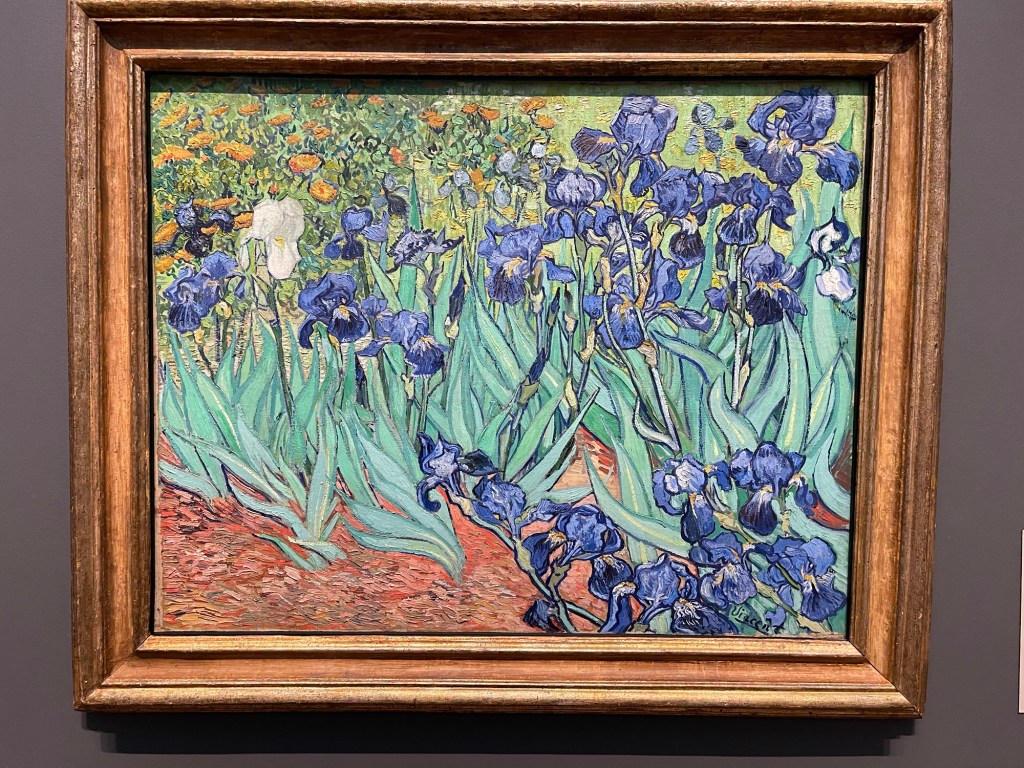
    None of this will mean a thing a hundred years from now. If we’re lucky maybe one small thing will break through and resonate beyond. Whatever project we’re currently working on is unlikely to resonate through the ages like Irises. Does that mean I shouldn’t write this blog post or go to work today? Purpose is discovered through daily action and the courage to change course when the one we’re on isn’t bringing us to where we’d like to go. Van Gogh painted Irises shortly after checking into the Saint Paul-de-Mausole asylum. Do you wonder if he considered his own path clear and straight to the top?

    It’s not just okay to try new things, it’s imperative that we do so. Exploring new paths opens up new opportunities, it colors our world with new perspective, it teaches us who we might be simply by stepping away from the tried and true. Some paths turn out to be magical, but we’ve learned that some will crush our spirit. Knowing this, courage is indeed necessary to rise again to try another. And another. And yet another. In this way, we grow into who we might become in this lifetime.

    Irises, at the J. Paul Getty Museum
  • Expression

    The reason we’re alive
    is to express ourselves in the world.
    And creating art may be the most
    effective and beautiful method of doing so.

    Art goes beyond language, beyond lives.
    It’s a universal way to send messages
    between each other and through time.
    — Rick Rubin, The Creative Act: A Way of Being

    Walk through a museum and inevitably some work calls to us from across the room. We’re drawn in, connecting to the human who created it who may live next door or lived a thousand years ago on the other side of the world. Human connection through art, literature and poetry, music, photography, architecture and engineering or really any expression that is mined deep within and brought to the world binds us now and through time. Artistic expression is thus a time machine.

    It follows that one who makes art may wonder whether their particular expression is enough. Sure, it’s our verse, but why are we making this and not something else? Why do I write a blog post every bloody day, no matter what? Why does a hiker I know spend every free moment redlining the trails of New Hampshire? Why choose a certain career path over another, potentially more profitable career path? We do it because something within us demands that we do it. Each pursuit fulfills something within, making us whole. And in turn we express that outwardly as part of our identity. This is who we are, doing this, at this moment in time. We are trading our precious time to express this pursuit, but feel more alive for having chosen it.

    Throughout life we acquire skills, develop muscle memory, navigate triumph and tragedy, age and learn and grow through the years that we’re given. All of that changes our perspective about what it is to be a human being. If we choose wisely we maximize our experiences along the way, and if we aren’t wise with our time we accumulate regrets for not doing certain things in the time we were given for it. Our reward is perspective. We grow as people and as artists to the level that we open to the experiences of a lifetime.

    The work that we produce is a time stamp of our experiences, created one after the other, indicating who we were when it was created. Our lens of now is forever altering our perspective, and thus alters our expression. When we think back on the person we were ten years ago, do we smile or shudder? The work that we produced, the routine we built our life around at the time, the people we surrounded ourselves with, all brought us here, to this place and time, where we may express ourselves yet again with this newfound perspective. Expression is a gift of our time and perspective to those who choose to use their time to connect with it (and in that connection perhaps alter their own perspective). We owe it to ourselves and our audience to draw out the best we can in the moment.

  • A Day at The Met

    The first thing you learn when you spend a day at The Metropolitan Museum of Art is that a day is comically not nearly enough time to see everything. A year at The Met might do. And be sure to capitalize that T in “The” because the official name is what it is and details matter. In matters of affectionate familiarity, it’s perfectly fine to simply call it The Met.

    Comic or not, I had one random Thursday for a Met marathon. The only thing to do is to get to it—to meander through the maze of exhibits, to see, to linger on art that whispers for you to be with it for a moment, to eavesdrop on tour guides as they drop insight on what seemed randomness a moment before, to gawk at the famous and smile at the packs of teenagers giggling about the lack of fig leaves, and to move relentlessly through as much of the collection as time and mental capacity allows. As with all things, we hope to return again one day and pick up where we left off. Like that expression about the river, we will have changed in the interim, and everything we see will seem different with that new perspective.

    Claude Monet, "Bouquet of Sunflowers", 1881
    Claude Monet, “Bouquet of Sunflowers”, 1881
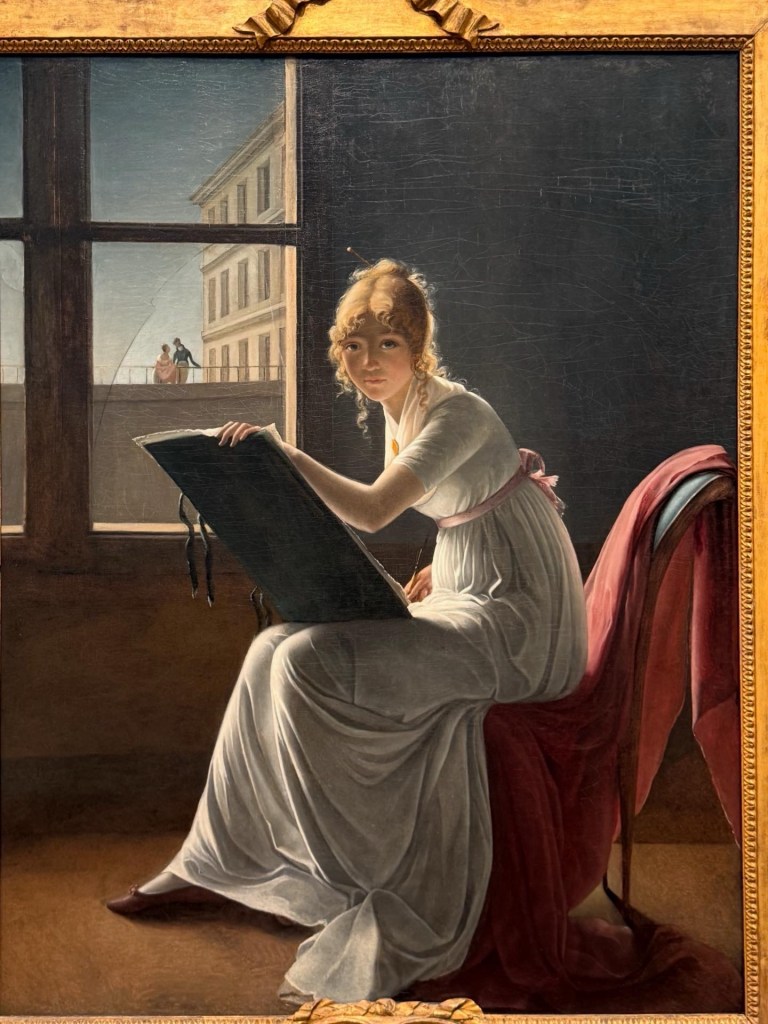
    Marie Denise Villers, Marie Joséphine Charlotte du Val d'Ognes (1786-1868), 1801
    Marie Denise Villers, Marie Joséphine Charlotte du Val d’Ognes (1786-1868), 1801
    Jean-Baptiste Carpeaux, Why Born Enslaved!
    Jean-Baptiste Carpeaux, Why Born Enslaved!
    Claude Monet, "Bridge over a Pond of Water Lilies", 1899
    Claude Monet, “Bridge over a Pond of Water Lilies”, 1899
    August Rodin, "Beside the Sea", 1907
    August Rodin, “Beside the Sea”, 1907
    William Bouguereau, "Breton Brother and Sister", 1871
    William Bouguereau, “Breton Brother and Sister”, 1871
    Vincent van Gogh, "Wheat Field with Cypresses", 1889
    Vincent van Gogh, “Wheat Field with Cypresses”, 1889
    Bronze statuette of a satyr with a torch and wineskin
    Bronze statuette of a satyr with a torch and wineskin
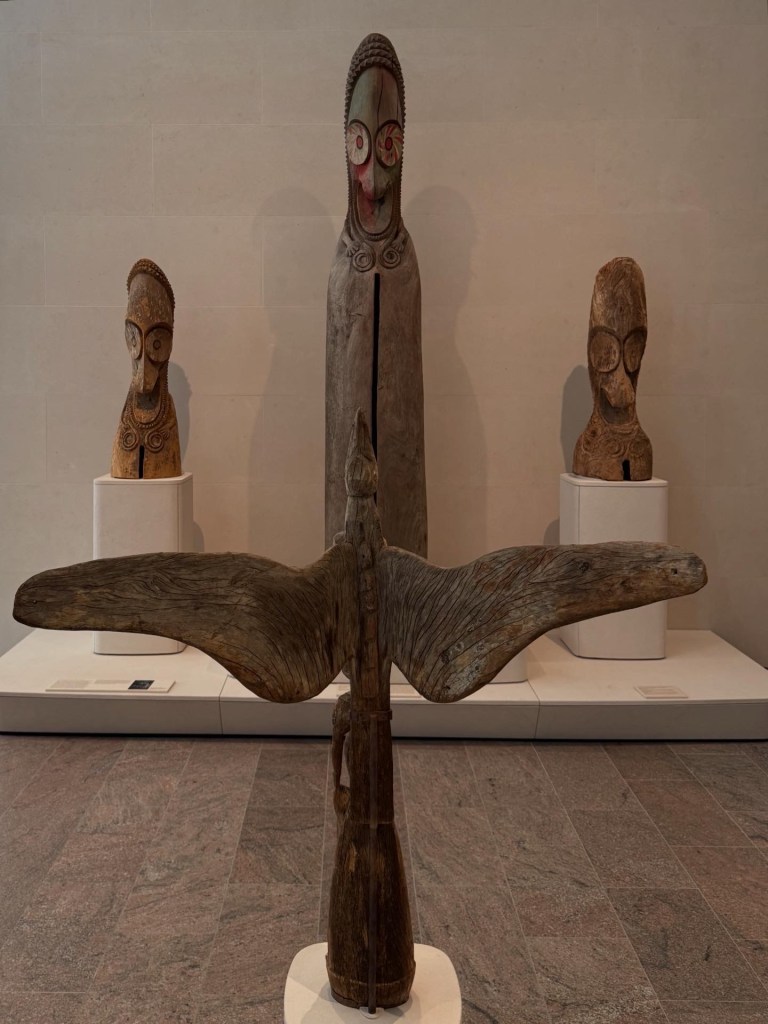
    Foreground: Finial for a ceremonial house, Sawos artist; Kaimbiam village, Middle Sepik River, Papua New Guinea
Background: Finials from Ambrym Island artists; Fanla village, Vanuatu
    Foreground: Finial for a ceremonial house, Sawos artist; Kaimbiam village, Middle Sepik River, Papua New Guinea
    Background: Finials from Ambrym Island artists; Fanla village, Vanuatu
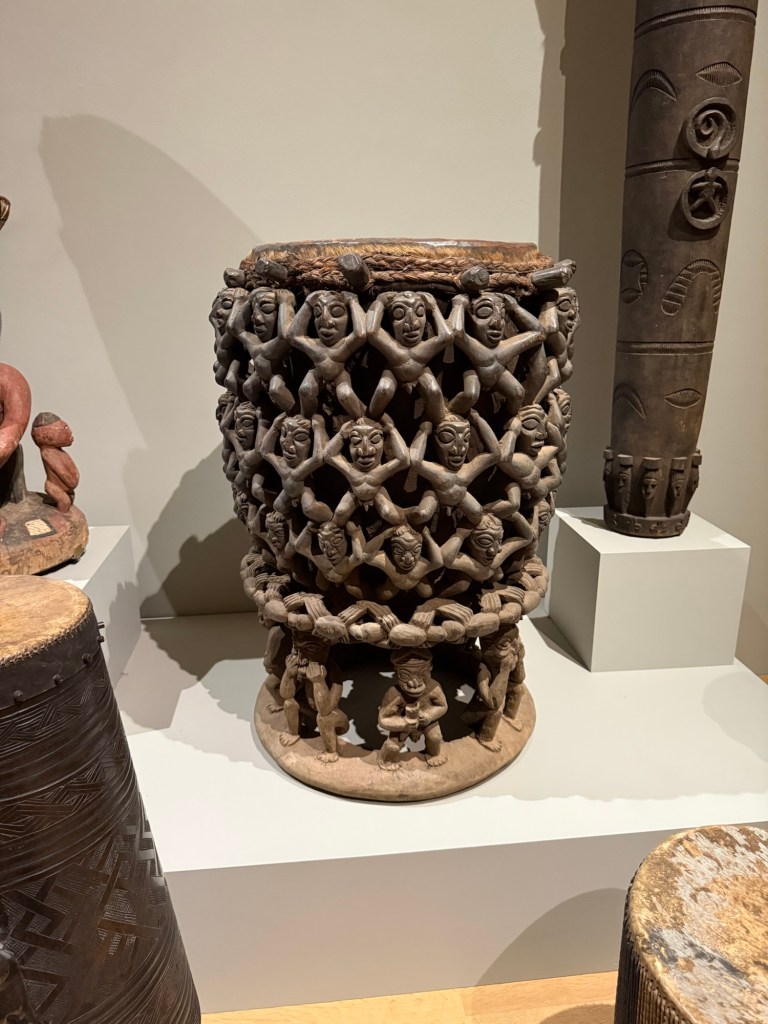
    Drum
Possibly Babungo/Vengo people
Cameroon, ca. 1940
    Drum
    Possibly Babungo/Vengo people
    Cameroon, ca. 1940
    Arms and Armor Room from above
    Arms and Armor Room from above
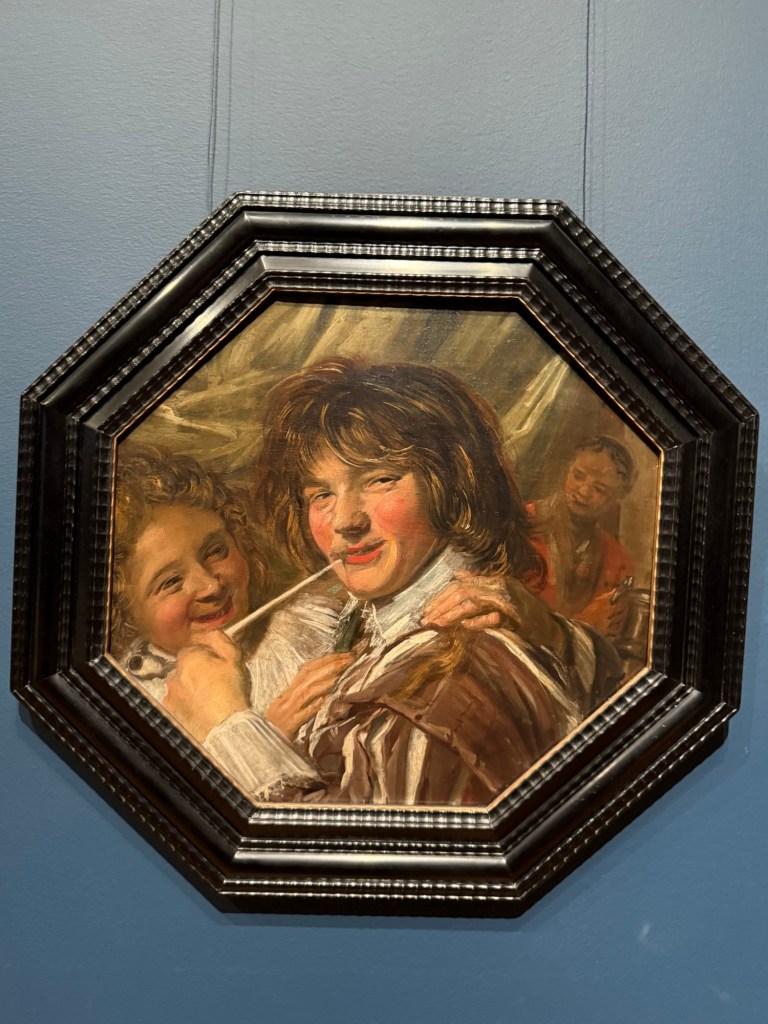
    Frans Hals, "The Smoker", ca. 1623-1625
    Frans Hals, “The Smoker”, ca. 1623-1625
    Pablo Picasso, "The Blind Man's Meal", 1903
    Pablo Picasso, “The Blind Man’s Meal”, 1903
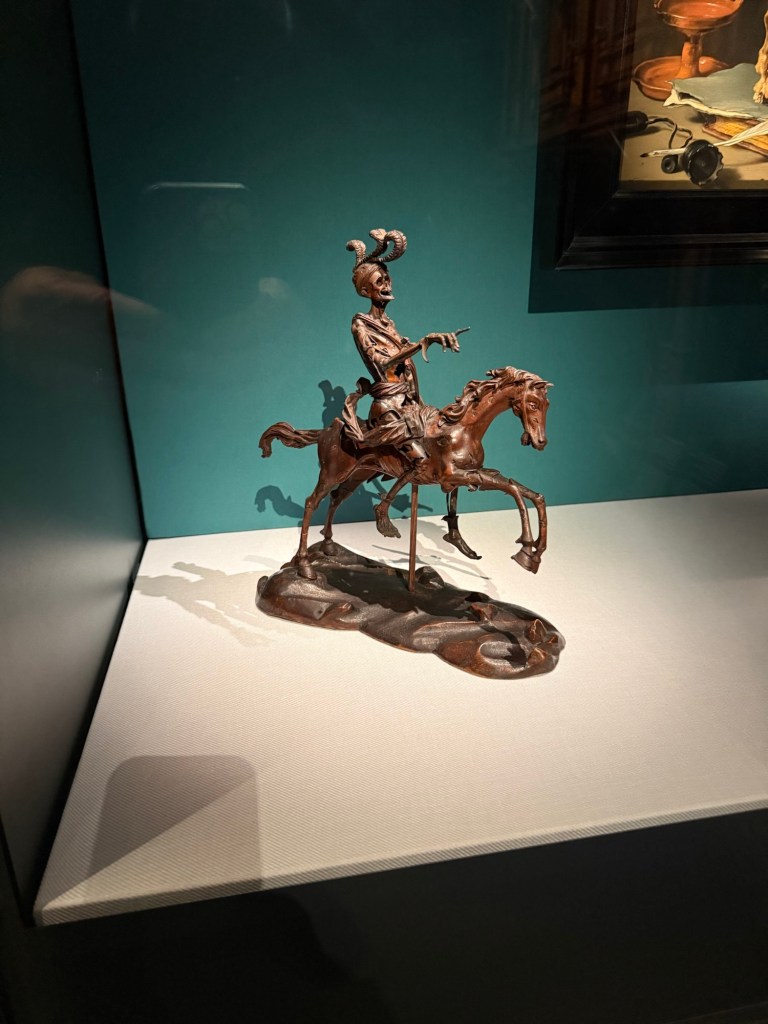
    Death
German, mid-17th century
Lindenwood with traces of pigment, spruce base
    Death
    German, mid-17th century
    Lindenwood with traces of pigment, spruce base
    Auguste Rodin, "The Burghers of Calais"
    Auguste Rodin, “The Burghers of Calais”
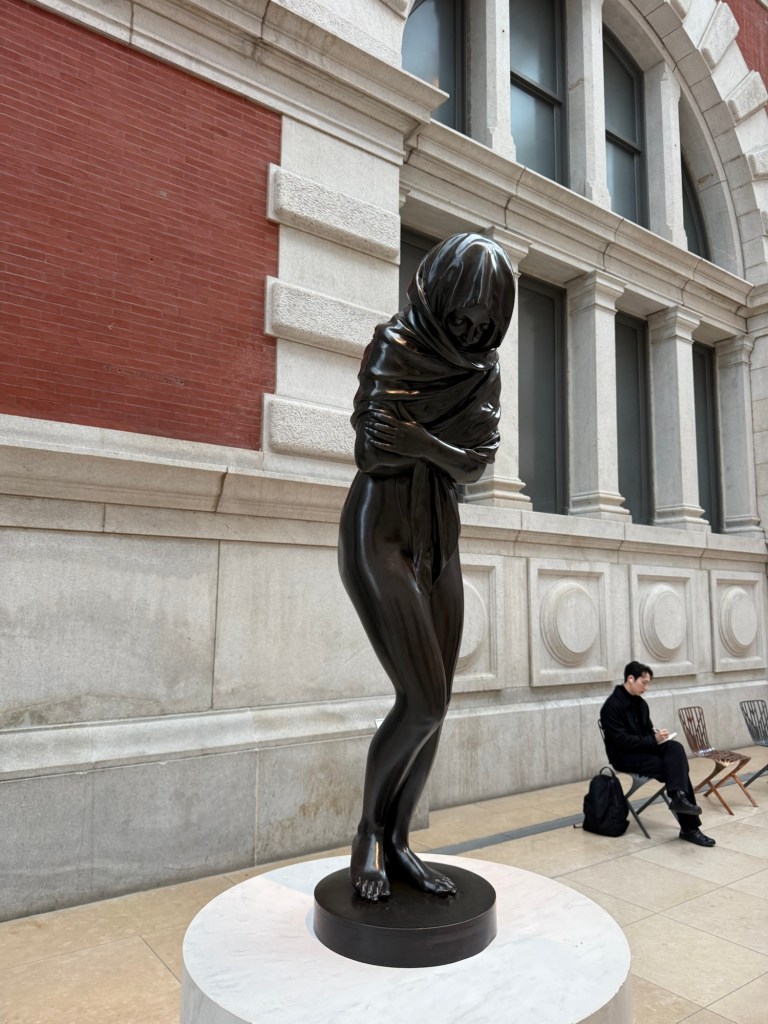
    Jean Antoine Houdon, "Winter", 1787
    Jean Antoine Houdon, “Winter”, 1787
    Fireplace Surround
Attributed to Désiré Muller, ca. 1900
    Fireplace Surround
    Attributed to Désiré Muller, ca. 1900
    Harriet Whitney Frishmuth, "The Vine", 1921 (this cast 1924)
    Harriet Whitney Frishmuth, “The Vine”, 1921 (this cast 1924)
    Antonio Canova, "Perseus with the Head of Medusa", 1804-6
    Antonio Canova, “Perseus with the Head of Medusa”, 1804-6
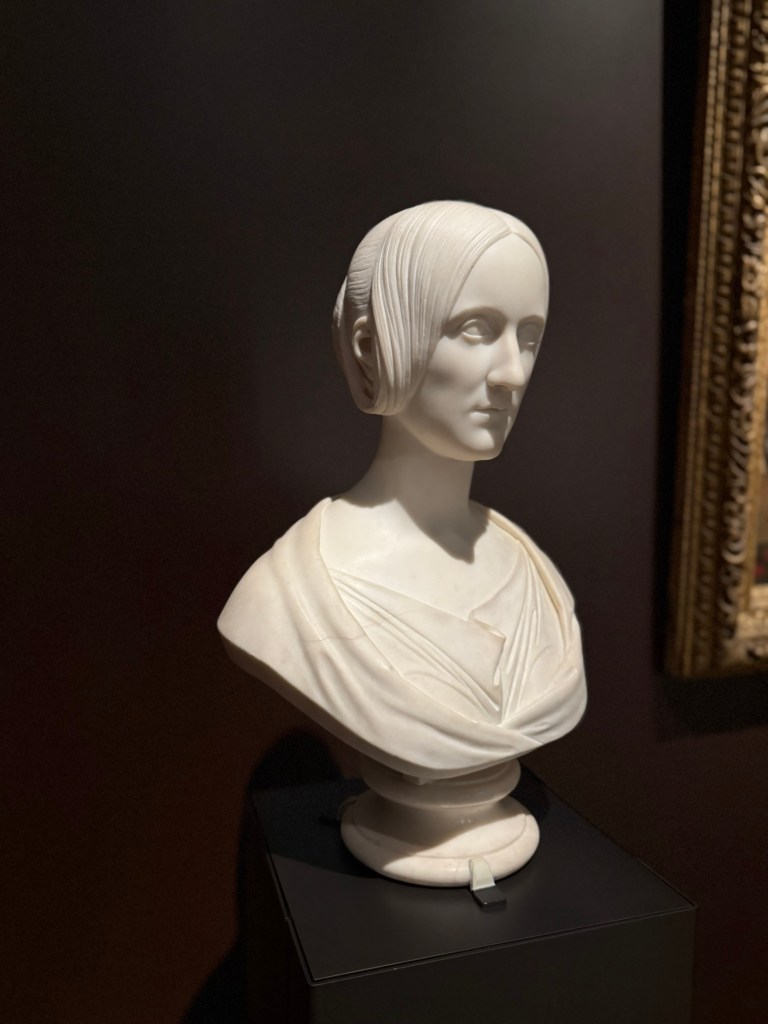
    Camillo Pistrucci, "Mary Shelley", 1843
    Camillo Pistrucci, “Mary Shelley”, 1843
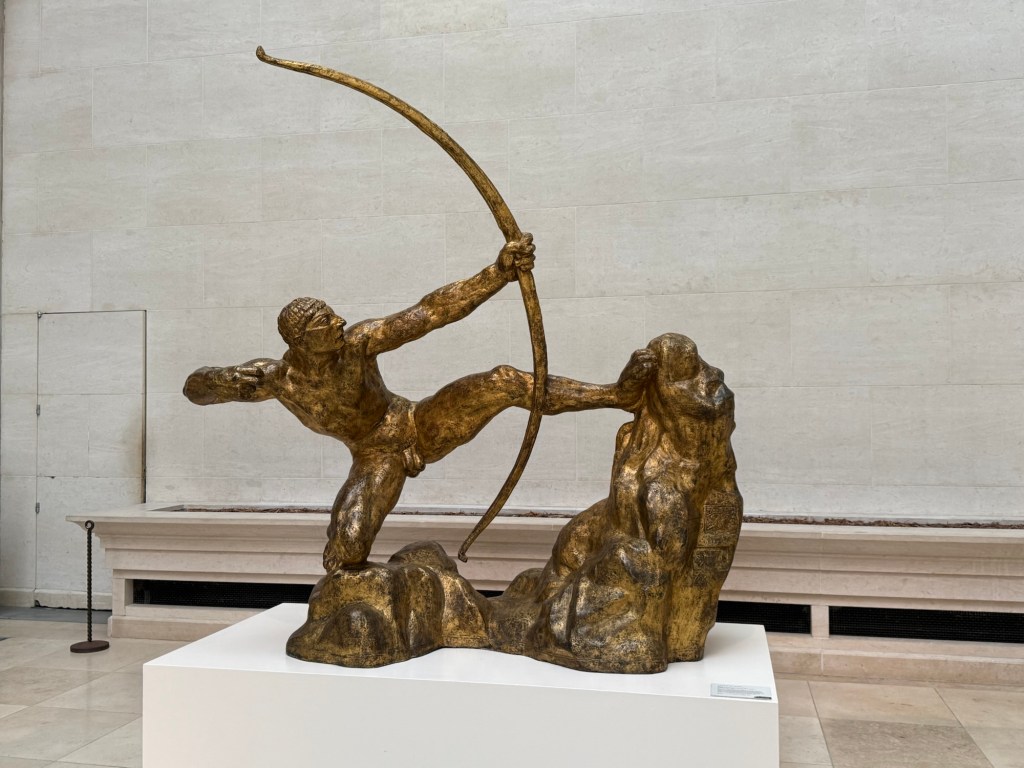
    Émile-Antoine Bourdelle, "Herakles the Archer", 1909
    Émile-Antoine Bourdelle, “Herakles the Archer”, 1909
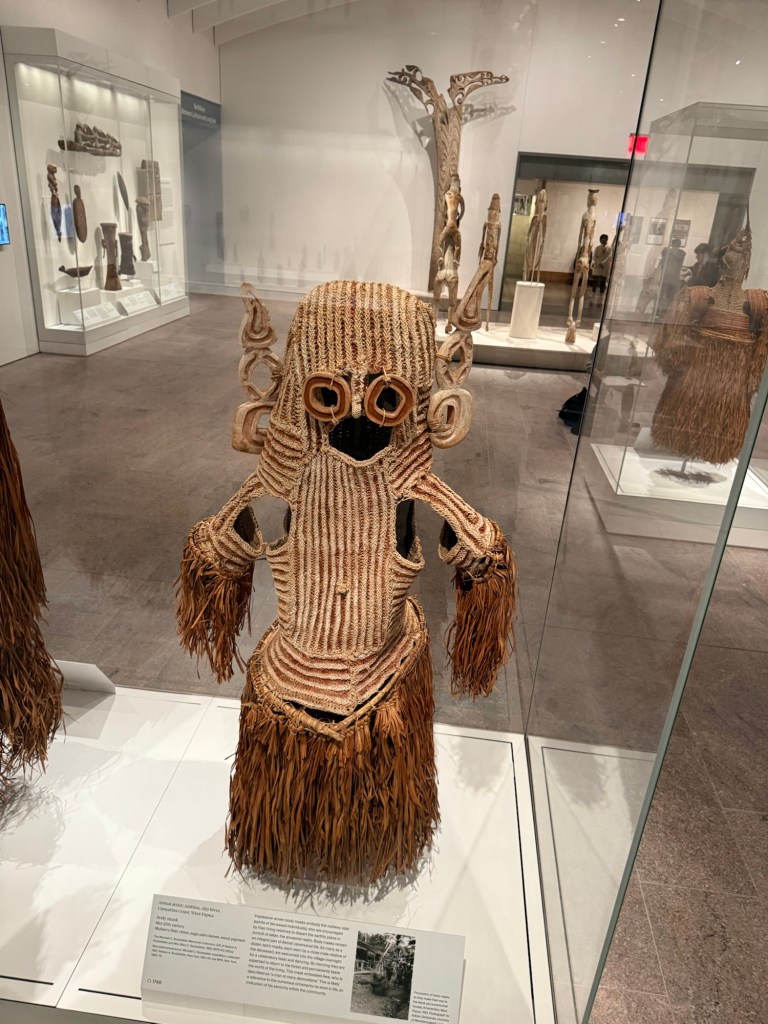
    Body Mask
Asmat artist; Ambisu, Ajip River, Casuarina Coast, West Papua
    Body Mask
    Asmat artist; Ambisu, Ajip River, Casuarina Coast, West Papua
    Bronze helmet of the Illyrian type
Greek, late 6th-early 5th century, B.C.
    Bronze helmet of the Illyrian type
    Greek, late 6th-early 5th century, B.C.
    Mechanical Table
Workshop of David Roentgen, ca. 1780-90
    Mechanical Table
    Workshop of David Roentgen, ca. 1780-90
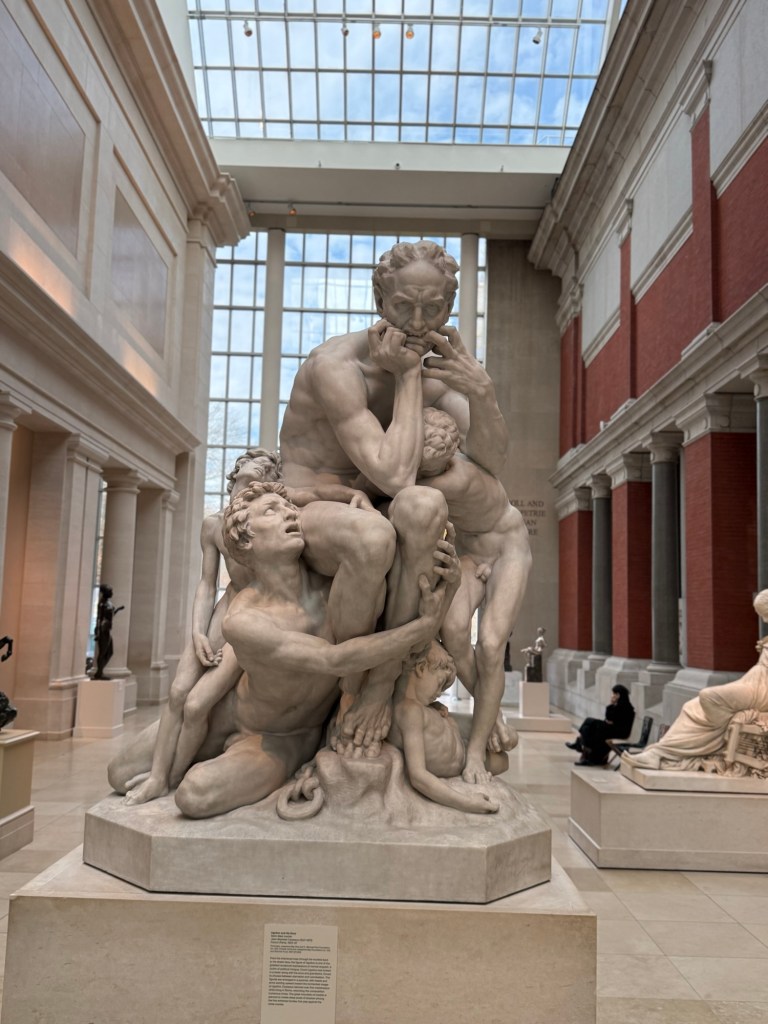
    Jean-Basptiste Carpeaux, "Ugolino and His Sons", 1865-67
    Jean-Basptiste Carpeaux, “Ugolino and His Sons”, 1865-67
    Augustus Saint-Gaudens, "Hiawatha", 1874
    Augustus Saint-Gaudens, “Hiawatha”, 1874
    Asmat artist, Yamas village, West Papua
Wuramon (spirit canoe)
    Asmat artist, Yamas village, West Papua
    Wuramon (spirit canoe)
    Bronze ornament from a chariot pole
Head of Medusa
Roman, 1st-2nd century A.D.
    Bronze ornament from a chariot pole
    Head of Medusa
    Roman, 1st-2nd century A.D.
  • Applied Focus

    “Is it interesting or important?” — Mike Vrabel, New England Patriots Head Coach

    After a couple of days away from home, the cat is especially expressive, meowing relentlessly for attention. Attention given, she is quiet for a few seconds, then begins again. There’s no creative space for writing with a cat meowing for your full attention. But that doesn’t matter, does it? This is the time to write, and so the writing happens anyway.

    The world doesn’t care if we want to focus.

    Is it interesting that the Louvre was just robbed in 7 minutes? Yes, because the robbers changed the game by shortening the time between detection and response, which will impact security globally. When you think about things like security for a living, that fact is more than interesting, but important. It’s too soon for all the answers, but finding more effective ways to detect, delay and respond to future threats is what security professionals will focus on next, even as others search for the robbers from this event. It’s a tragic development for art lovers either way, both for the loss and for the potential restrictions to access it may create in an attempt to mitigate the impact of future threats.

    Interesting will distract us all day if we let it.

    Applying focus is how we take charge of our days. After giving attention, and food to the cat, she’s still inclined to meow into my creative space. Noise-cancelling headphones playing Mark Knopfler’s Wild Theme on repeat will allow me to finish this blog post, and then pay attention to the cat again. What’s important to her is not necessarily important to me in this moment. The dog, bless her, gives me precious presence but also space to think.

    We become what we focus on the most.

    How do we win the day? One small win at a time. The pets deserve some attention first thing in the morning, but after that, our priorities deserve a little attention too. What are the important tasks that must be focused on to make today successful? What can we do to enhance our ability to accomplish these tasks? Interesting steals from important every day. It’s up to us to focus on the right thing, right now.

    So focus on the important at the expense of interesting.

  • Always Mine Time

    “When I paint a picture, the time it takes will always be mine, or I get something out of it; time doesn’t end because it has passed. I feel sick when I think about the days that are passing—interminably. And I don’t have anything, or I can’t get at it. It’s torture; I can get so furious that I have to pace the floor and sing something idiotic so that I won’t start crying with rage, and then I almost go crazy when I stop again and realize that meanwhile time has been passing, and is passing while I’m thinking, and keeps on passing and passing. There is nothing so wretched as being an artist.” — Jens Peter Jacobsen, Niels Lyhne

    When we stumble across that which captures our move through time, traps it in amber as Vonnegut put it, we realize the infinite—that which is timeless. Timelessness is itself an illusion, as is time, we simply capture our passage through it with something that will outlast us.

    Do you doubt this? Look at an old photograph from a moment in the past and feel what stirs within. Read an old letter, when people still wrote those, and see what is captured in amber. I write this blog post, as with all the rest of them, knowing that once I hit publish it becomes always mine time—this moment of thought and emotion and intellectual momentum (or perhaps inertia) are now captured. I move on to the next thing in my day, and the next; passing and passing. What of the rest is captured? Precious little, but these words remain.

    What artist hasn’t felt swept up in the moment of creation? What artist hasn’t felt the emptiness of uncreative moments? We must be productive in our time, or watch it drift away like so many empty days. The only answer to the coldness of time is to do work that matters, and to strive towards mastery in it. Personal excellence (arete) may be forever out of reach, but to reach for it is to make something more out of… time.

  • Walls Be Damned

    “Art may only exist, and the artist may only evolve, by completing the work.” — Rick Rubin, The Creative Act: A Way of Being

    I was reading some poetry, thinking that maybe I’d include it in today’s blog, and each poem spoke to me reluctantly—’tis not our day to be turned about in your precious blog. I know a cold shoulder when I encounter one. We must never force the issue, for we’d all know the truth of the matter soon enough. Some days we must simply work our way through our walls without the dance of poetry and song to light our way.

    Ideas come easy. It’s the work to realize them that is difficult. Writing every day is a form of paying penance to the muse, but also a ritual of doing what I said I was going to do, if only for this hour or two before the day washes over me. Excellence is a habit—right Aristotle? Well, this work in progress aspires towards excellence, as we all should in our pursuits, even knowing we will fall short. Ah yes: short, but ever closer. That’s the thing, friend.

    Having completed a blog, having clicked publish, the muse feels satiated and the pressure is off until tomorrow morning, when it will press upon me yet again. But there are other stories to tell, deferred indefinitely. Will those stories pass with me one day, or will I finally bring them to light? That’s the curse of the creative mind, knowing there’s more to tell, but for more time. The only answer is to just do the work—walls be damned. For our time together is only so long, and there’s so very much to bring to light.

  • A Dream of September

    “One of the most powerful wellsprings of creative energy, outstanding accomplishment, and self-fulfillment seems to be falling in love with something—your dreams, your image of the future.” — Ellis Paul Torrance

    If August infers grandeur and majesty, September—Sept—is related both to the clan (Scottish) or simply seven (French). The Highland Games return to New Hampshire, uniting the clans once again, and this was once the seventh month until some knucklehead added two months to the beginning instead of the end of the calendar, forever screwing up the logical order. Isn’t it funny how so many buy into a flawed story? We humans are completely illogical. But I digress…

    When you live in New England, September infers the beginning of magic. This is the high holy season of change and enlightenment. It’s a time of harvest, cooler days and the formal return to learning. We ought to listen to the rhythm of the season and embrace the transformation we wish to embark upon.

    We can literally feel it in the air—these thirty days of September are neatly packaged for life change. We must listen to what whispers. So what stirs within? Our creative energy demands a departure from what was towards what will be. And what a thrill to be a part of it!

    My enthusiasm may seem over the top, but isn’t this the place from which transformative action is born? Dreams aren’t meant to be dull and plodding, but crisp and bursting with flavor, like an apple awaiting plucking with a twist of the wrist. September is upon us, so what shall we harvest in our season? Dream big and get to work. This dream of September moves so quickly.

  • Boundless As the Elements

    “There is no theory. You have only to listen. Pleasure is the law. I love music passionately. And because l love it, I try to free it from barren traditions that stifle it. It is a free art gushing forth — an open-air art, boundless as the elements, the wind, the sky, the sea. It must never be shut in and become an academic art.”
    ― Claude Debussy

    Listen to Clair de Lune again, having read Debussy’s purpose for writing music. There’s magic in the music, released to dance in the moonlight—and with our imagination. It’s a breathtaking journey taken five minutes at a time. Sometimes I’ll simply play it on repeat and write, that I may reach the places the piece will take me to. May we all reach that level of mastery in our own work.

    Debussy was inspired to write Clair de Lune by a poem of the same name, written by Paul Verlaine. The poem is breathtaking in it’s own right, and one can see why Debussy drew inspiration from it. We in turn may draw inspiration from each ourselves. L’amour vainqueur et la vie opportune

    Below is a wonderful translation of it by Chris Routledge in The Reader:

    Votre âme est un paysage choisi
    Que vont charmant masques et bergamasques
    Jouant du luth et dansant et quasi
    Tristes sous leurs déguisements fantasques.

    Tout en chantant sur le mode mineur
    L’amour vainqueur et la vie opportune,
    Ils n’ont pas l’air de croire à leur bonheur
    Et leur chanson se mêle au clair de lune,

    Au calme clair de lune triste et beau,
    Qui fait rêver les oiseaux dans les arbres
    Et sangloter d’extase les jets d’eau,
    Les grands jets d’eau sveltes parmi les marbres.

    Your soul is a select landscape
    Where charming masqueraders and bergamaskers go
    Playing the lute and dancing and almost
    Sad beneath their fantastic disguises.

    All sing in a minor key
    Of victorious love and the opportune life,
    They do not seem to believe in their happiness
    And their song mingles with the moonlight,

    With the still moonlight, sad and beautiful,
    That sets the birds dreaming in the trees
    And the fountains sobbing in ecstasy,
    The tall slender fountains among marble statues.

    — Paul Verlaine, Clair de Lune (Moonlight)

    Here lies the beauty of the creative life. We write and create art that represents our verse, shared with humanity for as long as beauty rises above tyranny. Life is surely bounded with an expiration date stamped for each of us. Our timelessness isn’t our physical presence, it’s the ripple of spiritual presence carried onward through relationships (love) and our creative expression, as boundless as the elements (should we set it free).