Category: Culture

  • Designing the Sweet Life (La Dolce Vita)

    “A man must find his occasions in himself, it is true. The natural day is very calm, and will hardly reprove his indolence.” ― Henry David Thoreau, Walden

    In a full confession that will surprise no one in my circle of friends and family, I struggle with the act of idleness. I rarely sit still, even on vacation, choosing to explore whatever place I find myself in, and too often stack too many activities into those “idle” days. There’s no lying on the beach for hours for me. The default is activity over idleness. I marvel at the pets for their ability to simply nap away hours of a day. If I nap at all I set the alarm for 15 minutes and get right back to moving about as soon as possible. And the idea of sleeping in? There is no snooze alarm in my world.

    But that doesn’t translate to being productive all of the time. We can putter about without really getting anything done. The world is full of people quietly quitting the work they have in front of them. There are plenty of people opting out of frenetic lifestyles. There are whole cultures built around the sweetness of doing nothing (dolce far niante: I’m looking at you Italy). So how do we restless souls learn to chill out a bit and live the sweet life (la dolce vita) ourselves?

    “Doing less meaningless work, so that you can focus on things of greater personal importance, is NOT laziness. This is hard for most to accept, because our culture tends to reward personal sacrifice instead of personal productivity.” ― Timothy Ferriss, The 4-Hour Workweek

    The thing is, Thoreau and Ferriss, both known for promoting more strategic idleness in our days, have also produced some significant work that resonates beyond the moment they created it. For all their perceived idleness, there’s an underlying productivity hidden in plain sight. That’s what people miss in the idea of la dolce vita—it’s living the sweet life while still keeping the lights on with productive work. It seems we can have it all, if we create a lifestyle that is both pleasurable and productive.

    The trick is being far more strategic in our productivity, thus giving breathing room for idleness. We ought to know what we’re really setting out to do in this lifetime, and break that down into milestones. Milestones in turn are achieved through work strategically designed into our days. If that sounds like the antithesis of dolce far niante, well, I understand. But it really is the essence of living Thoreau’s “natural day”: filled with enough idle time to feel we’re not cogs in a machine while still producing something memorable.

    Productivity (and idleness) requires focus. Doing the work that matters most in the moment and then get on with living that sweet life. We’re all students of maximizing the potential of our lifetime. We ought to know what makes life sweet, and also meaningful. Designing a pace of life that balances the two is the essence of a sweet life.

    Ultimately, designing a lifestyle that maximizes our potential should be our focus. But potential for what? Wealth? Fame? Isn’t it really time spent doing the things that makes a life sweet? Time with people who matter a great deal to us. Time doing the things that make life a pleasure. Time structured in a way that it doesn’t feel like we’re biding our time but living it.

    So the question when designing a lifestyle is, “what will maximize the number of beautiful moments we may stack together in this finite lifespan?” Nothing brings focus to our days like remembering we only have so many of them. Memento mori. Stop wasting time thinking about it and go live it, today and every day we’re blessed with. The Italians are on to something, don’t you think?

  • So Apart We’ve Grown

    One of these days
    I’m gonna sit down and write a long letter
    To all the good friends I’ve known
    And I’m gonna try
    And thank them all for the good times together
    Though so apart we’ve grown
    — Neil Young, One of These Days

    Talking to an old friend, we asked each other about other old friends. Who have we seen? Who has drifted away? How are the kids? It was a reminder of the person I used to be who danced with the world in the best way he could at the time. We’ve grown so far apart since then. Yet we’re still the same in so many ways.

    The thing is we’re all becoming something more as the layers pile on. Those layers either smother who we once were or keep that person warm for the day when we fling off the years and dance like it’s 1999 again. Like a tree, those growth rings differ year-to-year. Some years are better than others, some are distinctly harder. We reach for the sun in good times and bad and put the seasons behind us, until one day we look around and wonder where the time went.

    One of these days, we’ll all get together again. We won’t miss a beat, I expect, just as we didn’t miss a beat last time. Somewhere deep inside us is the person we were then, thrilled to come out and play the part once again. Sure we’re all so very different as life rolls along and sometimes over us all. But there’s a spark of energy between old friends that remains to rekindle the flames of our youth. A time before mortgages and divorces and funerals for people we thought would be here with us now, in this very conversation, talking about who we were then.

    Those conversations change as we grow, from who we want to be when we grow up to who we want to be now that the kids have grown up. That’s a lot of growth to catch up on some day when we get back together with those old friends. Now is just another growth ring we’ll laugh about (perhaps someday). We all know that the future is coming for us soon enough. But those growth rings make their own music. And we have so very much to catch up on.

  • Choices

    A friend asked me which five songs I would choose if I could listen to no other song but those five for the rest of my life. An impossible task, really. Beyond your wedding song, if you truly loved it, what do you choose? Hard rock? Dance music? Introspective music? Singalong songs? Jazz? Classical? Death metal? Do you go with the first five you think of? The five most played on your phone? Or do you mine a little deeper, knowing that this is for keeps and there’s no time for casual affairs?

    When I put the initial list together in my mind and reviewed it, I noticed that my two favorite bands weren’t represented. Yet I could do the same five song exercise with either band and have a hard time deciding what to leave off. Another friend of mine once asked me to rank the best albums of a band we both love from best to worst. The worst is easy, but what do you choose as the best? It depends on your mood at the time. It’s the same with ranking songs, isn’t it?

    Imagine putting a list together like this, not as an ice-breaker, but as truly the only five songs you’ll ever hear again. Imagine the pressure, the last minute switches. The forgotten gem that you’ll regret excluding forever. Having to choose when the stakes are real sucks. The hard part is always what you must leave behind when you choose that other thing.

    The exercise should lead us to gratitude. We ought to be grateful that we don’t have to choose. We ought to be grateful that our days are filled with an abundance of choice on what we eat, what we read or watch, where we live, and yes, what we listen to. It’s truly an embarrassment of riches for most of us.

    It should also lead us to evaluate what our choices have been thus far in the game. We aren’t here for all that long, yet we remain frivolous with what we do with our time. I’m well aware that I’m choosing to write this blog at this moment instead of taking a long walk in the woods. Which is better for me in the moment? We must choose wisely, but then accept the choice that we’ve made if it’s working for us. Happiness is not found in constantly changing our mind about what we want.

    Life can never be about having everything. Just enough of some things. Things like beauty and love, engagement with the universe and the active pursuit of better. That’s the soundtrack to a great life. Something we can dance to.

  • A Serious and Omnivorous Reader

    “I think most serious and omnivorous readers are alike- intense in their dedication to the word, quiet-minded, but relieved and eagerly talkative when they meet other readers and kindred spirits.” ― Paul Theroux, Ghost Train to the Eastern Star: On the Tracks of the Great Railway Bazaar

    I’m determined to read 5-6 more books before the calendar year ends. This necessitates lifestyle choices, of course, but that’s par for the course with a reader. We who read often absorb the judgement of both those who choose to watch, and those who choose to do. As if reading as an alternative to watching a movie or a game or going out on the town is such a poor choice. The only poor choice is lethargy and sloth. There’s nothing lethargic or slothful about an active brain engaged in reading.

    The thing is, there are only so many books we can read in a lifetime. There are only so many movies one can watch, only so many walks we can take or bars we can close out, only so many dogs you can bring into your life, only so many stamps we’ll ever have in our passport, and so on. Whatever the lifestyle choice we make for ourselves, we must recognize that it’s inherently limited, because we are.

    When the year ends, I’ll have read about 25 books. That includes some pretty heavy lifts, but a few page-turners as well. This is down from a year ago, when I cleared 30 books leaning more heavily into fast fiction reads. Reading is also heavily dependent on how we travel, how we engage with the rest of the world, and whether we choose to write a blog every day during prime reading hours. With a full house this summer, I read much less than I might have with an empty nest. The trade-off was naturally worth it, but the unread books mock me nonetheless. And then there’s Goodreads, which only tracks the new books we’ve read, not the total including old favorites that we return to again and again. Shouldn’t it count when you re-read Walden or Awareness or Meditations for the umpteenth time? Of course it matters a great deal, but why are we counting anyway?

    Somewhere over the last year I’ve stopped worrying so much about the count and began focusing on what I absorb in my reading. I linger with a quirky set of authors who bring all manner of perspective to the universe. Why do we rush off to read the next big thing instead of revisiting that thing that’s whispering in the back of our mind? That person who read Slaughterhouse Five in high school is nowhere near the person who re-read it this summer. What have you re-read with an entirely different perspective?

    There’s a popular conversation starter that begins with the question, which albums would you bring to a deserted island with you—which ten albums would you listen to over everything else that’s out there, should you be destined to spend the rest of your life listening to no other music? It’s an impossible ask, really, but reveals a lot about the people around the table, should they be truthful. Music is always a deeply personal choice, influenced by our environment. So it is with books. So taking that question from music to literature, what books would you bring with you? If you were told to leave the planet on a trip to Mars, never to return and not having the Internet to constantly refresh your feed what would you want to read again and again to the end of days? A serious and omnivorous reader could tackle that list readily, with the natural regret of the large stack of books left behind.

    My own list would include the Thoreau, de Mello and Marcus Aurelius books listed above, along with some history, some poetry, and some fiction. None of the books I’ve read thus far this year—even the books I’ve rated as five stars—would make the list. Does that make this year a failure in not elevating my library, or a validation of that which I’ve already danced with? The answer lies within us, doesn’t it?

    Returning to the inherent limitation of how many books we can read in a lifetime, shouldn’t we be very deliberate in what we choose? I believe we should read as much and as widely as we can, that we may gain perspectives otherwise untapped. Particularly in a world that wants more than ever to control the conversation, we owe it to ourselves to go well beyond the populist fare to find voices that otherwise get drowned out in all that shouting and posturing. In the end, it’s the well-read who bring perspective and stability to an otherwise reactionary world.

  • A Dream Won’t Chase You Back

    If you got a chance, take it, take it while you got a chance
    If you got a dream, chase it, ’cause a dream won’t chase you back
    If you’re gonna love somebody
    Hold ’em as long and as strong and as close as you can
    ‘Til you can’t
    — Cody Johnson, ‘Til You Can’t

    In America, this week is always distracting. There are so many moving parts before Thanksgiving: Ingredients to purchase and prepare, people to check in with traveling from near and far, furniture to plot out in anticipation of rooms filled to capacity, cleaning (so much cleaning!), and for some of us, work to reconcile before the holiday break. This week is a hectic, wonderfully stressful mess that some of us love more than any other in a year full of blessed weeks.

    We build the life we most want, don’t we? But we can’t control everything, we must be open to the changes the universe presents to us. Who won’t be at the table this year who was there last year? Who won’t be at next year’s table? It might just be us. The underlying message is to do what must be done now. That could be rightly viewed as the overall theme of this blog for most of the last five years. Tempus fugit. Memento mori. Carpe diem.

    Most of us postpone the call or the question or simply beginning what is so much more important than what we’re doing otherwise. Most of us waste time. Henry had some advice for such moments:

    As if you could kill time without injuring eternity.
    The mass of men lead lives of quiet desperation. What is called resignation is confirmed desperation.
    — Henry David Thoreau, Walden

    We ought to feel the urgency of Thanksgiving every week. Perhaps we’d be exhausted and collapse on the couch eventually, but then again, perhaps we’d condition ourselves to living a larger life—full of love and a wee bit of conflict, anticipation and conversation, and something sweet to cap it all off with before you clean up yet again and look ahead to the next big thing. We aren’t here to kill time, we’re here to make the most of our time together before we lose our place at the table. By all means, seize it (because it won’t chase you back)!

  • Stillness and the Swirl

    When despair for the world grows in me
    and I wake in the night at the least sound
    in fear of what my life and my children’s lives may be,
    I go and lie down where the wood drake
    rests in his beauty on the water, and the great heron feeds.
    I come into the peace of wild things
    who do not tax their lives with forethought
    of grief. I come into the presence of still water.
    And I feel above me the day-blind stars
    waiting with their light. For a time
    I rest in the grace of the world, and am free

    — Wendell Berry, The Peace of Wild Things

    Manhattan enthralls. Manhattan is a jumble of ideas all shouting to be heard. Like the world jammed into an island could be expected to behave, there is a jostling for the top. Skyscrapers reaching higher, with more and more flair, like the people who occupy them. Manhattan demands the best we can muster of ourselves. Many fall far short of this, to be sure, but the demand is there for those who will listen.

    I’m usually good for two days of this, three tops, before I crave stillness again. The delight of sitting on the deck stairs with the pup curled up for an ear scratch and stubborn oak leaves drifting to earth. The call of simple stillness drowns out the noise of the streets, drowns out the madness in the world, drowns out the voice inside me that wants more of the bustle and hum of a city anticipating parades and Christmas lights in the weeks to come. This magic is borrowed, not mine to keep.

    The line between chaos and order is thin and tricky to find balance on as we make our way through a lifetime. A bit of poetry on one side, a dance with titans and hustlers on the other. We stumble and right ourselves, lean this way and that, breath deeply and step forward again. Hoping angry winds don’t blow us into chaos. Hoping whispers of doubt don’t betray us. Hoping we can carry on in the darkness beyond our control. We only control the next step.

    New York demands attention. Sirens and horns and the rumble of constant change a soundtrack penetrating my soul. The news of the world is dire. Seemingly darker by the day. How do we find peace despite it all? We ought to remind ourselves that the universe is bigger than the schemes of humanity. We ought to reverently walk in the woods. We ought to be grateful for the quiet familiarity of home even as we race through a city that never sleeps. Even the swirling leaves from a stubborn oak ground themselves eventually.

  • The Newport Cliff Walk

    Newport, Rhode Island is known its notable music scene with world-renowned folk and jazz festivals, as an epicenter of sailing culture (longtime home of the America’s Cup) and the party town any sailor would want in a home port, for the Tennis Hall of Fame, but mostly, Newport is famous for its mansions. Those mansions, built as summer “cottages” by wealthy families like the Vanderbilts, are massive and interesting to tour if you want to get a sense for how the wealthy lived in the Gilded Age of 1870 to 1910. Industrial titans and savvy global traders moved here to be where other wealthy people lived—to be amongst their peers in net worth.

    The phrase “The Gilded Age” was coined by Mark Twain, and not as a complement. He was pointing to the thin veneer of wealth that hid a lot of problems underneath it. It has taken on a romanticized connotation since then, but we ought to remember that these were just people with the same issues we all face in families and relationships, with the blessing and curse that money layers into the mix. I’m not a fan of wealth politics or keeping up with the Jones as a lifestyle choice, but I can appreciate the craftsmanship of the mansions and the wealth required to build and maintain them.

    The strip of land between this collection of Gilded Age and modern-day mansions and the sea is public domain. It’s here that you’ll find the Cliff Walk. Sections of the Cliff Walk are meant for everyone to traverse. You could easily walk or roll a wheelchair on most of the paved sections between Memorial Drive and 40 Steps, the staircase that descends to the ocean. The section between Salve Regina University and The Breakers is equally well-suited for accessibility. Beyond that the path becomes best for the sure-footed. If you don’t love hopping between boulders there are sections of the Cliff Walk that aren’t for you. But there’s something for everyone.

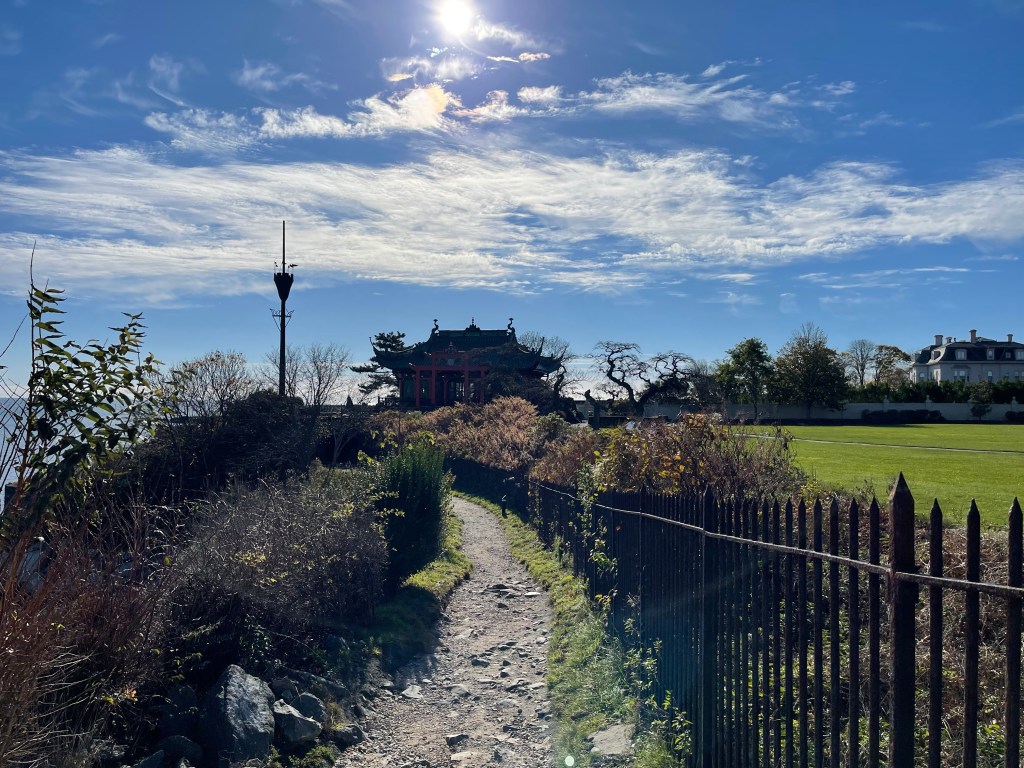
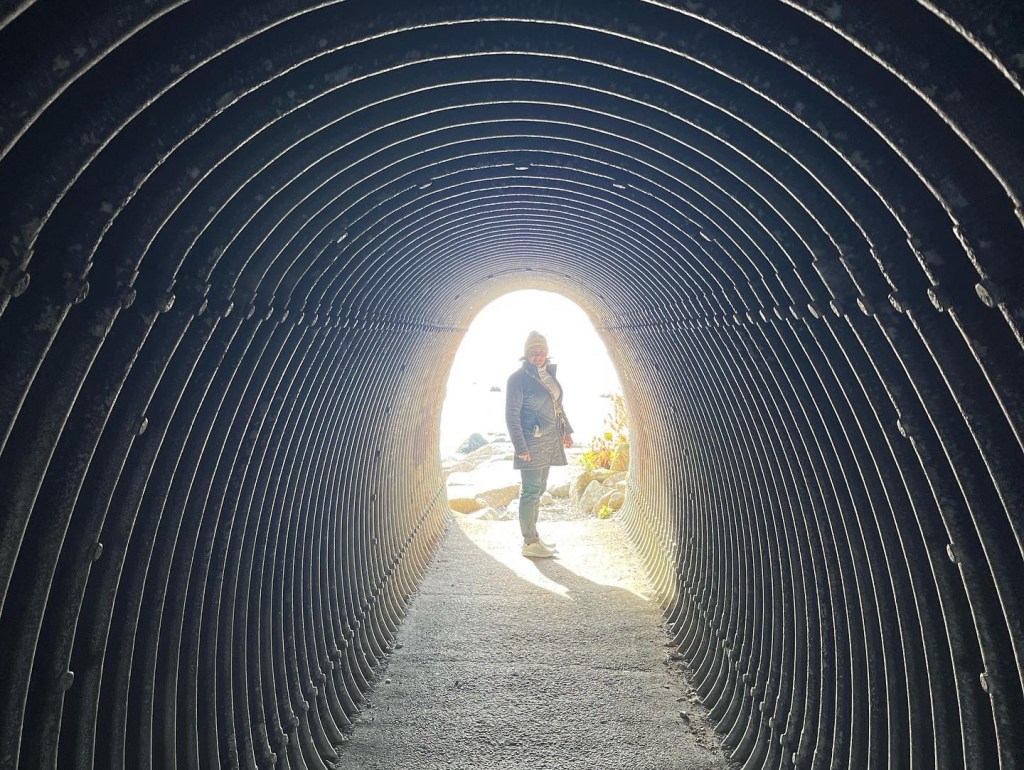
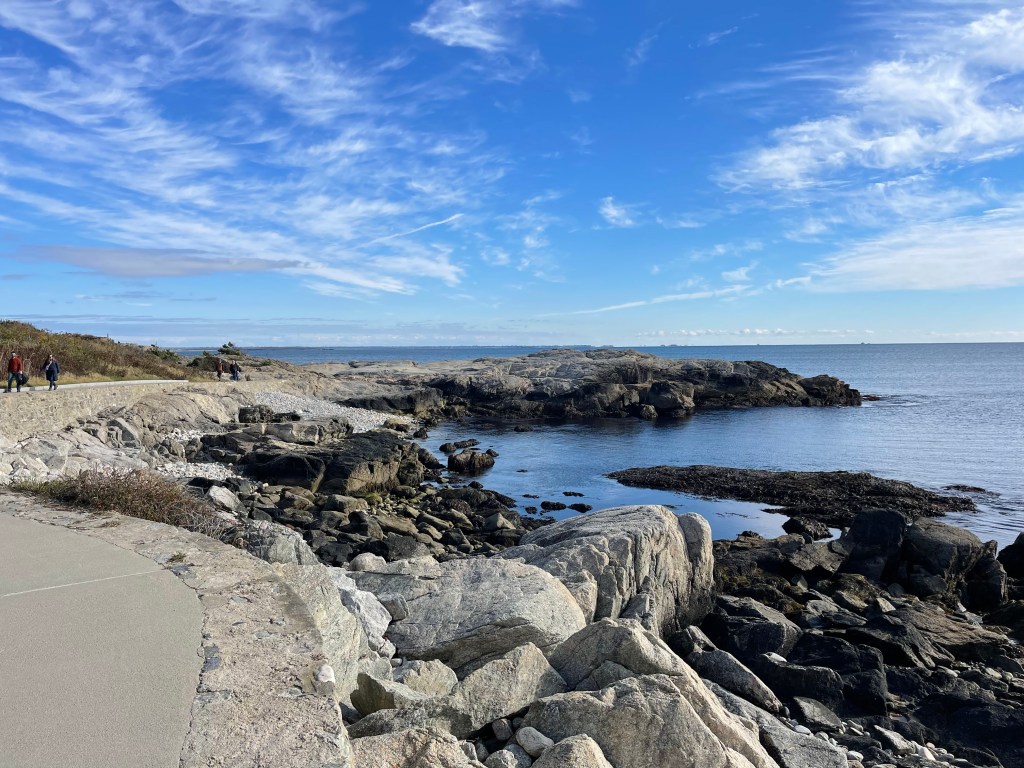
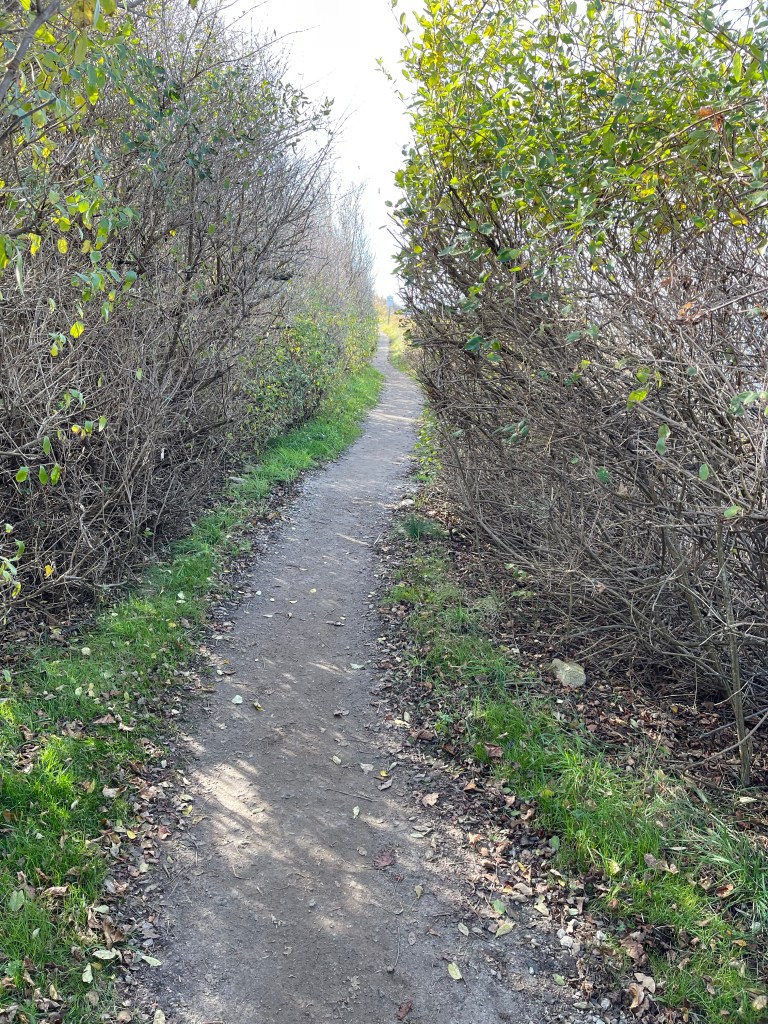
    For me, the magic of the Cliff Walk isn’t just the glimpses of manicured lawns and mansions, it’s the diversity of the walk itself. At times paved walkway, other times rock scramble or beach sand. Even a couple of tunnels to move the public quietly through the historic and high end real estate above. It’s a fascinating place to traverse, taking you from one beach to another past billions of dollars of American wealth.

    The Cliff Walk is officially 3 1/2 miles long, but we extended it to almost 6 miles, from Old Town to the Eaton’s Beach starting point, and from the end at Baily’s Beach along Bellevue Avenue to Rosecliff Mansion. On a crisp and sunny November day it wasn’t crowded but it was surely beautiful. From Rosecliff it’s an easy walk to The Breakers, the largest of the mansions and the flagship of Newport’s Gilded Age “cottages”. The fact that they called them cottages tells you all you need to know about the vast wealth of the families who visited Newport each summer.

    Ultimately, a stay in Newport is never quite long enough. I didn’t have a summer to mingle with the locals, but a mere weekend. The Cliff Walk was a great lynchpin stringing together an epic walking day in the Celestial City. It justified some of the great dining experiences we had, and have us thinking about a return trip sometime soon.

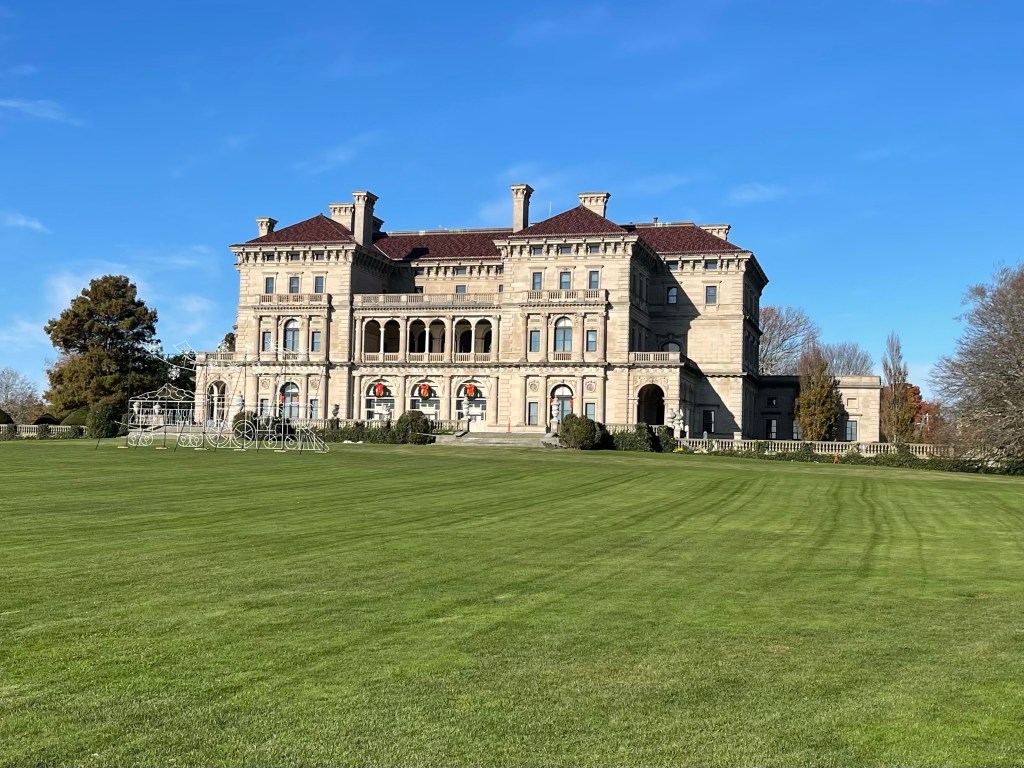
    The Breakers
    Beautiful gazebo tucked up tightly against the Cliff Walk
    The Tea House, shadowed by morning sun
    Tunnel under the Tea House
    Not all sections of the Cliff Walk are easy to traverse
    Rugged coastal beauty is everywhere between the Cliff Walk and the sea
    All kinds of terrain will greet you on your walk
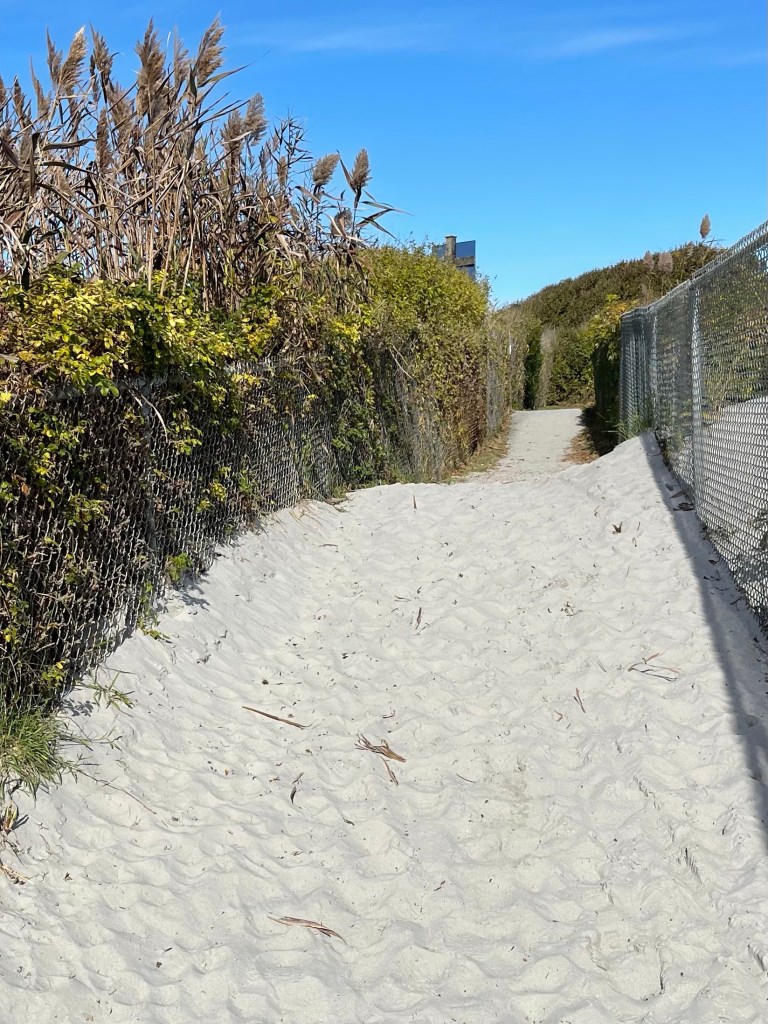
    The finale of the Cliff Walk is a walk through beach sand to the road
  • Missing the Signs

    After dinner with my bride at a local tavern, she saw a neighbor across the room and went over to say hello. We would see this woman and her husband now and then at restaurants and joke that we never seemed to see them in the neighborhood, where they lived just across the street from us. This time she was having a drink alone, and she explained that her husband had passed away in July with express wishes to not make a big deal of it.

    A big deal of it… We were shocked at his passing and wondered how we’d missed the signs of his absence since then. Construction project at home, a new puppy, friends staying over for a time, and vacation time all conspired this summer to make us less aware, but so unaware that we didn’t notice the absence of a neighbor for three months?

    It turns out we did notice—we just didn’t put it together. Different people mowing the lawn. The trash barrels rolled out at a different time than they used to be rolled out. The pickup truck no longer in the driveway. All of it washing over us as we made our way home.

    When you live in a place for years, you get to know some of the neighbors quite well. You watch their children grow up and move out, you watch relationships end, new ones begin, and people pass away from this world. When you think back, most of the time we’re just a witness to the passing of time, not an active participant in the lives of those around us. Some people leave their struggles behind closed doors.

    The details mattered a great deal, and we reflected on what we missed. How we might have helped more had we only known. We are each on our own journey, shared with others but in the end ours alone. We have some touchstone moments with our fellow travelers that resonate more than others, but it’s up to each of us to weave those into a tapestry of connection. When our time ends, all that remains is the memories and moments that linger with others.

    Our neighbor gave us a sign: Help needed. Too late for her husband but not for her. One more touchstone moment connecting us to someone just across the street but seemingly so far away.

  • The Most Important Pursuit

    “Remember that there is only one important time and that is now. The present moment is the only time over which we have dominion. The most important person is always the person you are with, who is right before you, for who knows if you will have dealings with any other person in the future? The most important pursuit is making the person standing at your side happy, for that alone is the pursuit of life.” — Leo Tolstoy, The Emperor’s Three Questions

    Tolstoy’s story resonates because it’s timeless. Consider: What is the best time to do each thing? Now, because we are not timeless ourselves. Who are the most important people to work with? The person we’re with in this moment, because there is no guarantee that the person we are interacting with is not the very last person we’ll ever interact with. What is the most important thing to do at all times? The most essential thing we can do in our brief dance together is to find happiness right here and now.

    I am an active practitioner of the three questions because of how I was raised, not because I sought the advice of Tolstoy, but his philosophy resonates because of the universal truth in the words. Shouldn’t we be present in this moment, with full attention directed towards the person we’re with, with the sincere objective of making the moment joyful for both parties?

    Consider the most recent interaction you had with a stranger. Say, the person who served you breakfast the last time you went out for it. Do you treat that person as a servant or as a fellow traveler on this trip around the sun? If the roles were reversed, how would you expect to be treated by them? Shouldn’t the golden rule apply in every such situation?

    The thing is, I have people in my life who roll their eyes when I engage in conversation with random strangers—there he goes again. But the point of each of these engagements is to acknowledge that we’re all in the same orbit at the same moment. We may never pass this way again. In most cases, the chances are extremely high that we won’t. So we ought to make the most of that moment.

    We know the world is full of angry people. I often get spun up at the unfairness in the world, and the sheer cruelty of some people who don’t see the worth in anyone but themselves. We all witness bad behavior that is the antithesis of the golden rule. But we don’t have to swim in that sea of misery ourselves. Why splash around where so many have drowned?

    Here’s the thing: We all want to live a fulfilling and joyful life. To be actively engaged in living is to be in the game in every moment, not just a few chosen highlights. So embrace the opportunity to be fully alive now, whatever now brings to you. The thing about those nows is that they tend to string together into a pretty amazing life.

  • Connection in Solitude

    “I find it wholesome to be alone the greater part of the time. To be in company, even with the best, is soon wearisome and dissipating. I love to be alone. I never found the companion that was so companionable as solitude. We are for the most part more lonely when we go abroad among men than when we stay in our chambers. A man thinking or working is always alone, let him be where he will. Solitude is not measured by the miles of space that intervene between a man and his fellows. The really diligent student in one of the crowded hives of Cambridge College is as solitary as a dervish in the desert. The farmer can work alone in the field or the woods all day, hoeing or chopping, and not feel lonesome, because he is employed; but when he comes home at night he cannot sit down in a room alone, at the mercy of his thoughts, but must be where he can “see the folks,” and recreate, and, as he thinks, remunerate himself for his day’s solitude; and hence he wonders how the student can sit alone in the house all night and most of the day without ennui and “the blues”; but he does not realize that the student, though in the house, is still at work in his field, and chopping in his woods, as the farmer in his, and in turn seeks the same recreation and society that the latter does, though it may be a more condensed form of it.” — Henry David Thoreau, Walden

    Another example of a Thoreau word-explosion-as-paragraph, and one I wanted to compress into a smaller bite, mind you, but didn’t have the heart to. Henry was never lonely because he surrounded himself with an ample supply of words. His work resonates because he combined so many of them into insightful and timeless nuggets that we still find nutritious today. For a guy who spent so much time alone, he still manages to connect with so many.

    The difference between solitude and loneliness is very much aligned with what we perceive ourselves to be doing with the time. Active engagement in meaningful work, expressed creativity, meditation, exercise and prayer are each forms of reaching outside of ourselves for connection to the greater energy force that hums all around us. I write this knowing the words will come, and I’m but an editor for the muse. How can you feel alone in such moments?

    Many people encountered solitude during the pandemic and were forced to reconcile what it meant for them. I found it to be a time of connection with family, who otherwise would have been off doing their own thing as I did mine. It made no difference whether I was alone in a home office or in a hotel room, for solitude is solitude anywhere—but it doesn’t have to be loneliness. Feeling alone is to look for connection with the universe and finding no answer.

    There’s no doubt that surrounding ourselves with the right people leads to a happier, more fulfilling and longer life. With any strong group dynamic we rise to meet others, even as they rise to meet us, providing a lift to the entire group. Community gives us momentum and mutual support, solitude gives us the elbow room to mine the best out of ourselves. Don’t we each need both to live a full life?