Category: Culture

  • A Visit to Reykjavik

    Reykjavik is the capital city of Iceland and the northernmost capital city in the world. As with any great city it has a strong foundation of history, culture and character. For the most part it’s highly walkable with a vibrant and diverse food and bar scene, friendly and interesting people. The trick is navigating the ice and wind in winter. They deal with ice by heating some of the main sidewalks, utilizing their abundance of geothermal heat. The wind you just learn to deal with. This blog post is a postcard from a city I’ve quickly grown to love.

    Hallgrímskirkja Lutheran Church
    Leif Erikson Statue, given to Iceland by the United States in 1930 to commemorate the 1000th anniversary of his discovery of America
    Parliament Building
    Harpa Music Hall
  • A February Visit to the Blue Lagoon

    The Blue Lagoon is one of those tourist hot spots that are absolutely worth being a tourist for. Going there straight from the airport offers another benefit; you get to soak away the aches and pains in a delightful setting. Visiting during a windblown snow/sleet mix, it proved a surreal and wonderful experience.

    The lagoon itself is fed from the water from a geothermal plant nearby, which produces electricity for the area and hot water for the lagoon. This makes it a highly profitable place indeed. With biting cold wind making us wonder what we were getting ourselves into, the reservation was pleasantly validated as we stepping into the water. This was a place you want to linger in, especially in winter.

    They tell us there are many health benefits to immersing yourself in the waters of the Blue Lagoon, largely derived from the briny water, some beneficial algae and an abundance of silica, which turned everything a milky white. After a few hours in the water, I certainly felt the difference on my skin, but also in my overall mood. This place has magical powers. Visit if you go, but be sure to make a reservation well before you go.

  • Eternal Sunrise

    Having been married awhile, my bride and I know each other’s tendencies. She rolls her eyes at me when she sees me watching YouTube videos of faraway places. I’ve got a regular playlist of places I’d like to go that I visit regularly, and virtually tag along with friends as they sail around the world. She anticipates my travel proposals well before I open my mouth. In turn, I roll my eyes when I hear her turn on home improvement shows, and feel like I live in one for all the projects her viewing inspires.

    There’s an undercurrent of restlessness that flows through many of us, wanted more in our time, whatever that “more” happens to be. In the best of times it’s positive and productive. Perhaps improvement on our lot in life or progress towards a personal goal. In the worst of times it might inspire jealousy and betrayal. Look around at the world, it’s easy to see examples of both.

    The question of how we’re perceived, or how we perceive ourselves, begs to be answered. The world is very good at showing us what’s possible with the right mix of resourcefulness and boldness. For all the cries for instant gratification in media, in reality most of us simply chip away at things until we get there. We can become some version of who we choose to be over time, but we must apply patient action.

    “The feelings that hurt most, the emotions that sting most, are those that are absurd – The longing for impossible things, precisely because they are impossible; nostalgia for what never was; the desire for what could have been; regret over not being someone else; dissatisfaction with the world’s existence. All these half-tones of the soul’s consciousness create in us a painful landscape, an eternal sunset of what we are.” — Fernando Pessoa

    At what point is enough enough? When are we satiated and content with our share, pushing our proverbial plate away? This seems to be the moment where we embrace bliss. Change will always happen, we just learn to focus on what we can control and find happiness there. The rest is just an entertainment of ideas.

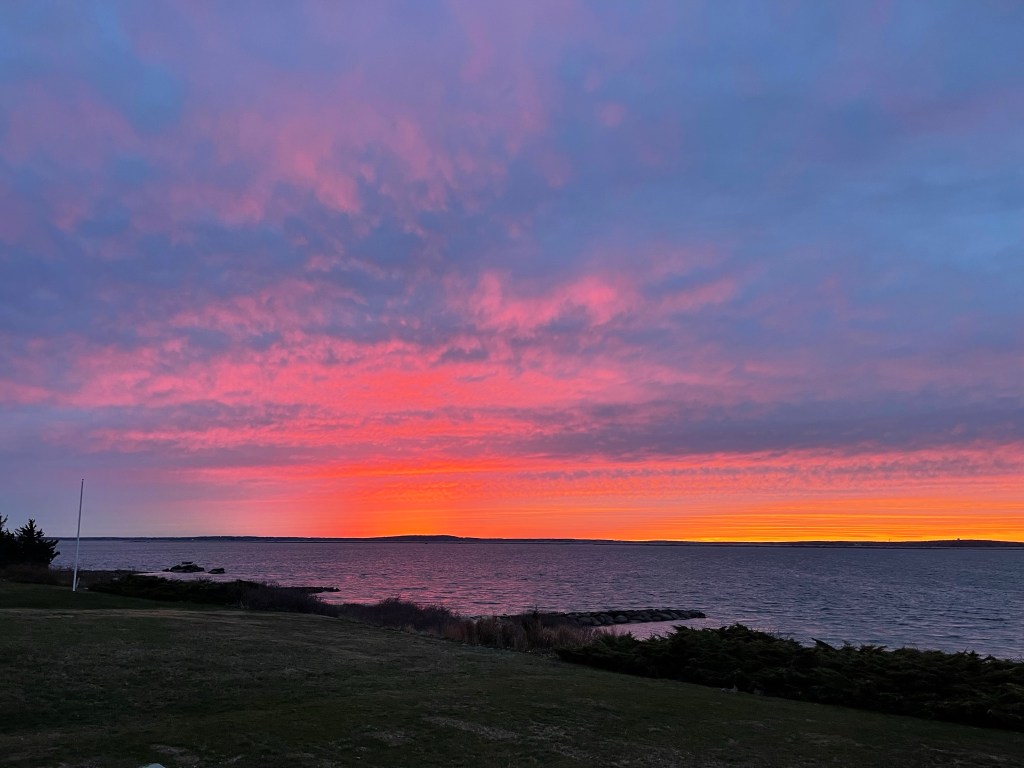
    For us, the nest is always being improved upon, even as we try to fly away from it. Sometimes we go, but we always return. Both the nest and the residents of it change over time. This is our eternal sunrise, as we are forever becoming something new, embracing change as it rises before us.

  • The Shape of Our Circles

    “We are mirrors reflecting one another. The people with whom we surround ourselves shape us, and we shape those around us, too.” Brad Stulberg, The Practice of Groundedness

    I had a conversation with two strong players in my circle of influence who both disliked The Banshees of Inisherin, a movie I absolutely loved. The movie shows the desperation of breaking free of circles when you feel trapped in a place. The four main characters each deal with this in their own way, but ultimately the circle is broken. How you react to the character’s choices generally informs what you think of the movie, but it isn’t about their choices, it’s about the desperate friction of a limited circle.

    We don’t live in a movie, but they capture our imagination because they often mirror moments in our own lives. Our circle can be a trap that surrounds us or a blessing that informs us. It’s often both, and when we break out of it we can reshape ourselves. People come and go from our lives, and the circle around us fluctuates with the stages of our lives. We ourselves have the agency to choose our dance partners in this lifetime. We’ve each felt the sting that each character in the movie feels.

    We’re collectors of people, each of us, gathering relationships and nurturing them over time. We aren’t meant to go it alone for the long haul. Solitude is a blessing best savored in doses. And we are the average of the five people who we associated with the most. This in itself is a blessing or a curse, offering guidance with whom we ought to spend our days with. Our closest relationships help inform us of who we really are, and also reveal where we’re going.

    Sometimes we find that the circle doesn’t suit as anymore, and sometimes we find that the people in our circle feel more alive in a different one. Over time we reconcile our place in a series of circles. We’re either running around in circles, circling the wagons or spinning off to another place. That’s life, dizzying as it might seem. But we must always remember we have a hand in shaping our circle even as it shapes us.

  • Table for One

    “I can be by myself because I’m never lonely, I’m simply alone, living in my heavily populated solitude, a harum-scarum of infinity and eternity, and Infinity and Eternity seem to take a liking to the likes of me.” — Bohumil Hrabal

    There is a moment in solo business travel where you’re inevitably going to feel the aloneness. It might be choosing that table for one instead of the bar, it might be walking into a large hotel suite ridiculously big enough to emphasize the sole nature of your occupancy, or it might just be not talking to a human being for hours on end. But this is the nature of travel: it amplifies the distance between us and those we choose to be with. The leap for the seasoned traveler is when you recognize alone isn’t lonely at all. It’s just an opportunity to be present with your own thoughts.

    We all seek connection with the larger world, and the opportunity to see associates around the world face-to-face is a uniquely special gift for those of us lucky enough to travel for work. All of these moments add up to a life beyond all that was previously familiar, and they in turn become familiar. This routine adds structure and normalcy to being on the road, wherever it might take us next.

    Alone is a courageous choice of self-selection. Meaningless banter at the bar may do now and then, but deep dialog with ourselves carries us to places we wouldn’t arrive at in the noise of the hive. We must seek solitude to think, and travel offers solitude in spades. Sitting at my table for one last night, I made the most of the opportunity to read a book I’ve been struggling to find time for, to ponder decisions I’ve been deferring for another time, and to savor the moment.

    Our time alone is limited. Eventually we dive back into the mix of friends and family and associates that make our world go ’round. This is as it should be, for it represents a healthy diet of solo and ensemble time. Each should be savored for the growth opportunities they offer and for the celebration of returning to the other soon. Each state is temporary, and each is essential.

  • An Unusual Winter

    Winter is different this year. The ground, frozen for weeks leading up to the New Year, thawed in a warming trend that hit New England in the first few weeks of the year. We sometimes say we’re grateful when it rains instead of snows here, knowing the general equation of one inch of rain equalling one foot of snow, but some of us actually prefer the snow. And when it finally came after the thaw and heavy rains, it made for muddy cleanup when you dared stray off the pavement. Yes, winter is finally here, sort of, and fashionably late, so enjoy it while you can. Just don’t go straying out on pond ice or try to steer a snowblower across the lawn to the shed. Each of these reckless acts will end in regret.

    Plenty of friends and acquaintances celebrate a mild winter. Perennially overextended, they’d rather deal with snow on their terms, with a quick ride up I-93 to the ski resorts. “Let them have the snow;” they say, “we’d rather not deal with it here”. As if we aren’t meant to have it here. Here isn’t all that far from there, I think, and winter has retreated enough already.

    I’m more sympathetic with the aged and the frail amongst us. Shoveling and navigating the world is a lot more complicated for them when you add heavy snow. This is where a sense of community is essential, to help those who might not be physically able to help themselves. Like snow, we accumulate awareness and empathy over time, and learn to check in on people more than we might have when we were younger and more carefree.

    We witness the changes in those we know moving from vibrant wrestlers of winter conditions to a more fragile condition. On days of particularly heavy and wet snow, we learn to face our own move to a more fragile condition. They call it “heart attack snow” for a reason, and something as mundane as shoveling snow can be a reckless act if our heart isn’t up for the task. We ought to celebrate the things we can do now, like walking in snow through the woods to visit a pond or simply shoveling the deck, for one day it will be beyond our reach.

    After cleaning up the remnants of the latest storm, I took a walk through the woods to see how winter was treating a local pond. During the drought of summer it had dropped to sad levels. With the rains of autumn and winter the water levels were back to normal and now coated with a slushy ice coating that wasn’t to be trusted. Still, it made for a pretty winter scene on a quiet winter morning. Moments like this are what we remember about winter, even as we forget that winter isn’t what it once was.

    Facing the changes this winter, it’s easy to see that everything is connected. Everything has its time, maybe even normal winters. With things like climate and physical fitness, we ought to do what we can while we can. Regret is no way to cap a window of time when it closes.

  • Simply Essential

    “Never own more than you can carry in both hands at a dead run.” ― Robert Heinlein

    The quest to simplify is often a process of one step forward, two steps back. Eliminating things shouldn’t be so very complicated. Accumulating stuff shouldn’t be so very easy. It’s the eternal wrestling match of what to keep and what to get rid of. Even now I’m considering why I used “very” in the second and third sentence of this very paragraph. Simplicity seems so easy to reach for if we could get past all the complicated in our lives.

    My bride and I talk of downsizing one day. As with everything, it’s more complicated than talk. The questions of where and when and what. And with each question, the place we currently reside looks a bit better than it did before. And so spaces are cleared, things are moved out, other things are moved in. It’s a game really; a sleight of hand performed on the same plot of land with the world spinning around us. The characters come and go but the stuff remains.

    We ought to be better editors. We ought to consider what is most essential in our moment and focus entirely on that. Knowing that the game will change, and what seems most important now may seem trivial when it does, is a good way to measure the essential. When everything eventually goes away, as it inevitably will, what will we hold on to until the last? This is our simply essential. Everything else is just stuff.

  • Thoughts on David Crosby

    Sunset smells of dinner
    Women are calling at me to end my tales
    But perhaps I’ll see you the next quiet place
    I furl my sails

    — Crosby, Stills & Nash, The Lee Shore

    David Crosby grew on me over time. He was always the troublemaker in the two famous bands he was an integral part of, always pushing beyond the limits of what others felt appropriate. And he destroyed his body and some friendships along the way. Indicators that he was pushing too far. With this as context, his body finally failing him at 81 is no great surprise, but it was nonetheless surprising. We forget sometimes that everything must pass, especially rock stars.

    This isn’t a blog about loss, it’s about discovery. Crosby was the odd character who popped up now and then, for fights with his bandmates, for his decades owning the beautiful 1947 Alden Schooner MAYAN, and for famously donating sperm to Melissa Etheridge and her partner to have children. If he’d passed when I was 25, I’d have noticed his passing, but it wouldn’t have resonated for me as I was then. Now it’s like losing an uncle in a way, someone who’s voice you’ve grown accustomed to, grown to trust. But you don’t mourn shooting stars, you celebrate them.

    The thing about rock stars, is that they never really die. The songs live on well beyond their bodies, and so do the stories. And what of the rest of us? We may not be rock stars, but we may each contribute our own verse, and set it free to harmonize forever after we’re gone. If there’s one thing we can take away from the fragile dance of a man like David Crosby, it’s that we may still contribute to the very end, and leave our work to sing for us.

  • Measuring Growth

    “I write entirely to find out what I’m thinking, what I’m looking at, what I see and what it means. What I want and what I fear.” — Joan Didion

    “You do not need to know precisely what is happening, or exactly where it is all going. What you need is to recognize the possibilities and challenges offered by the present moment, and to embrace them with courage, faith and hope.” ― Thomas Merton

    The gift of writing is not as much about putting all that you want to say on paper or on a screen for the world to read, although that is a motivation of sorts. No, the gift is in the sorting out of what you encounter in the world and finding a way to articulate it better than we might have yesterday. One doesn’t place a Didion or Merton quote just ahead of one’s own thoughts, let alone both, without recognizing that measuring up becomes ridiculous. But this is how we grow.

    Growth is measured against whatever it is we’re reaching for. Slowly chipping away at the French language for years now, I’ve picked up enough to know I’ve made measurable progress, but not enough that I’m not lost when a rapid-fire conversation amongst native speakers surrounds me. But at least I can tell them my name and ask where the toilettes are. Progress, and a clear indicator that more immersion is in order to grow into the language I too casually aspire to master.

    The meaning in the moment is derived from accumulated experience. If our experience is limited, we might not pick up the nuance in a conversation, know the double entendre, the obscure reference or an inside joke that is derived from being out there in the world and just knowing. The trick in living is to put ourselves out there in the mix, and sort things out as best we can. Writing is active processing, documented. Hopefully edited well enough to make it interesting.

    The thing is, we learn to recognize the darkness in the world, but also the light. The tenuous line between the two is where active living takes place. We become more resilient, more informed, more street-smart as we grow, and bring that to new places where we quickly discover how we measure up. The alternative to growth is stasis and atrophy. It’s more fun to grow. Plus we finally get the jokes we missed when we were someone else.

  • The Truth of the Work

    Work is a funny thing, for it represents so much of our identity, yet, if we live well, it’s only a small part of who we are. For if this life is about the accumulation of experiences, relationships, knowledge and self-understanding, work adds to each of these things but isn’t all of any of them. We want to believe that our work has purpose, and so chafe at the jobs that seem trivial, menial, unfulfilling and generally dead ends in a climb up the career ladder. But this outlook misses so much of what makes work meaningful.

    When I look at the accumulation of contributions I’ve made in my work, it’s easy to see where I made a difference and where my contribution felt insignificant to the overall progress of the companies I worked for at the time. Ultimately, what mattered was showing up and being present for the work at hand. The value derived isn’t always up to us to determine, only that we do our part.

    “Do not depend on the hope of results. You may have to face the fact that your work will be apparently worthless and even achieve no result at all, if not perhaps results opposite to what you expect. As you get used to this idea, you start more and more to concentrate not on the results, but on the value, the rightness, the truth of the work itself. You gradually struggle less and less for an idea and more and more for specific people. In the end, it is the reality of personal relationship that saves everything.” ― Thomas Merton

    We derive the most fulfillment from engagement with others, not from the accumulation of more wealth than the next corporate climber. Don’t get me wrong, financial security solves problems that linger in poverty, but at some point the pursuit of wealth and status is nothing but a distraction from the pursuit of meaning. Perhaps this is why those stories of people leaving the corporate ladder to run the country store or work in a non-profit are so fascinating. Deep down most of us just want to contribute and be a part of something bigger than ourselves.

    “Consider what a company is. A company is a culture. A group of people brought together around a common set of values and beliefs. It’s not products or services that bind a company together. It’s not size and might that make a company strong, it’s the culture—the strong sense of beliefs and values that everyone, from the CEP to the receptionist, all share.” — Simon Sinek, Start with Why: How Great Leaders Inspire Everyone to Take Action

    As Walt Whitman reminded us, the powerful play goes on, and we may contribute a verse. All the meetings and the key performance indicators lumped together are nothing but a means to an end. We’re here to contribute to something larger than ourselves in our time, and showing up for work is a demonstrated commitment to that mission. What we realize in the end is that the work we choose to do is an expression of who we want to become.