Category: Fitness

  • The Art of Packing for a Winter Hike

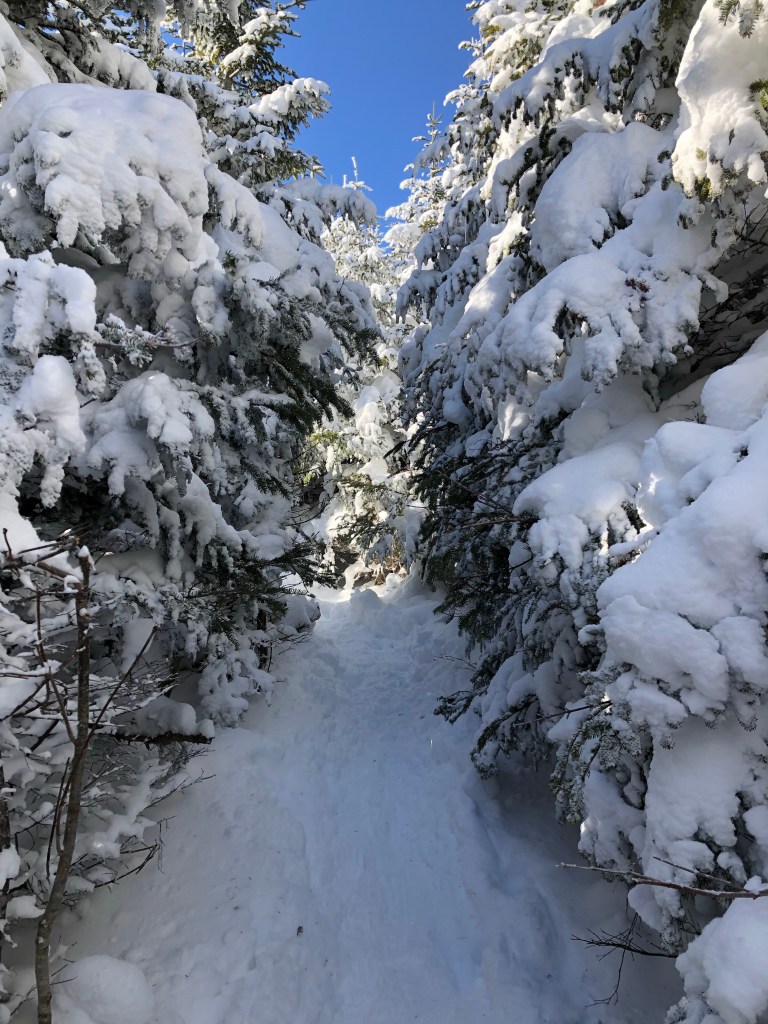
    Contingencies. I pack for contingencies. Most of it stays in the bag, bulging against the sides, weighing the pack down directly onto the hip belt, as designed, and a bit on the shoulders, as is the way. First aid kit, extra warm clothing, extra food, and, it turns out, just enough water for this eleven mile trip. Snow demands micro spikes, but also snowshoes. Mine spent most of the day strapped to my backpack, but I gave them a try for about an hour of hiking before strapping them back on the pack. The compressed snow and narrow trail made wearing them more hassle than salvation. Sometimes you try out your contingencies and realize that you were better off with the original plan. But I do love those heal lifts on steep inclines.

    It was -4 degrees Fahrenheit at the start of my hike this morning. Most layers packed as contingencies went right on the body for the start of the hike. Snow has a way of being crispy and slippery when you dip below zero. And the trail we started hiking wasn’t the same trail we descended when the sun rose and warmed temperatures into the twenties. Having the right footwear and accessories is essential when you see swings in temperatures like that.

    Still, for all the contingencies planned for, most everything stayed in the pack. Sleeping pad, extra layers, way too much food, all of it mocking me on the steepest parts of the incline and for most of the descent. But as soon as you don’t pack it you know what’s going to happen. Yeah, contingencies, especially in winter, must be a part of your kit. You’ve got to have a winter pack that can handle all the extra stuff, provide tie downs for the snowshoes, and remain an afterthought for the duration of the hike. For day hikes I’ve settled on an ULA Photon pack, which offers everything I need and the space for those extras.

    Winter hiking in New Hampshire offers plenty of beautiful moments. Moments that serve as exclamation points on the trip and in your life. But winter can offer up stunning beauty and calamity quite rapidly in the White Mountains. Mother Nature doesn’t care about your feelings. You must be prepared for whatever she throws at you. And that’s what contingency packing is for. Sure it mocks you when it never gets used, but it also assures you that it will be there for you if you need it.

    The next blog post will cover the actual hike. Memorable, incredibly clear, and two more 4000 footers checked off. Stay tuned, there’s a lot to cover.

  • The Future is Implied

    “It takes time for an acorn to turn into an oak, but the oak is already implied in the acorn.” – Alan Watts

    January is a funny month. Plans for the year generally completed, we look at the climb ahead and take our first steps into the unknown. Where will it take us? What will we accomplish? How will the world change these grand plans we’ve wrestled with in our minds and on spreadsheets? How exactly are things going to play out?

    The future is implied by our actions today. We turn plans into action one step at a time, one toe in the water, one conversation after another, one moment to the next. And in each step, we discover the truth about the world.

    I look back a year and laugh at the plans dashed against the rocks in the COVID storm. We all had to bushwhack when the path washed away last year. Extreme, to be sure, but it demonstrated the nature of plans. They do change.

    Words we used too much in 2020 included adapt and pivot and new normal. What words will we use in 2021? 2022? What is implied by the trends we see in the world? What is implied by our daily habits? We might not see everything in the future but we can surely see the path we’ve set ourselves upon.

    I wonder sometimes at the future, but it isn’t mine to ponder. Plans are made and revised, such that they can be. Focus on the first step, small as it might seem in the moment. And go.

  • Getting Lost With Waterfalls

    The day started with heavy, gusty rain. The kind of rain that would be a nor’easter had it been snow. The kind of rain that makes you glad you’re indoors looking out a window at it. And paradoxically, the kind of rain I wanted to be outside fully alive in. There’s an edge to any storm, and this one was abating just enough to prompt me to pursue a micro adventure or two. I packed up my rain gear and a water bottle and headed out to visit waterfalls.

    First stop was an hour from home, at Willard Brook State Park in Ashby, Massachusetts where the beautiful Trap Falls pour forever over granite ledge. This is a popular spot in the warmer months, but on a rainy Saturday in January I was the only one there. The falls were roaring from the rain, and easily heard from the small parking lot. A brief, shuffling walk on a few slippery spots and I was quickly at the falls, and thought it might be a trick. How could I have this all to myself on this day when the falls were screaming for attention? The answer lies in that moment when I looked out the window and decided I ought to go out in this weather, while the rest of the world thought that would be a crazy idea. Score one for the crazy folk.

    Trap Falls

    A few pictures and rock scrambles later, I headed back to the car and consulted the maps in Greg Parson’s excellent resource New England Waterfalls, which I’d picked up as a gift to myself while purchasing a gift for kindred spirits. Parson’s recommended a cluster of waterfalls just over the border in New Hampshire. I looked at two in particular as promising and plugged in their coordinates in my Waze app and headed off for more adventure.

    Driving towards Milford, New Hampshire, I decided to focus on Lower Purgatory Falls as my first choice, and sought out the trailhead on Wilton Road. The trailhead displayed some icy conditions and I brought my micro spikes with me for this hike. I would soon be grateful for having them.

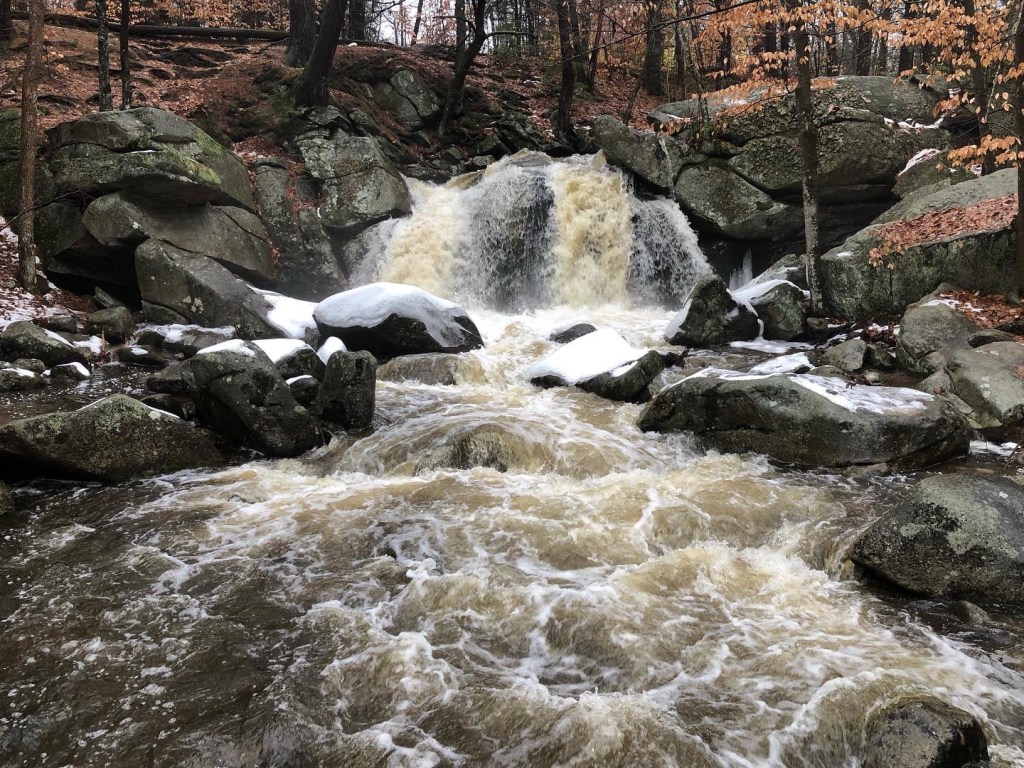
    The walk from the road to the falls is roughly half a mile. Nothing too crazy, really, just an old logging road that carries you to a yellow-blazed trail. And like Trap Falls, you could hear Lower Purgatory Falls well before you got to them. The falls are named for Purgatory Brook, a beautiful stretch of water that was white water after all the rain. Cresting a small rise, I saw the falls ahead and worked my way down to see them.

    And this is where the micro spikes were absolutely required. I was hiking solo in isolated conservation land on a day when nobody else thought it logical to be out there. A slip and fall would have been bad news. Micro spikes remain one of the best hiking investments I’ve ever made, and they offered a clear return on investment as I made my way down an ice covered hill with wet roots and rocks making up the better footing.

    Lower Purgatory Falls is a triangle-shaped wonder set deep in the woods of the aptly named Purgatory Falls Conservation Area. After the heavy rains and melt-off the falls had a lot to say, and I lingered by them for a bit to tap into their energy. Again I wondered why I was the only fool out there on this day, but I’m grateful I never came to my senses and stayed home.

    Lower Purgatory Falls

    As I was leaving the car I took a picture of the trail map supplied in Parson’s book. It indicated I could hike upstream to see Middle and Upper Purgatory Falls. The trail seemed clearly blazed in yellow and tightly followed the brook. And so I made my way upstream seeking more adventure. I found it.

    Hiking along the swollen brook, there were a couple of spots where it flooded over the trail, making for sketchy crossings. Not plummet into a frozen brook sketchy, for I’m not that crazy to attempt such things, more water deeper than your boot is tall sketchy. I made a few calculated crossings, trail blazed in a couple of spots, but always stayed safe and kept the yellow blazes in sight.

    Mossy Erratics
    Purgatory Brook, swollen with rainwater and melt-off

    Eventually the trail dead-ended at a development with a port-o-potty announcing “progress”. I silently cursed the abrupt ending to the trail, looked around to see if I’d missed it diverting elsewhere, and doubled back towards Lower Purgatory Falls, crossing anew the sketchy water crossings I’d already attempted.

    And here’s where it got interesting. I returned to the spot where I’d first seen the falls, looked left and right and saw yellow blazes going off in different directions. WTF.

    “Make sure to return on the trail you came in on as there are several official and unofficial paths in the area. Look for the yellow blazes and the junctions you passed through on the way to the falls originally.” – Greg Parsons and Kate Watson, New England Waterfalls

    Well, this is where I went wrong. I took the wrong yellow-blazed trail towards what I thought was a return to my car. After a few minutes of walking I was aware that I didn’t recognize any part of this trail. I doubled back and saw a logging road I’d ignored before and started following it until it dead-ended. Damn. And this is where you make choices deep in the woods. I could blaze my own trail through the woods with the compass on my cell phone, a picture from a book and Google maps as my guide, or I could double back once again and find the right trail. I’ve learned to trust my instincts in such situations, and not trust a phone battery. I doubled back.

    Finding a junction in the trail, I saw the yellow blazes once again splitting off in two directions. Who the hell blazed this land?? I stuck with the more worn trail and followed it to a place where (surprise!) I’d been before. It seems I’d followed the yellow blazed loop back around onto itself. And this is why bringing a compass and a reliable waterproof map is essential. Having neither, I relied on my experience in similar situations and kept my head about me. Since I was back on a trail I recognized, I simply followed it back to the Lower Purgatory Falls. Once there I saw immediately where I’d gone wrong and followed the correct yellow-blazed trail back to the logging road and eventually to the trailhead. Phew!

    This adventure started off as seeking a few waterfalls on a wet day. It became a small test in orienteering in unfamiliar woods on a wet, disorienting day without the proper equipment. And it ended with me deciding that two waterfalls were enough for one day. I thanked my wits and good fortune and headed home. The other waterfalls will have to wait… for now.

  • Doing More

    “The world as we have created it is a process of our thinking. It cannot be changed without changing our thinking.” – Albert Einstein

    Change happens slowly, one habit reinforced at a time. Some reach 10,000 views in one post, but most of us chip away for a few years of daily writing to get that first 10,000. Tolstoy filled War and Peace with 587,287 words. By that standard I’ve got a ways to go. I’ve only published 401K.

    Diet, for all intents and purposes, is one morsel shoved in your mouth to the next. You want to eat better? Don’t make an exception for that tasty treat you’re eying. Want to get fit? Move more, and more consistently. Simple, right?

    We all have reasons for the habits and beliefs we linger in. Life is a grind, after all. Sometimes the best you can do is walk to the refrigerator to see what inspires you that day. The world, as we’ve created it, can eat you up.

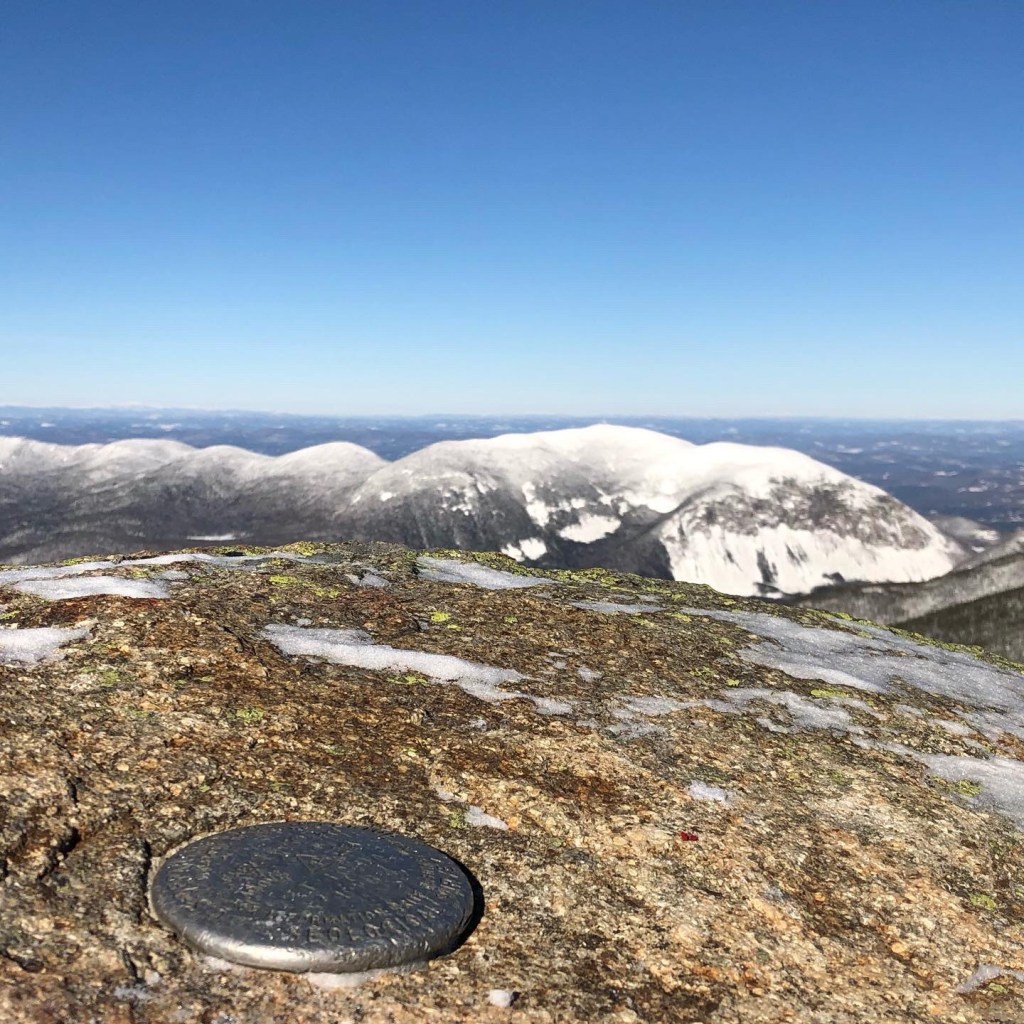
    Yesterday was a great day to be outside in New Hampshire, and I took full advantage of that with a hike up Mount Jackson. A hike like that, with friends and on a beautiful winter day, leaves a mark inside. It reinforces who you are in some ways, but alters your thinking as well. Standing on the summit of Jackson and looking up at Mount Washington, I thought it well within reach. I’ve climbed Washington before, but not lately. Looking up at Washington yesterday, cold breeze chilling my sweaty clothes, I thought it possible to do more.

  • Hiking Mount Jackson (New Hampshire)

    Too many weekends since I last hiked to a summit. Basically, I skipped December for the holidays, and was feeling the built-up restlessness that comes with knowing you’ve got things to do. I’d planned for Hale, but latched on to other’s plans for Mount Jackson for the views and banter of friends.

    Mount Jackson is a popular trail. We started early, meeting friends at the trailhead, but not early enough and parked along the side of Route 302. The out and back trail is roughly five miles of moderate hiking, with a short scramble towards the summit. Micro spikes were a requirement with a healthy dose of exposed ice and a couple of (frozen) stream crossings along the way.

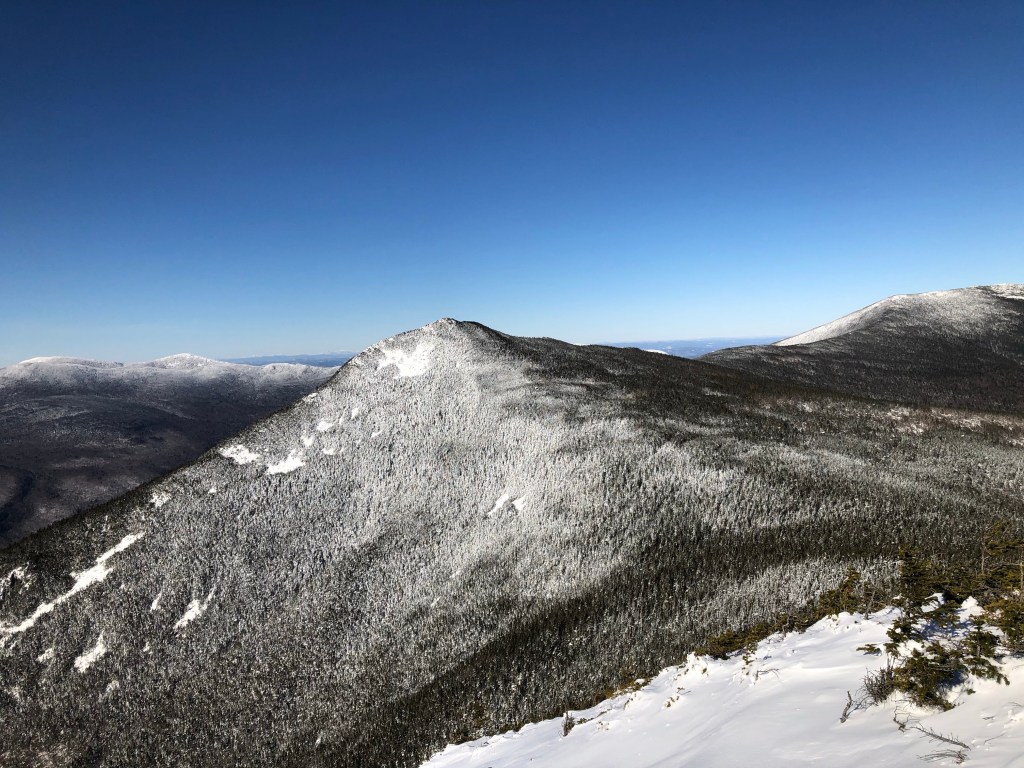
    The straight path up Mount Jackson is via the Webster-Jackson Trail. That’s the trail we took, and judging from the compacted snow on the trail, so do most people. The day started overcast at the trailhead, but it was one of those hikes where you walk into sunshine, and like a jet bursting through the clouds, we emerged from the tree line to find bright sunshine and undercast in the valley below. Incredible views of Mount Washington and the Presidential Range greeted us, along with a few hungry Gray Jays looking for handouts.

    Mount Jackson is named for a geologist named Charles Thomas Jackson who completed a geological survey of New Hampshire in 1844. According to Wikipedia, Jackson seems to have been a somewhat controversial figure in his time, with a pattern of taking credit for discoveries others made. His brother-in-law was Ralph Waldo Emerson. For those who can’t get enough information on Charles Thomas Jackson there’s a wealth of information on Jackson in an article published by The State of Maine and while doing a bit of research I saw that the Bangor Daily News just published a small bit about Mount Jackson a few days ago. Apparently I’m not the only one wondering about why they’d name the mountain after this particular character, but based on his controversies he probably just named it after himself and nobody challenged it.

    After a lunch on the summit we started our descent, with plenty of butt sliding mixed into the walk back. A couple of side trails made for interesting views, we spent a few minutes at Bugle Cliff, but opted out of Elephant Head. After the stunning views on the summit maybe we were a bit spoiled.

    On the descent a couple of us hiked down to the Silver Cascade, which is very popular near Route 302 but involves some sweat equity further upstream. The small falls we saw were worth the side trip, with blue ice putting on a dazzling display for the two of us that sought it out. Waterfalls change by the day, and even though most of our party had seen them before I was still surprised more people don’t make the trek down. I’ll never turn down a side trip to a waterfall with kindred spirits.

    I’d circled this weekend in hopes of trying out my new Tubbs snowshoes. They’re a huge upgrade over the snowshoes I used to have, but we just haven’t had the snow accumulation to give them a workout. With the compacted trails today wasn’t the right day for them either. But that didn’t make the day disappointing. It turned out to be a spectacular way to spend a beautiful and cold Sunday; time with the closest of friends, relatively easy hiking and another summit checked off on the 48 New Hampshire 4000 footer list.

    View of Mount Washington
    Gray Jay looking for handouts
    Micro Spikes required
  • Too Cloudy to Forecast

    The plan was to drive out to the wrist of Cape Cod for a sunrise picture. I’ve patiently waited for the right weather window to appear, and when my head hit the pillow it seemed all was a go. But the weather always has other plans, and teaches you to listen even when you want to hear something else. And at 5 AM the clouds obscured everything above Buzzards Bay. A check on cleardarksky.com confirmed that my destination was also overcast with transparency rated as too cloudy to forecast. And so I wrote instead.

    I’m working on my own forecast. Specifically the ten year plan, for the influencers I read tend to recommend thinking in decades not years. Seth Godin just had a great post about it yesterday, which likely planted it front and center on my brain. But he’s not the only one thinking in ten year chunks, and I’d like to be more forward thinking myself. Ten years seems about right for me too.

    Does creating a ten year plan run counter to living in the now? I don’t believe so. I believe it sharpens the focus on now. Instead of going with the flow you’re making the most of the opportunity that now creates. And you’re more inclined to check boxes you might have otherwise put off for some date in the future.

    Ten year thinking involves calculus on maintaining good health and fitness, mental sharpness, financial responsibility and investments to achieve goals, relationships and career. What kind of person do you have to become not so far from now? What do you need to do today to move you closer to that? What do you need to stop doing?

    The future tends to be too cloudy forecast, but we can always move to clearer skies. Or bide our time. As the last year has taught us, the unexpected will surely surprise us, but if we build enough resiliency into our plans we can get beyond even the deepest valleys. We can only see just so far of what lies ahead of us.

    But Mousie, thou art no thy-lane,
    In proving foresight may be vain:
    The best laid schemes o’ Mice an’ Men
    Gang aft agley,
    An’ lea’e us nought but grief an’ pain,
    For promis’d joy!

    Still, thou art blest, compar’d wi’ me!
    The present only toucheth thee:
    But Och! I backward cast my e’e,
    On prospects drear!
    An’ forward tho’ I canna see,
    I guess an’ fear!
    – Robert Burns, To a Mouse

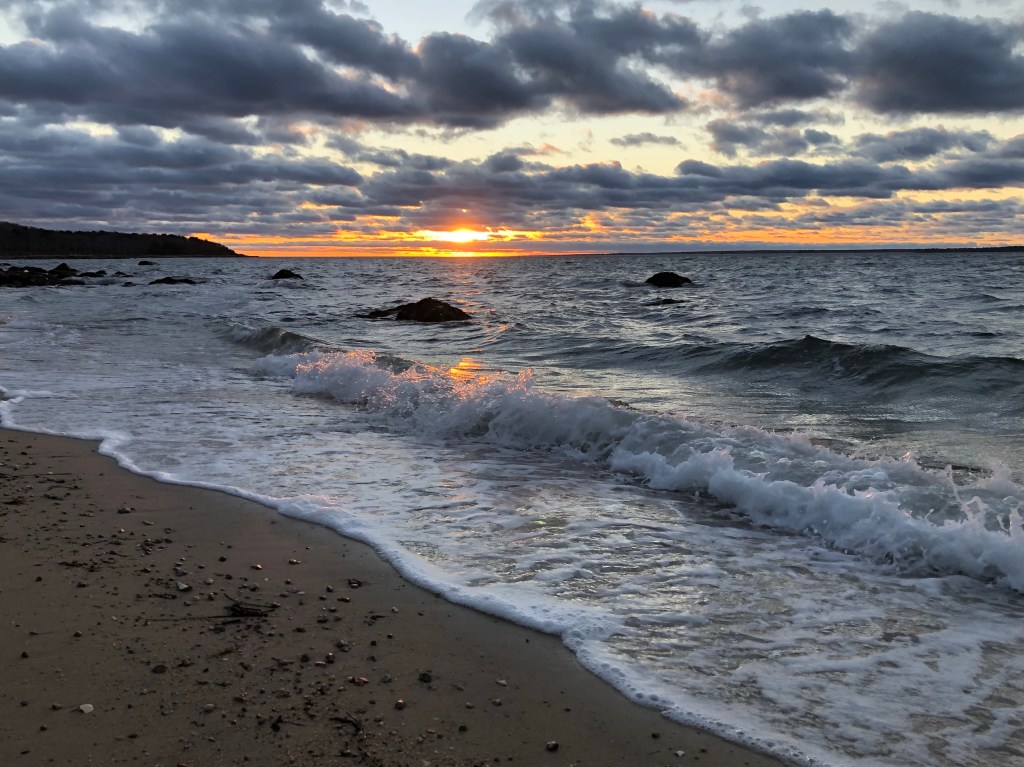
    Last night I saw the potential for a nice sunset down Buzzards Bay. I walked down to a better viewpoint and waited it out in the gusty wind. I thought it would make a nice bookend with the sunrise this morning, but since that never materialized the sunset turned out to be the only picture. I’m glad I didn’t hold out for just the sunrise instead. It serves as a good reminder to enjoy the moments along the way even as you plan and scheme and guess at the future.

    Sunset, Buzzards Bay
  • Confirmed in a Habit, Firmly Established

    I’ve been toying with the word inveterate in my mind for a couple of weeks. It would make a good New Year’s Day post, I figured. I mean, just look at the definition in the dictionary, practically screaming for a post:

    Inveterate
    in·vet·er·ate | \ in-ˈve-t(ə-)rət\
    Definition of inveterate
    1: confirmed in a habit : HABITUAL
         an inveterate liar
    2: firmly established by long persistence
         the inveterate tendency to overlook the obvious
    – Merriam-Webster

    I let New Year’s Day come and go but haven’t let go of the word. The opposite of inveterate would be intermittent or inconsistent behavior. Yet, Merriam-Webster casts a negative connotation on the definition. I like spinning it more positively. Call me a dreamer if you will.

    Last year I was an inveterate blogger, but not an inveterate rower or walker or eater of broccoli. This year, rather than setting goals or signing up for the gym I’m simply going to chase down more inveterate behavior. Lending positive intonations to the word, and swapping the word out in other sentences. From Inveterate eater of cheeseburgers to intermittent eater of cheeseburgers offers possibility. And so does transforming inconsistent effort in the mundane tasks that make you successful in your [fill in the blank] to something more, well, inveterate.

  • Starting Again, Regularly

    “be ready to start again
    like the moon”

    – Kat Lehmann, Small Stones from the River

    “If I had a week left to live, would I be doing this?” – Neil Strauss, via Twitter

    Two worthy prompts to start the mind’s gears turning on this New Years Day. I’m not one for resolutions, but find reviewing what worked and didn’t work are worthwhile exercises – not just as we round the corner into a new year but at regular intervals. But what is that interval? Is the best interval the beginning of a calendar year?

    Maybe timing big questions with the phase of the moon makes sense? Since full moon fever carries more baggage the New Moon might be a better time. Or perhaps the first random Sunday of the month. But I believe the interval is as important as the questions asked.

    The Strauss question demands attention, of course. It’s a big question, and maybe its best asked annually, saving more frequent intervals for questions of systems and processes and assessment of progress against objectives. What’s working/not working? questions. Whatever your questions are, they deserve to be asked, and answered. Regularly.

  • Bold

    “So long as I am hanging on
    I want to be young and noble.
    I want to be bold.” – Mary Oliver, Desire

    There’s that word again. Bold. I chase it down, let it challenge me. Take a deep breath and get after it yet again. To rise free from care before the dawn and seek adventures, as Thoreau put it so well.

    Latin words for bold translate to audax, confidens, fortis, and they all fit. To be a bit audacious, confident and fortified are generally celebrated in this harsh world. We all aspire to a bit of boldness in our actions, don’t we?

    It’s the last day of the year that most everyone would love to see go away. And yet great things happened despite it all. I started to take stock of the exceptions to the general malaise that was this year and generally the ones I had any control over started with a bit of boldness. Deciding what to be and then going out and being it. I save the selfies for others. Ego is my enemy. Instead of celebrating those mountains climbed and the waterfalls sought out I’m quietly putting them in my memory bank with a smile. That’s what archives and search are for.

    What have we done with our time this year? What will we do today? Next year is upon us, what shall we make of it? Begin in earnest, today.

    I have places to be and I’m excited about the future. That begins with celebrating the last day of the year and finding the next micro adventure to fill the days with wonder until the world opens up again someday. It begins with a measure of boldness.

  • 11 of My Favorite Books Read in 2020

    Looking back on this maddening year, I found I read a lot of poetry that inspired and a lot of page-turner novels that distracted. It would be easy to make half this list collections of Mary Oliver poems, but I subtracted poetry from the list altogether to focus on the craft of the written novel or book. Still, I like to bend the rules, so in making my list of top ten favorite books for the year, I chose eleven. This was a nod to Charlie Mackesy, who spun a bit of magic in a year where it was essential. Illustrating the timeless nature of books (or perhaps how far behind I am in catching up), only four of the eleven were released in 2020. These eleven books are listed in no particular order, largely because there’s a bit of wonder in each of them. Each informed and delighted me.

    Breath: The New Science of a Lost Art by James Nestor
    “The more oxygen life can consume, the more electron excitability it gains, the more animated it becomes. When living matter is bristling and able to absorb and transfer electrons in a controlled way, it remains healthy. When cells lose the ability to offload and absorb electrons, they begin to break down.”

    I find myself thinking often about breathing after reading this book. Waking up with a dry mouth reminds me I need to be better at nasal breathing, when hiking I try to control my breath and focus on how I’m taking in oxygen, and when I chew almonds I crunch with satisfaction, knowing it helps release stem cells and increase bone density. This book is highly informative and strongly recommended for anyone, well, breathing.

    The 80/20 Principle: The Secret to Achieving More With Less by Richard Koch
    “Equality ends in dominance: that is one of the messages of chaos theory. The 80/20 Principle’s message is different yet complementary. It tells us that, at any one point, a majority of any phenomenon will be explained or caused by a minority of the actors participating in the phenomenon. Eighty percent of the results come from 20 percent of the causes. A few things are important; most are not.”

    This was the most highlighted book of the bunch. Honestly, there were chapters I skimmed over because they didn’t sing a tune I wanted to hear, but the theories here are sound. I wish I’d read this book at the beginning of my career, but it’s not too late to implement the core principles in many aspects of my life.

    The Splendid and the Vile: A Saga of Churchill, Family, and Defiance During the Blitz by Erik Larson
    Hitler wanted still more force applied against Britain. America seemed increasingly likely to enter the war but would do so only, he reasoned, if Britain continued to exist. On March 5 he issued another directive, No. 24, this signed by Field Marshal Wilhelm Keitel, chief of the High Command of the Armed Forces (OKW), aimed mainly at how Germany and Japan might coordinate strategy under the Tripartite Pact, which both had signed with Italy the preceding fall. The goal, the directive said, “must be to induce Japan to take action in the Far East as soon as possible. This will tie down strong English forces and will divert the main effort of the United States of America to the Pacific.” Beyond this Germany had no particular interest in the Far East. “The common aim of strategy,” the directive stated, “must be represented as the swift conquest of England in order to keep America out of the war.”

    We all grew up sort of knowing about The Blitz. This book neatly sums up just how tenuous the situation was. I fancy myself well-informed about World War II, but I learned far more from the The Splendid and the Vile than I expected to. For all our complaints about the pandemic, most of us have no idea what real sacrifice is. Larson brings us closer to understanding with this book.

    The Boy, the Mole, the Fox and the Horse by Charlie Mackesy
    “What do you want to be when you grow up?” asked the mole.
    “Kind,” said the boy.


    A beautiful, simple book. I picked this up for my daughter as a gift and read it quickly before wrapping it up. If 2020 kicked you in the ass, read this. Then read it again. The Boy, the Mole, the Fox and the Horse is art, meditation and a warm hug disguised as a book.

    Longitude: The True Story of a Lone Genius Who Solved The Greatest Scientific Problem of His Time by David Sobel
    The zero-degree parallel of latitude is fixed by the laws of nature, while the zero-degree meridian of longitude shifts like the sands of time. This difference makes finding latitude child’s play, and turns the determination of longitude, especially at sea, into an adult dilemma—one that stumped the wisest minds of the world for the better part of human history.

    I’ve danced around this book for years, never getting around to reading it. And then I went to Greenwich and saw the chronometers ticking away in their plexiglass cases and resolved to get right to it when I returned home. This is a story of perseverance solving what was believed to be the impossible. A delightful book.

    Mayflower: A Story of Courage, Community, and War by Nathaniel Philbrick
    No longer mindful of the debt they owed the Pokanokets, without whom their parents would never have endured their first year in America, some of the Pilgrims’ children were less willing to treat Native leaders with the tolerance and respect their parents had once afforded Massasoit.

    Living in New England, you can’t really get away from the story of the Pilgrims. But the part we seem to forget with the Pilgrims is how much they relied on luck and the strategic kindness of Massasoit to survive at all. It seems I’m a descendent of a Pilgrim (or two), so I’m told, and that lineage makes me all the more indebted to the Pokanokets who assured that those first few years here weren’t the last for the passengers on the Mayflower. As the quote above suggests, that indebtedness seemed to skip the next generation, paving the way for the tragedy of King Phillip’s War.

    Draft No. 4: On the Writing Process by John McPhee
    “That four-to-one ratio in writing time—first draft versus the other drafts combined—has for me been consistent in projects of any length, even if the first draft takes only a few days or weeks. There are psychological differences from phase to phase, and the first is the phase of the pit and the pendulum. After that, it seems as if a different person is taking over. Dread largely disappears. Problems become less threatening, more interesting. Experience is more helpful, as if an amateur is being replaced by a professional. Days go by quickly and not a few could be called pleasant, I’ll admit.“

    Reading McPhee, like reading Hemingway, it’s easy to get just a bit intimidated. The beauty of this book is that he pulls back the curtains to show you the way. Great research, editors and fact checkers smooth out the rough edges and polish the story, but the work you put into it makes the finished product shine.

    Cape Cod by Henry David Thoreau
    “The ocean there is commonly but a tantalizing prospect in hot weather, for with all that water before you, there is, as we were afterward told, no bathing on the Atlantic side, on account of the undertow and the rumor of sharks. At the lighthouse both in Eastham and Truro, the only houses quite on the shore, they declared, the next year, that they would not bathe there “for any sum,” for they sometimes saw the sharks tossed up and quiver for a moment on the sand. Others laughed at these stories, but perhaps they could afford to because they never bathed anywhere. One old wrecker told us that he killed a regular man-eating shark fourteen feet long, and hauled him out with his oxen, where we had bathed; and another, that his father caught a smaller one of the same kind that was stranded there, by standing him up on his snout so that the waves could not take him. They will tell you tough stories of sharks all over the Cape, which I do not presume to doubt utterly,—how they will sometimes upset a boat, or tear it in pieces, to get at the man in it. I can easily believe in the undertow, but I have no doubt that one shark in a dozen years is enough to keep up the reputation of a beach a hundred miles long.“

    This book, like Philbrick’s Mayflower, informs the native New Englander about the places that once were the places that now are. I have a stack of quotes from this book that I’m saving for other blog posts, but the one above reminds us that the question of sharks has been around a lot longer than we might believe. Like Thoreau I’m much more concerned about undertow when swimming in the surf, but hey, you never know…

    Siddhartha: A Novel by Hermann Hesse
    “Were not all sufferings then time, and were not all self-torments and personal fears time? Weren’t all the difficult and hostile things in the world gone and overcome as soon as one had overcome time, and as soon as time could be thrust out of the mind?“

    I’ve heard enough people recommend this book that eventually I had to read it, and I finished it in 2020. Amazingly, it feels like I read this a decade ago, for all that’s happened this year. Like The Alchemist, it’s a story that teaches you a bit about yourself as you wade through it.

    Thinking in Bets: Making Smarter Decisions When You Don’t Have All The Facts by Annie Duke
    What makes a decision great is not that it has a great outcome. A great decision is the result of a good process, and that process must include an attempt to accurately represent our own state of knowledge. That state of knowledge, in turn, is some variation of “I’m not sure.”

    How do you make decisions? How can you make better, more informed decisions when you don’t have all the facts? And what is a game of strategy versus a game of chance? This book uncovers some of these answers. As with anything, there’s book smart and there’s street smart, and reading about it and understanding it in real life are different things. Duke sprinkles in some street smarts hard won on the poker tables.

    Sailing True North: Ten Admirals and the Voyage of Character by James G. Stavridis
    “The contemporary malaise is the unwillingness to take chances. Everyone is playing it safe. We’ve lost our guts. It’s much more fun to stick your neck out and take chances. The whole attitude is to protect yourself against everything, don’t take chances. But we’ve built this country on taking chances” (Quoting Rear Admiral Grace Hopper)

    A quick, enjoyable read that offers lessons learned from some of the great “Admirals” in history. This is examination of character in ten short biographies, but also an unflinching look at racism and sexism in the Navy and how that battle continues to be fought to this day. And there’s no mistaking the Admiral’s feelings about character in certain political leaders we currently suffer through. A timely message for all of us.