Category: Garden and Home

  • Finding the Essence

    I grew up following my grandfather around the garden. By all accounts he wasn’t a good husband or father to his 16 kids, and I’m told he was once a vicious drunk. But he was a good grandfather to me. Age likely tempered him as it does most of us, but I think it was largely because my memories of him were from that garden. With 16 kids you need to grow some of your own food, and he knew his way around the garden. He’d likely shake his head at my flower garden, wondering why I’d take up so much valuable land on ornamentals. But I’ve raised a more manageable number of kids, and there’s benefit to flowers that go beyond caloric intake.

    I think of myself as primarily a flower gardener, but taking stock I have a respectable number of herbs and edibles mixed in; basil, cilantro, oregano, lemon verbena, chives, monarda, dill, bell peppers, jalapeño peppers and four varieties of tomatoes. I also have two apple trees, blueberry bushes, a lime tree and coffee bush in pots… and those frustratingly unproductive grapes. This year I opted out of some other vegetables I’ve traditionally grown like nasturtium, sunflowers, string beans and squash because they simply overwhelmed the garden.

    The harvest is already coming in, particularly the herbs. The challenge now is to keep up with them. Which means expanding the menu. Growing a new herb or vegetable offers two unique experiences; figuring out how to optimize its growth and then what to do with it when its time to harvest. When I was in Israel the employee kitchen had bunches of freshly picked mint that people would plunk stem and all into their tea.  I’ve been growing mint for years but never thought to do that until they taught by example.  Now that the mint is exploding I’ve taken to drinking more tea with fresh mint and give a nod to my former co-workers for showing me the way.

    So consuming the edibles is one benefit, but the larger gift is in living amongst them day-to-day. Rub the leaves and smell the oil released on the fingertips. Flowering herbs like cilantro, chives and monarda (bee balm) are good for the local bee population, and good for me as I enjoy the show as they work their way around the garden. The garden becomes multidimensional. Good for the senses, good for the palette, good for the soul.

    I think my grandfather was essentially a good man, but he was caught up in the frustrating struggles of his life and alcohol poisoned his mind. The garden drew out his attributes, and I saw the good in him. I haven’t struggled with the demons he struggled with, but I know I’m better for having been in the garden. And so was he.

  • Easy Like Sunday Morning

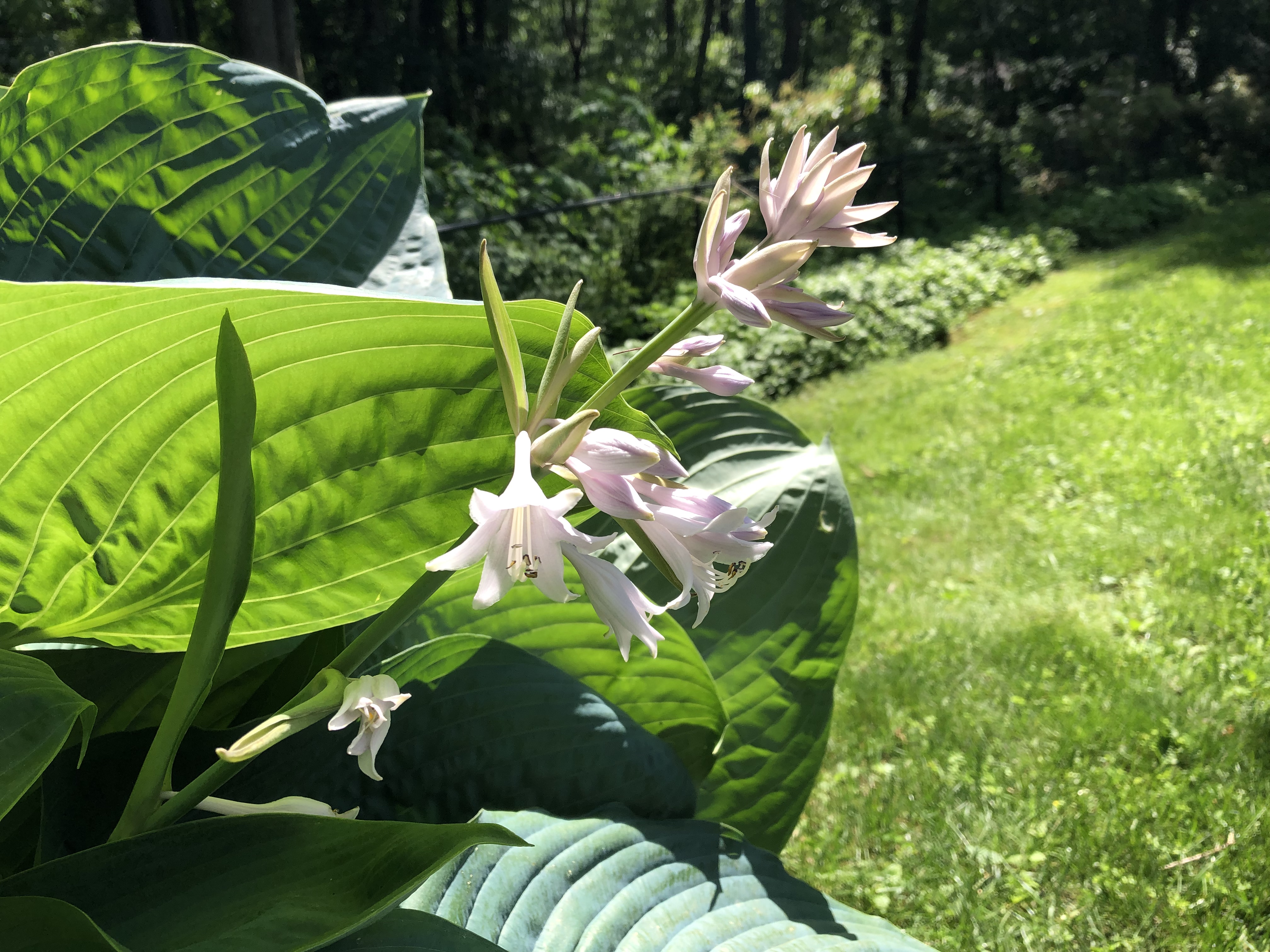
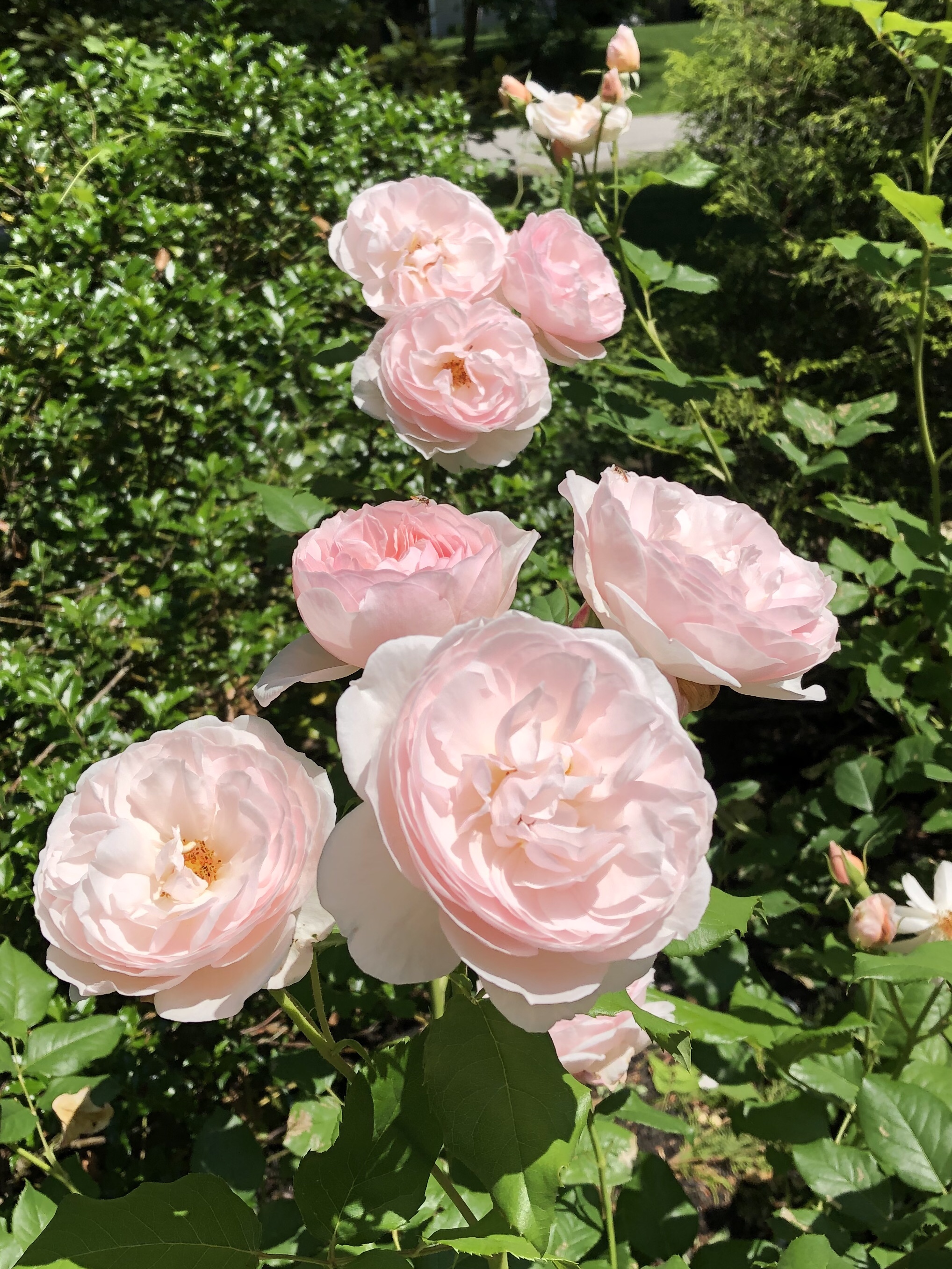
    Sipping coffee in the garden while watching the bluebirds fly between the feeder and the birdhouse I put up for them last year. Summer is finally here, the tea roses are blooming and the next round of garden perennials are about to burst in color. Monarda, hosts, day lilies, geraniums and rugosa roses are up soon. The garden is a delight of change.

    Morning is for reviewing what’s working and what needs work. I’ve filled in the holes in the garden and now maintenance is the rule of law. Easy like Sunday morning, but the rest of the day was filled with chores. Indeed, there are no breaks for the gardener in June. Pruning tree limbs, weeding, dead heading, staking, planting fill-ins, and house chores to round out the list. No, Sunday isn’t a day of rest for me. But the days fly by as I’m lost in the work, and most days I can’t say that about my chosen career. But its time to wrap this up – as you might expect I have work to do.

  • Soggy with a Chance of Rain

    There are places in the world experiencing severe drought.  This is not one of those places.  New Hampshire is one of many states experiencing significant rainfall.  The rain seems to be with us day after day after soggy day.  I don’t mind the rain at all, but I like a little balance with my weather.  And so does the garden.

    The lawn looks as good as it’s going to look.  Most of the foliage is thriving in the garden as the plants are drunk with rain water.  The constant rain has also greened up the forest, providing deep shade that the ferns seem to thrive in.  A walk in the woods right now would require rain pants as much as a rain coat.  The drawback of course is that the rain has delighted the mosquito population.  I keep emptying the birdbath so they don’t use it as a breeding ground, but lets face it, there’s no shortage of wet places for mosquitos to breed this month.

    And not all plants love the rain.  The tomatoes are growing but being constantly wet isn’t good for them.  Likewise, the Supertunias are suffering from the constant wetness on the flowers and leaves.  The cilantro looks genuinely annoyed with the weather.  These are plants bred for hot sunny days, not April showers in June.  But that’s the state of spring in New England most years now.  And so we make the most of it, the plants and me too.

    If the garden accelerates with the rain, traffic does the opposite.  Things slow to a standstill when you add water to roads, and this week has been tough for commuters.  People drive more slowly, and people that drive carelessly have less room for error, resulting in more accidents.  Indeed, the highways are more unpleasant with this weather, and so are the people on them.

    But the garden offers refuge.  A little rain doesn’t stop a gardener, and I was out in the garden early this morning surveying things before getting to work.  And things are looking up.  The plants, for the most part, are thriving.  My water bill will be lower this June than in years past.  And the weekend looks like a return to sunny days.  Things are looking up, even in a downpour.

  • Fruit Set vs. the Microclimate

    The garden is accelerating nicely now, aided by warm sunny days after a rainy start to spring. Even the grapes are producing masses of fruit set, which is the stage after fertilization just as grapes are formed when it kind of looks like a bunch of grapes but in miniature and without the grapes. It’s a time for optimism – maybe this will be the year the grapes finally thrive. But I’ve been here before, and without shading the vines the fruit will wither in August heat.

    I planted the grapes early on, with a vision of trellised vines with lovely red grapes dangling down ready for the plucking. But I made a critical mistake back when I planted them; they’re pressed too close to the house, living in a microclimate that is way too hot and dry for them to survive. I tell myself I’ll shade them every year but never get around to it, and so the annual cycle reaches its inevitable conclusion with dried out fruit. But this early burst of fruit set has inspired me anew. This year I’ll put up some shade cloth and harvest some grapes. After this business trip. Or maybe in July… Well, I’ll get to it eventually.

  • Chive Talkin’

    I planted chives twenty years ago and promptly ignored them ever since, save for the occasional raid with a pair of kitchen shears to supplement whatever meal called for them. Chives are both effortless and generous, multiplying and at the ready when you need them. Unlike the more celebrated basil, chives don’t need to be replanted every year. They require nothing but good soil, sun and an occasional drink. And this time of year they also show a little personality with showy purple crowns.

    Today is a glorious June Saturday in New England. The kind of day you envision when you suffer through the bleakest days of January. The kind of Saturday you yearn for on a Tuesday. There’s a reason people schedule weddings for June and it’s days like this. Many options present themselves on beautiful Saturdays. I chose to be in the garden. We talk about downsizing and moving someplace with less maintenance, but I know I’d miss the gardening. And so I muck about in soil and sweat trying to make the most of my time with it. Life is short, and there are only so many perfect June Saturdays.

  • Fences and Forests

    “At present, in this vicinity, the best part of the land is not private property; the landscape is not owned, and the walker enjoys comparative freedom. But possibly the day will come when it will be partitioned off into so-called pleasure-grounds, in which a few will take a narrow and exclusive pleasure only – when fences shall be multiplied, and man-traps and other engines invented to confine men to the PUBLIC road, and walking over the surface of God’s earth shall be construed to mean trespassing on some gentleman’s grounds. To enjoy a thing exclusively is commonly to exclude yourself from the true enjoyment of it. Let us improve our opportunities, then, before the evil days come.” – Henry David Thoreau, Walking

    When I moved into the house I’m living in twenty years ago, when this cul de sac was just being built, I watched a dozen deer run through the woods and diagonally through the backyard out to the front where the driveway is and then off to wherever they roamed from there.  A few years after that I became annoyed with one of my neighbors central vacuum system which didn’t (and still doesn’t) have any form of muffler on it.  I put up a six foot privacy fence on that side of the house to block out the noise a bit.  Fences make good neighbors, they say.

    A few years after that we got a very energetic one year old black lab and put him on a run, which was a cable strung tightly between two trees in the backyard with his chain hanging down, giving him some freedom of movement but not enough.  Eventually we fenced in the backyard entirely, and he had room to roam without running away.  Well, we thought so at the time.  Snow pack and exceptional climbing skills proved the fence wasn’t always as high as it needed to be.

    Then came the pool, and it justified the investment in the fence.  And that fence continues to serve us well, in theory keeping the young neighborhood kids out of the pool while being compliant with the town’s codes which require a fenced-in pool.  With a pool you have liability.  Lawyers love pools. Insurance companies love fences.

    The forest remains timeless.  It’s just on the other side of that fence, and it’s largely as it was twenty years ago, and twenty years before that.  It continues to invite itself back into the yard.  After all the backyard was once part of the forest and perhaps one day it will be again.  I see the deer sometimes just on the other side of the fence.  But they don’t run through the yard anymore.

    Thoreau would find his walking to be very different than it was when he wrote those words.  Aside from conservation land and State Parks like Walden the landscape is completely different than it was for him.  Roads are paved, land is subdivided, fences are put up to screen annoying neighbors or to protect pool owners from wandering toddlers.  Thoreau might say that the evil days have indeed come.  And looking at the building boom going on seemingly everywhere I can’t help but think that myself.  Houses and residential communities popping up everywhere.  Roads getting more and more congested.  Mixed-use development projects all the rage.

    I read a book recently that described the frustration that a family had at the development of Bedford, New Hampshire back in the 1960’s.  I know the stretch of road they described as it is today, but never knew it as the quiet country road portrayed in the book.  They ended up moving further north into Maine.  And maybe moving further away is the answer.  Or maybe it starts with taking care of your own backyard before it’s too late.  Conservation and preservation, zoning restrictions, political will and public demand are the formula for open space.  Developers rule most town halls nowadays.  When people are indifferent to the land around them the void gets filled by people who build 55 plus housing developments.  This isn’t developer bashing – developers do a lot of great things and I’ve directly benefited from development.  It’s more a call to all of us to demand more for the environment we’re creating for ourselves and future generations.  A little preservation goes a long way.

  • Life in the Weeds

    Gardening is 80% maintenance and 20% appreciation for what you’ve accomplished.  That ratio is likely way off the mark.  It could be closer to 99% maintenance.  This morning I was weeding the garden in dress clothes, using the time before I went to a birthday party to weed one of the beds.  Such is the mind of a gardener that I thought to do this in dress clothes instead of tackling it before I showered and put on my Sunday best.  I managed to keep most of the dirt off anyway.

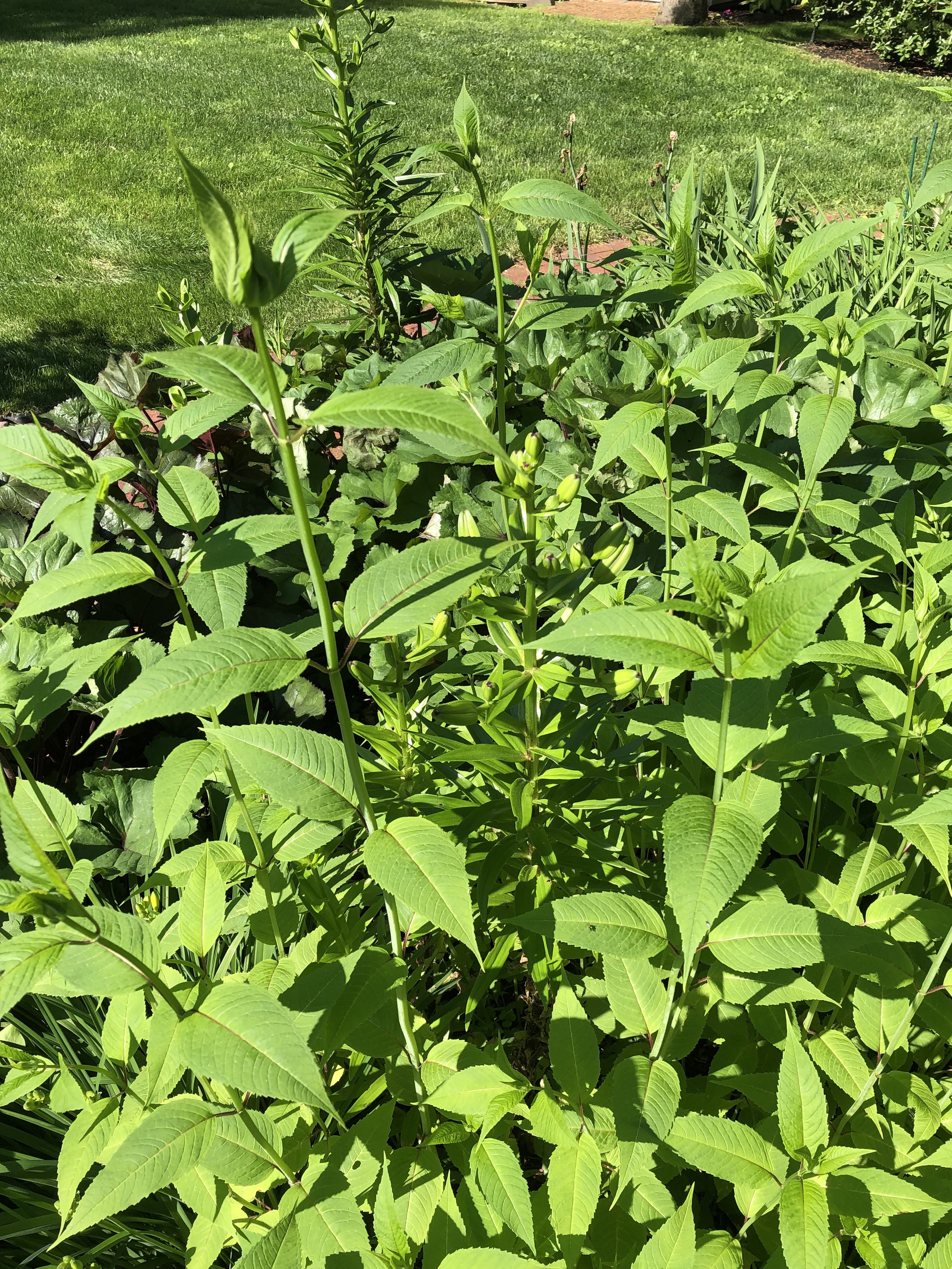
    Weeds are what you think they are.  Most plants that naturally grow in your yard are natives that thrive in that environment, while others are aggressive invaders that, well, thrive in that environment.  I didn’t invite the dandelions, clover, chickweed, maple seedlings and crabgrass to the party.  But Leopard Plant Ligularia, Black Eyed Susan and the most aggressive of all, Morning Glory were once planted with eager anticipation for the show they’d put on in the garden.  And the show is nice, but the seeds cast about in the wind growing everywhere?  Not so nice.

    Make no mistake, I don’t mind weeding.  In fact I’m quite fond of it.  Time weeding is “me time” (nobody else is volunteering) when I can think about anything or nothing at all.  And it’s a part of the deal.  You want a garden?  Get down on your hands and knees and bow to the clover god.  And when you’re done with clover there are dozens of Leopard Plant babies popping up all over the place.

    Chemical sprays can kill weeds pretty quickly, especially in the heat of summer, but I try to use them in moderation.  It’s one thing to spray the brick walk to knock down the weeds popping up in between.  It’s another thing altogether to spray in an active garden.  No, this is a task best accomplished with a good pair of grippy gloves and a comfortable pad to kneel on.  And that’s where you’ll find me a few times each week, busily filling a galvanized steel bucket with weeds.  May it go on forever.

  • Catkins and Helicopters and Life at the Edge of the Woods

    When you live on the edge of the woods you become part of the woods. The plants of the woods want to be a part of your garden. The creatures of the woods want to roam free in the clearing that you’ve made for them, and swim (sometimes unsuccessfully) in the pool you’ve placed as an offering. And the pollen, seeds and nuts make an airborne assault on… everything.

    Living here on the edge of the woods for twenty years now, I’ve learned the habits of the woods; just as I know which neighbors mow on Sunday, I know roughly when the acorns and hickory nuts start raining down in the fall, and roughly when the oak catkins and the maple helicopters will fly in spring. Yesterday was day one of the helicopter assault. Tens of thousands of them whirled down into everything – the pool, the deck, the flower beds, into the potted plants, the gutter… everywhere. And I know they’re not done. Looking up into the maples you see clumps of willing volunteers poised to make their own flight. No, it’s not over yet.

    Meanwhile the catkins quietly prepare for their own assault. Oaks do everything later than the maples. They leaf out later, turn color later, and drop their leaves much later in the fall. Everything has its time, and the oaks don’t rush anything. They’ve made probing missions already, but I know they’re holding out until I’ve cleaned up the yard.

    So the pool skimmers pile up clumps of soggy muck that need to be scooped out every morning, and sometimes during heavy assaults a couple of times a day. The patio has its own artwork going, with seed pods and clumps of catkins glued together with pollen, and moss and weeds popping up as the temperatures pull the trigger on the starting gun. Picasso has nothing on Mother Nature. <sigh> Add weeding to the to-do list. And the cleanup begins again, and then again still, until the woods concede another season to me. But we both know they’ve got time in their side.

  • Lilacs in Bloom

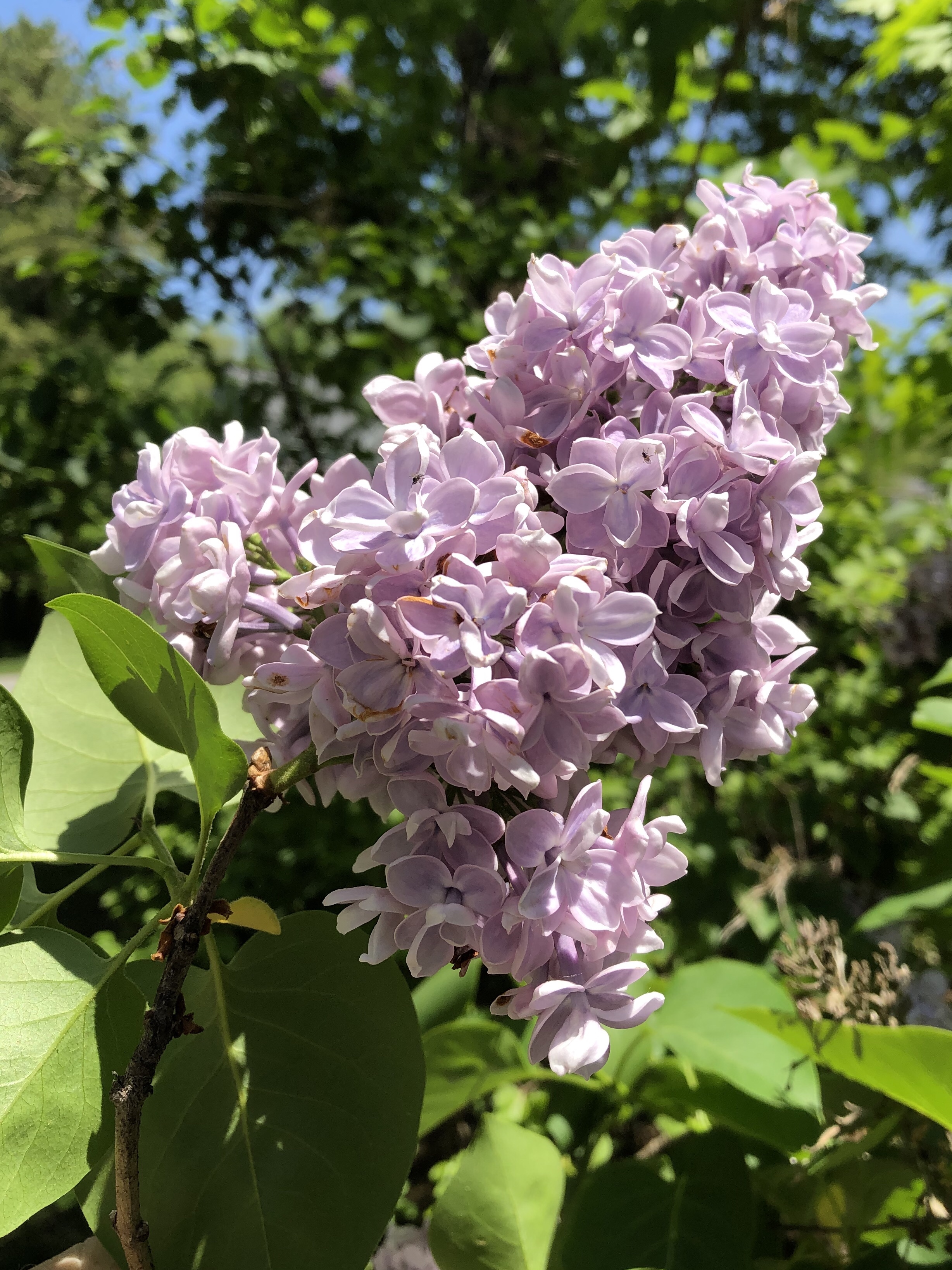
    A garden is a complete sensory experience, and any gardener will tell you that the smells of the garden are as memorable as the sights.  Monarda smells like tea leaves (because they are), tomatoes and marigolds announce the return of summer with a sniff of their leaves and stems.  Basil, mint, rosemary and other herbs have their own delightful fragrance. And of course the flowers offer their own too.  We’re witnessing the long parade of flowers each in turn announcing their time to shine.  For the last couple of weeks that time has belonged to the lilacs.  Their dance isn’t nearly long enough before they recede into the background of the garden like most flowering shrubs.  The magic in lilacs is the fragrance. And they sway in the breeze releasing it to all who come nearby. I make a point of visiting every chance I get, but notice others who love lilacs as much as I do never make the effort to pay them a visit. So I quietly bring them inside to perfume the kitchen. And celebrate spring in New Hampshire.


  • Catalpa

    Sitting at Boston Medical Center for an appointment earlier today I looked up to see a pair of Catalpa trees in full bloom. There’s nothing like a Catalpa tree, whether in bloom or later in the year when giant string bean-like fruits dangle off the branches. It’s a tree that I once promised myself I’d plant, but alas the yard isn’t right for a tree of this size.

    When I was in 8th grade my family moved to Chelmsford, Massachusetts to a beautiful old Victorian house with four acres of land. The house had four apple trees and a giant Catalpa tree right in the center of the yard. In front of the Catalpa was a large lawn that we’d play games on. We watched our dog get run over by a neighbor one day while playing kickball. Behind the Catalpa we rigged up a tire swing on a maple tree and would see how high we could go. One of the neighborhood girls whom I had a crush on passed away this year from cancer. We haven’t lived in that house in 34 years and I haven’t seen her since at least then.  Funny the things that spark your memories.

    Since then those who came after us tore down the old barn and the tack room that were attached to the house. I used to envision converting that barn into a living space. Such are the dreams of a teenager. I had a real connection to that house until I went off to college and our parents divorced. Those who came after us also ripped out the old lilacs that grew along the border with the neighbors. They changed the color of the house back to white.  I’m sure they did a lot more than I can see from a drive-by or a virtual Google street view flyby.  Whatever, it’s their house now – I just lived there once upon a time.  But that time was memorable for a lot of reasons; good and bad.  I miss the house but I don’t spend a lot of time pining for the days in Chelmsford.  I moved in as a 13 year old, moved out as a 19 year old.  So almost my entire teenage years were spent in that house.  A lot has happened in 34 years.  I’m happy to know that that Catalpa tree is still there, blooming year after year. It’s outlasted a lot of things in its time.