Category: History

  • Mount Desert Island

    “Le sommet de la plus part d’icelles est desgarny d’arbres parceque ce ne sont que roches. Je l’ay nommee l’isle des Monts-deserts.” – Samuel de Champlain
    (Translated into English: “The top of most of them is bare with trees because they are only rocks. I named it the island of Monts-deserts.”)

    French Explorer Samuel de Champlain sailed up the Gulf of Maine in 1604 and observed the granite mountain summits on the island before him. He named it “Ile de Monts Deserts,” or “island of the bare mountains”. Through all the turf wars between the French and the English the place names haven’t always been consistent, but this one has. The map below was from the British atlas The Atlantic Neptune in 1800 that shows the name clearly, along with other place names commonly accepted. And thus the island became known by a name we’ve called it forever since; Mount Desert Island. The pronunciation of “desert” itself leans towards the French… as it should.

    While exploring this island topped with pink granite peaks, Champlain hit a ledge off of Otter Cliff and had to take the time necessary to repair the hull. With the aid of a couple of Abenaki guides he explored some of the island, most likely around the Otter Creek area, but I wonder how far he explored while he was there. He and his guides would surely recognize large parts of the island today, but would be stunned by the crowds. A large part of the island and surrounding islands and land became part of Acadia National Park (from 1919 to 1929 it was known as Lafayette National Park, but changed to reflect the original French colony) and forever preserved for generations to see what Champlain saw in 1604. It would be the only time he set foot on Mount Desert Island, but his mark on history remains to this day.

  • Free From All Licentious Reflections, Insolence, and Abuse

    “As our present political state affords Matter for a variety of Thoughts, of peculiar importance to the good people of New England we purpose to insert every thing of that Nature that may be pertinently and decently wrote. For ourselves, we declare that we are of no Party, neither shall we promote the narrow and Private designs of any such. We are ourselves free, and our Paper shall be free—free as the Constitution we enjoy—free to Truth, good Manners, and good Sense, and at the same time free from all licentious Reflections, Insolence, and Abuse … to state and defend the Rights and Liberties of Mankind.” From the Independent Advertiser, on January 4, 1748.

    Samuel Adams was 26 years old in 1748; a Harvard College graduate working in his father’s malthouse (or brewery if you believe the marketing) and trying to figure out his place in the world. That year he would take a big step towards that goal with the publication of his newspaper, the Independent Advertiser. Heavily influenced by the writings and philosophy of John Locke, he would in turn influence countless people himself. He would write most of the content in the Independent Advisor for the next 27 years until the British would shut it down in 1775. Too late for the Mother Country, for the damage was already done.

    Samuel Adams was 41 when the French and Indian War ended, leaving Great Britain in debt and looking for a way to relieve that debt. They chose taxation of the colonists who had already suffered the weight of the war with the French and Native American population. This would prove too much, and the Independent Advertiser became decidedly less neutral. Adams, as the primary writer of the newspaper, became a thought leader and the Father of American Independence. The period between the end of the French and Indian War and the beginning of the Revolutionary War cemented Adam’s place in history.

    Nowadays its trendy in some orange circles to bash the media as fake. There’s no doubt that there’s plenty of fake media out there, but there’s also plenty of real news that politicians and profiteers would sweep under the “fake news” rug. The problem is knowing what, and who, to trust. And now there have never been more misinformed content writers, promoters of conspiracy theories, and the mad ramblings of direct sources on Twitter to fuel the chaos. These are strange, dark times.

    Adams was considered a radical until enough people saw things the same way. It makes you wonder, what is considered radical today that will gain enough momentum to be commonly-accepted truth down the road? There’s plenty to choose from in the last few years leading up to this penultimate 2020. Who is rising up to state and defend the Rights and Liberties of Mankind? Plenty of people are. The question is, who will shake themselves free of the noise to listen? And if 2020 is indeed penultimate, what is the next chapter?

    The concept of civilized discourse in politics has eroded over the last few years. That mirrors society as a whole, at least on social media and on the front lines of ideological debate. As a reader of history I know it wasn’t all that much different in Sam Adam’s time. We just have more advanced technology to amplify the licentious reflections, insolence and abuse. At what point does that technology start amplifying the truth, good manners and good sense instead? As it was when Samuel Adams was building his future, it will be when enough people start seeing things the same way. And demanding a higher standard.

  • In Search of a Border Marker

    In 1622 Captain John Mason was granted the land between the Kennebec River and the Merrimack River and the territory was named New Hampshire. The border with Massachusetts wasn’t the middle of the river, but a distance three miles north of the river’s shore. This made for an interesting, zig-zagging border that meanders along as the Merrimack River has from long before settlement by the English. That’s 398 years of continuous service as the official border between two similar yet completely different states. Barring wholesale changes in the borders that virtual sharp point should remain forever.

    Today, instead of eating lunch like a normal person I drove over to find the sharpest point on the border between Massachusetts and New Hampshire at a spot that on a map looked to be accessible in two directions. Using Google I zoomed in on the satellite image and decided the easiest possible way to get to this point was to walk the maintenance “road” that ran under the power lines adjacent to Route 213 in Methuen, Massachusetts. This worked out well until I reached the place where I needed to head north to the border point and scanned a swampy mess overgrown with cattails and impenetrable brush. This hike turned into a dead end but a good education on the lay of the land.

    Next option was to drive to the town transfer station, which was the next closest public land, to see if I could get to the woods that the border ran through that way. I had a great conversation with the woman weighing trucks in at the entrance, and she was politely curious about the quest that I was on, but received a no-go from the decision-makers on the other end of the radio. Not to be on this day. And that leaves me two options. Find another way in, potentially across private land, or to simply wait for the heart of winter when the ground is frozen solid to attempt the power line route again. I suppose there’s a third option of just dropping this pursuit of a border marker that may not even be there, but tell me, what’s the fun in that?

  • Over and Over

    “To do the same thing over and over again is not only boredom: it is to be controlled by rather than to control what you do.” – Heraclitus

    Heraclitus seems to be trending on the blog, coming up a couple of times in the last 24 hours of writing. Purely coincidence, but then again maybe there’s something in the September air. The days grow shorter, the air cooler, and the last of the harvest has begun. And yet we’re still in a pandemic, just as we were in the heat of summer and the early spring days when it all seemed uncertain. And many of us are still working from home day-by-day, chipping away at our jobs in the new normal, never quite feeling that way. My daughter began her senior year of college in the basement where she used to play with legos and costumes. I know she’d rather be amongst her peers on campus, and want it for her.

    Reading about the Battle of Britain in Erik Larson’s book helps me appreciate the relative ease with which we live through a global crisis compared to our grandparents and great-grandparents. We’re asked to work from home and wear a mask to avoid getting sick? Perhaps a moment of inconvenience in “living your best life”? Think about the souls being bombed from above night-after-night, wondering if this was the bombing that launched the expected German invasion. Looking at the full moon not in wonder but with dread for the illumination it offered to the enemy. No, wearing a mask doesn’t seem all that controversial in the big scheme of things.

    “History never repeats itself, but it rhymes.” – Mark Twain

    The funny thing about reading about fascists is seeing traits inherent in some world leaders of today. Critical errors made because of a character flaw changed the course of history then, and do so today as well. We just haven’t lived that history yet. But you can see the ripples that are building into waves in extremism and with climate change. Will we check the progress of the ripples or let them build into waves that wash over all of us? Appeasement didn’t work out well for Europe in the 1930’s. What are we tolerating now that will come back to bite us if unchecked?

    I suppose I should stick with the original themes of this blog, but seeing the same things over and over again gets frustrating. Sometimes you need to raise your voice and lend a hand to advance what is right. There will be moments of enlightened observation to come, but it ought to be balanced with a willingness to stand up and be counted. We can’t let the chorus of the ignorant drown out the voices of the informed. If that sounds like arrogance and elitism, well, let’s talk through our differences. There isn’t as large a gap as some might lead you to believe.

  • Our History

    “How does the country come out of a crisis stronger and not weaker?” – Jon Meacham

    “It’s just a sign of the grim moment we’re in that a basic statement about the capacity of America to reform itself can even seem partisan” – Jon Meacham

    I supposed it took an historian to jolt me back to action. I read these two statements in a New York Times article this morning, which got me thinking about these times, which were predictable in the lens of history but ignored in the self-consumed orgy of partisanship. What’s in it for me? has taken over for what’s best for the greater good? As if wanting equality for all is some dark socialist conspiracy. And with this rise of media bile and self-absorbed profiteering, the country has turned on itself. And with it, I’ve pulled away from the entire sordid mess in revulsion. But I’m doing a disservice to the country, the global community and the environment in doing so.

    American politics was once no place for the weak or meek. If you wanted to be in the arena you had to face the crush of public opinion, backroom pressure and lobbyists currying favor. But more than ever the morally compromised seek office for the power it brings and for the chance to grow rich from those who would buy a vote. The undercurrent of inequality has always been there in this country, but the American public is having a collective reaction to the bile we’ve been forced to hold down.

    Hatred and bigotry, things that simmered under the surface for years, would reveal themselves steadily as they rose to a boil. Things like mass shootings, police brutality, and riots would bubble up from below, indicating a level of rage and pathology that needed to be addressed. But instead it was thoughts and prayers and all manner of bullshit from political leaders too busy growing fat on lobbyist bribes to actually do anything meaningful. Trump, and Trumpism, is all that crap that was simmering under the surface finally boiling up and rattling the lid. Everything I believe in seems to be taking a hit from the criminally greedy swirling about in the White House today. It isn’t unlike other dark periods in history, and it will get far, far worse in a second term.

    And so what do we do about it? What do I about it? Vote? Of course. Raise my voice? Definitely. But not in a way that divides the country even further. No lecturing people who believe in something I don’t believe in. No mocking the opposition. Seek first to understand. And then to be understood. The key to selling is to help people reach conclusions, not to trick them. There are plenty of people tricking the American public right now. Educate people, but do it without smugness and antagonism. Lead with dignity and steadiness… but lead. Be in the arena, be in the game. No more recoiling in revulsion. Face the truth of what we’ve become and work to change it.

    Our history as a country is written in divisiveness, cruelty to others, opportunism and greed. But also on hope for an ideal of equality and freedom. The current administration has spotlighted the worst traits in America, but the reaction to the current administration has spotlighted our best traits. There’s a battle for the future America happening right now. This is our history being written, today, and we’re the authors. This is/there is no time to sit on the sidelines.

  • Reflections of the Day

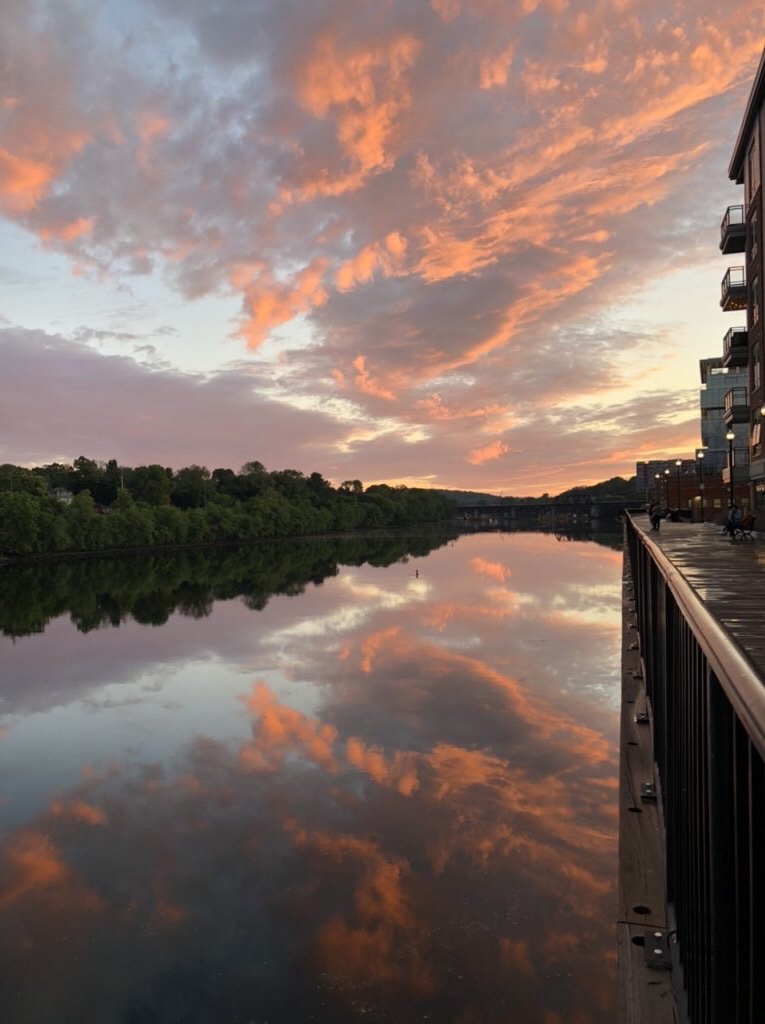
    Merrimack River at Sunset, Haverhill, Massachusetts

    “Water does not act like a perfect mirror. Light objects will appear a little darker and duller in their reflected images and dark objects will appear a touch lighter… A reflection [also] shows you the view from the point on the water’s surface that you are looking at, not the perspective from where you are standing.” – Tristan Gooley, How To Read Water

    I admit, standing on the riverwalk next to the Merrimack River in Haverhill, Massachusetts I didn’t think about whether the reflection was perfect or imperfect. I only thought about the beauty of the reflected light on the dark river water. For why dwell on the science behind the magic? Does knowing the science behind why something happens a certain way make it less magical? I should think not, and neither does Tristan Gooley. If anything it amplifies the beauty. Does knowing the name of the constellations improve or detract from the wonder in the night sky? Clearly it improves the experience. And so it is with water.

    I’ve borrowed How To Read Water from a friend and I chip away at it slowly. In fact, I finished two other books since he handed it to me. It’s not that I don’t want to read it, it’s more that the other books have been whispering to me more persistently. But after witnessing the sunset on the Merrimack River I’m inclined to dive deeper into the book.

    The Merrimack River holds a special place in my heart, flaws and all, because of my time living along its shores, and rowing on its waters, and exploring it from source to sea. Haverhill has never been my home, but I’m drawn to the city for its history and the raw beauty it still displays despite rough treatment by humans for generations. The land and the river both share the same affront from generations of humans, but still the land stoically holds on, scarred but dignified. And the river flows persistently onward, outlasting the generations who abused it. Those generations are eventually buried six feet into the land, becoming a part of it as we all must someday. For all our noisy encroachment, the land and the river silently have the last laugh.

    When you combine the history and the river and sunset, well, you’ve generally got me. And so I lingered along the edge of the river. My old friend and I quietly conspired as the light danced with shadows on her still water, until finally the shadows won out. The day faded and the river transformed into a black ribbon of water that now reflected starlight even as I reflected on another day that quietly slipped into the past.

  • The Four Chronometers of Greenwich

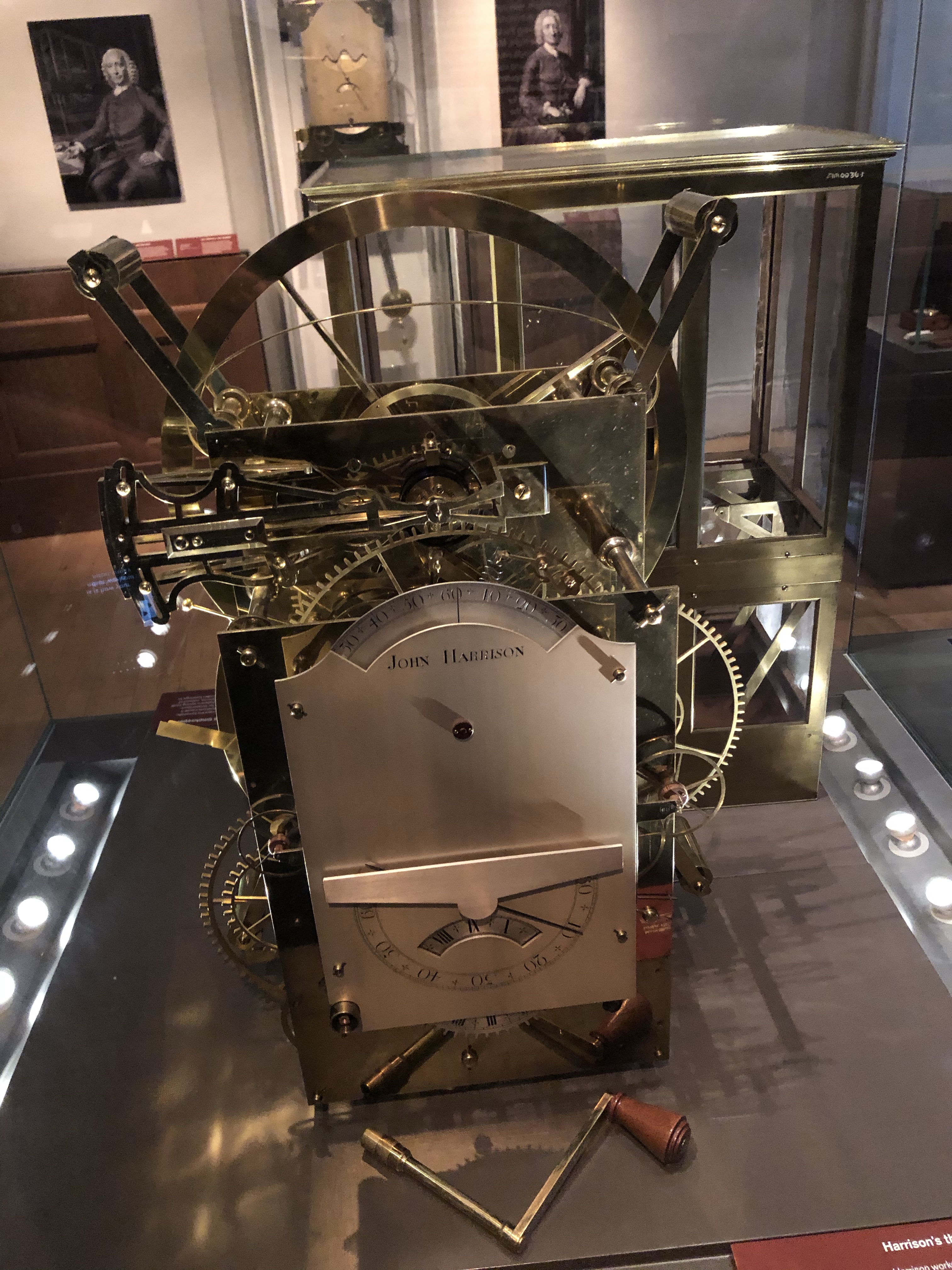
    I confess when I visited Greenwich my mind wasn’t on chronometers, it was on the Prime Meridian and Greenwich Mean Time.  But after the obligatory pictures at 0° along the famous line that dictates so much of our modern lives I spent the duration of my time exploring the Royal Observatory Greenwich, and listened intently as an exceptional guide detailed the story of the four clocks that changed the world.  That all four of the clocks were on display, and three of them were still running was a mind-blowing moment.

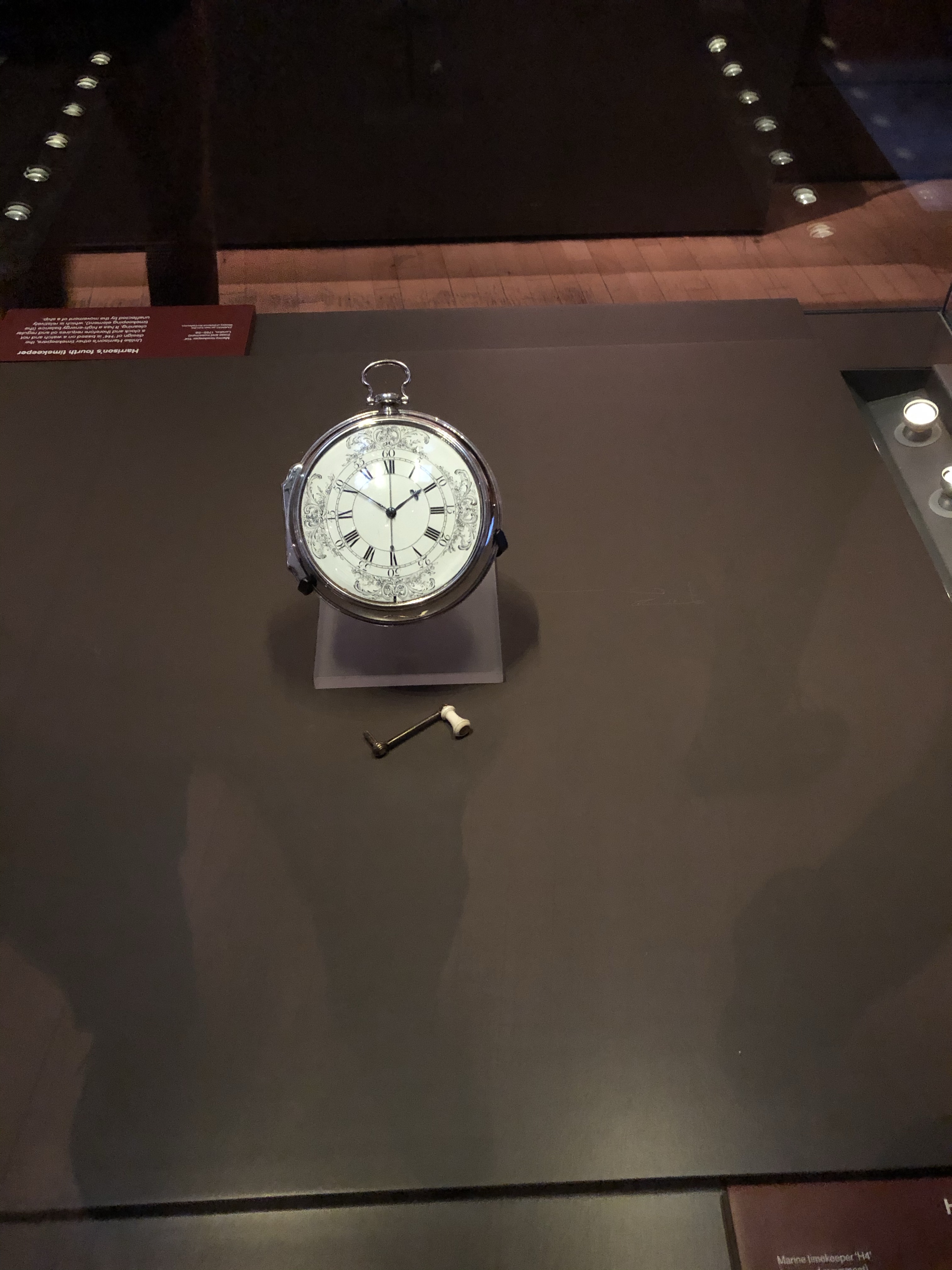
    John Harrison invented the first clock, H-1, in an attempt to solve the most perplexing problem of the day – determining longitude while at sea.  It was such a critical issue that Parliament passed The Longitude Act 1714 with a prize of £20,000 for anyone who came up with an accurate way to determine longitude.  Dava Sobel wrote an excellent book that details Harrison’s lifetime pursuit of a final solution.  H-1 was completed in 1735, but Harrison wasn’t completely satisfied with it and went about immediately to work on an improved chronometer.  H-2 never went to trial (tested at sea), H-3 was completed in 1759 but wasn’t trialed right away because of the Seven Years War.  While they waited to trial it Harrison invented the smaller H-4, which was the size of a very large pocket watch, which went on to win the prize money after a lifetime of work and refinement and continuous trouble with The Commissioners of Longitude (some of whom were biased towards an astronomical solution to the longitude riddle).

    Part of me wishes I’d read Sobel’s book before visiting Greenwich and seeing the four chronometers that changed the world.  But there’s another part of me that is grateful for discovering them unexpectedly.  I immediately purchased Longitude when I returned from the UK.  Having seen the four chronometers side-by-side in the museum, with all in working order (H-4 is deliberately kept unwound to preserve it), I felt an immediate affinity for the story when I began reading.  But another hero emerged from the book besides Harrison.  It was Rupert Gould, a Lieutenant-Commander in the British Royal Navy who was given permission to restore the four chronometers that had been sitting in a deteriorating state for almost a century.  Gould spent 13 years restoring the clocks to their original state, and in doing so returned four examples of timeless magic for visitors to the Flamsteed House and the Royal Observatory Greenwich.  He’s a quiet hero in history, and is rightfully remembered as such.  I was spellbound by H-1, H-2 and H-3 as they earnestly marked time 2 1/2 centuries after Harrison built them.  Now that I know their history, I look forward to a return visit someday, and will re-read Longitude and linger for a spell in the presence of history.

    H-2
    H-1

    H-4
    H-3
  • The Old Indian Meeting House

    The Nauset of Cape Cod are part of the Mashpee Wampanoag and were known as the “Praying Indians” because they became converts to Christianity.  They were an important ally for the colonists against tribes that rose up against the encroachment of the English settlements.  Most famously they worked with Benjamin Church as guides in his hunt for Metacom, or “King Philip”.  It was one of the Praying Indians who killed Metacom, effectively ending King Philip’s War in 1678.

    The Nauset were clearly converts to Christianity in the 1670’s, and they met somewhere in Mashpee to pray, but the original building is long gone.  A second building was purportedly built in 1684 at the original site near Santuit Pond.  That building is generally agreed upon as the current Old Indian Meeting House, relocated in 1717 to its current location on Meetinghouse Road (naturally) just across from the Mashpee River. This would make it the oldest church on Cape Cod and the oldest Indian church in the United States.  I’ve read at least one article that disputes the original date of construction for the meeting house, with a local historian claiming the building was actually built in 1757 or 1758 by Deacon John Hinckley.  I believe that Deacon Hinckley is agreed upon as the builder of the church, so determining the actual date should be relatively easy from there.  But I’m not diving deep into this controversy.  There’s no doubt that the Meeting House is historically highly relevant and important.  It was used by the Nauset as a church, and also no doubt that it was here that the Nauset staged a nonviolent protest known as the Mashpee Revolt against the Commonwealth of Massachusetts in 1833 over control of the tribe’s land.  Of course, that was exactly what Metacom was doing from 1675 to 1678, but he chose violence (spurred on by violence against the Pokanoket).

    I visited the Old Indian Meeting House on a quiet, hot August day.  Not a lot of Cape tourists hanging out at an old build next to a cemetery on a perfect beach day. I find that I’m often the only visitor to such places in the moment I’m there. But I prefer quiet time with places of relevance. It’s set on a small hill on the edge of the cemetery, roughly three miles from Santuit Pond, which would make moving it on logs on old colonial roads quite an undertaking.  The Mashpee Wampanoag hold this place as sacred, and I respectfully walked around the site for a few minutes, read a few of the nearby gravestones and generally tried to get a feel for the place before moving on.  A visit to their web site prompts a popup requesting that you sign a petition to help the tribe protect their lands from changes at the Bureau of Indian Affairs.  It seems that the contributions of the Praying Indians are once again being forgotten by some in the endless land grab of the native lands.  That would be par for the course.

  • A Sand and Scrub Pine Kid Visits the Past

    It might say a lot about me that on a hot Monday morning on Cape Cod when I found myself with time alone I didn’t opt for the beaches, but instead made a pilgrimage to an old graveyard in the woods of Forestdale.  This was a trip back for me, for I would walk in this graveyard as a kid reading the names and the stories behind the people who once lived and died in this place.  The graveyard was a short walk from the shores of Peters Pond, a place that I’d spend many summers in my formative years.  For I was a sand and scrub pine kid.

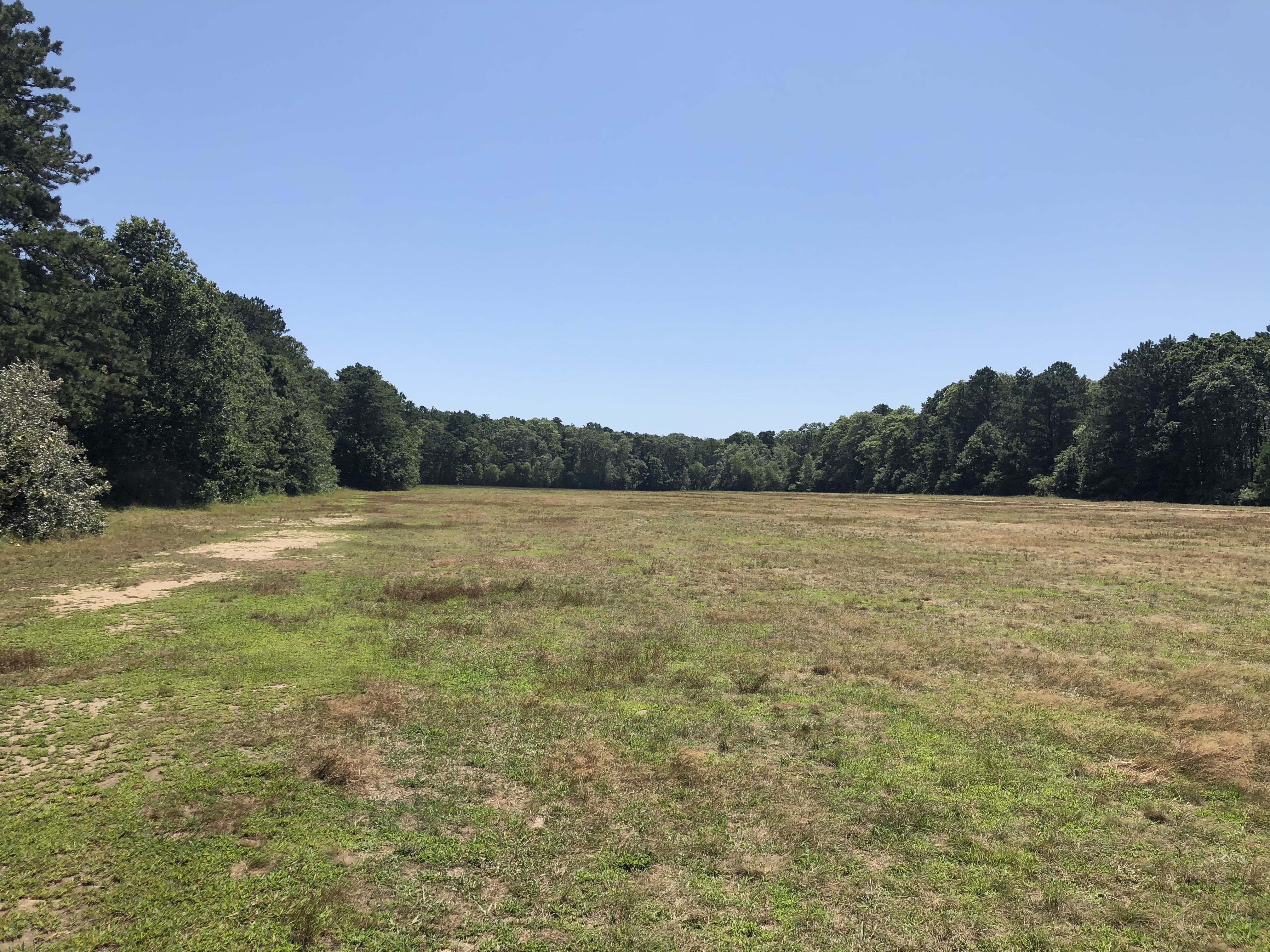
    30 years ago you could read the names clearly on most of the gravestones, and the cemetery was well-maintained by the caretaker for the Hewlett Packard Sandwich Resort (back when HP was a different kind of place).  That place on Peters Pond was a great perk for employees – a place to bring your kids for a week or two every summer at no charge.  When you went on the same week every year, you’d build friendships with other HP families, and that would build momentum year-after-year until it became a defining part of growing up for many of us.  The summer would end and they would have one last company party with employees grilling steaks and burgers and having games with prizes on a large field up the hill from the grounds of the resort.  That field is now home to The Sandwich Bazaar Flea Market, which effectively preserved the field in just as it was three decades ago.  I was grateful it hadn’t become a landing spot for condos.

    Sandwich Bazaar Field, once a part of HP’s Peters Pond Resort

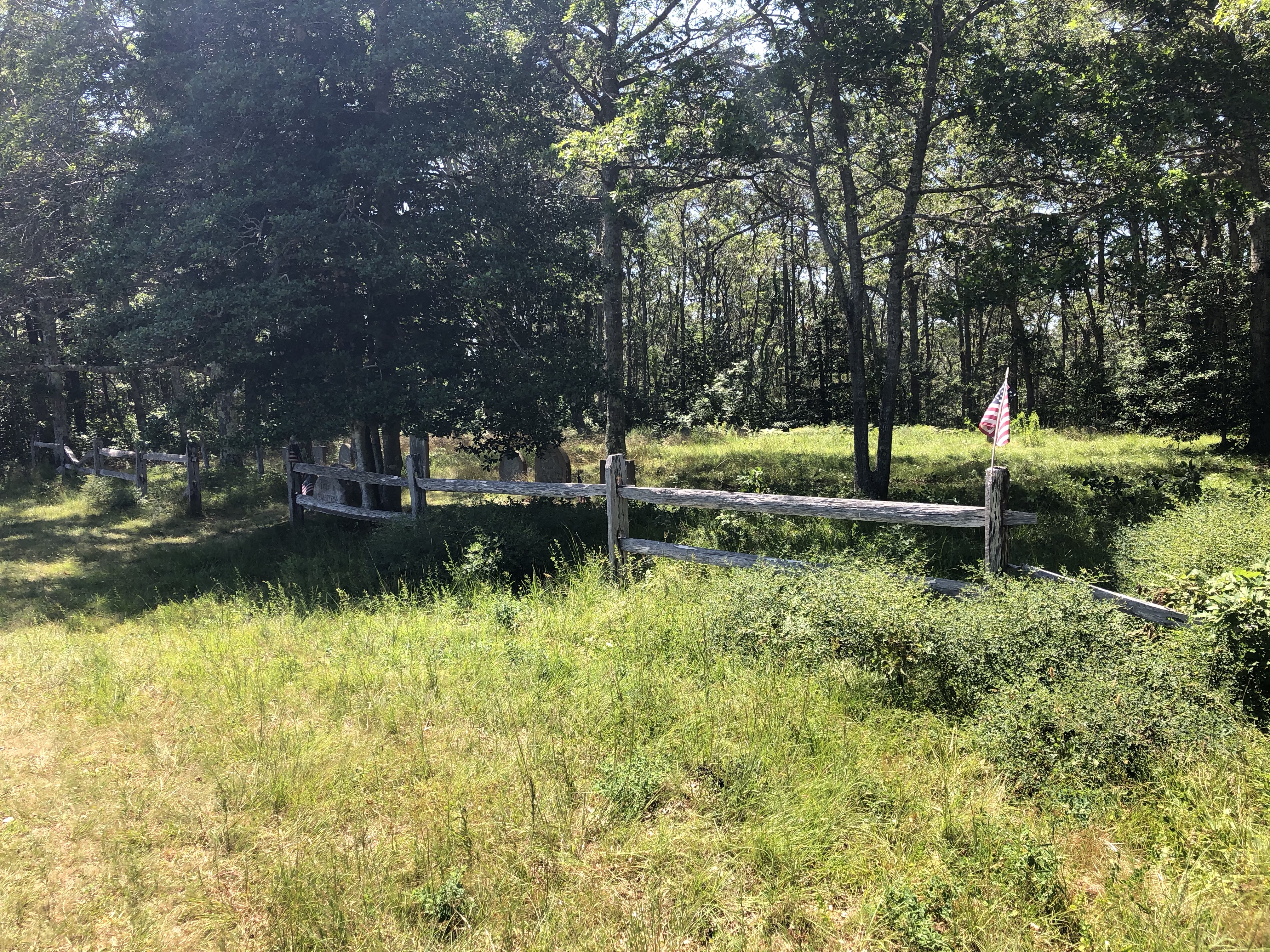
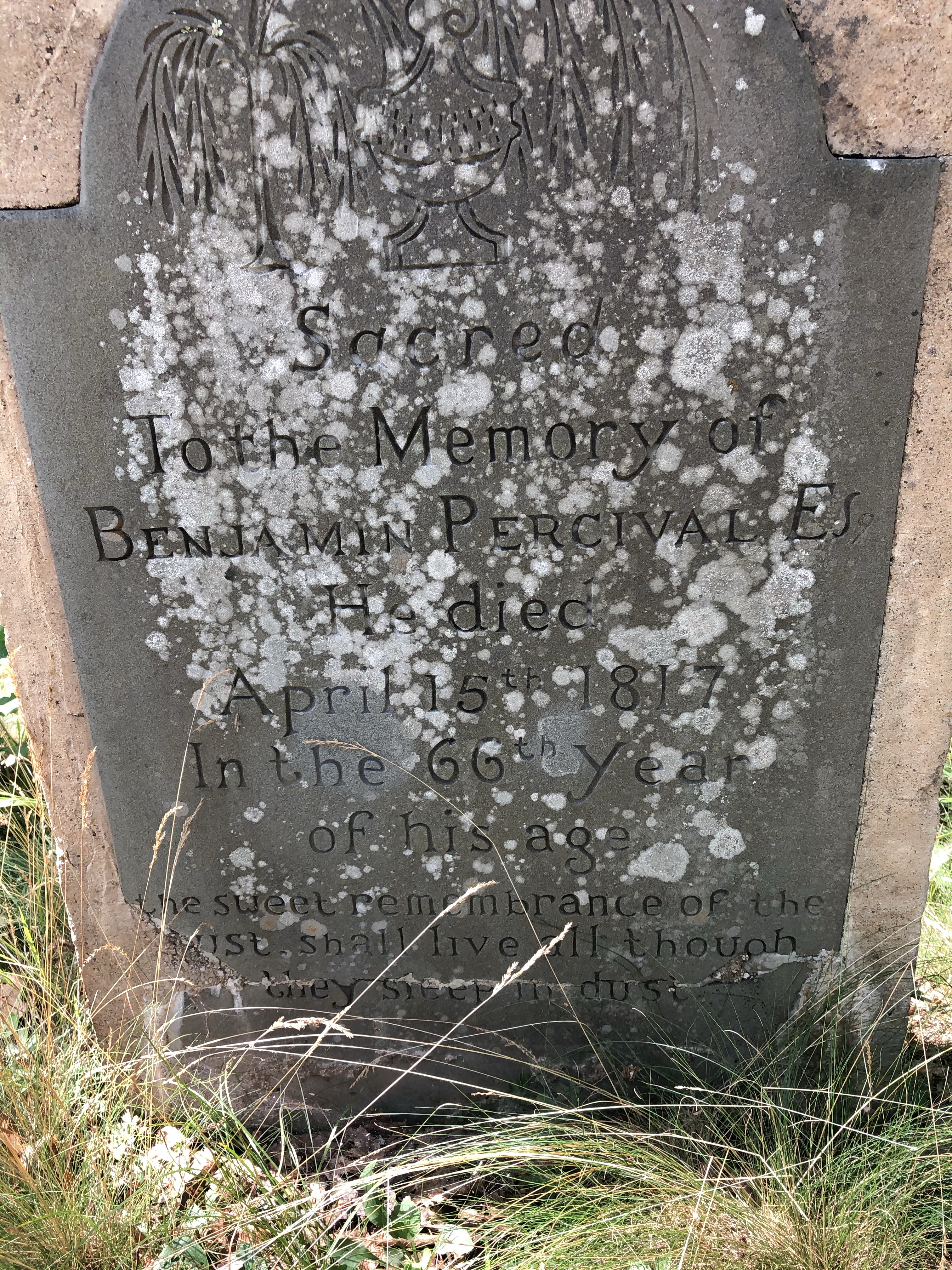
    The entrance to the field is chained off to prohibit cars, but I parked across the street and walked over.  Warning signs about deer ticks and Lyme Disease greeted me.  We didn’t think about such things when I was a kid, we’d just pull ticks off of our skin before they became engorged.  Now I guess you need to remind people.  And so I walked down to where I remembered the small graveyard being, walking in a time warp back to the late 1970’s and early 1980’s when this was my escape and the rest of the family didn’t think anything of you disappearing for the entire day as long as you showed up for dinner (I never missed dinner).  I saw the fence for the graveyard well past where the tire tracks for the flea market stopped.  Just where I remembered it being.  But sadly the old graveyard isn’t maintained anymore.  Where once the grass was neatly mowed, now it was as tall as the gravestones.  More troubling was the poison ivy that spread all over the grounds.  Apparently the Town of Sandwich has decided to let this cemetery return to nature.  At least the gravestones that were still standing.  Many were crumbled piles of broken stone.  Perhaps vandalized?  But even the gravestones still standing showed they haven’t aged well.  Most were illegible as the sandstone faces curled and peeled downward.  The last three decades haven’t treated the old graveyard well.

    The Sandwich Historical Commission does a great job of posting old maps of the area.  I compared two maps from around the time that the people taking up permanent residence here would have been alive.  The first was a map from 1794 that offers a larger view of Sandwich, with delightful details on the map.  Peters Pond is clearly named, making it an easy point of reference.  The land is marked as “wast land” on one side of the pond and “good land” on the other.  But the graveyard isn’t noted.  It does show up on a map from 1857, which also notes family names on houses in the community.  Interestingly, none of the names correspond with the people who are buried in the graveyard.  Its as if all references to them disappeared.  And so now is the graveyard, quietly being swallowed up by forest and poison ivy.  I thought of that 1794 map, describing this land as “wast land”.  Its impossibly hard to make a living farming on sand, but the land isn’t a waste.  It raised countless generations.  And for a dozen or so summers, it raised me.

    Segment of 1857 map of Sandwich

    I walked the serpentine path through the graveyard where the tall grass had been trampled down.  The path followed a route to the gravestones that were still intact.  I’m not the only one to visit Tobey Cemetery this year.  Which made me wonder, was it other sand and scrub pine kids returning to their childhoods as I was?  Or curious flea market people wondering what this remote graveyard was all about?  I’d like to think the former.  There were so many of us once.


    Tobey Cemetery

    One of the few intact and legible gravestones left
  • Skipping Across The Water: 20 Places To See By Boat

    Perhaps its my proximity to water at the moment, or perhaps the heavy influence of the crew of Fayaway on my thinking the last few days, but I’ve been thinking about places best seen by boat lately.  For when you combine water and beautiful scenery you can quickly build a list of must-see places that are perfectly situated to or only possible to see by boat.  I’ve managed a few of these in my lifetime, the rest are bucket list items for the right moment, should it come along.  But we all have to have hope for a future where we can once again explore the world, don’t we?

    Interesting if only to me, many of the places I want to go to most are in cold climates.  The tropical destinations are nice, but I’m a Northern bird and appreciate a bit of snow and ice in my life too.  And then there are the places I’ve been to before that I secretly plot to return to again as soon as possible.  You know you’ve fallen in love when a place haunts you for decades after visiting, and a few on this list qualify.

    Without further ado, here are twenty places best seen from the water for your consideration:

    The Outer Hebrides  Begin with Scotland?  I should think so.

    The Faroe Islands Stunning and remote?  Sign me up!

    Westfjords, Iceland – but why stop there?  The rest of the country whispers to me too.

    Iceberg watching between Newfoundland and Labrador (any excuse to return to Newfoundland works for me, and Labrador offers a world of remote exploration all its own.

    Easter Island, Chile to visit those Moai characters at sunrise and contemplate the extraordinary.

    Isla del Cocos National Park, Costa Rica – diving with hammerhead sharks?  Maybe.

    Nahuel Huapi Lake & Nahuel Huapi National Park, Argentina for the glory of the Patagonian Andes from the water.

    Whales and icebergs in Disko Bugt (Disko Bay), Greenland, and maybe a polar bear or two from afar.

    St Helena – maybe because its so remote, or maybe because of Napoleon, or the useless airport?  Whatever the reason, I’m interested in getting to St Helena someday.

    Carribean island hopping: Dominica, Martinique, Grenada, Saba, Barbados, etc. for all the reasons you’d expect.

    White water rafting through the Grand Canyon.  Because once was not enough.

    Inside Passage Alaska, and also because once was not enough.

    Revisiting the Statue of Liberty and New York Harbor again someday when the world is normal, or at least a little more normal.

    A cultural immersion in Okinawa, Japan for all that this place offers, from the historical perspective of Shurijo Castle and the WWII sites to slowing down in Sefa-utaki.  I have riding a bicycle across the Irabu Ohashi bridge on my short list of activities for someday, maybe.

    Milford Sound and Doubtful Sound in Fiordland, New Zealand remains on that evasive list of places to get to as soon as reasonably possible.  I fear that I might just want to stay in New Zealand should I ever visit, but its a chance I’ll have to take.

    Visiting Sydney Harbor and climbing that bridge are high on my list of things to do.

    Mo’orea, French Polynesia – and while you’re in the neighborhood, who doesn’t dream of visiting Tahiti, Bora Bora, Marquesas?  A visit to Mo’orea necessitates lingering to see more.

    Li River cruise China – China is a mystery to me, but a place I’d love to explore someday.  And I can think of no better place to start than on the water cruising the Li River.

    Cruising down the St. Lawrence Seaway and through the Great Lakes has been on my mind for some time.  If there were a reason to get another sailboat, it would be to do this trip.

    Last but not least and closer to home, sailing Lake Champlain is something I’ve contemplated since I was a teenager seeing sailboats moored along the shore with the Adirondacks rising in the distance.  And my fascination with the early history of this region makes it a must-do for me.  Early October would be sublime with the foliage.

    So there you go: twenty bucket list places to see from the water.  All we need is time and a way to get there.  A chance to skip across the water like a stone and see parts of the world you can’t always get to from land.  A mix of salt water and fresh water destinations just ready to explore.  Are you ready?  This list could take some time.