Category: History

  • Tipping the Scale Towards Progress

    “Each of you is in the process of building the structure of your lives, and the question is whether you have a proper, a solid and a sound blueprint… I want to suggest some of the things that should be in your life’s blueprint. Number one in your life’s blueprint, should be a deep belief in your own dignity, your own worth and your own somebodiness. Don’t allow anybody to make you fell that you are nobody. Always feel that you count. Always feel that you have worth, and always feel that your life has ultimate significance. Now that means that you should not be ashamed of your color… Don’t be ashamed of your color. Don’t be ashamed of your biological features. Somehow you must be able to say in your own life and really believe it, ‘I am black but beautiful’ and believe it in your heart.

    Secondly, in your life’s blueprint you must have as the basic principle the determination to achieve excellence in your various fields of endeavor. You’re going to be deciding as the days, as the years unfold what you will do in life, what your life’s work will be. And once you discover what it will be, set out to do it, and to do it well.

    And I say to you, my young friends that doors are opening to each of you. Doors of opportunities are opening to each of you that were not open to your mothers and to your fathers — and the great challenge facing you is to be ready to enter these doors as they open...

    And when you discover what you are going to be in your life, set out to do it as if God Almighty called you at this particular moment in history to do it. And just don’t just set out to do a good ‘negro’ job… Set out to do such a good job that the living, the dead or the unborn couldn’t do it any better.”
    — Martin Luther King, Jr. “What Is Your Life’s Blueprint?” speech at Barratt Junior High School in Philadelphia on October 26, 1967

    When you watch any speech by Martin Luther King, Jr. you feel the urgency of the moment he was living in. There was simply no time to waste. He said it as a preface of this speech in Philadelphia, speaking to young students who were at the beginning of their own journey to becoming. I wonder how things turned out for those students? How many heard the call and rose up to personal excellence? How many of us, hearing it today, will aim higher in our own pursuit?

    The thing is, we know how MLK’s story ended, just six months after this speech. Yet he lives on, transcending life itself to reverberate and resonate with generations long after the generation of middle school kids who listened to him speak that day. Precisely because he’d reached higher, arrived at the pulpit and turned to guide those who would follow.

    The world has turned more cynical once again, pushing against the momentum of change. There is an ebb and flow to progress, like a pendulum swinging. One side gains momentum, the other side resists and pushes back. Populism is predictable in this way, and generally requires the right voices to stand out in the noise and be the tipping point. For every autocratic bully rallying the crowd one way, there’s a voice calling to push back towards progressivism and human dignity. One step forward, two steps back for some period of time, then two steps forward, one back soon thereafter. Humanity’s history writes itself one swing at a time.

    Knowing this, we must continue to rise—not just in personal excellence, but generational excellence. There’s too much at stake in the world to settle for the narrative of the miserable. The swing towards autocracy isn’t a given, it’s merely a push. We can surely push back for progress. The scales can be tipped when we rise to the moment.

  • The Newport Cliff Walk

    Newport, Rhode Island is known its notable music scene with world-renowned folk and jazz festivals, as an epicenter of sailing culture (longtime home of the America’s Cup) and the party town any sailor would want in a home port, for the Tennis Hall of Fame, but mostly, Newport is famous for its mansions. Those mansions, built as summer “cottages” by wealthy families like the Vanderbilts, are massive and interesting to tour if you want to get a sense for how the wealthy lived in the Gilded Age of 1870 to 1910. Industrial titans and savvy global traders moved here to be where other wealthy people lived—to be amongst their peers in net worth.

    The phrase “The Gilded Age” was coined by Mark Twain, and not as a complement. He was pointing to the thin veneer of wealth that hid a lot of problems underneath it. It has taken on a romanticized connotation since then, but we ought to remember that these were just people with the same issues we all face in families and relationships, with the blessing and curse that money layers into the mix. I’m not a fan of wealth politics or keeping up with the Jones as a lifestyle choice, but I can appreciate the craftsmanship of the mansions and the wealth required to build and maintain them.

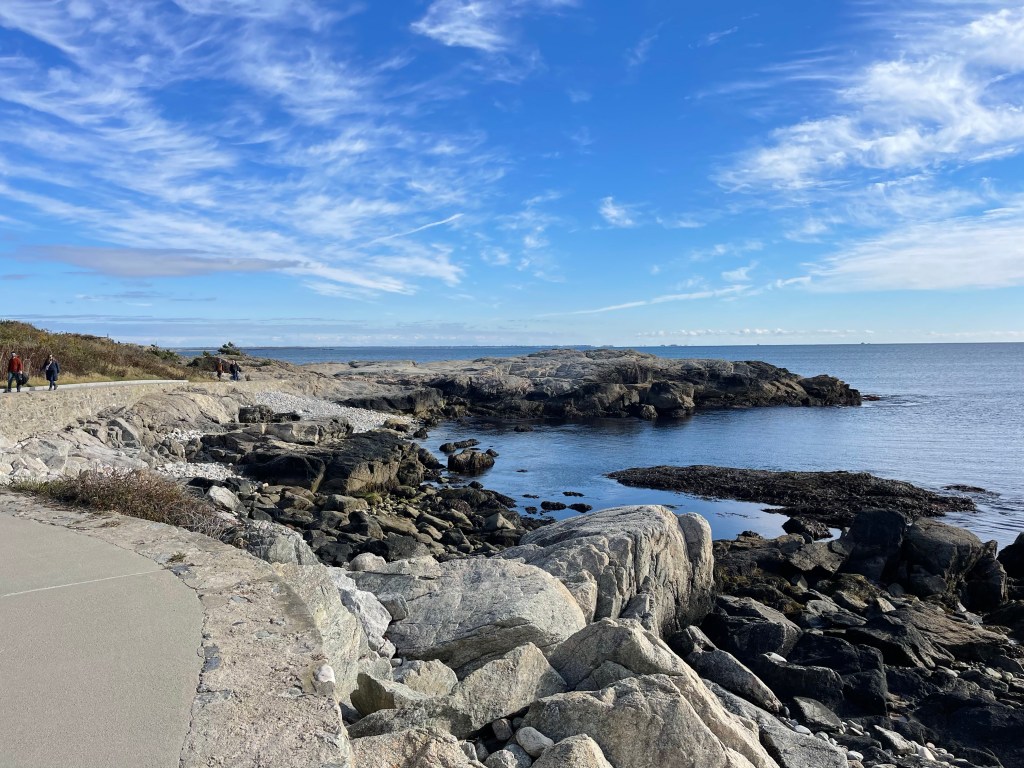
    The strip of land between this collection of Gilded Age and modern-day mansions and the sea is public domain. It’s here that you’ll find the Cliff Walk. Sections of the Cliff Walk are meant for everyone to traverse. You could easily walk or roll a wheelchair on most of the paved sections between Memorial Drive and 40 Steps, the staircase that descends to the ocean. The section between Salve Regina University and The Breakers is equally well-suited for accessibility. Beyond that the path becomes best for the sure-footed. If you don’t love hopping between boulders there are sections of the Cliff Walk that aren’t for you. But there’s something for everyone.

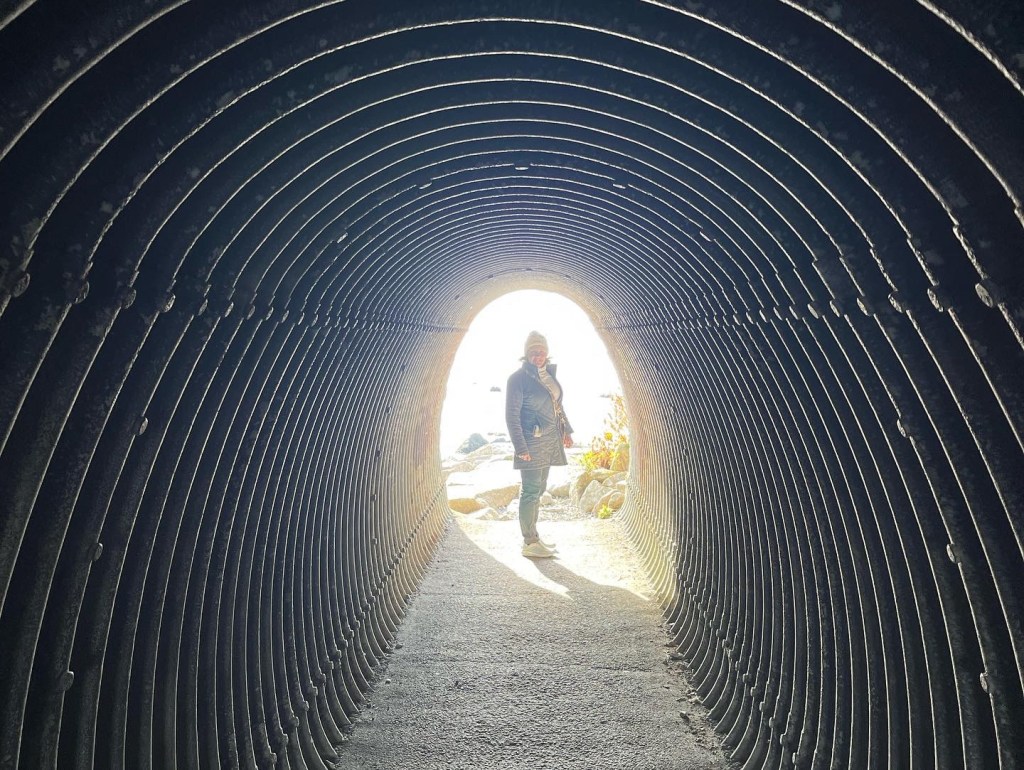
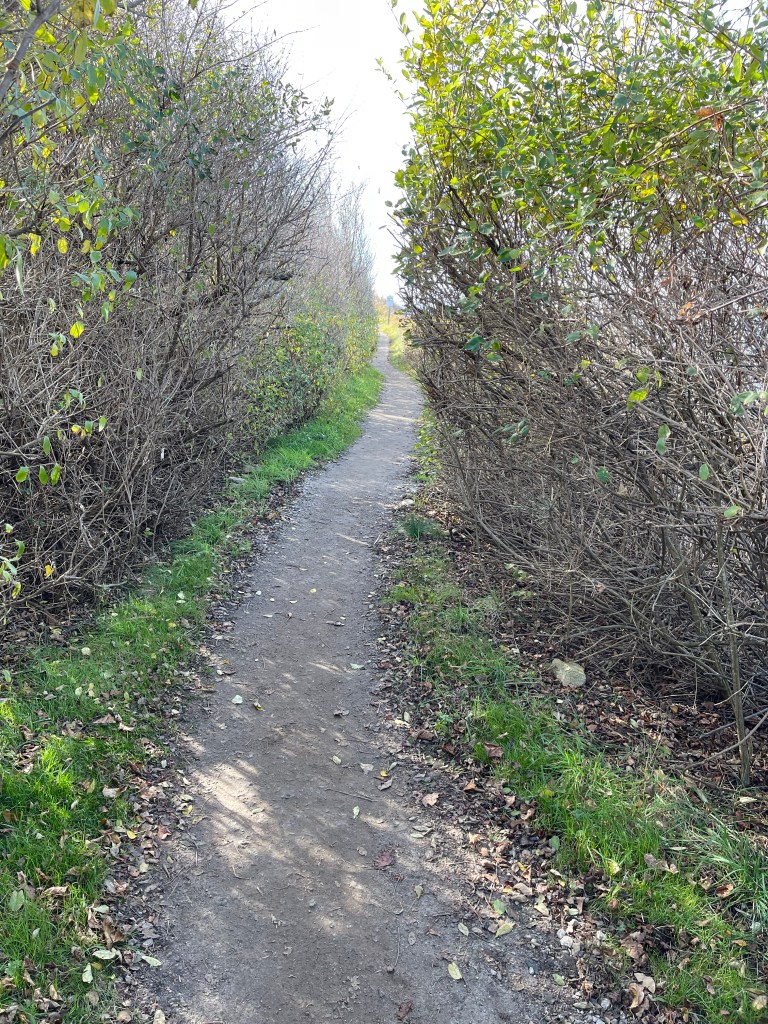
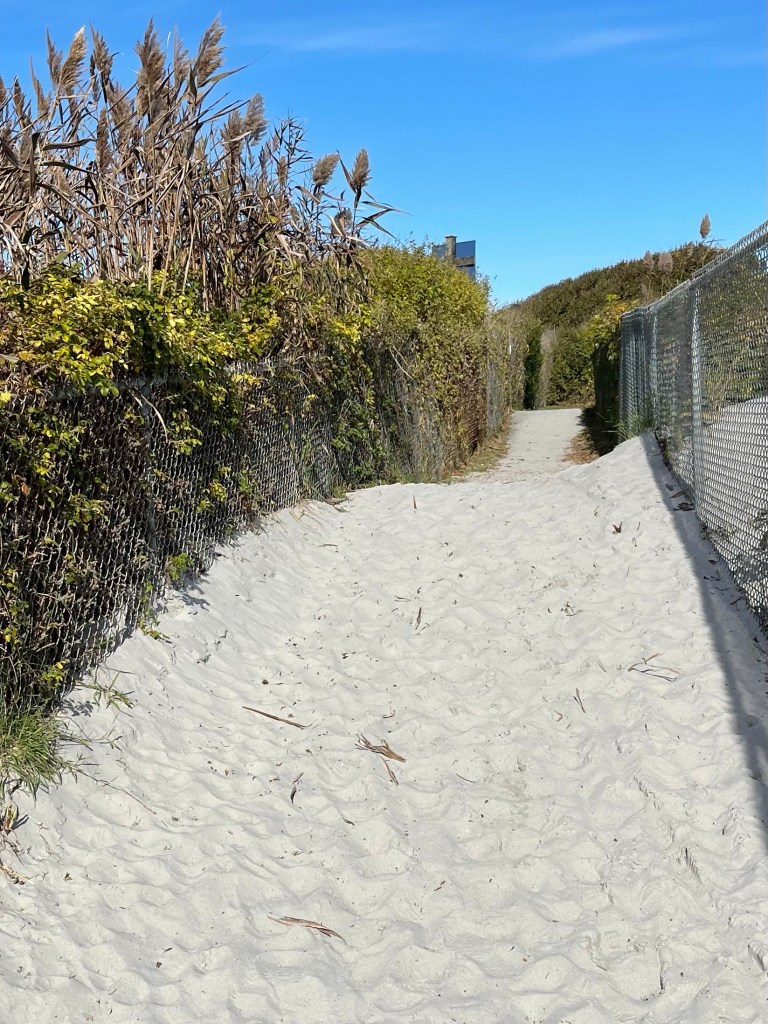
    For me, the magic of the Cliff Walk isn’t just the glimpses of manicured lawns and mansions, it’s the diversity of the walk itself. At times paved walkway, other times rock scramble or beach sand. Even a couple of tunnels to move the public quietly through the historic and high end real estate above. It’s a fascinating place to traverse, taking you from one beach to another past billions of dollars of American wealth.

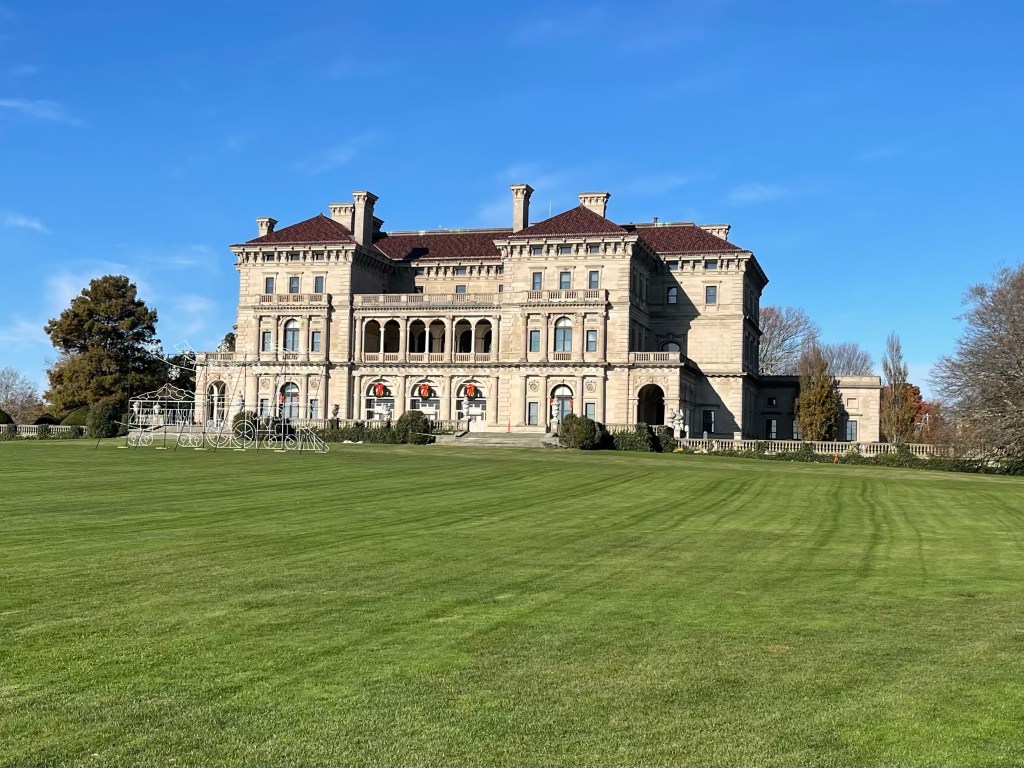
    The Cliff Walk is officially 3 1/2 miles long, but we extended it to almost 6 miles, from Old Town to the Eaton’s Beach starting point, and from the end at Baily’s Beach along Bellevue Avenue to Rosecliff Mansion. On a crisp and sunny November day it wasn’t crowded but it was surely beautiful. From Rosecliff it’s an easy walk to The Breakers, the largest of the mansions and the flagship of Newport’s Gilded Age “cottages”. The fact that they called them cottages tells you all you need to know about the vast wealth of the families who visited Newport each summer.

    Ultimately, a stay in Newport is never quite long enough. I didn’t have a summer to mingle with the locals, but a mere weekend. The Cliff Walk was a great lynchpin stringing together an epic walking day in the Celestial City. It justified some of the great dining experiences we had, and have us thinking about a return trip sometime soon.

    The Breakers
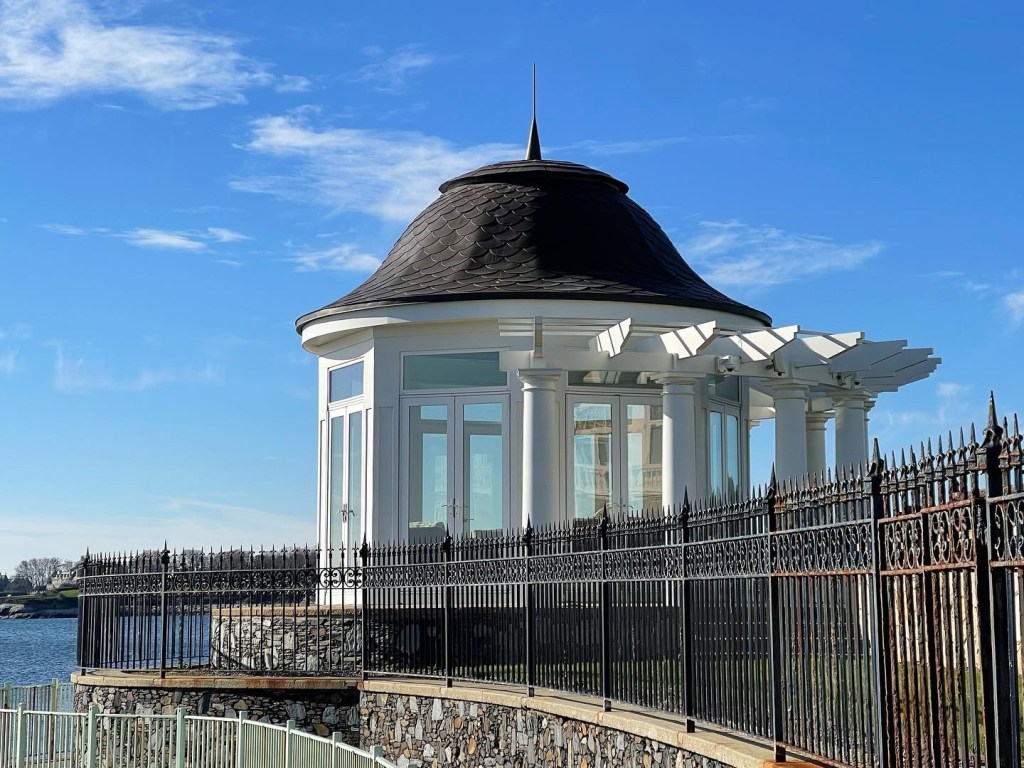
    Beautiful gazebo tucked up tightly against the Cliff Walk
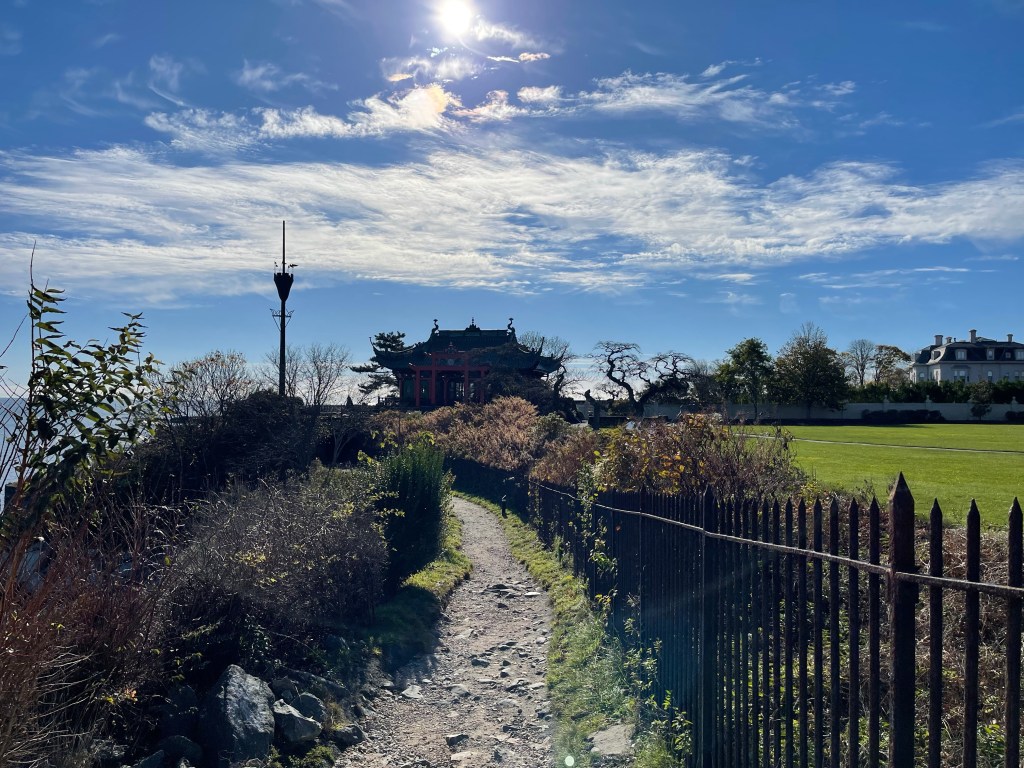
    The Tea House, shadowed by morning sun
    Tunnel under the Tea House
    Not all sections of the Cliff Walk are easy to traverse
    Rugged coastal beauty is everywhere between the Cliff Walk and the sea
    All kinds of terrain will greet you on your walk
    The finale of the Cliff Walk is a walk through beach sand to the road
  • The Pendulum

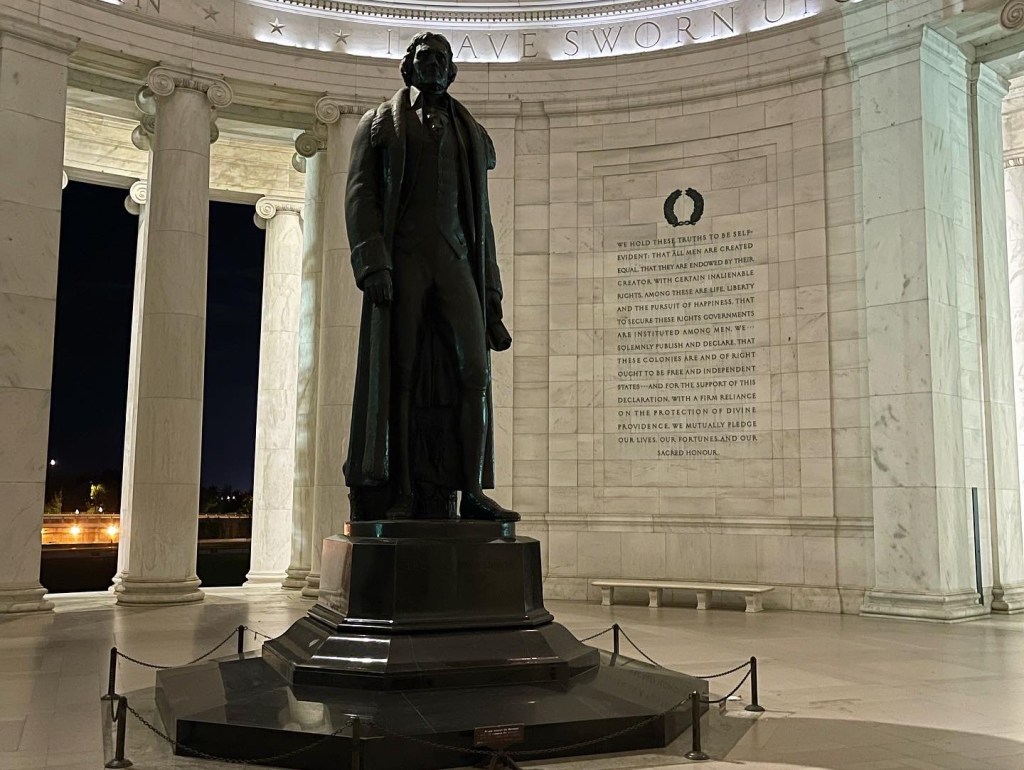
    “The returning good sense of our country threatens abortion to their hopes, & they believe that any portion of power confided to me, will be exerted in opposition to their schemes. And they believe rightly; for I have sworn upon the altar of god, eternal hostility against every form of tyranny over the mind of man.” — Thomas Jefferson

    When you stand under the dome at the Jefferson Memorial in Washington, DC you can read these words, “I have sworn upon the altar of god, eternal hostility against every form of tyranny over the mind of man.” Jefferson was directly addressing those who would take the religious freedoms guaranteed in the Constitution to roll out a national religion. Simply put, it wasn’t going to happen on his watch.

    The United States has gone through waves of fervor since Jefferson’s watch ended: religious, philosophical, political. We’re going through it right now with half the country aligned with one particularly autocratic clown and the other half holding out hope that the rule of law and concept of equality and freedom for all should survive the latest chapter of zealotry and anger. Time will tell, friends.

    The thing is, it’s our watch now—certainly for citizens of this country of voting age, but in many ways the global community as well. Look around at the rise of autocracy and extremism in the world. This is a pendulum swing into uncomfortable places. How things go from here is up to each of us. Many more voices of reason to temper the extremists on either side would greatly benefit society. Some of us believe that we’re all in this together, and some choose us versus them. I’m not naive enough to ignore the threat from some dark corners of the world, but in general a bit of creative diplomacy would solve the bulk of our collective problems, both at the dinner table and on a global scale.

    I wish more people would be hostile to tyranny, but most people are simply trying to get through the day. The lessons of history are clear enough though, when we pay attention to them. It’s a lot easier to clean up a small mess than a big one. Momentum works for and against us, and it’s still uncertain just how far that pendulum is going to swing.

  • An Evening Walk in Washington, DC

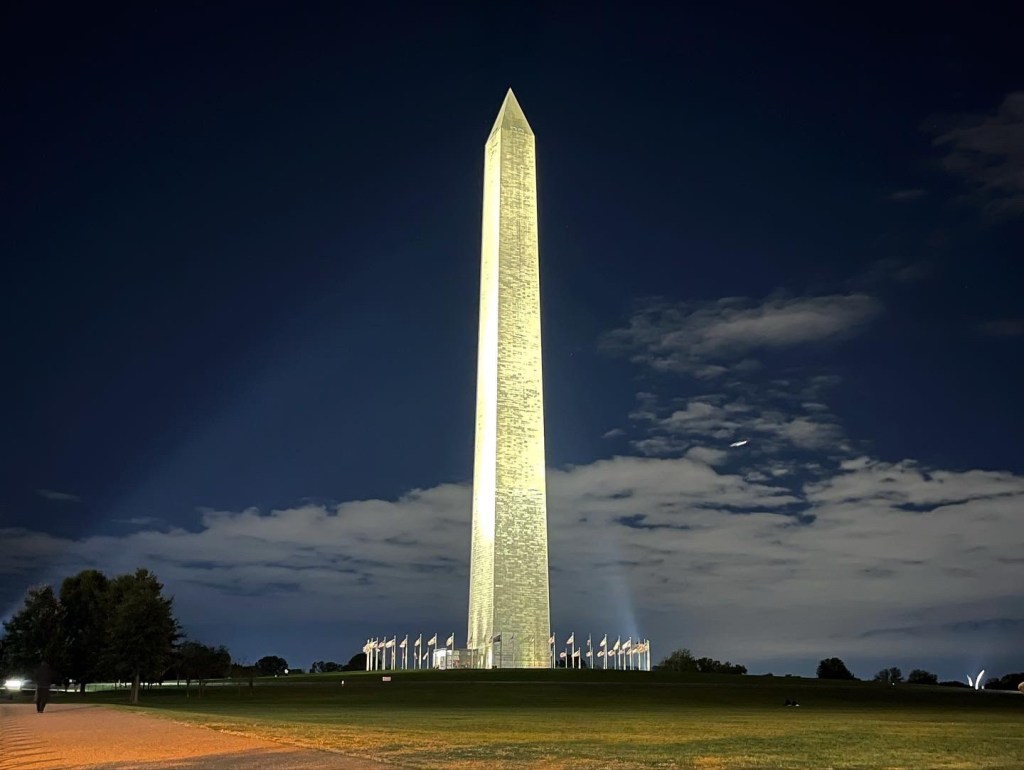
    America’s capital city is beautiful in the daylight, but it sparkles at night. This was my feeling as I departed a dinner and walked seven looping miles around the National Mall back to my hotel instead of using Uber. Some of the employees of Washington, DC disappoint Americans all the time, but its not the city’s fault, it’s those darned politicians, lobbyists and bureaucrats. The walk was magical, with a little drama mixed in for good measure.

    The walk began with a quick stroll to the White House, or rather, as close as one can get to the White House without a pass. For this walker that meant Lafayette Square, directly across Pennsylvania Avenue from the White House. Unfortunately, world events had that location full of Palestinians protesting boisterously, with a line of police officers lining Pennsylvania Avenue between them and the President’s place of residence. Not to be deterred, I found myself a spot between the protesters and the barricades to snap a picture of the White House and quickly got myself out of there.

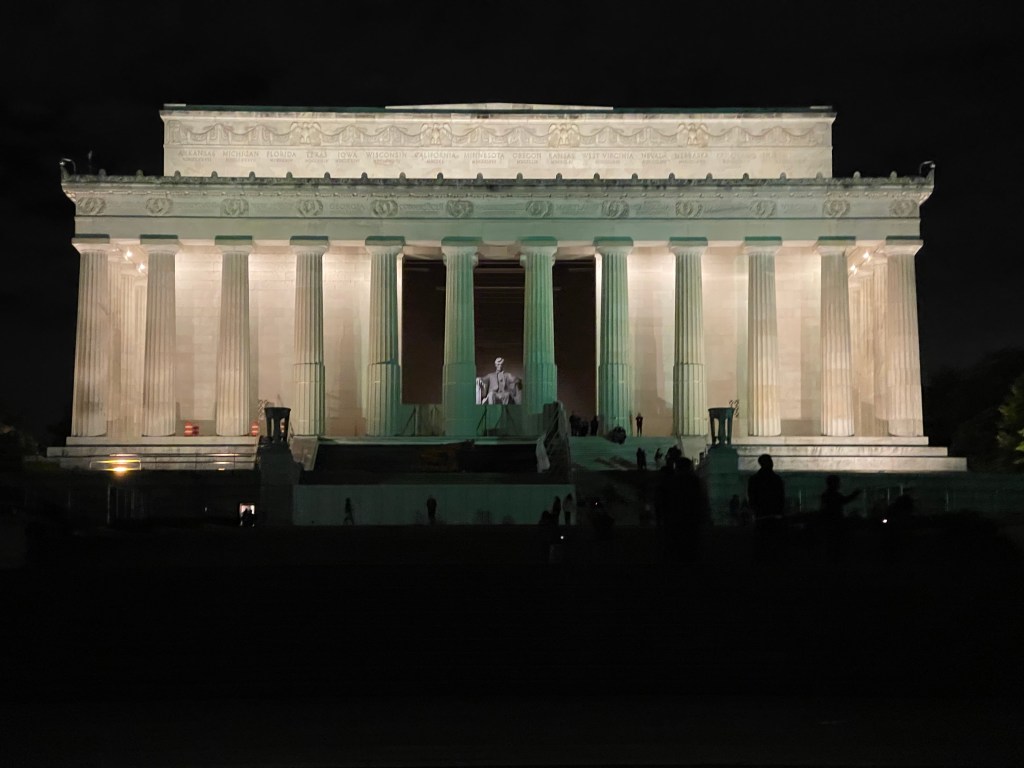
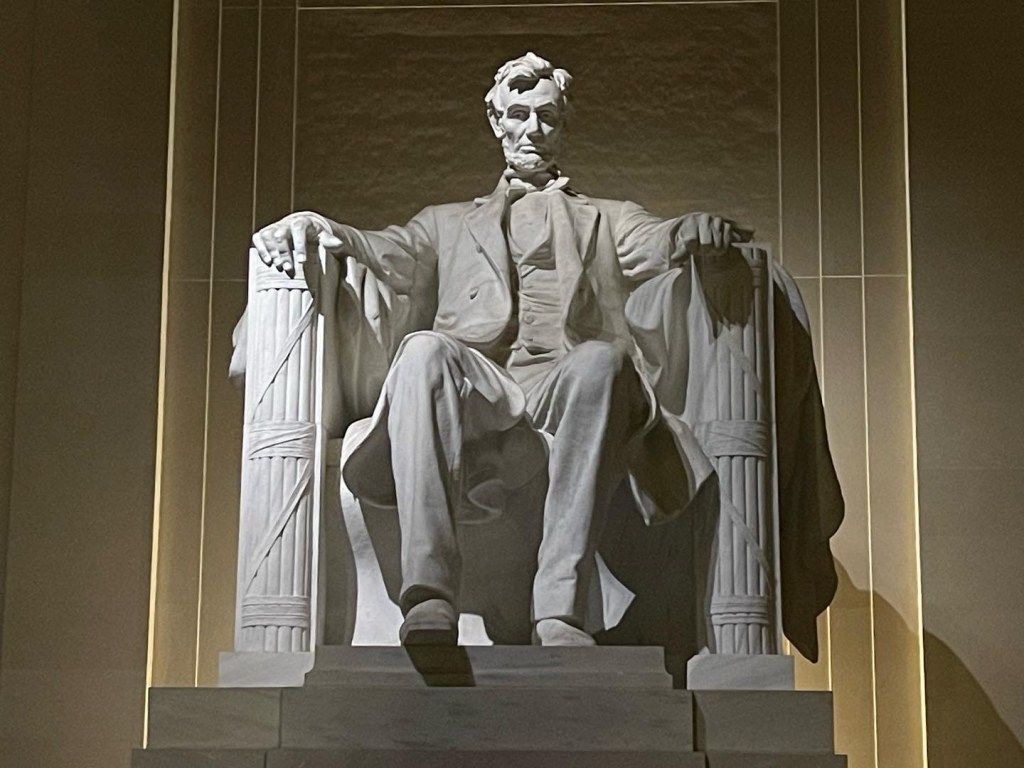
    After deciding it was impractical to head towards the US Capital I headed directly for the big Presidential Memorials: Washington, Lincoln, and Jefferson. Each is impressive, with the Washington Memorial the appropriate central point of the National Mall and the Lincoln Memorial the Daniel Chester French masterpiece must-see with the crowd to show it. I can’t come to Washington, DC and not visit Abe. Lingering a bit, I take the time to read the Gettysburg Address engraved on the wall. If I did nothing else in Washington I would visit this place whenever possible.

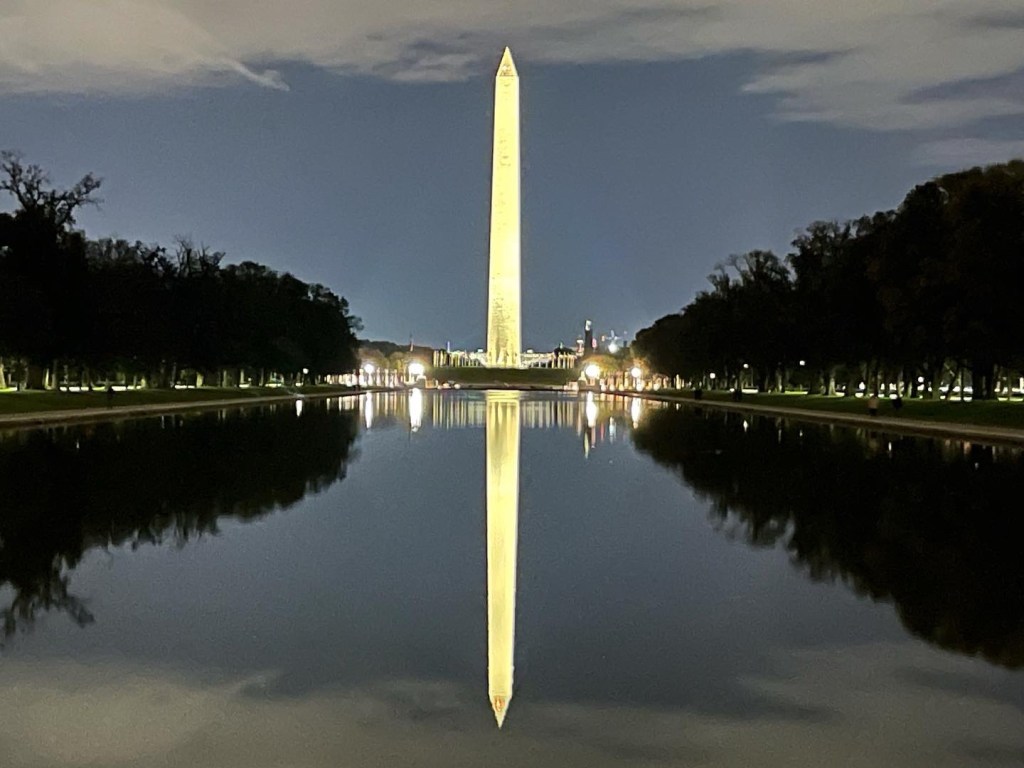
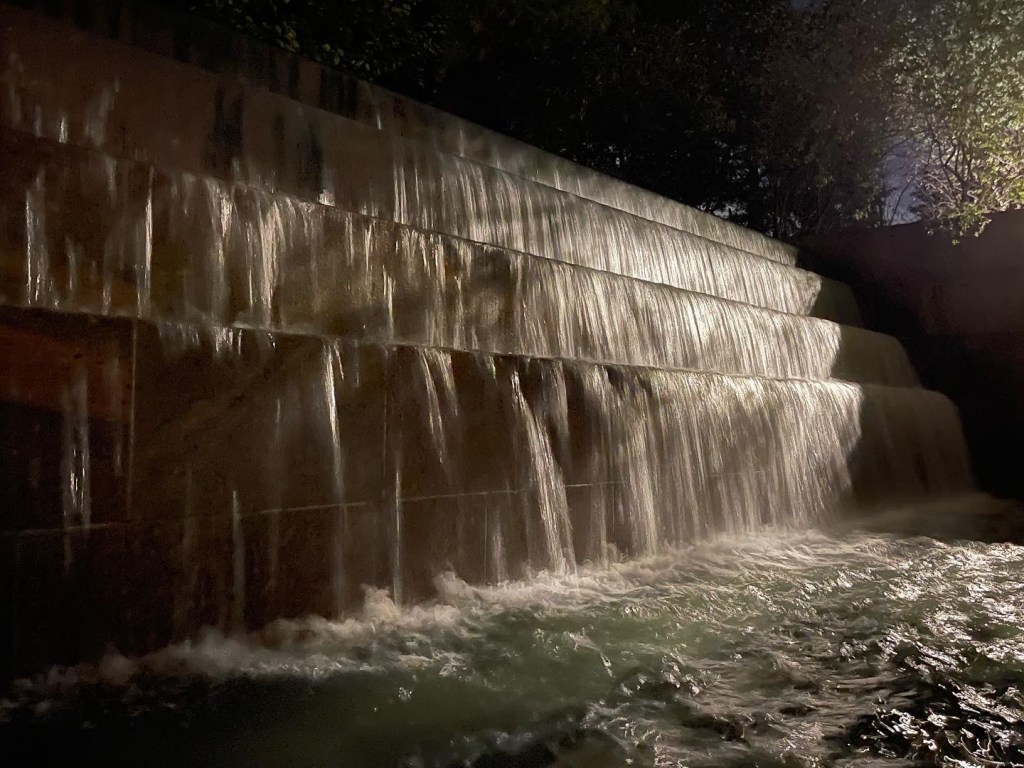
    After Lincoln there’s a lovely photo opportunity at the Lincoln Memorial Reflecting Pool with the Washington Memorial rising behind it. Nearby are the Vietnam and Korean War Memorials, both striking at night. I paid my respects to an uncle who’s name is engraved in the latter wall and moved on to the Martin Luther King, Jr. Memorial overlooking The Basin. Not far from this is the Franklin Delano Roosevelt Memorial. It’s quietly impressive at night, with the bare minimum of lighting and cascading water filling the senses.

    The Jefferson Memorial is quietly impressive, but it’s no Lincoln Memorial. One must commit to visiting it, especially at night. The walk along The Basin at night is dark and lonely. As a tall man I don’t think of myself as vulnerable in situations like that, but I maintained situational awareness nonetheless. The National Mall area is generally pretty safe but one must always be aware. I would need that awareness again later in the night, but that’s a blog post for another day.

    There were several other Memorials and Monuments skipped on this walk depending on the path chosen. The World War II Memorial is particularly impressive, and some other sites were just far enough off course to warrant a visit another time. But the highlights were covered on a wonderful walk in America’s capital city.

  • Significance Transcends

    “History is, above all else, the creation and recording of that heritage; progress is its increasing abundance, preservation, transmission, and use. To those of us who study history not merely as a warning reminder of man’s follies and crimes, but also as an encouraging remembrance of generative souls, the past ceases to be a depressing chamber of horrors, it becomes a celestial city, a spacious country of the mind, wherein a thousand saints, statesmen, inventors, scientists, poets, artists, musicians, loves, and philosophers still live and speak, teach and carve and sing. The historian will not mourn because he can see no meaning in human existence except that which man puts into it; let it be our pride that we ourselves may put meaning into our lives, and sometimes a significance that transcends death. If a man is fortunate he will, before he dies, gather up as much as he can of his civilized heritage and transmit it to his children. And to his final breath he will be grateful for this inexhaustible legacy, knowing that it is our nourishing mother and lasting life.” — Will and Ariel Durant, The Lessons of History

    We are the sum of all that has come before us, with a mission to process and pass along this wealth of knowledge and contribution to future generations. When we talk about the Great Conversation, we rightly wonder what our own legacy might be. We must feel the urgency to contribute. We must lean into Walt Whitman’s response to this very question: That the powerful play goes on, and you may contribute a verse. Walt wasn’t just writing prose, he was struggling with the same things we struggle with, with fewer notifications and cat videos. We’re simply links in the chain, anchored to the work of those who came before us.

    Lately I’ve seen the momentum that comes from steadily pushing the flywheel for years. The writing is easier, conversations seem more productive and meaningful, and a deeper and richer connection to the world has led to growth and understanding. We simply begin to realize that we’ll never have it all figured out, we cannot live forever and so we’ll run out of time before we grasp everything we hoped we might, and with the startling realization that our significance in the universe isn’t all that big. Yet we may still transcend this lifetime anyway, simply by being actively engaged in our time.

    When we feel the connection to the countless generative souls who made us who we are, we may feel compelled to rise to the occasion of our lifetime as well. There is magic in showing up every day and doing the work. Our verse is ours alone. Just as we thrill at discovering a magical verse from a distant voice, our own verse may one day delight a future treasure hunter. Doesn’t it deserve its moment in the sun?

  • The Best of Our Energies

    “We shall send to the moon 240,000 miles away, a giant rocket, more than 300 feet tall on an untried mission to an unknown celestial body, and then return it safely to Earth. But why some say the moon? Why choose this as our goal? And they may well ask, why climb the highest mountain? Why 35 years ago fly the Atlantic? We choose to go to the moon. We chose to go to the moon. We choose to go to the moon in this decade and do the other things not because they are easy, but because they are hard. Because that goal will serve to organize and measure the best of our energies and skills, because that challenge is one that we’re willing to accept. One we are unwilling to postpone. And therefore, as we set sail, we ask God’s blessing on the most hazardous and dangerous and greatest adventure that man has ever gone.” — John F. Kennedy, Jr.

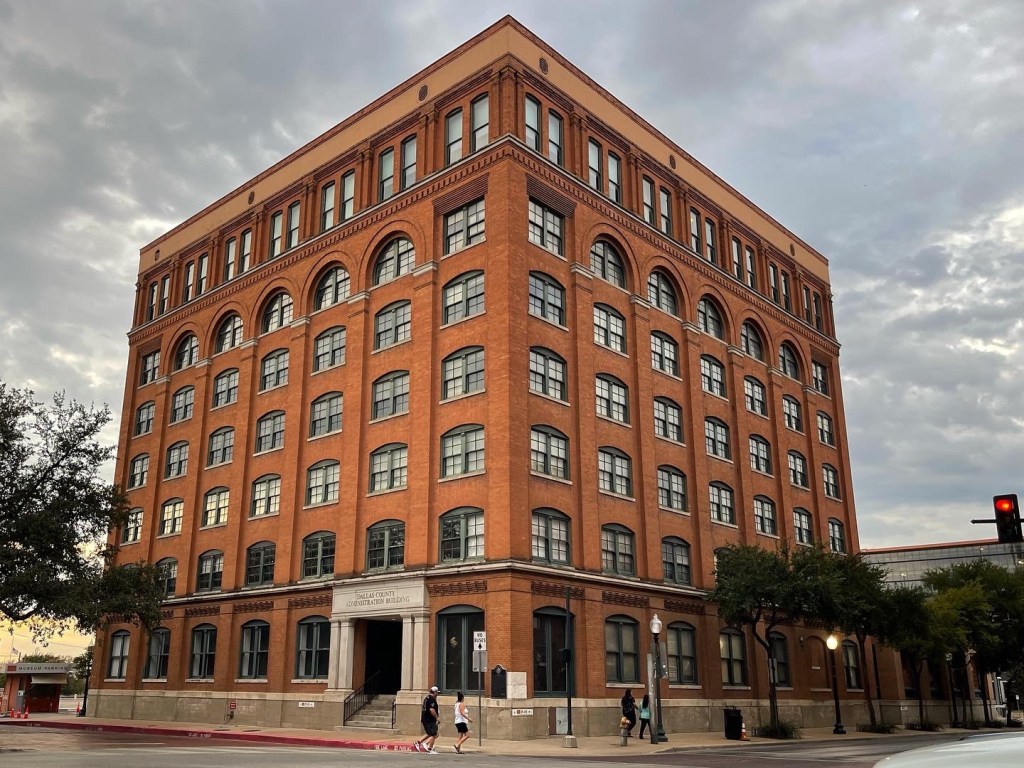
    Walking around Dallas, Texas to stretch the legs a bit, I had one destination in mind the entire time. It had to be Dealey Plaza and the Texas School Book Depository building. This may seem morbid in a way, but it’s similar to me to visiting the 9/11 Memorial in New York City. It’s a place we all know about (though I wasn’t alive at the time of Kennedy’s assassination) and feel compelled to experience to get a feel for what the place is really like.

    The thing about Kennedy that everyone remembers is the sense of hope and youthful energy that he brought to the White House. That it would be taken away so abruptly ripped the heart of the nation, no matter which side of the aisle you sat on politically. There are very few things that seem to unite us today, and we remember the moments when we stand together as one. That I visited on 9/11 wasn’t lost on me. Along with Pearl Harbor, 9/11, the Challenger explosion, Kennedy’s assassination was one of the seminal moments in American history.

    The thing is, Kennedy died but the ripple he made continued to reverberate. It says a lot that I should seek out the final moments of a man who died before I was born. It says a lot that we did go to the moon, and America did grow as a nation after JFK’s death. We show the way in our lifetime, that others may find their way in their lifetime. That we may grow as a society after we’re gone. Kennedy called for a nation to channel the best of their energies towards an audacious mission. That we accomplished it was one of the brightest moments for the nation in some dark days to follow Kennedy’s assassination.

    That phrase, choosing a goal that “will serve to organize and measure the best of our energies and skills” should still provoke us. Are we measuring up to the best we can be? Do we have the right goals in mind for ourselves? That’s what echoes in my mind when I think of Kennedy. We all know where his life ended, but it’s who he challenged us to be that stays with us.

    Texas School Book Depository building
  • Existing Determinedly

    “The content of our truth depends upon our appropriating the historical foundation. Our own power of generation lies in the rebirth of what has been handed down to us. If we do not wish to slip back, nothing must be forgotten; but if philosophizing is to be genuine our thoughts must arise from our own source. Hence all appropriation of tradition proceeds from the intentness of our own life. The more determinedly I exist, as myself, within the conditions of the time, the more clearly I shall hear the language of the past, the nearer I shall feel the glow of its life.” — Karl Jaspers, Philosophy of Existence (Existenzphilosophie)

    This idea of reading and weaving the philosophical work of past greats into our own lives today is nothing new, yet so many only read new books. If these new books are inspired and drawn from the great thinkers of the past, then doesn’t it make sense to dive deeply into the source material? Put another way, if we are to be a part of the Great Conversation, we must first be conversationally competent. Seek first to understand, then to be understood, as Stephen Covey put it.

    Sitting at the dinner table with some highly intelligent people this evening, the conversation moved from business talk to philosophy, history and religion. Being able to keep pace with these folks doesn’t elevate me to a place of prominence, but it surely makes the evening more interesting than it otherwise might have been. It also makes me more inclined to speak up, and to be listened to by others. Of course, we don’t seek knowledge to be more interesting, but to dive deeper into our own development as human beings. What is the glow of life but feeling fully engaged in the moment? Of rising to meet it?

  • Two Bush Island

    Maine has 4000 islands, which means some names repeat, while other names stand out for their charming descriptiveness. Two Bush Island is one of those latter names. And coming across them inspires even more wanderlust. You simply want to explore a place like this.

    We saved our wandering for Isle au Haut (surely a future blog post), But I was left wondering about the fanciful, perhaps practical name of this tiny island. As we sailed we tossed around all kinds of possibilities, being a lighthouse station and all, but the answer was as Maine Yankee practical as we originally thought. Here is the official version of where it got the name: “The island was named by local fisherman for two large pine trees which inhabited the island and served as navigational daymarkers before the station was built. Two Bush Island Light Station was established in 1897 to mark the southwestern entrance to Two Bush Channel in Penobscot Bay”.

    That link above also offers a wonderful story of the lighthouse keeper’s dog being involved in a rescue. The dog’s name was “Smut”. One night he heard two men trying to row their dory to safety and Smut started barking at them, luring them towards the island and safety. Sure, smut can be the ruin of many a sailor, but this story clearly demonstrates that sometimes Smut can save the day.

    Two Bush Island
  • A Walk Around the Timeless Kenoza Lake

    Kenoza! O’er no sweeter lake
    Shall morning break, or moon-cloud sail,
    No lighter wave than thine shall take
    The sunset’s golden veil.
    — John Greenleaf Whittier, Kenoza

    Whittier wrote this poem for the dedication for a beautiful lake in Haverhill, Massachusetts that was to be named Kenoza Lake. Kenoza means “lake of the pickerel” in the native Algonquian language, and in 1859 the locals formalized the name. There is irony in Native American place names living on when the people who’s language was being used for those names were swept away, but that’s everywhere in the world. The names always betray the past if you dig deeply enough.

    Whittier was an abolitionist, and likely saw the plight of the Native Americans who once lived here with a sympathetic eye. He once lived just a couple of miles away from Kenoza Lake in a quiet farmhouse. His farm looks very much the same today as it did then. Importantly, Kenoza itself also remains pristine, today a protected reservoir that supplies drinking water to the City of Haverhill. That lends a timelessness to the lake and surrounding land that’s impossible not to feel as you walk the grounds.

    The land has transformed over time. It was once deep forest, became farmland (like so much of America in colonial times) and eventually returned to forest again. That the land wasn’t developed required some luck. Dr. James R. Nichols, a wealthy scientist who made his fortune developing chemical fertilizers, acquired the farmland and set about building a castle for himself on top of a hill with views of three states. He called the place “Winnekenni”, which means “very beautiful” in Algonquian. Walking the property, today maintained by the City of Haverhill as parkland and a natural buffer for the reservoir, feels like you’ve been transported back to another time.

    There is a network of trails throughout the the park, and you can manage a great step count by doing the entire loop around the lake. They range from gravel roads to single track paths squeezed on both sides by abundant undergrowth(including, alas, poison ivy). The trails are well-marked and it’s very difficult to get lost, as you always have the lake to show you your progress. We encountered plenty of walkers, horseback riders and mountain bikers on the trek around the lake, but never felt it was overcrowded. Indeed, on the single track we saw only one other person, a trail runner who quickly distanced himself from us.

    Reservoirs, like graveyards, are time machines back to the days they were established. The lay of the land remains largely as it was then, and offers an opportunity to hear the whispers of history. It’s relatively easy to imagine how this place looked for Dr. Nichols or John Greenleaf Whittier because it’s largely that same place today: timeless, and beautiful.

    Kenoza Lake
    Winnekenni Castle
    The lake is almost always in view
    Local resident
    Very large Bondarzewiaceae fungi enjoying the wet summer
    Single track trail
    One of several memorials in the park
  • A World You Want to Live In

    I know you’re tired
    And you ain’t sleeping well
    Uninspired
    And likely mad as hell
    But wherever you are
    I hope the high road leads you home again
    To a world you want to live in
    — Jason Isbell and the 400 Unit, Hope the High Road

    I had a conversation with a work acquaintance who travels down a different ideological path than me. Maybe because I’m a good listener, or because I look the part, or because he’s inclined to let his opinion be known no matter who was on the other side of the conversation, his path of maybes led down the familiar sound bites for an American conservative man: taxes, guns and the irrational left. I heard him out instead of debating him on each point I disagreed with. I’ve learned long ago to stand my ground but always hear out contrary opinions. The weakest minds among us are those who refuse to listen for want of shouting down instead.

    There’s no doubt the world is experiencing friction. Humans angry with other humans, climate change turning the seasons upside down, rhetoric turned up, and bad behavior seemingly rewarded with fame and fortune. Aggressiveness is celebrated, amplified and repeated. There’s an ugly side to humanity, a side we thought we’d transcended for a brief, shining moment, but which keeps expressing itself despite our best wishes. We used to shame away the crazies, now we make them leaders and lawmakers. History strongly suggests it has always been this way. And yet we progress despite ourselves.

    We all know the expression: be the change you want to see in the world. It may feel insufficient given the weight of all our problems, for we’re far from perfect. As I travel around the world, it’s clear that most everyone is trying to take the high road and be that change we all want to see. Therein lies the secret to happiness in this tragic comedy: choosing what to see. In this brief lifetime together, we must see everything, the ugly and the beautiful, and focus on connection. This is more than symbolism, it’s putting in the sweat equity that brings us closer together instead of further apart. Collectively, we are what we choose to work on.

    May our work carry us higher.