Category: History

  • Lofty Expectations

    “Those who cannot remember the past are condemned to repeat it.” — George Santayana

    “History doesn’t repeat itself, but it often rhymes” – Mark Twain

    On my quest to be a lifetime learner I read a lot of history and philosophy in my spare time. Both subjects teach us that humans are fallible and the mistakes we inevitably make have tragic consequences. We must learn from the past, but mostly we repeat some iteration of it. History informs where societies spin off the tracks, philosophy teaches us how to get back on them. Pity that both subjects are largely ignored by the waves of humanity being told what to think.

    As the “greatest generation” passes and living memory of World War II and the Great Depression before it increasingly reside only in history books, it’s disappointing to see pundits twist facts for political gain, and it’s shameful to see learning the truth publicly shamed as woke by those who would have you only believe their words. We’ve been here before friends. We must choose to learn the lessons of history and be the voice of reason, and we must choose to learn the lessons of philosophy that we may find the moral strength to stay the course towards personal excellence, that we may live as an example of what is right in this world and guide others to a brighter future.

    This may seem rather lofty. Aren’t we allowed to have lofty expectations for ourselves and for the generations we coexist with? Would we rather be known as the ones who didn’t rise up when they could have made positive change in the world? History is full of such examples, but fortunately it’s also full of examples of people who pivoted at just the right moment to change the trajectory. I’d like to believe that might be us if we can ever put down the streaming cat videos and pay attention. Learning teaches us to be wary, but also cautiously optimistic. We may still get it right.

  • Time. Warped

    “We must not allow the clock and the calendar to blind us to the fact that each moment of life is a miracle and mystery.” ― H. G. Wells

    In a time warp kind of year, where the very idea of time seems askew, some perspective from H. G. Wells seemed appropriate. When we think about all that’s happened this summer, let alone this year, it might feel as if someone is playing with the clock and calendar to jamb more transformative change into ever tighter increments of time. Personally I’ve seen more twists and turns and backflips to my sense of what makes up normal than you see in an Olympic gymnastics floor routine. And August is stacked—doubling down on the crazy.

    None of this is new, only our perspective has changed. The world marches along at maddening speed, and we are either witnesses or active participants. Predictable is nice, but surprising developments and plot twists are what take our breath away. Life should be a fascinating page-turner, not some tedious slog through required reading. Instead of feeling overwhelmed we might simply say, “Wow, I didn’t see that coming” and muster up the courage to write the next scene.

    This is our time, for all its glory and ugliness. We may revel in the former while finding some way through the latter to better days. It all may feel warped in some moments but the pace of change has always been relative to how we look at such things anyway. All that ever matters is what we make of this—our day. Leaving the rest to history.

  • Slicing Out the Moment

    “All photographs are memento mori. To take a photograph is to participate in another person’s (or thing’s) mortality, vulnerability, mutability. Precisely by slicing out this moment and freezing it, all photographs testify to time’s relentless melt.” ― Susan Sontag

    There’s a cool feature in iPhone photos where you can view the map of where your thousands of photographs were taken, with thumbnails of the photos overlaying the spot it was geolocated. It’s a great reminder of where we’ve been and what we saw at the time we were there. It’s a momentary slice of our lives from the past, and we get to relive it with a virtual flyover as we zoom in on the place. And in doing so, the pictures from that place come back to us like a flood of memories.

    I’ve taken tens of thousands of photographs, mostly with my collection of iPhones since those became the technology that replaced a camera. But my Instagram feed is only at 1700 posts. We all save the best pictures to show others, don’t we? But that particular platform isn’t always friendly when formatting our favorite pictures, and so they fail to make the cut. Not so with our library, where with time and patience we can scroll through everything to find memories.

    I’m that person at parties and family gatherings taking all the pictures. I do it because I know the moment will soon be gone like all the rest but some fragment of it may live on. I’ve captured people no longer with us, full of hope and happiness or sometimes with a knowing look that this may be the last photo you’ll get of them. My favorite Navy pilot once observed this as I insisted on taking his picture with his grandchildren. It would be years before he passed, but his belief in my motivation for taking the picture stayed with me and does to this day.

    The thing is, all of our past moments are dead and gone. The people and places live on within us for as long as we are alive, and then we in turn live on in others for as long as they are. Beyond that is beyond all of us to know. Immortality isn’t ours to achieve, but our image may live on beyond the living memory of all who knew us. So too may our words, should we be so bold as to write them down for all to see.

    We all know the score. Tempus fugit (time flies), memento mori (remember we all must die) and so the only reasonable answer is carpe diem (seize the day). Capturing a few images along the way allows us to look back on a life well-lived and trigger memories that may have faded. Memories of places and people and moments that once were our entire life for an instant and now a layer of our identity, gently folded within us for the rest of our days.

  • Raising Our Voice of Reason

    Our little lives get complicated
    It’s a simple thing
    Simple as a flower
    And that’s a complicated thing
    — Love and Rockets, No New Tale to Tell

    Wrestling with what comes next with the generation ahead of mine is complicated. Offering guidance to the young adults we raised when they have good heads on their own shoulders is also complicated. We ought to let people find their own way as much as we can, while remembering that we’re in their life for a reason. Sometimes we have something to offer in such moments.

    The world is very complicated right now. Sometimes it seems like our only purpose is to be a voice of reason in a maddeningly confused time. It seems some people are outraged by the opening ceremonies at the Olympics. I’m more outraged by children dying on a soccer pitch in the Golan Heights for no reason but that they were born in a place and time that made them expendable to someone with the means and inclination to wipe their lives away. I’m more outraged that we’re pissing away time focusing on petty instead of looking at the bigger issues this planet is facing right now. And yes, I’m more outraged that people are outraged by things they’re told to be outraged about instead of following their own moral compass.

    “Frodo: I wish the Ring had never come to me. I wish none of this had happened.
    Gandalf: So do all who live to see such times, but that is not for them to decide. All we have to decide is what to do with the time that is given to us.”
    ― J.R.R. Tolkien, The Lord of the Rings

    I don’t particularly want to make this blog political, and choose to focus on finding common ground instead. I feel the world needs more people pointing out the things that link us together instead of people pulling us apart, and so I use my keyboard accordingly. That doesn’t mean we shouldn’t point out when we go astray. The human race is staggeringly complicated and stupefyingly simple all at once. Art is finding the beauty in the madness and helping others see what was right in front of them all along.

    Our job, should we choose to embrace it, is to raise our voice and bring reason to the conversation. The world doesn’t need another person screaming, and it doesn’t need another person who chooses to stay silent, it needs thoughtful consideration about what comes next and a measured response. It needs people who rise up and do what’s right when it feels like rising up will get you knocked down. This is our time, after all. So what will we do with reason when it asks for a voice?

  • A Day to Remember

    “I want to live happily in a world I don’t understand.” ― Nassim Nicholas Taleb, Antifragile: Things That Gain From Disorder

    Yesterday was surely a day to remember. Yes, there was that assassination attempt on a Presidential candidate (horrific, not shocking given the divisive climate), but honestly I didn’t even know about that until hours later. World-changing events happen whether we’re watching it unfold or not. The question is, what are we doing to create a positive ripple in our own pond? For me I’ll remember the day we brought our whole family together in one place after too long apart for a day of celebration.

    I’ll always remember January 6th, October 7th and September 11th for the events that unfolded on those days, just as we come to associate place names with other world-changing events: Tiananmen Square, the Pulse Nightclub, Pearl Harbor and on and on. Life on this pale blue planet is complex and often tragic (none of us gets out alive, after all), but we may control how we react to it, and mitigate the impact of some world events with our lifestyle choices. To be more antifragile should be a goal for each of us.

    The seismic political, social and environmental events unfolding in our world will always be there and can’t be ignored, but we may choose to stay far away the epicenter and focus instead on building something beautiful. We may be insular without being ignorant. The ripples will reach us as they always do in such events, but when we put ourselves to higher ground we aren’t completely washed over when black swan events happen.

    So what will we remember most today? It ought to be something deeply meaningful that we may influence in our own lives, not something out of our control. Make it a day to remember for all the right reasons. Our own positive ripple may counter the negative splash someone else is making.

  • A Visit to Malta

    “With Malta and the Mediterranean secured, the Allies were able to use them as bases to launch amphibious landings in North Africa (November 1942), Sicily (July 1943) and mainland Italy (September 1943).” — Imperial War Museum

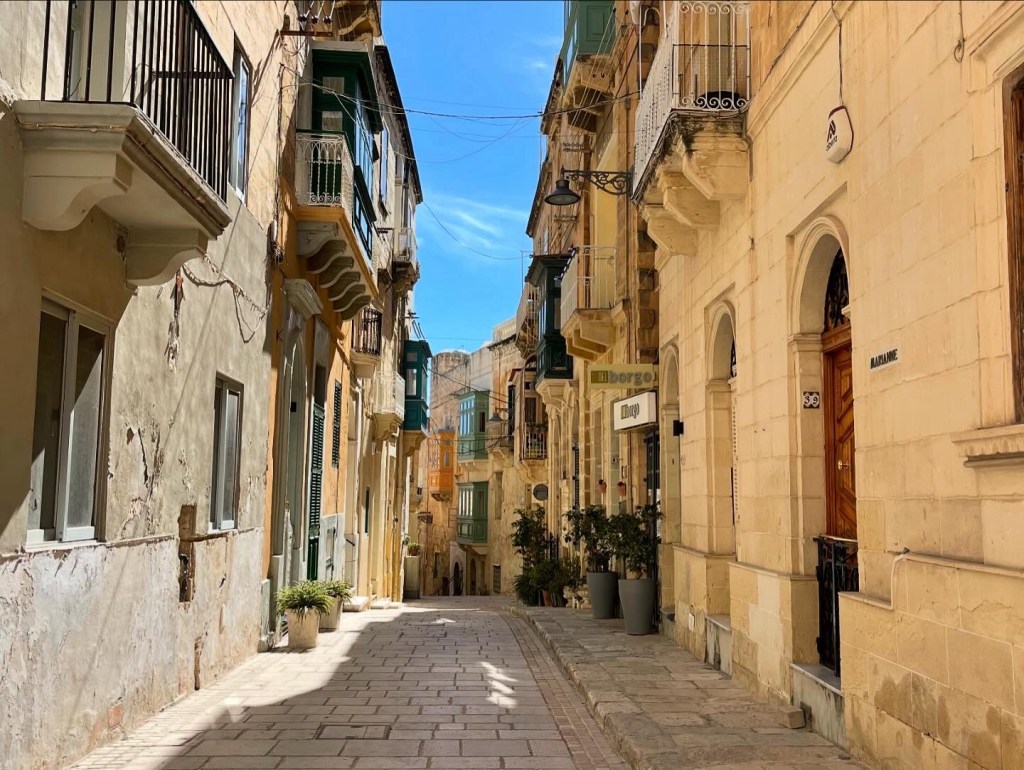
    A visit to Malta is a rolling history lesson. A natural island fortress with great harbors and a strategic location in the Mediterranean, Malta has been an attractive stronghold for centuries. Those who controlled it wanted very much to keep it. Those who didn’t wanted very much to capture it. And so it was that Malta’s history is full of military campaigns from the Knights Hospitaller holding back the Ottoman Empire to the Maltese and British holding back the Germans and Italians.

    Winding through streets designed with defense against invading armies in mind, gazing up at the high walls of the fortresses surrounding you while riding in small boats in Grand Harbor, you feel the strength and resolve of the place. This was a place designed to withstand a prolonged siege. It’s tragic that World War II left such scar on this beautiful historical island, but it was also inevitable when war erupted. Malta was simply too important to ignore.

    Today tourism has replaced strategic military positioning, but Malta remains as magnetic as ever. The people are friendly and welcoming, the cities are clean and historically fascinating, and the Mediterranean is a lovely shade of blue. Malta has finally found an established peace. It’s a place worth exploring—with no siege required.

    Shrapnel scars on ancient walls
  • Historical Memory

    “History is written by the victors and framed according to the prejudices and bias existing on their side.” — George Graham Vest

    History writes itself as humans progress generation-to-generation, but that’s no guarantee of it being remembered. For, as Vest, a Confederate Senator who managed to retain power after the American Civil War pointed out, our written history is only remembered when subsequent generations choose to remember it. How many billions of souls are nothing more than a footprint? How many heroic figures would have been portrayed as villains had the other side won?

    The point was hammered home for me on a visit to the Colosseum in Rome. The Colosseum affirms history—for who doesn’t know of the Colosseum?—while also emphasizing that remembering or saving anything from one generation is at the mercy of those who follow in the next. Whole sections of the Colosseum were removed and recycled into other things, which themselves may have been removed and recycled again and again. Were it not deemed sacred the Colosseum likely would have disappeared like the statue Colossus, from which it got its name, did.

    Most Emperors, Presidents and Popes fall away into history, let alone you and me. The lesson is to enjoy the ride while we’re here, but also to be so valued by those we leave behind that we’re remembered for all the right reasons. Ultimately, our lives are fragile enough as it is without the burden of being remembered beyond a generation or two after we’re gone, so we ought to simply pursue excellence for its own sake. Our time is not some dusty monument, we write our memories now. The rest is up to those who follow.

    Rome’s Colosseum
  • A Hike to the Hollywood Sign

    If there’s anything iconic in Los Angeles, it’s the Hollywood sign. It’s so deeply engrained in our cultural awareness that when you actually see if for the first time it doesn’t seem real. But there it is, atop Mount Lee, surrounded by chain link fencing, surveillance cameras and warning signs about trespassing. One should heed the warnings, if only to avoid the rattlesnakes and Mountain Lions said to roam the area.

    And that’s the irony of the Hollywood sign: for something so famously welcoming, it’s surrounded by signs telling you to stay the heck away from it. The neighbors don’t want you anywhere near it. The people who protect the sign from vandals take great measures to remind you to stay away from it too. What’s a hiker to do but press on in the face of all the dire warning signs? There are public trails leading to it, after all. The aim isn’t to get within arm’s length of the letters—it’s to be close enough to say you got there.

    We hiked up there early on a raw, wet Sunday morning. There were plenty of other hikers making the same trek, including a busload of tourists with umbrellas and a couple of small groups led by tour guides. The hike is roughly 5 miles round trip from the closest parking area, on terrain (access road) that is forgiving for the sneaker-wearers. Total elevation for our hike was 856 feet. So really, anyone healthy enough to walk it can make it to the summit of Mount Lee, just behind the sign. There are surely longer hikes, but in a land of mudslides those aren’t so fun in the rain.

    So why do it at all? Because it’s there, partly, but also because it’s got amazing views of Los Angeles on a clear day. And really, because it’s kind of cool to say that you’ve done it at least once. Hiking snobs may sniff at the elevation or the bands of tourists swarming around them, but who cares? Sometimes simply hiking for fun is more than enough of a reason to go.

    Los Angeles rising through the mist

    Access road signage designed to jolt the casual tourist to awareness

  • Songs of Freedom

    Old pirates, yes, they rob I
    Sold I to the merchant ships
    Minutes after they took I
    From the bottomless pit
    But my hand was made strong
    By the hand of the Almighty
    We forward in this generation
    Triumphantly
    Won’t you help to sing
    These songs of freedom?
    — Bob Marley, Redemption Song

    We forget, sometimes, the progress we’ve made generation-to-generation through the years. In my own lifetime I’ve seen the pivot towards acceptance and inclusion, and of course the strong, often violent reaction of those who don’t want to change. It’s always been this way. Still, we progress.

    Call me an optimist, but I take the long view on social change. There is a growing awareness of the stakes, even as there’s been growing momentum on the side of autocracy. Populism swings to and fro like a pendulum, fueled by whatever information or disinformation is consumed. The old ways die, but so do memories, and we often repeat the same mistakes over and over again. It can be frustratingly obvious how manipulated we all are at times.

    Once someone is free it’s pretty difficult to ask them to put the chains back on. That requires force. And there are plenty of examples of that in the world too. Places where democracy never took hold, or extremists grabbed power. It can happen here too, should we let the pendulum swing too far.

    Sure, I’m an optimist, but I can’t even convince some of my closest friends that the guy they want to be king is a conman. These are dangerous times for freedom. Never trust someone who tells you they know what’s best for you. They’re almost certainly talking about what’s best for them. But enough have bought in that half the country thinks we’d be just fine slipping backwards. American authoritarianism has legs and some powerful financial backing.

    Really, I can’t even believe I’m writing this blog. It seems so obvious to so many of us what the logical path is that it’s hard to see that we’re just consuming a completely different information diet than the other half of the country. Half. The. Country… Good God. If there’s one thing true about humans, it’s that we don’t always do what’s logical. And so it’s clear that we have to look to the next generation for help. I think that they’re paying attention. Aren’t they? Aren’t we?

    Logic only takes us just so far. Emotion is what always brings voters out on election day. Won’t you help to sing these songs of freedom?

  • The Emperor Has No Clothes

    “Stories appeal at least as strongly to listeners’ emotions as to their calculation. Social psychologists have shown repeatedly that the prestige of a spokesperson, the identities of a speaker’s friends and enemies, and the exploitation of nostalgia or grievances more strongly shape attitudinal change than the sheer merits of a rational argument do. When it comes down to it, the argument that carries the day may well be the one that exerts the strongest affective appeal, rather than the one that triumphs on debating points. For every Abraham Lincoln, whose speeches were more tightly reasoned than those of rival Stephen Douglas, we must countenance the possibility of an Adolf Hitler, who baldly appealed to the lowest common denominator of the German citizenry and found that he could dissolve reason by arousing passions.” — Howard Gardner, Leading Minds: Anatomy of Leadership

    The reasonable mind often has a headache in the climate we’re living in nowadays. The headache is populism fueled by the rise of nostalgia and grievances. Gardner’s argument rings true when considered against the backdrop of the rising popularity of autocrats across the globe. How does reason and rationality hold fast against the din of the chanting hoard? Is it any wonder most people just want to pretend it’s not happening? But we’ve seen this act before, and we know how it ends, and so we must stand up against it as if our lives depended on it.

    The trick is not just to learn how the game is played, but to master the game ourselves, that we may triumph over the best the worst offers. We must become better storytellers than those on the other side of liberalism. We aren’t “woke” for demanding personal freedom and the rights of the individual, and we can’t simply accept that dismissal from those who would bully us into submission.

    The pendulum feels like it’s swinging well to the autocratic side, but the further from the center it swings the more the gravity of the masses want to pull it back to center. The more friction the autocrats feel, the louder and more angry they’ll get. We must continue to tip the scales towards freedom and justice for all.

    The problem with this post is that it’s meant to be a logical argument. If reason dissolves in the face of passion, we must find a way through to common ground. Instead of logic, the better tactic is storytelling. Help others see the light with a modern parable revealed to them in such a way that they might reach the conclusion themselves. We all tend to believe the truth we stumble upon in our own mind more than that which is told to us.

    Our stories must be light and nimble enough that they penetrate the rapt attention of the hardened masses. To shame the reckless autocrat is to shatter their hold over the passionate mind. When the crowd realizes that the emperor has no clothes the illusion may finally be broken.