Category: History

  • A Great Day Not to be Dead (With the Egopantis and Thee)

    I thought about my car crash and my close call
    I started getting sentimental
    I said, I love this house, I love you guys
    I even love my rusty old car outside
    And I’m so happy to be alive with you
    Let’s do all the things we always said that we would do
    ‘Cause it’s a great day
    It’s a great day
    It’s a great day
    It’s a great day
    And it’s a great day to not be dead
    — Don White, Great Day

    “The Bull Run has been a Tavern for centuries and was the first stop on the Boston-to-Albany Stagecoach route in the 1800s.” — History of the Bull Run Restaurant

    Mounted to the fireplace near the bar of The Bull Run is the head of a creature they call the egopantis. When you see it, you’ll never really forget it, mostly because your first and last reaction when seeing it is, “What the hell is that thing?” Could it be a bear or a buffalo with a distinctive facial birth defect? Or someone’s art project made eternal? The tall tales told by the establishment are enjoyable but only lead to more questions. The only certainty as we navigate fact and fiction in this complicated world is that most answers are a load of bull. So we’d clearly come to the right place.

    That we go through our lives with so few opportunities to see good friends over good food and fun live music is unfortunate. Life really should be a celebration; a forever birthday to mark the miracle of our dance through this time and place together. Life really is what we make of it. So we made our way to the quiet town of Shirley, Massachusetts for a night of live music with the beautiful comedic soul Don White. And we found some magic. Not just a strange bit of taxidermy on the wall magic, but the kind of magic that happens when you gather around a table with some of your favorite people in the world to enjoy some live music. We all remember the worst days of the pandemic when we’d wish for such moments to come back again. Here we are.

    A place as old as The Bull Run has seen a lot of characters come through its doors. A night out with Don White, the edopantis and thee was another layer on the life experience cake. We were simply the latest weary world travelers who stopped in for the night. We may not be able to get a room at the inn like we might have once upon a time, but we can surely have a memorable evening. Memories are what stay with us, after all, so let’s do all the things we always said that we would do. We are history makers one and all.

    Egopantis decked out for St. Patrick’s Day
  • Stepping Out of the Box

    Let me ask you this.
    Do you also think that beauty exists for some
    fabulous reason?
    And, if you have not been enchanted by this adventure—
    your life—
    what would do for you?
    — Mary Oliver, To Begin With, the Sweet Grass

    Plotting our next adventure in a faraway place, we went out for breakfast to dance with the hopefulness of scheduled enchantment. We ran into a woman we know, who once was married and then she wasn’t, but she never accepted that she wasn’t and retreated into herself and the rituals of the church and suddenly twenty years later she’s still the same shell of a person she was then but older and more insulated from the world. She might have gone with us on our adventure, or perhaps one of her own, had she only gotten out of her own way.

    She made me wonder—what rituals of routine are getting in my own way? If the opposite of boredom is engagement and being captivated by the world around us, why do we settle for something less? What lingers just outside the box of our identity? Why is that so frightening? To live in fear of the world is to never be alive.

    As this is published it’s the first Monday in March. March was once the first month of the original Roman calendar. If you think about it, the calendar is arbitrary and nothing but a shared belief that keeps this whole game going. We can’t very well change the calendar and function in a society that works off of it, but we can use it as a reminder to ourselves that we can change things when we find our routine isn’t working for us any more. It’s like adding two months to a year our ancestors thought they had figured out. It turns out the extra two months made it better. Imagine what we can make better if we changed too?

    A few days ago we had a leap day on that 12-month calendar, tacked on to the end of a month that once didn’t exist in the minds of mankind. It was a bonus day and a chance to do something truly different. Most of us went about our lives as we did the day before or the days since. It was sort of like New Year’s Day in this way, where we might think up all sorts of ways we may break out of the box but end up right back in our ritual of routine. Imagining our possibility is easier than actually living it. We forget that we don’t have to leap, we could simply step out of the box and close the door behind us.

  • The Grave of the Female Stranger

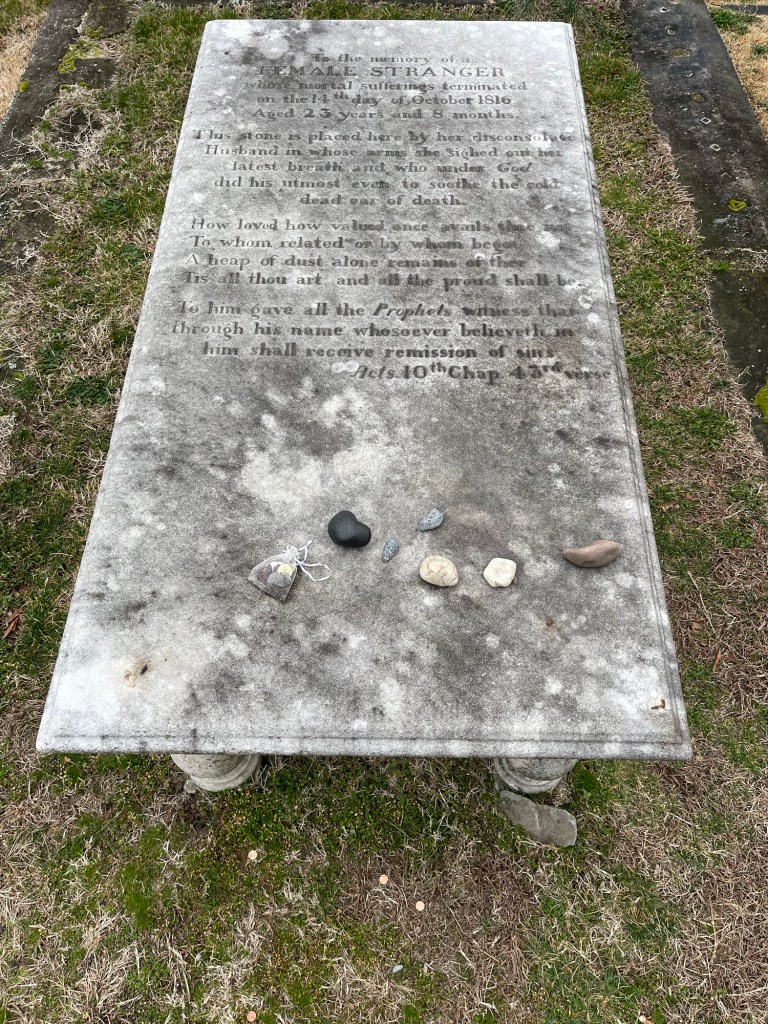
    Alexandria, Virginia is full of history, making it a wonderful place for a history buff to wander about. My early morning walk took me to the Alexandria National Cemetery and the neighboring St. Paul’s Cemetery. Honoring the Union dead was a given, but the lure of my trip was the tragic tale of a young woman visiting the region who died in 1816 shortly after her arrival. The story goes that she and her husband gathered the doctors and nurses before she passed away to have them swear never to reveal her name. They honored her wish and went to their own graves having never told her name. Her husband spent a small fortune on an elaborate tabletop gravestone and then skipped town before the bill was paid. The mystery of the Female Stranger lingers to this day. It’s said that her ghost still haunts the Gadsby’s Tavern, where she apparently died.

    Atop the gravestone is engraved the following:
    To the memory of a
    FEMALE STRANGER
    whose mortal sufferings terminated
    on the 14th day of October 1816
    Aged 23 years and 8 months
    This stone is placed here by her disconsolate
    Husband in whose arms she sighed out her
    latest breath, and who under God
    did his utmost even to soothe the cold
    dead ear of death
    How loved how valued once avails thee not
    To whom related or by whom begot
    A heap of dust alone remains of thee
    Tis all thou art and all the proud shall be
    To him gave all the Prophets witness that
    through his name whosoever believeth in
    him shall receive remission of sins
    Acts. 10th Chap. 43rd verse.

    The unique gravestone is easy to spot, and yet I always seemed to be looking in the other direction as I walked through the St. Paul’s Cemetery. The Female Stranger is not the only soul interred at the cemetery, and I spent some time reviewing the lives of her neighbors on my walk before finally circling back to give my respects to this young lady who’s spirit still haunts the region more than two centuries later. The tokens and coins left behind by other visitors indicate she is more famous in her anonymous death than she ever might have been had her name simply been revealed.

  • Maps

    “A map is not the territory it represents, but, if correct, it has a similar structure to the territory, which accounts for its usefulness.” — Alfred Korzybski, Science and Sanity

    “A map is the greatest of all epic poems. Its lines and colors show the realization of great dreams.” – Gilbert Grosvenor

    I was having a conversation with a friend the other day. I’d asked him when was the last time someone had pulled up asking for directions? It just doesn’t happen now—there’s a phone app for that. That same app takes us to parties and work appointments and the Grand Canyon. Maps are relegated to the wall or the imagination. GPS rules the road now.

    Grosvenor, the founder of National Geographic, had it right when he compared a map to poetry. It stirs the imagination similarly. When you look at a great map of a place, how can you not be stirred to explore that place? Maps whisper to me like Sean O’Connell beckoned to Walter Mitty: Go!

    The name of this blog is Alexander’s map for a reason, it’s based on William Alexander’s pamphlet Encouragement to Colonies and my own wanderings around the northeast corner of North America. I saw a replica of the map Alexander commissioned in a conference room in Newfoundland and it sparked my imagination, which is exactly why he had it commissioned in the first place. I just came into the picture a bit later than he’d planned. That one map completely changed the person who viewed it that day.

    If maps are no longer needed for everyday use, they still have a place in our lives. Maps give us the big picture, while a GPS just tells you where to go. We must always reference the big picture when determining where we want to go in our lives, while remembering always that the map is not the territory. The world is more complicated than that.

    What sparks our imagination? Where do we want to go in our lives, and what tools are we using to get there? The answers to these questions are more important than we might believe.

  • Past and Present

    “It is a mistake to think that the past is dead. Nothing that has ever happened is quite without influence at this moment. The present is merely the past rolled up and concentrated in this second of time. You, too, are your past; often your face is your autobiography; you are what you are because of what you have been; because of your heredity stretching back into forgotten generations; because of every element of environment that has affected you, every man or woman that has met you, every book that you have read, every experience that you have had; all these are accumulated in your memory, your body, your character, your soul. And so it is with a city, a country, a race; it is its past, and cannot be understood without it. It is the present, not the past, that dies; this present moment, to which we give so much attention, is forever flitting from our eyes and fingers into that pedestal and matrix of our lives which we call the past. It is only the past that lives.” — Will Durant, Fallen Leaves

    Super Bowl Sunday was a fun day for many, a crushing day for a few, and a collective memory for all who paid it any attention. Life marches on, no matter which team won or which celebrity did what at the game. It’s all a game in the end. The fact that I woke feeling pretty good overall is far more important to me than who won the game (particularly since “my team” hadn’t even made the playoffs).

    We are each a collection of our past living on within us. We do what we must with the present trying to make it great and to set up a better version of us tomorrow, but our identity is always built on what we’ve done in the past that brought us here. We are all writing our life’s story, our greatest hits, and our obituary. We ought to make it shine.

    A few years ago I started logging what I did every day in a line per day journal. It’s a great way to focus on making something memorable of every day, but it’s also a great way to look back at the breadcrumbs of a life that brought us from there to here. The blank pages to come are full of optimism, but the pages that have been filled are who we really are.

    My recent past has involved looking at several paths forward, weighing each, dismissing some and leaning in to others. Humans must look to the future, even as we live a present built on our past. Our question is always, “What’s next?” and we spend our lives trying to find the answer. Our present, on the other hand, forever answers a different question: “How have you been?” We ought to like the answer. Yesterday is gone, but it lives on within us.

  • The Beauty in Our Memories

    “I can only note that the past is beautiful because one never realises an emotion at the time. It expands later, and thus we don’t have complete emotions about the present, only about the past.” — Virginia Woolf

    I was scanning through some old pictures while looking for a certain image to highlight a conversation I was engaged in and smiled at the memories in the scroll. We forget the blessing of pictures in our march through time. I am that person taking pictures at gatherings because I want to lock in some of those memories. Of course, there’s a fine line between locking in memories and living in the moment. We must first live should the moment slip away.

    In the moment, we know when something is special because we enjoy it so, but we may not realize the impact on our life until well after. We become anchored to these moments with memories—both our own and those of others, through photographs and other media, and through triggers. My mind would go back to the summer between high school and freshman year of college were I to smell the cologne I wore at that time. It floods back to me even writing about that cologne. I haven’t worn cologne since then, making it a uniquely strong trigger for that time in my life.

    I’m attending a reunion tonight that will place me with some of people who may associate me with that cologne. Surely that’s not the whole of my identity, but it might be something that would trigger memories of the character I was then. Reunions are time travel events on their own, and surely stories will bring us back there more than some long lost production of cologne. In all that jovial recollection I hope we remember to savor the moment to lock in those memories to follow. For that’s what makes life beautiful.

  • Tipping the Scale Towards Progress

    “Each of you is in the process of building the structure of your lives, and the question is whether you have a proper, a solid and a sound blueprint… I want to suggest some of the things that should be in your life’s blueprint. Number one in your life’s blueprint, should be a deep belief in your own dignity, your own worth and your own somebodiness. Don’t allow anybody to make you fell that you are nobody. Always feel that you count. Always feel that you have worth, and always feel that your life has ultimate significance. Now that means that you should not be ashamed of your color… Don’t be ashamed of your color. Don’t be ashamed of your biological features. Somehow you must be able to say in your own life and really believe it, ‘I am black but beautiful’ and believe it in your heart.

    Secondly, in your life’s blueprint you must have as the basic principle the determination to achieve excellence in your various fields of endeavor. You’re going to be deciding as the days, as the years unfold what you will do in life, what your life’s work will be. And once you discover what it will be, set out to do it, and to do it well.

    And I say to you, my young friends that doors are opening to each of you. Doors of opportunities are opening to each of you that were not open to your mothers and to your fathers — and the great challenge facing you is to be ready to enter these doors as they open...

    And when you discover what you are going to be in your life, set out to do it as if God Almighty called you at this particular moment in history to do it. And just don’t just set out to do a good ‘negro’ job… Set out to do such a good job that the living, the dead or the unborn couldn’t do it any better.”
    — Martin Luther King, Jr. “What Is Your Life’s Blueprint?” speech at Barratt Junior High School in Philadelphia on October 26, 1967

    When you watch any speech by Martin Luther King, Jr. you feel the urgency of the moment he was living in. There was simply no time to waste. He said it as a preface of this speech in Philadelphia, speaking to young students who were at the beginning of their own journey to becoming. I wonder how things turned out for those students? How many heard the call and rose up to personal excellence? How many of us, hearing it today, will aim higher in our own pursuit?

    The thing is, we know how MLK’s story ended, just six months after this speech. Yet he lives on, transcending life itself to reverberate and resonate with generations long after the generation of middle school kids who listened to him speak that day. Precisely because he’d reached higher, arrived at the pulpit and turned to guide those who would follow.

    The world has turned more cynical once again, pushing against the momentum of change. There is an ebb and flow to progress, like a pendulum swinging. One side gains momentum, the other side resists and pushes back. Populism is predictable in this way, and generally requires the right voices to stand out in the noise and be the tipping point. For every autocratic bully rallying the crowd one way, there’s a voice calling to push back towards progressivism and human dignity. One step forward, two steps back for some period of time, then two steps forward, one back soon thereafter. Humanity’s history writes itself one swing at a time.

    Knowing this, we must continue to rise—not just in personal excellence, but generational excellence. There’s too much at stake in the world to settle for the narrative of the miserable. The swing towards autocracy isn’t a given, it’s merely a push. We can surely push back for progress. The scales can be tipped when we rise to the moment.

  • The Newport Cliff Walk

    Newport, Rhode Island is known its notable music scene with world-renowned folk and jazz festivals, as an epicenter of sailing culture (longtime home of the America’s Cup) and the party town any sailor would want in a home port, for the Tennis Hall of Fame, but mostly, Newport is famous for its mansions. Those mansions, built as summer “cottages” by wealthy families like the Vanderbilts, are massive and interesting to tour if you want to get a sense for how the wealthy lived in the Gilded Age of 1870 to 1910. Industrial titans and savvy global traders moved here to be where other wealthy people lived—to be amongst their peers in net worth.

    The phrase “The Gilded Age” was coined by Mark Twain, and not as a complement. He was pointing to the thin veneer of wealth that hid a lot of problems underneath it. It has taken on a romanticized connotation since then, but we ought to remember that these were just people with the same issues we all face in families and relationships, with the blessing and curse that money layers into the mix. I’m not a fan of wealth politics or keeping up with the Jones as a lifestyle choice, but I can appreciate the craftsmanship of the mansions and the wealth required to build and maintain them.

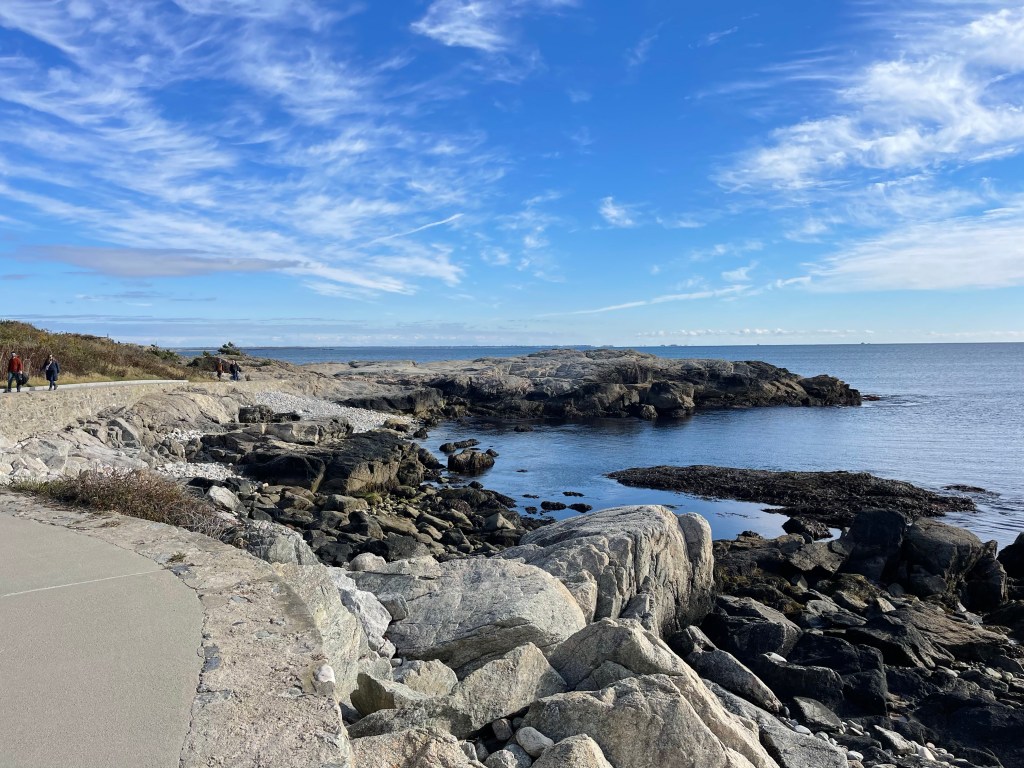
    The strip of land between this collection of Gilded Age and modern-day mansions and the sea is public domain. It’s here that you’ll find the Cliff Walk. Sections of the Cliff Walk are meant for everyone to traverse. You could easily walk or roll a wheelchair on most of the paved sections between Memorial Drive and 40 Steps, the staircase that descends to the ocean. The section between Salve Regina University and The Breakers is equally well-suited for accessibility. Beyond that the path becomes best for the sure-footed. If you don’t love hopping between boulders there are sections of the Cliff Walk that aren’t for you. But there’s something for everyone.

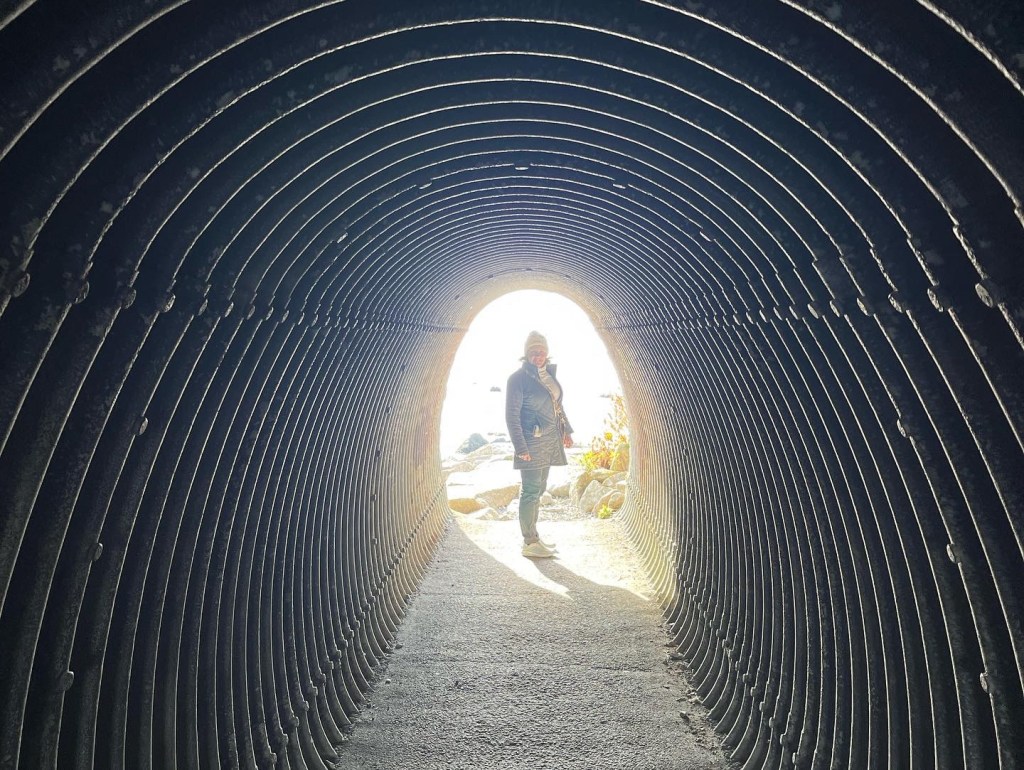
    For me, the magic of the Cliff Walk isn’t just the glimpses of manicured lawns and mansions, it’s the diversity of the walk itself. At times paved walkway, other times rock scramble or beach sand. Even a couple of tunnels to move the public quietly through the historic and high end real estate above. It’s a fascinating place to traverse, taking you from one beach to another past billions of dollars of American wealth.

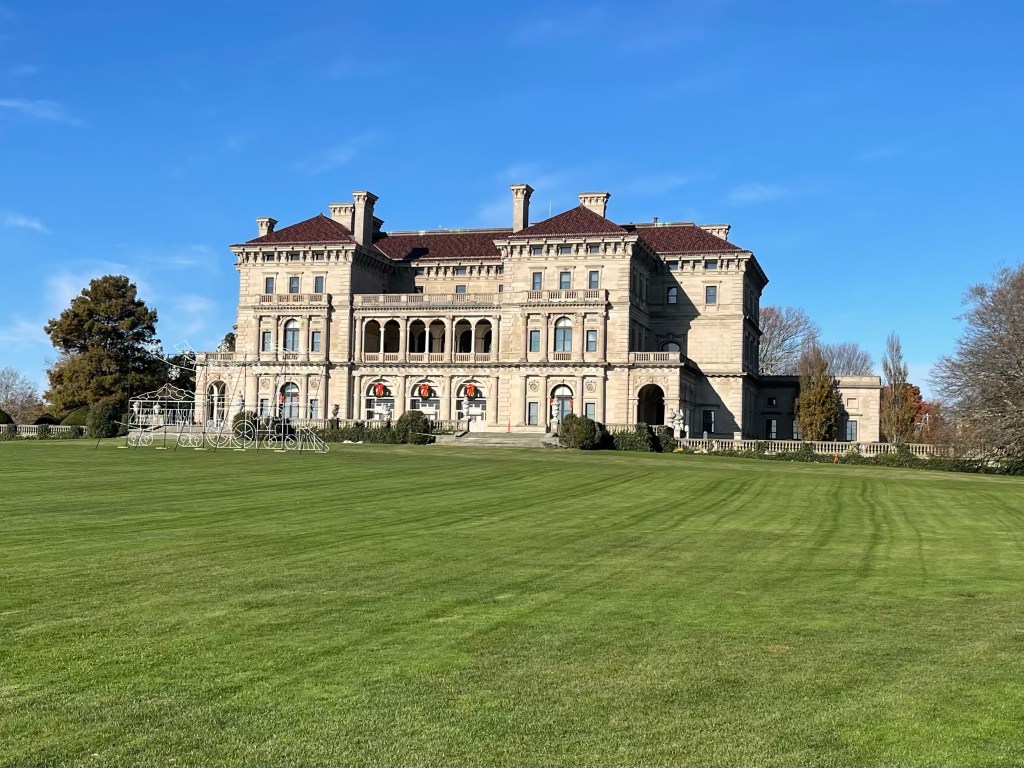
    The Cliff Walk is officially 3 1/2 miles long, but we extended it to almost 6 miles, from Old Town to the Eaton’s Beach starting point, and from the end at Baily’s Beach along Bellevue Avenue to Rosecliff Mansion. On a crisp and sunny November day it wasn’t crowded but it was surely beautiful. From Rosecliff it’s an easy walk to The Breakers, the largest of the mansions and the flagship of Newport’s Gilded Age “cottages”. The fact that they called them cottages tells you all you need to know about the vast wealth of the families who visited Newport each summer.

    Ultimately, a stay in Newport is never quite long enough. I didn’t have a summer to mingle with the locals, but a mere weekend. The Cliff Walk was a great lynchpin stringing together an epic walking day in the Celestial City. It justified some of the great dining experiences we had, and have us thinking about a return trip sometime soon.

    The Breakers
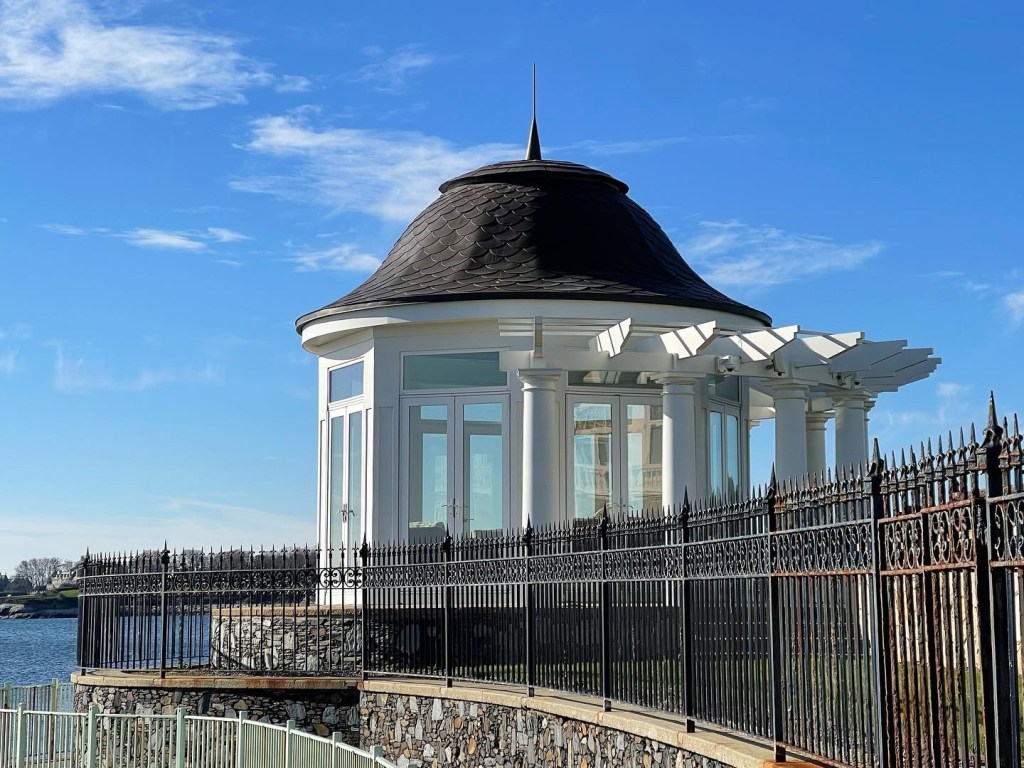
    Beautiful gazebo tucked up tightly against the Cliff Walk
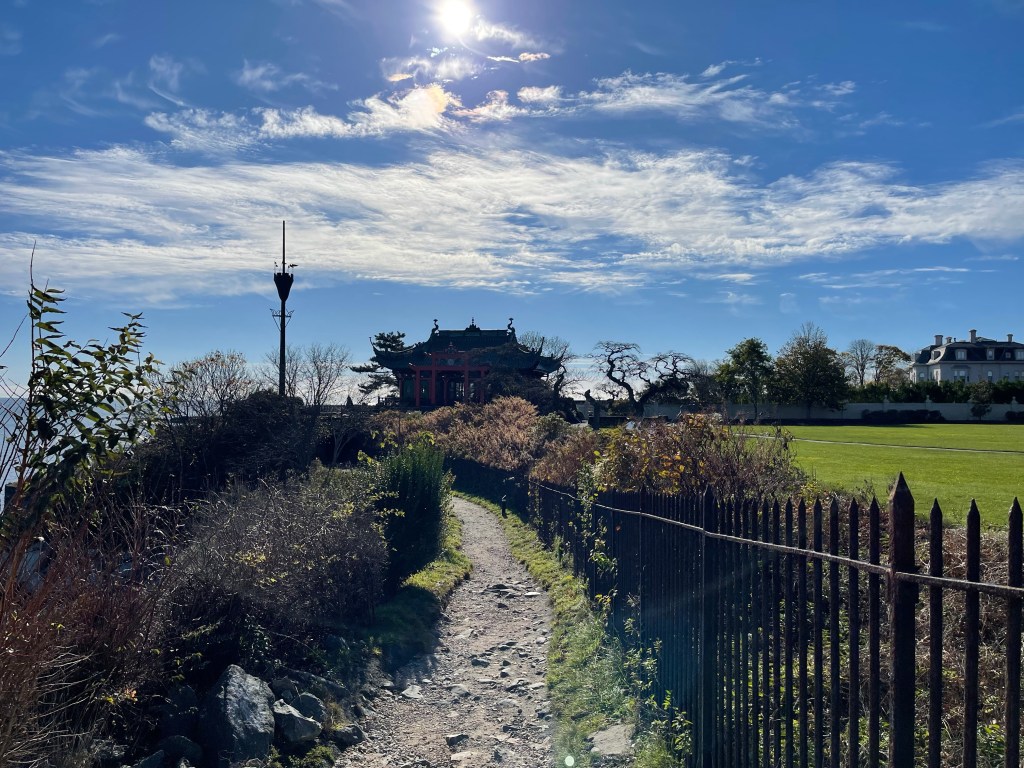
    The Tea House, shadowed by morning sun
    Tunnel under the Tea House
    Not all sections of the Cliff Walk are easy to traverse
    Rugged coastal beauty is everywhere between the Cliff Walk and the sea
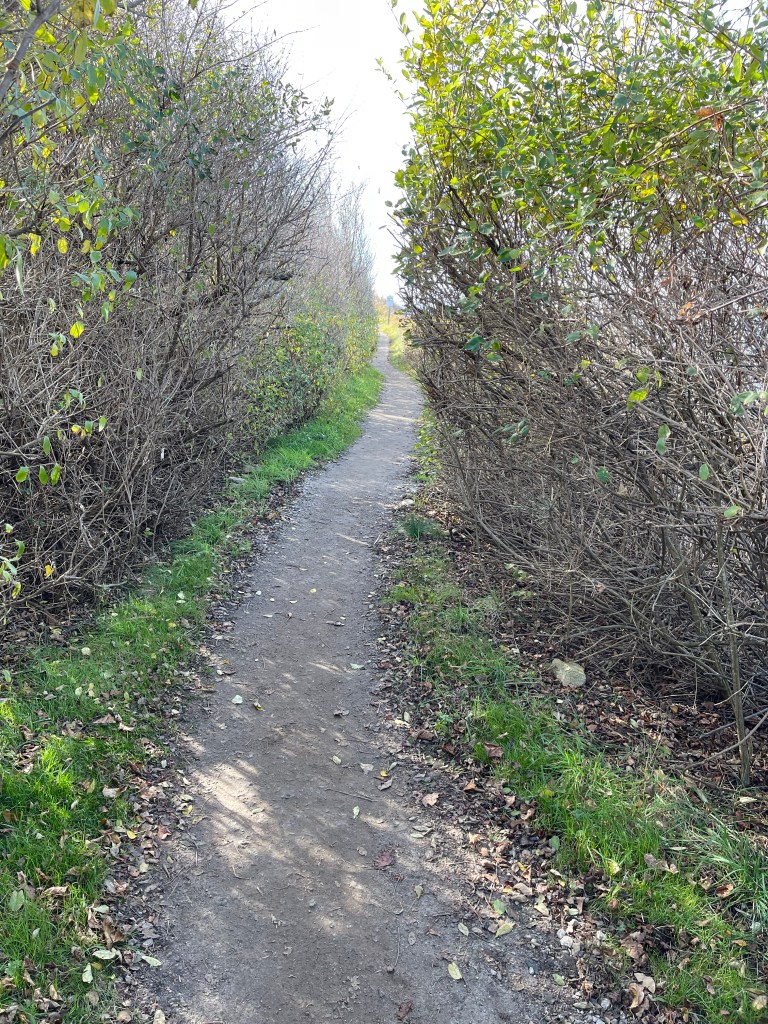
    All kinds of terrain will greet you on your walk
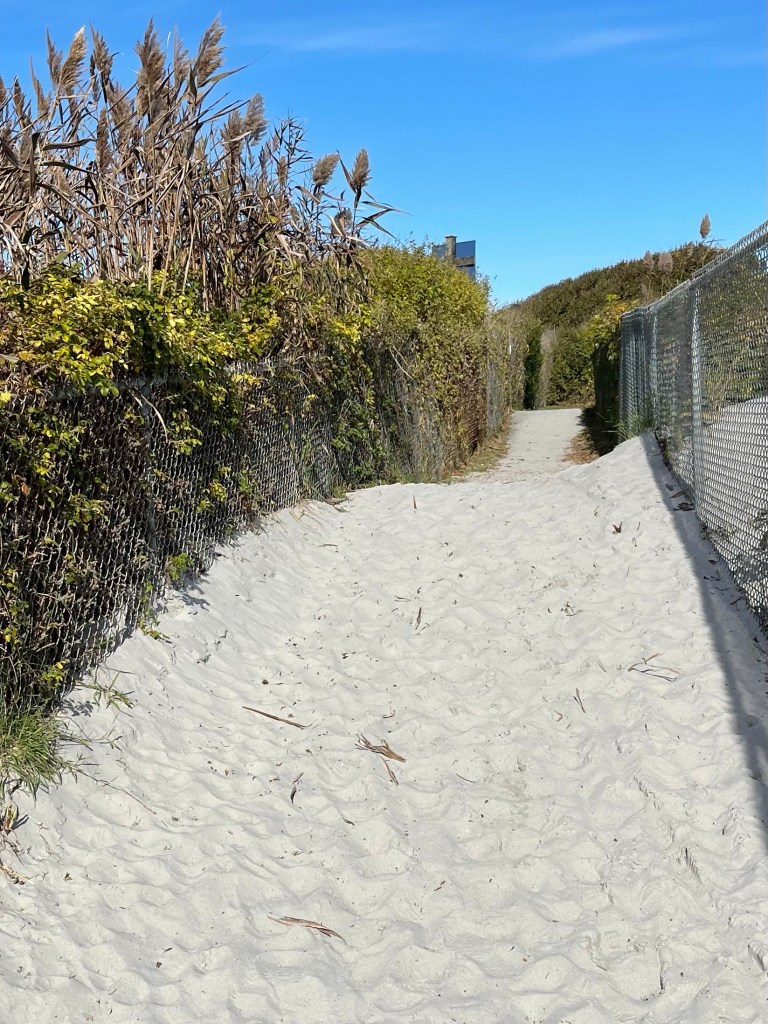
    The finale of the Cliff Walk is a walk through beach sand to the road
  • The Pendulum

    “The returning good sense of our country threatens abortion to their hopes, & they believe that any portion of power confided to me, will be exerted in opposition to their schemes. And they believe rightly; for I have sworn upon the altar of god, eternal hostility against every form of tyranny over the mind of man.” — Thomas Jefferson

    When you stand under the dome at the Jefferson Memorial in Washington, DC you can read these words, “I have sworn upon the altar of god, eternal hostility against every form of tyranny over the mind of man.” Jefferson was directly addressing those who would take the religious freedoms guaranteed in the Constitution to roll out a national religion. Simply put, it wasn’t going to happen on his watch.

    The United States has gone through waves of fervor since Jefferson’s watch ended: religious, philosophical, political. We’re going through it right now with half the country aligned with one particularly autocratic clown and the other half holding out hope that the rule of law and concept of equality and freedom for all should survive the latest chapter of zealotry and anger. Time will tell, friends.

    The thing is, it’s our watch now—certainly for citizens of this country of voting age, but in many ways the global community as well. Look around at the rise of autocracy and extremism in the world. This is a pendulum swing into uncomfortable places. How things go from here is up to each of us. Many more voices of reason to temper the extremists on either side would greatly benefit society. Some of us believe that we’re all in this together, and some choose us versus them. I’m not naive enough to ignore the threat from some dark corners of the world, but in general a bit of creative diplomacy would solve the bulk of our collective problems, both at the dinner table and on a global scale.

    I wish more people would be hostile to tyranny, but most people are simply trying to get through the day. The lessons of history are clear enough though, when we pay attention to them. It’s a lot easier to clean up a small mess than a big one. Momentum works for and against us, and it’s still uncertain just how far that pendulum is going to swing.

  • An Evening Walk in Washington, DC

    America’s capital city is beautiful in the daylight, but it sparkles at night. This was my feeling as I departed a dinner and walked seven looping miles around the National Mall back to my hotel instead of using Uber. Some of the employees of Washington, DC disappoint Americans all the time, but its not the city’s fault, it’s those darned politicians, lobbyists and bureaucrats. The walk was magical, with a little drama mixed in for good measure.

    The walk began with a quick stroll to the White House, or rather, as close as one can get to the White House without a pass. For this walker that meant Lafayette Square, directly across Pennsylvania Avenue from the White House. Unfortunately, world events had that location full of Palestinians protesting boisterously, with a line of police officers lining Pennsylvania Avenue between them and the President’s place of residence. Not to be deterred, I found myself a spot between the protesters and the barricades to snap a picture of the White House and quickly got myself out of there.

    After deciding it was impractical to head towards the US Capital I headed directly for the big Presidential Memorials: Washington, Lincoln, and Jefferson. Each is impressive, with the Washington Memorial the appropriate central point of the National Mall and the Lincoln Memorial the Daniel Chester French masterpiece must-see with the crowd to show it. I can’t come to Washington, DC and not visit Abe. Lingering a bit, I take the time to read the Gettysburg Address engraved on the wall. If I did nothing else in Washington I would visit this place whenever possible.

    After Lincoln there’s a lovely photo opportunity at the Lincoln Memorial Reflecting Pool with the Washington Memorial rising behind it. Nearby are the Vietnam and Korean War Memorials, both striking at night. I paid my respects to an uncle who’s name is engraved in the latter wall and moved on to the Martin Luther King, Jr. Memorial overlooking The Basin. Not far from this is the Franklin Delano Roosevelt Memorial. It’s quietly impressive at night, with the bare minimum of lighting and cascading water filling the senses.

    The Jefferson Memorial is quietly impressive, but it’s no Lincoln Memorial. One must commit to visiting it, especially at night. The walk along The Basin at night is dark and lonely. As a tall man I don’t think of myself as vulnerable in situations like that, but I maintained situational awareness nonetheless. The National Mall area is generally pretty safe but one must always be aware. I would need that awareness again later in the night, but that’s a blog post for another day.

    There were several other Memorials and Monuments skipped on this walk depending on the path chosen. The World War II Memorial is particularly impressive, and some other sites were just far enough off course to warrant a visit another time. But the highlights were covered on a wonderful walk in America’s capital city.