“Besides, isn’t it confoundedly easy to think you’re a great man if you aren’t burdened with the slightest idea that Rembrandt, Beethoven, Dante or Napoleon ever lived?“ — Stefan Zweig, Chess Story
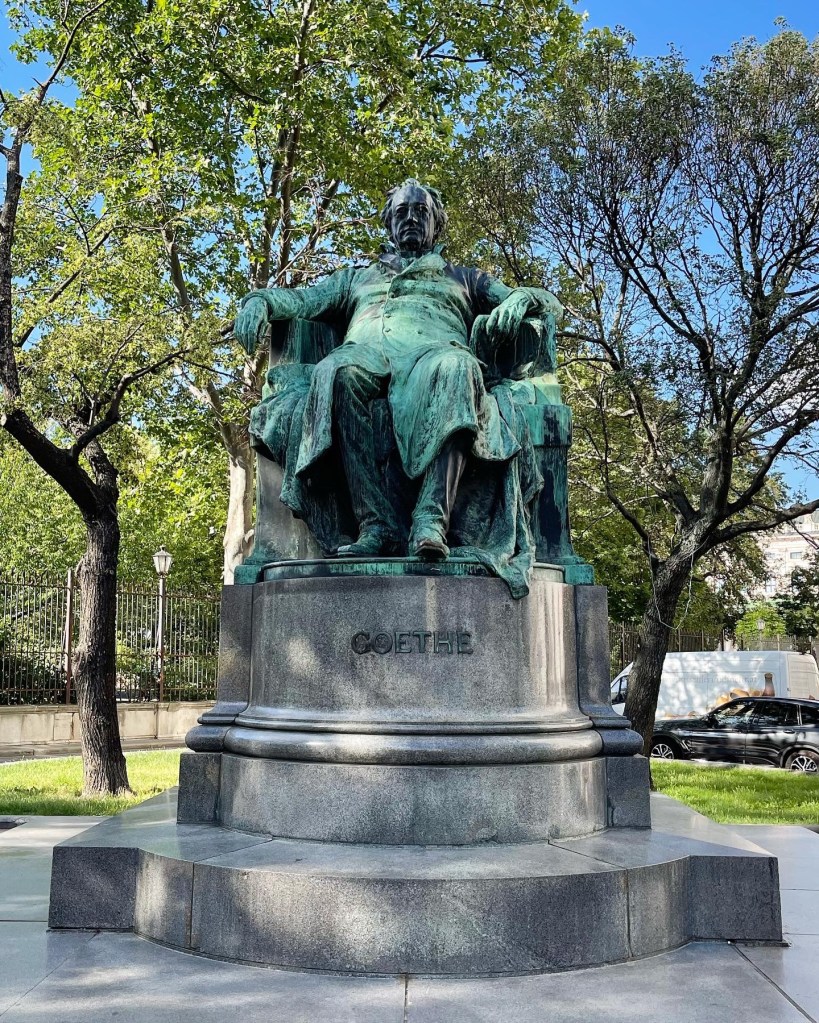
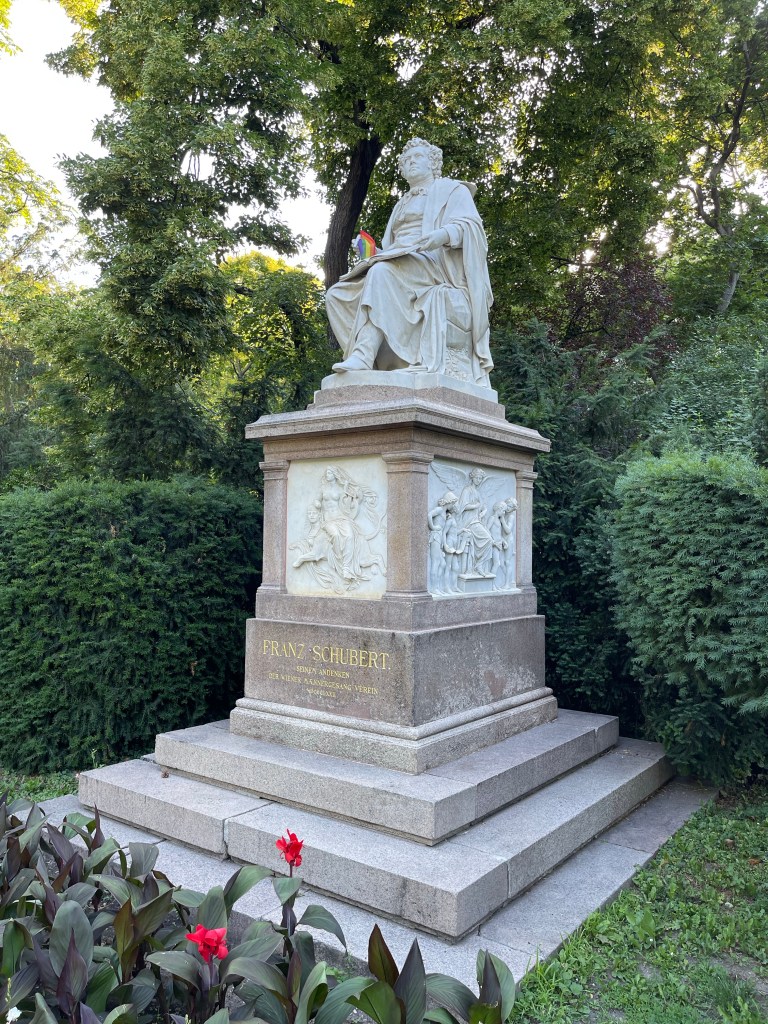
My mind is still in Vienna as I write this—a city that’s had its fair share of high achievers walk her streets and contribute to humanity’s Great Conversation in their life’s work. Big names roamed those same streets, and you might feel a need to raise your game when you walk with that level of ghosts—I surely did. And shouldn’t we feel this compulsion to close the gap between the masters and where we currently reside?
The world offers precious few brilliant shining stars. Most of us burn less brilliantly. And yet we burn just the same, and cast our own light on the darkness in the world. We may recognize that we aren’t quite at the level of a master in our field yet still have something to offer anyway. And knowing that there are more brilliant lights in human history, we may choose to stoke our fire—feed it with the fuel necessary to one day burn more brilliantly still.
What provokes us towards greatness but comparison? We may never reach those levels, few do, but knowing there are heights we haven’t reached yet ought to inspire more. For mastery is a beacon.
Slow down, you crazy child And take the phone off the hook and disappear for awhile It’s all right, you can afford to lose a day or two When will you realize, Vienna waits for you?
— Billy Joel, Vienna
A traveler seeks magic in places big and small, and in mountains and cities alike. Two weeks of trains, planes and automobiles carried us to some of the most beautiful places in the region, but we had to come to Vienna before we felt our trip was complete. Maybe it was Billy Joel’s reminder that the city—theworld— is out there waiting for us to stop the madness and seek out the magic that inspired a visit, or maybe it was a voice inside. Vienna, like Paris or Budapest or Prague remains a myth until you reach out and meet it.
The first impression a visitor may have of Vienna is that the city is far bigger than one might expect. The larger city looks and feels like the working city it is. Cranes all over the horizon indicate it’s still growing, and quickly. But for all its bigness the Old City itself is very walkable.
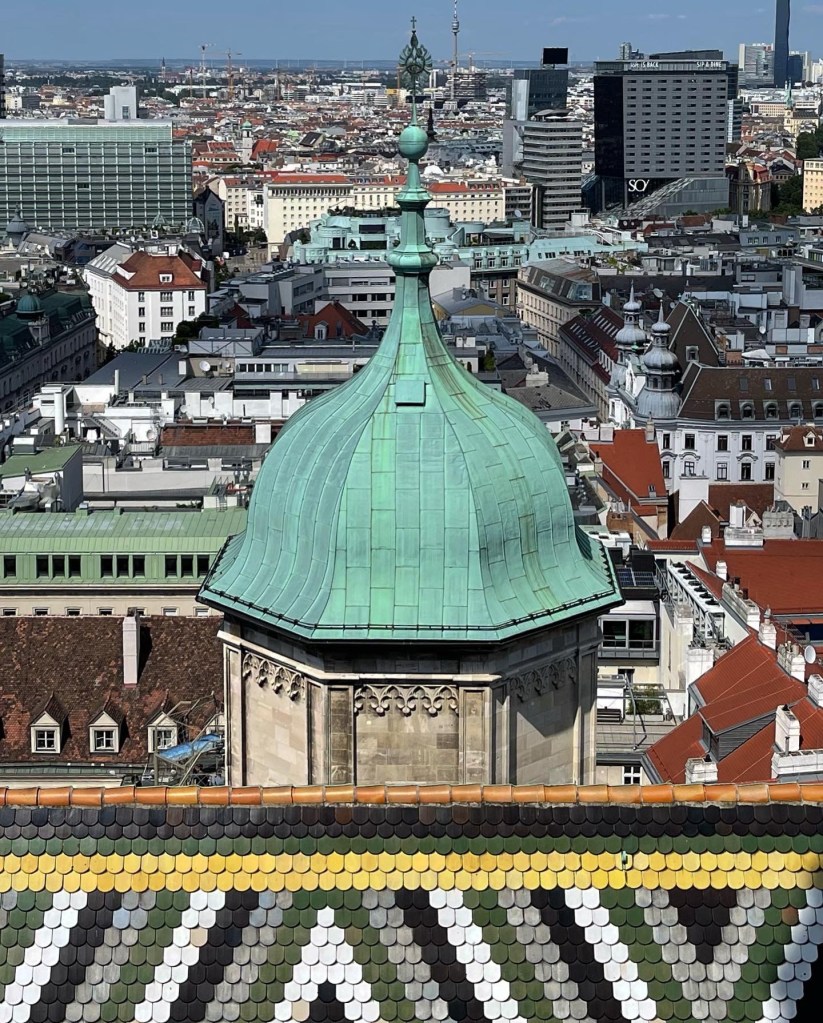
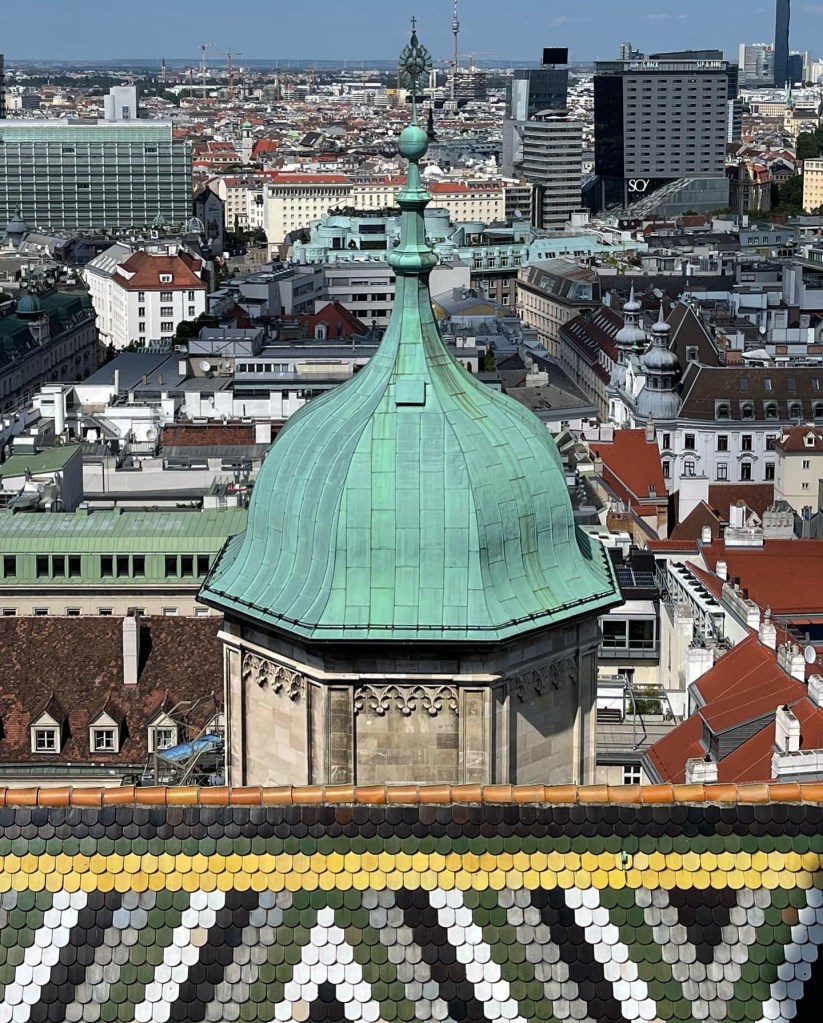
Where do you go first when you visit Vienna? For me the choice was obvious: St Stephen’s Cathedral. Seeing the massive and ornate structure of the church itself was a goal, but climbing the 343 steps up the South Tower for the incredible views of the city was my underlying goal.
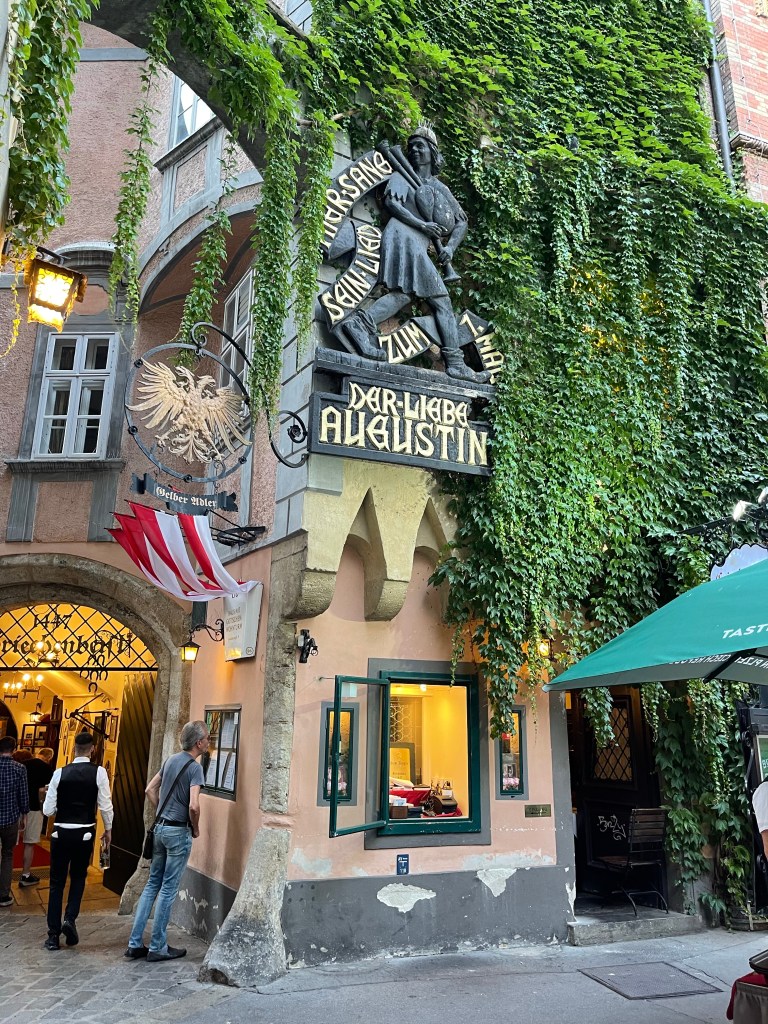
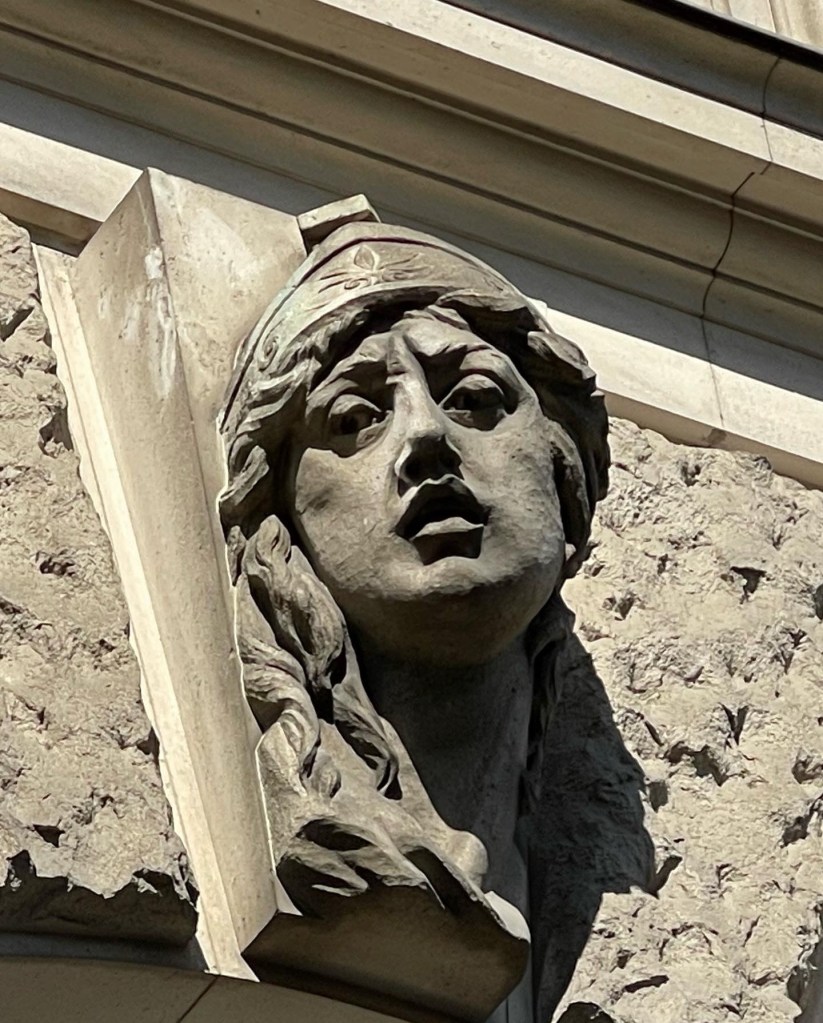
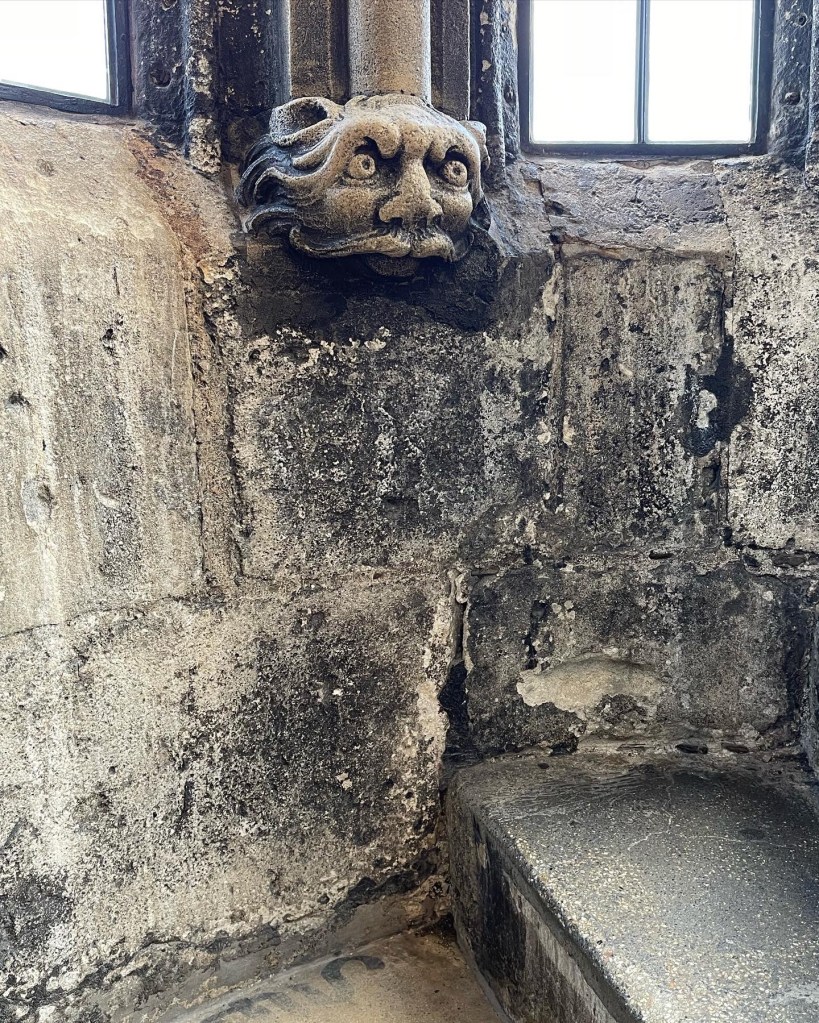
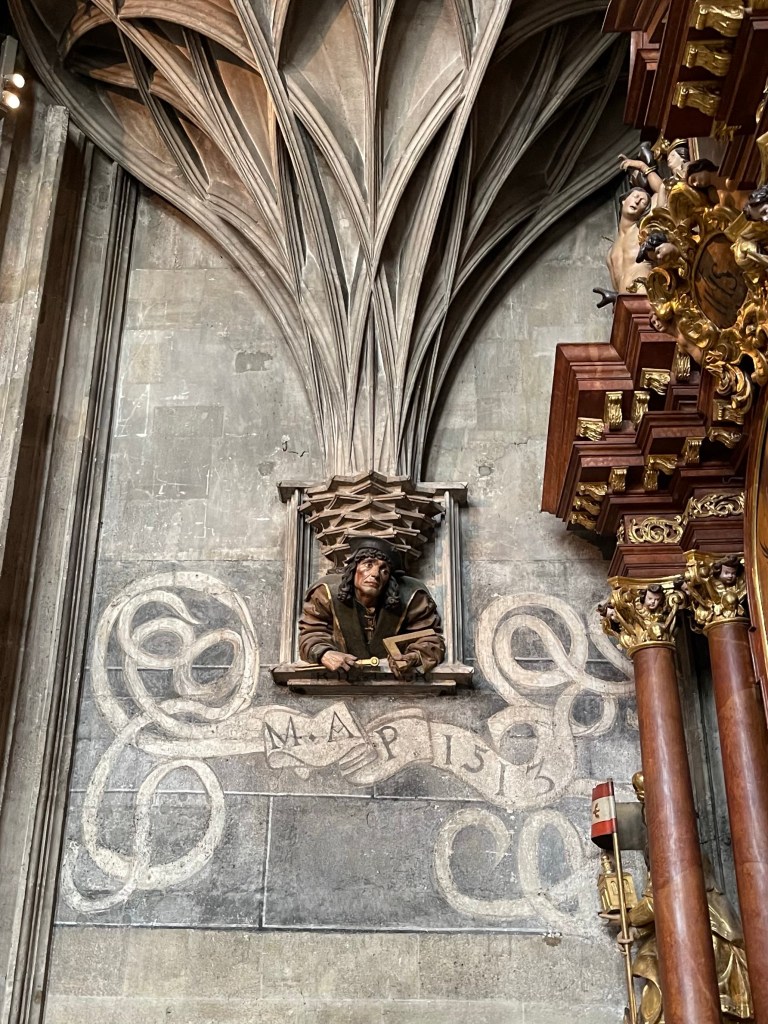
Having seen the city from a high vantage point, it was time to find the details that make Vienna unique. One must walk an old city and find that which hides from casual visitors. This city offers something around every corner.
When you’ve heard about Vienna your whole life don’t just skip across its surface like a stone, sink in! One should visit the palaces and museums and cafés to know Vienna, but you should also seek out the nooks and crannies where the place reveals its magic. Those who built this place leave a bit of themselves for us to discover, should we only look for it.
“All I insist on, and nothing else, is that you should show the whole world that you are not afraid. Be silent, if you choose; but when it is necessary, speak—and speak in such a way that people will remember it.” — Wolfgang Amadeus Mozart
Taking the train between Salzburg and Vienna I’m reminded of Salzburg’s famous son, Mozart, who made this journey himself. Doing so launched his contribution to music and humanity to a level than it would have had he stayed home—a level of mastery very few attain in their lifetime. Sure, we know that taking this trip on its own doesn’t make us memorable, we’ve got to deliver the goods when we get there. Young Wolfgang delivered.
Maybe that’s too much pressure for now. Maybe following in the footsteps of Mozart now might stir inspiration for later. We don’t accomplish great things without a rigorous apprenticeship and the courage to raise our hand when our time comes. Knowing when to raise our hand is as essential as knowing when to keep it down. Yet too many never get around to saying it’s our time. That shouldn’t be us.
We sense when it is necessary for us to raise our game. We know when we can do more. The world may remain indifferent, but no matter. What matters is that we summon up the courage to rise up and do our very best to make our work memorable.
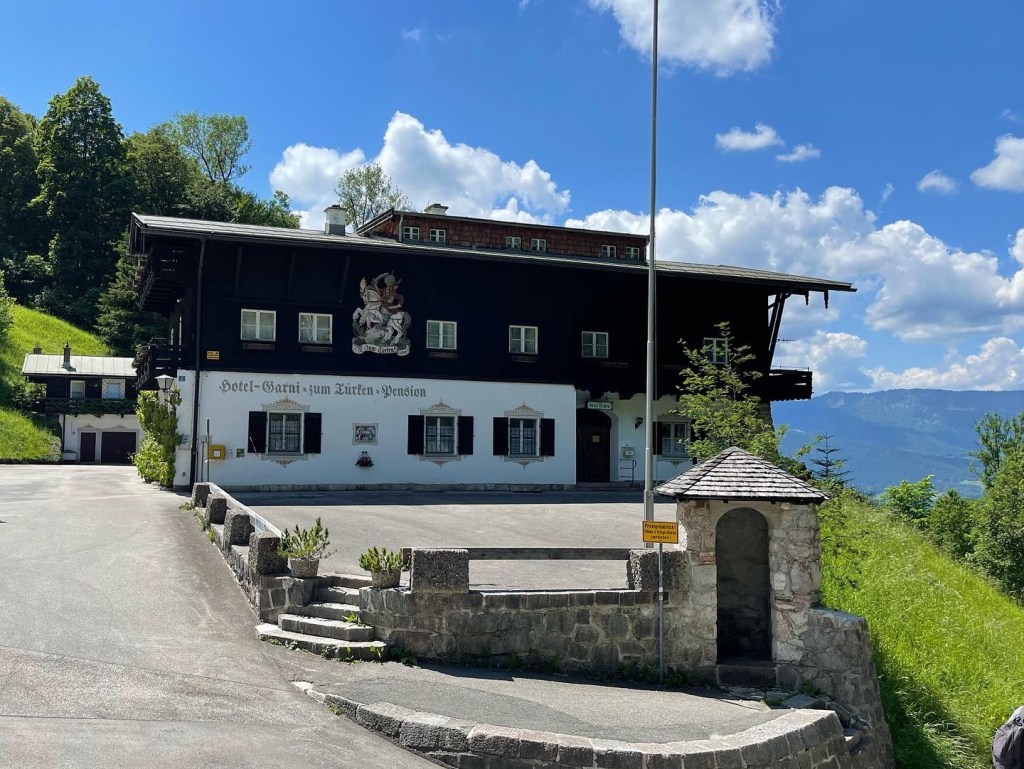
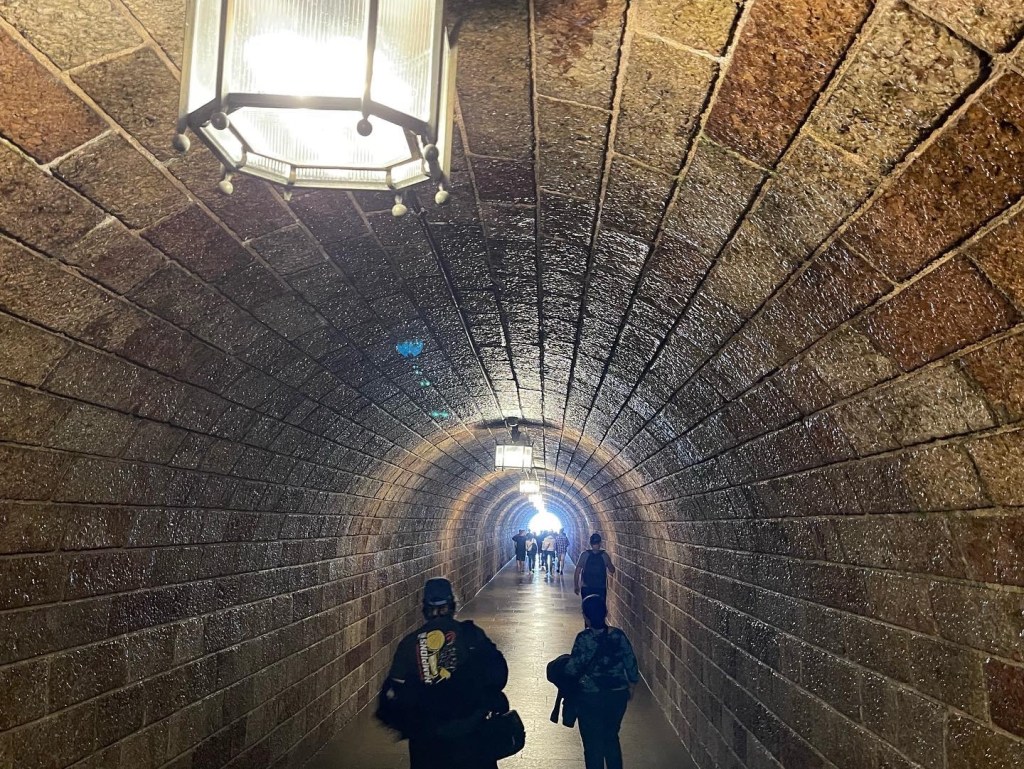
You feel the history of the place well before you walk through the marble tunnel to the polished brass elevator that carries you more than 400 feet to the Eagle’s Nest. You feel it when you see the broken old bricks that were once the steps leading to the door of the most famous villain in modern history. You feel it when see the old guard hut still standing stoically almost 80 years since Nazis stood in it. Eagle’s Nest reputation precedes a visit you make to it.
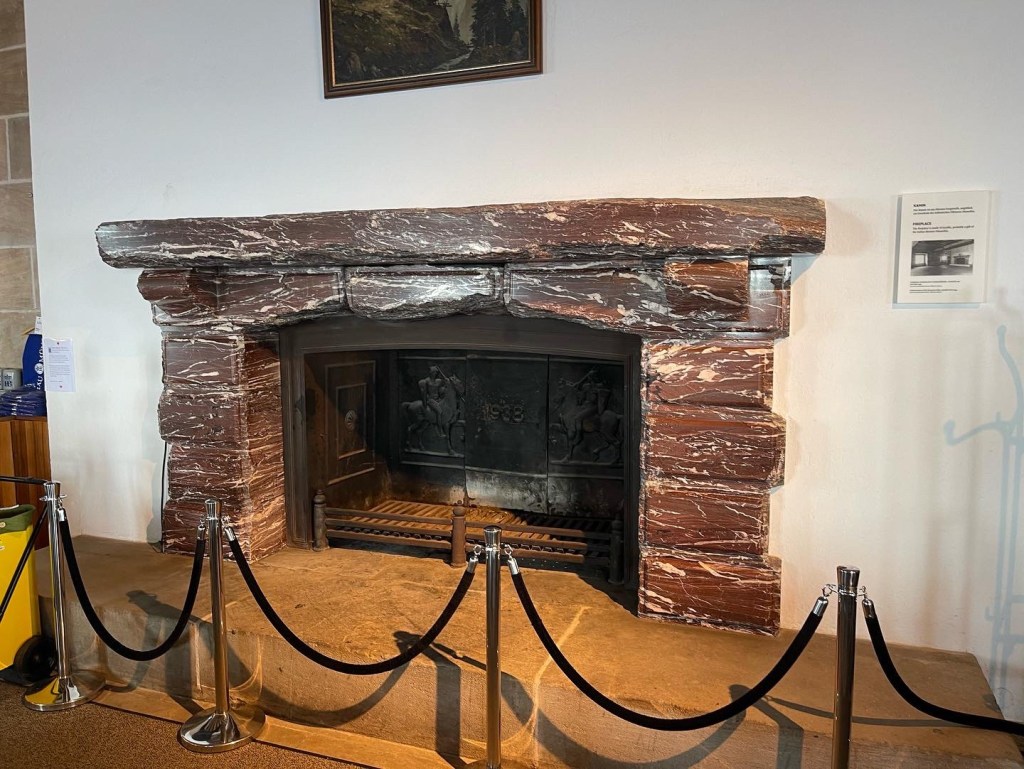
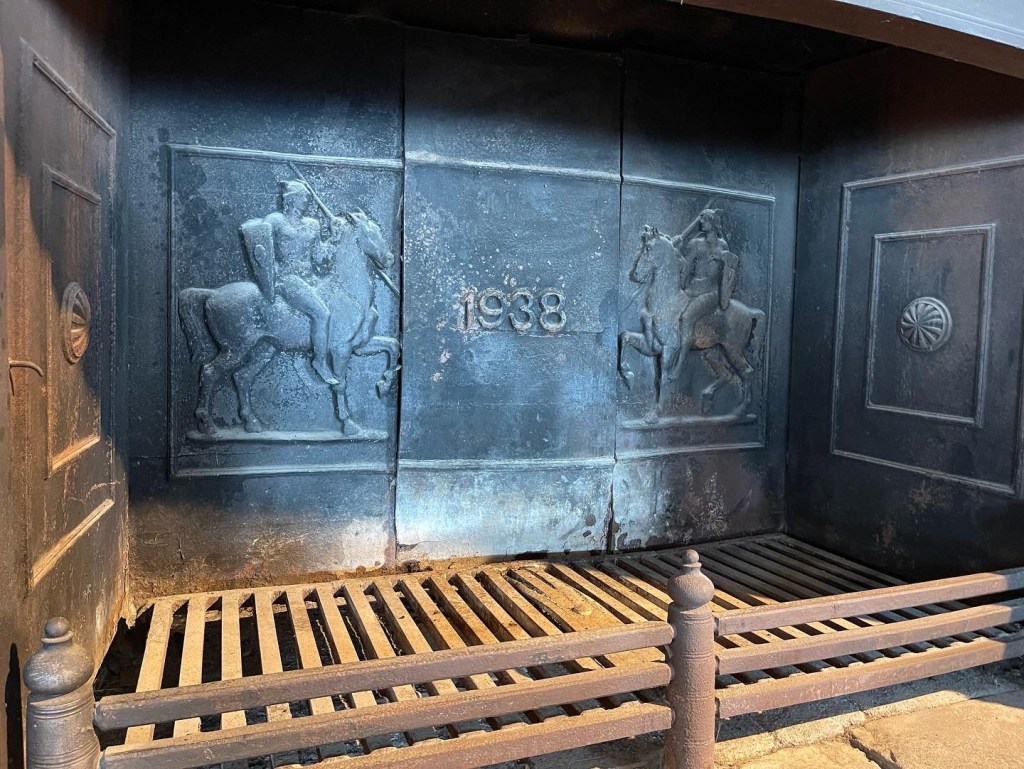
The German word for Eagle’s Nest is Kehlsteinhaus. It remains largely the same as it was when Hitler and the worst of humanity plotted invasions and mass extermination of large segments of the population within reach of this mountainous enclave. That it was spared during the bombing raids of 1945 or the subsequent destruction of Hitler’s prized home is a lucky break. For all its dark history, Eagle’s Nest today is a beautiful place to spend a day.
Despite the complexity of building a mountain road with its network of bridges and tunnels, cutting an entry tunnel and elevator shaft out of rock and dropping a building on top of it all, thousands of skilled laborers got it done in just over a year. For Hitler, a guy afraid if heights, that drive up must have been terrifying. Good. Who wants to think of him enjoying it?
Walking around the mountaintop on a beautiful day, the world opens up around you. The stunning Berchtesgaden Alps surround you and sparkling Lake Königssee shimmers below. This place is a wonder. But don’t plan to stay for long at the top. People are moved in and out with quick efficiency. It may have started as a Nazi lair designed to awe visitors, but today it’s a major tourist attraction. Still in the business of awe, but very much on a tight schedule.
Walking around in Salzburg, Austria offers a visual feast of bustling streets and five squares, the Salzach River, the Salzburg Cathedral, the cafes and biergartens, and above all, the Hohensalzburg Fortress high atop Festungsberg hill. The core hardscape is essentially the same for us as it was for Mozart 250 years ago. You can feel history with every step in this city. You can hear the whispers of all those who came before you.
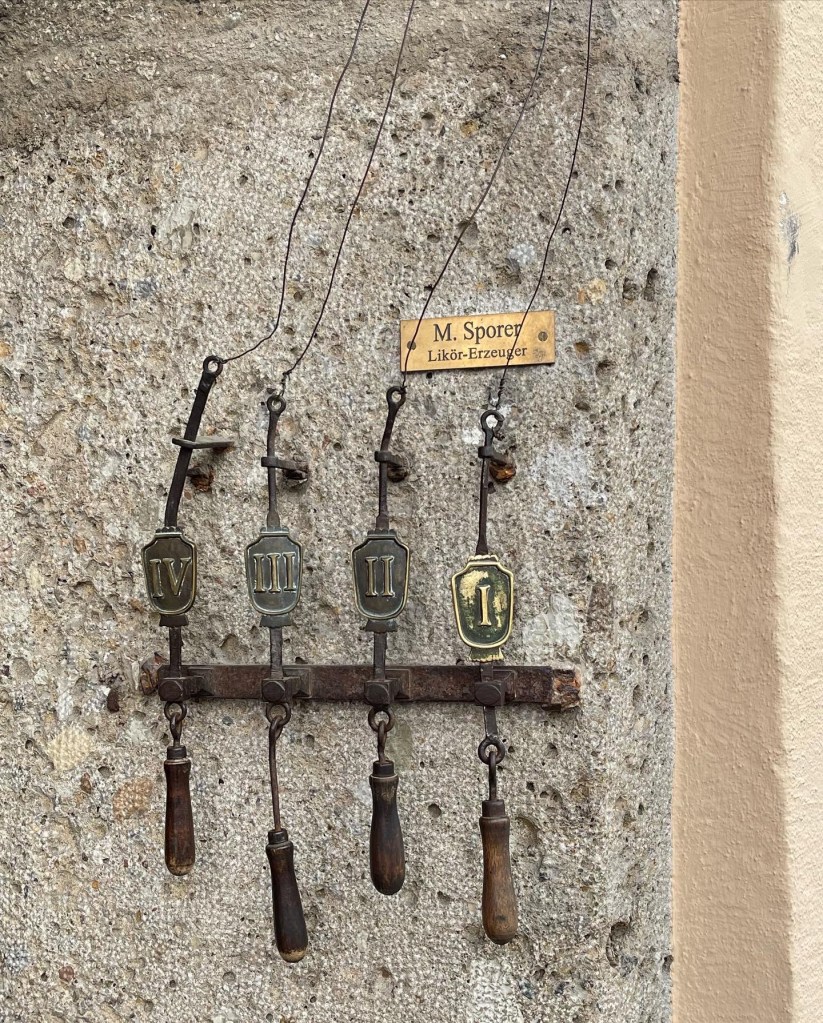
One small detail struck me more powerfully than all the ornamentation in Salzburg combined. Walking along the Getreidegasse, with all its shops and people from all over the world, I came across a doorway with four pull cables that ran up the outside wall to the four floors above, each cable run to the inside of each apartment. It was an old doorbell system from the days before electricity, still functional today. I wanted to ring the bell and ask the local resident if I could see the bell on the other side of the cable. And imagine this has likely happened many times on such a busy street with such a tantalizing pull readily at hand for those returning from biergartens late in the day.
It’s funny the things that stick with you when you travel. I look for small details like this wherever I go, for these details are where the magic is. The smallest things speak the loudest if you’ll only slow down long enough to listen.
There’s a lot of history lurking in plain sight. Take Calf Pasture Beach in Norwalk, Connecticut. on the surface it’s a pretty municipal beach on Long Island Sound. I suppose that might be enough. But there’s a significant link to the Revolutionary War on this beach. As an eager participant in maximizing the potential of any trip, I’d read about the beach while looking for a good place to watch a sunrise. As a history geek I leapt out of my chair when I learned more about the beach. A sunrise visit became a no-brainer.
So why the strange name? Calf Pasture Beach was exactly what the name infers. When the first European settlers arrived in 1651, their cattle grazed on the grass just off the beach. Names have a way of sticking, don’t they? But there’s even more history whispering on this beach. On July 10, 1779, British Lieutenant General William Tryon led 2,600 troops on the Revolutionary War raid of Norwalk. They camped right on the peninsula where the beach is located, and the next morning burned most of the town to the ground.
There’s no sign of British encampments or cows now, just a municipal beach with a fishing pier and bathhouse, a few baseball fields and a large parking lot. The property might have developed into any number of things, from industrial facilities to a housing development. Thankfully it was donated to the city exactly 100 years ago by the Marvin-Taylor family, who had owned the land for generations. That’s a gift that keeps on giving, and I hope Norwalk has something planned for 2022 to commemorate the family.
All this history lured me to that particular beach for a wonderful sunrise over Long Island Sound. Arriving during magic hour, the sky was lit up in pink, and Sprite Island offered a beautiful contrast with its bare trees. A short walk down the beach brings you to a fishing pier, which offers a different perspective on the sunrise, and a different perspective on the beach itself. This small peninsula feels like it would be a million miles away from the congested I-95 corridor, yet here it is just a few minutes away. It’s funny what you find when you pause to look around a bit. Not every early morning micro-adventure pays off, but this one surely did.
Sprite Island during the magic hour before sunriseCalf Pasture Beach, Norwalk, CTSunrise over Long Island Sound from the Captain William Clark Fishing Pier
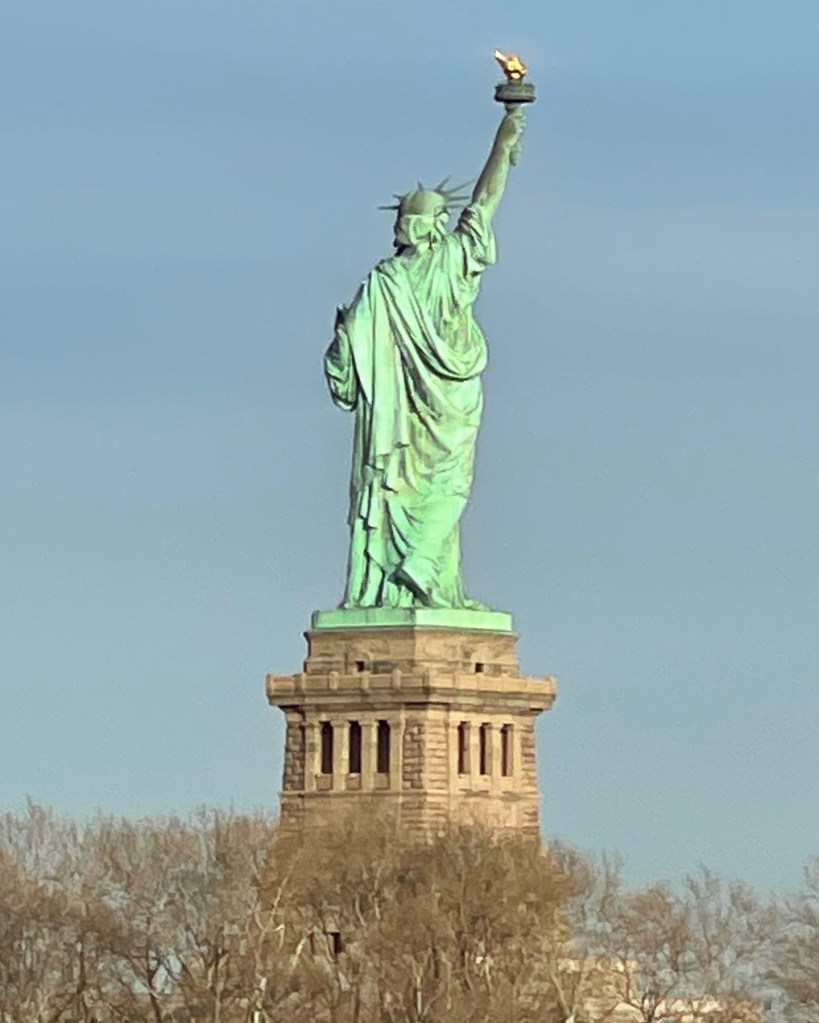
When you see the Statue of Liberty from the New Jersey side, it feels a bit surreal. We’re all used to that image in our head of the face of Lady Liberty, but how often do we ever think of the back? Yet that’s what New Jersey sees. I recall a joke about Lady Liberty forever turning her back on New Jersey, but let’s flip that script around for what’s really been happening since 1886: New Jersey’s always had her back.
Liberty Park offers a striking view of Manhattan and Frédéric Auguste Bartholdi’s bold vision of American liberty. He called his work “Liberty Enlightening the World”. Liberty represents the hopes and dreams of millions, standing exposed to the elements for 13+ decades. 1886 was within the lifetimes of Civil War veterans, think about what that statue meant to them. What it still means, when we look at the world with new perspective.
Liberty connects generations, and she stoically stands, not just American’s, but for the world. The work was literally a gift from the Old World to the New. We ought to remember the message in the gift. Forget the people trying to co-opt her message for political gain, Liberty represents all of us. When you look at America’s Liberty from New Jersey, you aren’t just looking at it, you’re a part of it. And from that perspective, shouldn’t we all have her back?
Let’s get the elephant in the room addressed right off the bat: Anthony’s Nose has an odd name. Here’s one story I came across in Kiddle that describes how it got it:
“Pierre Van Cortlandt, who owned this mountain, said it was named for a pre-Revolutionary War sea captain, Anthony Hogan. This captain was reputed to have a Cyrano de Bergerac type nose. One of his mates, looking at this mount, as they sailed by it, compared it to that of the captain’s nose. He said that they looked similar in size. This good-natured joke soon spread, and the name Anthony’s Nose stuck to this peak. Washington Irving’s History of New York, a satire, attributes the name to one Antony Van Corlear, who was the trumpeter on Henry Hudson’s ship.”
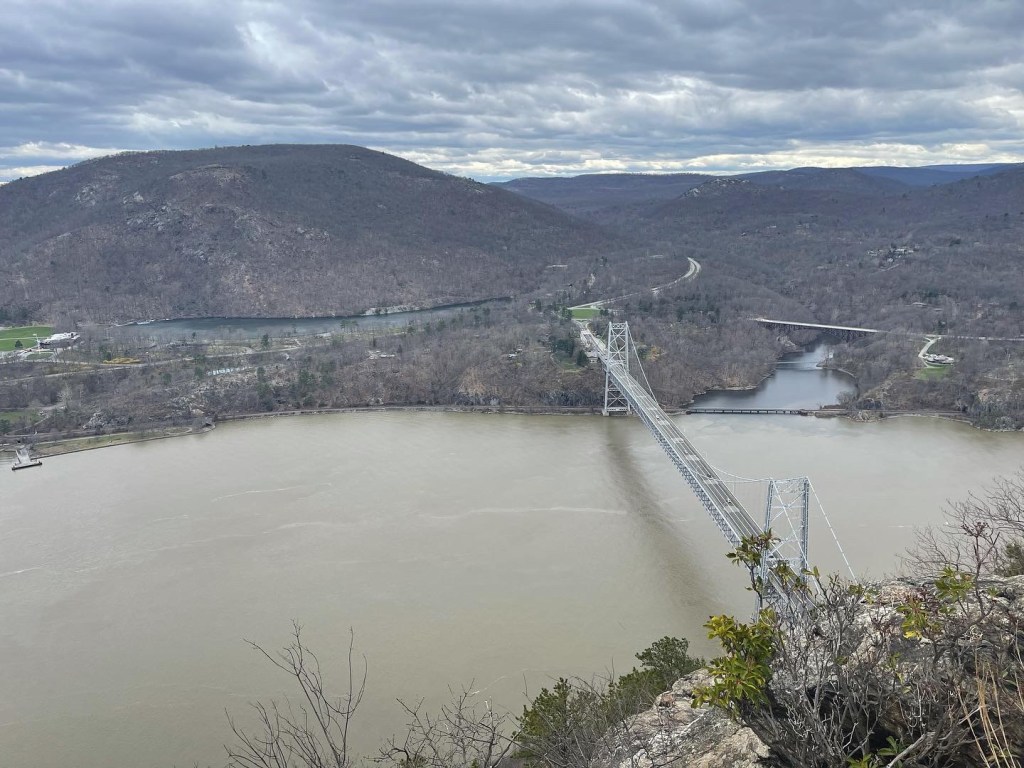
Whatever the source, it requires that each hiker now forever able to say they went up Anthony’s Nose. How you feel about that is entirely up to you. For me, the motivation was to see a bridge I hadn’t seen in almost 30 years, get a quick hike in to break up a long drive and get a feel for a stretch of the Hudson River from a hill top.
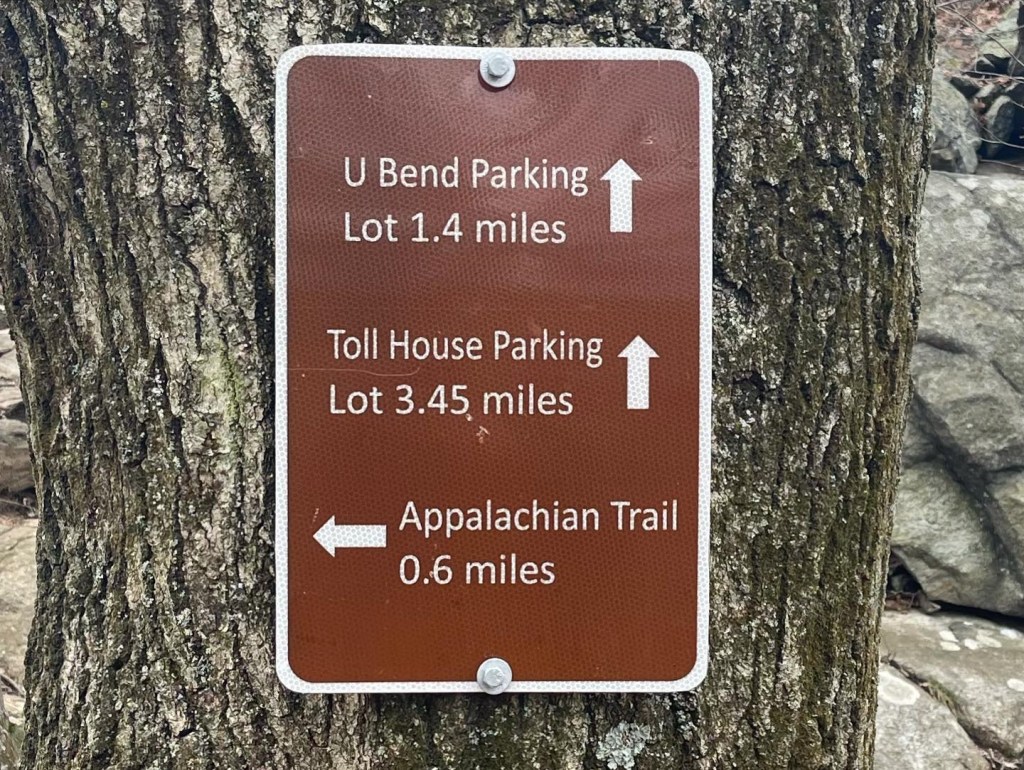
There are a few routes up Anthony’s Nose (sorry). The most direct route is a steep granite “staircase” that brings you to your destination relatively quickly. This requires street parking on a busy stretch of road. Alternatively, there are a couple of longer routes to the lookout spot, the one I favored followed the white blazes of the Appalachian Trail. The AT crosses the Bear Mountain Bridge over the Hudson River and meanders up through a final stretch of New York before reaching Connecticut. You might expect a stretch of the AT to be lovely hiking. You’d be correct for this stretch.
There seems to be a lot of confusion about where the trailhead is for Anthony’s Nose. If you’re going to hike straight up the staircase, you begin at a small deck on the side of the road not far from the bridge. If you’re more interested in a 90 minute round trip hike, take the AT route. The trailhead begins on South Mountain Pass Road, which is a rutted stone dust road for a long stretch. If you’ve got a small sedan you might consider driving in from the Blue Mountain Beacon Highway side, which offers a bit more pavement to work with. Driving a truck, I enjoyed the off-road feel of reaching the trailhead after a few hours of highway driving to get there.
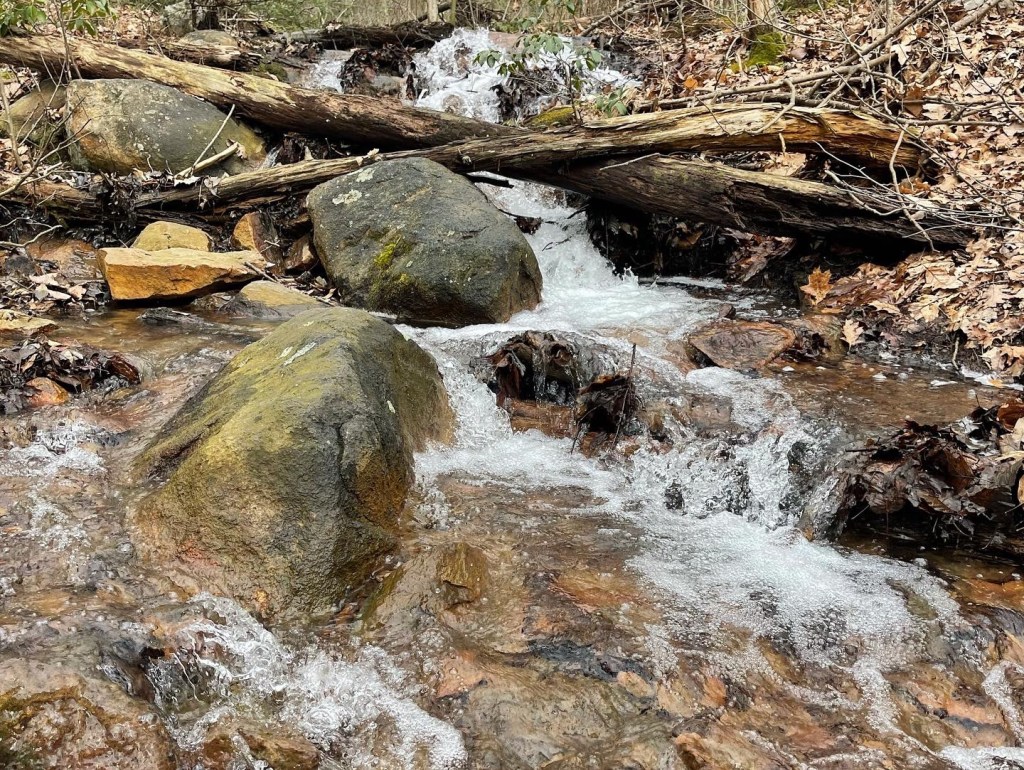
The key for the trail is to follow the white blazes, which leave an old roadbed a few hundred yards up and begin descending towards a small stream before climbing back along the ridge line. The trail head would benefit from a bit of signage and a map, as one hiker after another asked each other if they were in the right spot. Perhaps a Boy Scout Troop could take it on as a project.
The hike took 90 minutes round trip. Parts of the trail felt like you were in the middle of the White Mountains, but with glimpses of the Hudson River along the way. There was a bit of traffic buzz in the background, but overall it was a perfect hike to break up a drive from New Hampshire to New Jersey for me, or a short destination hike away from New York City. I’d recommend bringing lunch and soaking up the view.
Bear Mountain Bridge with it’s namesake rising up behind it
“We have to remind ourselves that, at that moment, Blitzkrieg was nothing. It was just a bunch of stalled Panzers. Just a monstrous traffic jam on the Austrian highways, some furious men, a word that was coined later, like a gamble. What’s astounding about this war is the remarkable triumph of bravado, from which we can infer one lesson: everyone is susceptible to a bluff. Even the strictest, most serious, most old-world souls: they might not give in to the demands of justice, they might not yield to an insurgent populace, but they’ll always fold before a bluff.” — Eric Vuillard, The Order of the Day
It’s hard not to read this quote about the earliest days of World War II and not see current events in the world. We’re seeing bravado and bluster all around us, and the voices of those who stand up against it shouted down in social media and in mob rallies. This isn’t far off from what was happening in 1930’s Europe. We’ve always seen it, really, for humans live to react and take time to think about the consequences when it’s too late.
History is full of thugs and gangsters rising to power on a bluff and a healthy dose of intimidation. To think it’s not happening now is to live with blinders on. But we wonder, who are we to raise a voice in protest? Why rock the boat when you see what happens to others who do? We all have our filters on, biting our tongue when the oddball rambles about something a bit too extreme for our tastes. Why give them any momentum at all?
I was at a trade show in Las Vegas, listening to some people I know parroting some mob rally talking points. I wasn’t surprised at their point of view, but taken aback that they’d voice it in the midst of industry peers. And what are you to do in that moment? Argue the contrary? Who wants to argue with someone you’re trying to do business with? And that’s exactly how a fringe idea vocalized becomes accepted by some who lean in that particular direction.
I write this with a sense of optimism. It feels like the world has recoiled, finally, in the face of Putin’s aggression. In the face of Trump’s sedition. Yet the mob rallies continue. The lights are on and the cockroaches scatter, but they’re still there, waiting for their opportunity to come back out. Don’t give it to them.
Bravado and bluster attracts some even as it repulses others. We either rise up and face it or we enable it. Strong leadership requires a play for the middle. The middle must recoil and throw them out before they gain momentum. Call their bluff—before it’s too late. As we’ve seen, it can happen here too.
If you’ve been seeking balance in your life, today’s your day. March 20 brings balance to the earth once again. The sun is positioned directly over the equator, making the day and night exactly the same. If you love the idea of yin and yang and skating the line between order and chaos, then March 20, 2022 is your happy place.
For those in the Northern Hemisphere who prefer day to night, this is good news. You’ll have more and more of the former. For friends in the Southern Hemisphere, well, you’ll have more time for stargazing and romantic evenings. The Northern Hemisphere began this slow tilt back towards the sun on December 21st on the winter solstice, and will finish its tilt and start heading back away from it on June 21st, the summer solstice. For those keeping score the next vernal equinox will occur on September 22nd.
These are the four quadrants of the year, making one wonder why the calendar year wasn’t set to these four reference points. The answer is that the calendar year was originally set to the beginning of farming season, which in Rome meant March 1. March, being the “first” month, was named for Mars (there’s an interesting article about how the months got their names here). So much of who we are today was derived from those Romans.
So, lovers of balance, celebrate today like it’s the last day on earth, because it is but a one day celebration. Tomorrow day and night are once again out of balance. The earth is permanently off-kilter, and this odd fact both explains and sustains those of us who inhabit this crazy planet. Perfect only happens 2 out of 365 days per year. For those of us who are far from perfect, the other 99.5 % of the year is our time for celebration. Cheers!