Category: Nature

  • The Call of the Wild

    “Deep in the forest a call was sounding, and as often as he heard this call, mysteriously thrilling and luring, he felt compelled to turn his back upon the fire and the beaten earth around it, and to plunge into the forest, and on and on, he knew not where or why; nor did he wonder where or why, the call sounding imperiously, deep in the forest.”
    ― Jack London, The Call of the Wild

    Finishing my first cup of coffee, I heard the distinctive honk of a skein of geese. Quickly removing myself from the comfort of the moment, I caught the geese circling back around the woods and turn towards a local pond. The rising sun caught them in flight, illuminating their bodies in the red light of dawn. They soon disappeared behind the roofline and the honks faded away as I walked back into the warmth of the nest.

    We know deep down whether we were meant to be wild things or creatures of comfort. The world wants very much for us to seek comfort, to leave those crazy dreams well enough alone and celebrate the nest—to turn back towards the fire. Maybe a little part of us feels this too. So why are we so drawn to wild things? What is it that we seek?

    I believe it’s vitality. Vitality bursts out of us, it isn’t buried in the mundane. It is not another cup of coffee to get through the hour, or a nightcap to wash away the day. To be fully alive we must step out of ourselves and be uncomfortable. Test limits and stretch to new places. To do otherwise is to avoid a full and vibrant life.

    “You cannot find peace by avoiding life.” — Virginia Woolf

    Will we be drawn to the Siren’s call to the rocks or to the call of the wild? One calls us to accept what always was until our end, the other calls us to fly. We ought to ask ourselves, is inertia comfort in disguise, and vitality masked by the judgement of imprudence? We are, each of us, on a hero’s journey, listening for our calling. What call will we turn towards?

  • A Snowball Walk in the Woods

    There are winters when it seem to snow, relentlessly, mercilessly, every day. The types of winters that wiped out half of the pilgrims on the Mayflower. “Hungry? Eat more snow!” kind of winters. This was not that kind of winter in New England. And now that we’re well into March, when the sun is higher and the snow melts quickly, it seems clear that opportunities to celebrate winter are drawing to a close.

    Blame it on seasonal variability or jet streams run askew or climate change, whatever the reason, the opportunities to fly across snow on skis or snowshoes wasn’t quite available locally. None of that quick lunch hour snowshoe hiking presented itself this year in southern New Hampshire. And truthfully, I missed it. When friends invited me to hike up north after a heavy snowfall on Saturday, I leaned in towards it but pivoted back to home. I wanted to savor the local trails instead. It turned out to be a sound decision.

    Driving over to a local town forest, I expected the parking lot to be jammed full of fellow snow lovers. Instead, I found it relatively quiet. Tracks indicated others had set off on snowshoes, while a few chose to post-hole their way through the snow, wrecking the pristine trail. This would prove a problem on the wooded trails, but in the fields I simply flew off on my snowshoes to break my own trail. After all, this was what I missed most this winter—flying atop unbroken snow.

    It proved to be as delightful as I’d hoped it would be, but already the sun was up and working on the snow pack. The trees began dropping snowballs, often with small branches, which dampened my enthusiasm for the wooded trails. The fields were better, and I thumped my way around in earnest, seeking that flying feeling until I was breathless. Stopping for a rest, I looked around and listened. Nothing but snowballs falling in the woods. Not a single human voice, or dog barking, or even a car far off in the distance. Just a clydesdale in snow, appreciating the briefness of the moment. We never know if we might have another opportunity to do something. A winter like this one teaches you to make the most of the moment before it melts away.

    A rare opportunity to fly over snow
  • Little Things

    Elle est retrouvée!
    Quoi? -l’Éternité.
    C’est la mer allée
    Avec le soleil.


    She is found!
    What? -Eternity.
    It’s the sea gone
    With the sun. — Arthur Rimbaud

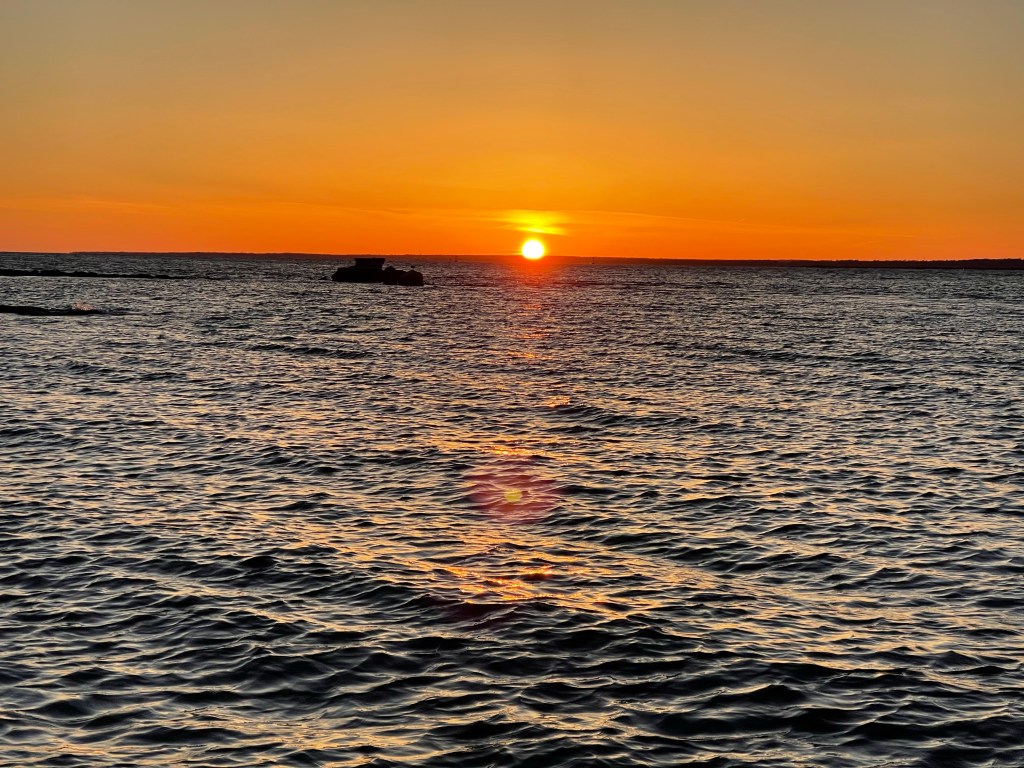
    Sunsets are routine, often ritualized. Little things, really, repeated daily. I’ve been known for carrying on about such things as the position of the sun relative to where it was in warmer days. Most people, it seems, could care less about where the tilt of the earth is. We are what we focus on.

    “Little things in life, which afford what [Daniel] Kahneman calls “experiences that you think about when you’re having them,” provide a great deal of everyday enjoyment. Because you’re apt to pay more attention to your remembering than your experiencing self, however, it’s all too easy to forget to indulge yourself in these small but important pleasures on a daily basis, thus depriving yourself of much joy.” — Winifred Gallagher, Rapt

    I should think life would be less enjoyable the very moment one forgot to savor the little things. We get used to things that once delighted us, looking for the next big thing to replace that feeling, always chasing. Never really savoring.

    Most writers have an eye for details, and linger in them longer than the average bear, seeking a deeper understanding. There’s pleasure to be derived from digging deeply into what seems trivial. Consider Rimbauld’s twelve words, arranged just so, that draw so much out of what someone else might think of as just another sunset. Poetry itself might be thought a little thing. Ah, but what things they are, sunsets and poems! I think I’ll stick with little things, thank you.

  • A Visit to Black Sand Beach

    When polling the five people I visited Iceland with last week, the consensus pick for most memorable place to visit was Black Sand Beach (Reynisfjar​a). There are plenty of options to choose from aside from that particular location—epic waterfalls, glaciers, volcanoes, geysers, the Blue Lagoon, tectonic plates drifting away from each other, and of course, Reykjavik. Each offers a possible highlight moment on a normal week of living on this planet. But the Black Sand Beach stood out for all of us.

    Why? Because a place like Reynisfjar​a changes you, as travel does, but more viscerally than visiting the tasty Icelandic hot dog stand. It might be the distinct black sand, ground up bits of lava expressing itself vividly against the white salty foam of the crashing waves. It might be the angry seas with their sneaker waves, always threatening to pull a distracted tourist to their doom. Maybe it was the basalt columns rising up from the sand and sea, standing against the ocean in a fight to the end of time. Mostly it was all of those things, combined into a magical place that is indifferent to the hordes of tour buses casting tourists upon the sands. The beach will be here long after we’re gone, but each of us take black sand memories with us.

    Reynisfjar​a
    The white foam against black sand was mesmerizing to watch as the waves receded.
    The famous basalt columns at Reynisfjar​a. You can see them referenced in architecture in Reykjavik. You just might also see a few tourists at this beach, and this time of year, a bit of snow.
  • The Dweller in the Gorge

    A short walk from its more famous waterfall cousin Seljalandsfoss is a hidden waterfall that I found overwhelmingly beautiful. Gljúfrafoss is hidden in a gorge, which you can reach by wading into ankle-deep water. This leads you into a cathedral of falling water and mossy boulders. Gljúfrafoss also goes by another Icelandic name, Gljúfrabúi, which I’m told means “Dweller in the Gorge”, which describes it perfectly.

    Iceland is bearing a massive surge in popularity, and you really see that at the popular tourist spots like Seljalandsfoss, which are overwhelmed with buses and small group vans. I’m one of those visitors too, so who am I to judge? But hidden waterfalls, even the most magical ones, become overrun by the masses. I have mixed feelings about it, while being drawn to these places myself.

    I wanted to shout for the rest of my friends to join me in this misty cathedral, but there were no takers. The thing is, when you meet a place as magical as this head-on, you want the world to experience it as you have. Yet you want to be protective of it too. For a few minutes of relative quiet, as one of the few to wade into the cold waters flowing out of the gorge, I paused in reverence in the cold mist before heading back to join the masses.

    Gljúfrabúi
    A friend captured this image of me inside the gorge
    Ice formations made it even more magical
  • Geysers and Ice

    Iceland is known as the land of fire and ice, for all the volcanic activity you can find nudged up against the Arctic Circle. Visiting in February, there’s ample opportunity to experience ice, but less so fire. You just don’t get eruptions that frequently, even here. But you do get plenty of geothermal activity. They might be experienced as hot springs, as with the Blue Lagoon, or they can be experienced as geysers dancing with in sky. Both are amazing to be a part of,

    Geysers are what you might expect: groundwater boiling underground looking for a release. Once it finds a weak spot it erupts with whatever force it’s accumulated. The result, especially on a cold winter day, is a spectacular column of boiling water and steam. Not something to linger too close to, but fun to watch from just far enough away.

    The word geyser originated in Iceland, with a geyser called—surprise—Geysir. Geysir is largely dormant now, but the boiling water has a release point nearby in a geyser called Strokkur, which spouts every 7-10 minutes. It’s predictability and frequency make it a great place to experience a geyser with efficient use of your limited winter daylight.

    Strokkur
    Strokkur
  • Finding Aurora

    “The Aurora Borealis is a fickle phenomenon. A week can pass without a flicker … then bang! The Northern Lights come on like a celestial lava lamp.” — Nigel Tisdall

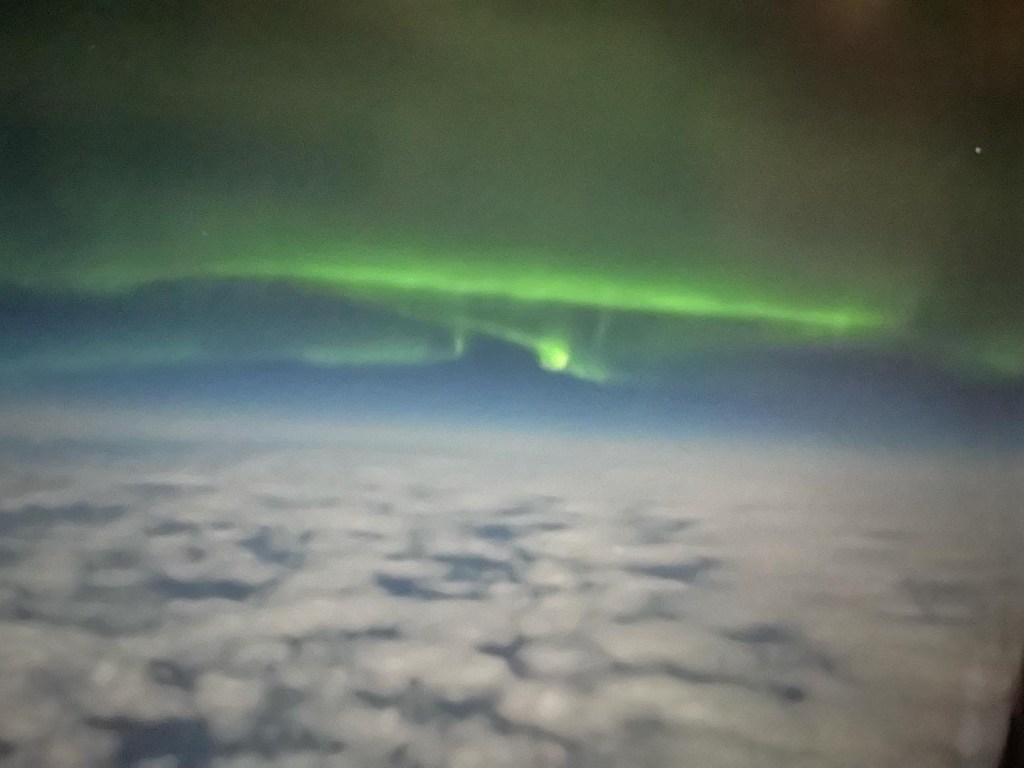
    I went to Iceland expecting to be disappointed by the weather. I’m not a pessimist by nature, but the forecast simply didn’t look good. There are a lot of reasons to go to Iceland in winter, but the primary reason is to see the Aurora Borealis. Yes, there are waterfalls and volcanoes, geysers and glaciers. These are spectacular, but also things that you can see any old month. But the Northern Lights are more evasive than that. Dark, clear skies are merely a starting point. You must also have some luck. Winter brings ample darkness but also some challenging weather conditions. We put ourselves in the way of beauty, but a bit of luck goes a long way too.

    Sure enough, we arrived to heavy snow. That might have frustrated me, but I’d already seen the Northern Lights on this trip. We’d had an ace up our sleeve, a window seat facing north for the flight, which carried us over the snow-laden clouds, up where auroras dance. It’s there that I finally glimpsed it, checking a box I wondered when I’d ever get to. There’s still hope for more dances with Aurora, should the weather cooperate, beginning tonight. Bucket lists deserve more than a brief encounter to savor, don’t you think?

  • A Wisp of a Moment, Captured

    On a recent walk I noticed the recently painted median strip dividing the road featured artwork now and then. It seems they painted the road in autumn, as the oak leaves returned to the earth to close their cycle and begin again. A few rebels, wishing for immortality perhaps, found the opportunity to capture the moment. It struck me this was what all artists do; reach out from the anonymous mass of their moment and leave something of ourselves for others to find.

    There’s something lovely in the temporary nature of this street art, akin to chalk drawings on sidewalks or sandcastles at low tide. Some art is meant to someday be a memory, recalled in quiet moments when you again walk down that street or on that particular stretch of beach. Do you remember the leaves of autumn, swirling in the wind? How quickly they fade from memory. We surf on a wisp of a moment, sometimes captured, mostly lost forever. We ought to embrace the freedom in that, elusive as it feels, for this is our fragile dance.

    “If you would create something, you must be something.” ― Johann Wolfgang von Goethe

    At times we hear the call from the naked page of a notebook, and at times from the middle of the road. Leaves locked in the amber of their moment are a whisper from seasons past to do something with this one. To feel the urgency of the season and make the most of it before the moment fades. This is the unique call of our work, leaping to our attention in the strangest of places. In each case, the question lingers in the moment: Where will you take us now?

  • An Unusual Winter

    Winter is different this year. The ground, frozen for weeks leading up to the New Year, thawed in a warming trend that hit New England in the first few weeks of the year. We sometimes say we’re grateful when it rains instead of snows here, knowing the general equation of one inch of rain equalling one foot of snow, but some of us actually prefer the snow. And when it finally came after the thaw and heavy rains, it made for muddy cleanup when you dared stray off the pavement. Yes, winter is finally here, sort of, and fashionably late, so enjoy it while you can. Just don’t go straying out on pond ice or try to steer a snowblower across the lawn to the shed. Each of these reckless acts will end in regret.

    Plenty of friends and acquaintances celebrate a mild winter. Perennially overextended, they’d rather deal with snow on their terms, with a quick ride up I-93 to the ski resorts. “Let them have the snow;” they say, “we’d rather not deal with it here”. As if we aren’t meant to have it here. Here isn’t all that far from there, I think, and winter has retreated enough already.

    I’m more sympathetic with the aged and the frail amongst us. Shoveling and navigating the world is a lot more complicated for them when you add heavy snow. This is where a sense of community is essential, to help those who might not be physically able to help themselves. Like snow, we accumulate awareness and empathy over time, and learn to check in on people more than we might have when we were younger and more carefree.

    We witness the changes in those we know moving from vibrant wrestlers of winter conditions to a more fragile condition. On days of particularly heavy and wet snow, we learn to face our own move to a more fragile condition. They call it “heart attack snow” for a reason, and something as mundane as shoveling snow can be a reckless act if our heart isn’t up for the task. We ought to celebrate the things we can do now, like walking in snow through the woods to visit a pond or simply shoveling the deck, for one day it will be beyond our reach.

    After cleaning up the remnants of the latest storm, I took a walk through the woods to see how winter was treating a local pond. During the drought of summer it had dropped to sad levels. With the rains of autumn and winter the water levels were back to normal and now coated with a slushy ice coating that wasn’t to be trusted. Still, it made for a pretty winter scene on a quiet winter morning. Moments like this are what we remember about winter, even as we forget that winter isn’t what it once was.

    Facing the changes this winter, it’s easy to see that everything is connected. Everything has its time, maybe even normal winters. With things like climate and physical fitness, we ought to do what we can while we can. Regret is no way to cap a window of time when it closes.

  • A Winter Hike on the Welch-Dickey Loop Trail

    The Welch-Dickey Loop Trail is one of the most popular trails in New Hampshire. There are many reasons for this, including its relative closeness compared to trails further north and its proximity to popular recreation destination Waterville Valley. But really, people hike this trail because the views are spectacular and you can do the hike in a few hours if you want to push, or linger with those views if you wish to take your time. In summer the blueberry bushes are generous and those ledges are great places to sit awhile. In winter, those ledges look like toboggan runs to a hard landing. Best to stick to the trail, wear spikes and respect the unforgiving nature of the White Mountains when people get careless.

    As the name infers, there are two mountains on this 4.4 mile loop: Mount Welch and Mount Dickey. Both have a ton of exposed granite ledge that let the world open up for you, making the payoff in views exceptional for the effort expended. In summer, it’s a fun scramble up the granite, in winter, it’s strongly advisable to have micro spikes or crampons. Even with spikes on, I was very deliberate with every step hiking up Mount Welch. It’s not a trail to be doing in casual footwear in winter.

    At some point along the way, I recognized that the prominence of the summit wasn’t ever my goal, it was simply getting out in nature at elevation, to a place where I earn the view with every step. I’ve been too distracted by numbers (48, 200 & 4000: there are 48 4000 foot mountains with a prominence of 200 feet or more) lately, forgetting that lists are not the point. While it’s in my nature to finish what I started and complete the 48, it took this winter hike on the Welch-Dickey Loop Trail to remind me that deep down I’m seeking experience, not validation. The numbers can take a hike. I’ll finish when I finish.

    If you’re looking for incredible views with a relatively easy hike, the Welch-Dickey Loop Trail brings you to two summits of the five I’d recommend in New Hampshire, along with Mounts Monadnock, Major and Willard. In summer or during foliage season these hikes are maddeningly crowded on the weekends, but winter brings relative quiet and pristine beauty. Just remember those micro spikes.

    The steep ledge scramble up Mount Welch
    Would you hike this without spikes?