Category: Exploration

  • Reading and Writing and All the Other Things

    “I write because I want more than one life; I insist on a wider selection. It’s greed, plain and simple. When my characters join the circus, I’m joining the circus. Although I’m happily married, I spent a great deal of time mentally living with incompatible husbands.” — Anne Tyler

    “I read so I can live more than one life in more than one place.” — Anne Tyler

    We read fiction to escape: to be someone else in another place, if only for a little while. We write fiction to explore: to create something bolder within ourselves that we might not otherwise explore, and drop these characters into the places we might not dare to go in a normal lifetime. To take a walk on the wild side without too much damage. Each of us seeks something more in this world in some way. Fiction offers safe passage to extraordinary places.

    This blog doesn’t dabble in fiction, although this writer has. There’s a distinct separation there, between fiction and non-fiction, and between creative output and daily observation. My name isn’t even Alexander, which may lend to the confusion. Certainly it doesn’t offer optimization of the brand. But so it goes. The motive isn’t to develop a brand, but a deeper understanding of the world and my place in it.

    Sometimes we want to explore other lives, represented in fictional characters who come to life in the pages of a book. Sometimes we want to explore the meaning in our own life, and optimize our potential in this brief go-around. If I’m sure of anything in this daily ritual, it’s that I’m a better writer and a better human for having consistently done it. Writers develop characters, and we also develop our own character. Those richer and bolder lives aren’t just on paper, after all, they’re within us too.

    This business of reading and writing is a lovely part of who we are, but let’s face it: Most of our life is made up of all the other things. When done well, we develop a deeper perspective and sense of place through our active participation in words, but also through our engagement with the world. We must step outside our comfort zone in small ways that lead to bigger and bolder things. Just as a snowball grows as we nudge it along, so we grow as we accumulate skill and confidence through repetitive action. As with the snowball, at some point it grows beyond our capacity to push it, and it is then that we must seek the help of others. We must develop the awareness and courage to ask for help when we find our pushing isn’t quite enough.

    When you stop to think of it, we’re each the authors of our own lives. Those characters we develop are often us. Just as they stretch and grow, so too do we. All the other things that make up a life are derived from our imagination and the courage to step out into the unknown. It shouldn’t just be fiction.

  • Which One Stirs?

    “I have been and still am a seeker, but I have ceased to question stars and books; I have begun to listen to the teaching my blood whispers to me.” — Hermann Hesse, Demian

    We all listen to whispers—hints and suggestions and guidance from deep within. We usually don’t act on most of these. Perhaps some seem reckless, or frivolous. Perhaps we don’t like the stretch out of a comfort zone. But now and then we do stretch, and sometimes even leap. The whisper is all we hear at times like this.

    The question isn’t what whispers to us, for there will always be whispers, the question is, which one stirs? We ought to do more of that. Naturally, we already know this. Do you wonder why we ever hear anything else? Or why we choose not to listen to our very own whisper more often?

  • The “I’m Glad I Did” Lens

    “Go live your life. Live it fully, without fear. Live with purpose, give it your all, and never give up.” Effort is important, for without it you will never succeed at your highest level. Achievement is important, for without it you will never experience your true potential. Pursuing purpose is important, for unless you do, you may never find lasting happiness. Step out on faith that these things are true. Go live a life worth living where, in the end, you’ll be able to say, “I’m glad I did,” not “I wish I had.” — Gary Keller, The One Thing

    Without being reckless, what would you have done differently yesterday? How about this year? Who would you spend time with? Where would you linger a beat longer? Where would you have gone if not for the place you stayed instead? What work would you have applied yourself to, worthy of your precious time? In other words, what do you regret leaving off the table in this brief life?

    Perhaps, choose to do it today. Perhaps reach out to that person. Perhaps, linger in the moment when it arrives instead of rushing off to the next urgent thing. Perhaps, book the trip today, while there’s still precious time. Live through the lens of “I’m glad I did” and defer “I wish I had” instead. Be focused. Be intentional. Be bold.

    There is the idea of deathbed regrets. We are all on our deathbed, whether today or a hundred years from now. We ought to feel the urgency in that realization and do something with our time. Through what lens do we view the world? Choose the “I’m glad I did” lens. We probably won’t regret it.

  • A Visit to Brimstone Hill Fortress, St. Kitts

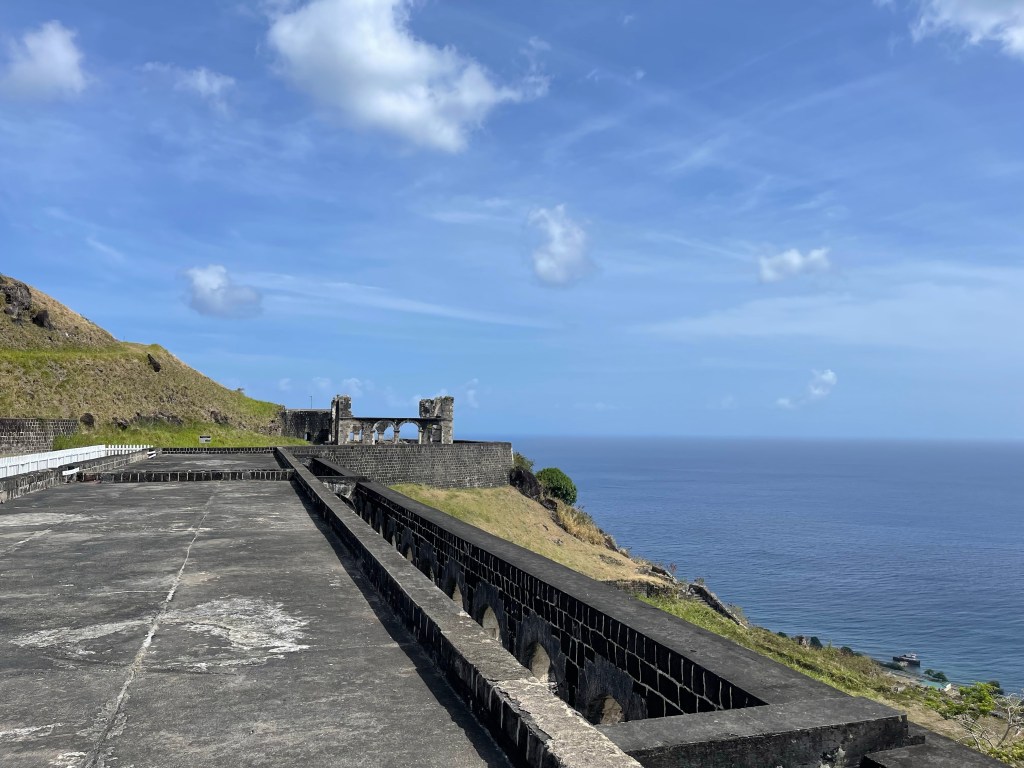
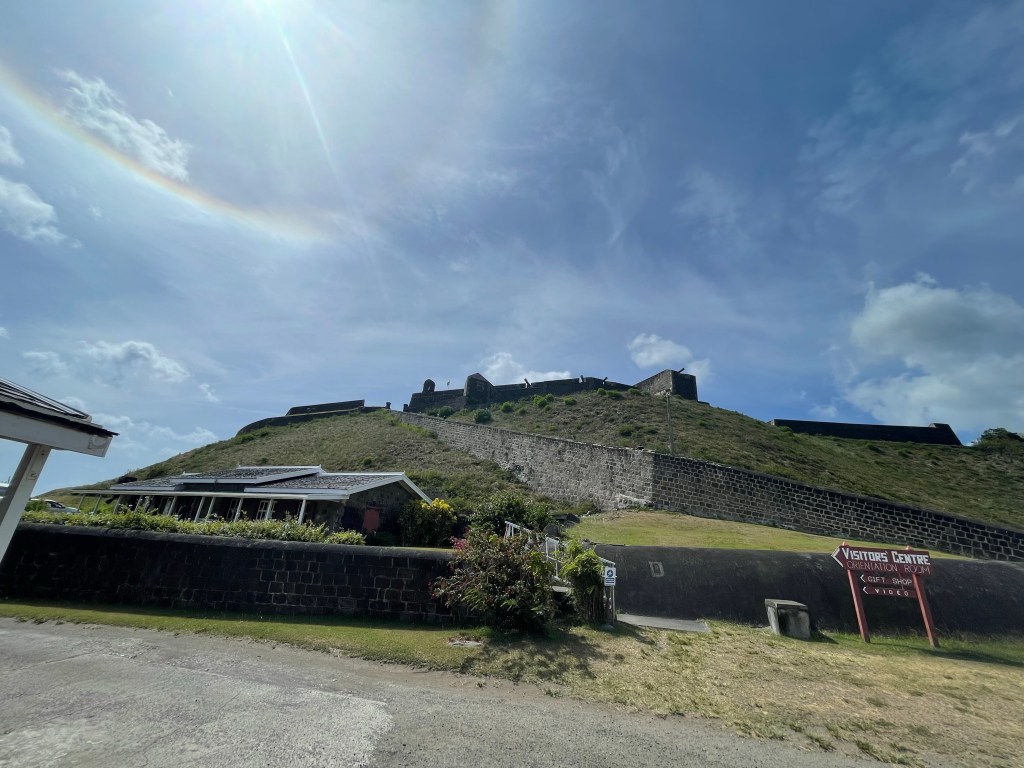
    On a steep and imposing chunk of rock with the mountains at her back, Brimstone Hill Fortress continues to watch over the Caribbean long after the strategic reasons for having a fort here at all have faded into history. Today St. Kitts and Nevis, and the other island nations nearby, are destinations for fun in the tropics, but three centuries ago these islands were strategically valuable producers of tobacco, cotton and especially sugar and its byproducts, molasses and rum. The conflicts between England and France were played out in the North American colonies and in small islands like St. Kitts. While most soldiers considered being stationed in the tropics a death sentence due to the high mortality rate (from disease, alcoholism, etc), it was nothing compared to that suffered by the original inhabitants and the slaves that built the fortress. Each were decimated as the history of this place evolved. Visiting the castle after playing tourist for a few days, the contrast between the joyful destination of today and its dark history was sobering.

    They say that history is written by the victors. This is largely true, but with enough time and clues, you find enough evidence to piece together a more complete story. The English and French united to massacre thousands of Caribs (kalinagos) in 1626 at a place aptly called bloody point, not far from Brimstone Hill. Once they’d eliminated the native population, the English and French divided St. Kitts between them, with the English taking the middle of the island and the French the rest. This tenuous peace between colonists would last until 1713 (the end of Queen Anne’s War).

    Brimstone Hill Fortress was built by slaves between 1690 and the 1790’s. The slaves were brought from Africa in a continuous loop that began the slave trade of tobacco, cotton and sugar for captured and enslaved people. This highly lucrative trade created generations of wealth and tragedy. The fortress is an early example of the polygonal system, which created fields of fire to ensure that all sides were covered from assault. The sheer height of the fort ensured it would be very difficult to attack from the ground, while offering the prominence of the high ground to fire canon balls up to a mile away. This was state-of-the-art technology for the time. The volcanic stone was mined and cut into a formidable fortress, using lime quarried from lower in the mountain.

    During the American Revolutionary War, the French (allied with the American colonists) invaded St. Kitts and laid siege on the fortress from January and February of 1782. A siege is the kryptonite of a fortress, as the inhabitants face a dwindling supply of water, food and ammunition while the attackers wait them out. Eventually even the strongest fortresses capitulate, and the English surrendered and marched out with full honors. A year later the English were back again when the Treaty of Paris restored the islands to them.

    Today the Brimstone Hill Fortress is a Unesco historic site and remarkably well preserved. Many of the original canon line the fort, awaiting an assault that will never come. Today’s assault is from tourists seeking out the spectacular views from the fortress, stirred with a sobering history lesson. It’s absolutely worth the trip up the narrow, winding road on a clear day. A walk out to the outer walls confirms exactly why they built the fortress here—you can see forever in all directions. Including the past.

  • Tropical Rewind

    Hey, stop talking, think I can hear the sea.
    And did I tell you the sound of the surf
    Makes strange things happen to me.
    — Del Amitri, Here and Now

    There’s nothing better than an off-season beach, save perhaps an off-season beach in the tropics. Celebrating a quiet beach is best accomplished in the early morning light, when magic happens in the universe, but only witnessed by those who make the pilgrimage. The advantage of a tropical beach is in the warm breezes and even warmer ocean water. An off-season beach in northern climates has all of the beauty, but is served with a frigid sting. Such things matter when you linger in a place by the sea.

    Walking the beach in St. Kitts well before the dancers of the night before ever thought to awaken, I had no souls to keep me company but the sea birds, a stray dog and an inquisitive cat. Warm tropical breezes offered a different experience than the norm for me. It’s an experience you can certainly get used to very quickly. This explains why so many move to the tropics. But we all know that everything loses its magic if you get too used to it. At least that’s what I told myself as I walked back from the beach to face reality once again.

    [Postscript: This post was written but never made it out of international waters. The streak of writing is alive, the streak of posting is subject to interpretation.]

  • A Visit to the Montpelier Plantation & Beach, Nevis

    “Montpelier history dates back to 1687 when Sir Hans Sloane, Secretary of the Royal Society of England and a doctor, visited Nevis and discovered this location. A hundred years later, history gave this small Caribbean island prominence far beyond its size. Although many epic battles were orchestrated from Montpelier, this estate became famous for love. Montpelier Plantation witnessed the marriage of Horatio Nelson, famous for his service in the Royal Navy, to Frances “Fanny” Nisbet, niece of the president of Nevis, John Herbert.” — Montpelier Plantation & Beach

    The Montpelier Plantation & Beach has seen a few things in its time. This is a place full of magic, full of stories dating back to the earliest days of British colonialism. A place of enormous wealth generation through subjugation and slavery. A place where countless souls passed through, some forever famous, most forever anonymous. This sugar plantation in the hills of Nevis doesn’t just whisper history, it reverberates history, and at times wrote it.

    There is a weeping fig tree greeting you as you enter the grounds that appears to be as old as the plantation. I’m told it was planted in 1966, apparently a very good year for vibrant growth. The tree has thrived, and is one of the most iconic things you’ll encounter here. But not the only thing. Just a few steps away are the ruins of the old sugar mill, prominently declaring the darker history of the plantation, even as it offers a beautiful backdrop for photographs and private meals within.

    Walking around the quiet, meticulously landscaped grounds, you quickly realize why so many famous people have flocked here, most famously Princess Diana after her divorce from Charles. This is a place to escape from the world and all its madness. When you’re here you separate yourself from timelines altogether, and immerse yourself in something beyond the immediacy of your own life. It’s a place to reset and revise your story.

    It should be mentioned that the food is extraordinary here, exceeding expectations for fine dining. It’s accompanied by excellent service from a friendly staff who know just how to make a moment special. You feel a sense of place here, and become a part of it with your visit. The Montpelier Plantation can be thought of as a time machine, or maybe it should be thought of as a timeless wonder.

  • The Promise of Now

    “He was weary of himself, of cold ideas and brain dreams. Life a poem? Not when you went about forever poetizing about your own life instead of living it. How innocuous it all was, and empty, empty, empty! This chasing after yourself, craftily observing your own tracks—in a circle, of course. This sham diving into the stream of life while all the time you sat angling after yourself, fishing yourself up in one curious disguise or another! If he could only be overwhelmed by something—life, love, passion—so that he could no longer shape it into poems, but had to let it shape him!” ― Jens Peter Jacobsen, Niels Lyhne

    Often in the urgency of becoming, we forget to savor moments. It’s an odd thing to say, being an unabashed savorer of moments, to admit that I lose the feel of now sometimes in my quest for a then I may never reach. But now is ours to live, everything else is chasing promises.

    A person in my close circle heard that their cancer is terminal, which means that they’re facing their mortality more profoundly than they had every imagined before. The truth of the matter is they were dying all along—we all are—but he wasn’t focused on the expiration date. When someone hears they’re going to die they immediately wonder exactly when. This is a fair question, to be sure, but perhaps the better question, for all of us, is what will we do with the vibrant and healthy days left for us? Not the bedridden, atrophied and out of time days, but our very best days of those we have left?

    In a way, a diagnosis is a gift, forcing the person hearing it to focus on the urgency of living now. This awareness magnifies what is essential. When all the noise is finally filtered away, what calls to us?

    Go out and live, friends, for our time is so very brief. Dive deeply into the stream of life. Savor the moments and create memories that will make you smile at the sheer audacity of living in the now. Feel this moment, and the next. Be overwhelmed by life, love and passion, for these are the spices of today. Realize the promise of now while it’s here.

  • Going Further

    “All people, no matter who they are, all wish they’d appreciated life more. It’s what you do in life that’s important, not how much time you have or what you wished you’d done.” — David Bowie

    “If you feel safe in the area you’re working in, you’re not working in the right area. Always go a little further into the water than you feel you’re capable of being in. Go a little bit out of your depth. And when you don’t feel that your feet are quite touching the bottom, you’re just about in the right place to do something exciting.” — David Bowie

    How did you spend your time in the last 24 hours? Did you find yourself out of your depth? Someplace exciting? I hope so. My own time was spent digging a ditch for a drainage pipe, and then filling it in again. And I tried a new way to cook bone-in pork chops and corn on the cob. On the surface, none of this is particularly exciting, but it was all unique experience compared to the norm. Life is about trying new things to see what we’re capable of, after all. Sometimes those new things seem pretty mundane.

    The point is to do more things out of our comfort zone. I’ll never be a rock star, but I’ll keep trying new things in this lifetime. I can confirm that 26 meters of ditch digging teaches you a few things about yourself. There was always going to be sweat equity paid this weekend, whether a hike or a long walk on the beach. Both of those sound a lot better than digging that ditch, but I’ve done each many times in my life. The ditch informed. And now that it’s done, I will take that labor with me to the next decision I make down the road.

    Choosing adventure and experience over the routine is a path towards a larger life. But so too is choosing the small challenges that everyday living presents to us. We won’t always be up on a stage with the spotlights on us, but we can all appreciate life a bit more. Doing more is the way.

    David Bowie might have been a rock & roll star, but he was also an avid reader, who would look around at all the books in his library mournfully, knowing he couldn’t possibly read them all in his lifetime. We all feel that way about something in this brief lifetime. All we can do is live with urgency and celebrate what we manage to get to in our days.

  • The Courage for Course Corrections

    “Many people feel they are powerless to do anything effective with their lives. It takes courage to break out of the settled mold, but most find conformity more comfortable. This is why the opposite of courage in our society is not cowardice, it’s conformity.” — Rollo May (via Poetic Outlaws)

    Some of us have an internal wrestling match battling in our heads between what we could be doing and what we’re currently doing. Which tendency dominates, the call of the wild or the call to conformity? Surely, we can’t have it all, but we can find ways to lean into that which stirs our soul.

    Teaching ourselves that all is not lost by breaking free from expectations offers an off-ramp from the conformity highway. Micro-adventures demonstrate that we can do things we previously thought out of reach. You don’t sail around the world by buying a boat today and leaving tomorrow. There’s learning and work and sacrifice that go into that process, as friends on Fayaway have documented. Each day offers a lesson in what not to do, but it also highlights what is possible simply by changing our course a degree or two on the compass heading.

    A friend recently posted a picture of a group photo taken a long time ago, when we were all much younger versions of ourselves. One of those people in the photograph had never really hiked before, and every step was new for her. She flipped the script on that and is now one of the most consistently active hikers in New England. That reinvention happened slowly in those early days, but now there’s no stopping her.

    We hear stories of people like JK Rowling writing in cafe’s in Edinburgh, or Mark Dawson writing on the train while commuting back and forth from his previous day job. There’s nothing to this but setting out to do what we say we want to do. How much time do we waste in excuses? We’re simply a course correction away from living towards that dream. The very act of changing course and sticking with it takes courage, but habit soon takes over.

    “Every action you take is a vote for the type of person you wish to become. No single instance will transform your beliefs, but as the votes build up, so does the evidence of your new identity.”
    ― James Clear, Atomic Habits

    When we see the evidence all around us of personal transformation, shouldn’t it provoke courageous action in ourselves? Perhaps. But it’s easy to see that which we aspire to be and view the gap as too far. We forget that each transformation was once a small course correction on the compass, acted upon one day at a time, until identity and routine took over.

    It’s easy to declare what we’re going to do in our lifetime. It takes courage to actively choose the alternative path from that those we’re closest to expect us to take. It takes even more courage to teach ourselves to take that new path and to keep going on it until we find ourselves. But what are we here for but to find our why and to do something with that?

  • My Earth Day Reckoning

    And we died of the future,
    of calling and mission only we could keep,
    leaping into every favorite season;
    sinking into roots, dreams, and books.
    — Li-Young Lee, First World

    “I am losing precious days. I am degenerating into a machine for making money. I am learning nothing in this trivial world of men. I must break away and get out into the mountains to learn the news” — John Muir

    Looking back, it seems quite natural to be locked into this routine of daily obligations—of work and chores and driving from here to there. Things fall apart and must be fixed. We must be fixed too. We are what we repeatedly do, as I repeatedly remind myself. So when is there time for nature and hiking? When is there time for long walks in the woods?

    There is no other time than now. We must go, and see, and take something of it with us for eternity. Not a rock or a leaf or even a flower, but a memory of who we were when we found the truth. Earth is far bigger and more beautiful than we’ll ever fully realize, no matter the frequent flyer miles accumulated. Earth is fragile yet resilient, and will wait an eternity to shrug herself of humanity. It may take a million years, but Earth will fix itself in time. We’re the ones who suffer for our neglect.

    Yet we are a small ripple in this big pond. Whether I recycle or not makes little difference, not when we see the crisis of leadership in the bigger things happening in the world. Nonetheless, we all make a small difference. We might pile on or opt in to the mission of making the planet a better place for our children’s children. Our small daily actions aren’t meant for others to see, they affirm who we tell ourselves we want to be in this world. We’re part of a larger chorus, and our accumulation of voices make a difference even when we can’t see it. A forest is made up of thousands of trees and millions of leaves. There is power in numbers.

    “I would say that there exist a thousand unbreakable links between each of us and everything else, and that our dignity and our chances are one. The farthest star and the mud at our feet are a family; and there is no decency or sense in honoring one thing, or a few things, and then closing the list. The pine tree, the leopard, the Platte River, and ourselves—we are at risk together, or we are on our way to a sustainable world together. We are each other’s destiny.”
    — Mary Oliver, Winter Hours

    Earth Day is a reckoning, a day when we take stock of what we’re doing to the Earth, but also a day when we take stock of what we’re doing with our own brief time on this planet. There are things we say yes to in this world, which means we say no to many other things. In the end, we must choose, what dreams will die with us? What will we stand for? What will we stand up against?

    We all see the changes in the world, but forget we have some agency in the matter. Is this a year of incremental improvement or reckless abandonment of what we believe we ought to be. These are questions for society, surely, but also for each of us in our daily lives. The question is always the same: who are we becoming?