Category: Exploration

  • A Visit to Joshua Tree

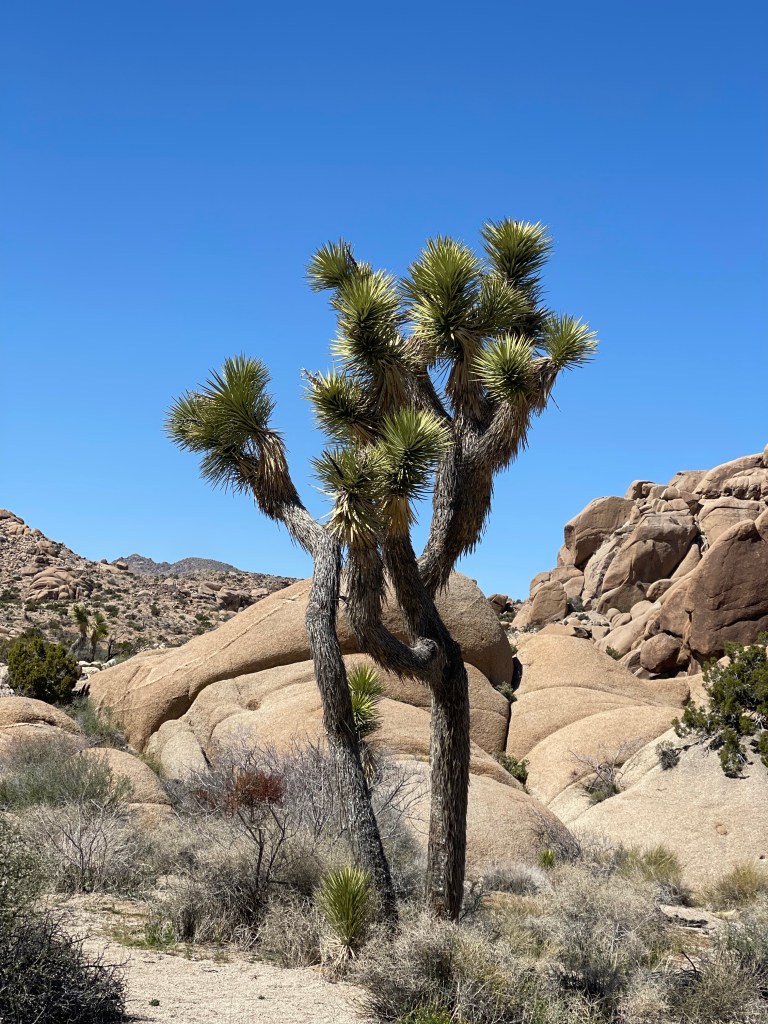
    California’s Joshua Tree National Park is technically a part of the Mojave Desert, but it straddles the Colorado Desert. Where the Mojave is considered a high elevation desert, the Colorado Desert is a low elevation desert. So Joshua Tree is the unique meeting place of the two extremes. It was protected as a national monument in 1936, largely to stop cactus poachers from taking everything, and elevated to a national park in 1994 as part of the Desert Protection Bill. It’s namesake, the Joshua Tree, or Yucca brevifolia, earned its nickname for resembling arms raised in supplication, and became famous when U2 gave the name to their biggest album. U2 put Joshua Tree on my radar, and I’ve felt compelled to visit ever since.

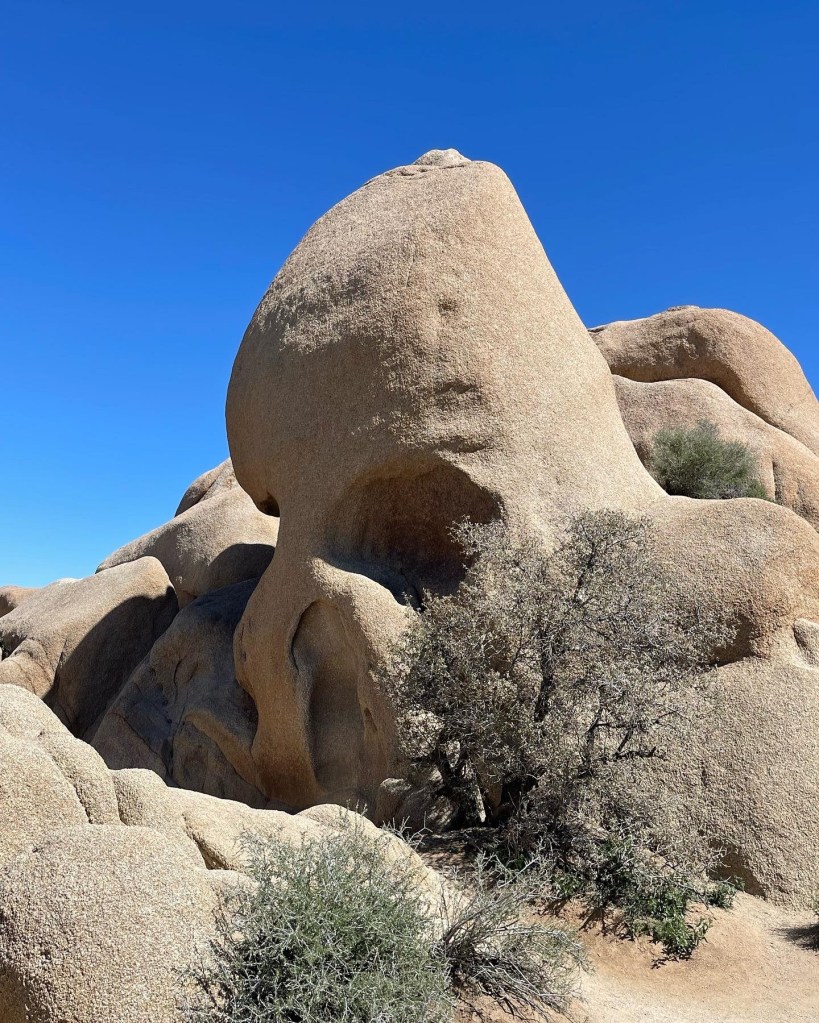
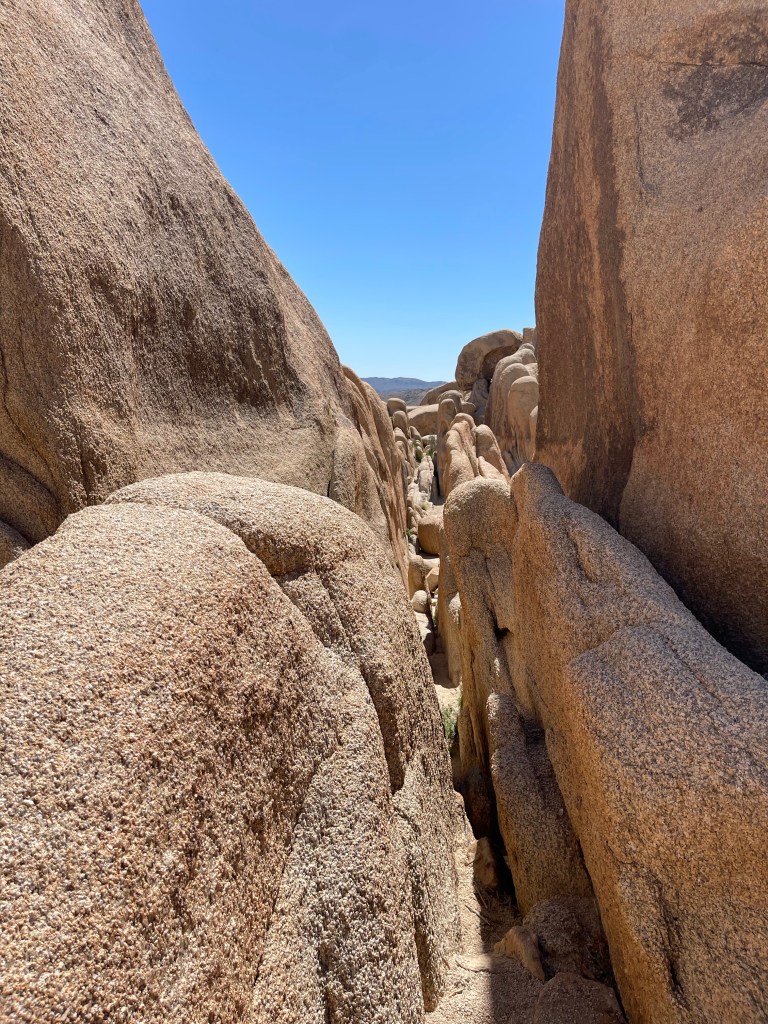
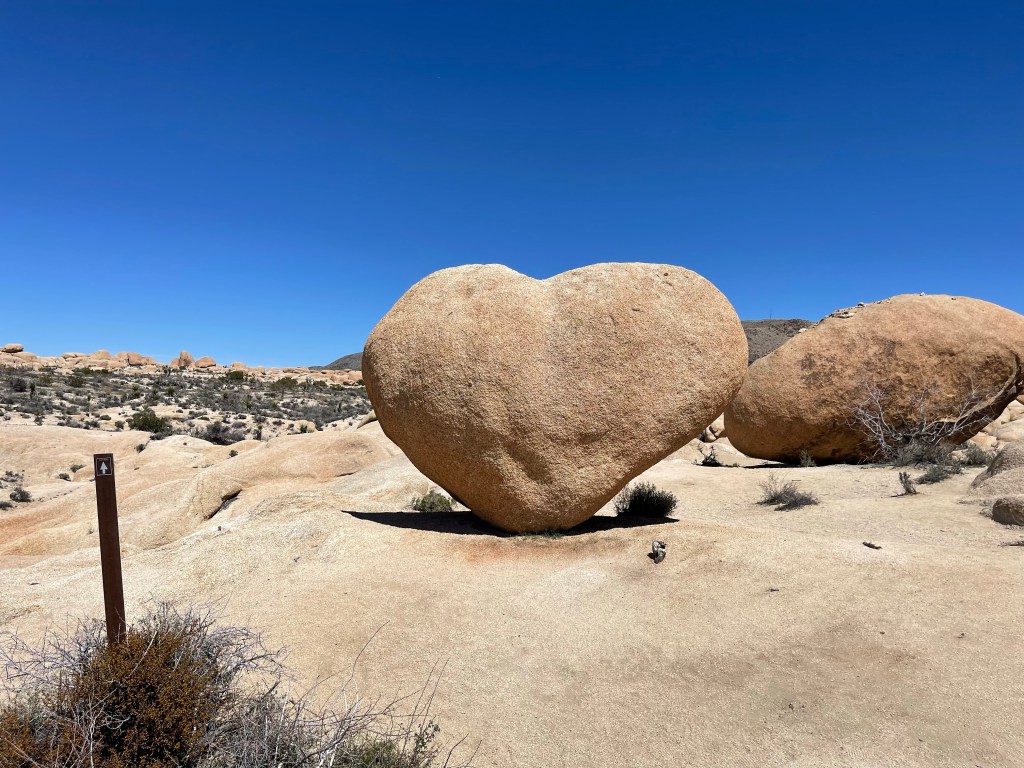
    Joshua Tree is famous for more than just the yuccas dotting the arid landscape. There are massive boulders and rock formations to explore. Three of the most famous of these are Arch Rock, Skull Rock and the once evasive Heart Rock. Fame comes with a price, and each had swarms of tourists descending on them for photographs. I descended on them too, of course, and managed a few pictures without people crawling into view with patience and creative staging. Each picture you see below was the result of waiting out the people taking their version of the same picture. But this is what you get in a place like this. Better to share than to have it owned by a private individual who bars access. National Parks are a treasure for all citizens to enjoy.

    My visit to Joshua Tree National Park was a detour from Las Vegas to Los Angeles. This drive took me through the stark landscape of the Mojave Desert. This is a place where a full tank of gasoline and plenty of water are essential elements of your self-preservation. It’s so very different from the two cities on either end of the journey. You can see no signs of life for miles around you driving through the desert, and the desert is indifferent to your desire to stay alive in it. Come prepared.

    There are several places to camp in Joshua Tree, and some additional motels nearby. There’s even a Starbucks in Twentynine Palms, not ten minutes from one of the entrances to the park. Civilization isn’t far at all from some parts of Joshua Tree, but you’ll feel like you’re on another planet anyway.
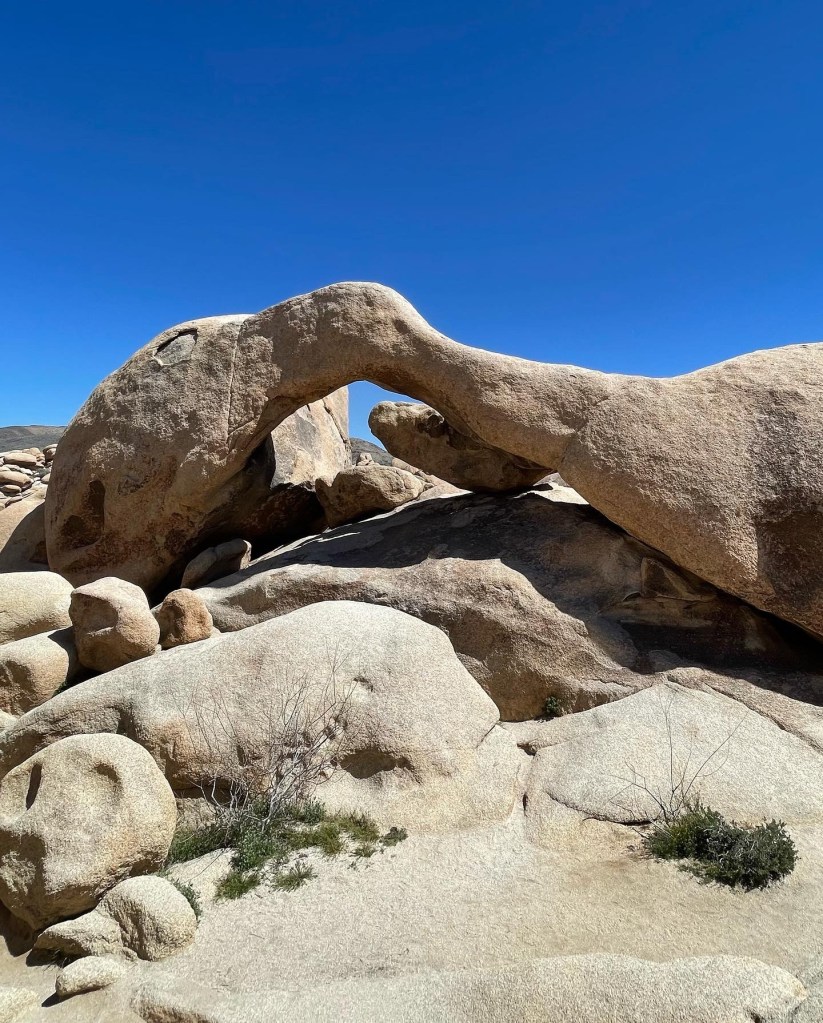
    Arch Rock
    Heart Rock
    Joshua Tree (Yucca brevifolia)
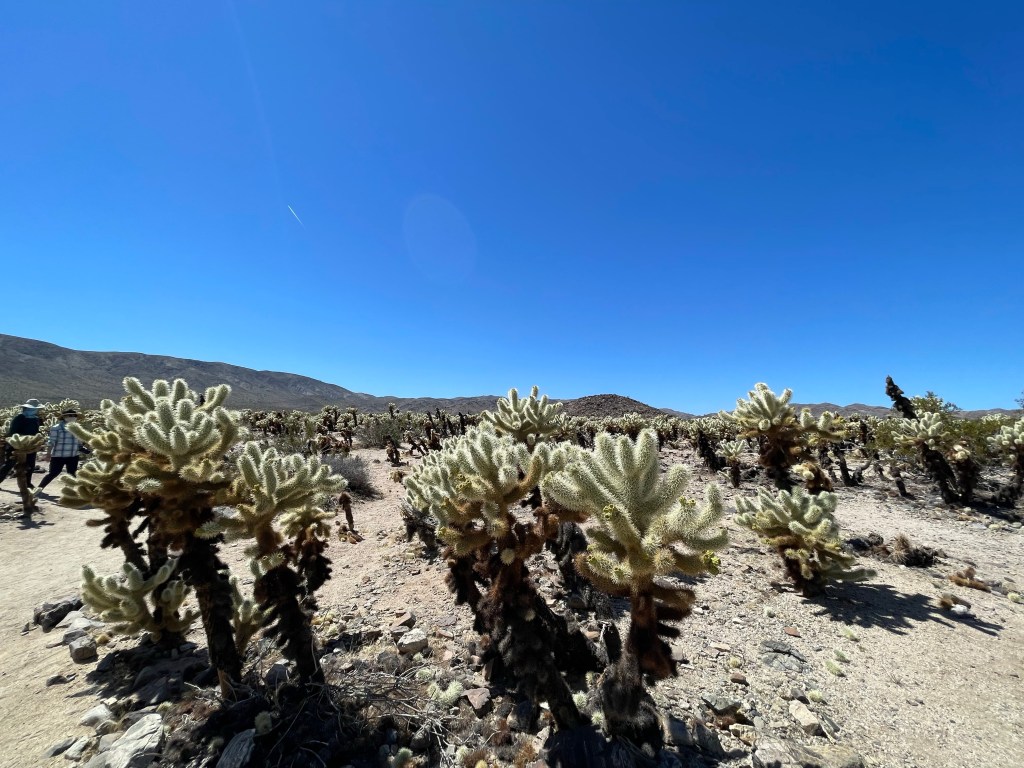
    Cholla Cactus Garden
    Skull Rock
    Rock scrambler’s paradise
  • Art With a Spritz of Lime

    “Art is art and life is life, but to live life artistically; that is the art of life.”— Peter Altenberg

    A close friend has a flare for living well. He’ll spritz lime on a potato dish and make something extraordinary of what was moments before thought to be disparate produce. He’s always looking for the exceptional in an otherwise average day. And he drives many people mad as a result. Like that burst of citrus in a starchy dish, I find his perspective punctuates life perfectly.

    This business of living artistically is something to aspire to. Capturing moments with a bit of magic and moving through the ordinary with je ne sais quoi, these are the things that matter very much in a world that wants you to fall in line and fit right in. Certainly, we must do our job and do it well, but why always settle for vanilla?

    We each live on both sides of ordinary. It’s a gift to be human at a time and place when you can express yourself freely. We ought to use that gift and add more flavor to our days. Like every gift, we must choose to use it. Art is a deliberate act, expressed uniquely. What might we bring to the table if we have the gumption to try something new?

    We all know the expression: when the world throws you lemons, make lemonade. There’s another clever expression I once found on a kitchen magnet that adds a twist: when the world throws you limes, make margaritas. To this I’ll add, don’t forget to save some lime for the potatoes.

  • These Roads

    These roads don’t move;
    You’re the one that moves.
    — Jay Farrar and Benjamin Gibbard, These Roads Don’t Move

    Jay Farrar framed this song around the words of Jack Kerouac back in 2009. I’d first heard it while driving around the northeast, trying to make things work in a job I’d eventually leave. The song has been a favorite ever since. Jobs come and go, songs and memories stick with us for a lifetime.

    Back when this song was released, I often thought I ought to write more, but never got around to it. Mostly I felt I didn’t have enough to say. I wonder what that me would have come up with? I can guess, being me at the time, but not really the me of now. Somewhere there are old journals full of quotes and restless thoughts of a younger man, then, as now, trying to figure things out. What was missing was the act of publishing. But the universe wasn’t exactly feeling the void. Only me.

    Writing is simply a routine developed over time. So it is with collecting experience. We move through the world bearing witness to all that we stumble upon, while doing our best to rise to meet the moment. Each road brought us here. But we’re the ones that moved.

  • The Call of the Wild

    “Deep in the forest a call was sounding, and as often as he heard this call, mysteriously thrilling and luring, he felt compelled to turn his back upon the fire and the beaten earth around it, and to plunge into the forest, and on and on, he knew not where or why; nor did he wonder where or why, the call sounding imperiously, deep in the forest.”
    ― Jack London, The Call of the Wild

    Finishing my first cup of coffee, I heard the distinctive honk of a skein of geese. Quickly removing myself from the comfort of the moment, I caught the geese circling back around the woods and turn towards a local pond. The rising sun caught them in flight, illuminating their bodies in the red light of dawn. They soon disappeared behind the roofline and the honks faded away as I walked back into the warmth of the nest.

    We know deep down whether we were meant to be wild things or creatures of comfort. The world wants very much for us to seek comfort, to leave those crazy dreams well enough alone and celebrate the nest—to turn back towards the fire. Maybe a little part of us feels this too. So why are we so drawn to wild things? What is it that we seek?

    I believe it’s vitality. Vitality bursts out of us, it isn’t buried in the mundane. It is not another cup of coffee to get through the hour, or a nightcap to wash away the day. To be fully alive we must step out of ourselves and be uncomfortable. Test limits and stretch to new places. To do otherwise is to avoid a full and vibrant life.

    “You cannot find peace by avoiding life.” — Virginia Woolf

    Will we be drawn to the Siren’s call to the rocks or to the call of the wild? One calls us to accept what always was until our end, the other calls us to fly. We ought to ask ourselves, is inertia comfort in disguise, and vitality masked by the judgement of imprudence? We are, each of us, on a hero’s journey, listening for our calling. What call will we turn towards?

  • Bury Regret

    “I want to live my life so that my nights are not full of regrets.” — D. H. Lawrence

    D. H. Lawrence, his hand forced by a society that wasn’t quite ready for what he had to say, was a traveler. One could safely say he had an adventurous spirit. That his ashes were eventually scattered in the sea to freely roam the world seems poetic in the end.

    Recently I’ve opted out of two adventures that didn’t seem prudent at the time. I wonder, even now, what the return shall be on my investment in practicality? A stack of still more practical days thereafter? I should think a collection of passport stamps, photographs and memories would be the more sound investment.

    D.H. died at 44, a young man still, not so very full of an old man’s regrets. The lesson, from he and all who came before us, remains starkly clear. The graveyard is full of unresolved regret. We the living, must clear our minds of all that we might regret later by living a full life today. Never nihilism, for meaning and purpose are our pursuit, but surely embracing richer experience. We regret that which remains unfulfilled. Bury regret in favor of a full life today.

  • Something Amazing

    “Life is never what one dreams. It is seldom what one desires, but for the vital spirit and the eager mind, the future will always hold the search for buried treasure and the possibility of high adventure.” — Ellen Glasgow

    The very idea of l’élan vital, the vital spirit, of living each moment with rapt attention and the eager anticipation of what comes next is a bold, some might say extravagant, way of moving through our days. But what is the alternative? Practical living? Skating our lane to the last? Give me something amazing, thank you. Give me adventure and the search for buried treasure hidden in the moments to come. Give me joie de vivre. Give me l’élan vital.

    But Glasgow also pointed out that this vitality has a shelf life in the moment:

    “No matter how vital experience might be while you lived it, no sooner was it ended and dead than it became as lifeless as the piles of dry dust in a school history book.” — Ellen Glasgow

    The thing is, an active, vital life isn’t meant to be a singular moment, but singular moments stacked one upon the other, lifting us to a higher level of engagement with the world. What’s done is surely done, but something of it remains within us, a hint of something betrayed in the sparkle in our eye. Those who acquire enough of it emanate a magnetic energy that attracts others. We’re all walking swarms of electrons looking to dance with life.

    I’ve surely lost the physicists with my blog today, but nonetheless, there’s something to being actively engaged in living that increases our vitality. The hunt for the buried treasure in the next moment is a mindset. It reveals a zest for life and a reach for boldness. Aspiring for something amazing in our next moment isn’t setting us up for disappointment, it’s setting us up to find more of what we seek.

  • Little Things

    Elle est retrouvée!
    Quoi? -l’Éternité.
    C’est la mer allée
    Avec le soleil.


    She is found!
    What? -Eternity.
    It’s the sea gone
    With the sun. — Arthur Rimbaud

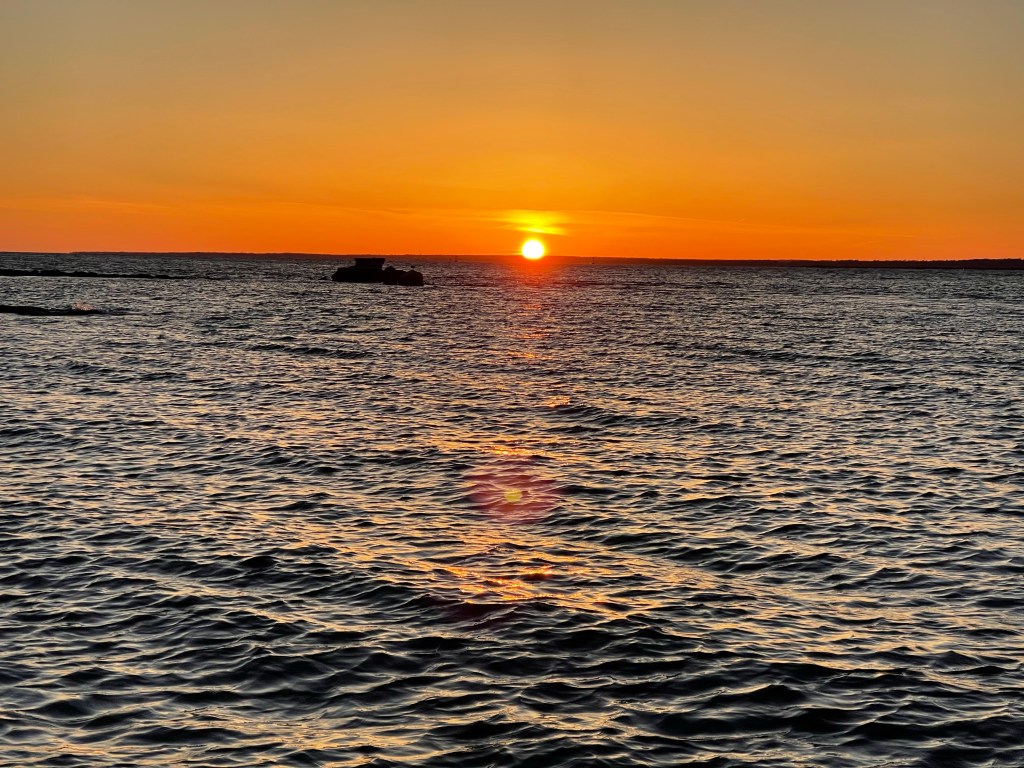
    Sunsets are routine, often ritualized. Little things, really, repeated daily. I’ve been known for carrying on about such things as the position of the sun relative to where it was in warmer days. Most people, it seems, could care less about where the tilt of the earth is. We are what we focus on.

    “Little things in life, which afford what [Daniel] Kahneman calls “experiences that you think about when you’re having them,” provide a great deal of everyday enjoyment. Because you’re apt to pay more attention to your remembering than your experiencing self, however, it’s all too easy to forget to indulge yourself in these small but important pleasures on a daily basis, thus depriving yourself of much joy.” — Winifred Gallagher, Rapt

    I should think life would be less enjoyable the very moment one forgot to savor the little things. We get used to things that once delighted us, looking for the next big thing to replace that feeling, always chasing. Never really savoring.

    Most writers have an eye for details, and linger in them longer than the average bear, seeking a deeper understanding. There’s pleasure to be derived from digging deeply into what seems trivial. Consider Rimbauld’s twelve words, arranged just so, that draw so much out of what someone else might think of as just another sunset. Poetry itself might be thought a little thing. Ah, but what things they are, sunsets and poems! I think I’ll stick with little things, thank you.

  • Footsteps

    I wonder, now and then, who has tread on the ground I walk on. Surely this thought comes to mind often in famous places where people whom we remember did things that stir the imagination and puts us in their shoes, if only for a little while. The history buff in me lingers in places where famous moments happened. It’s my way of understanding their moment a little better, even as my moment in that place is so very different. I’m a visitor in that place in that moment, they defined the place in theirs. Walden, Culloden, Kehlsteinhaus, Liverpool’s Cavern, Saratoga… each stirred up ghosts as I walked in footsteps. Some we honor, some we simply try to understand.

    There’s that word again: understand. We can never put ourselves in the place of the characters who brought us here, but we can learn from them. History rhymes, after all. When we learn from those who came before us we might change the script, or gain insight into our next move. We’re all just re-writing history, we’re all playing the same chords. We make of it what we will.

    Last week I visited Gljúfrabúi, partly inspired by watching a YouTube video of someone walking into the gorge to experience the hidden waterfall. I re-watched that video, just to see it again from the perspective of someone who has now been there. For all the thousands of people who have likely walked there, the experience of that particular person walking in my footsteps when I’d actually walked in theirs felt circularly surreal for me. It reminded me that each of us is walking in the footsteps of others while also creating footsteps for those who will follow us. Doesn’t it make you wonder, how will we define our place?

  • A Visit to Black Sand Beach

    When polling the five people I visited Iceland with last week, the consensus pick for most memorable place to visit was Black Sand Beach (Reynisfjar​a). There are plenty of options to choose from aside from that particular location—epic waterfalls, glaciers, volcanoes, geysers, the Blue Lagoon, tectonic plates drifting away from each other, and of course, Reykjavik. Each offers a possible highlight moment on a normal week of living on this planet. But the Black Sand Beach stood out for all of us.

    Why? Because a place like Reynisfjar​a changes you, as travel does, but more viscerally than visiting the tasty Icelandic hot dog stand. It might be the distinct black sand, ground up bits of lava expressing itself vividly against the white salty foam of the crashing waves. It might be the angry seas with their sneaker waves, always threatening to pull a distracted tourist to their doom. Maybe it was the basalt columns rising up from the sand and sea, standing against the ocean in a fight to the end of time. Mostly it was all of those things, combined into a magical place that is indifferent to the hordes of tour buses casting tourists upon the sands. The beach will be here long after we’re gone, but each of us take black sand memories with us.

    Reynisfjar​a
    The white foam against black sand was mesmerizing to watch as the waves receded.
    The famous basalt columns at Reynisfjar​a. You can see them referenced in architecture in Reykjavik. You just might also see a few tourists at this beach, and this time of year, a bit of snow.
  • Finding Aurora

    “The Aurora Borealis is a fickle phenomenon. A week can pass without a flicker … then bang! The Northern Lights come on like a celestial lava lamp.” — Nigel Tisdall

    I went to Iceland expecting to be disappointed by the weather. I’m not a pessimist by nature, but the forecast simply didn’t look good. There are a lot of reasons to go to Iceland in winter, but the primary reason is to see the Aurora Borealis. Yes, there are waterfalls and volcanoes, geysers and glaciers. These are spectacular, but also things that you can see any old month. But the Northern Lights are more evasive than that. Dark, clear skies are merely a starting point. You must also have some luck. Winter brings ample darkness but also some challenging weather conditions. We put ourselves in the way of beauty, but a bit of luck goes a long way too.

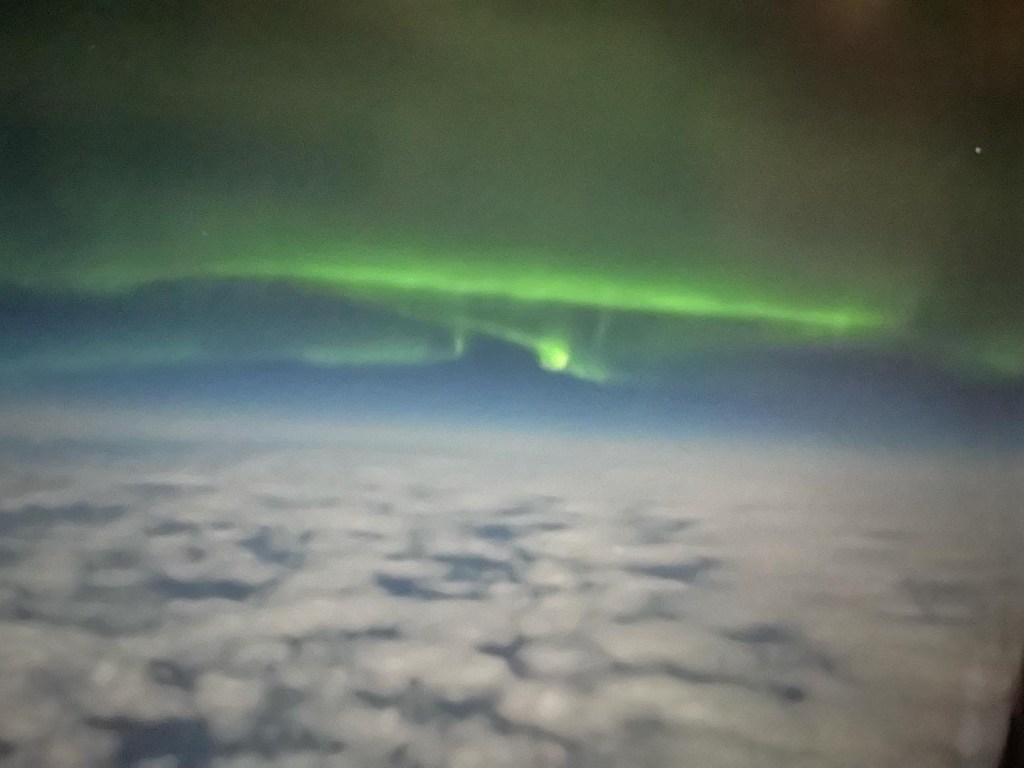
    Sure enough, we arrived to heavy snow. That might have frustrated me, but I’d already seen the Northern Lights on this trip. We’d had an ace up our sleeve, a window seat facing north for the flight, which carried us over the snow-laden clouds, up where auroras dance. It’s there that I finally glimpsed it, checking a box I wondered when I’d ever get to. There’s still hope for more dances with Aurora, should the weather cooperate, beginning tonight. Bucket lists deserve more than a brief encounter to savor, don’t you think?