Category: Travel

  • Four Songs for Late Night Walks and Long Drives

    “Lay your blouse across the chair
    Let fall the flowers
    From your hair
    And kiss me
    With that country mouth
    So plain
    Outside the rain is tapping
    On the leaves
    To me it sounds like
    They’re applauding us
    The quiet love
    We’ve made
    Will I always feel this way
    So empty
    So estranged?” – Ray Lamontagne, Empty

    Some songs stay with you forever.  Empty is one of those songs.  I’ve had it playing in my head off and on for 13 or 14 years now. But it’s on the list of songs I usually save for myself, not on playlists at parties or around the fire. Empty is a song that catches you in the throat so thoroughly that you’re reluctant to share it.

    Some songs are for late night walks and long drives, and some are for the masses.  Here are a few more songs I mostly keep for myself on those lonely stretches of highway… until now anyway:

    “When there’s nowhere else to run
    Is there room for one more son
    One more son
    If you can hold on
    If you can hold on, hold on” – The Killers, All These Things That I Have Done

    I first heard this song on a borrowed CD from a friend.  I kept that CD way longer than I should have, and think about that person when I hear this album.  And it’s a complete album worthy of listening to from beginning to end many times over, but this song remains the one that stays with me years later.  Good dose of pep talk with some soaring music, and who doesn’t need some of that?

    I’ve wanted this for so long
    Now the deed has been done
    We shall rise with the sun
    And spend our time as one – One Eskimo, Amazing

    I had it all planned out to play this song in a quiet moment at the wedding of some friends.  It’s the perfect song, really, for a moment like that at a wedding.  It sneaks up on you as your sort of listening, and I tactfully placed it at a moment when I just knew it would make an impact.  But the computer didn’t recognize the song and played Aerosmith’s song Amazing instead.  Not quite the same – and the moment was gone.  That still bugs me.  But the song remains great, and it was the thought that counted….  right?

    At the moment of surrender
    I’m falling to my knees
    I did not notice the passers by
    And they did not notice me – U2, Moment of Surrender

    I’ve been a huge U2 fan since I was a teenager, but No Line On The Horizon took a bit longer to grab me than others did.  Longer as in maybe ten listens instead of three.  But this album holds on longer than some of the other albums in their catalog.  Moment of Surrender was recorded in one take as I understand it, and it’s stunning.  Sure, I play the incredible and vibrant songs like Breathe and Magnificent and Stand Up Comedy at parties all the time, but this one I keep for myself.  Breathe remains my favorite song on this album, but Moment of Surrender is a close second.

  • Bumped Up to the Safari Room

    The woman at the front desk looked at me and smiled as I checked in Tuesday, thanking me for being a Hilton Diamond member and informing me that my room was upgraded to a suite.  I thanked her, still shaking off the miles of driving, accepted my cookie and water and rolled my bag to my upgraded room.  Hilton Diamond is just another way of identifying yourself as someone who travels a lot for work.  Less a status symbol, more a way of life.  But there are perks beyond the free water, wi-fi and shorter check-in line, namely I get points I can use for even more travel.

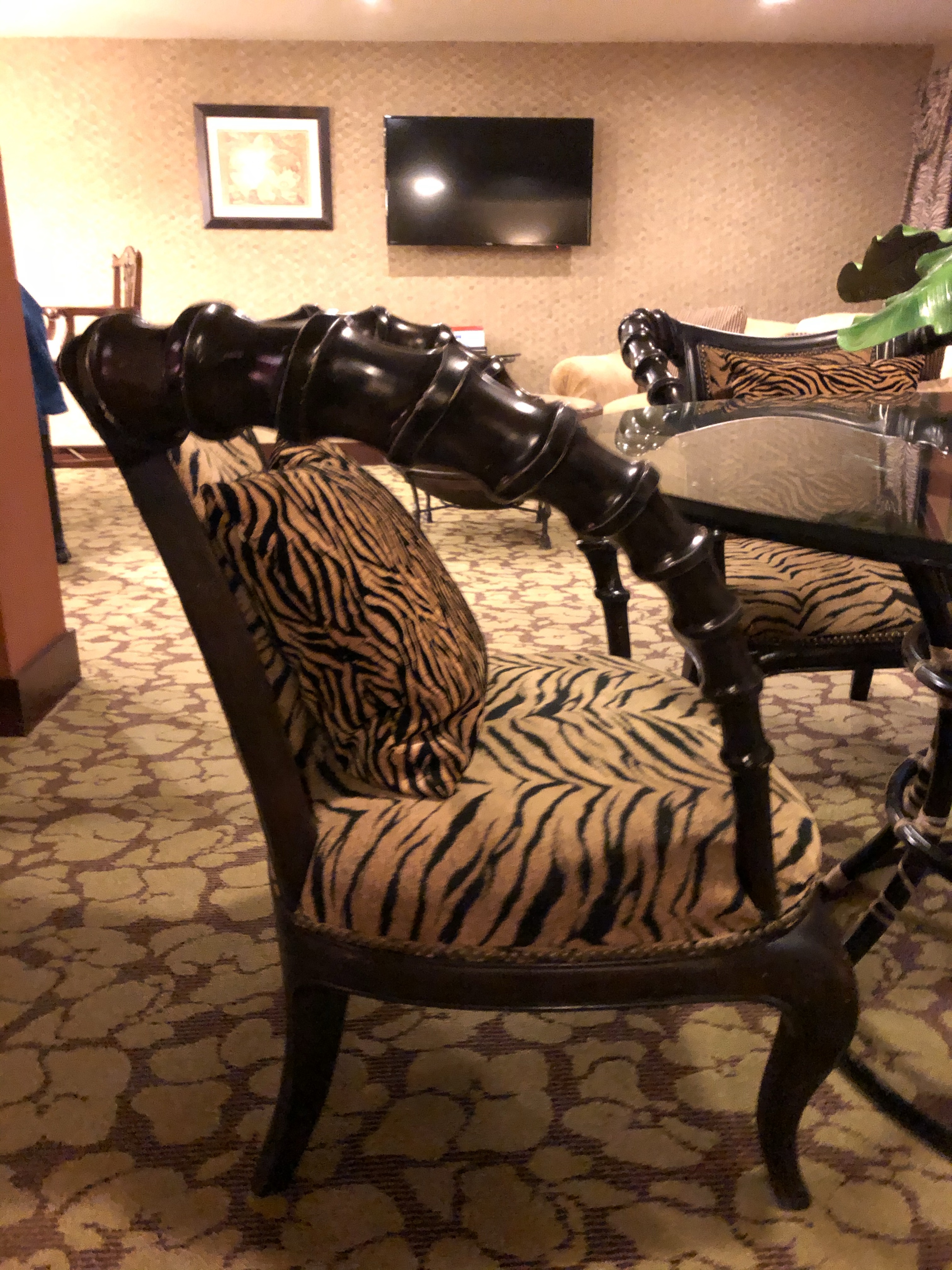
    My room was on the third floor, and as I rolled my bag around the corner I saw the room almost immediately.  I tapped my prox card on the reader, the light turned green and beeped a greeting and I opened the door to another world.  This wasn’t just a suite, this was an adventure in thematic decorating.  They bumped me up to the Safari Room, and the only thing missing was the soundtrack of wild animals screaming in the night and the pounding of drums as the natives hunted me down.

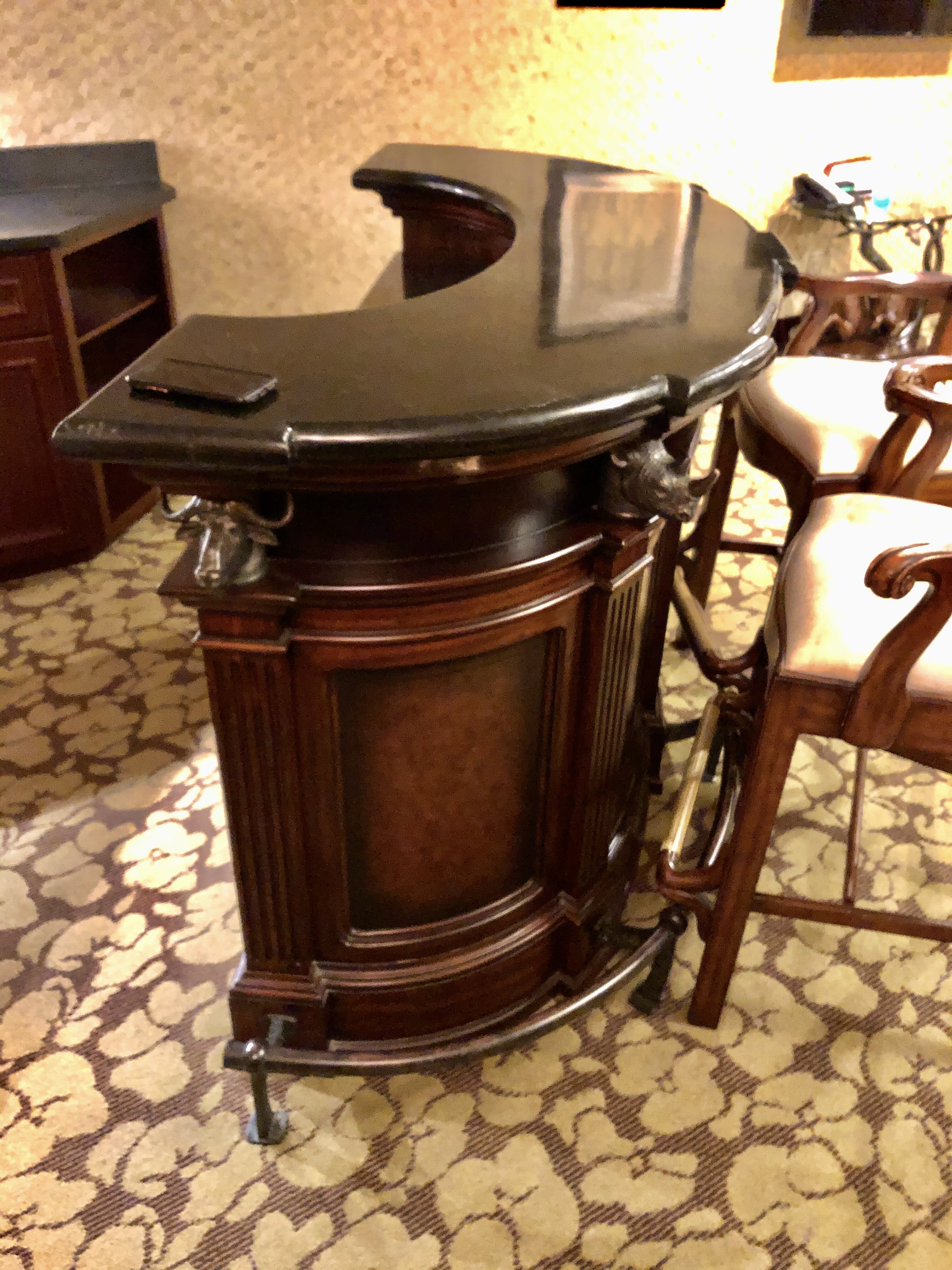
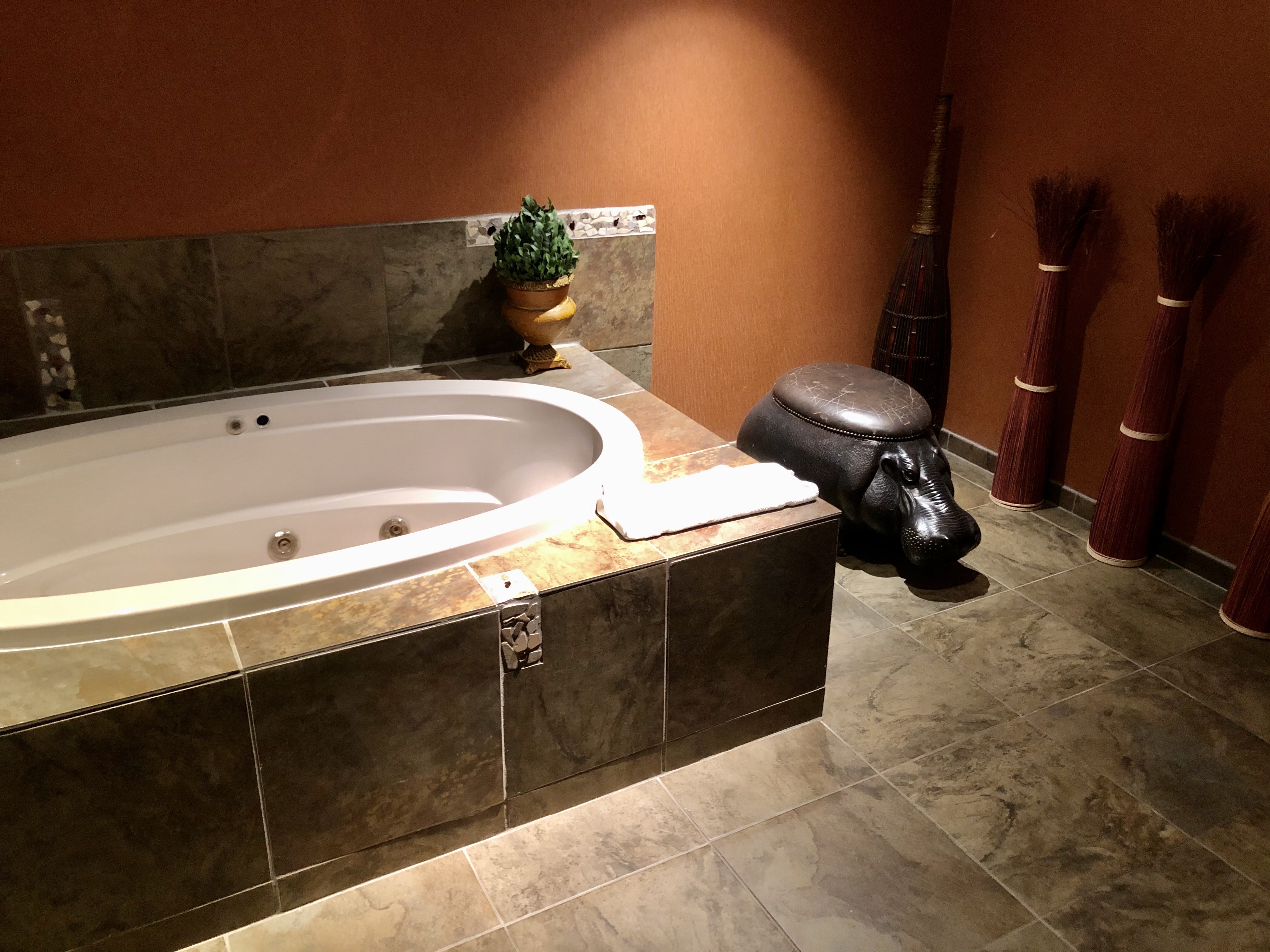
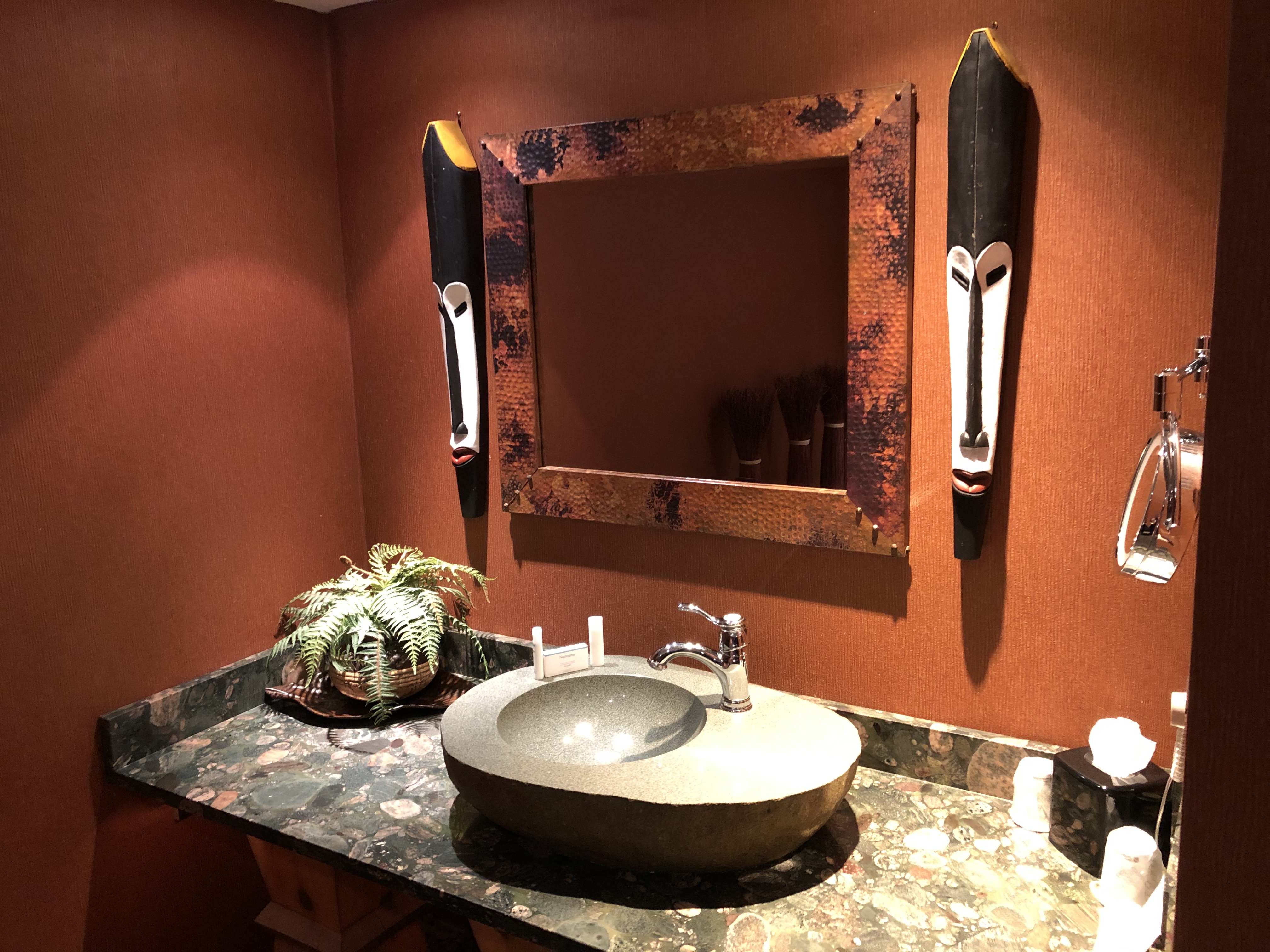
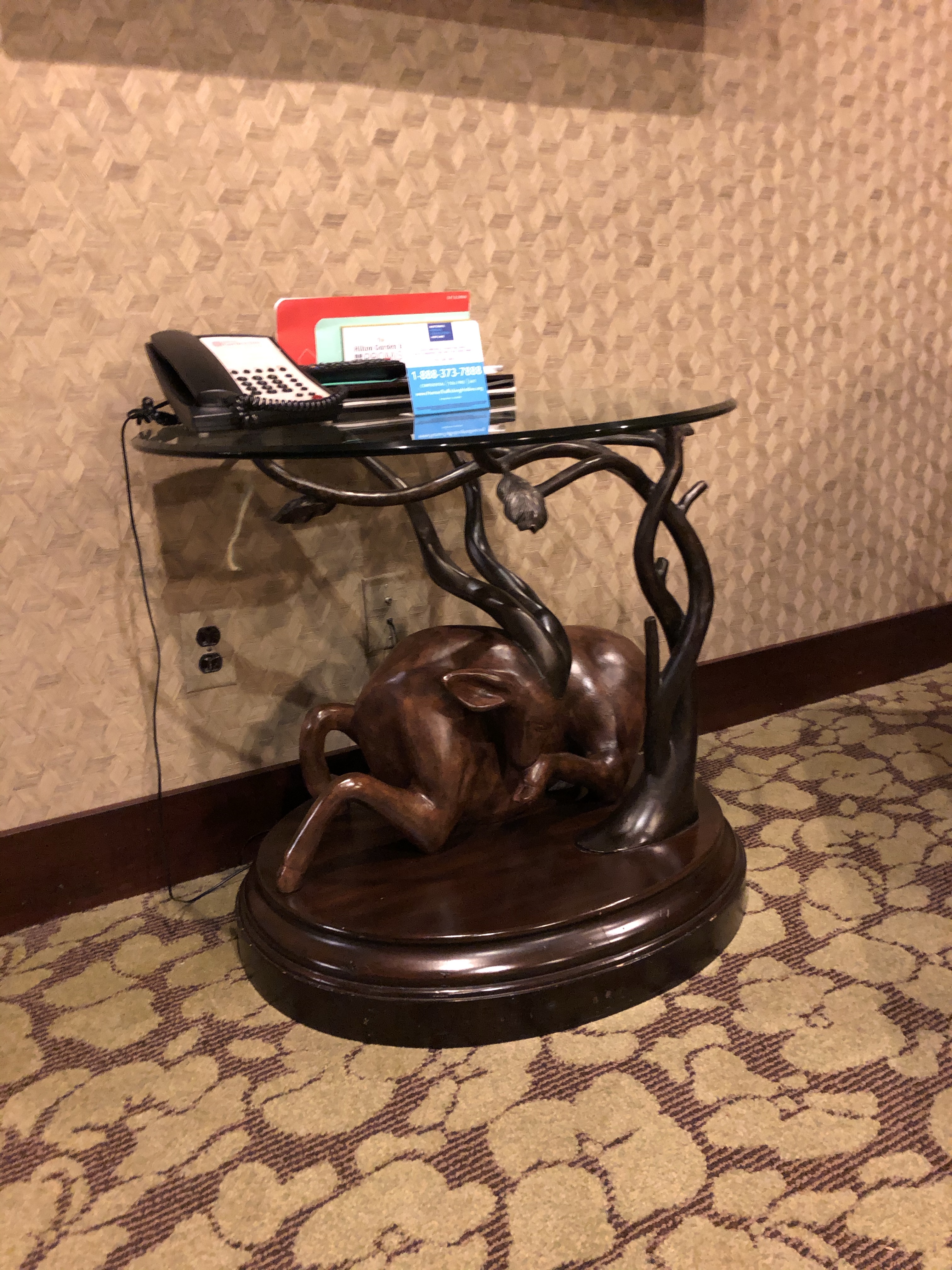
    Flipping on the light, the first thing I saw was a curved bar with animal busts mounted conveniently at knee height (as I would find out later).  A lion’s head sconce with flickering electric candles watched over the copper sink in the wet bar, gazelles and monkeys and wildebeests were integrated into the furniture.  Bamboo and matted grass-like wallpaper completed the look.  And the room went on forever (I counted 55 steps to circle the L -shaped room).  A glass table with four themed chairs met me around the corner, and far down the other end was the king-sized bed with bamboo headboard.  A massive walk-in closet was off to the side, with room for hundreds of outfits, and hangers for five.  And capping it all off was the bathroom.  This was a suite in itself, larger than many hotel rooms I’ve stayed in, with a hot tub set in the middle, a large walk-in shower to the side, toilet and avocado sink…. that’s right, an avocado sink. Surveying the entire bathroom suite were two jungle masks on either side of the sink that kept staring at me and a large hippo bench that looked like it would roll over and have me rub its belly.  Wow, where do you begin?

    The thing about getting a room like this is it reminds you that you’re traveling alone. It amplifies the solo in solo travel. I’d almost rather have the standard room where I don’t think about what I left behind to be in this crazy room. But you make the most of it and move on to the real world. I had a drink at the bar while running a report, but otherwise it was just another hotel room for me. People make the place, not jungle themed furniture. This room would be wildly fun with friends. Nope, just me. Alone. In the jungle. But it sure was unique.

  • A Healthy March To 100

    Watching my father and other older people in my life struggle with brain health has been a wake-up call for me.  I’ve been too complacent in what I put in my mouth, and I’ve been adjusting my dietary intake over the last few months as a corrective measure.  There are three things that I’m most concerned about as I get older: Brain health, heart health and avoiding cancer as long as possible on my march to 100.  We can’t control everything, but we can control what we eat and drink.  So with that in mind, there are the foods that most experts agree improve your overall health and resilience, and the foods that are harmful to your health.  It seems simple to adjust the menu accordingly.

    “Good” foods include fatty cold water fish like salmon, blue fish and sardines, blueberries, green leafy vegetables like kale and spinach, extra virgin olive oil, avocados, eggs, seeds and nuts and dark chocolate(!).  Wash it all down with lots of water, coffee and tea and some red wine in moderation.  Hey!  This is pretty much my diet already!  Easy, right?

    “Bad” foods include french fries, hot dogs and hamburgers, donuts, cheese, refined carbs like white rice and foods associated with high mercury like tuna.  Wash this toxic mix down with soft drinks (either regular or diet) and alcohol and you’re asking for trouble…..   I have work to do on this one. I dropped all sugar drinks and largely avoid artificial sweeteners, but tuna, bacon, burgers and cheese are tough subtractions. Making them a rare treat instead of a regular part of the menu is a good step forward.

    The x factor is exercise and sleep.  I used to pride myself on working on five hours of sleep.  No longer.  I sleep until I wake up, and I’m not shy about going to bed earlier than everyone else in the house.  I like getting up early, I just need to go to bed earlier to make up for it.  Exercise is the one that misses the mark too often for me, and it’s the one I’m focused on most now.  Walk, row, hike, bike and swim.  Those are my favorite exercises, and they all lend themselves to better health.  But listening to a Tim Ferriss podcast with Peter Attia woke me up.  Attia talked about the “Centennial Olympics”, which for him means being healthy enough to lift a great-grandchild or get up off the floor by yourself when you’ve been playing with them.  Dial that back factoring in the decline in strength and muscle mass that comes naturally with aging, and he’s figured out the amount he has to do now as a late 40’s active adult to build the endurance necessary to get there.  Interesting…  As someone who casually states that I’ll live to be 100 as a target number (knowing fate may intervene), wouldn’t it be good for me to get there healthy in mind and body?  What’s the point of living to 100 if you don’t really live when you get there?

    Nothing keeps the mind sharp like daily work, and I’m pushing myself with more diverse reading, travel, writing more, playing chess, picking back up on French and learning other new skills. Writing daily established the habit, and refined the skill. Reading opens my mind to new ideas from the greatest minds in history. Travel offers new perspective on living. And the rest just keeps the mind challenged in different ways. If nothing else I have more to talk about at parties.

    So I’m exercising the mind, modifying the diet, drinking more water, getting more sleep and prioritizing daily exercise. Will it get me to 100 healthy and sharp? Only time will tell, but it’s a better way to live anyway, and who doesn’t want to be more vibrant, engaged and active now, the only time guaranteed to us?

    Slàinte Mhath!

  • Taking Flight… Again

    Yesterday I had the pleasure of sitting in the back seat of a Cessna as my father flew again. Getting back in the left seat of a plane was a bucket list item for our favorite Navy pilot. For me it was a chance to see him in action flying and see the world from a different perspective.

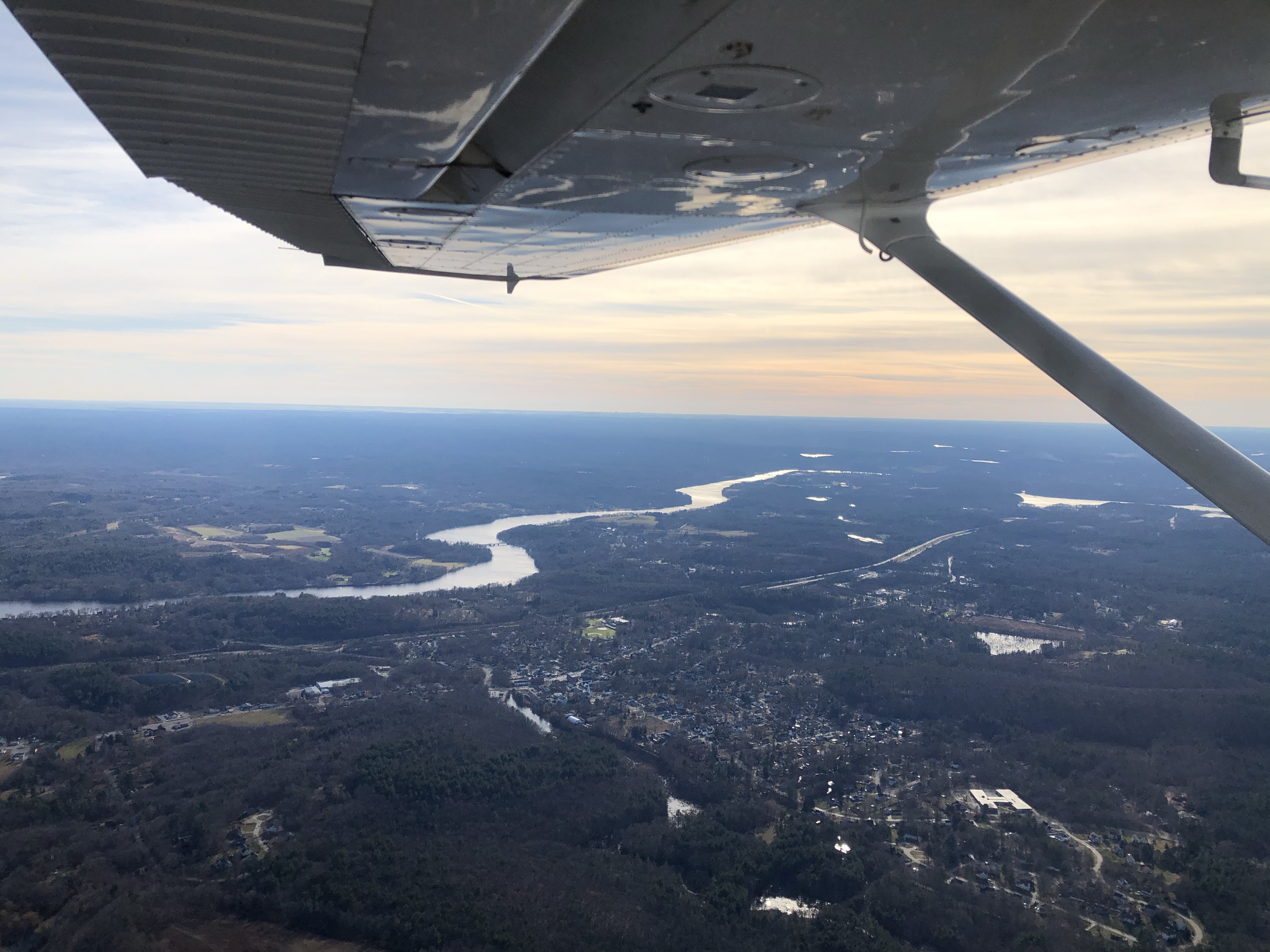
    Commercial flying offers stunning views from a 12″ oval window. I’ve sat in awe at views from 30,000 feet over New Brunswick and the landing over Boston Harbor at Logan Airport. I always try for a window seat on a red eye just so I can catch the sunrise. Flying in a Cessna is different. First, you feel much more connected to the mechanics of flying, even in the back seat. Everything is right there in front of you with instruments, controls and communication with the towers all part of your experience. And that experience! The views are close to 360 degrees, you’re flying over terrain you’ve known from the ground up, seeing it literally from a bird’s eye view at 2000-3500 feet max, and going a lot slower so can savor the view more.

    We flew out of Lawrence Airport, followed the Merrimack River to the sea, turned northward following the beaches up to Portsmouth and then circled in for a touch and go at Pease International Airport before heading back to Lawrence, with a quick circle around the neighborhood in New Hampshire. Clear skies with some wind gusts making it interesting at lower altitudes. Listening to impressive banter between a flight instructor and a Navy pilot all the while. I kept my own chatter to a minimum; I was along for the ride, it was his experience… one I was happy to share.

    This wasn’t my first flight in a Cessna. I’d flown a similar route with the father of a girlfriend in college once. He did all the work, while I sat in the right seat and my girlfriend sat in the back. I’d told myself I’d like to get my pilots license then, and here we are years later with the goal shelved. Money and time and other priorities killed that goal. We can’t do everything, can we? Perhaps not. Watching the Navy fly again reminded me that even the professionals get busy with other things. There’s a shortage of pilots it seems, and work for those who wish to pursue it. I don’t believe I’ll pursue it myself, but the hourly fees to fly with a pro aren’t outrageous. Why wait when the opportunity is so readily available? That’s what brought us here, and the day was a highlight reel of memories and a reminder to not put things off. For me it was a nice change of perspective, and I think my smile was as big as the pilot’s.

    Merrimack River in Haverhill at Groveland Bridge
    Salisbury Beach, surf’s up
    Isle of Shoals
    New Hampshire coast, looking north to Maine
    Pierce Point, Portsmouth Country Club
    Merrimack River
  • The Joyful Pursuit of Fish and Chips

    How did I get on this track? Surely I’d have been better off looking for the best kale salad? But I’m in search of the best fried food. I know where it started. I blame Halifax. I’ve had exceptional fish & chips, and I keep chasing it in restaurants around the northern Atlantic Ocean trying to find the best in an evasive, sometimes frustrating mission.

    The very best I’ve ever had was a lunch special at The Five Fishermen Restaurant in Halifax. It was super fresh with a crisp, light batter and chips seasoned just right, all presented beautifully on a modest plating. It was an epiphany, and I haven’t had a better one yet in Canada, New England, New York, London or Scotland. Are there equal or better fish & chips in those places? Probably, but I haven’t found it yet.

    Now to be fair, The Five Fisherman is a fine dining experience with a menu to be savored, and I was the right audience for that dish. Pubs and most restaurants that serve fish & chips aren’t focused on the delivery of a world class dish, they’re simply feeding the masses. So I don’t bash the places that don’t do it well, I just don’t mention them at all. I’ve had truly awful fish and chips only once, in the shadow of the London Eye, at a tourist trap. Soggy, greasy and full of bones. I had one bit and threw away the rest. Shameful waste of food, and a fish that died in vain. I had no business ordering anything in that place so the fault lies squarely with me.

    But as you might expect, that was the exception in London. The city has some excellent fish & chips places in every corner. Pub food bliss with large servings of fish overflowing the dish, mounted on a healthy pile of chips (“next to” is the preferred serving, thank you). The only thing stopping me from ordering it everywhere was a natural desire to eat a bit of everything, but I give a respectful nod to the UK for the consistently great fish & chips. Shame my last experience having it there before leaving was that tourist trap place. Circumstances being what they were it was what it was…

    As I’ve hinted, the best fish & chips offers fresh, flaky white fish (Cod, please) in a light, crispy batter, served with a reasonable pile of crisp fried potatoes sliced just right. A side of fresh coleslaw is welcome. Tartar sauce, lemon and ketchup should be strictly optional, not required to get through your meal. When I see a piece of fish presented with a slice of lemon already sitting on the fish I think “not fresh fish”, and when the fish is thrown on top of the chips I think, “soggy chips”. Yes, it’s a basic, working-class dish, but presentation still matters.

    I’ve written close to 500 words on the modest topic of fish & chips. Candidly, I could go on much longer on the topic. Ultimately, my search continues for a better fish & chips dish. Like any experience, once you’ve had something truly exceptional most things afterwards won’t measure up. But there’s joy in the pursuit.

  • I’ll Take the Train, Thank You

    There are many ways to get from Boston to New York City. Driving or taking a bus are viable options that offer advantages in flexibility and economy. Flying used to be the fastest way until security requirements stretched the time commitment to be roughly the same as driving. And then there’s the train, the oldest and still the best option when you’re going from downtown Boston to the heart of Manhattan. And that’s where I find myself this morning, rolling down the tracks looking at the changing landscape of Rhode Island and Connecticut, phone charging, wi-fi and Bluetooth on, coffee at the ready.

    I’ve recently taken the train from London to Liverpool and back, and a sleeper train from London to Edinburgh and back, so the comparison is still fresh in my mind. Amtrak is more expensive and slower than that Virgin train to Liverpool. The infrastructure and number of stops simply don’t allow for long runs at high speed. The difference between the Acela and the regional train is only 30 minutes. If you can tolerate the multiple stops it makes a lot of sense to just take the regional. And really, who cares? I’m sipping coffee, writing and listening to music while someone else does the work. And I didn’t have to wait in a TSA line or take my shoes off for the honor of sitting in this seat. Dog sniffing my bags? Any time you want.

    I’ve driven to New York countless times. It’s a miserable experience unless you manage to time the traffic. Humans aren’t at their best in stop and go traffic, and the 5 minute delay I hit at 5 AM this morning driving to the train station was a good reminder of the horror show that is I-95 through Connecticut. Why subject yourself to that when you don’t have to? And when you finally get to Manhattan mentally spent, you get to spend a fortune to park your car. Then do it all over again going back home. I’ll take the train, thank you.

  • A Walk With Ghosts: King Philip’s Seat

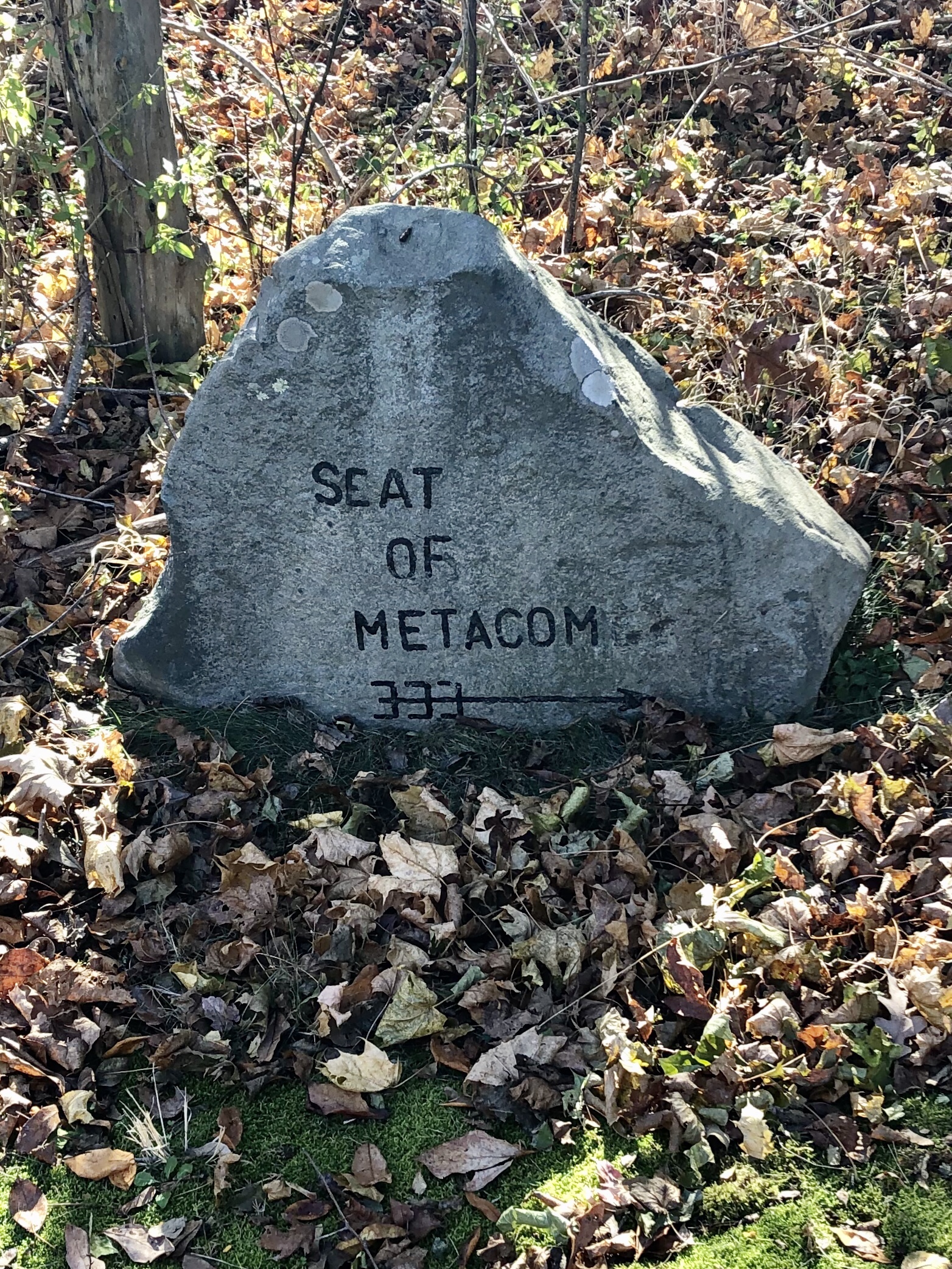
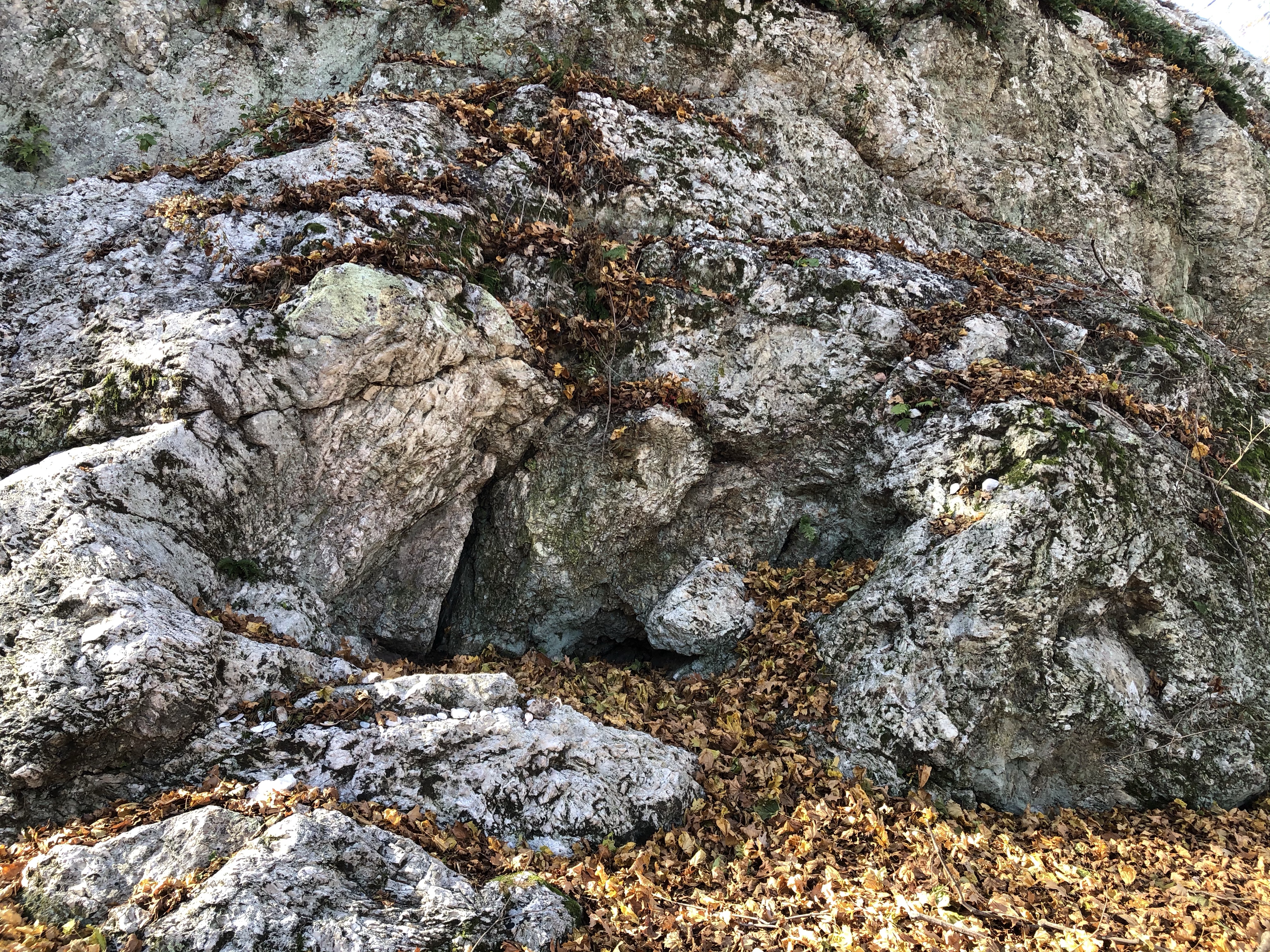
    If you want to walk amongst ghosts of the past, the walk from Brown University’s Haffenreffer Museum to the rocky outcropping forever known as King Philip’s Seat offers ample opportunity to feel you are. This is where the sachem Metacom (aka Metacomet), who had once taken the English name Philip as a gesture of goodwill, waged war on the English settlers in King Philip’s War from 1675 to 1678, when Metacom was killed. Metacom was the second son of Massasoit, who was born near this spot too, as countless generations of Pokanoket were. If Massasoit is remembered for trying to manage a peaceful coexistence with the English settlers, Metacom is remembered as the first to rise up against the relentless encroachment on their lands.

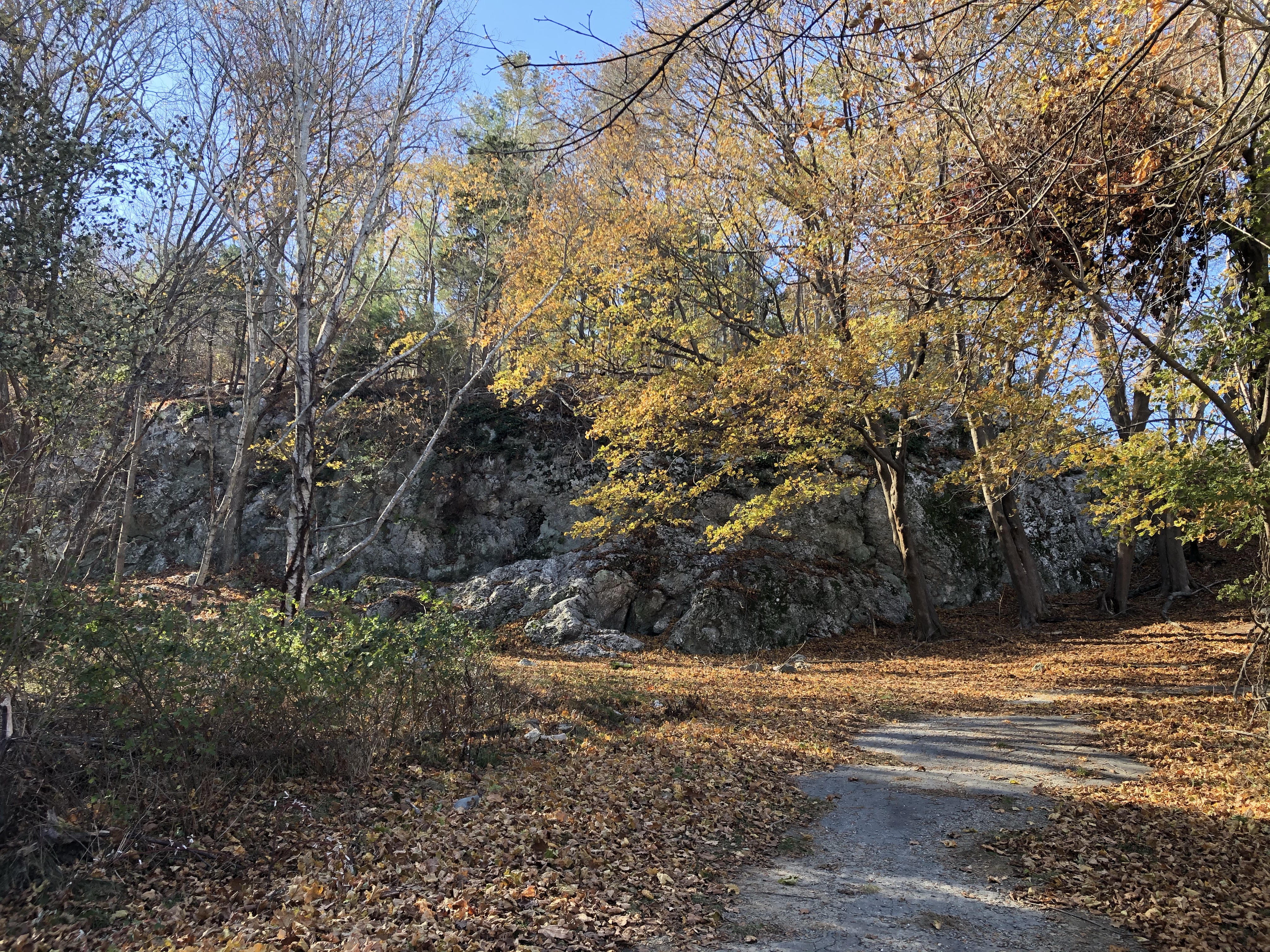
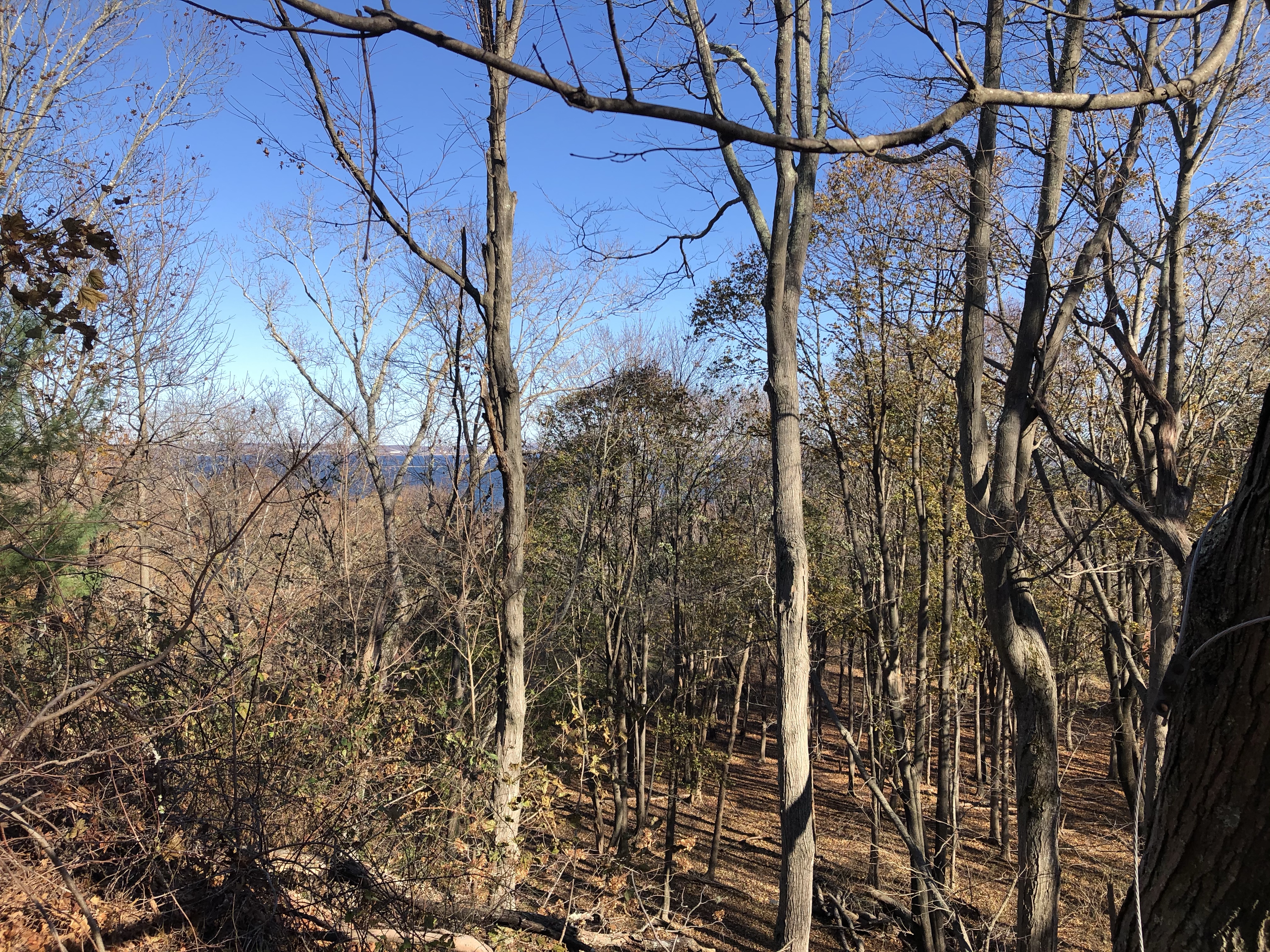
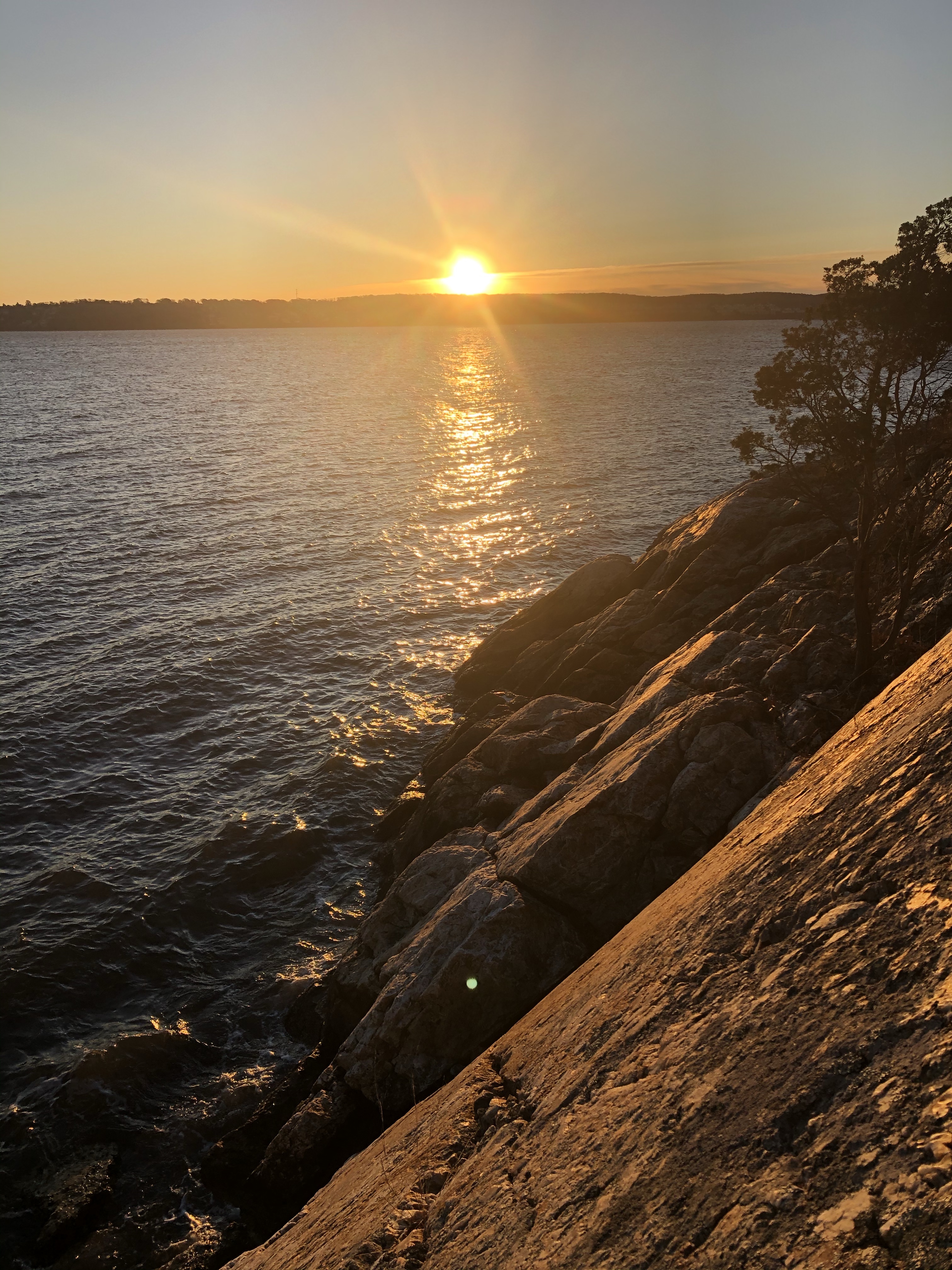
    Walking through the woods on an old paved road slowly being consumed by the forest, I spooked a hawk from the ground and watched it leap to the sky and arc above me, white feathers on blue sky. A sign? A welcome from Metacom or another ghost from the Pokanoket? I keep moving and soon after I saw the rock outcropping that was Metacom’s seat. And it just looked like a seat of power, silently commanding the forest and looking out to the bay, just like its sachems did before they passed, and the land passed to the settlers. Pokanoket survivors were sold into slavery in the West Indies, a final, brutal indignity.

    I’m told that the Pokanoket recently attempted a takeover attempt to win back the land from Brown University. 341 years after Metacom’s death this place still evokes passion. This is one reason I had to get a permit to enter private property, and I was only given an hour to walk around. It was enough time this time, though I’d like to go back again knowing I missed more than I saw. I was alone as I walked and relied on written directions and one sign on the property to inform me where I should go. Instinctively I climbed the outcropping to see what Metacom saw: blue water above the dancing treetops. But I relied on a feeling about the place not signage. It seems they’ve made it challenging enough to visit that most people don’t. But I never really felt alone. That hawk, and many more spirits in the wind, were with me the whole time.

  • Whispers of Montaup: Mount Hope Farm

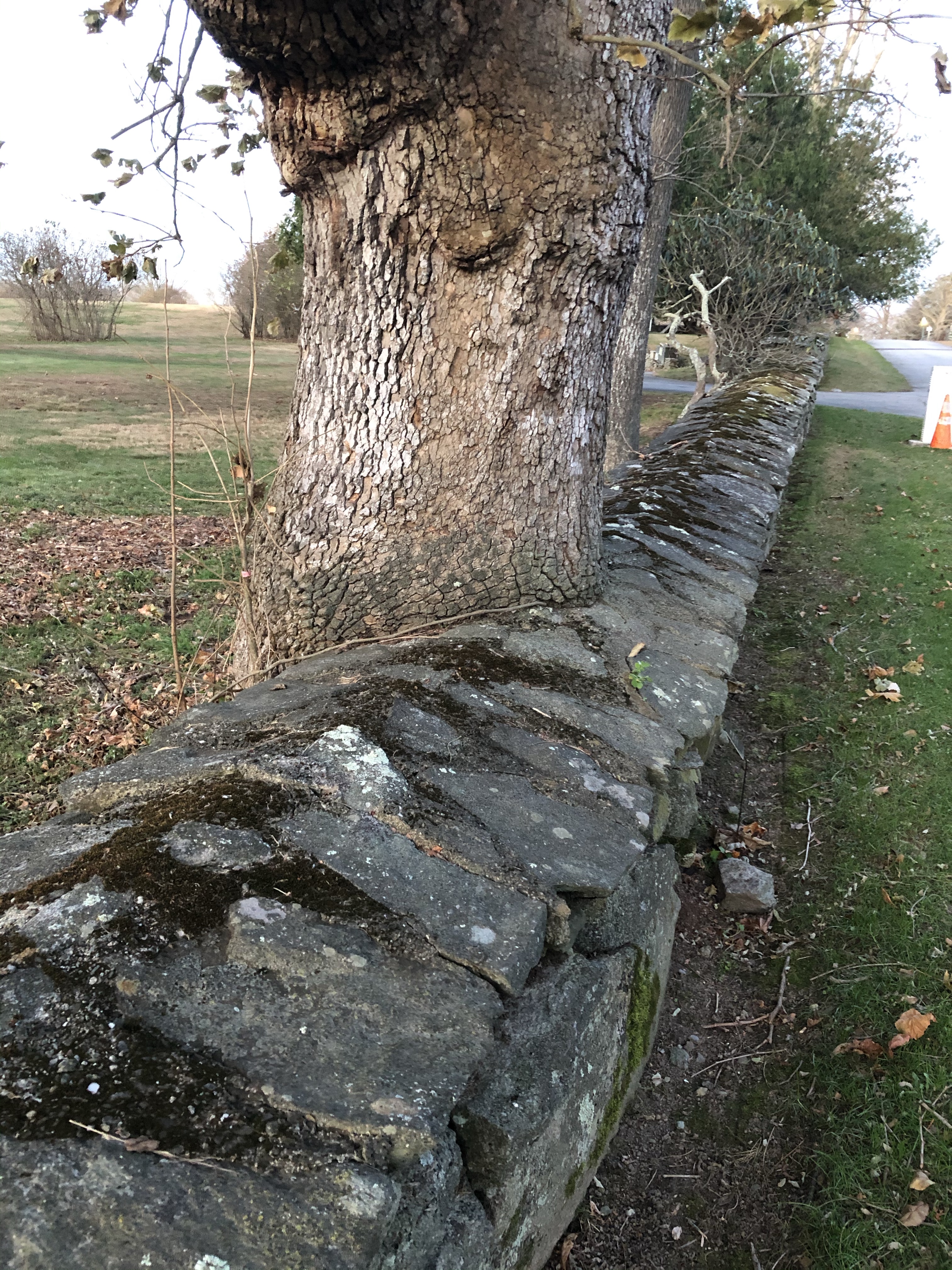
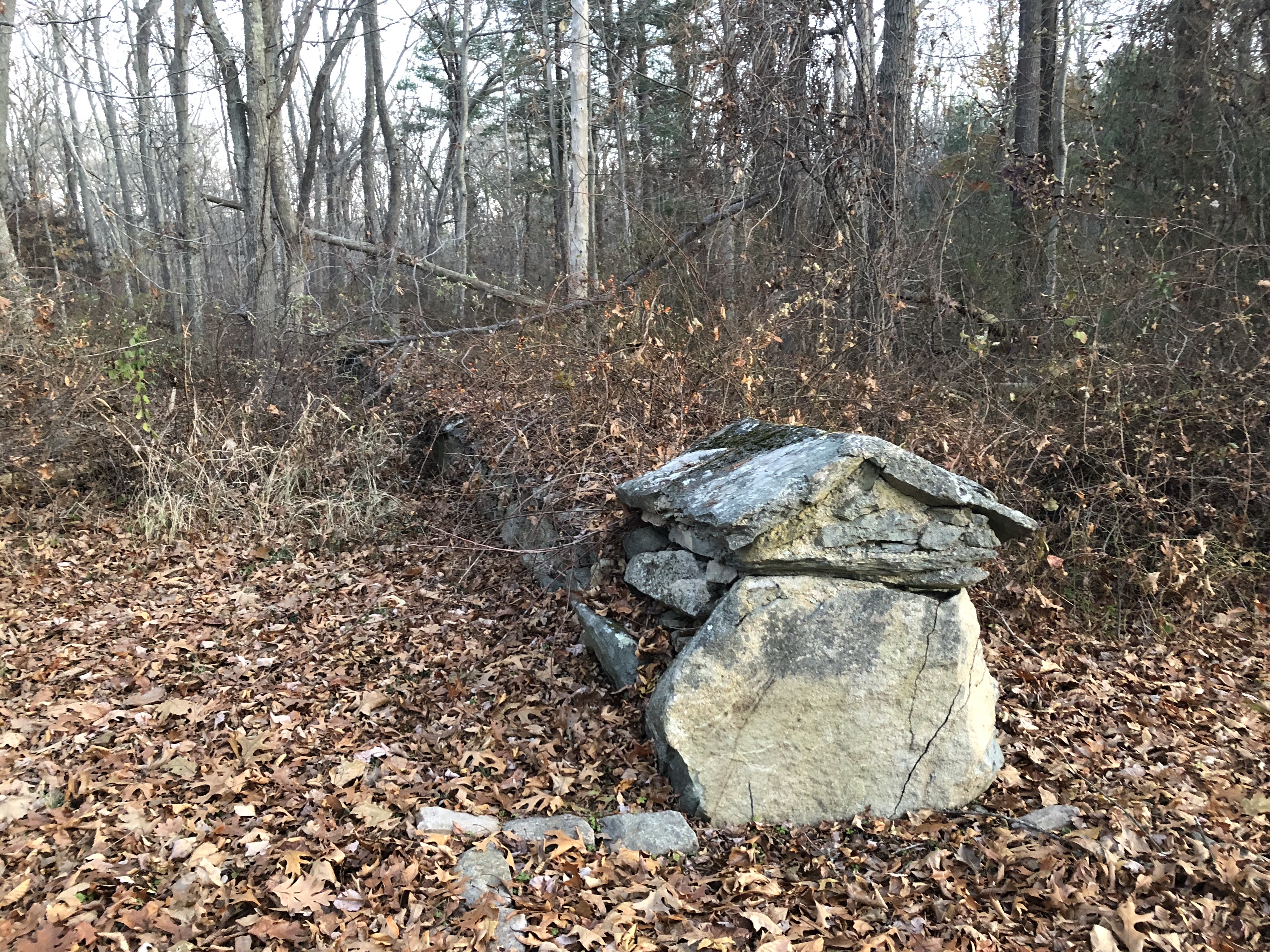
    Undiscovered places offer a bit of wonder, and I had that in spades on an early morning walk at Mount Hope Farm in Bristol, Rhode Island. Mount Hope Farm is a non-profit, running a bed and breakfast, educational programs and a camp. Walking the grounds is a time warp, with mossy old stone walls lining the road and running perpendicular off into the woods. They say this land has been farmed since the 1680’s, and there are places on this walk that feel like you could be stepping into that time. This land was once called Pokanoket, where the Wampanoag lived for untold centuries. It’s said that the first Thanksgiving actually happened here in 1621, when Pilgrims were welcomed by Massasoit. Walking the land, it whispers convincingly of those early days.

    When Massasoit died, his sons had a very different experience with the English settlers. The oldest, Wamsutta, took the name Alexander and his younger brother Metacom took the name Philip, which would become more famous. Alexander would die after getting roughed up by the English during an interrogation. Philip would unite tribes and wage war against the English in King Philips War. The land around Mount Hope was the heart of operations for Philip, and it’s where he would ultimately be killed in 1676. His wife would be sold into slavery in the West Indies. Not all whispers are pleasant.

    This land was eventually the property of the Royall family, which made their fortune from the slave trade. For all the beauty here now, there’s a healthy dose of human tragedy whispering through the grounds. Eventually the land was sold to a loyalist who fled during the Revolutionary War, and old New Hampshire friend General John Stark and General Sullivan would use the land as an encampment for the 2nd Rhode Island Regiment during the Battle of Rhode Island.

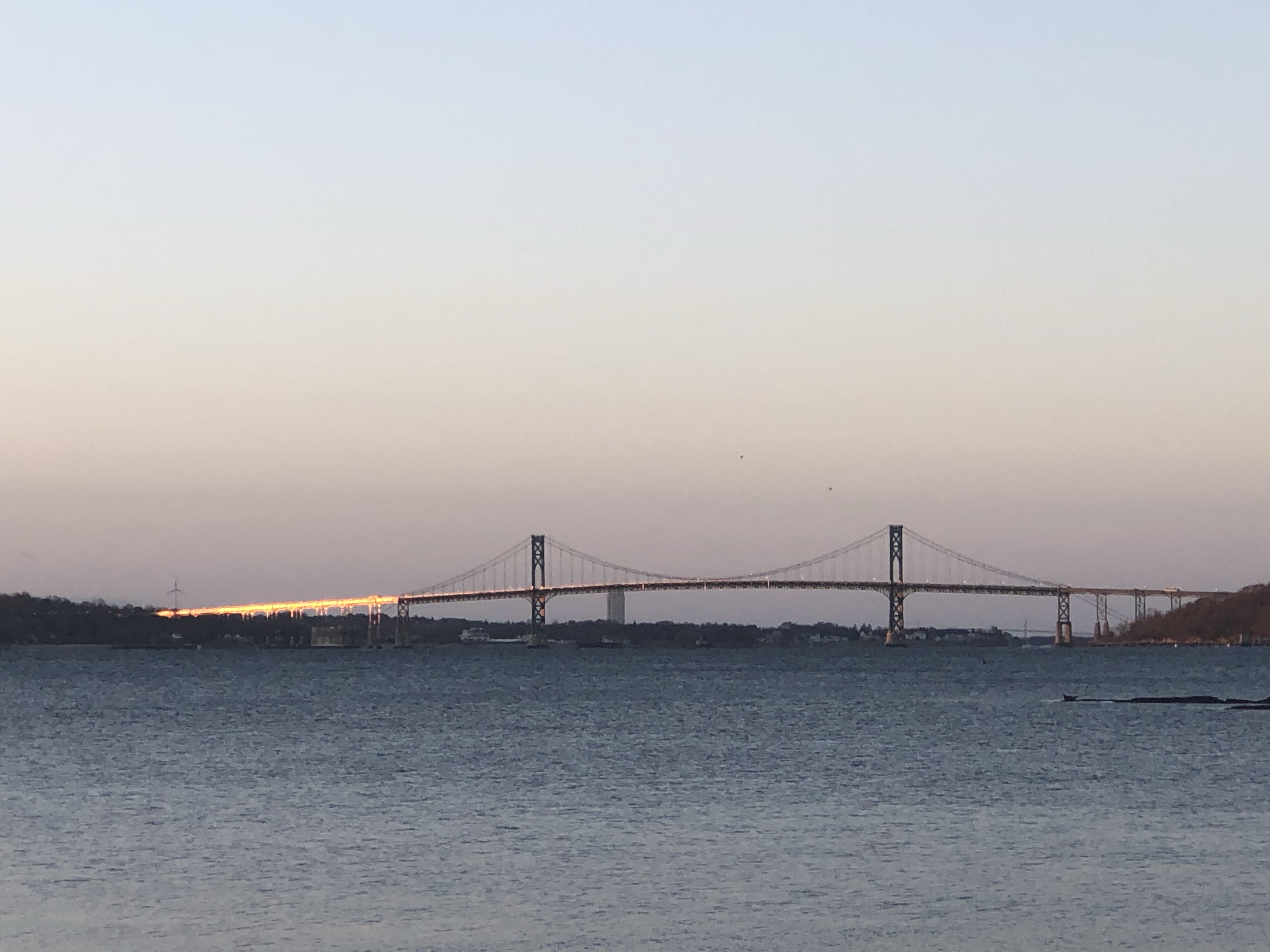
    Walking the farm, I’m thrilled to see the land preserved, but also used as a functioning farm. And for all the whispers, this farm has a strong foothold in the present. The Mount Hope Bridge is omnipresent, rising solemnly over Narragansett Bay, spanning the gap between Portsmouth and Bristol. The bed & breakfast, run out of the Governor Bradford House, is a wonderful place to stay and immerse yourself in history. The barn hosts weddings and a great farmers market every Saturday morning. The Mount Hope Farm – Montaup – is very much alive and well.

  • Walking In Their Footsteps

    There’s a moment 7:24 into the James Corden Carpool Karaoke with Sir Paul McCartney when James remarks, “If my grandad were here right now he’d get an absolute kick out of this” and McCartney replies, “He is.” That moment grabs me by the throat each time I’ve watched it. After a trip to Liverpool a couple of weeks ago, I’ve revisited the episode on YouTube a few more times for the “I was right there” time warp it offers. Which is closely related to the “They were right there” experience of walking in their footsteps on that day.

    We’re all souls marking our time on this planet, eventually our time ends and we’re remembered in moments like Corden’s. Generations later we’re just a small ripple, echoes that show in the traits of future generations, the equivalent in personality to having the same color eyes or the same shape to the earlobes. I can only hope my children carry my better traits to the future, and leave the more annoying stuff behind. But whatever will be will be.

    As I write this my friend the Carolina Wren is singing her morning song outside. We’re well into November and I thought she’d have migrated south by now. But it seems she wanted to stick around a bit longer, brightening up the days with her songs. It’s a sound I wasn’t familiar with until she arrived just this year, but one I won’t ever forget now. It’s funny how little things like that mean so much over time. Which makes me wonder, how will we be remembered?

  • Stumbling Upon Buried Treasure

    While waiting for a taxi to the airport I scanned the wonderful old books lining the shelves at the London hotel I’d been staying in. I do this often when I have moments like this, it’s where the buried treasure is after all. I saw two books on a shelf at eye level that drew my attention; Two Years Before the Mast, by Richard Henry Dana Jr. and an old collection of English poems. I’d read Two Years Before The Mast several years ago at the recommendation of a friend who’s doing exactly that at the moment. I flipped through it quickly, saw the old stamps indicating it was a library book and smiled. Libraries were where I found most of my buried treasure before the Google and Amazon changed everything.

    To this day my favorite discovery was an old copy of Typee by Hermin Melville pulled at random from a university library shelf in the fall of 1984. I was a freshman then, figuring out this college thing, and fascinated with the vast rows of books I could walk through. I picked up Typee and brought it to a reading nook and read the first couple of chapters, quickly falling in love with this other world. I’d return the book and come back again and again to it in the same fashion until I finished it, never checking it out (sadly not including my name on the stamp), but finishing it nonetheless. That friend who loaned me Two Years Before The Mast in turn took my recommendation to read Typee and now has a boat named Fayaway, a compelling character in the story.

    That other book, the one on poetry? I opened to a completely random page in a completely random book in an old library book stuck on a hotel shelf in London….. so you know; random. And I read this:

    Care-Charming Sleep, thou easer of all woes,

    Brother to Death, sweetly thyself dispose

    On this afflicted prince; fall, like a cloud,

    In gentle showers; give nothing that is loud

    Or painful to his slumbers; easy, light,

    And as a purling stream, thou son of Night,

    Pass by his troubled senses; sing his pain,

    Like hollow murmuring wind or silver rain;

    Into this prince gently, oh, gently slide,

    And kiss him into slumbers like a bride!John Fletcher

    Fletcher died in 1625. Analogies between sleep and dying are common, and Fletcher dabbling with the concept in this poem/song from 400 years ago illustrates that. We all want to gently fall asleep, and given the choice we’d likely all wish the same for our final sleep. Poetry either grabs you or it doesn’t. I haven’t made up my mind on this one, which means it’s the latter. Not everything you pick up in a book is going to be buried treasure. If it were what would be the value anyway? But there’s something to chew on here anyway.

    Two Years Before The Mast was written by a man named Richard Henry Dana Jr. after he left Harvard to regain his health after contracting measles. It’s a fascinating book that illustrates life onboard a merchant ship on a two year journey as they rounded Cape Horn to pick up cattle hides in California to haul back to Massachusetts. Seeing the book again prompted me to read a bit more about Dana, and I was struck by one part of his legacy. Dana Point, California is named after him. I’ve spent a fair amount of time in Dana Point, but never made the connection to the book until today. It seems I found some buried treasure after all.