Tag: Fort Ticonderoga

  • Crown Point

    The strategic importance of Lake Champlain during the early colonial years when the French and British and later the Americans and British were wrestling for control of this region is well documented.  Controlling the flow of supplies and men along the lake was critical, and the French chose a point of land where the lake narrowed significantly on the southern end to build Fort Saint-Frédéric in 1734.  This gave them both a foothold of consequence at a choke point on the lake and a launching place for attacks into British territory.  They held this ground until 1759, when Jeffrey Amhert’s 10,000 man army marched northward from Albany to take it.  The French destroyed Fort Saint-Frédéric as they retreated, but the strategic importance of the location wasn’t lost on the British.

    When Amherst’s army reached the destroyed French fort, they immediately set to building a much larger fort next to the location of the original.  In fact, if you look at satellite  image of the location you can see the faint outline of the French fort right next to the larger British fort that replaced it.

    Walking around on this site you feel just how exposed you are to the elements.  For the soldiers stationed here, it must have been brutally cold in the winter.  The large fireplaces for the upper and lower floors in the officer’s quarters must have been heavily utilized during those winter months.  Officer’s quarters were much nicer and the fireplaces much bigger than those of the enlisted men.


    Ultimately Crown Point fell into disrepair as the threat from the French disappeared and threats from the Native American population moved further and further west.  The strategic importance of Crown Point was also diminished by the decision to strengthen Fort Ticonderoga closer to where Lake Champlain and Lake George overlap.  The other concern about Crown Point was that it was set on a peninsula, and thus soldiers manning the fort would become trapped there should the land it connected to be controlled by the British and their Native American allies.  That proved a salient point as the Continental Army was barely controlling the lake at this time let alone the western lands adjacent to Crown Point.

    Walking along the top of the earthworks the British built, it’s easy to see just how clear the sight lines were for the cannon overlooking the lake.  Ironically the fort was never directly assaulted and never fired a shot at a passing ship as far as I can tell.  The Green Mountain Boys overwhelmed a skeleton crew manning the fort in 1775, shipped many of the cannon to Boston (along with many from Ticonderoga), and then the Continental Army opted to abandon Crown Point in favor of what they believed to be stronger ground at Ticonderoga and Fort Independence in 1777.  The British took back control of Crown Point and held it until the end of the Revolutionary War in 1783.  This was the last hurrah for Crown Point, and it fell further into disrepair until it was declared a National Historic Site.
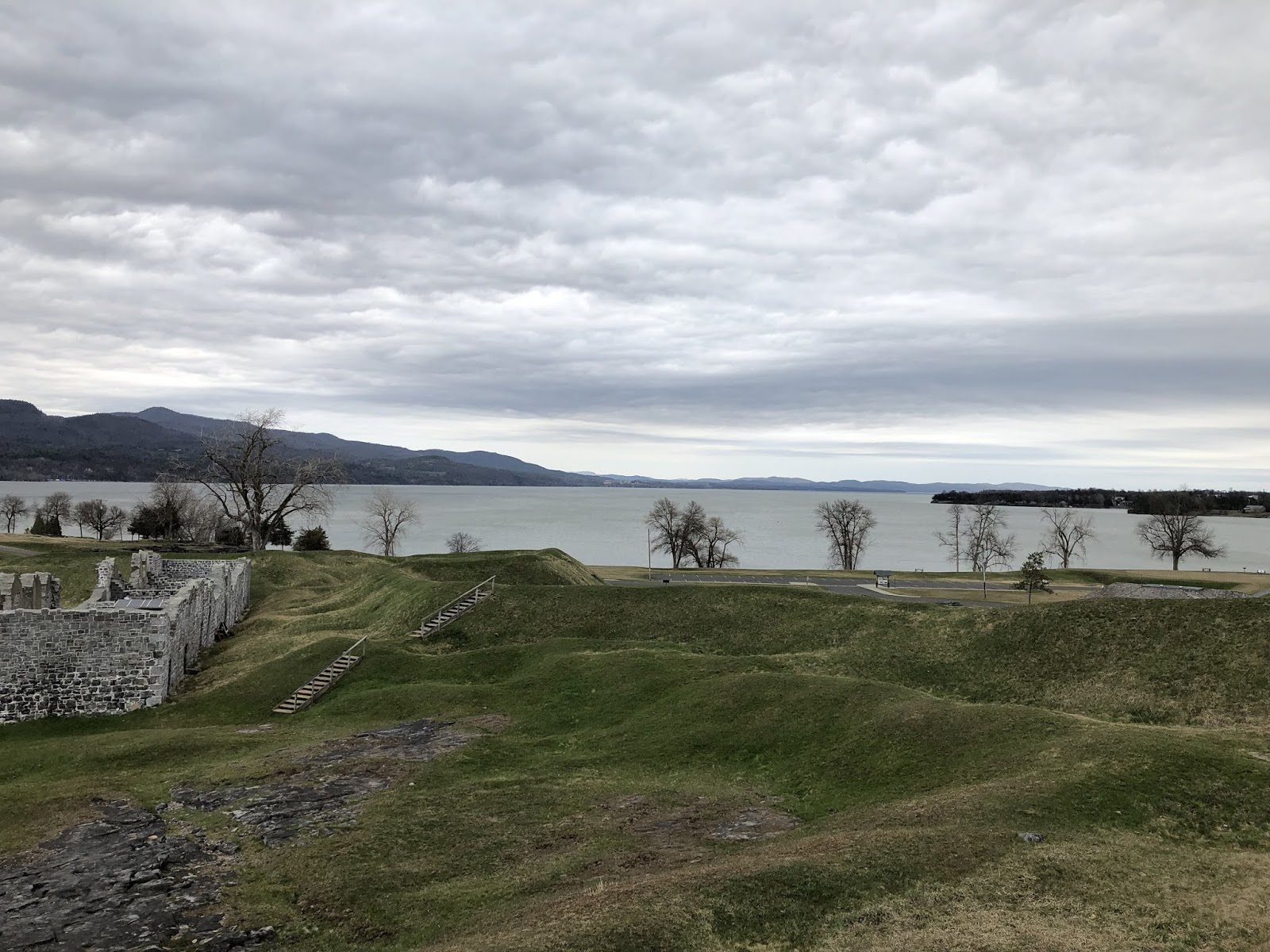
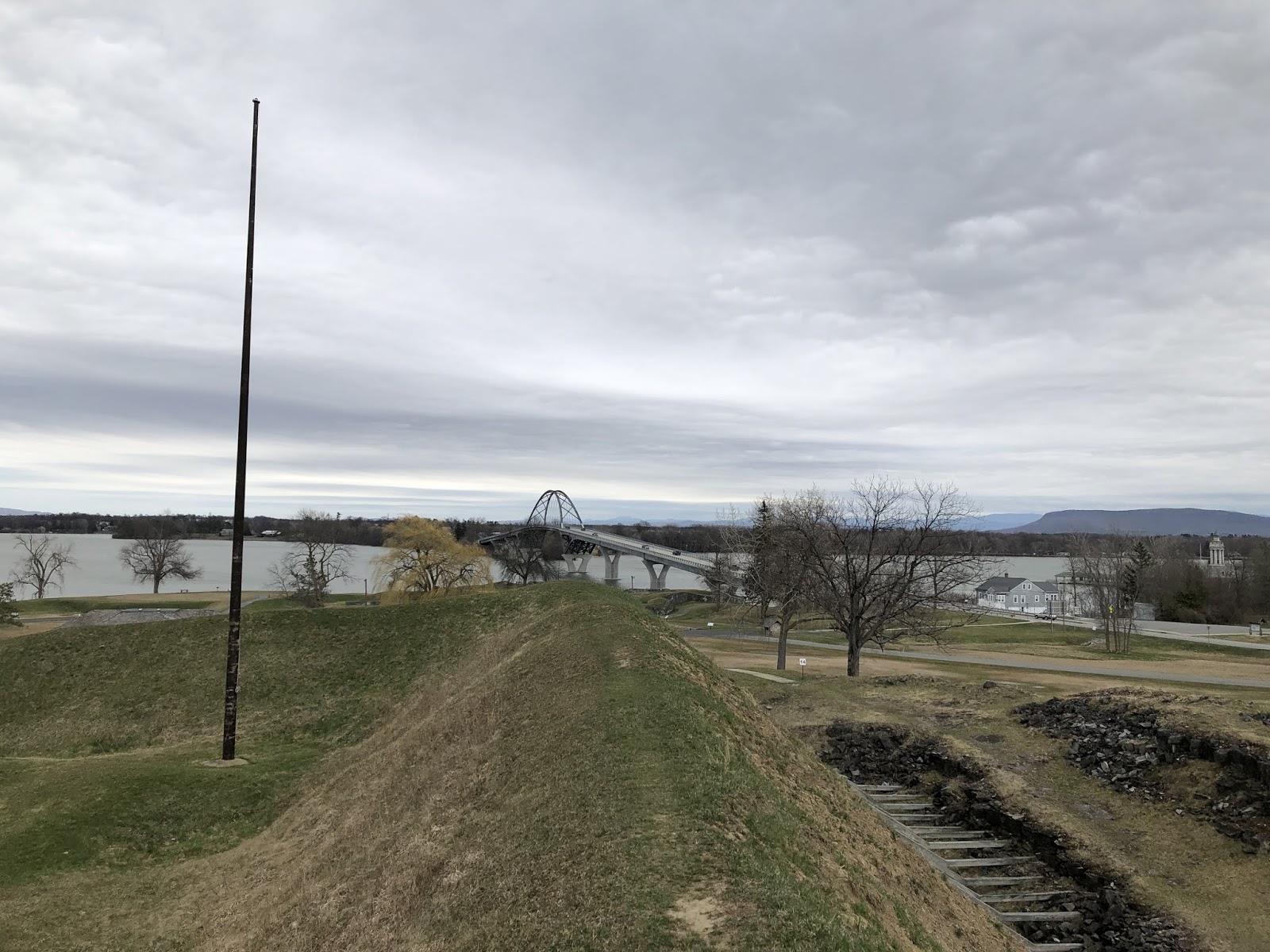
    I’ve walked the grounds of Crown Point once in the spring, and hope to get back there sometime when they’re open for tours.  Perhaps I can combine a visit with one I’m planning later this year for Fort Ticonderoga and Fort Independence.  I’d also like to hike up Mount Defiance to round out my knowledge of the campaign and to complete my tour of this region.
     

  • Evacuation Day

    March 17th is of course St. Patrick’s Day, and Boston celebrates this day as well as anyone with the parade in South Boston and taverns overflowing with Irish and Irish-for-the-day revelers.  But Boston has another reason to celebrate the day that is unique to the city.  On March 17, 1776 Boston’s long siege ended as the British evacuated the city and sailed to Halifax.  Boston has marked this date forever since as Evacuation Day, and it remains a city holiday to this day.

    The siege may have continued on indefinitely had Colonel Henry Knox not pulled off the Herculean task of hauling cannon from Fort Ticonderoga and Crown Point to Dorchester Heights.  The British had the naval strength to continue controlling the harbor, meaning the siege was an inconvenience but the loyalists and British in Boston wouldn’t starve.  It was only when they saw the cannon on Dorchester Heights that they realized the dangerous position that put them in and chose to pull out.

    There are many people who roll their eyes at Evacuation Day as a city holiday.  They surmise, perhaps correctly, that it’s an excuse to have a day off for the drinking, parade and extracurricular activity of St. Patrick’s Day.  But if you’re a history buff it’s a great day to celebrate.

    Today is Evacuation Day at home as well, as both kids head back to college.  This is bittersweet of course, but ultimately a necessary rite of passage as they both move deeper into adulthood.  My hope is that they get safely back to school before the drunks hit the road after a long day of celebratory drinking.

  • Two Epic Marches in 1775

    During the early days of the Revolutionary War, there were two epic marches of heroic proportion.  Henry Knox’s Noble train of artillery in November and December 1775 was one.  Benedict Arnold’s march through the wilderness of Maine for the invasion of Quebec in September to November 1775 was the other, and the one that seems to have been lost to history because of Arnold’s turncoat future in the war and the immediate result from each effort.

    Benedict Arnold was the person credited with the idea of hauling the artillery from Fort Ticonderoga to Boston, which was occupied by British troops but under siege from the colonists.  The Generals recognized that a long, drawn-out siege was going to help the British more than the colonists, as reinforcements from England would be arriving at some point in the spring to try to eradicate the uprising.  Ships in Boston harbor weren’t going to leave just because militiamen were surrounding Boston.  Artillery was needed to encourage them to move on.

    Since Arnold was a little busy marching through the wilderness of Maine, it fell on Henry Knox to bring the cannon from Ticonderoga to Boston.  As with any travel in those days, using existing waterways was much easier than horse paths through the woods.  So bringing almost 120,000 pounds of cannon down the Hudson River to Albany made a lot of sense, but from there they needed to haul the cannon on sleds across ice and rough terrain all the way to the Dorchester Heights.  The hardest part of this overland trip must surely have been bringing them over the Berkshires roughly where Blandford, Massachusetts is today (where the Massachusetts Turnpike cuts through the Berkshires).

    Arnold by contrast sailed to the Kennebec River and up to Augusta, Maine, where he began his march through the wilderness to Quebec.  He started with 1100 men, and reached the St. Lawrence with about 600 starving men.  Some starved to death on the trip, and the rest abandoned the march and retreated towards home.  Arnold’s expedition was even more bold than Knox’s.  Yet the immediate results were very different.  Knox’s artillery chased the British out of Boston on what is forever celebrated as Evacuation Day in the city.  Arnold’s army reached Quebec and were met there by Montgomery’s troops who had come from Lake Champlain.  Ultimately they didn’t have the numbers or the artillery to lay a proper siege on Quebec, and they were eventually chased away as the ice broke on the St Lawrence and British reinforcements arrived to chase them down.

    Two men remembered differently in history.  Benedict Arnold’s name is forever associated with treason, but in the early years of the war he was a hero many times over.  Henry Knox would continue to grow his career in the Continental Army, becoming the Secretary of War for the United States.  His name lives on at Fort Knox.  Benedict Arnold doesn’t have any forts named after him, but the United States may not have won the war without him.

  • Pass the Flowing Bowl

    When Ethan Allen and the Green Mountain Boys helped Benedict Arnold seize Fort Ticonderoga, they apparently wanted to celebrate the occasion.  In 1775 these two men, who couldn’t be more different, led the attack on the lightly defended fort, winning it without a fight.  British soldiers stations there hadn’t heard about Lexington and Concord yet, and had no idea that they might be attacked by people who were supposed to be loyal to the crown.  For the Green Mountain Boys, the best way to celebrate was to pass the flowing bowl around.  The bowl was usually filled with punch.

    The recipe for punch varied from place to place across the globe, but in the American Colonies it called for rum.  Punch rivaled ale and flip in popularity, and in some colonies exceeded it.  Punch had an added benefit over Flip or ale in that it helped introduce fruits and juices into the diet of colonists, which certainly improved their overall health (rum aside) and fending off scurvy.Wayne Curtis in And a Bottle of Rum referenced a recipe for Planters Punch that was published in The New York Times in 1908 in the form of a ditty:

    “This recipe I give to thee,
    Dear brother in the heat.
    Take two of sour (lime let it be)
    To one and a half sweet.
    Of Old Jamaica pour thee three strong,
    And add four parts of weak.
    Then mix and drink “I do no wrong – 
    I know whereof I speak.”

    Back in my college days, I thought I’d be clever and mix up a batch of punch for a party.  Not being an expert in the art of mixology, I was pretty aggressive in my pours, adding several spirits into a bowl and adding Hawaiian Punch or something like it.  After celebrating a bit too much with this concoction, the night took a turn for the worse.  It was the first and last time I’ve ever made punch.

  • The Great Carrying Place

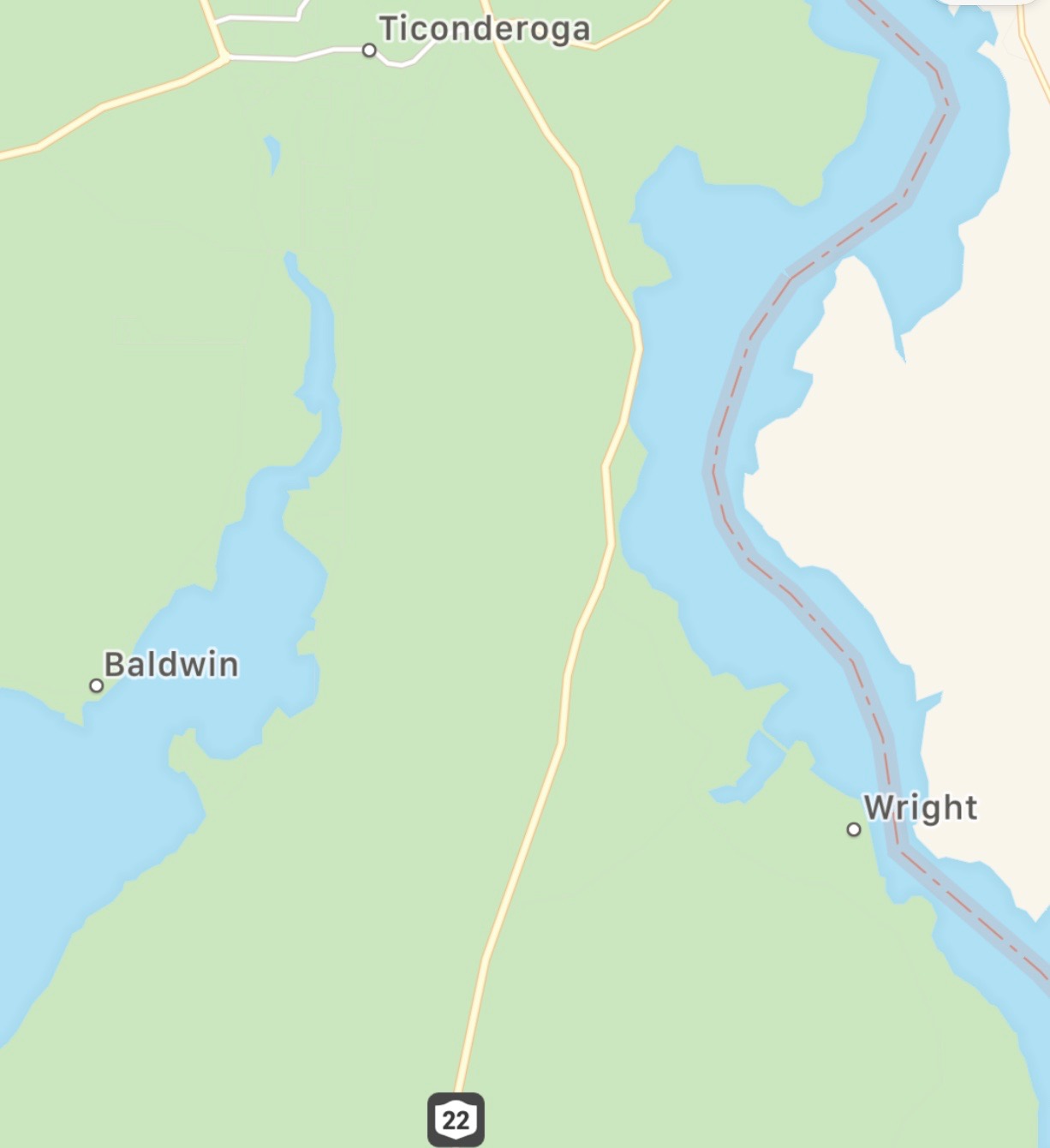
    There’s an almost unbroken stretch of navigable water from New York City up the Hudson to Lake George to Lake Champlain to the St. Lawrence Seaway, which in turn leads back to the Atlantic Ocean or deep into the interior of North America to the Great Lakes.  The “almost” part is a couple of stretches of land that must be portaged where the La Chute River is unnavigable.  This two mile stretch of land between Lake George and Lake Champlain is the place the Native Americans called “the great carrying place”.  There are other portages with the same name, notably a stretch of trail in Maine that Benedict Arnold used to invade Quebec, but this stretch in New York is arguably much more strategic.

    In the years before and during the French and Indian War this was one of the most strategically important and thus heavily contested patch of wilderness in North America.  Navigable water was the most efficient and fastest way to travel at the time, and aside from this stretch of land navigable water was close to unbroken.  During the Revolutionary War this place was the site of significant naval and land battles led by Benedict Arnold.

    I’ve been to Glens Falls and Saratoga many times.  I’ve been to Lake George once or twice.  And I’ve been on and most of the way around Lake Champlain.  But I’ve never viewed the region with the educated eyes of a historian.  It’s not that I didn’t know the rough history of the region, it’s that I was apathetic towards it.  I’m not longer apathetic.  The next time I make my way through the region I’m going to spend a little time immersing myself in the history of the region.  Fort Ticonderoga, Mt. Defiance, Saratoga and so much epic history happened right in this area.  I can’t very well ignore it now can I?