Month: January 2018

  • Sand, Snow, Sea and Shells

    Winter brings seclusion to the beach.  After all, who’s really lingering on a beach in January anyway?  Well, I am when the opportunity presents itself.  I’m not a beach person in that I don’t see any point in lying on the sand while the sun cooks your skin.  And yet I’m a beach person in that I love to walk on the beach, especially near the surf, and especially when I may find solitude.  Since I’m not wealthy enough to own a private beach, my options for solitude are early in the morning and in the off-season.  A beach in the Northeast doesn’t get much more off-season than January.

    January beach time brings together seclusion, sand, snow, sea and shells.  If that’s not an attractive alliteration I’m not sure what is.  I seek out solitude because I like to think, and I like to re-charge my batteries through nature and walking.  I welcome the occasional sniff from a dog running free with it’s human.  I take a picture that strikes my fancy.  Sometimes I pick up a shell or driftwood or sea glass.  I try to get my steps in for the day.  And I think.  Being alone with your thoughts seems to be less of a thing nowadays.  People escape into their devices, their TV shows, politics, celebrity gossip or sports.  Some escape into a bottle or religion or drugs or exercise programs.  I’m not interested in escape.  I’m interested in enjoying the ride while I’m on this earth.  Now.  Not deferred to some retirement or vacation in the future.

    Tim Ferriss calls this living the lifestyle of the New Rich.  Time and mobility.  I’ve tried over the last decade to build my career around this NR lifestyle.  While I haven’t pulled off the rich part, I’ve generally lived in such a way that I’ve had the freedom to do what I want to do most of the time.  Generally that means being able to see my kids play sports or attending other milestones in their lives, but sometimes it means taking a walk along a cliff in Portugal, or seeing a sunrise from the easternmost point in Newfoundland, or taking a walk on the beach on Plum Island on a random Tuesday.

    Through Ferriss and Ryan Holiday I’ve found myself reading more stoicism lately.  There are three phrases in Latin that I’m trying to embrace.  Amor fati, or “a love of fate”, Memento mori, or “remember that you have to die” and of course the old standby Carpe Diem, or “seize the day”.  Each day I’m trying to live a complete life.  Some days I accomplish more than in others, and I’m always seeking improvement.  Life, like the sand, shells and snow on a beach, is fleeting and ever-changing.  All we’re guaranteed is now.  So if now is all I’ve got, I might as well walk on a beach in January.
     

  • Red #2

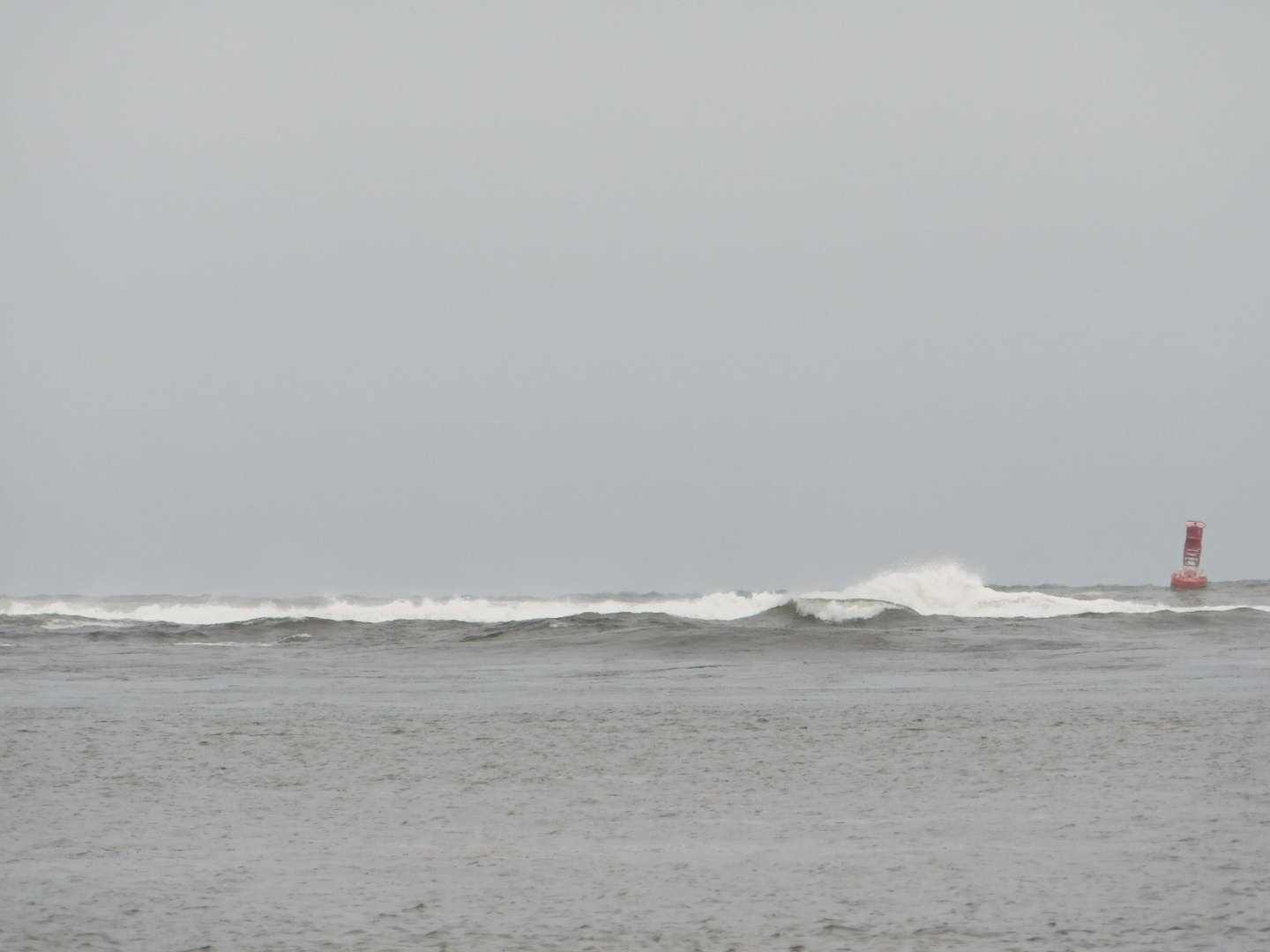
    Standing watch at the Mouth of the Merrimack River is Red # 2.  Red # 2 is a navigational buoy that rides out some of the most violent conditions on the East Coast.  Red # 2 is not as well known as MR, which is the first red navigational buoy on the approach to the Merrimack River and the one that most boats set their course to.  MR is the glamor buoy in this part of the Gulf of Maine.  Important, much discussed by boaters and the mark of choice on the GPS.  MR is not just a navigational buoy, it’s a destination.

    Such fame is not in the cards for Red # 2.  But I’d contend that Red # 2 is responsible for more safe passages through the Mouth of the Merrimack than any other.  Set beyond the Salisbury Jetty, Red # 2 marks the channel around the treacherous sand bars beyond the jetty.  Without Red # 2 boaters would be tempted to cut the corner around the jetty on their way north.  These pictures shows the waves breaking over the sandbar between the jetty and our friend Red # 2.  On a calm day a boater wouldn’t realize just how dangerous a tight course around the jetty would be.  So thank you Red # 2, you’re tops with me.


  • Portugal: The End of the World

    Started strong on this blog, then petered out as the realities of a job spiraling downhill combined with an irony-filled sales kick off meeting in Portugal left me with not much to say.  Which of course is not the case at all with all that going on.  I’ll work to be more consistent.

    The sales kick off meeting was the usual stuff that goes on when a company goes to great lengths to inspire a sales team.  Well prepared executives telling us how great things are.  Product Managers telling us how great things are going to be.  Sales awards for the past and optimistic spin on the future.  And a dose of ass-kissing and opportunistic positioning by the sleazy element.  Still, as with most companies the majority of employees are truly great people who work hard, are ethical and want to do good things.  I wish them well, and hope they clear the hurdles ahead of them.

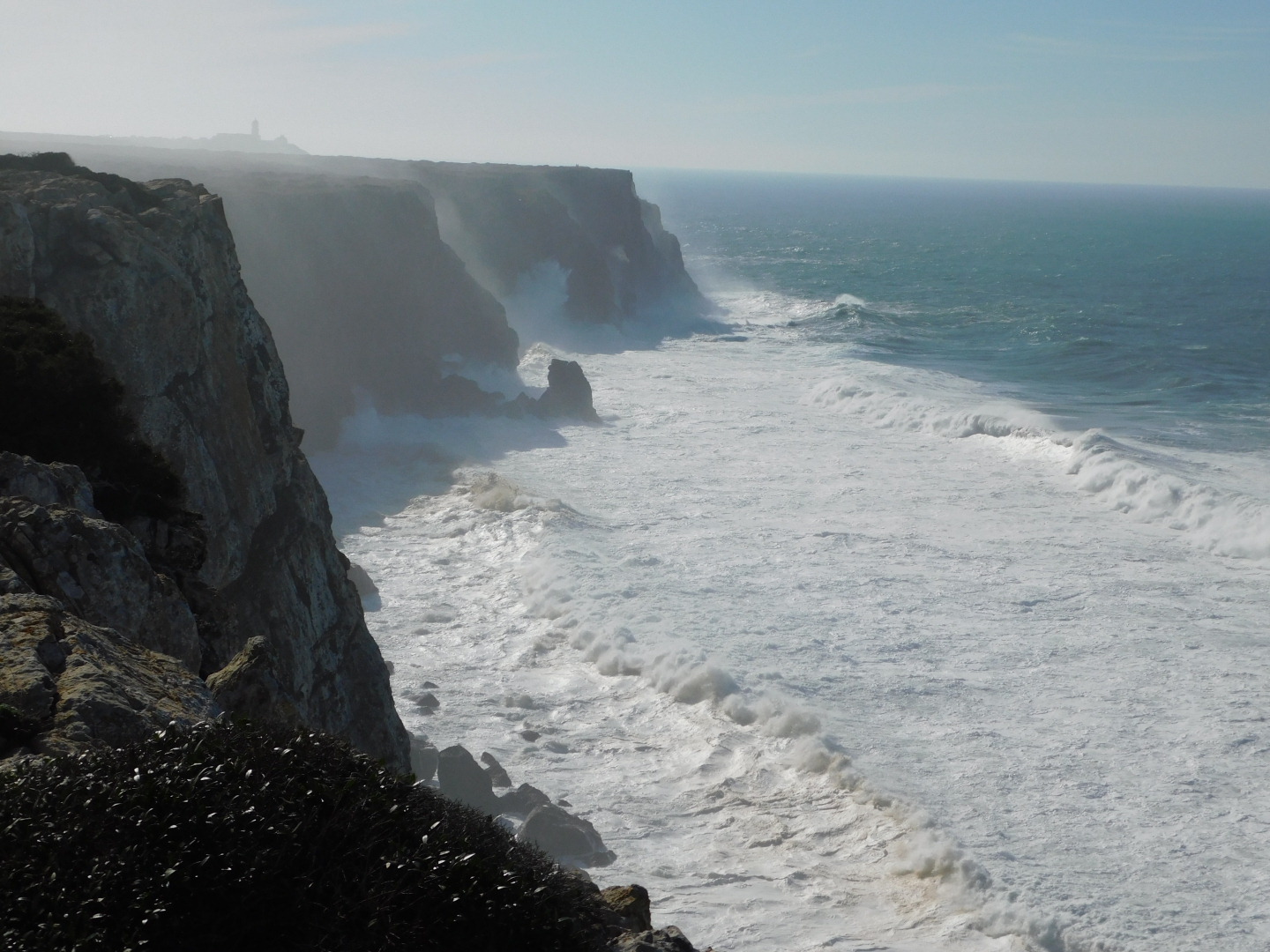
    The real adventure in Portugal began when the meeting was over.  I drove from Lisbon to Sagres for some hiking along the coast, fresh seafood and time to reflect in a place completely new to me.  The drive down from Lisbon began on the extraordinary Vasco da Gama Bridge over the Tagus River, continued across a changing landscape of vineyards and cork tree groves that gave way to more arid climate as I approached the Algarve Region.  My destination was the end of the world.

    Sagres was once called that – the end of the world.  The rocky cliffs of Cape St Vincent were the southwestern corner of “civilization”.  And no wonder they thought so.  The rolling waves of the Atlantic Ocean crashing into the cliffs of Western Europe certainly felt that way.  Ships rounding the Cape of St Vincent looked to the treacherous cliffs and prayed for favorable winds to keep them from being bashed against them.  Many of their prayers were unanswered and countless sailors perished along this coast.  Imagining the New World beyond the horizon was likely beyond the scope of many of the people living in the Middle Ages.

    Sagres today is a sleepy surf town, full of beautiful vistas and great seafood.  The world back then, as in many places, was a lot more violent and uncertain.  Sagres is incredibly rich in history.  Pirates and privateers raided this coast to rape and pillage and enslave those they didn’t kill outright.  Explorers setting sail from this region mapped the African coast, opened up the sea route for spice trade and eventually circumnavigated the world.  Sagres was the home and final resting place of Henry the Navigator (Prince Henry the Navigator – Wikipedia) who changed the narrow view of Europeans in this time and fueled the Age of Discovery.

    Hiking a portion of the Rota Vicentina in the offseason provided me with a glimpse into the past.  I was struck by the powerful waves of the Atlantic colliding with the sheer cliffs along the coast, and the splendid isolation as the trail moved towards the interior.  For much of my hike I was alone.  Fishermen and tourists were clustered at the lighthouse on Cape St Vincent, but after that I saw five other people on the rest of my 12 mile hike.  Offseason for sure.  Soon after passing the last of the fisherman precariously dangling their poles over the cliffs near Cape St Vincent I found myself virtually alone in the harsh, beautiful terrain.  The footing is challenging; alternating between red sand and sharp limestone and sandstone ready to trip and greet the careless walker who dares to enjoy the stunning scenery for more than a step or two before validating the path.

    Portugal, like Newfoundland, offers seclusion mixed with warm encounters with friendly people.  It’s still relatively unknown as a vacation destination, but that will change.  As indicated by the graffiti I saw throughout Portugal and the broken glass on the trail, not everyone embraces leaving no trace.  I hope that the cultural intolerance for these things increases in the years to come.  I fell in love with this place and hope it never becomes the overbuilt, resort-clogged destination that some other parts of the Algarve have become.

    And now I’m back, with memories, pictures and video of this incredible place.  As with all solo travel I felt the conflicting emotions of savoring the meditative qualities of going it alone with the longing to have shared it with family and friends.  Hopefully I’ll see you again Sagres.


  • Don’t Cry About the Weather

    Don’t Cry About the Weather

    The day after the “bomb cyclone” storm that dumped a foot of snow in my area, and wreaked havoc on the coastal areas.  It’s a day when we all take a breath, finish cleaning up the mess and get on with living.  The weather, and the seasons in general, are just part of the cycle.  New Englanders generally don’t get too spun up about it, no matter how much the news channels try to raise your heart rate.  We’ve seen it before and know what to expect.  Though “bomb cyclone” is a new one for us, the weather is what it is.  No use carrying on about it, just clean it up and move on.  Which is what I’m doing now.

    Over the next few weeks I’m going to explore the history of the region, add some cultural observations, write about food, travel, and generally try to make this an interesting read.  After all, this blog could either be an ego stroke or something slightly more worthwhile of your time.

  • Surviving Winter

    Surviving Winter

    Bomb cyclones and polar vortexes, blizzard conditions and brutal cold.  That’s 2018 weather so far.  I think about the first settlers to this region when the weather gets like this.  Depleted food stores, meager heat thrown from the fire you had to feed all year to survive.  Threats from the native population that they were encroaching on, or from the turf wars between the French, British and Dutch.  Tough to stay alive in those days, let alone thrive.  But many of these settlers were used to violent displacement.  Life is easier in so many ways now, and there are safety nets for most of us should be flounder.  Yet most people don’t live.  They seek distraction from their lives in celebrity culture, sports, politics, or television.  We all do it really, but I’m trying to make 2018 more about making progress in my own life and less about everything else.

    Outside the wind howls like its the end of days.  I hope not, because I have a lot to do.


  • Fogtown

    Fogtown

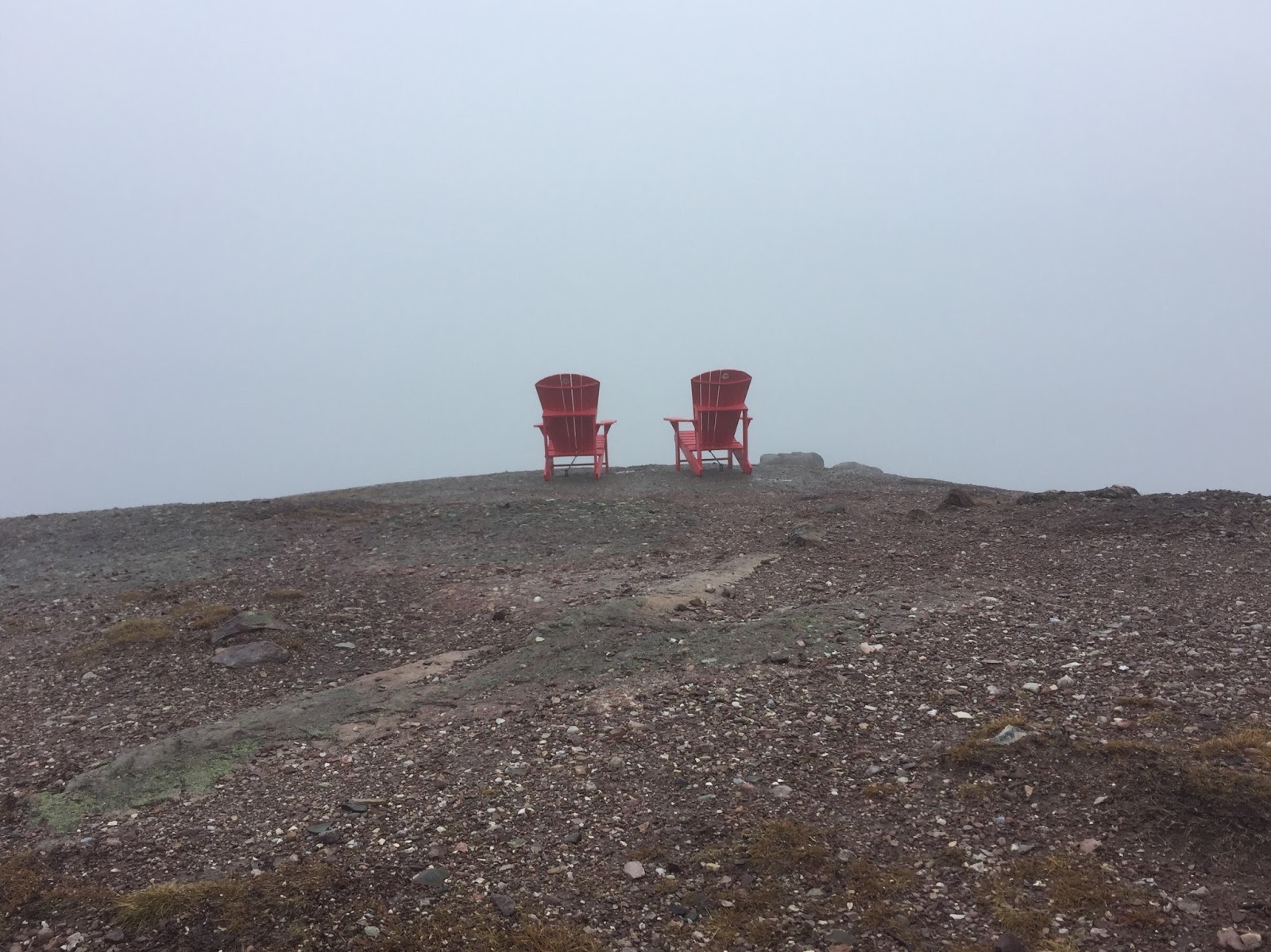
    A few weeks back, with time to kill before my flight home from Newfoundland, I drove to the top of Signal Hill and walked out to North Head.  Signal Hill offers stunning views of St. John’s Harbor and The Narrows, and East to the Atlantic Ocean.  It’s a place I’d love to linger at on a warm summer day.  But this was December, and the wind stung as I took in the view from the top of the hill.  Not a beach day at all, but the overcast skies cooperated enough to give me a view.  Looking out at North Head, I noticed a couple of red Adirondack chairs in two spots along the North Head Trail, cleverly placed to draw the eye, give walkers a place to rest a spell and at that moment to stir my wanderlust.  Not very far at all, perhaps 20 minutes or so, and despite the wind and the raw day I felt the urge to visit those chairs.

    In the time it took me to walk down the boardwalk stairs and out to North Head the fog that gives St. John’s it’s nickname rolled in fast and hard.  The last couple of people out on North Head hurried past me on their way back to their car, leaving me alone out on the trail, with visibility rapidly decreasing and nothing but the blaring foghorn marking the Narrows to keep me company.  That foghorn reminded me of the horns blowing on the Wall on Game of Thrones as the White Walkers approached, and frankly, I wouldn’t have been surprised to see one walking out of the mist towards me.  Or perhaps the ghosts of Leif Erickson, the lost-to-history Beothuk tribe, the French or British soldiers who fought here in the last battle of the Seven Years War or maybe just the countless tourists who stumbled away from George Street long enough to walk these cliffs before me.  

    Alone out on North Head with the fog swirling and the horn calling out its warning, it was easy to imagine them all marching by me, and the moment stays with me still, almost a month later.  I hope to visit St. John’s many times over the years ahead, but we all know that men make plans and God laughs.  Here’s hoping that fate brings me back for a longer spell next time.

  • Alexander’s Map

    Alexander’s Map

    A new year, and a new pursuit; this blog.  So why the name?

    Alexander’s Map is a rare map published in 1624 to encourage colonization of the lands granted to William Alexander.  The map gives an early, if inaccurate, glimpse at this region that I’m so fascinated with.  Alexander’s Map stretches from present-day Massachusetts to Newfoundland to the northeast and Quebec (“New France”) to the north.  
    My blog will cover observations from living in this region, and will also include observations from as far west as Buffalo and as far south as New Jersey.  This is where I spend much of my time, and with so much history, food, sports and geological and cultural diversity to explore it will be fun to explore this in writing.  I hope you’ll enjoy the journey with me.