Blog

  • Resistance, Habits and Progress

    Resistance, Habits and Progress

    “We’re wounded by fear
    Injured in doubt
    I can lose myself
    You I can’t live without” – U2, Red Hill Mining Town

    Bono is singing about his relationship with God with those lyrics.  I’m not inclined to embrace religion in the same way.  I’m more pragmatic I guess.  A higher power?  A creator?  I don’t know…  and anyone who says they do should be greeted with a degree of skepticism.  And yet the lyrics resonate.  They just mean something else to me;  A universal struggle against our inner critic.  Fighting the saboteur within.  Steve Pressfield calls it The Resistance.  Seth Godin describes it as overcoming your Lizard Brain.  It’s far easier to embrace distraction, and it’s easier than ever.  Fight through it.  For me that means making more outbound activity to drive business in my job, but it also means fighting for the daily habits of reading, writing and exercise.  And the struggle is real.

    I just finished reading Atomic Habits, which is a great book that I can highly recommend.  But I’ve read many books on self-improvement, compounding action over time, grit, etc.  The call to action resonates, but it’s the action that must occur now.  What I like about Atomic Habits is that James Clear breaks down the process of establishing habits into small, actionable steps.

    “Focus on the process not the result.” – James Clear, Atomic Habits

    “Incentives can start a habit.  Identity sustains a habit.” – James Clear, Atomic Habits

    Now this I believe in.  I’ve seen too many examples of identity sustaining habits.  Friends who identify themselves as hikers are off hiking every weekend, and are more fit and happy than ever before.  Friends identifying themselves as entrepreneurs who jump into the deep end and live the life of a business owner, learning and climbing as they go.  Tired but more satisfied in life for the identity they’ve chosen for themselves.

    Me?  I’m working to establish my identity as an athletic, accomplished sales professional and well-read, well-travelled, disciplined writer.  I’ve established the loyal husband, father, son and friend thing already.  And I’m proud of that.  Time to add more.  Do I want to be an accomplished sales professional?  I don’t know that I do, but I know it’s a means to an end.  Elizabeth Gilbert discusses jobs versus careers in a YouTube video I’ve watched a few times.  I’m 52 going on 53.  I don’t give a damn about career aspirations at this point in my life.  I care about being successful enough to more than cover the bills and keep the family ship afloat.

    “If you don’t get what you want, it’s a sign either that you didn’t seriously want it, or that you tried to bargain over the price.” – Rudyard Kipling

    That’s as informative a quote as I’ve chewed on in quite some time.  I care about being a professional and my contribution to the team, but I don’t give a damn about being a VP or President of a company or any such nonsense.  No, that’s not for me.

    “No, that’s not me.” – Arya Stark, Game of Thrones

    But all that said, I believe in making progress as a professional, as a member of society, as an individual.  If we aren’t moving forwards we’re moving backwards.  So growth is a key metric in life. Being better today than yesterday.  And tomorrow better still.  Aiming for 1% improvement.  That’s tangible progression towards a goal, even if the goal is to be a better person.

    “Direction is greater than outcome.” – James Clear

  • Guy Carleton, 1st Baron Dorchester

    The history of the American Revolution is weighted towards the dignity and heroism of the colonists who rose up and demanded their independence.  The winners always write the history.  But there were characters on the other side of this fight who were heroes as well.  Guy Carleton is one of those heroes.

    I’ve visited Carleton University in Ottawa a few times over the last few years for business.  The spelling of Carleton was particularly notable to me, but I never dove deep into the history of the name until I reacquainted myself with the Revolutionary War.

  • Rum

    Life for the settlers of North America was hard.  Scraping together enough food to eat from the cold land was certainly challenging.  Having enough food to eat was a daily challenge for settlers.  Compounding this was a general distrust of water was prevalent throughout the colonies as water harbored cholera and other diseases.  Tea was one answer for replacing water.  Rum was a better answer.  Rum not only solved the problem of water-born disease, it also offered critical calories.

    “Rum was not just a diversion; it was nutritionally to colonists who labored to coax a meager sustenance out of a rocky, stump-filled landscape and cold seas.  Alcohol has fewer calories per ounce than straight far but about the same as butter.  It’s five times more caloric than lean meat, and has ten times the calories of whole milk.  A bottle of rum squirreled away in a Grand Banks fishing dory provided the energy to haul nets and aided in choking down hardtack and salt cod.” – Wayne Curtis, And a Bottle of Rum

    Rum, ale and cider were the three primary alcoholic drinks in the 1700’s, and rum was far and away the most popular.  Molasses was shipped up to Boston from the Caribbean, it was made into rum and shipped around the world.  Some of this rum was traded in Africa for slaves, which were shipped to the Caribbean to complete the cycle.  Rum had as large a part to play in the earliest days of the thirteen colonies as any drink.

  • The Great Carrying Place

    There’s an almost unbroken stretch of navigable water from New York City up the Hudson to Lake George to Lake Champlain to the St. Lawrence Seaway, which in turn leads back to the Atlantic Ocean or deep into the interior of North America to the Great Lakes.  The “almost” part is a couple of stretches of land that must be portaged where the La Chute River is unnavigable.  This two mile stretch of land between Lake George and Lake Champlain is the place the Native Americans called “the great carrying place”.  There are other portages with the same name, notably a stretch of trail in Maine that Benedict Arnold used to invade Quebec, but this stretch in New York is arguably much more strategic.

    In the years before and during the French and Indian War this was one of the most strategically important and thus heavily contested patch of wilderness in North America.  Navigable water was the most efficient and fastest way to travel at the time, and aside from this stretch of land navigable water was close to unbroken.  During the Revolutionary War this place was the site of significant naval and land battles led by Benedict Arnold.

    I’ve been to Glens Falls and Saratoga many times.  I’ve been to Lake George once or twice.  And I’ve been on and most of the way around Lake Champlain.  But I’ve never viewed the region with the educated eyes of a historian.  It’s not that I didn’t know the rough history of the region, it’s that I was apathetic towards it.  I’m not longer apathetic.  The next time I make my way through the region I’m going to spend a little time immersing myself in the history of the region.  Fort Ticonderoga, Mt. Defiance, Saratoga and so much epic history happened right in this area.  I can’t very well ignore it now can I?

  • Celestial Dance

    This morning Venus was dancing with the crescent moon, while Juniper looked on with envy.  The air is brutally cold this morning, but getting outside before the sunrise has its benefits.  Watching this tango was one of them.  Sadly I couldn’t get a decent picture of conjunction of these three, but I’m glad to have shared the moment with them.

    My reason for being outside in the first place on this cold morning was to let Bodhi get outside for a little relief.  The days of long power walks are over for him, and it seems I’m not inclined to do many myself without his company.  So seeing celestial dances like this aren’t as common as they once were for me.  I clearly need to change my routine and get back outside.

  • Gray Gables

    Grover Cleveland was the 22nd and 24th President of the United States of America (the only President to be re-elected in non-consecutive elections), was the Governor of New York before that, and the Mayor of Buffalo before that.  Grover Cleveland was a Bourbon Democrat, which today would be aligned with a Libertarian or conservative Democrat.  He’s considered one of the more successful Presidents we’ve had.

    Cleveland was born and died in New Jersey.  During his years as President he had a summer home in Bourne, Massachusetts in an area known forever since as Gray Gables.  That was the name of his summer home, which became the Summer White House during his Presidency.  The house burned down in the 1970’s, but the history of Gray Gables lives on in the area.  A train station that was built for the President’s train stop still exists today, but was moved away from the tracks to an area near the Aptucxet Trading Post and Museum.  This train station had a direct telegraph connection to Washington, DC.  Gray Gables was the epicenter of politics in the summers of 1893 through 1896.

    Cleveland Ledge is named after the former President and it was in these choppy waters in Buzzards Bay that the President would go fishing.  Road names like Presidents Road and Cleveland Circle betray the history of the place.  The land around Gray Gables has been built up over the years since then.  Hog Island stopped being an island when they used fill from the channel leading up to the canal to create a peninsula.  But Buzzards Bay remains largely as Cleveland would have remembered it.

  • Wooden Pipes

    Before lead and copper and cast iron pipes, there were clay and wood pipes.  Woods pipes sound crazy, but in a time when trees were abundant but copper, iron and lead were harder to come by it made sense to use materials that were readily available.

    Wooden pipes were basically logs that were drilled out.  Nothing especially exotic about this, and it turned out that they could be effective transportation vessels for water when buried underground.  And they would do their job until they rotted away, split or were replaced with more modern options.

    I came across a wooden pipe from the 1870’s or 1880’s at the Department of Public Works in Burlington, Vermont a couple of years ago, and I’ve seen it every time I visit there.  It’s a great reminder of the older infrastructure that our ancestors had to create to support the growing cities of the time.  Yankee ingenuity?  I think so.  And also a time capsule that reminds us of our not-so-distant past.

  • Reading Water

    Back in college when I rowed, we would row in all kinds of conditions.  In general we would row in just about anything.  But two things you never wanted to see when you were rowing were lightning and whitecaps.  Lightning was a problem on summer afternoons.  Whitecaps were a problem on bigger bodies of water.  It’s been years since I rowed.  I have strong memories of rowing in both thunderstorms with lightning crashing around us and in races where the whitecaps were cresting over the gunwales.

    I don’t row on water anymore, but I still look to the water whenever I’m around it, and read the surface as I once did as a rower.  Rowers read the water a little bit differently than sailors do.  Where sailors read the water looking for puffs to propel the boat forward, rowers look to those same puffs with a mental calculation of what that means to the set of the boat.  Wind and water conditions determine rigging, strategy in a race, and whether you’re going out on the water or hitting the ergs.

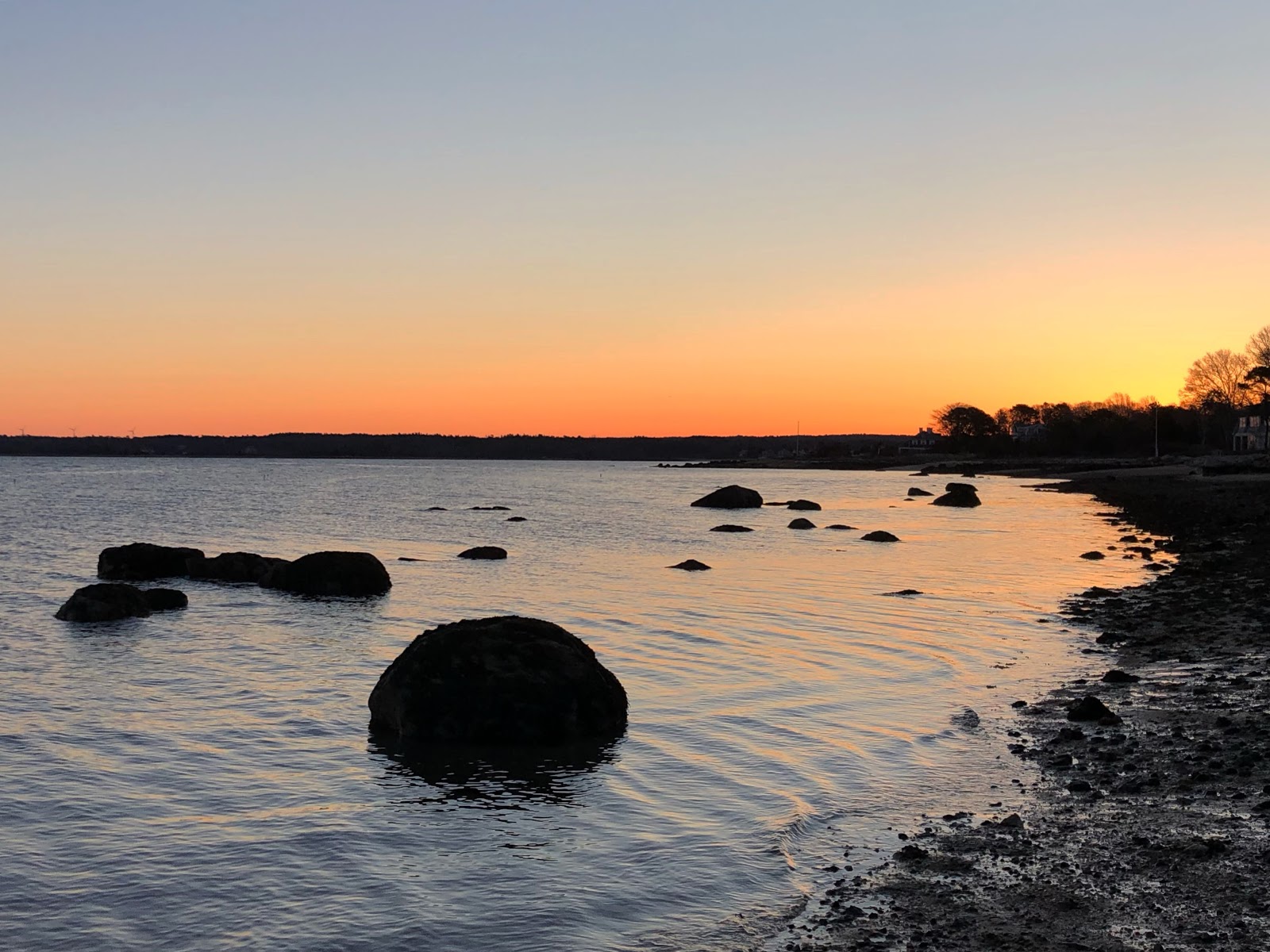
    Sunday I was looking out at Buzzards Bay and watching the gusts of wind ripple across the glassy water.  It reminded me of those days reading the rivers and lakes that we rowed on.  And I remembered that I miss rowing.

  • Prevailing Winds

    The prevailing winds are different as you move from the North Pole to the South Pole.  Up in the north where I am we have the westerlies.  Which means that the prevailing winds blow from the west eastward.  Further south, roughly around the lattitude of the Gulf of Mexico, the winds blow in the opposite direction, from the east downward towards the equator in a southwest direction.  Below the equator the winds blow from the west in a northeast direction towards the equator.  Further south, the winds blow from east to west.

    Prevailing winds are a strong consideration when you’re planning east-west travel as it will slow down the trip and burn more fuel as you fight the winds.  Going west to east will shorten the trip and save on fuel.  These are factors in flying, but also in sailing.  Adding to the economy in my lattitude on an east-west trip is the Gulf Stream ocean current.

    Prevailing winds also factor into other things.  You don’t want to be downwind of a sewage treatment plant.  Or in my case a next-door neighbor who chain smokes.  Important considerations like these require a sense of place, an understanding of the prevailing winds, and foresight into who is moving next to you.

  • Jeffrey Amherst

    The winners get to write the history.  That maxim has dictated what we’ve learned in history books, at church or in the stories told time and again through generations.  Whether its historical perspective, political correctness gone awry or a long overdue reset, there’s no doubt that some of the historical figures of the past are getting re-evaluated over the last decade or so.

    General Robert E Lee, Columbus, Hannah Duston, and Tom Yawkey are some of the historical figures honored in the past who are being re-examined in the present.  Outrage addiction is real, and there are plenty of people who look for anything they can find to be indignant about.  Some people ignore the realities of the situation people were in at the time, like Hannah Duston’s immediate peril should she be discovered escaping that island on the Merrimack River.

    Jeffrey Amherst is a good example of one-time hero being re-examined with the lens of history.  There’s no doubt that Amherst was a man of action trying to win the French and Indian War.  There’s no doubt that the settlers in the region were enduring atrocities at the hands of the Native Americans allied with the French.  But history points out that Amherst is the man that approved giving smallpox-infected blankets to Chief Pontiac’s Ottawa who were wreaking havoc on Fort Pitt and the settlements in Western Pennsylvania.

    In a letter to Colonel Henry Bouquet in 1763 Jeffrey Amherst approved of a plan to “to try Every other method that can serve to Extirpate this Execrable Race.” in response to Bouquet’s letter asking for permission to “inocculate the Indians”.  Biological warfare utilized to eliminate a problem during war.  It’s hard to justify the action, but it’s easy to understand if you look at the North American settlers killed and kidnapped over the past 70 years in wars between the French and British.  There were horrors on both sides.