Category: Culture

  • Where Deep Roots Grow

    From the bottom of my heart
    Off the coast of Carolina
    After one or two false starts
    I believe we found our stride
    And the walls that won’t come down
    We can decorate or climb or find some way to get around
    Cause I’m still on your side
    From the bottom of my heart
    — Jimmy Buffett, Coast of Carolina

    Long-term relationships are about finding the space to grow together. We’ve all seen examples of couples who find a way to make things work because they want to make it work. We’ve seen the opposite too. The thing about walls is they’re always there—we either find a way around them or we let them close us off from the people who are most important for us.

    Relationships work when we break down barriers. They fall apart when we let the barriers define the relationship. None of us has to think too long about a friendship or romantic relationship that suffered from one or both parties seeing the differences of opinion but not the way around it. Nothing grows very well in a tight box.

    We live in a world that amplifies our differences. What might grow if we knocked down a few walls instead of throwing up more? The very question prompts a new level of thinking, doesn’t it? Thinking in possibilities instead of limitations opens us up for deeper relationships, wider experiences, and stronger bonds.

    It brings us to a place where deep roots grow.

  • Time for a Friendly Visit

    When a friend calls to me from the road
    And slows his horse to a meaning walk,
    I don’t stand still and look around
    On all the hills I haven’t hoed,
    And shout from where I am, What is it?
    No, not as there is a time to talk.
    I thrust my hoe in the mellow ground,
    Blade-end up and five feet tall,
    And plod: I go up to the stone wall
    For a friendly visit.
    — Robert Frost, A Time to Talk

    Imagine the audacity of pressing deadlines and the urgency of the moment pulling us away from what is most important. And we willingly do it, thinking there will be another time when we’re less busy and feeling less obliged to do what clearly must get done. Where do we best spend our time, if not for furthering relationships with our fellow time-travelers?

    We hear about rampant depression and a longing for something tangible. There’s nothing tangible in the comments section of those popular social media platforms. We must meet each other face-to-face and sort out the world together, or together we’ll spiral deeper into chaos. To do this requires nothing more than meeting halfway. Doesn’t that idea feel as antiquated as the horse in Frost’s poem? Yet it remains the obvious answer to the problems of the world: diplomacy, compromise, mutual respect and understanding. These aren’t signs of weakness, in fact just the opposite: they betray inner character and a measure of emotional development.

    We are the diplomats, you and me. We walk across the minefield of distrust and find common ground. Seeking first to understand, and then to be understood. There’s nothing easy about this in a world that rewards mic drops and jaw-dropping tweets, but the world has always been divided between those who make all the noise and those who quietly keep things from falling apart.

    Imagine if we all simply stopped shouting and began to listen instead?

  • Knowing the Songs

    I can see, it took so long just to realize
    I’m much too strong not to compromise
    Now I see what I am is holding me down
    I’ll turn it around
    Oh, yes, I will
    — Boston, Don’t Look Back

    When you go to a concert to see a band play, are you looking for new or familiar? Go to an Eagles or Paul McCartney concert and it’s a greatest hits collection where you know every song and everyone around you does too. It becomes a sing-along festival. Tasty, but not exactly pushing your boundaries.

    Think about the last time you went to see an up and coming band with all the buzz and you didn’t know any of their songs at all, but want to see what all the fuss is about. That was a voyage of discovery, one that carried you to places exciting and new. You knew you were going to know those songs soon enough when that band broke like a wave over the airwaves.

    That band that you’ve known for years knows the score. They want to play you the new stuff, because that’s what excites them the most. But they know people pay to see the songs they love performed live. So they layer in the new with the old, hoping the ratio is just right to keep the crowd from going flat.

    We humans play our own greatest hits in our head. We tell ourselves we’re going to change but stick with the same soundtrack we had on yesterday and the day before. Maybe we have a circle of fans around us that only want to hear our greatest hits and feel uncomfortable when we start to change. It’s easy to get trapped in that old soundtrack.

    The trick to turning things around is to layer in the new songs. Change a small habit, then another. Learn something new today and stretch even further tomorrow. Pretty soon you’ll find that you don’t look back so much anymore because you’re so busy becoming what you want to be next. We might even find that our best fans enthusiastically go along for the ride, changing with us.

  • No Regrets

    The Regret Minimization Framework is simple.
    The goal is to minimize the number of regrets in life.
    So when faced with a difficult decision:
    (1) Project yourself forward into the future.
    (2) Look back on the decision.
    (3) Ask “Will I regret not doing this?”
    (4) Act accordingly.
    @SahilBloom

    This Regret Minimization Framework business seems a bit hokey, doesn’t it? Even when you watch the incredible Jeff Bezos video where he admits to being a bit of a nerd with the name. But when you watch it through the lens of perspective in who Bezos has become, and what has become of Amazon, well, it seems less hokey.

    Which brings us back to the question: what will you regret not doing today? Will that spur you to action or will you punt it to tomorrow with some story that you’ll really do it then? Isn’t it better to punt the safe route to the future, and tell ourselves that we can always go back to it if these things we’d regret not doing don’t work out?

    Choose the path of no regrets.

  • Wanting Wild

    “I try to be good but sometimes a person just has to break out and act like the wild and springy thing one used to be. It’s impossible not to remember wild and want it back.” — Mary Oliver, Green, Green is My Sister’s House

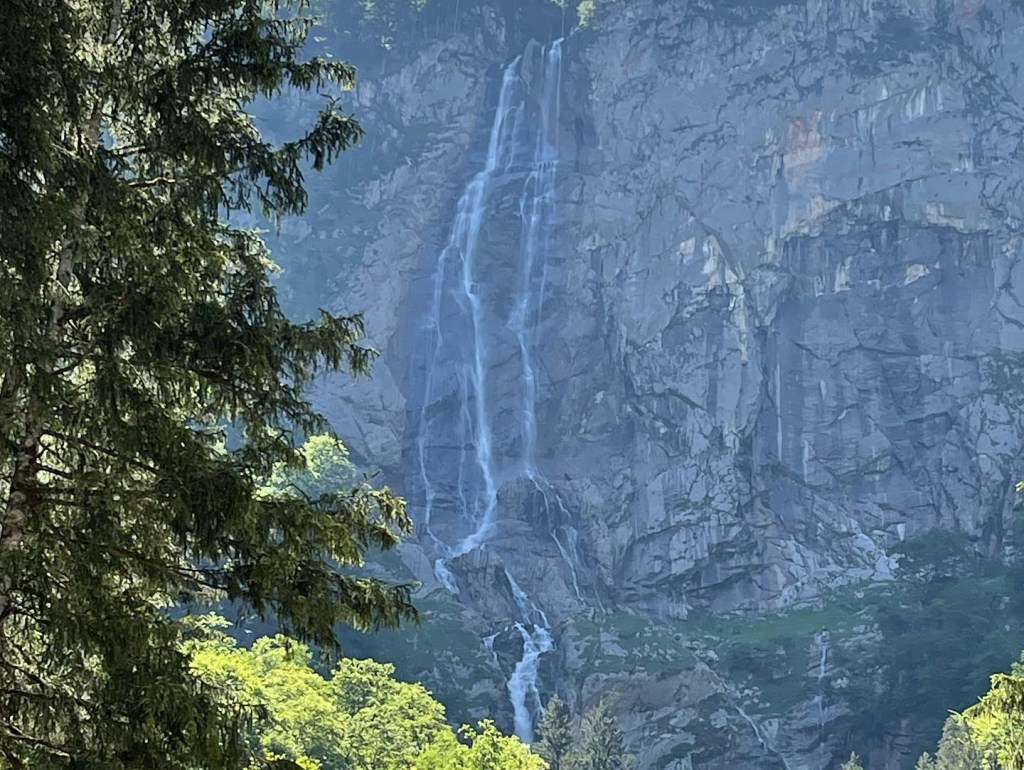
    If we’re lucky, we never really grow up, we just get a bit more creative with our diversions. I used to crave responsibility, now I try to build enough flexibility in my schedule to chase waterfalls. Intense curiosity about the world around us is the key. Life is a quest, after all, adulting be damned. What are we wild things to do but seek adventure where we might find it?

    “In conclusion, it appears that nothing can be more improving to a young naturalist, than a journey in distant countries.” ― Charles Darwin, Voyage of the Beagle

    Adventure is easier when you’re on the road. You see things all the time that stir your soul. It’s much harder when you’re working in an office or sheltered in place at home. If we don’t venture out into the world we’ll never find out what we’ve been missing. Charles Darwin found adventure on the other side of the world, Henry David Thoreau found it a short walk from his bed. Adventure isn’t about how far you go, it’s about getting out of your own shell. What is a shell but a prison of our own making?

    Wild is always stirring about inside of us. We must want it back in our lives enough to seek it. The world will always ask for everything we’ve got. We ought to be the wild thing that rebels against that and turns towards adventure instead.

  • Ambient Noise

    After a few nights in New York and New Jersey, I returned to New Hampshire to reflect on the differences. I’d hiked in pristine woodland next to gorgeous streams, the kind of stuff you see regularly in the White Mountains of New Hampshire. I’d stayed in a beautiful resort surrounded by hills. I’d eaten at a vineyard next to a lovely river. I’d visited New York City itself, deep in the heart of it. And capped my visit to the city with a trip to Liberty Park in New Jersey with its striking Upper Bay view of Manhattan and the Statue of Liberty.

    It was all beautiful. The days and nights were lovely. The people were generous and friendly. You learn to love the spirit and energy and vibrancy of the place and miss it when you’re away from it. And yet I’ve never gotten used to the ambient noise.

    The Metropolitan New York region has a relentless buzz that stays around you all the time. If you live there you likely don’t even know it exists, but when you’re a country mouse coming to the big city regularly you pick right up on it. The automobile traffic, the air brakes on trucks, the train whistles, the sharp roar of planes and helicopters flying overhead, the steady rumble of ships on the Hudson River and the constant beeps and thumps and shouts of close proximity that collectively create a soundtrack of urban living. This soundtrack bleeds for miles up the Hudson River, far out into the Atlantic on Long Island and deep into the hills of New Jersey and Connecticut. It begins with the roar of the city and fades to the sound of sprawl.

    Hiking the amazing Harriman State Park next to a pristine river, you’d think the white noise would drown it all away. But reach a bit of elevation and you hear the traffic informing you that you must go even deeper into the green splashes that surround the map of New York City. Even Harriman, as big a green space as it is, has roads full of commuters cutting through it, like Central Park in the hills of the Hudson River Valley. Those roads surely serve, but they also detract if you let them. Don’t let them.

    For it’s all so very beautiful. Even the ambient noise, that guarantees no escape from the world, fades just enough when you focus on what they’ve protected from the sprawl. This is a place that offers the advantages and disadvantages of one of the greatest cities in the world, the constant beat of progress and growth and rising to the occasion that New York is famous for. But within an hour are these places like Harriman where you might immerse yourself in nature, so long as you accept the soundtrack playing way in the background and focus on the wind in the trees and the water finding its way through ancient boulder fields.

    The farther away you get from the ambient noise of New York the more faint it is. Somewhere along that spectrum of noise we reach a place where we feel the ambiance most vividly. Life isn’t about escaping from the world, but finding our place in it.

  • Gridlock Perspective

    If you had any doubt that we’ve mentally come out the other side of the pandemic, drive around a few of the metropolitan areas. Los Angeles, San Francisco, New York, Miami, or any other major city or the connecting smaller cities that they’re connected to. The roadways are all back to gridlock traffic. How some react to that reality is distinctly different. Welcome back–who are we now?

    When traffic is moving, some people dial up the crazy. I see more mad dash drivers than ever trying to squeeze into every pocket, using the breakdown lane for passing, multi-tasking with texting… whatever. It can all seem mad, because it is maddening. So how do we counter the madness outside the windshield?

    When I get tired of the same old characters around me, I’ll pull into a rest area or take an exit to stop for five minutes, whether I need to or not. It’s like moving out of a neighborhood with too much drama—instant refresh! Get out of the car, walk around a bit, refuel the body and mind. And when you get back on the road, the new “neighborhood” seems interesting enough to carry you through.

    I know a lot of people crank up the music on commutes, and sometimes I’ll do that too. But frequently I’ll use the time to reconnect with people using [gasp!] phone calls. Conversations are like time machines, transporting you for miles seemingly in an instant. Likewise, podcast interviews do the same thing for me. The time isn’t wasted, for the mind is moving faster than the car you’re in.

    Nobody welcomes traffic, but when we can’t time our trip better we ought to accept it as a part of living in this particular time. A bit of perspective after what we’ve all been through, and a desire to be in a better place despite it all. After all, aren’t we all trying to get somewhere a bit better than where we just were?

  • A Different Perspective on Liberty

    When you see the Statue of Liberty from the New Jersey side, it feels a bit surreal. We’re all used to that image in our head of the face of Lady Liberty, but how often do we ever think of the back? Yet that’s what New Jersey sees. I recall a joke about Lady Liberty forever turning her back on New Jersey, but let’s flip that script around for what’s really been happening since 1886: New Jersey’s always had her back.

    Liberty Park offers a striking view of Manhattan and Frédéric Auguste Bartholdi’s bold vision of American liberty. He called his work “Liberty Enlightening the World”. Liberty represents the hopes and dreams of millions, standing exposed to the elements for 13+ decades. 1886 was within the lifetimes of Civil War veterans, think about what that statue meant to them. What it still means, when we look at the world with new perspective.

    Liberty connects generations, and she stoically stands, not just American’s, but for the world. The work was literally a gift from the Old World to the New. We ought to remember the message in the gift. Forget the people trying to co-opt her message for political gain, Liberty represents all of us. When you look at America’s Liberty from New Jersey, you aren’t just looking at it, you’re a part of it. And from that perspective, shouldn’t we all have her back?

  • One Drop

    Does a drop stay still in the ocean?
    Move with the entirety
    and with the tiniest particular.
    Be the moisture in an oyster
    that helps to form one pearl.
    — Rumi

    We are all drops in the infinite ocean, part of the whole yet trying to make a splash. Why do we focus so much on the splash and so little on being part of the whole? How do we reconcile our smallness in the vast infinity?

    One drop at a time. Life is a series of connections that unite and pull us apart across time. This collection of jumbled words, dropped into infinity, won’t change the ocean. But in an instant of molecular attraction, it drew Rumi, you and me together.

    Isn’t that something?

  • Culling the Information Feed

    Information and entertainment sources like Twitter, Instagram, Facebook have their place. I’ve found each highly enjoyable at points in my life, and each infuriatingly addictive for all the wrong reasons at other times. I look back on time wasted, time I could have spent immersed in something better, and feel disappointed in myself. And like many people I grow to hate the very thing that had me so fixated for chunks of my life. At these times I cull the information feed.

    I hear the voices of those who tell me they simply scroll past posts that are annoying or designed to get a reaction. That’s sweet. I mute, unfollow, unfriend. This is early-stage app culling, but it does wonders for your sanity in the moment.

    If you use Twitter for a news feed and start following an endless stream of personalities, you soon find yourself overwhelmed with information from them, or worse, information from people they’re informed by. This is designed to draw you in, prompt you to follow that person too, and pretty soon you’re full-on addicted to an app. Next stage culling involves clicking on every one of those unsolicited posts and teaching the algorithm that you’re not interested in this Tweet, or to mute or block the source so you’ll never see it again (you won’t, but you’ll still be subjected to the reaction to the source in your feed).

    The next stage is to delete the app itself. Say goodbye to it for awhile, post about leaving the party (It’s not you, it’s me) or simply disappear from other people’s feed for a time. I used to believe the world cared whether or not my updates and clever posts would continue in their lives. The world is completely shell-shocked by information and doesn’t particularly care whether we posted that day or not. If anything, our absence gives them a microsecond of breathing room during their scroll. Addition by subtraction, if you will.

    The thing is, it’s okay to cull your information feed. Delete the app, it’ll still be there if you want to get reacquainted someday. But what you find is that you’ve both changed in the time you’ve been absent from each other’s lives. And in the process of reconciling that, you’ll find that you just not into each other anymore.