Category: Garden and Home

  • Karma’s Gonna Get You

    This morning I was inspecting the grapes, which seem to be thriving this year, when I felt  a familiar stinging sensation on my hand.  Looking down quickly I saw the reason, I’d grabbed the fence right at the spot where a hornet had built a nest in the cavity made by the U-shaped metal top rail.  And there was the hornet flying about still annoyed with me.

    Wasps and hornets offer value to the garden, hunting pests that would otherwise damage your plants.  But they also tend to build nests in places inconvenient to humans trying to live in the same space.  I’ve seen a couple of other hornet nests in the fence but this one was a surprise for me.  Unfortunately it’s right next to the gate to the backyard and a safety concern, so I’ll have to spray this one.  I don’t mind coexisting with hornets but not when they endanger my family and guests.  They aren’t my favorite neighbors but they are a sign of a healthy ecosystem.  In a year when the bee population seems to be lower in my garden, I’ll take any positive I can find.

    That said, I view this entire incident as karma, as last night I finally got around to destroying a nest of yellow jackets in my grill.  They built a nest the size of a Nerf football right behind the propane tank.  That would qualify as unacceptable risk for me and anyone else that uses the grill or opens the cabinet door for the grill brush.  Nope, they had to go.  And karma came in the form of a sting this morning.  As I type this the sting still throbs a bit to remind me that it’s best to look carefully before grabbing hold of anything.  Another lesson from the garden…

  • Tigers and Time Travel

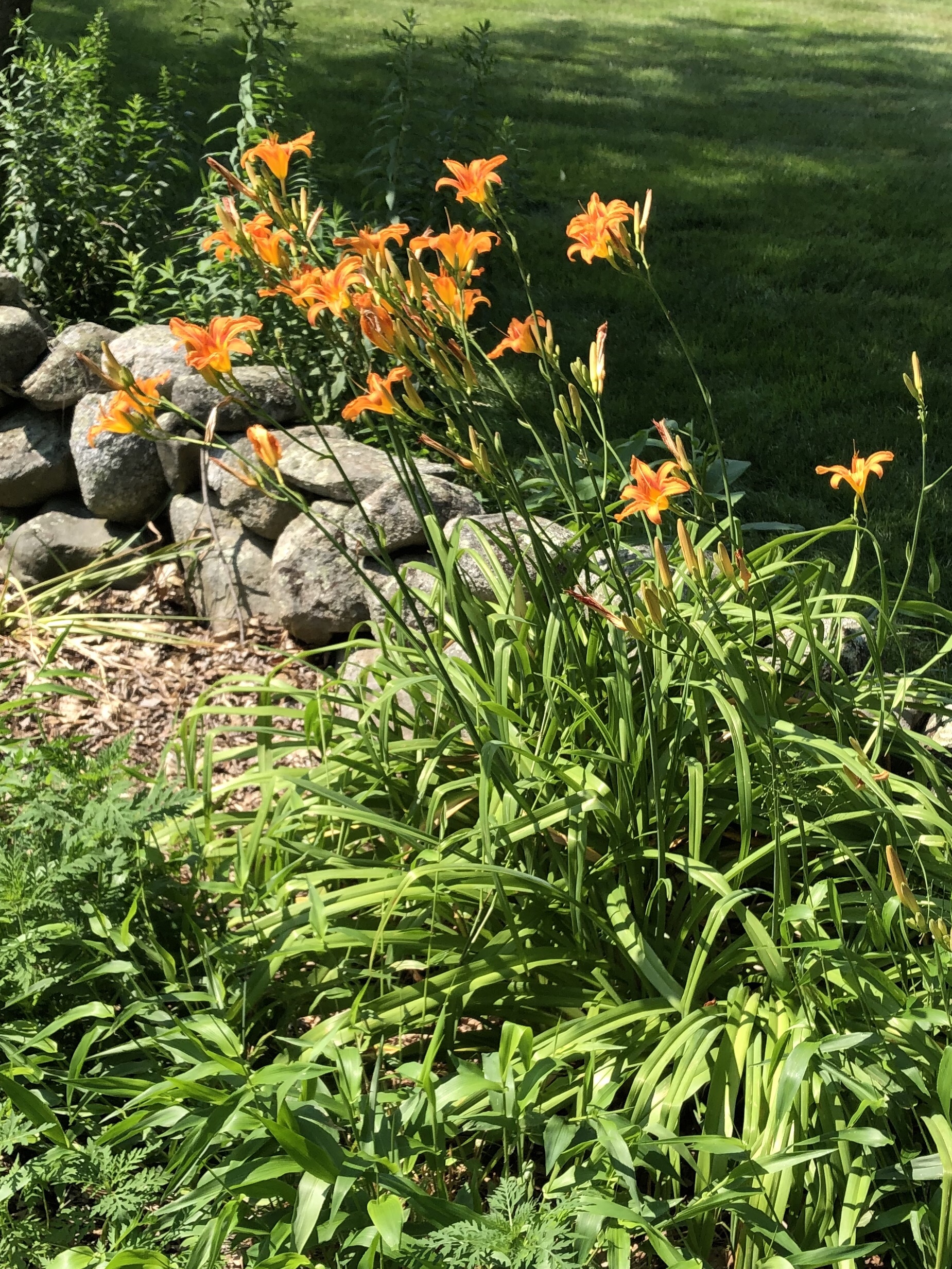
    This is the time of year when the orange time machines announce they’re back. Along old stone walls, foundations of farmhouses and in places random today but logical once upon a time. The tiger lilies are back.

    The land whispers to us of those who came before us. Tiger lilies were planted generations ago, divided and planted again at the next generation’s homes, and so on. Tiger lilies came out of China in the middle of the 18th century, made their way to England in the early 19th century and then to the United States. Tiger lilies are entirely edible, from the bulbs that supposedly taste like potatoes to the flowers. But most people plant them as ornamentals.

    Tiger lilies are a common sight in New England’s summer. On a 3 1/2 mile walk around the block I passed maybe a hundred of them. Time machines of orange and green, whispering the names of generations of people long gone who brought them to this place.

  • Playing Favorites

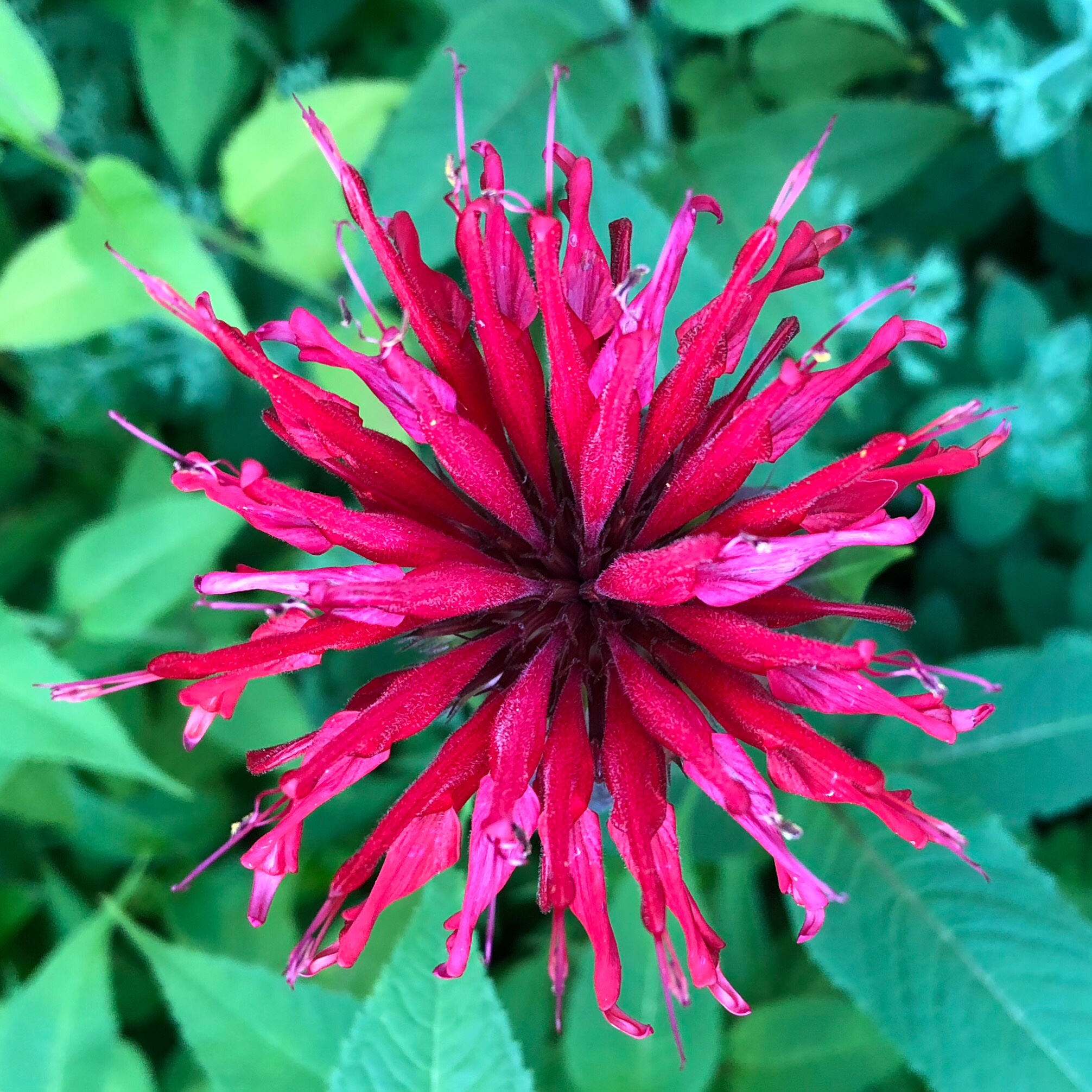
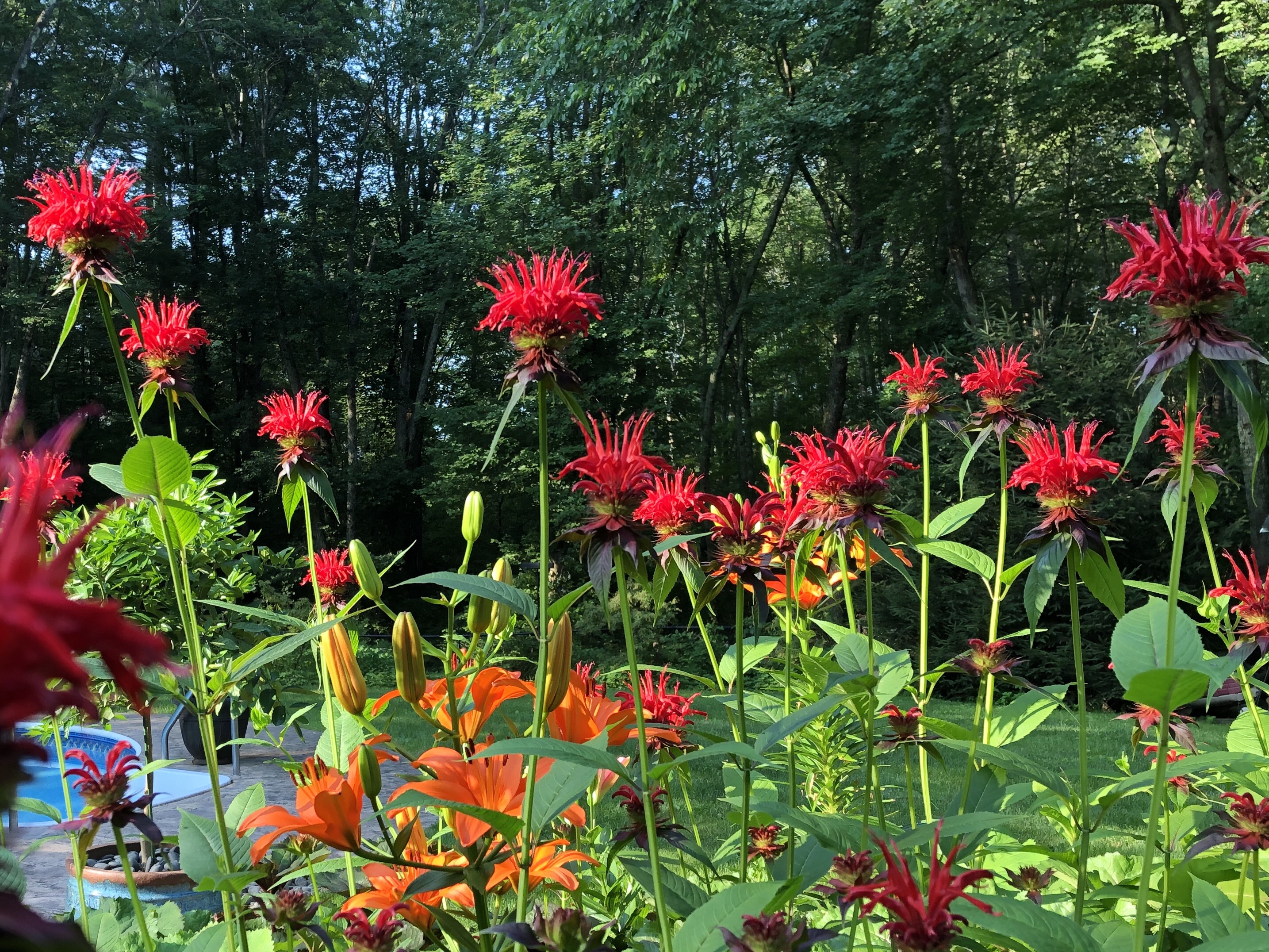
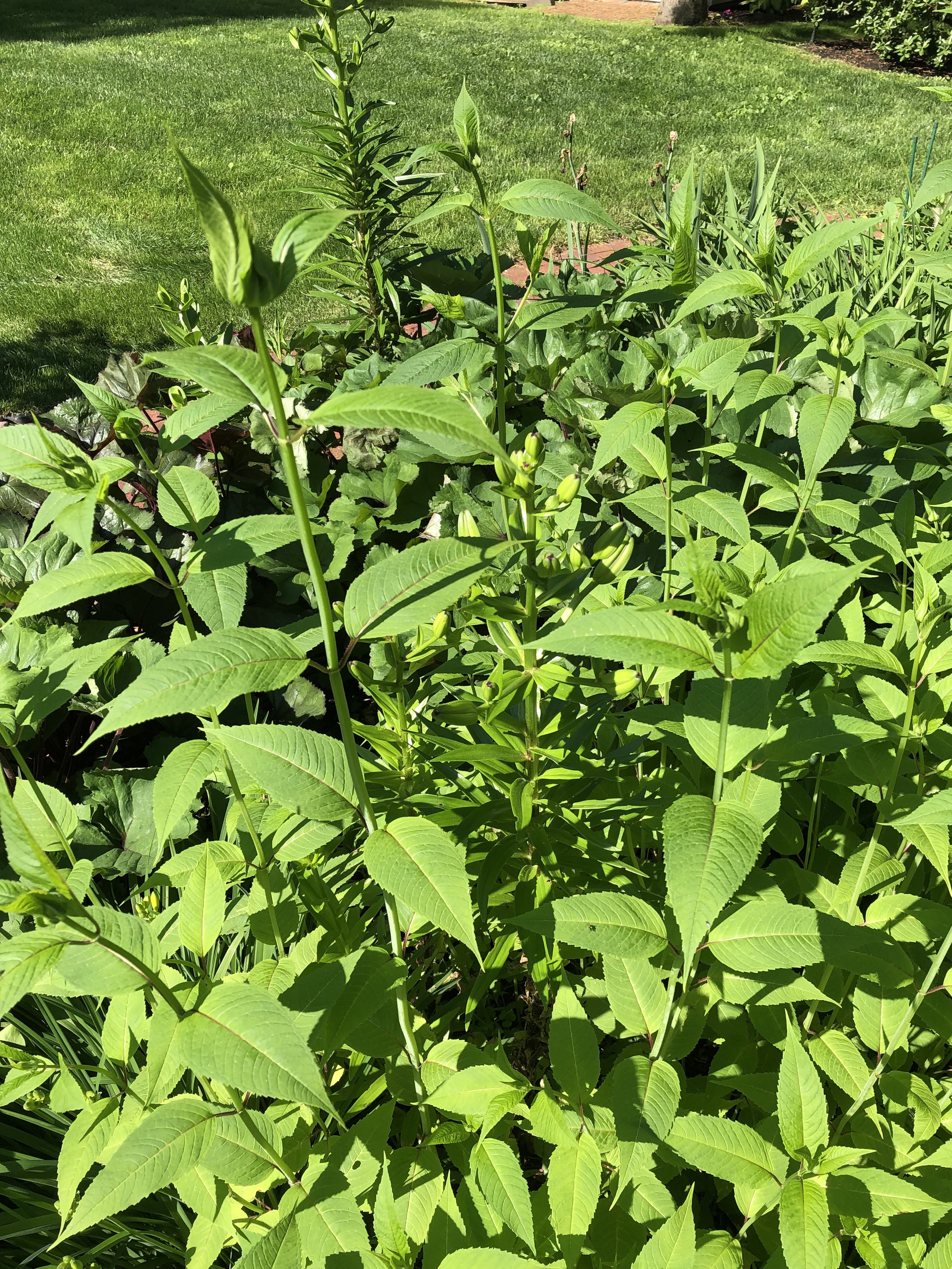
    This is the time of year when taking the long view pays off. Perennials offer stability to the garden, have an excellent return on investment compared to annuals, and in their time put on a show of their own. And with the heat of summer New England gardens explode upward like a 4th of July fireworks display. And like the large comets that wow the crowd there’s one standout above the rest. Like a Scottish Highlander, it displays unruly red tops, toughness of spirit, wild tendencies and tight-knit roots that keep the clan together. Monarda, better known as bee balm, takes the stage.

    The lilies and day lilies look spectacular and hold their own in the garden. The daisies offer a vibrant splash of white and yellow. The annuals are filling in admirably. But bee balm steals the show. Masses of brilliant red explosions hover over the garden, commanding attention for weeks. And boy do they get attention. The hummingbirds are all over them. Butterflies are drawn to the yard. And guests unfamiliar with these marvels ask about them more than any other flower in the garden.

    It’s appropriate that they burst on the scene on the 4th of July week. I can think of no other combination that would match the pyrotechnics so well as bee balm and lilies. Out of respect the dahlias, purple coneflower, balloon flowers and others hold off their own performance to let these two tango above the green masses. I know we aren’t supposed to play favorites, but I can’t help myself; Bee Balm is the one. There’s nothing else like it in the garden.

  • It’s Not a Miracle

    Entertaining guests yesterday I had the question and answer exchange every gardener has:

    Question: “What’s your secret for growing such a beautiful garden?”

    Answer: “Miracle Grow.”

    This of course is completely inaccurate. The real answer takes more time than a cocktail conversation allows.The person asking knows the answer as much as I do. Is Miracle Grow a good gardening hack?  You bet.  Does it accurately reflect what gets you to a beautiful garden.  Not at all.  But in the Q & A session at a party small talk should be kept small.  Follow-up questions indicate a real commitment to learning more than “use liquid fertilizer” and those who dive deeper are rewarded with deeper answers.  Which begins with “You grind away for years having success and epic failures, incremental improvements and adjustments along the way. You learn what works and keep doing that, learn what doesn’t and change how you do that.”  And if they want more then the details come along.  Gardening is a long climb towards a level of mastery that I’ll never reach. But I’m better for having made the climb than someone who hasn’t. At gardening anyway.

    Robert Greene writes brilliantly of mastery in his book of the same name. He describes the phase of developing skills that move you to mastery as the Ideal Apprenticeship. I know with conviction that I’m no master gardener; I’m somewhere in the next phase after apprenticeship, which Greene calls Creative-Active. With recreational gardening I’m not sure there’s a mastery stage in my future. I don’t aspire to be a horticulturist or botanist or landscape architect. Being a knowledgeable enthusiast is enough for me with gardening.

    And what of other interests? Career and family, of course, and the other pursuits of history, travel, writing and the like? Does being a generalist dilute each pursuit? No question. Does it mean pursuing more than one interest isn’t beneficial? That depends on what you think your best life should be. Personally I’ll take Jack-of-all-trades, thank you. But that doesn’t mean you can’t strive to be your best in each of those “trades”.

    We live in a time and place where pursuing fancies like an ornamental garden or casually researching the best London pub crawl route for an October visit while poolside on an iPhone (guilty) are available options. I’m well aware that the settler who first cleared and farmed the land I’m on never debated whether to move the dahlias from one side of the garden to the other to give the variegated impatiens room to grow. Mastery for that settler meant nurturing crops to a successful harvest, hunting or fishing for that night’s dinner, and generally staying alive in an unforgiving environment.  Mastery in recreational gardening isn’t a life or death matter for me. It’s like making your bed in the morning; It’s not going to change the world in any meaningful way, plenty of people get along just fine not doing it, but it elevates my day a notch higher for having done it well. And isn’t that enough?

  • The Daily Buzz

    I keep the news at arms length most days, but I’m generally aware of what’s going on in the world.  One headline that’s hard to miss is the distinct threat to the bee population as commercial bees are on the decline due to constantly movement from farm to farm, disease and pesticides take a toll on them.  Add in the threat to native bees as development swallows up wildflowers and we find ourselves in a precarious place.  No bees, no flower pollination.  No pollination no food.  I know I’m simplifying it, but in general that’s the problem we’re facing.

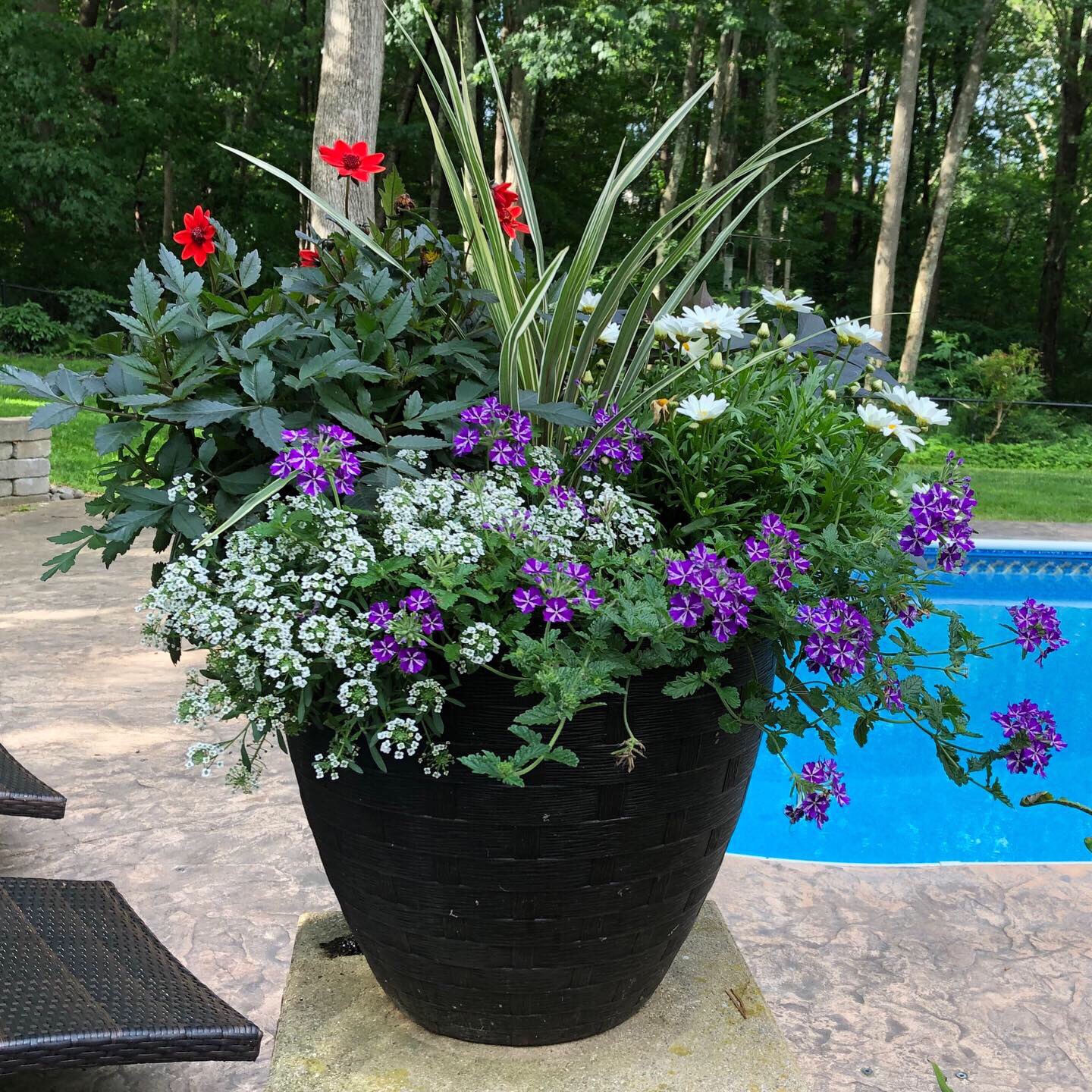
    I have friends who post constantly about bees on social media.  I prefer to plant instead.  If the bee population is suffering, I’m offering up my yard as a sanctuary garden.  I don’t use pesticides as a rule, preferring traps for Japanese Beetles and leaving most of the plants to fend for themselves.  And so this morning, as I sipped my coffee and watch the sweat bees dancing along on the Sweet Alyssum I cast my vote for the New Hampshire bee population.  The butterflies and hummingbirds don’t seem to mind either.  And I’ve made a similar bee and butterfly sanctuary down on the Cape, where the Pocasset garden, a standout well before I got involved, has recently been supplemented with bee balm, Purple Coneflower, and cilantro.

    I’m no expert on bees, but I’m trying to learn a bit more about them.  What I’m sure about is that they could use a little help from people in the form of more flowers, and maybe a little less asphalt and concrete.  It’s not uncommon to see more wildflowers seeded and left to grow on the sides and median strip of highways.  Generally more awareness creates better ecosystems for all of us.  As with everything though, it starts at home.

  • Finding the Essence

    I grew up following my grandfather around the garden. By all accounts he wasn’t a good husband or father to his 16 kids, and I’m told he was once a vicious drunk. But he was a good grandfather to me. Age likely tempered him as it does most of us, but I think it was largely because my memories of him were from that garden. With 16 kids you need to grow some of your own food, and he knew his way around the garden. He’d likely shake his head at my flower garden, wondering why I’d take up so much valuable land on ornamentals. But I’ve raised a more manageable number of kids, and there’s benefit to flowers that go beyond caloric intake.

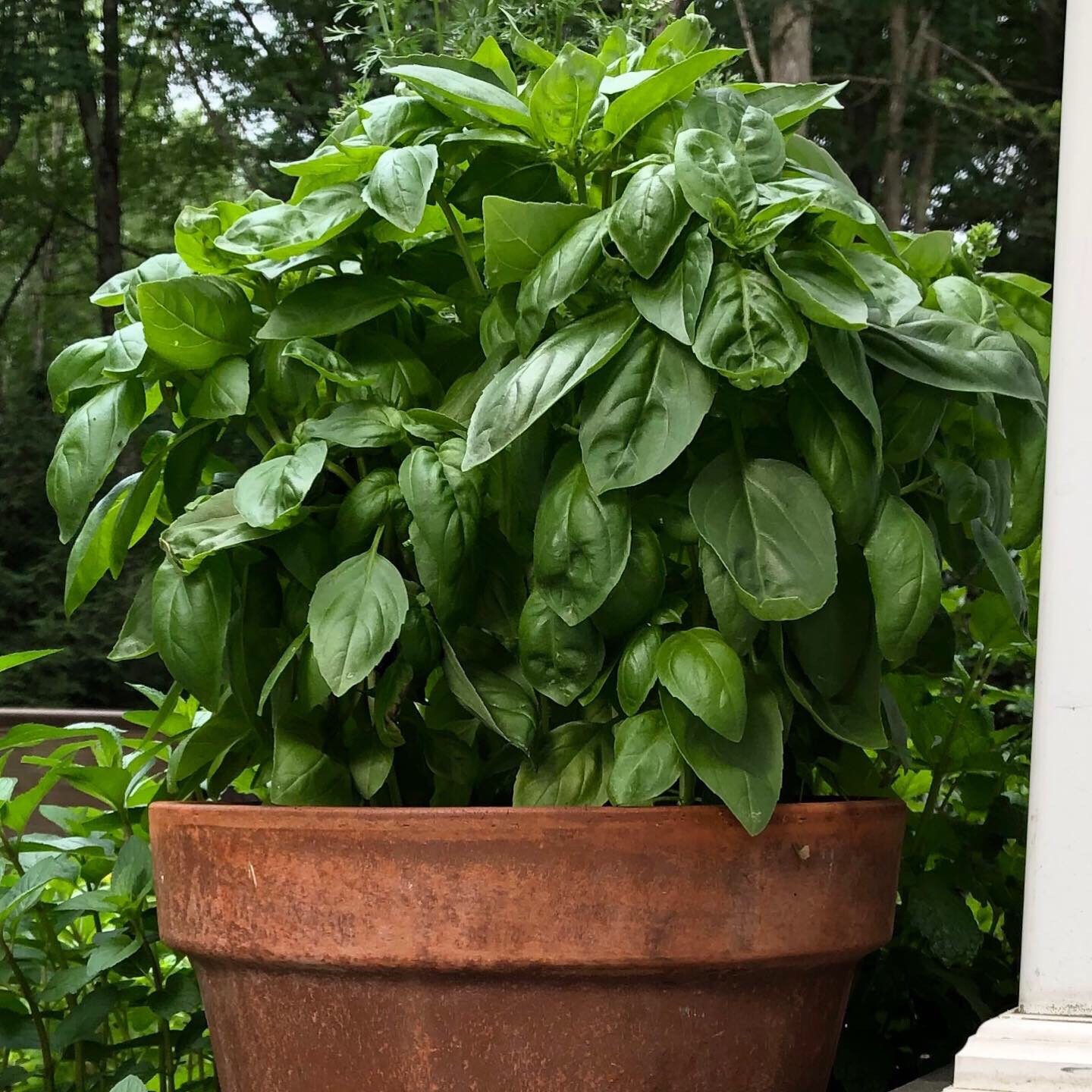
    I think of myself as primarily a flower gardener, but taking stock I have a respectable number of herbs and edibles mixed in; basil, cilantro, oregano, lemon verbena, chives, monarda, dill, bell peppers, jalapeño peppers and four varieties of tomatoes. I also have two apple trees, blueberry bushes, a lime tree and coffee bush in pots… and those frustratingly unproductive grapes. This year I opted out of some other vegetables I’ve traditionally grown like nasturtium, sunflowers, string beans and squash because they simply overwhelmed the garden.

    The harvest is already coming in, particularly the herbs. The challenge now is to keep up with them. Which means expanding the menu. Growing a new herb or vegetable offers two unique experiences; figuring out how to optimize its growth and then what to do with it when its time to harvest. When I was in Israel the employee kitchen had bunches of freshly picked mint that people would plunk stem and all into their tea.  I’ve been growing mint for years but never thought to do that until they taught by example.  Now that the mint is exploding I’ve taken to drinking more tea with fresh mint and give a nod to my former co-workers for showing me the way.

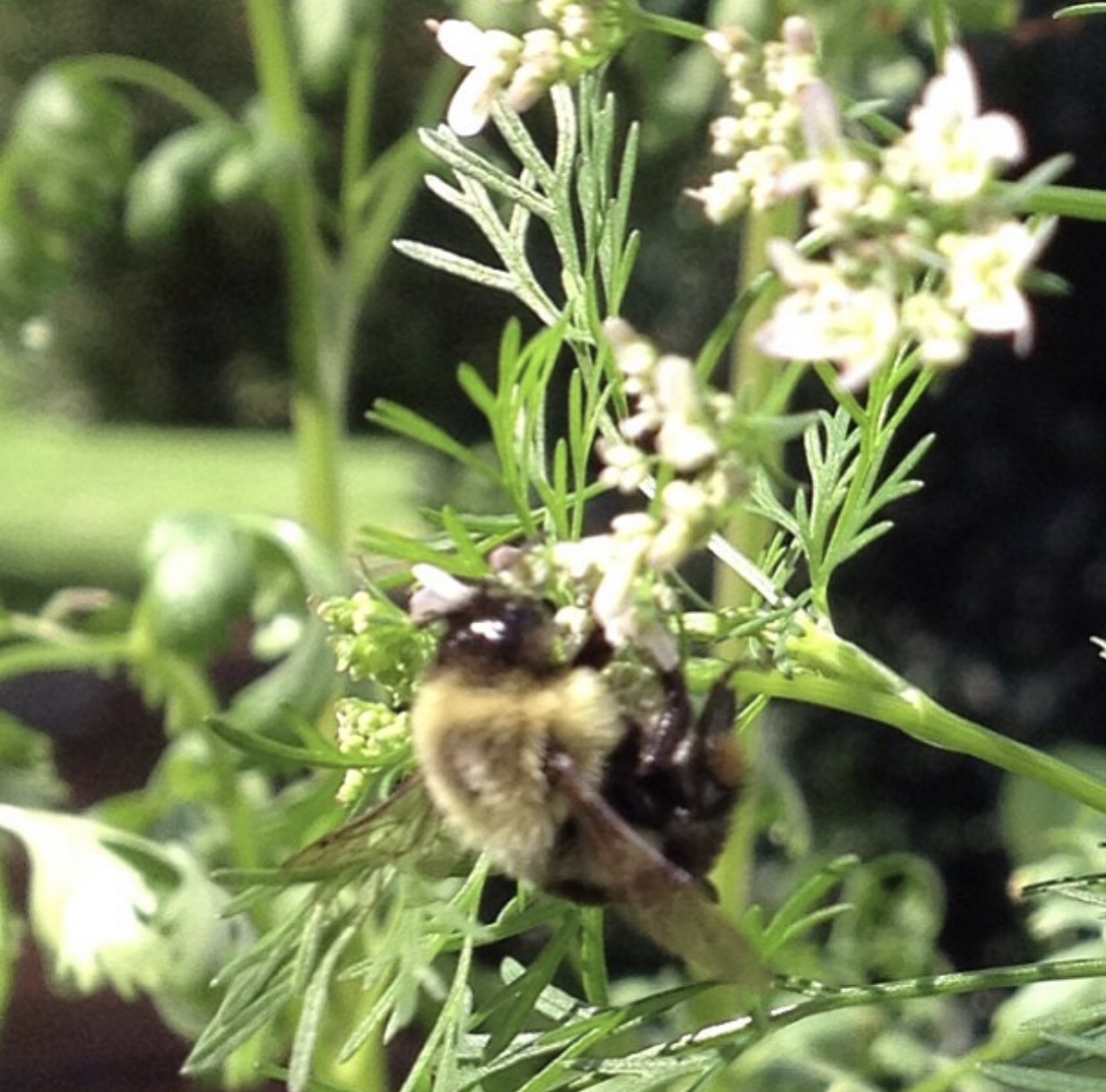
    So consuming the edibles is one benefit, but the larger gift is in living amongst them day-to-day. Rub the leaves and smell the oil released on the fingertips. Flowering herbs like cilantro, chives and monarda (bee balm) are good for the local bee population, and good for me as I enjoy the show as they work their way around the garden. The garden becomes multidimensional. Good for the senses, good for the palette, good for the soul.

    I think my grandfather was essentially a good man, but he was caught up in the frustrating struggles of his life and alcohol poisoned his mind. The garden drew out his attributes, and I saw the good in him. I haven’t struggled with the demons he struggled with, but I know I’m better for having been in the garden. And so was he.


  • Easy Like Sunday Morning

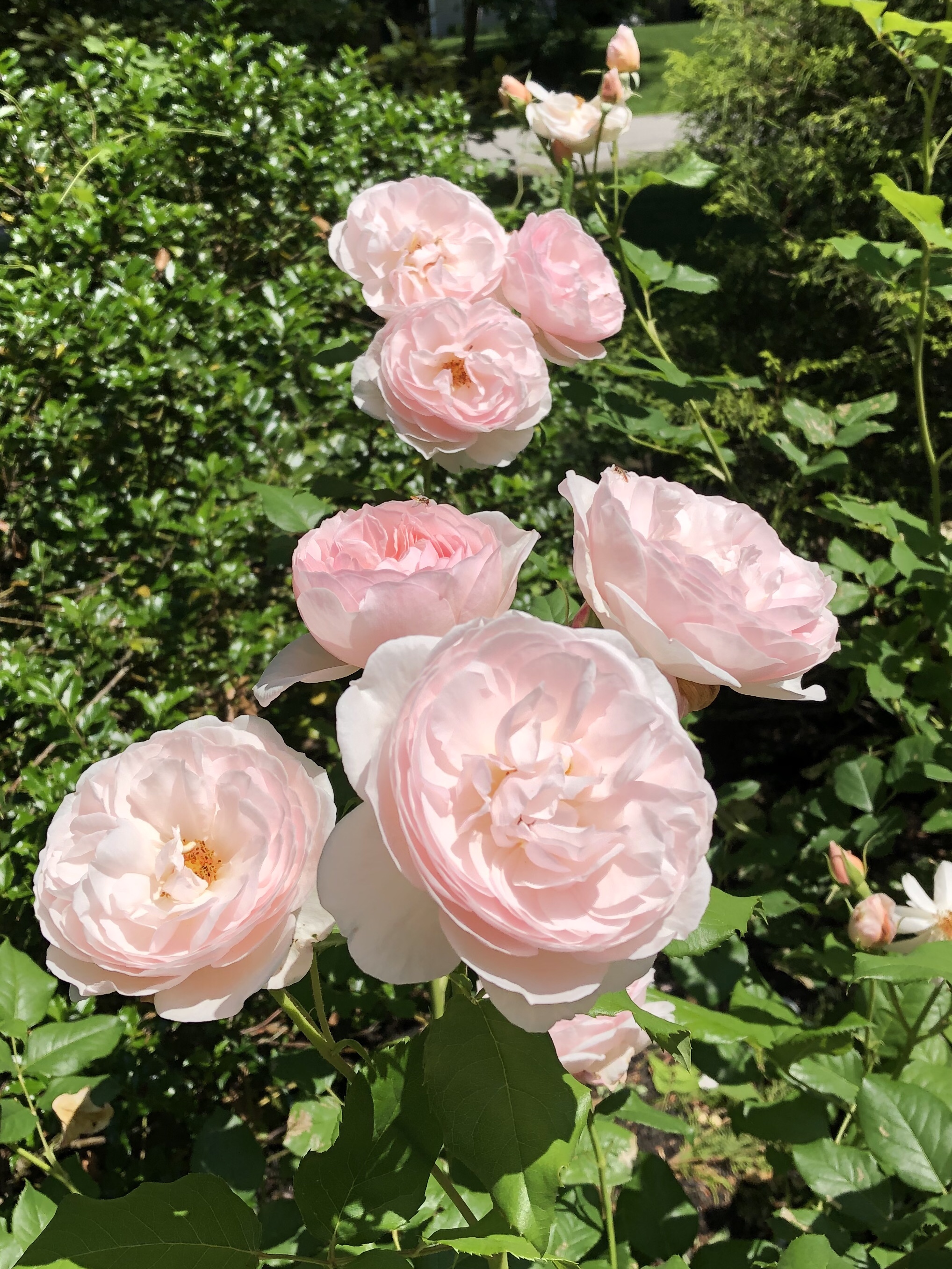
    Sipping coffee in the garden while watching the bluebirds fly between the feeder and the birdhouse I put up for them last year. Summer is finally here, the tea roses are blooming and the next round of garden perennials are about to burst in color. Monarda, hosts, day lilies, geraniums and rugosa roses are up soon. The garden is a delight of change.

    Morning is for reviewing what’s working and what needs work. I’ve filled in the holes in the garden and now maintenance is the rule of law. Easy like Sunday morning, but the rest of the day was filled with chores. Indeed, there are no breaks for the gardener in June. Pruning tree limbs, weeding, dead heading, staking, planting fill-ins, and house chores to round out the list. No, Sunday isn’t a day of rest for me. But the days fly by as I’m lost in the work, and most days I can’t say that about my chosen career. But its time to wrap this up – as you might expect I have work to do.

  • Soggy with a Chance of Rain

    There are places in the world experiencing severe drought.  This is not one of those places.  New Hampshire is one of many states experiencing significant rainfall.  The rain seems to be with us day after day after soggy day.  I don’t mind the rain at all, but I like a little balance with my weather.  And so does the garden.

    The lawn looks as good as it’s going to look.  Most of the foliage is thriving in the garden as the plants are drunk with rain water.  The constant rain has also greened up the forest, providing deep shade that the ferns seem to thrive in.  A walk in the woods right now would require rain pants as much as a rain coat.  The drawback of course is that the rain has delighted the mosquito population.  I keep emptying the birdbath so they don’t use it as a breeding ground, but lets face it, there’s no shortage of wet places for mosquitos to breed this month.

    And not all plants love the rain.  The tomatoes are growing but being constantly wet isn’t good for them.  Likewise, the Supertunias are suffering from the constant wetness on the flowers and leaves.  The cilantro looks genuinely annoyed with the weather.  These are plants bred for hot sunny days, not April showers in June.  But that’s the state of spring in New England most years now.  And so we make the most of it, the plants and me too.

    If the garden accelerates with the rain, traffic does the opposite.  Things slow to a standstill when you add water to roads, and this week has been tough for commuters.  People drive more slowly, and people that drive carelessly have less room for error, resulting in more accidents.  Indeed, the highways are more unpleasant with this weather, and so are the people on them.

    But the garden offers refuge.  A little rain doesn’t stop a gardener, and I was out in the garden early this morning surveying things before getting to work.  And things are looking up.  The plants, for the most part, are thriving.  My water bill will be lower this June than in years past.  And the weekend looks like a return to sunny days.  Things are looking up, even in a downpour.

  • Fruit Set vs. the Microclimate

    The garden is accelerating nicely now, aided by warm sunny days after a rainy start to spring. Even the grapes are producing masses of fruit set, which is the stage after fertilization just as grapes are formed when it kind of looks like a bunch of grapes but in miniature and without the grapes. It’s a time for optimism – maybe this will be the year the grapes finally thrive. But I’ve been here before, and without shading the vines the fruit will wither in August heat.

    I planted the grapes early on, with a vision of trellised vines with lovely red grapes dangling down ready for the plucking. But I made a critical mistake back when I planted them; they’re pressed too close to the house, living in a microclimate that is way too hot and dry for them to survive. I tell myself I’ll shade them every year but never get around to it, and so the annual cycle reaches its inevitable conclusion with dried out fruit. But this early burst of fruit set has inspired me anew. This year I’ll put up some shade cloth and harvest some grapes. After this business trip. Or maybe in July… Well, I’ll get to it eventually.

  • Chive Talkin’

    I planted chives twenty years ago and promptly ignored them ever since, save for the occasional raid with a pair of kitchen shears to supplement whatever meal called for them. Chives are both effortless and generous, multiplying and at the ready when you need them. Unlike the more celebrated basil, chives don’t need to be replanted every year. They require nothing but good soil, sun and an occasional drink. And this time of year they also show a little personality with showy purple crowns.

    Today is a glorious June Saturday in New England. The kind of day you envision when you suffer through the bleakest days of January. The kind of Saturday you yearn for on a Tuesday. There’s a reason people schedule weddings for June and it’s days like this. Many options present themselves on beautiful Saturdays. I chose to be in the garden. We talk about downsizing and moving someplace with less maintenance, but I know I’d miss the gardening. And so I muck about in soil and sweat trying to make the most of my time with it. Life is short, and there are only so many perfect June Saturdays.