Category: Garden and Home

  • Here, in This Place

    In the place that is my own place, whose earth
    I am shaped in and must bear, there is an old tree growing,
    a great sycamore that is a wondrous healer of itself.
    Fences have been tied to it, nails driven into it,
    hacks and whittles cut in it, the lightning has burned it.
    There is no year it has flourished in
    that has not harmed it. There is a hollow in it
    that is its death, though its living brims whitely
    at the lip of the darkness and flows outward.
    Over all its scars has come the seamless white
    of the bark. It bears the gnarls of its history
    healed over. It has risen to a strange perfection
    in the warp and bending of its long growth.
    It has gathered all accidents into its purpose.
    It has become the intention and radiance of its dark fate.
    It is a fact, sublime, mystical and unassailable.
    In all the country there is no other like it.
    I recognize in it a principle, an indwelling
    the same as itself, and greater, that I would be ruled by.
    I see that it stands in its place, and feeds upon it,
    and is fed upon, and is native, and maker.
    – Wendell Berry, The Sycamore

    I’ve both loved and resented the roots I’ve grown. A wandering spirit, I’ve chafed at being caught in place for too long. Yet I’ve been deeply nourished by the community I’ve planted myself in. I reach towards the sky, trying to fly. While rooting deeper and wider still. Such is the way.

    Roots are built on routines and responsibilities, done with love and established over time. You don’t have to feed the birds where you live, but when you do they reward you with movement and song. They bring life in return for your investment in time, money and persistence. And so it is with a community. When you help nourish the community you’re rewarded in ways you might not have anticipated when you first set roots there.

    Old growth trees come in many shapes and sizes. Some grow impossibly high. With others, thick trunks support wide canopies. And those in the highest mountains remain low to the ground, clustered tightly together and shrinking in on themselves, constantly buffeted by the harshest of winds.

    The pandemic abruptly stepped into our lives about a year ago and still informs. I’ve learned to appreciate the firm ground I’m rooted to all the more when the storms blow. For here in this place I’ve grown more than I might have otherwise. Here in this place the worst of the winds blow over. Here in this place we’ve built lives for ourselves. Bonded to this place and each other, roots interwoven together.
  • Hummingbirds in Winter

    “For unless one is able to live fully in the present, the future is a hoax. There is no point whatever in making plans for a future which you will never be able to enjoy. When your plans mature, you will still be living for some other future beyond. You will never, never be able to sit back with full contentment and say, “Now, I’ve arrived!” Your entire education has deprived you of this capacity because it was preparing you for the future, instead of showing you how to be alive now.” – Alan Watts

    I was thinking about flowers. Specifically, Bee Balm (Monarda). The blooms of next summer are currently scheming in the frozen turf of the garden, awaiting the heat of late June and July to burst onto the scene. In that respect, I share more in common with the flower than the hummingbird, which ignores border restrictions altogether and zips down to Mexico and Central America for the winter. You think that snowbird expression invented itself? The hummingbird is one of many birds that bolts the limited prospects of survival in the north for the tropics.

    Still, I don’t mind winter, when we have it. This year is a confusion of rain and frigid temperatures, but no significant snow to speak of just yet. But that’s the world we live in now, with seasons shifted slightly askew, and some uninformed loud people thinking climate change is a hoax, like COVID and election results and any science that doesn’t jibe with their worldview.

    I imagine the hummingbirds I got to know last summer are doing the Macarina with friends from around North America in some tropical paradise right about now. And why shouldn’t they? They flew 3000 miles and straight across the Gulf of Mexico to arrive in the tropics. So go on: guzzle that nectar and dance to your heart’s content!

    Back here in the frozen north, we wonder when the snow might return again, and then the flowers, and finally the hummingbirds. But, as Watts points out, we can’t live in the future, we can only embrace what we have now. We keep things going here, the dormant flowers and their gardener, making the most of what we’ve got until warmer days and open borders.

    As a gardener, I know there’s merit in planning for the future that Watts doesn’t account for in the quote above. Amending the soil, sowing, weeding and generally seeing your crop through to harvest are inherently forward-looking activities that happen in the present. There’s nothing wrong with knowing where you’re going while living fully in the present. Watts knew this too of course, but you can’t wedge everything into one clever quote.

    Here in New Hampshire, I’m packing as much alive time as possible into each day as it presents itself. In six months time, should we be fortunate to arrive there together, I’ll get reacquainted with the hummingbirds, who like to hover at eye level and check out the character who tends the garden for them. They’ll have squeaky tales of perilous travel over open water and jungle reunions with cousins. What shall my own tales be for them? Don’t we owe it to them to make it interesting?

  • Mid-Autumn Philosophy

    “I like spring, but it is too young. I like summer, but it is too proud. So I like best of all autumn, because its leaves are a little yellow, its tone mellower, its colours richer, and it is tinged a little with sorrow and a premonition of death. Its golden richness speaks not of the innocence of spring, nor of the power of summer, but of the mellowness and kindly wisdom of approaching age. It knows the limitations of life and is content. From a knowledge of those limitations and its richness of experience emerges a symphony of colours, richer than all, its green speaking of life and strength, its orange speaking of golden content and its purple of resignation and death”
    ― Lin Yutang, The Importance of Living

    The leaves on the white oaks stubbornly hold on, even as the rest of the leaves are weeks into their return to earth. Still a lot of green in those leaves, I see. And orange and red and yellow. The oaks don’t get the attention that the maple leaves get – how could they possibly compete? And yet they remain the more resilient reminder of the warmer months. So we begin the waiting game.

    Two weekends ago the yard was cleared of every leaf and acorn. We knew it was only round one. Sure enough we had snow and cold temperatures roll in, and the leaves started raining down off the red oaks. Snow and red oak leaves scattered everywhere as if Mother Nature had vomited over the yard. Not a good look at all, really.

    But soon the snow melted and the winds picked up and the red oak leaves became a gift to others down the street. Or maybe the next town over. The winds were pretty strong and leaves love to fly, so your guess is as good as mine. The wind giveth, the wind taketh away.

    The stack of wood sits waiting for frozen ground and a chain saw to get chopped up into stackable bits. I gave the chain saw away in 2019 to someone who needed it more. I still hear about that, but it’s a phone call away and it was never mine to begin with. I find owning things to be a stack of small burdens that ask for attention, and yet we stack them like firewood anyway. Stuff we must take care of, stuff we give away time to. Stuff that doesn’t matter all that much in the long run.

    And so we slide towards late Autumn, when the trees concede their final leaves, the ground is raked bare once again, and life returns to a naked slumber. The days are short and grow dark too soon. A reminder that life too is short, but didn’t we know that all along? Embrace the cold, short days. For there’s magic in them. And this too shall pass.

  • Blue Wings

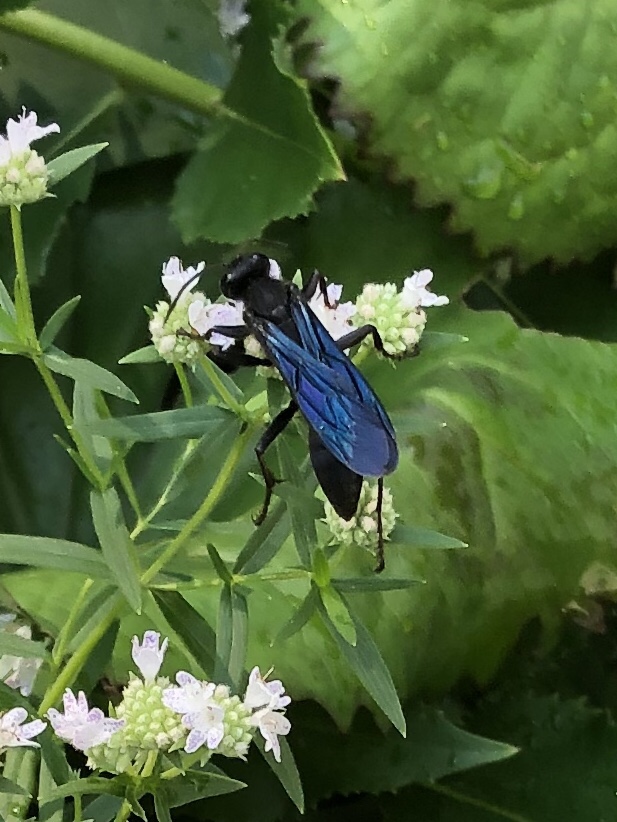
    Wasps are not something I think about very often (until they become a threat anyway), but my attention was drawn to a half dozen fascinating black wasps with blue wings diligently working the flowers like honeybees. I’ve seen them in other years, but sometimes you don’t pay any attention to such things until you’re ready to. It seems I was ready to. And researching this wasp made me gasp.

    I can think of many ways to die that would be better than the way the prey of the Great Black Wasp (Sphex pensylvanicus) die.  In fact, it might just be the most horrific way to die I could think of.  The wasps sting their prey, usually things like grasshoppers and katydids, to paralyze it.  They’ll then bring it back to their underground nest, where they lay eggs on the stomach of the prey that feed on the still-alive and most unfortunate victim.  If you were going to write a script for a horror movie, being eaten alive by the offspring of your hunter while paralyzed in captivity might be your inspiration.

    The Great Black Wasp lives up to its name – black all over with iridescent blue wings.  Its huge by wasp standards. The ones flying around in my garden were more than an inch long, which is daunting when you consider the stinging insects flying around you.  But they were too busy pollinating flowers and looking for food for their offspring to eat alive to worry about me.  I was grateful for their lack of aggression, because I found them to be beautiful insects.  But then, I’m not a grasshopper.

    Viewing the wasps was a nice departure from the devastation caused by the groundhog.  It reminded me that the flower garden is really my preference anyway, precisely because it attracts interesting pollinators like the Great Black Wasp.  At some point maybe the garden will return to normal again, just as I hope the world will. And in those dark moments that 2020 brings think about those beautiful blue wings and remember: things can always be much, much worse.

  • Shift Happens

    The lingering glow of immersion in salt water quickly sweated out of me when I returned home to a yard in need of attention.  Some of the attention simply needed a prompt investment in labor, like mowing the lawn and cleaning the pool.  Co-existing with mature trees means picking up a collection of branches and other debris before you can mow.  Co-existing with wildlife meant scooping six frogs out of the pool once the solar cover was removed, disrupting frog spa day, and more tree debris.  It also meant assessing the damage from the groundhog, who has raised the stakes significantly by wiping out most of the remaining vegetables, but more egregiously climbing up the potted Hibiscus, breaking branches on its quest to mow down tasty bits from the top.  This shall not stand.

    There’s a tangible shift happening with the back yard from June/July satisfaction with the joys of a private oasis in the middle of a pandemic to a feeling that maybe this work is more than I want to deal with.  I recognize this as a post-vacation reality slap and know it will subside in time.  Part of this is a recognition that the pandemic marches on with no clear end in sight, and a burning desire to just get out in the world once again.  To cross borders real and imagined.  Part of it is knowing the routine for what it is and not being quite ready for it just yet.  We’re 1/3 of the way through August and this is naturally the time when I start to look around at where we are and what needs to be done.  The garden had faded even before the large rodent accelerated the process.  Where do we go from here?

    There’s another part of the shift, and its the recognition that time slips quickly away, and our best efforts to maintain a pristine environment can be wiped out faster than you can spell groundhog.  More attention paid to those big things from yesterday’s post, and less on half-assed attempts to grow pumpkins and tomatoes and hibiscus.  Does creating a backyard paradise mean hunting down a mammal that finds a buffet paradise in my efforts?  Or do I just stop planting the things it likes to eat and go to the farm stand for tomatoes and pumpkins?  The garden, however noble a pursuit, was never about produce.

    Yesterday I woke up on the edge of the bay.  This morning I woke up on the edge of the forest.  Each offers a dose of reality that you’ve got to come to terms with.  I’m not a Rhodes Scholar but I’m smart enough to recognize good fortune when I see it.  Appreciate the good and learn from the setbacks.  That’s 2020 in a nutshell.  The world marches on, and shift happens.

  • Life In Four Native American Quotes

    “When it comes time to die, be not like those whose hearts are filled with the fear of death, so when their time comes they weep and pray for a little more time to live their lives over again in a different way. Sing your death song, and die like a hero going home.” – Chief Aupumut in 1725, Mohican.

    The Chief Aupumut I’ve read about was born in Stockbridge, Massachusetts and fought in the Revolutionary War as an important ally against the British.  He wrote an extraordinary letter to Thomas Jefferson asking for lands for a reservation in Wisconsin, so that his people wouldn’t have to keep moving further and further until they ran out of land.  He was also known as Hendrick Aupaumut, the Chief of the Muhheconneck Nation.  Given the date, the quote above may have derived from his father.  I’m not really sure, I’m relying on a web site dedicated to quotes from Native Americans.  But it took my breath away whomever the source was.  There’s a fair amount of stoicism in Aupumut’s words, not unexpected, and he challenges all of us to live more boldly in pursuit of our own dreams.  That’s a lot to live up to, living that we might die like a hero going home, but what else is this wild and precious life for if not to reach our potential?

    “What is life? It is the flash of a firefly in the night. It is the breath of a buffalo in the wintertime. It is the little shadow which runs across the grass and loses itself in the sunset.” – Crowfoot, Chief of the Siksika First Nation, Blackfoot warrior, peacemaker

    Crowfoot died relatively young at 60 from tuberculosis, so there’s wisdom in this quote reminding us of the briefness of life.  We’re all here for a short time, whether 60 years or 100, it’s all just the flash of a firefly in the night.  So why do we waste time on the trivial when time is so precious?  Because we don’t believe the truth before us.  There’s always another tomorrow, always next year, always an I’ll get to it…  until there isn’t.  Do it now.  If ever there was a consistent call from those who came before us its to make the most of this moment, not some future moment.

    “All who have died are equal.” – Comanche or Navajo quote (source uncertain)

    Google this quote and you’ll find multiple sources for it.  But generally it comes down to either the Comanche or the Navajo.  I wouldn’t be shocked if they both had a version of the same quote.  All who have died are equal.  And all who live are equal as well, even if treated differently.  I was raised to treat everyone the same, no matter what their skin color or nationality or sexual identity or preference.  But I’ve taken my own identity for granted, not seeing the struggles of those who fight unseen battles with those who weren’t raised the same way.  The world is full of struggles for equality and the respect and dignity of all.  But collectively we can make significant improvements in our lifetimes.

    “When a man moves away from nature his heart becomes hard.” – Navajo Expression

    There are a lot of hardened hearts in the world, removed from nature and seeing the world as asphalt and concrete and electricity.  It’s easy to dismiss climate change and consumer waste as hoaxes when you’re not immersed in nature.  How can you possibly see what you aren’t looking at?  I have seen the plastic washed up on remote beaches, and the oil slicks from spills far away.  I have noticed the shift in seasons and the haze over cities on busy commuter days.  As with equality, we can make significant improvements in our lifetimes, but we can’t wait much longer.  Perhaps a new President and Congress will prove to be the catalyst for change long overdue in the United States.  Perhaps the pandemic has given the world enough of a breather to give us the time to make meaningful change in our collective behavior.  But it always starts with us.

    I linger on the edge of nature often.  Gardening and observing the birds and bees and mammals attracted to the garden.  Hiking and getting out on the water whenever possible.  But I need to plunge deeper into the heart of it, to soften the hardness in my own heart.  We’re all that firefly in the night, with so little time.  How will we use our light?  What are you waiting for?


  • Thoughts on the Garden

    I spent an hour deadheading the roses early in the morning.  Just me in the garden, giving haircuts and quietly staking overeager plants that have reached too far to the sky for their slender stalks to support.  In the garden I don’t think about the political and environmental mess we have on our hands.  Instead I meditate with flowers and vegetables that don’t care a whit about the makeup on Trump’s collar or the temperature in the Arctic Circle.  I care about climate change and world peace and equality, but you have to have moments where you quiet your mind and take care of yourself for a spell.  For me the garden is as good a place as any to cast that spell.

    I found myself looking up the garden club in the town I live in, wondering who I knew that was a member.  I didn’t recognize a face or a name.  All women with an average age about 25 years my senior.  I could really shake up a club like that if I were to join.  Introduce cocktails with the clematis Tuesday nights, or run for garden club President on  a platform of composting for all ages.  It reminded me that a lot of people assume that my wife is the gardener in the family.  My wife, respectfully, is definitely not a gardener.  She’d rather hit the pavement in running shoes than linger in the loam.  But it’s easy to see why people assume she might be when you look at the typical garden club membership.

    If 2020 had been a normal year I had planned to downsize the garden a bit.  Fewer containers filled with flowers would mean less maintenance, which would mean more freedom to travel, hike, sail or pursue crazy ideas like Scuba diving again.  It takes commitment to have a good garden, that’s all.  Time and money and sweat equity and you get rewarded with a lovely show.  And you want to enjoy the show, but all you see are the bare spots where something didn’t perform as planned, or the leaves the rabbits are nibbling on, or the cursed chipmunk holes.  And you roll up your sleeves and get back to it.

    I know many people who do the bare minimum for landscaping, hire someone to mow for them, treat the lawn with chemicals, and even plant flowers for them.  That all seems quite attractive somedays, but that’s not me.  I’ve had a garden for as long as I’ve owned a house, and couldn’t see hiring it out to someone else.  Why should they have all the fun?  I even purchased a push mower so I could get more steps in.  Those days of coming home from work to see the lawn freshly cut in expertly angled lines by the landscaper are behind me for now.  And walking the entire property has proven to be more therapeutic than I thought it would be.  I might not be hiking a mountain, but I’m getting a good amount of exercise and spend a few seconds enjoying the fruits of my labor before moving on to some other task.

    The time to enjoy the garden is when the world is asleep and it’s just you and a hot beverage, watching the world wake up around you.  The garden is a magnet for bees and hummingbirds, but also for rabbits and groundhogs and chipmunks and hornets and snakes.  I take the good with the bad, and try to minimize the damage that the unwelcome visitors do while encouraging more visits from the stars of the garden.  It all becomes an immersive experience, better than any virtual reality game.  Why live virtually when there’s so much to see right outside the window?

    And so this morning at an hour most people shake their heads at I quietly tied twine onto stakes and gently coaxed thorny roses upward.  A few thorns managed to catch the back of my hand in the process and drew blood, which I wiped away and finished the knots.  The roses looked happier for the support, but a bit resentful for the restraint.  We all want freedom, don’t we?  For me the garden is my stake in the ground, offering support and refuge, though at times I grow resentful at the commitment.  But then I remember that the commitment is exactly what I was looking for all along.

  • The House and the Road

    “My house says to me, “Do not leave me, for here dwells your past.”
    And the road says to me, “Come and follow me, for I am your future.”
    And I say to both my house and the road, “I have no past, nor have I a future. If I stay here, there is a going in my staying; and if I go there is a staying in my going. Only love and death will change all things.”
    – Khalil Gibran, Sand and Foam

    Lately I’ve been thinking of the house I’ve lived in as an anchor.  An anchor can have both a positive and negative connotation of course, but I thought of it in the positive way.   I’ve been putting a lot of time in at the old anchor lately, quarantined in a pandemic and working from home.  And the completed projects have stacked up into something tangible.  I could almost stay here forever.

    Lately I’ve also been thinking about the road.  Getting out there and seeing the world again, almost like things were normal.  The list of places to go grows quietly urgent, for time is fleeting and the world changes but so do you.  I imagine a scene akin to the running of the bulls in Pamplona as would-be travelers run the streets, hoping they aren’t run over by time as they make up for 2020.

    I look at the trees when I sit in the backyard, thinking they’re beginning to encroach a bit in their search for light.  This won’t do, not if we stay.  Limb up the trees now added to the list.  The list that grows and nags.  It only takes the right ratio of time and money to make a house work out for you.  You either put in more time or more money, but one way or the other the house demands a mix of both from you.

    I scrolled through a list of the most beautiful place to visit in each state that Conde Nast Traveller put out a couple of years ago.  I’ve been to ten of the places listed.  Ten out of fifty.  For all my travel I’ve only been to 33 of 50 states, if you exclude layovers in random airports.  Using the same criteria, my results are much worse on global travel, where I’ve spent meaningful time in only 12 of 195 countries.  The road mocks me even as it calls.

    There is a season for everything, and the last twenty-two years have been the season of parenting and being present as a father, layered with epic travel blessings.  I travel more than many do in their lifetimes, and I’ve managed to do it while being present for my children in their own lives as they’ve grown into adults.  I see the people traveling the world with their children and I’m awed by the life these families are living, but I wanted my own kids to grow up in a neighborhood, playing sports and riding bicycles up and down the street and building lifetime memories.  I suppose I could have added another dozen countries to the list, maybe even 50 more.  But here in this house dwells my past, and it’s not such a bad past at that.

    “Come and follow me, for I am your future”

    And now?  Now I plot and scheme and decide what to prioritize. I have at least 47 reasons to stay in New Hampshire for the foreseeable future as I quietly chip away at the 4000 footers.  There’s a net benefit in hiking in better fitness as well.  Resuming global travel will have to wait a bit longer.  Same with a few of those places I haven’t seen in the United States.  And I don’t mind waiting, for the house is not just the past, but the future as well.  At least for a little while.  It’s good to have a solid anchor at the ready.  Today, Father’s Day in America, I realize I’ve been an anchor myself.  Paid in full through time and effort and love.  With one eye on the house and the other on the road, but always present when it counts.

  • Is It Yourself You Seek?

    It is yourself you seek
    In a long rage,
    Scanning through light and darkness
    Mirrors, the page,

    Where should reflected be
    Those eyes and that thick hair,
    That passionate look, that laughter.
    You should appear

    Within the book, or doubled,
    Freed, in the silvered glass;
    Into all other bodies
    Yourself should pass.

    The glass does not dissolve;
    Like walls the mirrors stand;
    The printed page gives back
    Words by another hand.

    And your infatuate eye
    Meets not itself below;
    Strangers lie in your arms
    As I lie now.

    – Louise Bogan, Man Alone

    I seek myself in early morning quiet, listening for the whisper.
    I seek myself on long walks in rough terrain, one step at a time with an eye on the footing and the other at the way forward.
    I seek myself in the long drives to faraway places, with nothing playing but the soundtrack of the tires on pavement.
    I seek myself in pictures, vainly attempting to capture the light and never quite reaching perfection but smiling at the moment anyway.
    I seek myself in the dusty soil, that traps under fingernails and turns into beauty with water and time we hope we have.
    I seek myself in deep plunges into water, thoughts rising with the bubbles as we break the surface, clearer than before.
    I seek myself in lyrics captured from songs in the air, hearing words for the first time and desperately grabbing at Shazam to find the source before it disappears forever.
    I seek myself in habits made and promises to myself broken, with hopes of trying again tomorrow.
    I seek myself in reaching out in service to others, to rejoice in the moment of connection ever fleeting.
    I seek myself in old battlefields and graveyards and monuments to ghosts who only wish to be remembered once more.
    I seek myself in freshly chopped vegetables, sautéing in snaps and pops that betray my anticipation.
    I seek myself in the words that dance on the page, my own or those of strangers in my arms.
    I seek myself in skimming across water, skipping like a stone on the pull of an oar or the puff of the wind and wanting only to fly a little bit longer.
    Tell me, where do you seek yourself?

  • Return of Wonder

    Wonder dies and is replaced by boredom, as we develop language and words and concepts. Then hopefully, if we’re lucky, we’ll return to wonder again.” – Anthony de Mello, Awakening

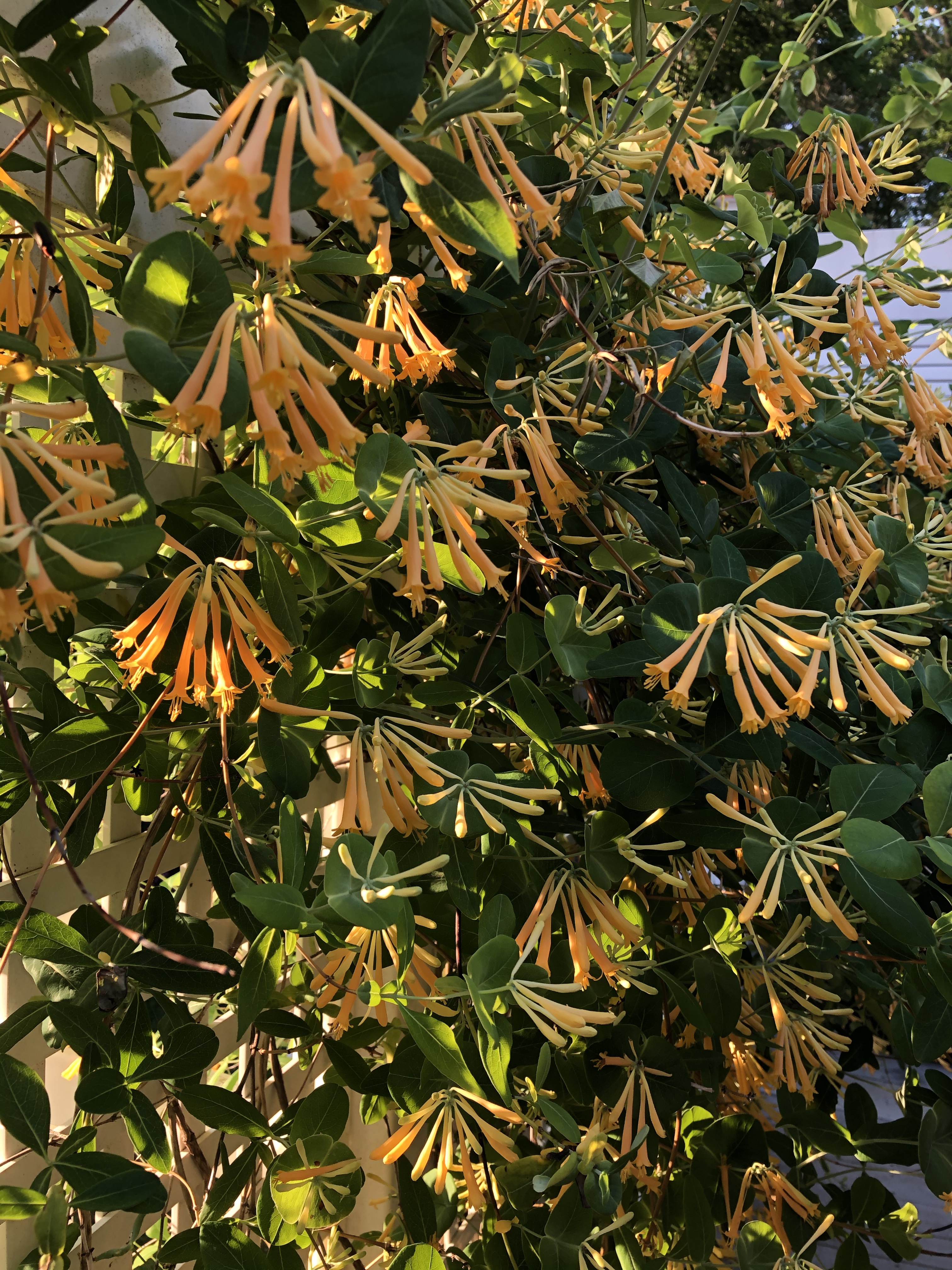
    The hummingbirds work their way across the mounds of honeysuckle in turns. One fills up and flies off and another takes its place. The vine and the birds return year-after-year and each season I marvel at the intimate dance of the honeysuckle and the hummingbird. I’ve learned over many seasons together to sit silently and let the dance happen. I’m rewarded once again in 2020, a year like no other, and nod in gratitude to the dancers.

    I keep returning to Anthony de Mello, and why not? Every visit mines gold, like a hummingbird returning to honeysuckle. This is an especially good year to re-read Awakening, and lately I’m scanning a few pages in between history and philosophy and poetry. There’s so much you miss the first time through with great books, and I’m reading it again with a new sense of wonder. And isn’t that the way with everything worthwhile? The garden is different every time you visit it, and so is the forest, and the ocean, and mountains, and old friends in our lives and surely a spouse. And so are we, if we’ll just sit still long enough to see.

    I’m lucky. I know this. I can sit quietly in the garden and watch hummingbirds. I can walk on a dark street alone at night looking at the stars without concern. Born in a place and time with a skin color that offers me a silent leg up over people who are in every way my peers or a few notches above me. I’m not struggling the way many people struggle, and I’m grateful. But what do you do with the gift? Become bored with it? Jealousy hold it tight, not willing to share it with others? Lecture those who don’t see the wonder?

    I think the first step is to appreciate the beauty in your own life. To truly see it anew. And then share it with the world. Pull wisdom from the ages and embrace it, and shine a light on it for others to see. To be a stabilizing force for those who need a hand, and a teacher for those who need to see the wonder in all of us. I view the merit of another person by the sparkle in their eyes, not by the color of their skin or the position they hold. Help others to see. To find wonder themselves. We all live by concepts we’ve learned along the way. Concepts are funny things. They change when the student is ready and not a moment sooner. Offer a hand to those struggling with the climb, an ear for those who need you to hear and a shoulder for those who are hurting to cry on. Share wonder with the world and dance with those who rise up with you. And keep offering a place on the dance floor for those who aren’t there just yet. They could use some wonder too..