Category: History

  • A Cape Cod Time Warp

    We slipped back into old Cape Cod for a quiet walk on the trails of Little Bay and Monks Park in Bourne, Massachusetts yesterday.  From a perspective of scale this park is of modest size, and the loop is quick, but from the perspective of getting you out of modern Cape Cod and back into a time before the place was built up it served us well.  A time capsule of sorts, onto shady paths of sand and scrub pine needles with surprising variations in elevation from sea level to 70 feet.  Not exactly the White Mountains, but a pleasant departure from the usual flat walks.

    The variation in flora matched the elevation changes, with sassafras, scrub pine, oak, highbush blueberries and a fair amount of poison ivy dominated the landscape, with salt marsh and views of the bay sprinkled in.  In some ways this feels like its always been this way.  But there are hints to other uses in the flora as well.  A pair of large beech trees guard the entrance to the park on Valley Bars Road, planted at some point maybe a hundred years ago.  A holly on the Loop Trail looks to be out of place in the landscape as well, perhaps planted by someone before this became conservation land in 1980, perhaps by someone taking a walk in the woods who wanted a home for a shrub.  The holly keeps her secret from me.

    All of this land is preserved because of the work of the Bourne Conservation Trust, which saw the explosion of development on the Cape in 1980 and decided to do something about it.  This land was once part of the estate of George Augustus Gardner, brother of Isabella Stuart Gardner, giving it a hint of Boston Brahmin.  This area was pretty exclusive back in the day, with President Grover Cleveland summering just up the road.  He bequeathed it to his daughter Olga Eliza, who married a man named George Howard Monks, which is where the name Monks Park comes from.  The family sold the land when Olga passed away, and thankfully it was purchased by the Bourne Conservation Trust.

    The Loop Trail is roughly 1.5 miles, with a few trails that cut straight across the land providing a shortcut of sorts.  If you were to walk this trail in late fall or winter the water views would be spectacular.  In summer the oak leaves obscure much of the view, making you earn it with a walk down steep grade to the beach from the trail, or simply walk under the railroad bridge from the parking lots.  Not the longest trail, but you could walk the loop a few times and try the side trails for variation if you wanted a longer walk.  This place is a gem hidden in plain site on busy Shore Road, and worth a visit.  A quiet connection to old Cape Cod, to the wealthy who acquired the land, and to those progressive people who saved it from ever being developed. Consider a donation to their future efforts, as Little Bay and Monks Park demonstrates just how much good a few people can do.

  • Hiking Pierce and Eisenhower

    201 years ago, in 1819, a father and son team of Abel and Ethan Allen Crawford cut an 8.5-mile hiking trail from what is today called Crawford Notch to the summit of Mount Washington’s summit.  A year later, Ethan Allen would guide an expedition up that trail, which became known then and to today as Crawford’s Path.  That group would name most of the mountains they saw after the early United States Presidents: Washington, Adams, Jefferson, Madison and Monroe. That we hiked on the oldest continuously maintained hiking trail in the United States wasn’t lost on me.  People have been walking or riding horses on this path since many of the Founding Fathers were alive.  The Crawford Path is a bridge of sorts, and 200 years later I hiked part of it to traverse the summits named for two Presidents who came after the trail was first cut: Mount Pierce and Mount Eisenhower.

    Franklin Pierce was the 14th man to be President, and the only one ever born in New Hampshire.  He was President between 1853 and 1857, and was well aware of the threat that the abolitionists from the southern states posed to the young United States of America.  Pierce was a compromise candidate nominated to appease the south, but he wasn’t a particularly popular President, making controversial decisions like nullifying the Missouri Purchase (if we can have anti-slavery Maine be a state we let pro-slavery Missouri be one too) by signing the Kansas–Nebraska Act.  That may be a post for another day, but the act essentially fueled the vigorous anti-slavery movement that led to the Civil War.

    “After the White House what is there to do but drink?” – Franklin Pierce

    Pierce wasn’t a great President when the United States needed one.  He was also a vocal critic of Abraham Lincoln, which didn’t endear him to most northerners then or today.  But he is a native son, and New Hampshire named a 4310 peak in his honor.  It would be the first of two 4000 footers I’d climb for the day.  The second would be the 4780 foot Mount Eisenhower.

    Dwight D Eisenhower was, like George Washington, a great General who became a relatively great American President.  He opposed McCarthyism, promoted civil rights, expanded Social Security and built the nations interstate Highway System.  He was a two-term war hero President who bridged the relatively peaceful decade between the Korean War and American escalation in Vietnam.  When he passed away New Hampshire took an existing mountain in the Presidential Range, Mount Pleasant, and re-named it Mount Eisenhower in his honor.

    “This world of ours… must avoid becoming a community of dreadful fear and hate, and be, instead, a proud confederation of mutual trust and respect.” – Dwight D Eisenhower

    Enough history, let’s get to the hiking.  Hiked up the Crawford Connector Trail to meet up with the Crawford Path, and made a point of stopping for a look at Gibbs Falls. I rarely pass up a visit to a waterfall, and today wasn’t going to be an exception.

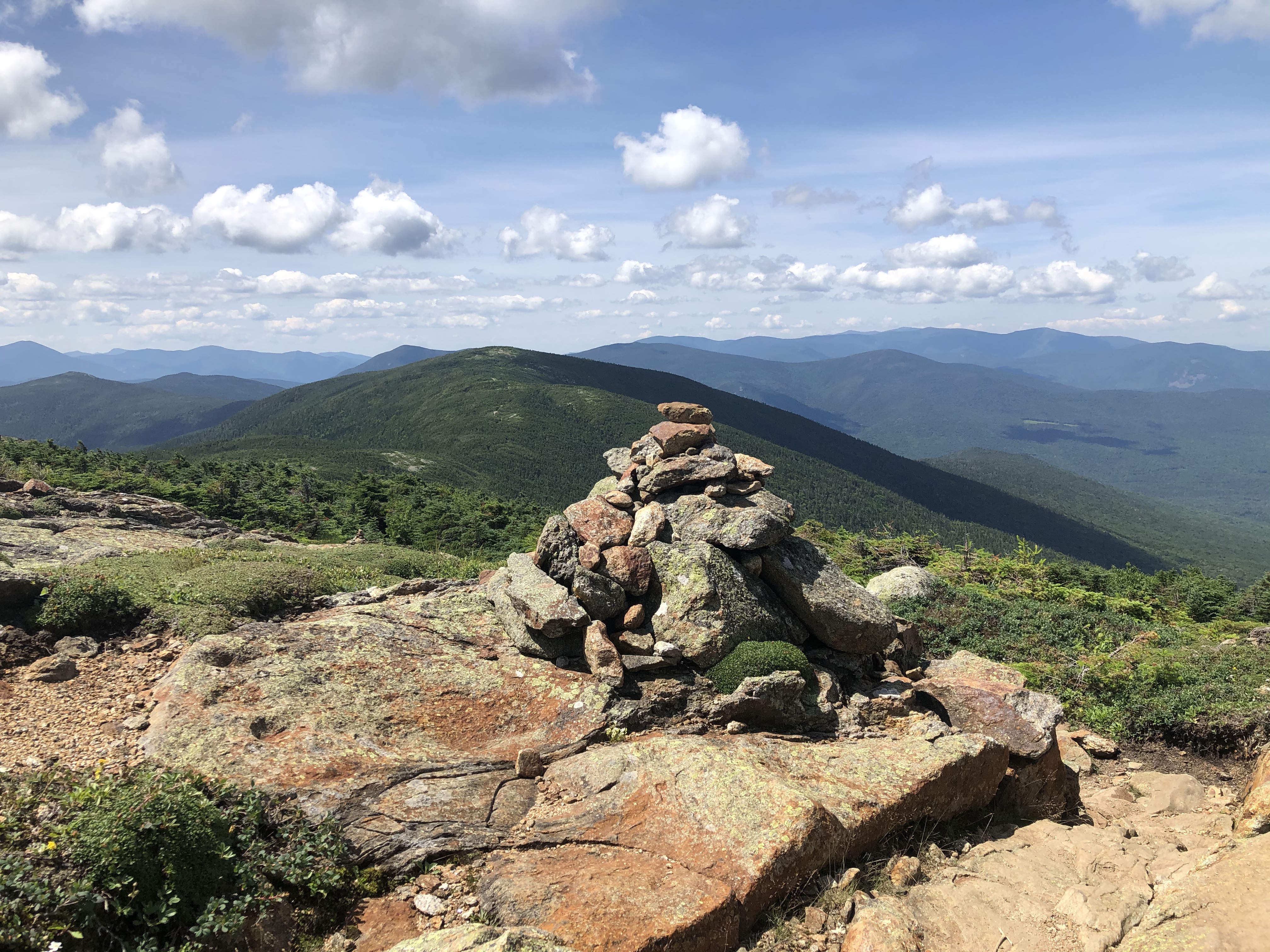
    From there we hiked up to Pierce and then Eisenhower. There was a lot of company on each summit (being a beautiful Saturday) but we managed to find a spot to stop for a quick break at each before moving on. Checked two peaks off the list of 48 and had a great day with three great people. We left Crawford’s Path for the Eisenhower Loop, summiting relatively quickly, had our quick lunch and descended via the Edmands Path, a rocky, wet trail that wasn’t a favorite. But it did the job of bringing us back to the quiet road that led to our car and cold beverages and hot showers. A long day, but a heck of a day. And I’ll publish this and enjoy the rest of a great Saturday.

  • To Visit All the Celebrated Places

    “Now is the time to visit all the celebrated places in the country, and fill our heads with what we have seen, so that when we become old and bald we will have something to talk about over the teacups.” – Jippensha Ikku

    Credit to Smithsonian Magazine for the Ikku quote, for it made me smile when I read it.  Ikku lived in Japan during a fairly important period in American history (1766-1831) so its easy to overlook what might have been happening in other places in the world.  The quote reminds me that our feelings about travel and aging are timeless.  We all hope to see the world while we’re young and full of vigor, that we might have epic stories to tell over a favorite beverage when we’re older and less mobile.

    The travel list of celebrated places is ready, and all earnest travelers wait for the starting gun to set us free to explore once again.  We’re all rooting for a vaccine and some level of herd immunity, some measure of personal responsibility from society at large and perhaps stronger political leadership to set policy that makes sense.  May we see it sooner than later.  But in the meantime, I’m traveling as Thoreau traveled: exploring the place where I am in ways that I hadn’t before.  Walking fully aware in the woods, or the mountains and shores of New Hampshire, stopping at local landmarks previously unknown to me, and exploring space  while looking up at the stars to pick out planets and constellations.  For the adventurous spirit, there’s no shortage of opportunities to explore, even in a pandemic.

    “Travel spins us round in two ways at once: It shows us the sights and values and issues that we might ordinarily ignore; but it also, and more deeply, shows us all the parts of ourselves that might otherwise grow rusty. For in traveling to a truly foreign place, we inevitably travel to moods and states of mind and hidden inward passages that we’d otherwise seldom have cause to visit.

    All [great travel writers]… believed in “being moved” as one of the points of taking trips, and “being transported” by private as well as public means; all saw that “ecstasy” (“ex-stasis”) tells us that our highest moments come when we’re not stationary, and that epiphany can follow movement as much as it precipitates it.

    Travel, then, is a voyage into that famously subjective zone, the imagination, and what the traveler brings back is — and has to be — an ineffable compound of himself and the place, what’s really there and what’s only in him.” – Pico Iyer, Why We Travel

    While nice on the surface, I chafe when spending too much time at resorts because I’m not looking for pampering or losing myself in a cartoon world.  Travel at its best isn’t distraction, but exploration.  It isn’t running away from ourselves, but finding ourselves.  And that can happen anywhere if we let it.  Our highest moments come when we’re not stationary…  and so we hear the call to explore.  I’m conspiring to travel locally over the next couple of weeks to places near, while foregoing far.  At least for now.  For there’s so much to see right in our own backyards that we rarely celebrate.  Over the next few weeks I’ll explore some of those places in New Hampshire and Massachusetts.  And as you might expect having read any of this blog, explore hidden inward passages too.

  • Hiking Mount Garfield

    As U.S. Presidents go, James Garfield is barely remembered, but he seemed like a decent guy.  He fought for the Union primarily to eradicate slavery, and is the only President to be elected from a seat on the House of Representatives.  So he should be viewed favorably and as an American success story.  Unfortunately, his tenure as President lasted a mere six months, as he fell victim to an assassination attempt, dying a few months after being shot from complications.  That you and I don’t remember much about Garfield has as much to do with his short and tragic life more than any flaw in his character  His mother Eliza was born in New Hampshire, so it seems fitting that there’s a mountain named after him.  This morning I climbed that mountain.

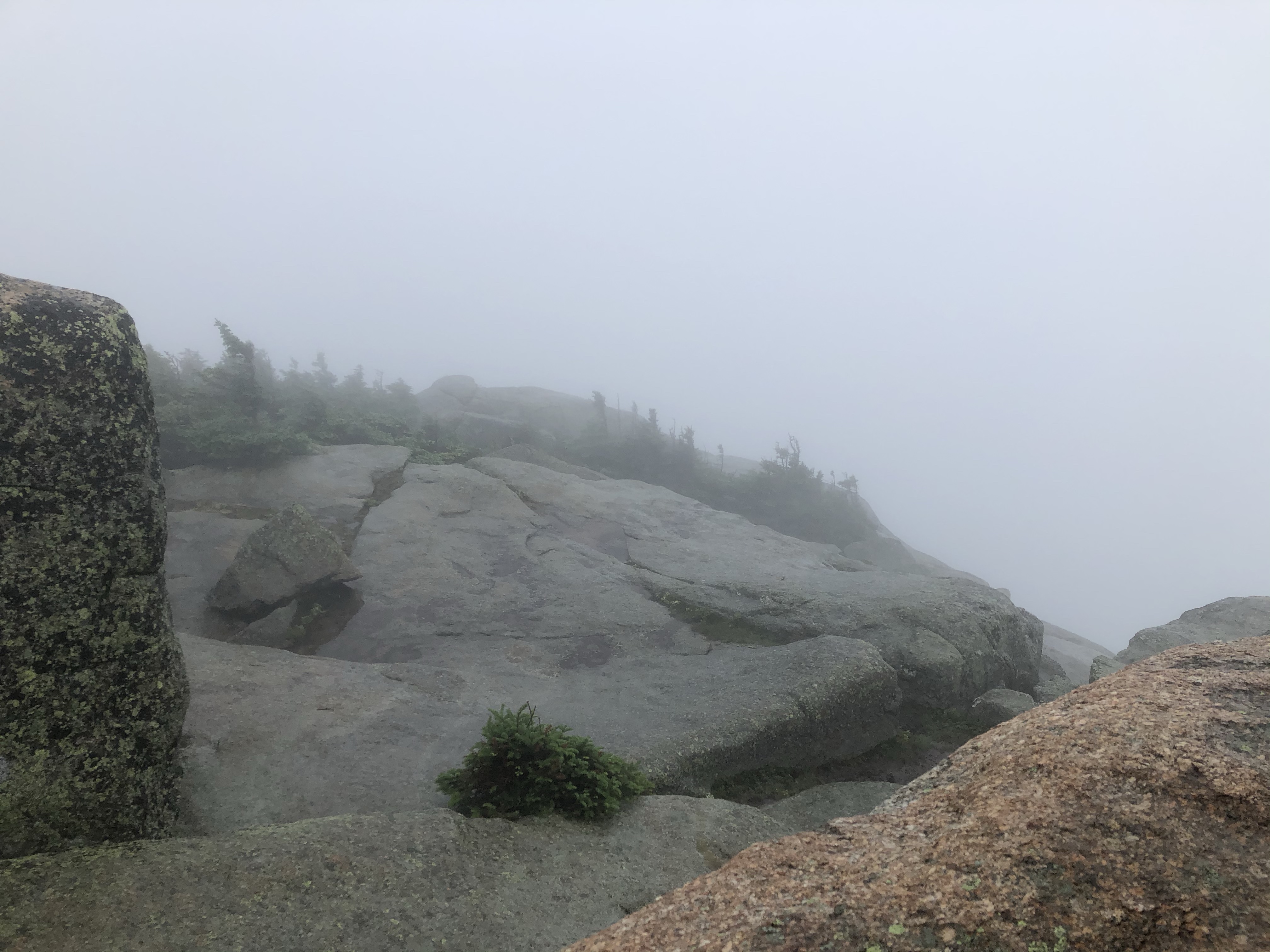
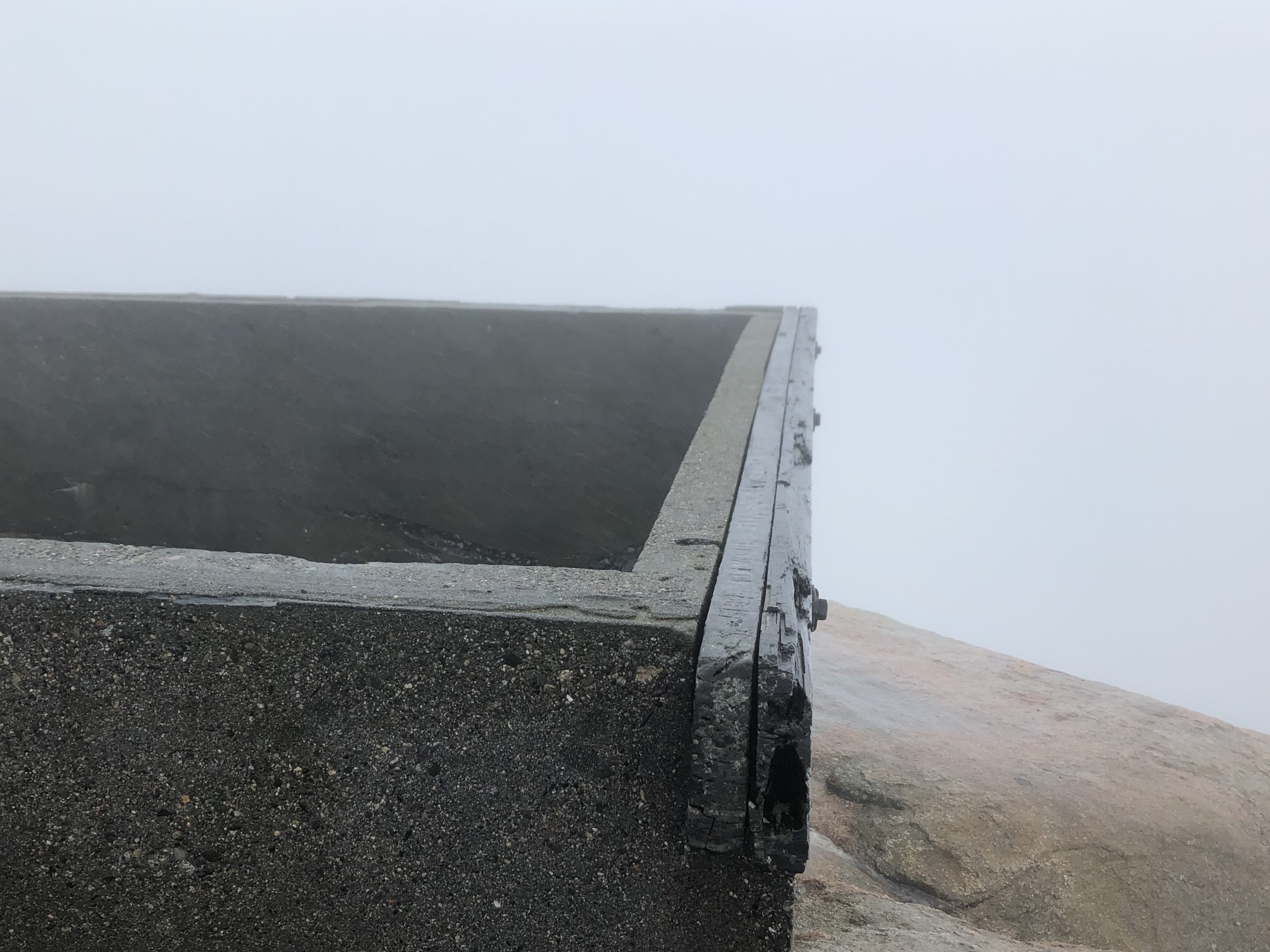
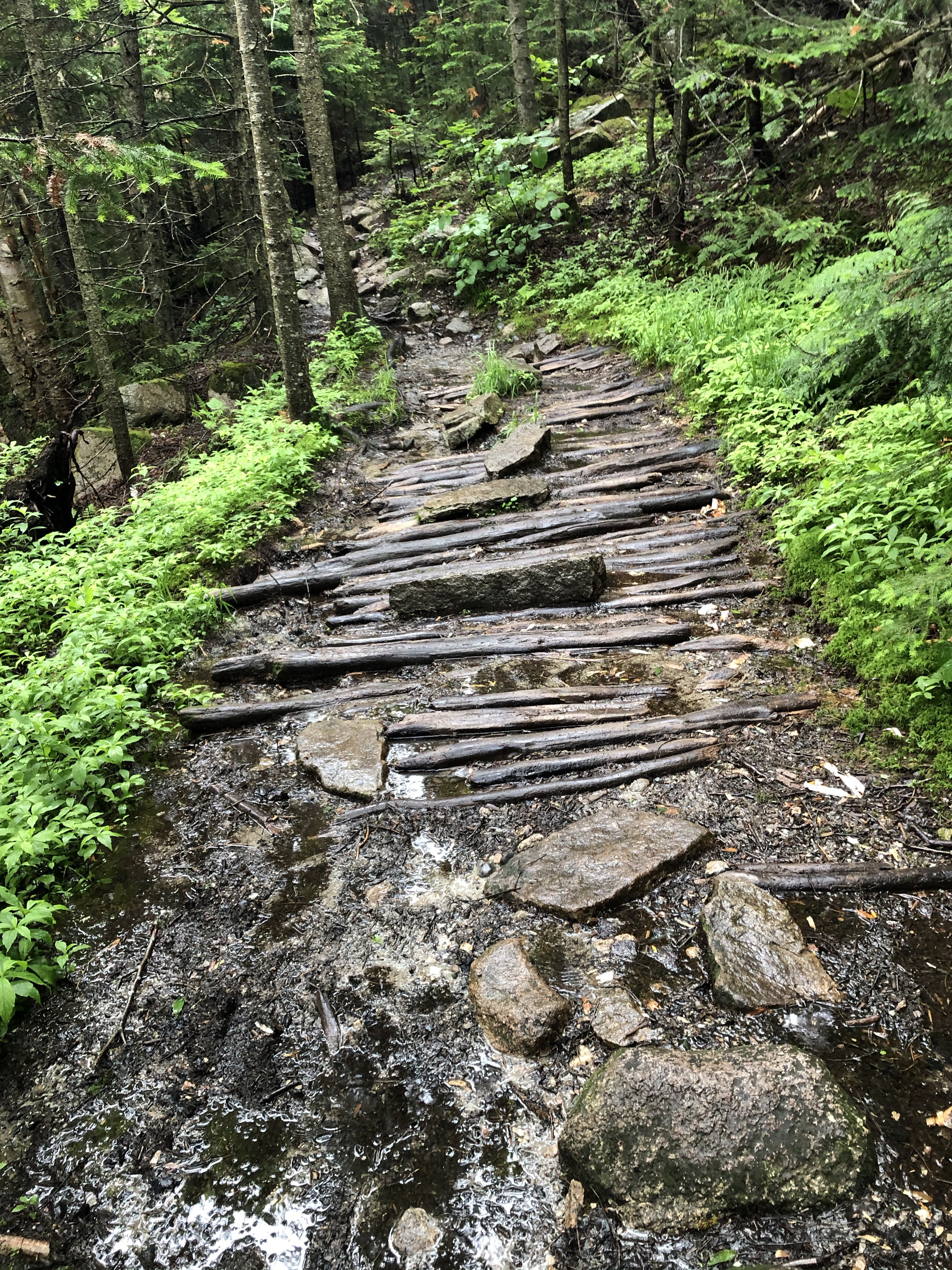
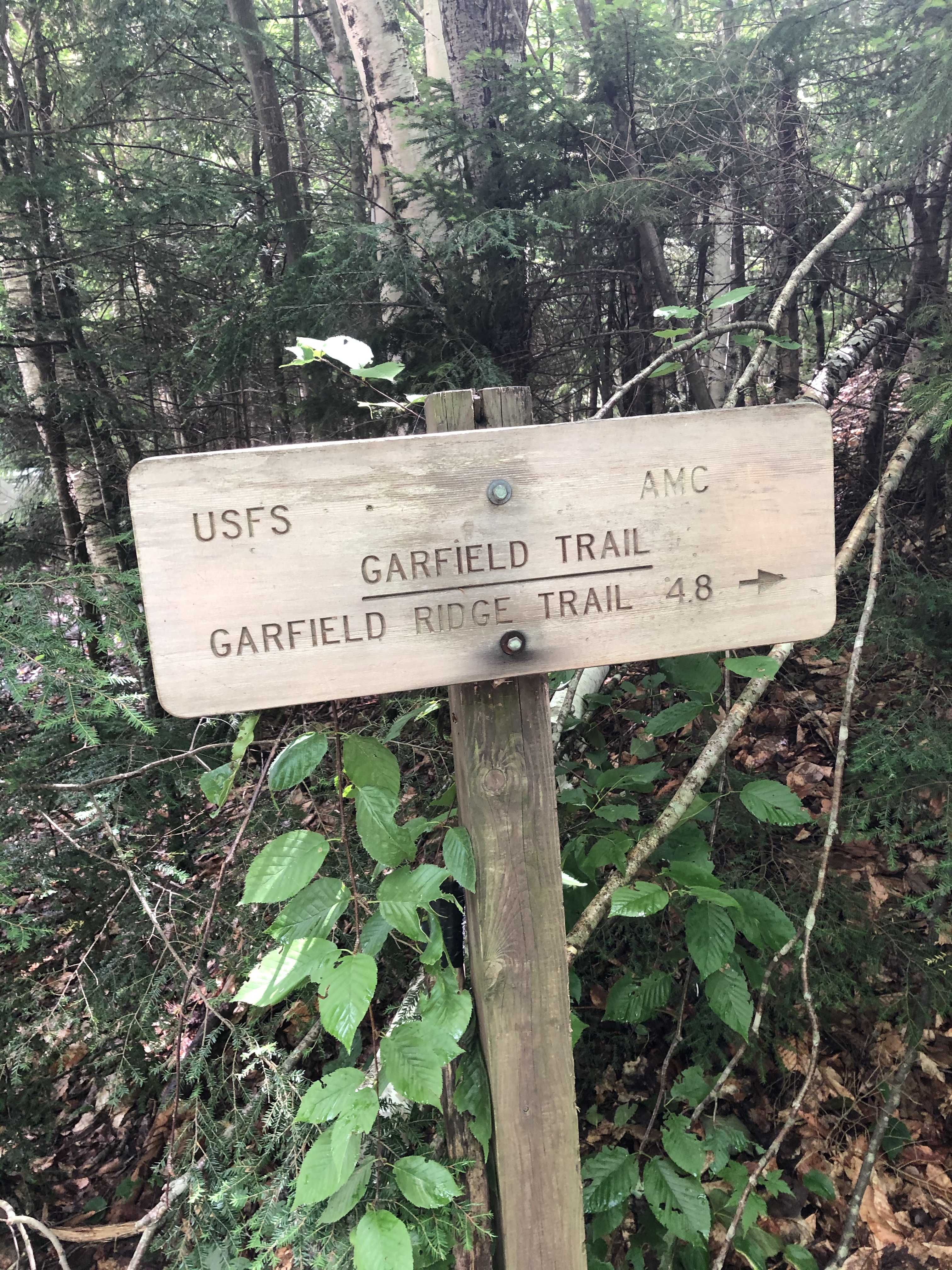
    Mount Garfield is known for the view from the summit.  There would be no view this morning, as rain and low cloud cover announced from the start that this wouldn’t be one of those days when you could see for miles.  I decided to hike it anyway, and to do it solo. The Garfield Trail is a relatively easy hike, and I was able to get to the summit in 2 1/2 hours.  As a wet hike, the Garfield Trail leaves a lot to be desired.  You feel like you’re hiking in a stream in stretches, and on the verge of getting bogged down in mud in some others.  But it’s a classic New Hampshire hike, with a cathedral of mature trees lining the ridge in the first third of the hike, and rocks for much of the rest of the way.  This is the type of hiking I’ve grown up with, and I quickly settled into my rhythm for the climb up.  For all its wetness, there were no bugs for the duration.

    Beginning at 7:30, I found little company on the trails.  I passed one father and daughter pair early on, and was in turn passed by a woman who flew past me after the first hour of hiking.  I’ve long checked my ego at the door when it comes to my pacing on hikes, and when I go solo I’m very deliberate with footing.  I’d see her again as she flew down the mountain at almost the same pace.  And that was it for company on the ascent.  It seemed most people were saving Garfield for a sunny day.  But the descent proved me wrong, with a steady parade of hikers streaming past me, most wondering about the view at the summit.  Not much of one, I’d tell them, but even as I spoke those words the day was beginning to change, with sunlight burning through the cloud cover and warming up the forest.  I was grateful for having done the ascent in the cool rain, even if the view didn’t cooperate.

    Mount Garfield is considered one of the easier climbs of the 48 4000 footers, but with that big payoff of a magnificent view waiting for you on a clear day.  If I wasn’t pursuing the 48, I might have saved this hike for better day, but I don’t view it as a waste at all.  20,000 steps later, I’d finished another 4000 footer and began my drive back home.  Garfield is a mountain I’ll do again a few times, certainly in autumn but also in winter when it becomes a longer hike as they close the gate on the access road.  Maybe my timing wasn’t good for a view, but it was an excellent 4 1/2 hour round trip anyway.  I’ve got my second notch on the 48 (I started over again from the beginning this year, since I rarely logged hikes previous to pursuing this goal) 4000 footers, and I got a decent workout in before lunchtime.  I’d call that a great success.

    A side benefit of hiking the 48 is learning more about the people the mountains are named for.  Other than knowing he was President and that he’d been assassinated, I didn’t know much about James Garfield until I chose this hike.  I’m glad I took the time to look back on his life a bit.  He only lived to aged 49, but managed to accomplish quite a bit in that time.  He was a classic rags to riches story with a life cut short too soon.  The White Mountains are dotted with more famous Presidents, but that doesn’t make Garfield a bit player.  Just a guy who ran out of time before he could do more.  I think he’s had a lot of company in that club.  A good reminder to get busy already, time waits for no one. And with that in mind I’m considering a peak bag for my next hike, which involves summiting multiple peaks in one day’s hike. I have another couple of former Presidents in mind for that one.


  • The Compass and the Torch

    “Not like the brazen giant of Greek fame,
    With conquering limbs astride from land to land;
    Here at our sea-washed, sunset gates shall stand
    A mighty woman with a torch, whose flame
    Is the imprisoned lightning, and her name
    Mother of Exiles. From her beacon-hand
    Glows world-wide welcome; her mild eyes command
    The air-bridged harbor that twin cities frame.

    “Keep, ancient lands, your storied pomp!” cries she
    With silent lips. “Give me your tired, your poor,
    Your huddled masses yearning to breathe free,
    The wretched refuse of your teeming shore.
    Send these, the homeless, tempest-tost to me,
    I lift my lamp beside the golden door!”
    – Emma Lazarus, The New Colossus 

    There’s an interesting connection between Emma Lazarus and Henry David Thoreau.  It seems that Emma visited Ralph Waldo Emerson at his home in Concord, Massachusetts in 1876, and met the poet William Ellery Channing while visiting.  Channing was a close friend of Thoreau, and apparently never really got over the death of Thoreau 14 years prior to Lazarus’ visit to Concord.  He proved to be a tough nut to crack, but succumbed to Lazarus as he learned she was an admirer of Thoreau’s.  Channing gave her a personal tour of Thoreau’s Concord, from Walden Pond to the place he was born, and when she was leaving Concord he gave her an incredible gift; Thoreau’s compass.  I admit, that’s a breathtaking gift to me, the compass of Henry David Thoreau, the surveyor of lands and spiritual guide to generations.

    Lazarus, like Thoreau, would live a short life, succumbing to what is believed to be lymphoma at the age of 38.  But like Thoreau she lives on in words of significance created during her short tenure on earth.  Her most famous poem is The New Colossus, which was written to raise funds for the base of the Statue of Liberty, and is forever associated with Lady Liberty.  I’ve read it many times, but find new meaning in it with each reading.

    A mighty woman with a torch, whose flame
    Is the imprisoned lightning, and her name
    Mother of Exiles.

    When you absorb The New Colossus, you recognize the folly of Trump, the Tea Party and the undercurrent of white privilege that’s always been there but is recoiling under an uncomfortable spotlight.  The Founding Fathers might have been complicated in how they lived their own lives, but the ideas behind the Declaration of Independence and the Constitution were bigger than their lives.  The century after would see a nation boiling inside, putting the words to the ultimate test again and again culminating in the Civil War and Reconstruction, the settlement of the continent and the sweeping aside of Native Americans, much of the wildlife and the very land itself.  Set against this was the rise of Transcendentalism, conservation and preservation.  And all the while the immigrants kept flooding in, fleeing desperation and seeking a new hope in America.  Lazarus represents the open arms of Lady Liberty and America, with no restriction in who might be welcomed when they arrive:

    Give me your tired, your poor,
    Your huddled masses yearning to breathe free

    I know people who despair at Trump and the rise of hatred in America.  I take no pleasure in the vile and ugly amongst us.  But I also take the long view, and recognize that American is shifting once again, and the undercurrent of hatred, racism and greed is unwelcome by the vast majority in this country.  I have faith in the process and believe we’ll come out of this year like no other better for having endured.  America is a land of hope, transcendentalism is founded on the belief in the inherent goodness of people.  Emma Lazarus corresponding with Ralph Waldo Emerson and eventually visiting him shows her own interest in his thoughts and opinions.  When I read The New Colossus I think of Thoreau’s compass that was handed to Lazarus by Channing and the direct link that created between them.  I wonder if she glanced at the compass while writing The New Colossus and found the right words to say.  Words that still show us the way forward, towards our true north as a country.

  • Is It Yourself You Seek?

    It is yourself you seek
    In a long rage,
    Scanning through light and darkness
    Mirrors, the page,

    Where should reflected be
    Those eyes and that thick hair,
    That passionate look, that laughter.
    You should appear

    Within the book, or doubled,
    Freed, in the silvered glass;
    Into all other bodies
    Yourself should pass.

    The glass does not dissolve;
    Like walls the mirrors stand;
    The printed page gives back
    Words by another hand.

    And your infatuate eye
    Meets not itself below;
    Strangers lie in your arms
    As I lie now.

    – Louise Bogan, Man Alone

    I seek myself in early morning quiet, listening for the whisper.
    I seek myself on long walks in rough terrain, one step at a time with an eye on the footing and the other at the way forward.
    I seek myself in the long drives to faraway places, with nothing playing but the soundtrack of the tires on pavement.
    I seek myself in pictures, vainly attempting to capture the light and never quite reaching perfection but smiling at the moment anyway.
    I seek myself in the dusty soil, that traps under fingernails and turns into beauty with water and time we hope we have.
    I seek myself in deep plunges into water, thoughts rising with the bubbles as we break the surface, clearer than before.
    I seek myself in lyrics captured from songs in the air, hearing words for the first time and desperately grabbing at Shazam to find the source before it disappears forever.
    I seek myself in habits made and promises to myself broken, with hopes of trying again tomorrow.
    I seek myself in reaching out in service to others, to rejoice in the moment of connection ever fleeting.
    I seek myself in old battlefields and graveyards and monuments to ghosts who only wish to be remembered once more.
    I seek myself in freshly chopped vegetables, sautéing in snaps and pops that betray my anticipation.
    I seek myself in the words that dance on the page, my own or those of strangers in my arms.
    I seek myself in skimming across water, skipping like a stone on the pull of an oar or the puff of the wind and wanting only to fly a little bit longer.
    Tell me, where do you seek yourself?

  • Knowing Your Place

    “Even on the most exalted throne in the world we are only sitting on our own bottom.” – Michel de Montaigne

    There’s a tiny house wren that acts like it owns the place, and carries on about it when I have the audacity to linger near her nest. I understand and concede the space. There will be a time soon enough when the space won’t be as important to her and her young and I can linger there again. We all have our place in this world. Here and now, this is hers.

    Coexisting with others offers humility.  I’m tolerant of the wren and the cardinal who nests in the shrub out front that’s in need of a trim.  Far less tolerant of the chipmunks who tunnel under the hard won ground I’ve toiled with, or the hornets who wish to reside in the grill or the weep holes for the windows.  But all of them are telling me that we’re just bit players in the game, just like they are.  Eventually we’ll move on one way or the other, just as they do.  So how do you behave while we’re all sitting here in the same place?

    From the beginning Americans have acted like we own the place, moving in and sweeping aside those we wouldn’t coexist with.  I heard a great analogy for this on Dan Carlin’s Hardcore History podcast, where we might get a little freaked out about a spider that may or may not be dangerous.  If we know for sure it’s not going to harm us we might gently sweep it outside.  But if there’s any doubt about it’s venomous nature we’d kill it in a second.  Such was the fate for the Native Americans as Europeans settled North and South America.  In the early stages of King Philip’s War peaceful “Indians” were rounded up and shipped to islands in Boston Harbor, just in case.  Eventually those same people would be used to help end that war.  Look at any war and you’ll see a similar level of suspicion of who might be peaceful and who might be venomous.  Russians rounding up people of German descent and sending them to Siberia, Americans rounding up people of Japanese descent and sticking them in internment camps in the west, the English rounding up the Scots and Irish and kicking them out of first one place, then another.  When in doubt, evict or destroy.

    The beautiful thing about America is that we’re a country designed under the rule of law, not the rule of a king or tyrant.  Checks and balances exist to ensure that those in power don’t abuse their power.  That’s being tested like never before in American history, ironically by a guy sitting on his own bottom tapping away unchecked on Twitter.  For all the abuse and fixing of the system going on by those in “leadership” positions, nature has a way of balancing things out.  First, that pesky rule of law provided delay tactics to slow the spread of tyrannical tendencies.  Then a swing of the House of Representatives as Americans reacted to the wave of indignities perpetrated on the country.  And then the tsunami of a pandemic with the associated economic gut punch and a massive reaction to social injustice reared up to test the leader, who is showing he’s not up to the task.  But many Americans are showing that they’ll coexist with a big scary spider only until they feel that it represents a danger to all of us.  Time will tell, but I’m generally optimistic about humanity and my fellow voters.  They might not have been paying enough attention four years ago, but surely they are now.

    Ultimately, we all need to get our own houses in order so we can focus on the more pressing global concerns like climate change.  Mother Nature is peacefully coexisting with us for the moment, but she’s showing her irritation.  We might think we’re perched at the top of the food chain on our exalted throne, but we’re just bit players in the timeless cycle of history.  It would be good to show a little more humility.  We’re all in this place in time together, maybe for a reason, and ought to embrace our role and get to work.


  • Bobby Kennedy Quotes From the Edge of the Tinderbox

    We’ve all been quietly dancing on the edge of a tinderbox, alone in our own thoughts.  Until something sparks the flame, and we stamp feverishly to put them out, even as they consume us.  Welcome to 2020, the year the tinderbox reignited.  It’s been aflame before, and will be again if we don’t get it right this time.  And again thereafter.  As a student of history, I’m well aware that none of this is new.  It sometimes gets swept under the rug, but it’s not like we haven’t been dealing with racial injustice and political leadership who view those who are angered by it as thugs.  This year feels a lot like 1968 to me.  A challenging year if ever there was one.  Who better to listen to than Bobby Kennedy, who navigated the edge between chaos and order as well as anyone, until he too succumbed to a violent death.  Here are six Robert Kennedy quotes that resonate for me this morning as I contemplate the state of things:

    “All of us might wish at times that we lived in a more tranquil world, but we don’t. And if our times are difficult and perplexing, so are they challenging and filled with opportunity.”

    “What is objectionable, what is dangerous about extremists is not that they are extreme, but that they are intolerant. The evil is not what they say about their cause, but what they say about their opponents.”

    “America’s answer to the intolerant man is diversity – the very diversity which our heritage of religious freedom has inspired.”

    “Each time a man stands up for an ideal, or acts to improve the lot of others, or strikes out against injustice, he sends forth a tiny ripple of hope, and crossing each other from a million different centers of energy and daring, those ripples build a current that can sweep down the mightiest walls of oppression and resistance.”

    “Every time we turn our heads the other way when we see the law flouted, when we tolerate what we know to be wrong, when we close our eyes and ears to the corrupt because we are too busy or too frightened, when we fail to speak up and speak out, we strike a blow against freedom and decency and justice.”

    “Too often we honor swagger and bluster and wielders of force; too often we excuse those who are willing to build their own lives on the shattered dreams of others.”


  • Revisiting Belém Tower

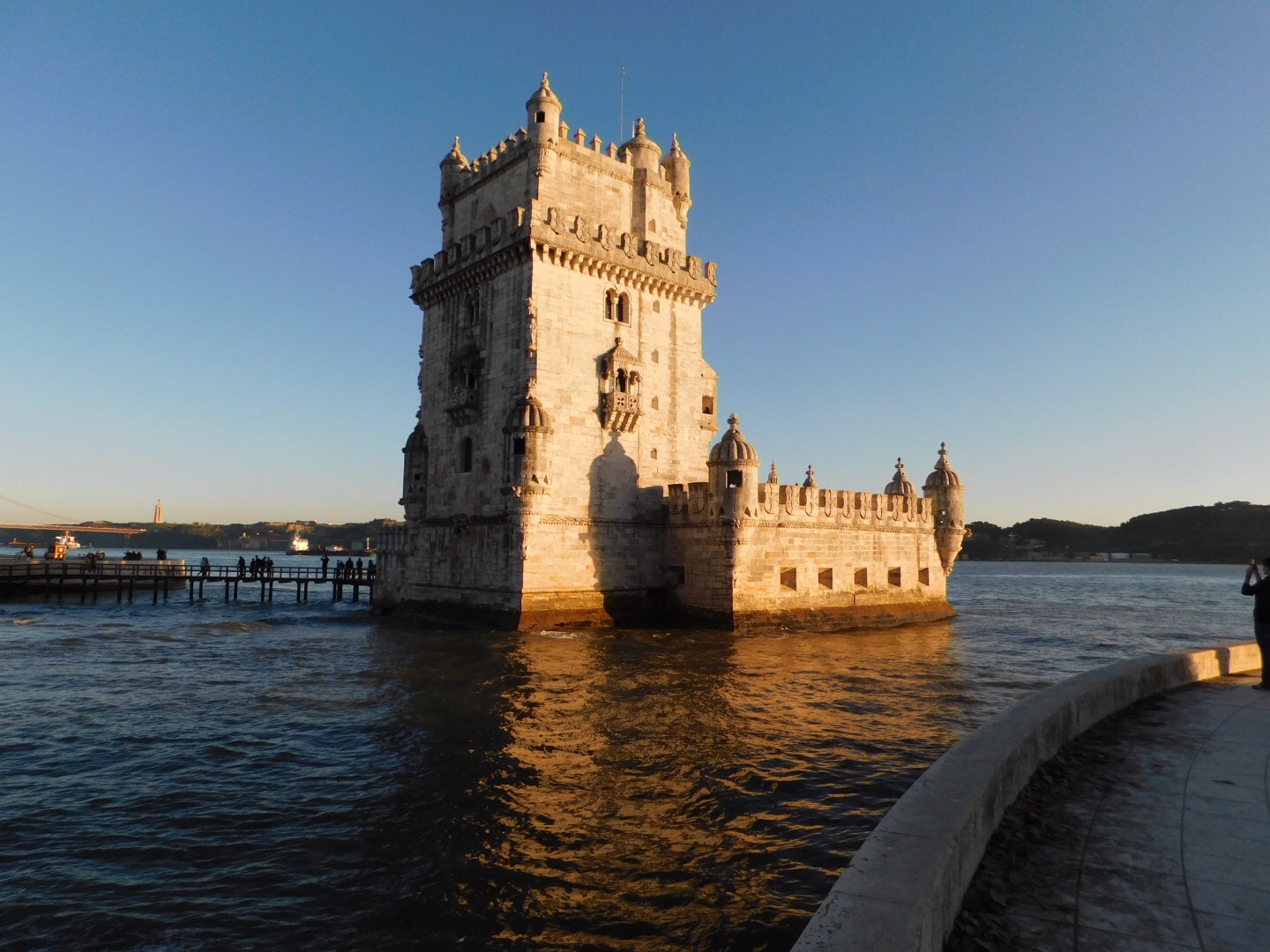
    Perched on the Northern Shore at the Mouth of the Tagus River, Belém Tower is a time machine back to the Age of Discovery.  It was built while Ferdinand Magellan was still making the first circumnavigation of the globe, a high point on a string of maritime milestones for Portugal.  It was designed by Francisco de Arruda as a “permanent ship” to help defend Lisbon and the river, and features the Portuguese Manuelino style popular during the lifetime of King Manuel I.  That it stands largely as it was built 500 years later is a blessing.  Countless souls have walked through Belém Tower, from kings to prisoners to tourists from all over the world.  I’m lucky to have been one of those souls.  As travel remains a dream for the future, I thought I’d return once again.

    Belém Tower is an island dropped in the waters of the Tagas River. To visit it you purchase a ticket next door and go stand in line on the small pedestrian bridge that spans the lapping waters that swirl around the base of the tower underneath you and then splash up the stairs that circle the tower on shore.  Apparently the island was once further out in the river but an earthquake shifted the land and moved it closer to shore.  Better for tourism today, and it’s likely that the prisoners held in the lowest level didn’t really care about a 360 degree water view anyway.

    You enter into the bastion at the base and the arched ceilings grab your attention.  There are views of the magazine from when it was a fort, or where the prisoners were held when it was a prison.  As you climb, you visit the Governor’s Hall, the King’s Hall and the Audience Room.  I quickly learned that the staircases are very tight, and require you wait your turn to climb up or down in a controlled fashion.  I didn’t expect to be waiting at traffic lights in a building built half a millennium ago, but sure enough I did.  Great indication of just how many people visit, and how cramped those staircases are.  Like other spiral staircases built long ago, these were tight for this tall writer.  There just weren’t a lot of clydesdales walking around in 1520, something I’ve grown to accept as I duck my way through history.  The other thing you notice is the ornate gothic details adorning the building.  This was built as a fortress, but also for a king.  There are wonderful details throughout, and I did my best to take it all in.  Traveling solo, I was able to allocate as much time as I wanted for Belém Tower and managed to explore all parts of the structure open to the public.

    I fell in love with Portugal and wonder when I’ll get a chance to return again.  My visit to Belém Tower in January of 2018 capped off an incredible week in my life that marked a new beginning of sorts for me.  I visited before the tower’s birthday, before the pandemic, before a lot of things.  It would be interesting to return again someday to see Belém Tower with fresh perspective.  To feel the energy of Lisbon and the possibility that the Tagas River offered those who launched their own discoveries sailing right past the tower.  I was so busy looking back during my visit that I wasn’t fully aware of the future that Portugal helped launch for me.  My own age of discovery, if you will.  In many ways, it started right here.

    Inside the Bastion


  • Memorial Day

    “And if any gaze on our rushing band,
    We come between him and the deed of his hand,
    We come between him and the hope of his heart.”
    – W.B. Yeats, The Hosting of the Sidhe

    Today is Memorial Day in the United States.  A day to remember those who sacrificed everything that we might live in freedom.  I believe that Yeats was on a completely different track with this poem, but I’m drawn to these lines when I think about this particular Memorial Day.  Death came between the hopes and dreams of countless soldiers on battlefields far from home.  And for their sacrifice we should be eternally grateful.  The older I get, the more I recognize this, the more I appreciate their sacrifice, and the more I hope for a day when there are no more sacrifices made to be memorialized.

    In The Hosting of the Sidhe Yeats writes of the supernatural and enchantment by faeries.  I’ve felt this too, in the form of the whisper of a place of significance, in the form of the muse that I channel, and through listening to the land on deep walks in quiet places far from asphalt and concrete and copper wiring.  The beauty of poetry is in the interpretation of the individual.  It means something different for me than to you, and perhaps something else entirely to the author.  Memorial Day itself is subject to interpretation.  I think of weathered gravestones with fresh flags planted beside them that I’ve visited, memorializing heroes of battles long forgotten or never known by most everyone who’s come after their sacrifice.  And those lost in more recent battles we’ve collectively conceded to for reasons we don’t fully understand.  We owe them more than politicians going through the motions at a ceremony and 20% off (this weekend only!) sales.  But that’s the way of the world; it moves ahead anyway, despite that which came between him and the hope of his heart.

    This post is heavier than I wanted it to be.  I suppose the day warrants that.  As the world reflects on the collective sacrifice of all in our effort to keep a virus in check, perhaps take a moment to think of those who sacrificed something more, and act on the hope in our own hearts while there’s still time.  We owe it to them, don’t we?