Category: History

  • Dry Towns, Blue Laws and Border Crossings

    There was a time, within my time, when towns were well known for being wet towns or dry towns. I’m not talking about the amount of rainfall, but rather whether a town allowed alcohol sales or not. I went to a dry wedding once and marveled at the resentment in the room as people found out about it. Imagine moving to a dry town and realizing it afterwards? Like that wedding people would simply carry in what they’d like to drink. Rules are meant to be broken, aren’t they?

    New Hampshire only has one “dry” town out of a combined 259 total towns, cities and “unincorporated places”.  That town is Ellsworth, a small town just west of I-93 between the Lakes Region and the White Mountains.  There are only 83 residents in Ellsworth, and every one of them of drinking age have to go to another town to purchase alcohol.  I’m guessing there aren’t a lot of restaurants or stores selling alcohol in Ellsworth anyway, but if they have anything going for them it’s that quirky statistic that makes them unique in the state. Live Free or Die indeed.

    Neighboring Massachusetts by comparison has 8 dry towns. It used to be many more in my lifetime, but the trend is downward. Look, even the Puritans drank alcohol, and for generations it was safer than water in those early colonial years when life was hard and cholera was common. The Pilgrims brought beer across the pond and negotiated with Massasoit with aqua vitae. People went straight from the cold church to the warm tavern. Alcohol consumption was common right up to a century ago, when Prohibition crashed the party for the entire country. From 1920 until 1933 the United States was “dry”. But rules are made to be broken, and organized crime and small time bootleggers, rum-runners and illegal moonshine stills came into prominence immediately afterwards.

    Dry towns are bureaucracy in action, or simply inertia. Most dry towns today are in rural, sparsely populated places that don’t have restaurant and store owners campaigning for change. Dry towns are a curiosity now, 100 years after Prohibition, but also a legacy to the cultural and political winds that blew across the country then. Being a wet town kid, I remember going with my grandfather to the bar where he would proceed to drink many beers in tiny glasses. That bar was on the edge of town, and that edge was wet meeting dry. How many people crossed the border over the years to have a couple of drinks and zig-zagged home? Now that former dry town sells much more alcohol than that old wet town. Money talks, and there’s money in alcohol sales.

    Sunday’s were once a sacred day in Massachusetts, with Blue Laws that prohibited the sale of alcohol. So naturally residents drove across the border to states that didn’t have blue laws. New Hampshire’s southern border is dotted with old convenience stores that sold beer to eager Massachusetts residents on Sundays. New Hampshire built liquor stores on the highways for the quick and convenient sale of alcohol to out-of-staters. The Blue Laws are long gone, but “sin taxes” aren’t. People still stop to fill up their trunks.

    So Ellsworth, New Hampshire remains the lone holdout on the dry side of the law. I hope they always will be, as a reminder of where the country was 100 years ago. If we’ve learned anything over the last few years, it’s that the political winds can blow in strange ways, and a few people can impose their views upon the masses given the opportunity. But if Prohibition teaches us anything, it’s that Americans chafe at arbitrary rules and find ways around them. Our forefathers would recognize the debate either way, and marvel at the choices in the liquor stores.

  • Make No Small Plans

    “Make no little plans; they have no magic to stir men’s blood and probably themselves will not be realized. Make big plans; aim high in hope and work, remembering that a noble, logical diagram once recorded will never die, but long after we are gone be a living thing, asserting itself with ever-growing insistency. Remember that our sons and our grandsons are going to do things that would stagger us. Let your watchword be order and your beacon beauty.” – Daniel Burnham

    I sat in a line of cars waiting for a light to change to green to release the compliant flock to pastures beyond. The Jeep in front of me had a vanity plate with “YOLO” and what I’d guess was their age when they bought the Jeep. YOLO is a trendy acronym nowadays, and part of me is glad to see it. Not the self-absorbed Instagram look-at-meselfie! YOLO, but the what will you do with this one precious life YOLO.

    What I like about the Burnham quote is that it gets to the heart of it; what is your contribution going to be? Will it inspire current and future generations or will it sink into the abyss of anonymous whispers? Look, a ripple is a ripple just the same, but what if you could make a real splash while you’re here? Seems like a nice way to cap a life.

    Daniel Burnham was a force of nature back in his time, with his architectural firm designing projects as diverse and continually fascinating as the Flatiron Building in New York and The White City for the Chicago World’s Fair. As a diabetic, he suffered health issues later in his life. He famously learned about the death of his friend Francis Millet when he attempted to reach him with a telegraph as Burnham was sailing east on the SS Olympic while Millet was sailing west on the Titanic. Burnham would also die that year, though less dramatically. By all accounts he lived a large life, filled with big projects that echo across the landscape and our imagination today. I’d guess Burnham, as in his own time, might shake his head at the transactional nature of many projects built designed today, but wonder in awe at the scope of others.

    So what of our own plans? Will their scope awe our grandchildren or will we be a curiosity, a relay runner who once passed the baton to another runner who passed it to them in the short sprint through life? Our sons and daughters and grandchildren will do things that would stagger us. Hell, they already are. That is as it should be. So what is your own magic that stirs the blood of those around you? Make no small plans.

  • Old Fort Johnson

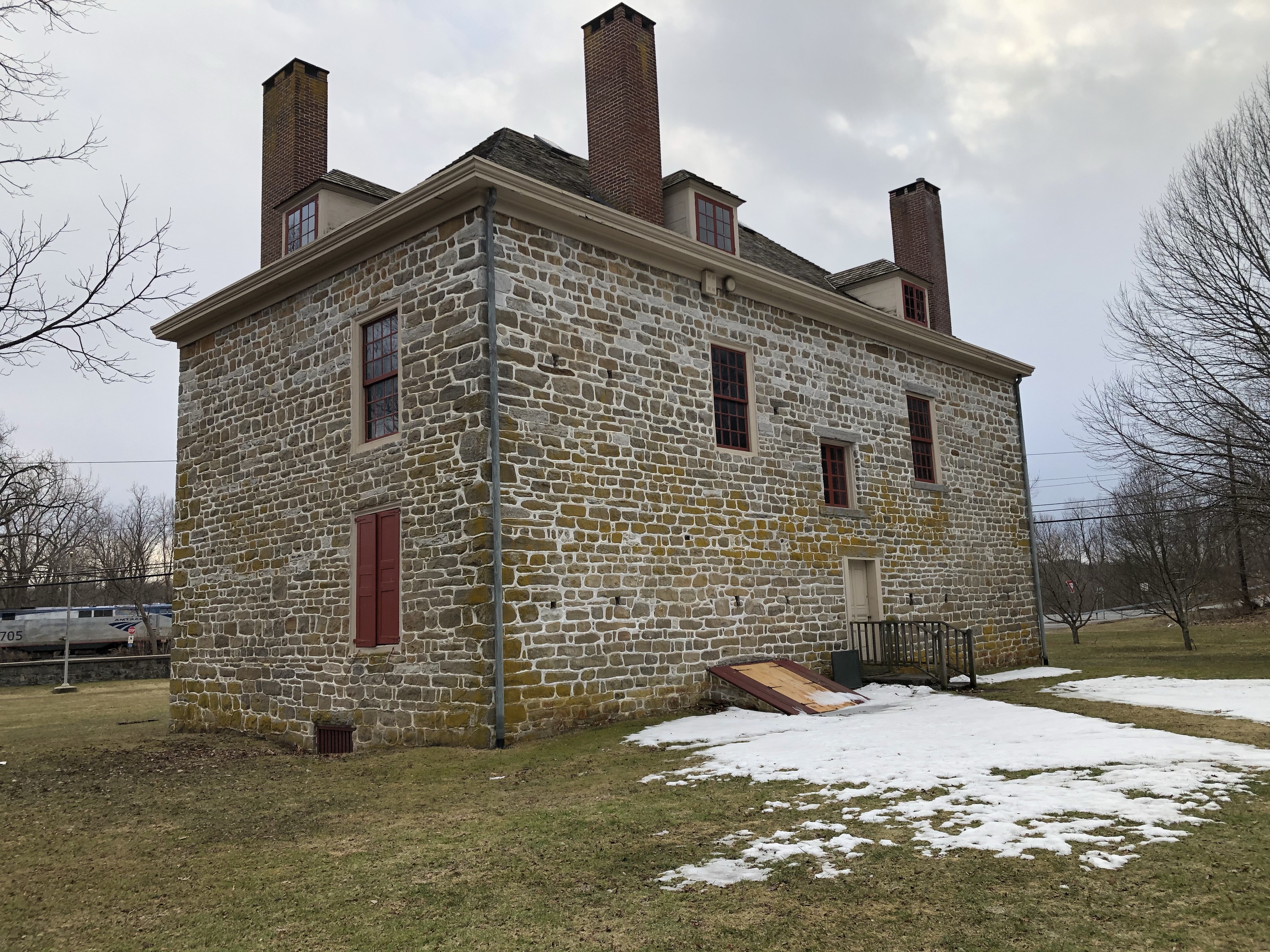
    There’s beauty in serendipity, especially when traveling.  Yesterday afternoon while driving from Rochester, New York to Saratoga Springs, New York Waze sent me off the highway onto Route 67, which is a shortcut that cuts off a good chunk of highway.  The drawback of course is that you’re on back country roads in farm country, but I haven’t met an off-the-beaten-path route that I didn’t want to try anyway.  As a history buff I’ve long circled Old Fort Johnson as a place to visit.  It’s hard to hear the whispers of history when you’re blowing by at highway speeds, so having Waze take me off the highway less than three miles from this historic site seemed, well, serendipitous.

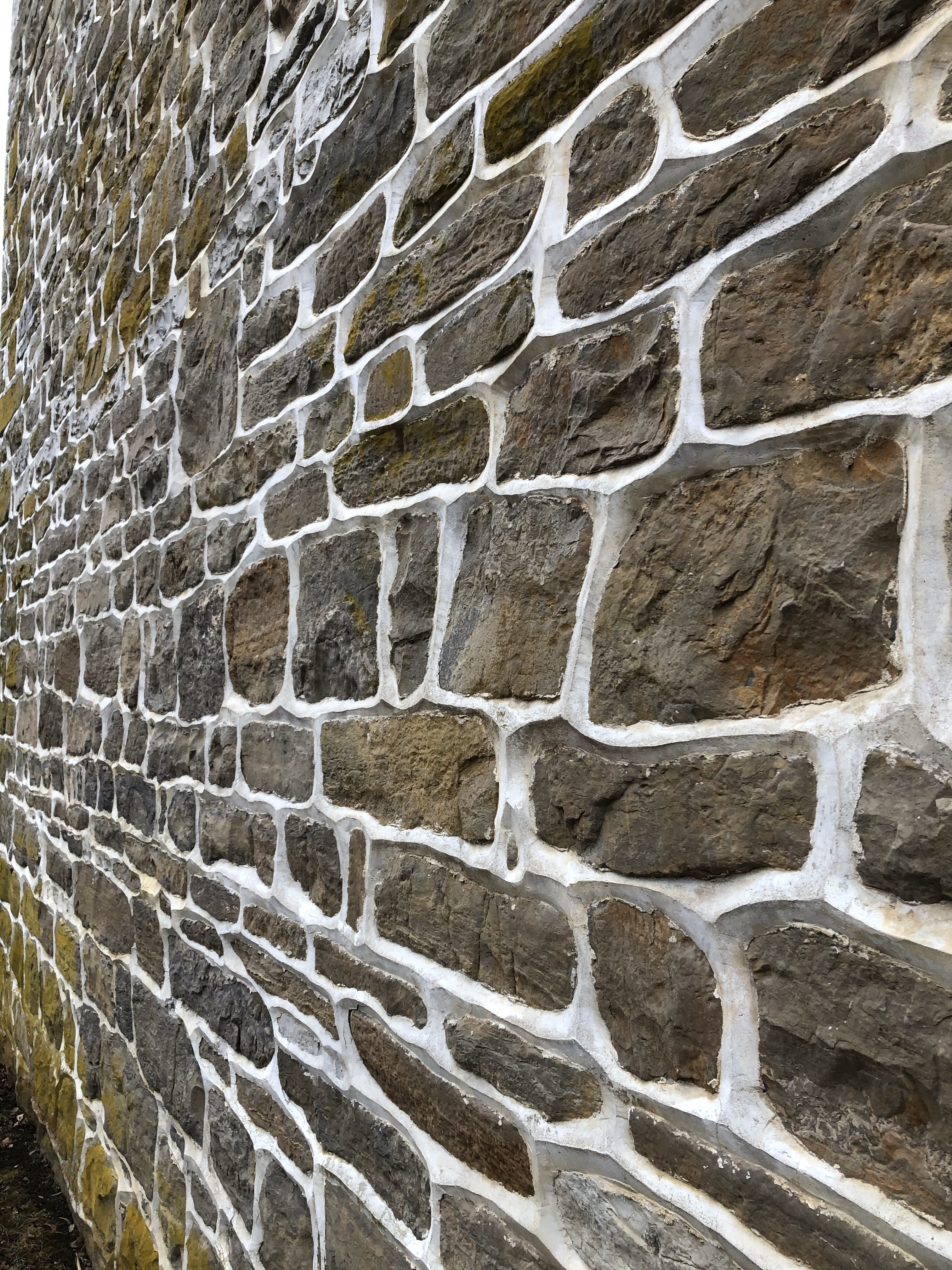
    Here’s the thing, small historical sites like Old Fort Johnson aren’t open year-round.  I’ve experienced this many times over in my travels, but you make the most of the opportunities fate throws your way.  The site is open to walk around, and I stepped gingerly in my dress shoes around the main house doing my best to avoid mud on a wet afternoon.  Sure, I could’ve put on my hiking shoes, which were sitting right in the car, but why dabble in logic when the ghosts are calling?  I walked across the bridge onto the mowed lawn surrounding the historic house, touched the limestone walls and felt the vibration of the colonial history…  or maybe it was the Amtrak train roaring down the tracks between the house and the Mohawk River.

    Okay, this was a quick stop, and not as meaningful for me as visits to battlefields or the homes of poets and writers.  But still meaningful.  This site was where William Johnson settled in a place he called Mount Johnson.  He was a fur trader and as such became friendly with the Iroquois, eventually building enough wealth and influence to be quite a power broker in the wilderness of Upstate New York.  When hostilities with the French broke out, he led the local militia as a Major General and was Commander when the French were defeated at the Battle of Lake George and other monumental victories at Fort Niagara and in Montreal.  In defeating the French at these three key sites, the British would control the waterways to the interior and forever evict the French from New York.

    This large home that Johnson built would eventually be passed on to his son John and other members of the Johnson family.  But here’s where things took a turn.  The Johnson family were Loyalists, and with the outbreak of the Revolutionary War, they chose to fight on the British side just as the Iroquois did.  When the British lost, they were evicted from New York, just as the Iroquois were.  There’s a profound sadness in the history of this place.  Where once there was a thriving collaboration between the Johnson’s and the Native Americans, there was now a void, still felt to this day.  Be careful which side you choose, for you may lose everything you’ve built for yourself in the process.  The house remains a monument to a greater glory, and to all that was lost in the next generation.

  • Palindrome

    02/02/2020 is almost over in this time zone, and it’s worth a mention before it passes by. Read it frontwards or backwards and it reads the same. Surely a novelty of the calendar. It hasn’t happened since 11/11/1111 and won’t happen again until well after all of us leave this planet (probably along with our grandchildren) on 12/12/2121. That’s an interesting date itself, and I wonder what the world will be like in 101 years? A better place or an environmental wasteland? At war or finally, blessedly at peace? The future holds the answer, and all we can do is influence it in some small way. Our token ripple on the pond of history. What shall that be?

  • The Pilgrims and Pokanoket

    As you walk into the Mayflower Pub in London there’s a poster mounted high on the wall that shows the silhouettes of all the pilgrims and servants who sailed on the Mayflower to settle in America. The poster is divided in two, with the upper half showing the Pilgrims as they sailed from Europe. The lower half has the same image, but depicts those who perished before that first winter was over in gray. There’s a lot of gray… but by all rights it should have been all of them.

    The Pilgrims sailed for America too late in the season, without enough food, and sailed for the wrong place. Their charter had them settling at the mouth of the Hudson River, and instead they found themselves at the fist of Cape Cod. Turning south they almost wrecked on the treacherous shoals that have claimed thousands of ships since then. Turning back northward, the Captain of the Mayflower considered present-day Provincetown but eventually worked their way to the area that would become Plymouth., Massachusetts. Pilgrims were starting to die as freezing temperatures, tough living conditions aboard and malnutrition conspired against them. The Native American tribes were well aware of their presence and had already skirmished with them on Cape Cod at First Encounter Beach. A more sustained attack could easily have wiped them out.

    But the Pilgrims also had some lucky breaks that kept enough of them alive to establish a foothold in the region. They arrived at a place where just a few years earlier thousands of Native Americans lived. Contact with Europeans, most likely fishermen fishing the Gulf of Maine, triggered a plaque that killed thousands of people in the few years right before the Pilgrims arrived. So the native population was decimated and in no position to shove the Pilgrims back into the ocean they’d arrived on. They settled in an area with cleared fields and few adversaries. Truly fortunate to be there instead of landing in a place with a thriving and hostile Native American population.

    The other lucky break the Pilgrims caught was landing at a place where the local Sachem, Massasoit, saw strategic advantage in an alliance with the Pilgrims. The Pokanoket tribe Massasoit was Sachem of had been hit hard by the plaque that hit the tribes along the Gulf of Maine, and he was feeling pressure from the Narraganset tribe. An alliance with the Pilgrims gave him some strength in numbers that proved mutually beneficial for the short term. Ultimately this alliance would give the Pilgrims the momentum to survive and grow, but would destroy the Pokanoket in the next generation. An accident of geography brought the Pilgrims and Pokanoket together, time would drive them apart. But in the winter of 1620-1621, it would prove the difference in keeping more Pilgrims from turning into gray silhouettes on a poster 400 years later.

  • Favorites From a Year of Reading

    This might go down as my favorite year of reading.  I made it a goal to read more the last two years, and the momentum from 2018 definitely carried over into 2019.  Reading inspired my travel to new places and offered side trips of meaning in places I’ve been many times before.  It kicked me in the backside with work, writing, exercise and diet, and it inspired me to be a better version of myself than I previously had been.  I’m still a work in progress, but aren’t we all?  In all I read 23 books cover-to-cover in 2019, and dabbled in chapters of a few more.  Here are my ten favorite books this year:

    Atomic Habits by James Clear was by far the most impactful book on self-improvement that I’ve read in many years.  Strongly recommend this if you’re looking to make meaningful changes in your life.  I’m going to re-read it again in January to get a jump-start on 2020.  Habits that are now part of my identity include reading, writing, walking and drinking water.  Habits that went by the wayside include daily burpees and drinking less.  2020 (every day really) offers a chance to reset on habits, with new possibilities with learning language(s) and a few notable work goals.

    The Gift by Hafiz is a stunningly beautiful collection of poems.  Why it took me until 2019 to find Hafiz I don’t know…  but I’m glad I got here.

    Dream Work by Mary Oliver is another collection of brilliant poetry that it took me way too long in life to discover.  Maybe Oliver’s passing this year put a spotlight on her work, or maybe the student was finally ready.  Either way I’m glad I’ve immersed myself in the world of Mary Oliver.

    To Shake the Sleeping Self: A Journey from Oregon to Patagonia by Jedidiah Jenkins is a travel book on the one hand, and a journey of self-discovery one the other as Jenkins wrestles with his religious upbringing and his sexual identity during an epic biking trip across North and South America.  The book reinforces my belief that most people are good while acknowledging some good fortune along the way.  As a bonus, Jenkins pointed me towards one Hafiz poem, Tim Ferriss pointed me towards another, and soon I was reading The Gift (above).

    Awareness by Anthony De Mello is not the kind of book I ever would have picked up, as it feels self-helpy and overly religious at first glance.  And it does have a healthy dose of both things, but this books is an incredible call to action for the self, and backed up with tremendous insight into human nature.  Another book I wish I’d read years ago that I’m glad I got to in 2019.

    How the Scots Invented the Modern World by Arthur Herman is a book I’ve had on the shelf for years that I finally got to in 2019.  Perhaps inspired by my then upcoming trip to Scotland, I burned through the book quickly, learning a lot about the Scottish people who made a massive impact on the world we live in today.  It also prompted me to add a few places to my trip that I might not otherwise have gone to.

    The Map Thief by Michael Blanding poured gasoline on my burning fascination with old maps, and fired me up in another way; as someone who is passionate about historical artifacts like maps and old books, and also in a career based on securing people and assets from criminals like Forbes Smiley, this book was highly relevant for me.

    The French and Indian War: Deciding the Fate of North America by Walter R. Borneman offered me more insight into the place I live than any history book in a long time.  The Northeast corner of North America is where most of this fighting took place, and I took the opportunity to visit many historically important sites in my travels that were inspired by this book.

    Benedict Arnold’s Navy: The Ragtag Fleet That Lost the Battle of Lake Champlain But Won the American Revolution by James L. Nelson is a look at the complex individual that is Benedict Arnold.  And it goes well beyond the Battle of Lake Champlain, with a detailed account of Arnold’s epic raid of Quebec through the wilderness of Maine.  The retreat from Quebec opened up the St Lawrence River to the British, which put Lake Champlain and Lake George in their sites as the critical water route to the Hudson River. Arnold’s fleet delayed the British just long enough to set up the victory at Saratoga (where Arnold played a critical role as well).  I followed this book by reading Valiant Ambition by Nathanial Philbrick, another excellent book with even more detail on complicated life of Benedict Arnold.  Benedict Arnold’s Navy inspired that read, so it gets the nod here in the top ten.

    The Daily Stoic: 366 Meditations on Wisdom, Perseverance, and the Art of Living by Ryan Holiday is, as the title indicates, meant to be read daily, one quick dose of stoic medicine at a time.  After immersing myself in Marcus Aurelius’ Meditations in 2018, I felt that The Daily Stoic would be a great way to add a little daily stoicism to my life.  And it became part of my morning routine, where I’d read this before other books.  I’ll continue this habit by re-reading The Daily Stoic one day at a time in 2020 and on into the future.

    So there you go, my top ten favorite reads in 2019.  I’m a better person for having read them all, and look forward to revisiting several of them again and again in the years to come.  I’m a better writer for having read them all (still a work in progress).  And there’s a big stack of exciting books to tackle waiting patiently beside them.  So here’s to some great reading in the year ahead!

  • What’s Up? The View From The Top Of Two Monuments

    One of the fun things about travel is seeing new things. Or more specifically seeing old things that are new to you. Climbing tight spiral staircases to see the view from the top isn’t high on many people’s lists, but an adventurous few make the climb to see what’s up there.  I had this experience twice while I was in the United Kingdom this year, once in London and the other time in Scotland.  Both offer similar experiences and yet are completely different.  I recommend doing each climb if you’re fit and aren’t afraid of heights.

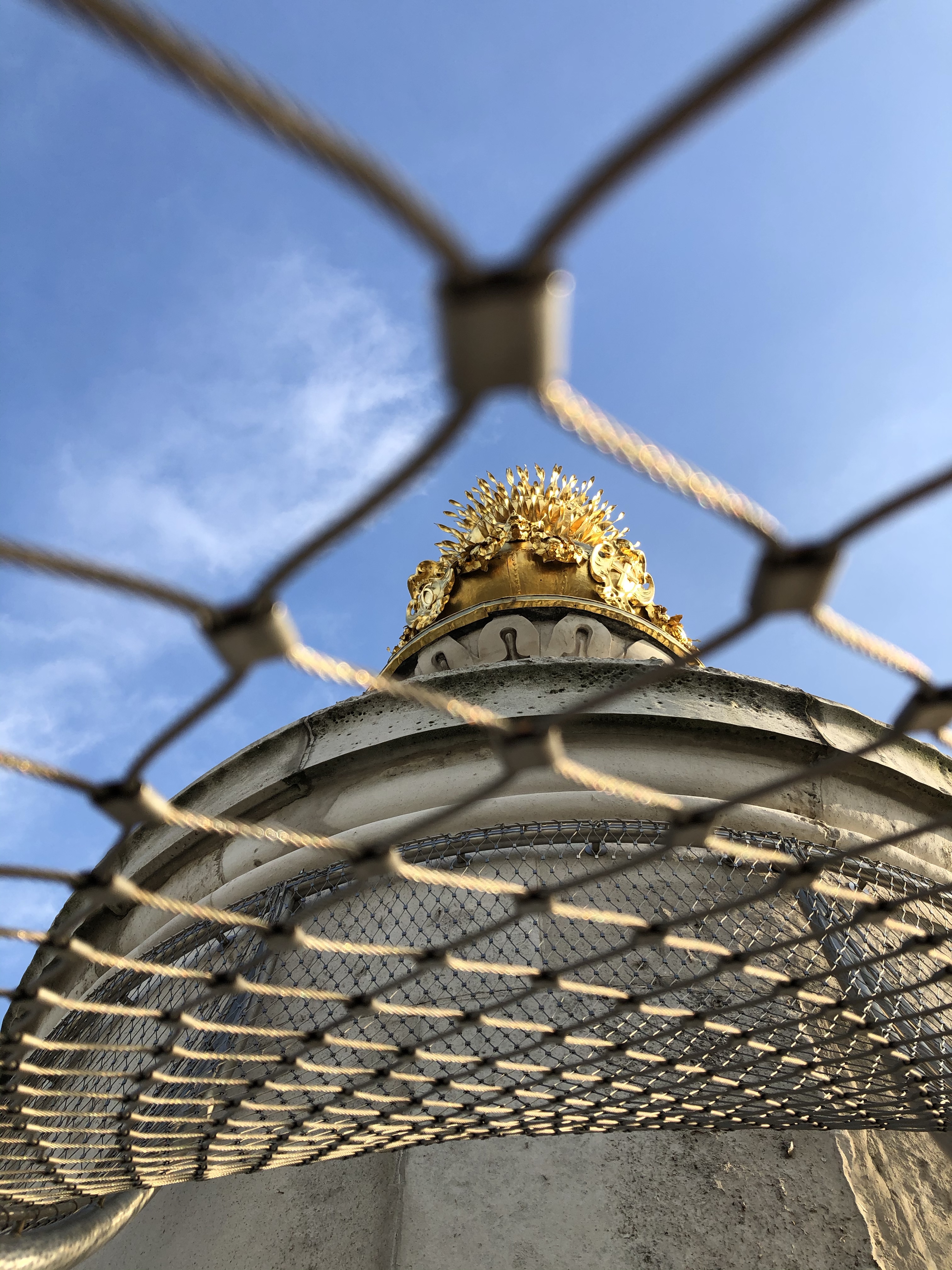
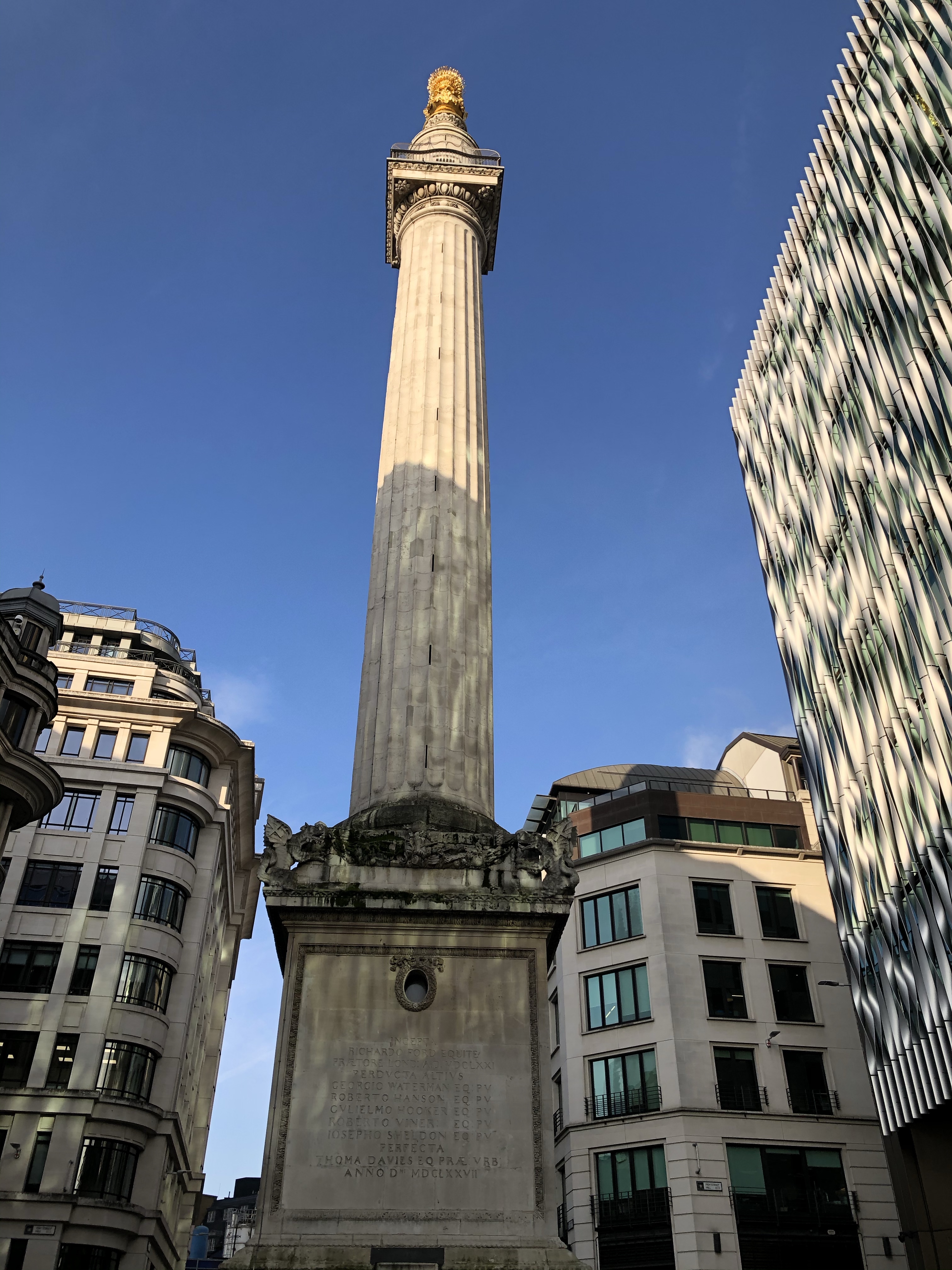
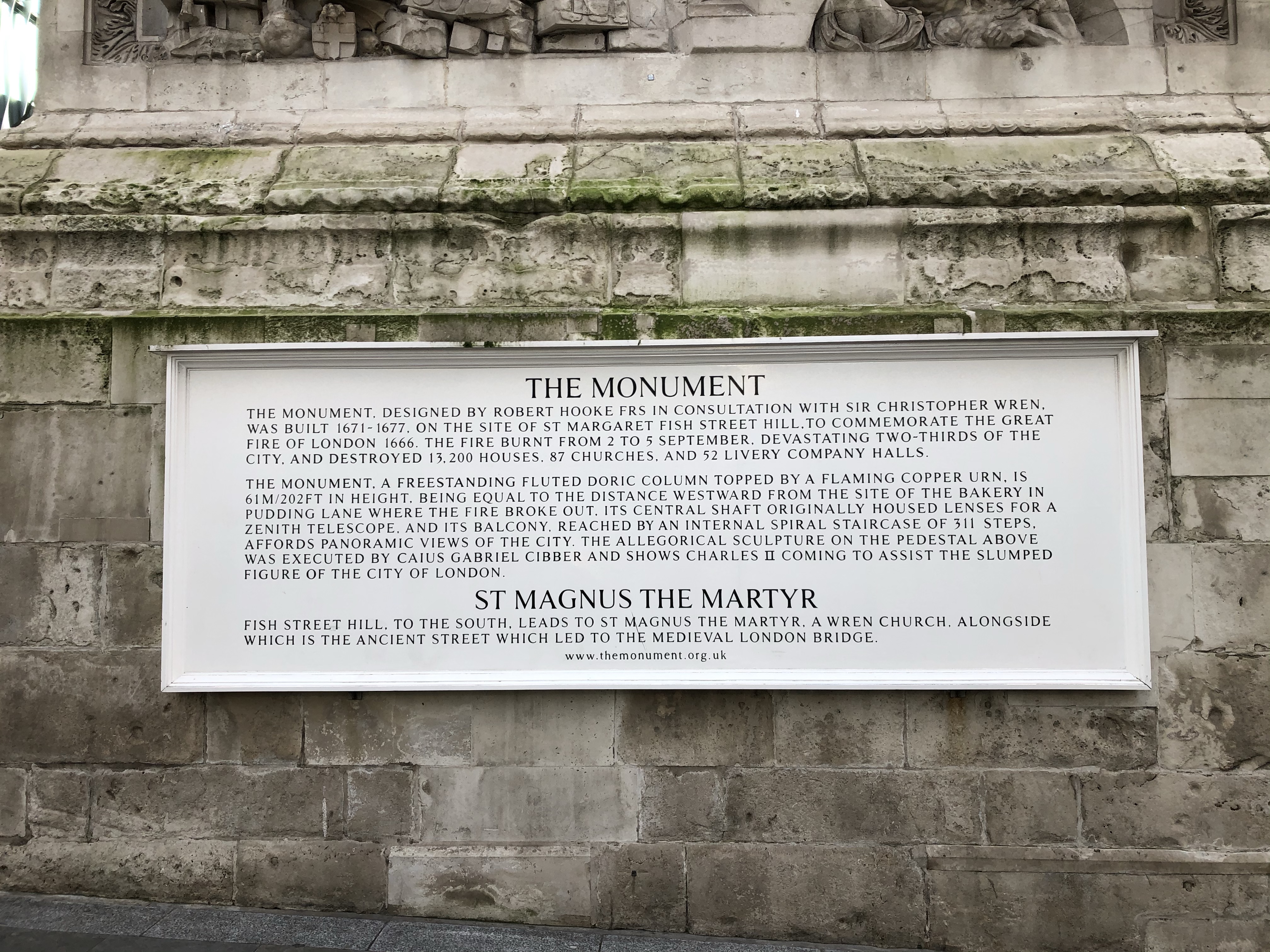
    The Great Fire destroyed over 13,000 homes and 87 churches in London in 1666, leaving upwards of 130,000 people homeless.  The re-build of the city was based on the design of Robert Hooke and Sir Christopher Wren.  These two men designed a monument commemorating the Great Fire, which was built of Portland Stone in the shape of a doric column with a spiral staircase inside running to an observation deck on top, and crowned with a gilded urn of fire.  I climbed up the 311 first thing in the morning on one of my last days in London, appreciating the stunning views of the city from up there.  The spiral staircase is easy to navigate, but you’ll feel it as you climb up.  I managed to get to the top without taking a break, but my heart rate was elevated when I finally reached the viewing platform.

    Perhaps the most impressive thing about The Monument is that it was completed in 1677, a century before America declared independence from Great Britain.  Think about the generations of people who have made the climb up those same stairs!  If you take a low number, maybe ten per day, multiplied by the number of days The Monument has been open for the public, you arrive at 1.2 million people who have made the climb to the top.  More realistic is a number topping 3-5 million.  All climbing a staircase ’round and ’round to the top; an adventure shared across generations.  Imagine the stories in that collection of people.  And now my daughter and I are on that list, with our own stories.

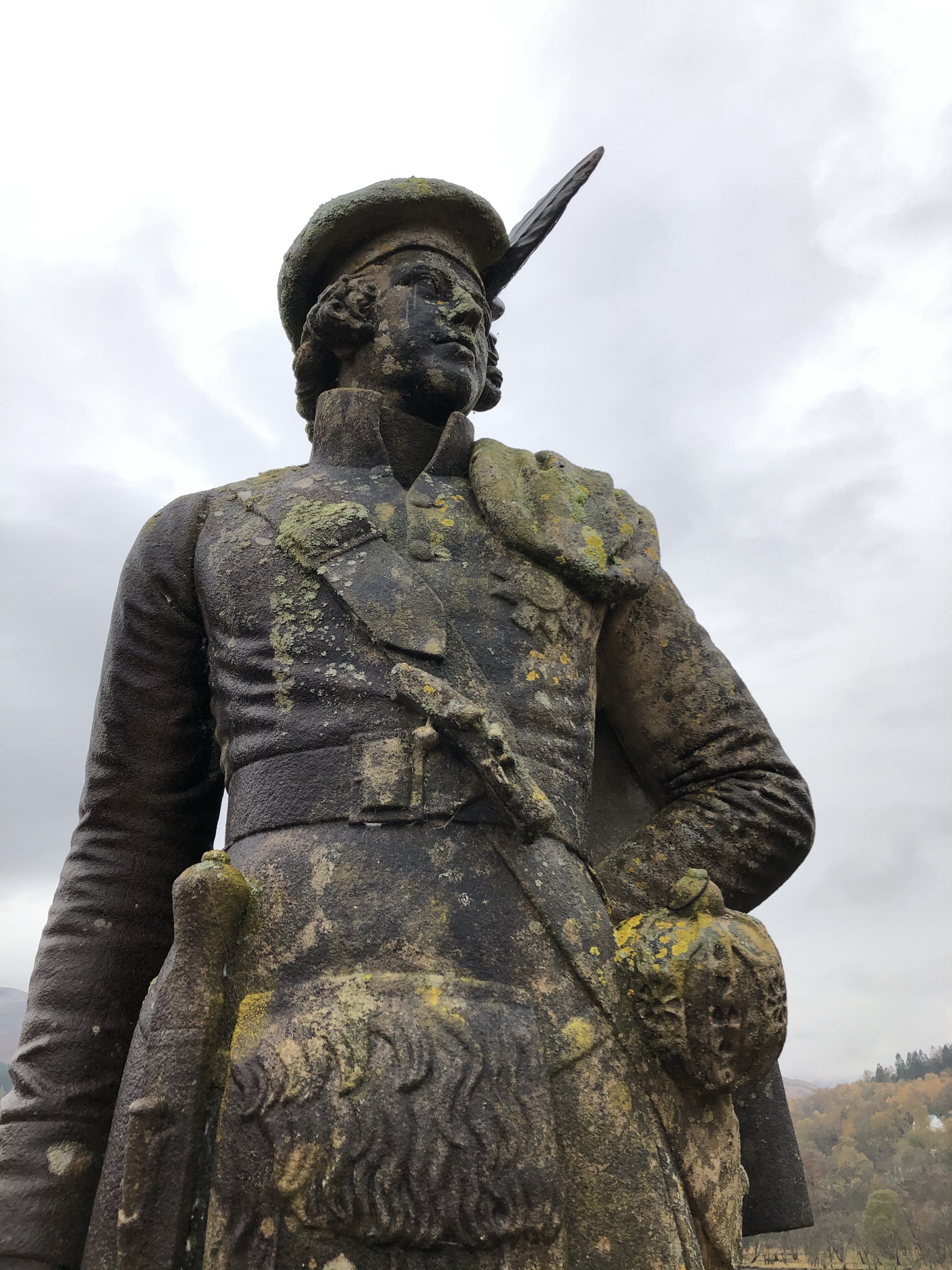
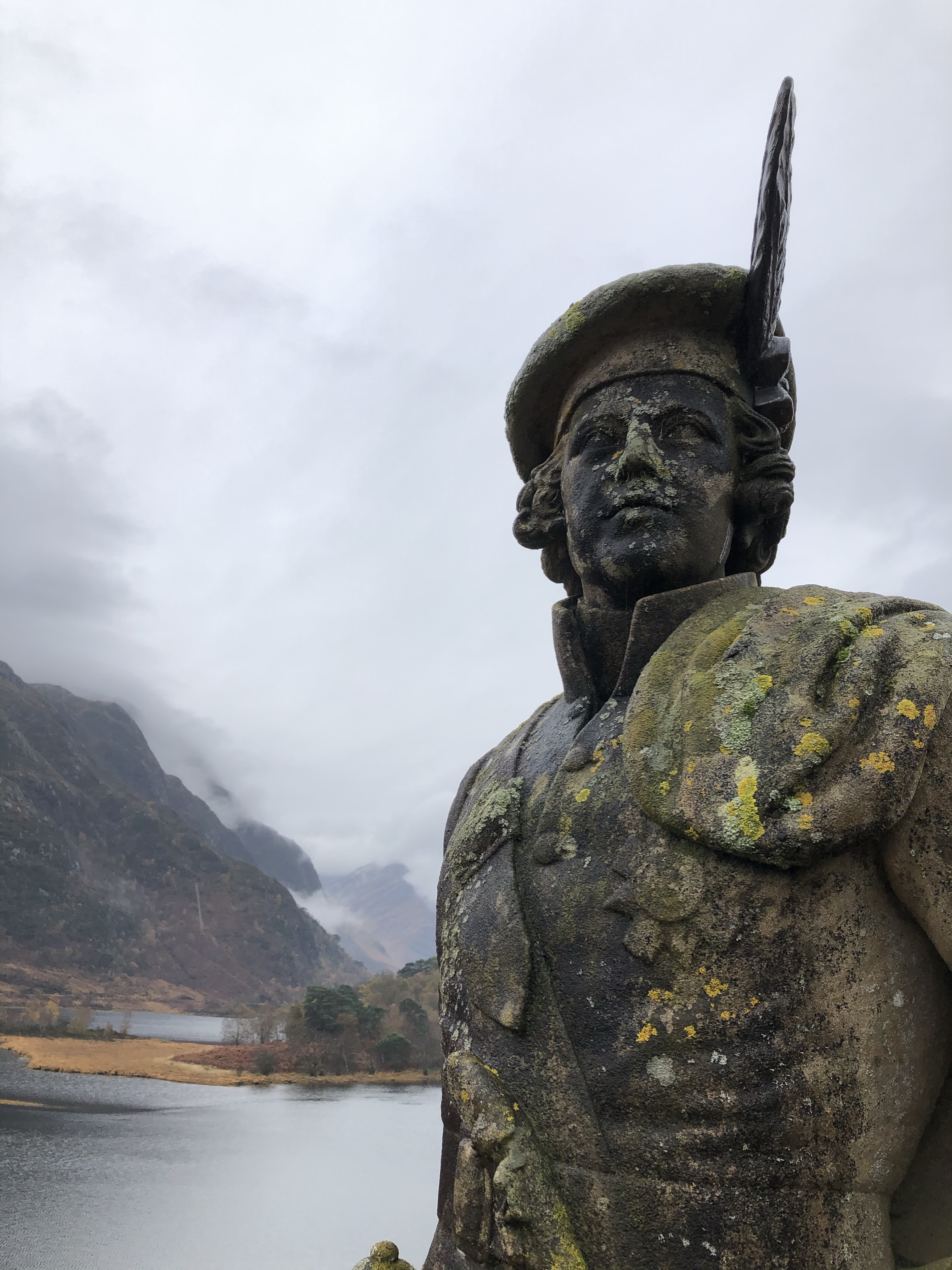
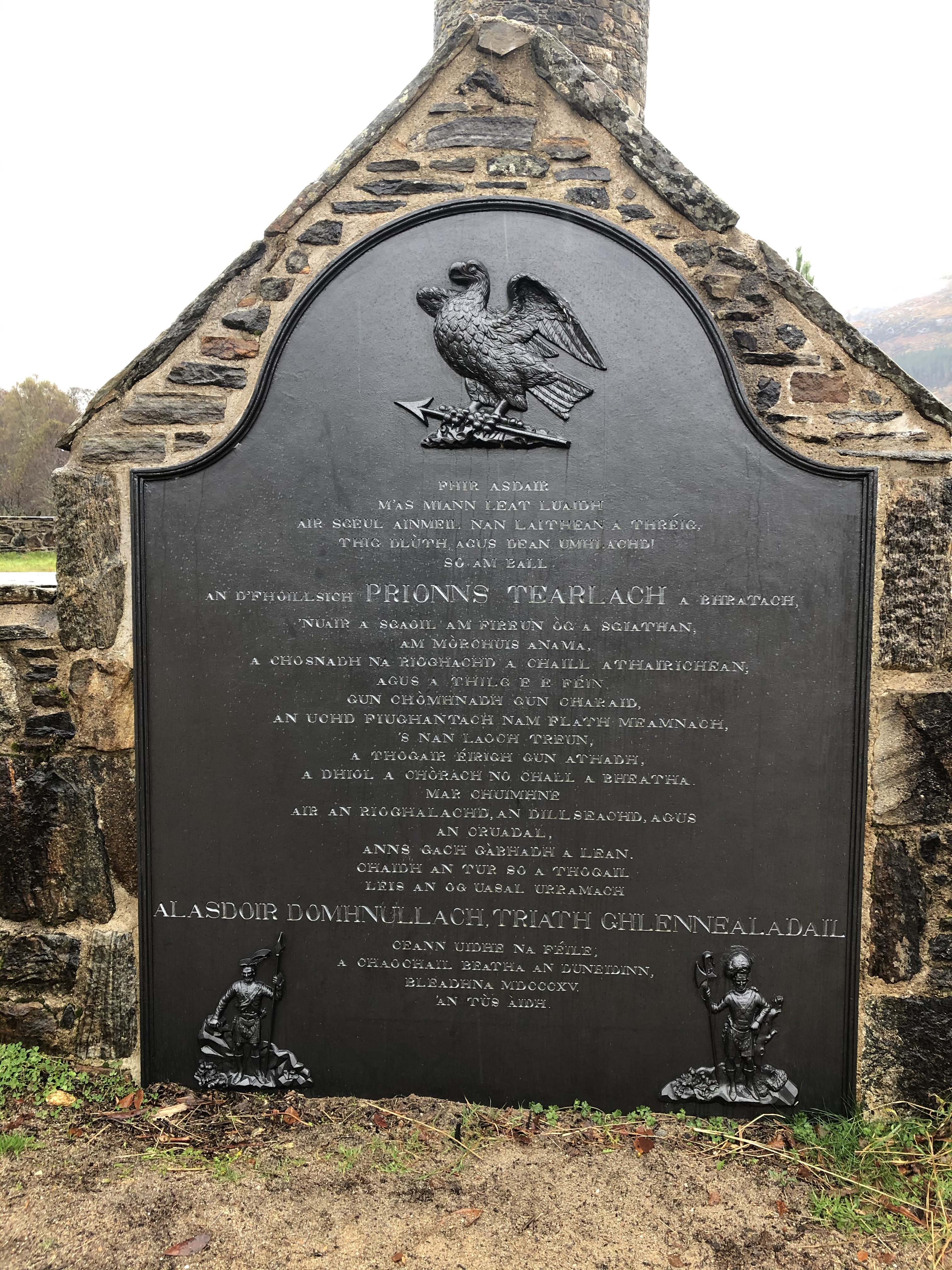
    Meanwhile, in Scotland at the head of Loch Shiel, there’s another monument that’s been standing stoically for generations.  The Glenfinnan Monument, built in 1815, commemorates the 1745 Jacobite Rising.  It’s topped with a statue of a lone Jacobite soldier looking north towards the Highlands.  This climb wasn’t as high as The Monument – it’s 18 meters, or about 60 feet tall, but it has it’s own challenges.  The spiral staircase is more like a tight and twisting ladder spinning you to the top step-by-step.  I’m 6′-4″ tall and felt like I was in a gun barrel spinning about to the top, where I emerged to see this moss and lichen covered Jacobite ignoring me as he’s ignored countless climbers before me.

    Where London has grown up above The Monument, squeezing it on all sides and shrinking the panoramic view, the Glenfinnan Monument offers the same view today as it did in 1815.  Stunning views of Loch Shiel, Sgùrr Ghiubhsachain and other surrounding mountains.  Turning your gaze towards where our friend the Jacobite is focused on, you see the Glenfinnan Viaduct, made famous by the Harry Potter movies, making its elegant sweeping curve.  This was a lovely view indeed, even with a bit of rain and fog playing games.  Aside from the paved road, the Glenfinnan Visitor Center, a few new buildings scattered about and the Viaduct, this view hasn’t changed since this monument was erected.  It offers its own whispers to the past, and was worth the climb.

  • Better For Having Done So

    2019 was a year of change for all of us, as every year is, but it felt more profound this year. That has everything to do with writing about it. I know people who made changes on a massive scale, and others minor, but change happens whether we choose it or not. In the spirit of self-improvement as we enter the New Year, here are some small changes in routine that offered a profound return on time invested:

    Coffee consumption doesn’t seem like a big thing, but ever since I switched to the AeroPress I’ve reduced my daily coffee consumption, favoring one or two amazing cups to savor over multiple cups of average coffee from a Kurig or drip coffee maker.  I’ve reduced my personal plastic waste significantly as well.  I’d estimate that I’ve subtracted about 500 used K-cups from the landfill just making the switch.  I wish I’d done this years before, both for the reduction in waste and for the exceptional coffee the AeroPress makes.  On a side note, since the London and Scotland trip I’ve increased my tea consumption, switching coffee about half the time for tea, and find it a nice enhancement for my daily steaming hot beverage.

    Reading every morning, beginning with a quick read of The Daily Stoic for a jump start and moving to whatever book I was chewing on at the time, has built a routine and habit streak that has greatly enhanced my personal philosophy, helped me to know more about the history of the place I live and places I traveled to, opened my mind to spirituality and changed my perspective on a few things. I’ve read more and better books in 2019 and chewed through a few brilliant books that mocked me for years sitting on my bookshelf.  Nothing improves the mind like active participation in The Great Conversation.

    Educated travel in 2019 was enhanced by the reading, as you might imagine, but became a mission in itself.  Major trips to London, Scotland and Chicago were enhanced with educating myself about the places I was going, adding things I would have missed and subtracting things that may have been good but replaced with things that were amazing.  But this really became powerful for me in local travel.  Local travel took on new meaning for me with quick side trips to see the Saratoga Battlefield while I was in the Capital Region in New York and Fort Niagara in Buffalo, New York and Fort Western in Augusta, Maine.  I’ve hiked the trails in Ithaca, New York to see the stunning waterfalls in winter and spring, stopped at lonely graveyards to see the tombstone of Revolutionary War heroes and walked in dress shoes on soggy battleground sites deep in the off-season.  Educated travel offers a greater sense of place, and I’m better for having made the time to learn about and then visit these places.

    Writing every day has changed me completely.  The daily cadence, the skills acquired, and the deliberate action in the previous two habits to enhance the daily writing offered far more to me than any other daily routine.  We’ll see where it takes me in 2020, but wherever it goes, you’ll read about it on this blog.

    Walking has always been a part of my life.  I used to walk home from school four miles instead of taking the bus just to get away from the noise and secondhand smoke that was a part of bussing teenagers home back in those days.  When my dog Bodhi got older and passed away in 2019 the walks had decreased in length, and I found myself missing the nightly routine of walking for an hour with him looking at stars.  So I started walking again to get that minimum 10,000 steps, but also to come alive again.  Doing those steps on the beach or the rail trail or walking around the block at a random hotel somewhere became a mission.  I’m currently on a 19 day streak of 10,000 steps per day, managing to get my steps in through the holidays and hopefully for a long time to come.  I know I won’t always have the time to do it with work, but then again, what’s more important than maintaining a base level of fitness?  Walking is easy, and hasn’t caused nagging injuries like the burpees did for me.  When I can’t walk outside I’ll read on the treadmill, magnifying the font to crazy sizes so I maintain good posture.  But I double down on two habits and feel better for having done so.  So I’ll keep moving, and add other activity to enhance my fitness whenever possible.

    Looking at 2020, I’m not looking at resolutions as much as what can I add to my daily routine that will pay off over time?  And the answer for me is language acquisition.  Being bilingual or multilingual is nothing unusual in the rest of the world, but in American we tend to stick with English.  I think I’ve got my head wrapped around that one already.  Nothing improves travel like knowing the local language, and nothing challenges the brain like learning to speak it, so it’s time to get back on track.  I’ve dabbled in French, Spanish and Portuguese over the years, and it’s time to double down on learning two of them.  French and Spanish are the leading candidates, but I have a soft spot in my heart for Portuguese and may explore the language a bit as well.  Let’s see where this takes me.

  • Friday the 13th and Ghost Stories

    Here we are again, at a point where the days and numbers on the calendar align and give us another Friday the 13th.  In general good things have come my way on a day many people associate with bad luck.  My son was born on a Friday the 13th, making it a very lucky day indeed.  More often than not you get what you expect in life, and if you’re primed to look for the negative it’ll find you.  I’ll stick with the opposite point of view, thank you.  Optimism with a healthy dose of stoicism seems to work for me.

    I’ve written before about dancing with ghosts.  For me ghosts aren’t the creepy spirits that get annoyed that you’re in their space, they’re the people who lived in the past who’s story is all around us.  Historical figures and anonymous lives alike, all lived before we were here.  The stone wall standing alone in the woods, the old foundation on Isle of Skye left from the Clearances, the soot on the ceiling of a cave from fires long ago, and the groove worn into a stair tread; These are my ghosts. I love uncovering the stories of some person from centuries ago and visiting the place they did something memorable, and maybe their grave to remind them they aren’t forgotten.  We all want to be remembered, don’t we?  At least for a few generations.  Make the ripple last as long as possible, hopefully in a positive way.

    I’ve been bumping into the other kind of ghost stories lately.  People who encounter poltergeists.  A poltergeist wants attention, making its presence known by messing with things in “our” world, crossing some border between death and life.  Frankly I never think about the poltergeist kind of ghost.  Maybe I’m closed-minded about it, or maybe they see me dancing with other ghosts and leave me alone.  But I’ve got this stack of stories people tell me about poltergeists they’ve encountered, and after a while you have to wonder what’s real and what’s imagined.  I see good things on Friday the 13th, others see bad things; who’s right?

    Yesterday I was speaking with a Town Clerk in Connecticut.  I’d stopped to pick up a death certificate for an ancestor as a favor for my mother.  We noticed on the death certificate that this relative had died from a fall down the stairs, breaking his neck.  I joked about that house being haunted and the clerk, not missing a beat, told me about Antonio, pointing to the vault and saying he died right in there and still haunts the place. I looked in the vault and asked if he preferred Antonio or Tony.  We finished our transaction and I was on my way, with one more ghost story added to the list. I don’t know if Antonio is a poltergeist haunting the vault at Town Hall, but I do know that he tragically died in the vault at some point in history.  And people are still talking about him to this day.

    I’ve heard similar stories from separate friends about encounters at hotels in Boston and Nashville, and some good friends that insist there’s a ghost in a family home on Cape Cod.  What do I know?  I’m not in the poltergeist business.  I have no desire to stay in Lizzy Borden’s house for a night trying to bait unseen ghosts to come out and play.  No, I’m trying to bring their stories alive without all the mischief.  But now and then I do hear a whisper in the wind, feel a spirit in the air, and I give a nod to acknowledge.  Walking alone in the woods at Holy Hill in Harvard, Massachusetts in Autumn once had me thinking of Shaker ghosts.  Visiting King Philip’s Seat in Bristol, Rhode Island and spooking a hawk into flight had me hearing whispers of Metacom and the lost Pokanoket tribe as I explored the woods.  And visiting the Winter Street graveyard in Exeter, New Hampshire looking for the grave of Major General Nathaniel Folsom felt like I was being directed around to look at every other Revolutionary War hero’s grave before finding his.  I felt it that day too.

    So here we are on another Friday the 13th.  We generally get what we look for in life, and I hope today brings you good fortune.  If you happen to run into any ghosts, I hope they aren’t poltergeists – those buggers are nothing but mischief.

  • A Walk With Ghosts: King Philip’s Seat

    If you want to walk amongst ghosts of the past, the walk from Brown University’s Haffenreffer Museum to the rocky outcropping forever known as King Philip’s Seat offers ample opportunity to feel you are. This is where the sachem Metacom (aka Metacomet), who had once taken the English name Philip as a gesture of goodwill, waged war on the English settlers in King Philip’s War from 1675 to 1678, when Metacom was killed. Metacom was the second son of Massasoit, who was born near this spot too, as countless generations of Pokanoket were. If Massasoit is remembered for trying to manage a peaceful coexistence with the English settlers, Metacom is remembered as the first to rise up against the relentless encroachment on their lands.

    Walking through the woods on an old paved road slowly being consumed by the forest, I spooked a hawk from the ground and watched it leap to the sky and arc above me, white feathers on blue sky. A sign? A welcome from Metacom or another ghost from the Pokanoket? I keep moving and soon after I saw the rock outcropping that was Metacom’s seat. And it just looked like a seat of power, silently commanding the forest and looking out to the bay, just like its sachems did before they passed, and the land passed to the settlers. Pokanoket survivors were sold into slavery in the West Indies, a final, brutal indignity.

    I’m told that the Pokanoket recently attempted a takeover attempt to win back the land from Brown University. 341 years after Metacom’s death this place still evokes passion. This is one reason I had to get a permit to enter private property, and I was only given an hour to walk around. It was enough time this time, though I’d like to go back again knowing I missed more than I saw. I was alone as I walked and relied on written directions and one sign on the property to inform me where I should go. Instinctively I climbed the outcropping to see what Metacom saw: blue water above the dancing treetops. But I relied on a feeling about the place not signage. It seems they’ve made it challenging enough to visit that most people don’t. But I never really felt alone. That hawk, and many more spirits in the wind, were with me the whole time.