Category: History

  • A Castle, Reborn

    Scottish castles had a tendency of being blown up. If my time in Edinburgh, Stirling, Doune, Interlochy, Eilean Donan and Urquhart Castles has done anything, its reinforced this point. Some remain ruins to this day, others were rebuilt to support next generation clan objectives. All are tourist attractions today, but the day they were destroyed marked a world that was forever changed for the previous inhabitants.

    Castles were symbols of the power and influence of the clan that lived there. Stick a castle on a chunk of lava rock and you can hold out against a siege for a long time. At least as long as you have water, food, ammunition and the will to ride it out. Stirling Castle could have held out indefinitely had their water supply not been compromised.

    If a clan is only as safe as the strength of the castle they reside in, the opposite may be more true. Castles only survive history when there’s no reason to attack it. Diplomacy, political connection (being on the “right” side) and tactical value all play a role in a castle surviving.

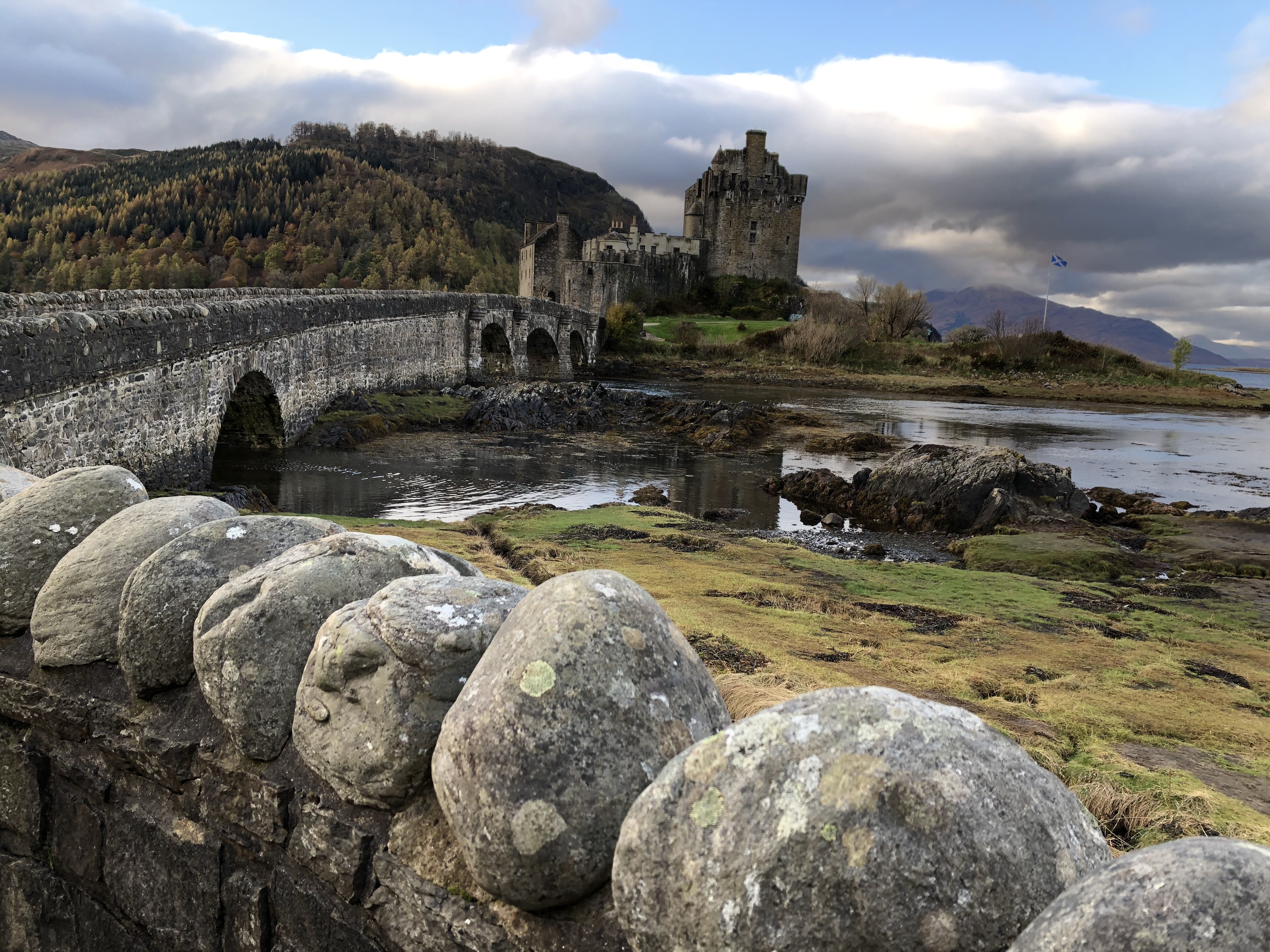
    The defeat of the Jacobites gave plenty of reason for the English and a united Scotland to persecute the clans that sided with Bonny Prince Charlie. The horrifying results to the clans on the losing side are well documented. The castles offer visual verification. Looking at Eilean Donan Castle now, it’s hard to imagine it being a pile of rubble like Inverlochy is, but it too was blown up to punish the Mackenzie Clan. It was eventually rebuilt by their ally the Macrae Clan and today is one of the most photographed castles in the world, playing host to hoards of tourists and many weddings. What might have been a violent end was just a dramatic pause in the life of this castle. This one is a must-see, and I’m grateful to the Macrae’s for opening it up for tours. If you go, be sure to drive up the hill on the opposite side of the road for an iconic shot of the castle.

  • The Birdman of Stirling Castle

    You see Stirling Castle long before you get to it. Perched high on a chunk of volcanic intrusive rock at the strategic point where the River Forth widens, offering the last downstream crossing between the Highlands and the Lowlands of Scotland. You couldn’t pick a more strategic spot for a castle, and the sheer cliffs made it impossible to breach from any side but the heavily-defended front. There were eight significant sieges on the castle, the last (unsuccessfully) by Bonnie Prince Charlie.

    Mary, Queen of Scots was crowned here. That’s a story many know. Lesser known but certainly noteworthy was the life of John Damian, resident alchemist for King James IV, who boldly declared that he would fly to France in a flying rig he created that looked like a chicken suit. Damian brought the court out to the Ladies Lookout, which offered one of the steepest drops. He flapped his wings, stepped off the edge and… promptly plummeted. He would have died right then had it not been for the large pile of chamber pot remnants. Instead the mound of muck cushioned his landing just enough that he got out of it with a broken leg and wounded pride. And on the bright side, a bit of immortality.

    Glancing over the wall where Damian made his flight, its hard for me to imagine him taking that leap into the abyss. But that demonstrates the power of convictions. Sometimes they work in your favor, sometimes they leave you covered in feathers and crap with everyone you know laughing at you. There’s nothing wrong with taking the leap, but maybe limit your downside first.

  • Live Awakened

    The book Awakening begins with a foreword by Francis J Stroud, relaying a story the author of the book used to tell when he was alive:

    “A man found an eagle’s egg and put it in a nest of a barnyard hen. The eaglet hatched with the brood of chicks and grew up with them. All his life the eagle did what the barnyard chicks did, thinking he was a barnyard chicken. He scratched the earth for worms and insects. He clucked and cackled. And he would thrash his wings and fly a few feet into the air. Years passed and the eagle grew very old. One day he saw a magnificent bird above him in the cloudless sky. It glided in graceful majesty among the powerful wind currents, with scarcely a beat of its strong golden wings. The old eagle looked up in awe. “Who’s that?” he asked. “That’s the eagle, the king of the birds,” said his neighbor. “He belongs to the sky. We belong to the earth—we’re chickens.” So the eagle lived and died a chicken, for that’s what he thought he was.” – Anthony De Mello

    Today I’m walking all around Edinburgh, feeling quite awake. Yesterday I came across Memento mori at Greyfriars Cemetery and smiled at the sight of this familiar reminder that life is short. Learn who you really are and live a larger life. The rest will take care of itself.

  • Thy Selfe May Pas: A Stoic Reminder at Westminster Abbey

    There are many famous names at Westminster Abbey. The ornate carvings on ornate carvings give a collective sensory explosion in the brain. We may have skilled artisans today, but there aren’t many stone carvers doing this kind of work anymore. Stunning detail everywhere you looked. Add in the throngs of people touring and it can all feel a bit much. The only blessing is they don’t allow photography inside, so the long lines weren’t subjected to selfie-taking vanity shots.

    Deep into the tour at Westminster Abbey in the chapel of St Edmund, well-removed from the famous names, is a young man lost to history. Francis Holles died at the age of 18 in 1622 on his return from fighting in the Netherlands. His grieving family had an elaborate monument carved by Nicholas Stone to honor him and placed it here, amongst other members of the Holles family. Whether there’s any resemblance to Francis the world will never know, but no matter, the power was in the 1620’s English epitaph engraved below.

    What so thou hast of Nature, or of Arts, youth, beautie, strength, or what excelling parts, of mynd and boddie, letters, arms and worth, his eighteen yeares, beyond his yeares, brought forth then stand and read thyself within this glas how soon theise perish, and thy selfe may pas.

    Mans life is measured by the worke, not dayes, no aged sloth, but active youth hath prayse”

    What parent doesn’t hear the story of Francis and not feel a pang of grief for both him and his parents? For all the famous kings and queens, writers and politicians who spend eternity at Westminster Abbey, this is the one person who stood out above all the rest for me.

  • Day Tripping With the Beatles

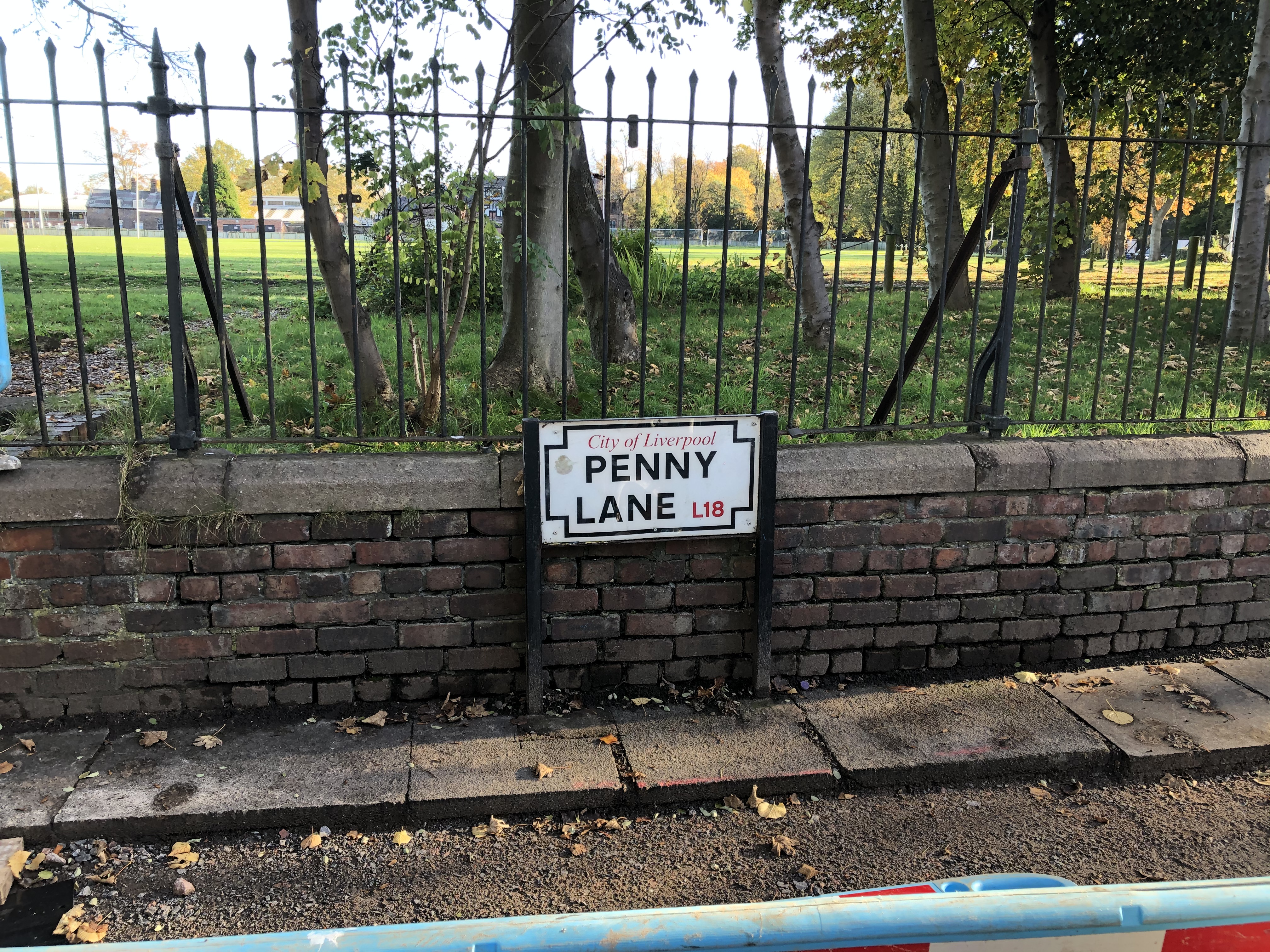
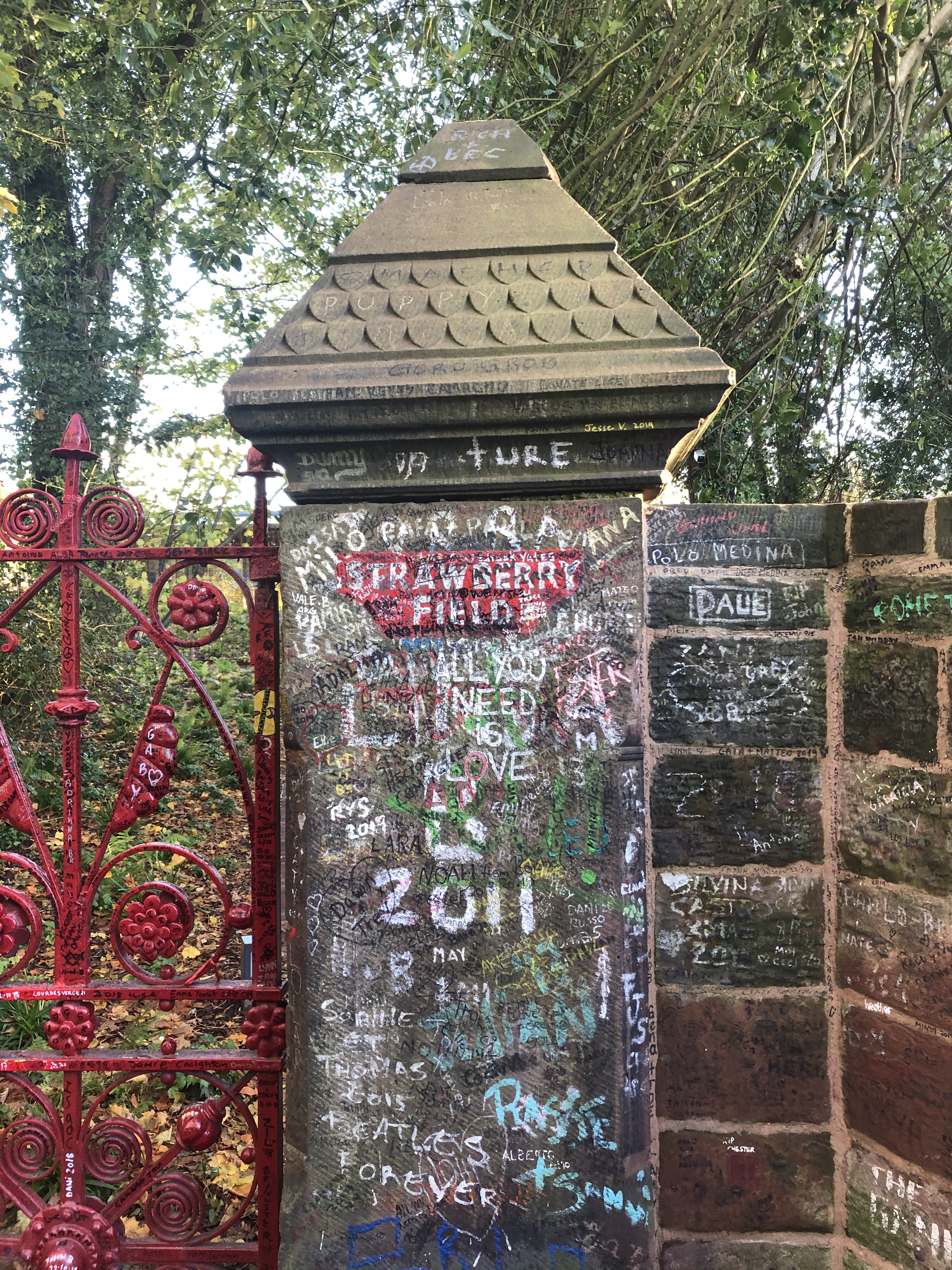
    When you grow up a Beatles fan you learn all the names. Not John, Paul, George and Ringo (that goes without saying), but Penny Lane and Strawberry Fields and The Cavern Club and Elenor Rigby and all the rest. Those names are in Liverpool. And that’s where I found myself yesterday.

    Some people go to Disney World for their dreams to come true. I have a hard time wrapping my head around that. But walking in the footsteps of those who came before? Standing in a spot where a legend was literally born? Yes, please. And Liverpool delivers.

    There’s much more to this city than The Beatles, and I’d love to write about my experiences with all of the museums and exploring the waterfront more. But we had a seven hour window to work with, and a lifetime of assumptions to work through. So it was all about The Fab Four on this trip. If I were to go again, and I hope I do, I’d stay for at least a long weekend for a more immersive Liverpool experience. There’s just so much to see you’ll need the time.

    If you’re a Beatles fan with limited time, I’d recommend the itinerary we created on the fly. Go to The Beatles Story for an immersive self-paced walk through the lives of John, Paul, George and Ringo (that’s the accepted order of names, it messes up everything to jumble them). Wear the headsets and listen to the stories and music, it’s a great launching point for a day with The Beatles.

    Right down the street is the boarding spot for the Magical Mystery Tour, a fabulously fun tour on a bright yellow coach bus. Highly informative stories about what you’re seeing or, importantly, about to see sprinkled with Beatles songs that had many on the bus singing along. That “about to see” part is key, because when driving up a street it’s helpful to know what to look for. Our guide was excellent and prepped us for the turn onto Penny Lane and the drive-by of Elenor Rigby’s grave so we were collectively ready for the moment. Just enough stops for pictures along the way to satiate the Beatles fan checklist without losing momentum. I’ve done a few bus tours in my day, most do the job of informing on the fly well, some not so well. This one is exceptional.

    The tour ended down the street from The Cavern Club, and included a ticket to get in. Perfect way to end the day? Not so fast; there was still one more thing to do before the sun set. My daughter and I walked briskly down to the waterfront for a picture with Ringo, Paul, George and John (See? Doesn’t flow the same). Liverpool is well aware of the positive contribution their four lads have made on the city and erected statues of each of them together looking west. There are other statues of them individually sprinkled in the city but I’m partial to the band together.

    To cap off a Fab day we made our way back to The Cavern Club, deep down several the flights of stairs to the place where they took off. And this place didn’t disappoint. Great music playing on that stage we all know. The arched Cavern walls enclose you, immersive and reflective all at once. You’re literally there, wrapped up in that place you would see in black and white images, now a living monument to the past and a vibrant and exciting bar. The Cavern Club has a pulse, and it’s strong. I had no idea this place deep underground would be the highlight of my day, but it surely was. I’d go again any time at all.

  • Stumbling Across Amherst

    I was thinking about Jeffrey Amherst yesterday. Or rather, Amherst was thrust upon me as I walked through the National Portrait Gallery in London and his face jumped out at me in three paintings. Two were “face in the crowd” works that ensured you knew that yes, HE was there, so was that other HE… and so on. It’s like a snapshot taken at an event, painted over a long period of time. Ego strokes and, to me, tedious. But portraits offer something different, a glimpse into the person. And few people got your attention during the French and Indian War like Jeffrey Amherst.

    No matter what you think of Amherst, and there’s plenty of reason to question his tactics, he helped shift momentum of the war with decisive, ruthless action (giving smallpox infected blankets to Native Americans is certainly ruthless and ethically highly questionable). That victorious campaign positioned him for accolades at home, place names in the New World, and one elite liberal arts college bearing his name. And a portrait in the National Portrait Gallery. I don’t celebrate the life of Amherst, but I acknowledge that he got the job done when the English needed someone to step up.

  • The Guard

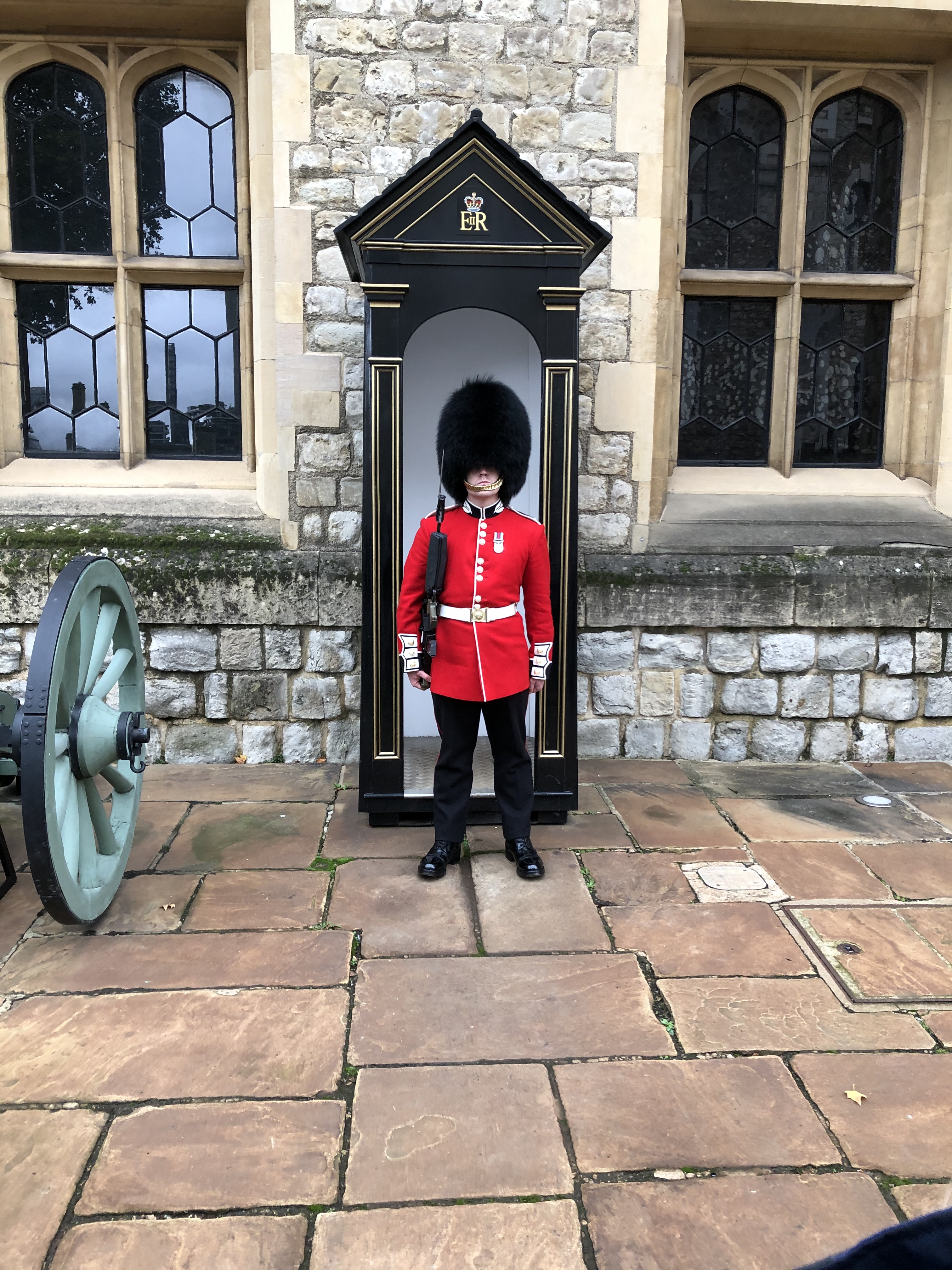
    Consider the Queen’s Guard, standing stoic. The guard scans the crowd with his eyes, moves in ever so slight ways, but otherwise still. As the guard stiffens, they’ll stomp their feet vigorously, ceremoniously shift their gun from the right arm to left, swirl to the side and march to a designated spot where they once again stomp and swirl and repeat as many times as they feel necessary to get the blood moving. From there they return to their original spot, stomp and shift the gun back to the right side, stand back at attention with a stomp and cap it off with a dramatically wonderful swirl of the head. A practical way to shake off London rain, or a crowd-pleasing play to the swarm of Changing of the Guard gawkers? No matter, it’s a big hit.

    I saw a similar act yesterday at Tower of London, however this ceremony of the changing of the guard is a Buckingham Palace show. But no changing of the guard on Saturdays. Still, a good chance to see Buckingham Palace, mingle with global tourists and take the required pictures. And oh, the pictures. Indulgent consuming of megabytes of data, all in hopes of the perfect photo. And an indulgent post to mark the occasion.

  • Queen Victoria and the Prince

    Kensington Palace… interesting place to visit, but I wouldn’t want to live there. Too much museum, not enough home for my tastes, but then, I’m not exactly touring the private quarters of the Royal Family, am I? But there’s humanity there at the Palace, and like many I found myself drawn to the life of one previous resident.

    I’ve always had an image of Queen Victoria dressed in black, in her senior years, but Kensington Palace shows you the entire life of Victoria, which offers remarkable new perspective. Standing in the room she was born in offers perspective. As does seeing her children’s rooms. Focus on the jewels if you will, stunning as they are. But nothing jolted me like seeing the seductive young Victoria in a self-commissioned painting for her true love, Prince Albert. This Victoria would have loved iPhones and selfies, I think, if only for the fun they might have brought to her time with Albert.

    They have a wonderful quote from Victoria describing her attractive Prince, and this marvelous line she used to convey what she was feeling: “My heart is quite going.” Alas, true love doesn’t last forever, and Queen Victoria is later quoted after the passing of Prince Albert, “Who will ever call me Victoria now?” And with that you can feel her grief through the decades. Who doesn’t read that and grieve with her?

    Kensington Palace is full of human stories like this. Mary, Victoria, Diana, Kate; I understand the fascination some people have with the Royal Family, though I confess I don’t share the same… enthusiasm. I’d rather live my own life, thank you. But in young Victoria I found a connection.

  • A Weekend Between Trips

    I knew she’d be trouble.  My week away had wound her up, but it was her persistent hunger pangs that drove her mad.  12 hours between meals for a teenager is too long.  And as much as I wanted to finish reading the history of the sacking of Berwick in 1296, my office was being sacked while I ignored her.  First she got up under my book, pushing it back up to my chest.  I conceded a moment to pet her.  Next came the knocking about of small nuisance items, easy to ignore.  Finally, she got up on the end table, flicked her tail at me and knocked the lamp to the floor, shattering the bulb as it landed upside down.  Point made.  I cleaned up the shards of glass, righted the lamp and fed the cats.  It wasn’t yet dawn, but the fast was broken.

    I’ve been reading up on Scottish and English history in preparation for my trip.  I’ll call it a refresher course, as I’ve read much of it before, but with the immediacy of a pending trip I realize what I don’t know.  A personal goal is to never visit a place ignorant of its significance.  As with this trip, there’s so much to digest and so little time.  But we make do with the time we have, don’t we?

    Over the summer I smiled at my daughter as she packed and repacked bags for her semester abroad.  Now, just back from a week away and leaving in a few days for my own trip abroad, the joke’s on me.  There’s a lot to do before the trip, not least of which is taking care of matters on the home front before we leave.  Security cameras?  Check.  Alert neighbors to keep an eye on things?  To be checked.  Arrangements to have the cats fed so there’s a house left to come home to?  Definitely checked.

    I’ve mentally circled this weekend as the in-between time.  I had a business trip that wrapped up last night, a couple of days to get loose ends tied, and then off to the airport for the next trip.  The preparation is largely done.  The lists are made and ready for checking.  Last minute purchases of toiletries, laundry to do, decisions to be made on what to leave out when the bags grow inevitably overstuffed.  I feel like I just got home (I did), but I’m eager to get going once again.  The travel bug has got ahold of me once again.  My apologies to the cat.

  • Edgy in Satire: Edith Lunt Small

    There’s a painting in the long hallway at Richardson’s Canal House that you can get lost in for hours. The artist was Edith Lunt Small, who passed away in 2017, 38 years after creating this fanciful world on canvas. Edith lives on in the painting, portraying herself as a skinny-dipping artist swimming in the Erie Canal in 1825. As the self-portrait indicates, there’s a lot of whimsy in her work, and I enjoyed spending a few minutes with this one.

    Art is meant to be enjoyed, and I found myself smiling at the little details she dropped into this painting, commissioned for Richardson’s Canal House. 1825 Bushnell’s Basin in Small’s world was raucous fun, and I imagine the artist was too. Her son called her work edgy in satire in his eulogy, and based on this one, I see what he means. I was happy to get a glimpse into the spirit that was Edith Lunt Small. These close-ups offer a small glimpse for you as well. This was an artist who clearly loved life!