Category: History

  • A Weekend Between Trips

    I knew she’d be trouble.  My week away had wound her up, but it was her persistent hunger pangs that drove her mad.  12 hours between meals for a teenager is too long.  And as much as I wanted to finish reading the history of the sacking of Berwick in 1296, my office was being sacked while I ignored her.  First she got up under my book, pushing it back up to my chest.  I conceded a moment to pet her.  Next came the knocking about of small nuisance items, easy to ignore.  Finally, she got up on the end table, flicked her tail at me and knocked the lamp to the floor, shattering the bulb as it landed upside down.  Point made.  I cleaned up the shards of glass, righted the lamp and fed the cats.  It wasn’t yet dawn, but the fast was broken.

    I’ve been reading up on Scottish and English history in preparation for my trip.  I’ll call it a refresher course, as I’ve read much of it before, but with the immediacy of a pending trip I realize what I don’t know.  A personal goal is to never visit a place ignorant of its significance.  As with this trip, there’s so much to digest and so little time.  But we make do with the time we have, don’t we?

    Over the summer I smiled at my daughter as she packed and repacked bags for her semester abroad.  Now, just back from a week away and leaving in a few days for my own trip abroad, the joke’s on me.  There’s a lot to do before the trip, not least of which is taking care of matters on the home front before we leave.  Security cameras?  Check.  Alert neighbors to keep an eye on things?  To be checked.  Arrangements to have the cats fed so there’s a house left to come home to?  Definitely checked.

    I’ve mentally circled this weekend as the in-between time.  I had a business trip that wrapped up last night, a couple of days to get loose ends tied, and then off to the airport for the next trip.  The preparation is largely done.  The lists are made and ready for checking.  Last minute purchases of toiletries, laundry to do, decisions to be made on what to leave out when the bags grow inevitably overstuffed.  I feel like I just got home (I did), but I’m eager to get going once again.  The travel bug has got ahold of me once again.  My apologies to the cat.

  • Edgy in Satire: Edith Lunt Small

    There’s a painting in the long hallway at Richardson’s Canal House that you can get lost in for hours. The artist was Edith Lunt Small, who passed away in 2017, 38 years after creating this fanciful world on canvas. Edith lives on in the painting, portraying herself as a skinny-dipping artist swimming in the Erie Canal in 1825. As the self-portrait indicates, there’s a lot of whimsy in her work, and I enjoyed spending a few minutes with this one.

    Art is meant to be enjoyed, and I found myself smiling at the little details she dropped into this painting, commissioned for Richardson’s Canal House. 1825 Bushnell’s Basin in Small’s world was raucous fun, and I imagine the artist was too. Her son called her work edgy in satire in his eulogy, and based on this one, I see what he means. I was happy to get a glimpse into the spirit that was Edith Lunt Small. These close-ups offer a small glimpse for you as well. This was an artist who clearly loved life!

  • A Handshake with Norman Rockwell

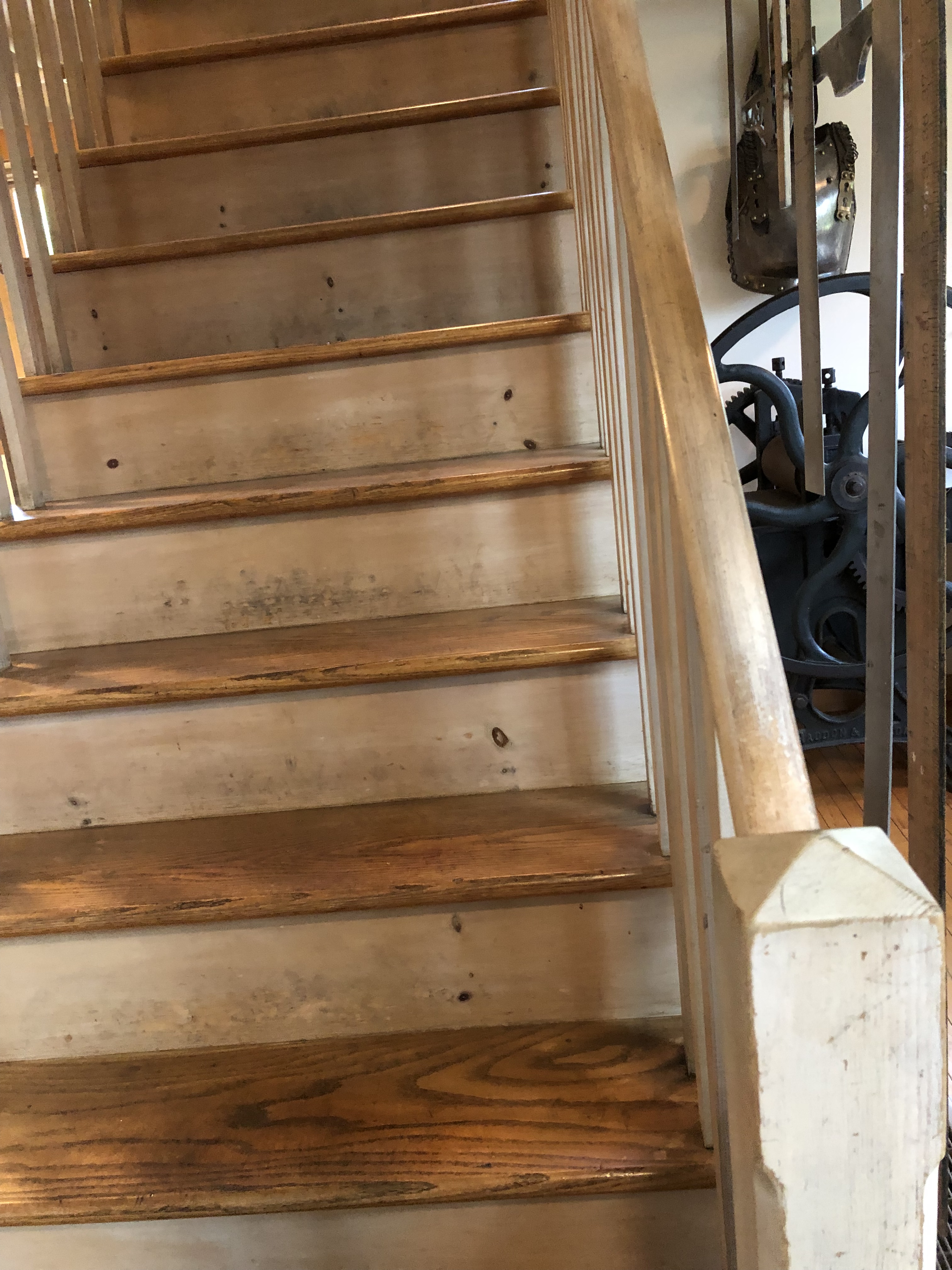
    I always make a point of grabbing the newel post and sliding up my hand on the stair railing when visiting the homes of artists, writers and historical figures.  I’ve written about doing this at Ernest Hemingway’s Key West house, at Mark Twain’s Hartford, Connecticut house, and at Robert Frost’s farmhouse in Derry, New Hampshire.  I had the opportunity to do it again when visiting the Norman Rockwell Studio in Sturbridge, Massachusetts recently.  This to me is a handshake with those who came before, and I feel it most profoundly when I visit the places like these where the giants of the past did their greatest work.

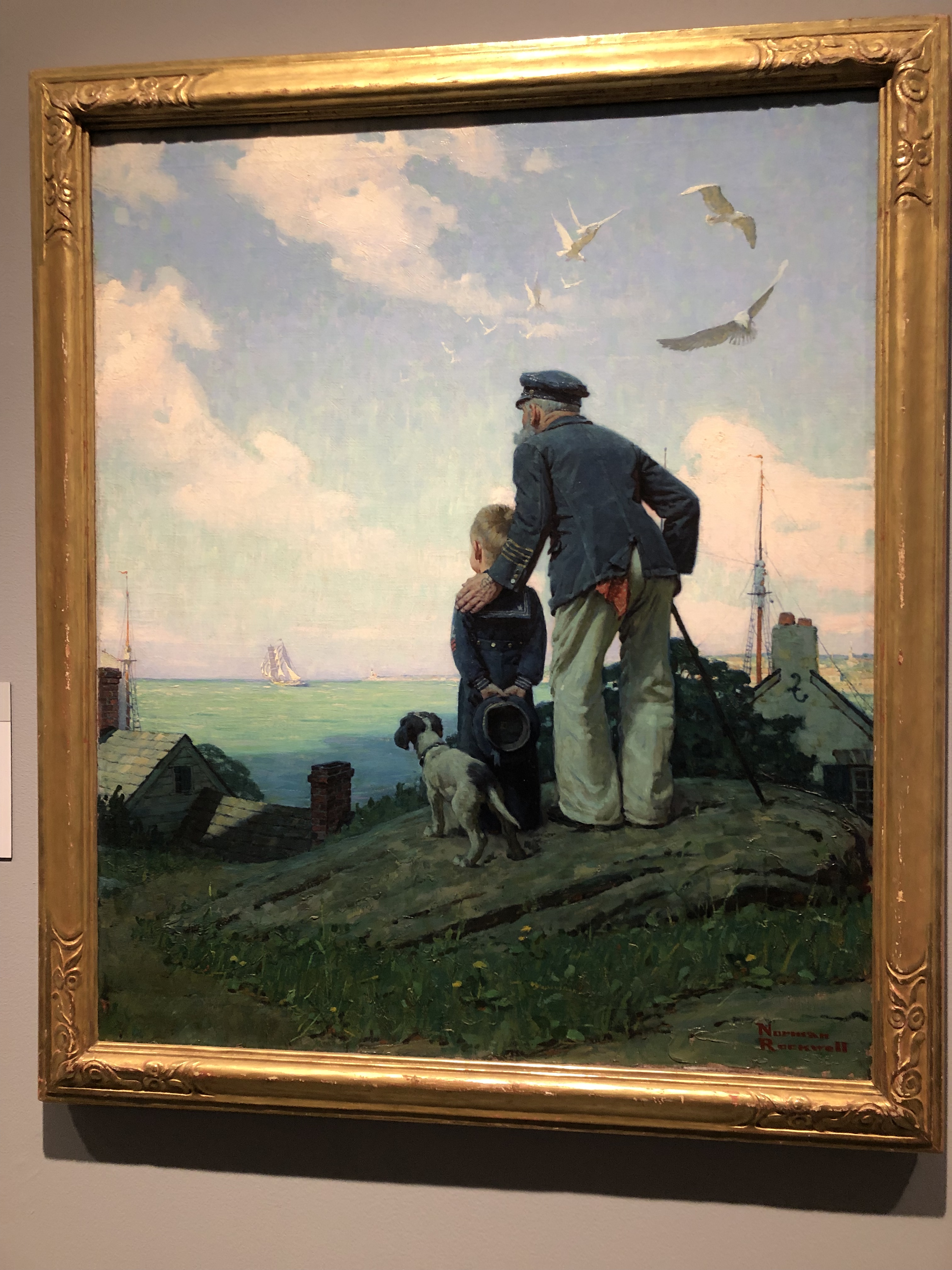
    If you live in America you know Norman Rockwell.  His paintings and sketches are more widely known than any other artist in the 20th century, thanks in large part to his work with The Saturday Evening Post during some of the most significant milestones of that century.  Rockwell was capturing the very human moments everyone felt during the Great Depression, World War’s I and II, the Kennedy Assassination, etc.  The museum carries you through his work and is worth a visit.  I’ve driven by it for decades before finally stopping by for an hour while driving home from New York.  Seeing his paintings doesn’t give me the same feeling as seeing Aivazovsky’s The Ninth Wave did, but that’s largely because there’s a humbleness to Rockwell’s work that doesn’t inspire awe as much as appreciation for the incredible detail he put into his work.

    There’s a story of the painting Country Doctor, which when published on the cover of the Saturday Evening Post inspired letters from people asking about the woman in the photograph on the doctor’s desk.  It seemed she looked like a nurse that had treated patients in England during World War II, and a soldier wrote to ask if she was in fact the same woman….  and was.  Such was the detail in Rockwell’s paintings that a random detail in a larger work, shrunk down for the cover of a magazine, sparked recognition. Rockwell apparently made his subjects, mostly his neighbor’s in the Berkshires, laugh while painting, and there’s joy in most of his work.

    I appreciate art, and linger in the museum longer than I should have on my trip home, but for me standing in the space where Rockwell created that art was more impactful. That space is his studio, moved four miles from downtown Stockbridge to a hill overlooking the Housatonic River and the Berkshires in 1976. Rockwell gifted the studio to the Norman Rockwell Museum, and the studio is set up as it would have been in 1961 when Rockwell was painting Golden Rule, which seems appropriate for an artist who’s work reflected that rule. The space is largely the same, if transported from its original foundation in the heart of Stockbridge. The staircase to the loft is roped off, but the newel post and railing are in reach, like a handshake with Norman. And that sums up his art; within reach of everyone. Simple but complex, and beloved, like the artist himself.

  • The Land Informs

    In New England in the spring of 2006 it started raining and never stopped. The rivers soon overflowed their banks, creating lakes where there was once roads, parking lots and lawns. The Spicket River closed large sections of Salem, New Hampshire and downstream in Methuen and Lawrence, Massachusetts. Ponds too were overflowing, and dams were reaching a breaking point.

    It was at this point that officials in my town decided it was best to release the floodgates on the dam on a pond not far from me. Releasing the water would immediately relieve the pressure on the earthwork holding back the flood waters, which may have been catastrophic had it burst. I live downstream of this dam. When the flood waters were released the stream quickly became a churning serpent racing downhill, picking up momentum in a race to the Spicket River. It reached its first choke point at a culvert up the hill on my street, filled rapidly at this new dam and flowed sideways across a neighbor’s lawn onto the street, which became a riverbed. The crest on the road soon channeled this river onto the lawns of each neighbor in succession until it reached mine.

    When we built this house in 1999 I planted a rugosa rose at the end of the driveway. In seven years it had filled into a fragrant shrub occupying a challenging spot where not much else would grow. It served as the perfect dam for the raging white water racing to meet it. The water swirled around the shrub creating an eddy, which quickly started working on the driveway before continuing on to the end of the street into Hog Hill Brook, which in turn flowed to the Spicket River, then the Merrimack River and finally to the Atlantic Ocean.

    When the rains stopped and the waters receded, a chunk of the driveway was gone. The street fared worse, with long sections of asphalt peeled away. And the bridges downstream still worse than that. But the houses were spared and nobody died, so all told it could have been much worse. As events go it was memorable for those who witnessed it, a triviality to those who hear the stories of that day.

    Memories fade, people move away. but the land often informs if you pay attention. Today that resilient rugosa rose still stands watch at the end of the driveway. The street was repaired and you can still see those patchwork repairs as you walk up the hill, tracking the path of the water that day. The town put in a larger culvert and dumped a pile of dirt leading to it to channel future floods better. My neighbor plants tomatoes on top of it. He’s moving soon, another memory of that day moving away from the site. There are now three bridges dated 2006 or 2007 spanning the Hogs Hill Brook and the Spicket River that betray what happened that spring. The driveway is patched but has never been quite the same. When I walk on the beach near the mouth of the Merrimack River I wonder sometimes if I’m walking on bits of that driveway mixed in with the sand, reunited once again with my feet.

  • Ghost Dancers in the Wild

    We’re all borrowing time, and the ground we stand on too. How many people passed through the spot you’re occupying now? And what was their story? That’s history, and you either dance with the ghosts or ignore them. I like to dance with the ghosts – bring them back to life for awhile. Perhaps they’ll welcome me warmly when I reach the other side.

    Yesterday I had a business lunch with a couple of consultants in Boston. After the usual talk of feature enhancements and product roadmap one of the consultants mentioned his drive from Lake George to Quebec City, and suddenly we’re all pulling out our phones comparing pictures of various forts we’ve visited. Were we the hippest table at Row 34 that day? No doubt. But it’s nice to run into people who know the lay of the land as well, or better, than you do.

    I stopped by the Bourne Historical Center recently as a follow-up to a visit I made to the Aptucxet Trading Post Museum a few weeks back. Both are places to meet other history geeks, and places where you can talk openly about King Philip’s War without the listener backing away slowly. Ghost dancers aren’t always easy to spot in the wild, but corral us in a museum and we open right up.

    Aptucxet was missing one artifact that brought me eventually to the Bourne Historical Center. Specifically, a rock. History is all sticks and stones and the occasional cannon, isn’t it? No, it’s the stories behind those things. It’s always the stories, the rest of this stuff just helps you see it better.

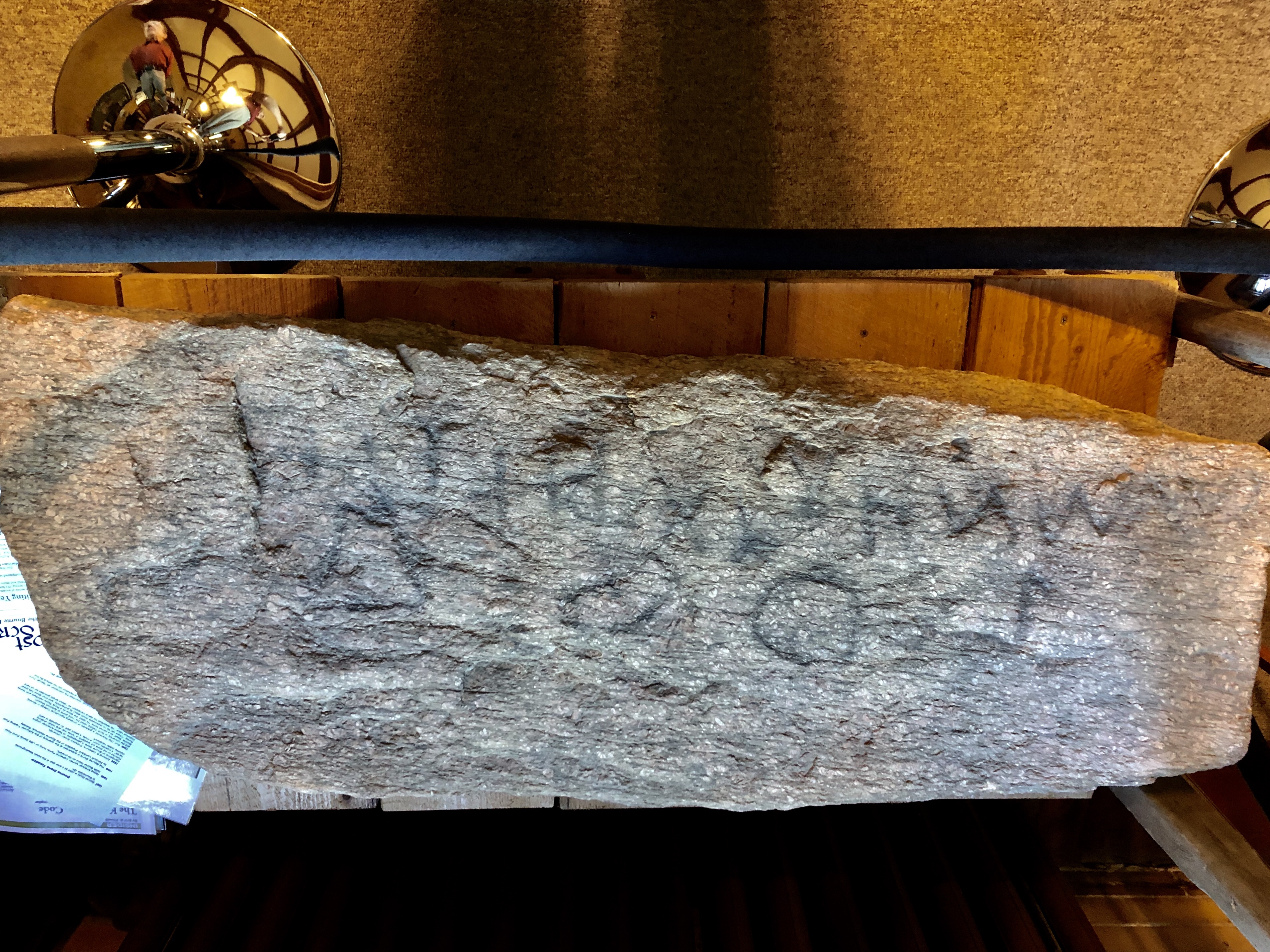
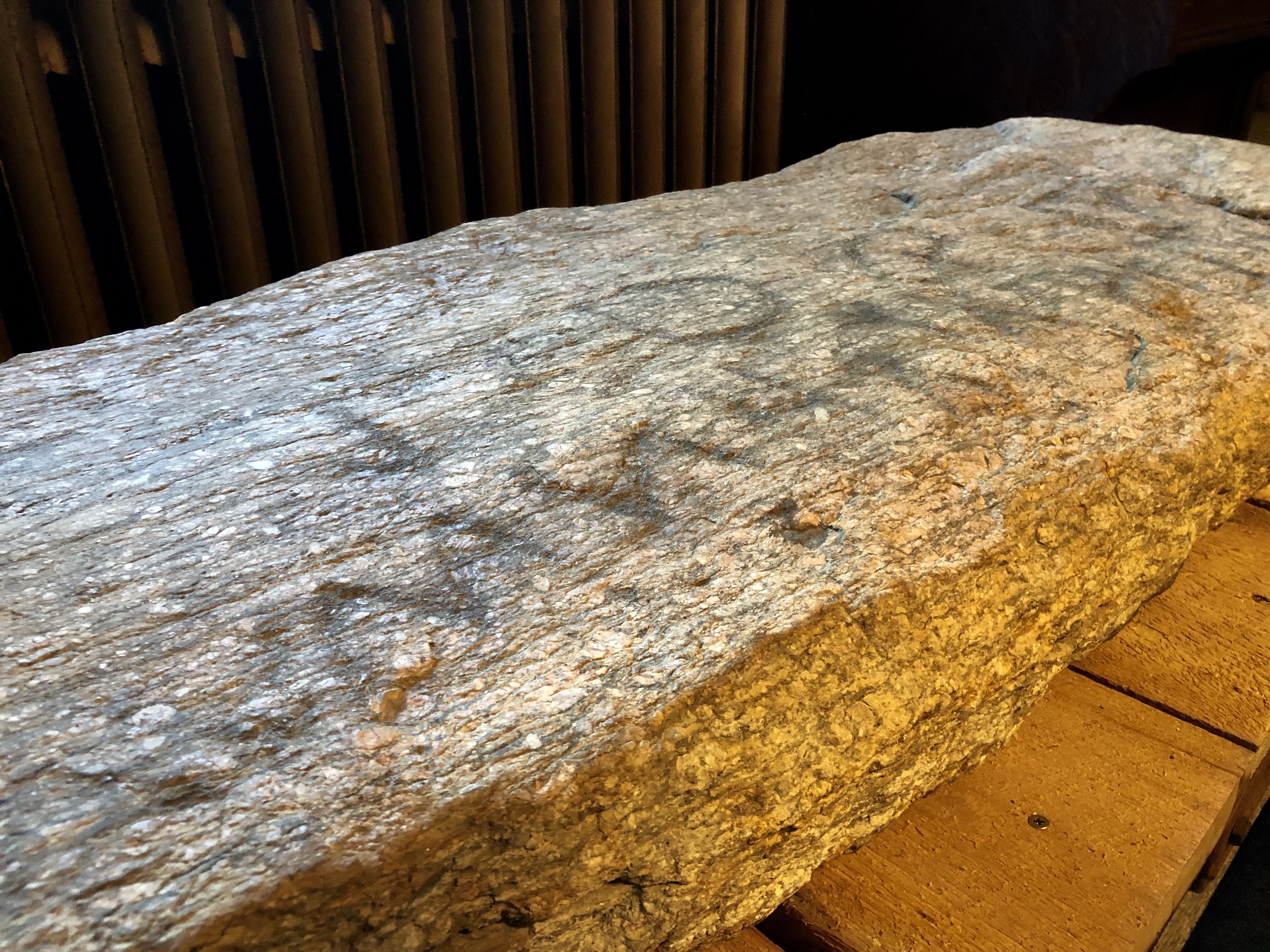
    Anyway, that rock. The Bourne Stone. A piece of granite engraved with markings (pictographs) sometime before the 1650’s. Was it some kid with time on their hands scratching pictures on a rock or some ancient wisdom being passed down to us in a language lost to history? Who knows? But there’s a story in that rock, from the person who marked it to the threshold it once occupied at a Native American meetinghouse and the many people who have stepped on it, touched it and speculated on its meaning ever since.

    I’m no archeologist, but I found it interesting enough to stop by for a look. Maybe the sailboat engraved on the stone captured my attention, or maybe I have a thing for questions with no answer. Whatever it is, I’ve checked a box that’s been nagging me a bit. The mystery of the Bourne Stone for me was solved. What is it? What does it look like? The stories behind it I leave for other ghost dancers.

  • Dancing after the Dragons

    “How could we be capable of forgetting the old myths that stand at the threshold of all mankind, myths of dragons transforming themselves at the last moment into princesses?  Perhaps all dragons in our lives are really princesses just waiting to see us just once being beautiful and courageous.  Perhaps everything fearful is basically helplessness that seeks our help.” – Rainer Maria Rilke, Letters to a Young Poet

    The Ninth Wave is a painting by Ivan Aivazovsky on display at the Hermitage in St. Petersburg, Russia.  I stood in front of it 30 years ago and it stays with me still.  There are two paintings from that visit that keep coming back to mind, the other being Henri Matisse’s The Dance.  Both are stunning when you stand in front of them and immerse yourself in them.  Google both and look at the images that come up, and you’ll see a wide range of colors, from vibrant primary to muted mixed colors.  There’s nothing like seeing each in person, where it literally washes right over you and you swim and dance with the subjects in the paintings.

    I’ve got a bucket list of art and architecture that I hope to see in my lifetime.  I only have to reconcile the images I see in a book or online to know that there’s nothing like seeing the real thing.  Travel gives you that gift.  And more than seeing The Ninth Wave or The Dance in my mind, I see the entire picture of that time.  Babushkas sternly looking at college kids to make sure we weren’t taking flash photography or crossing past the ropes.  Black market traders trying to swap blue jeans for assorted USSR military stuff.  Seeing Cuban soldiers for the first time when we visited the Aurora (As a Cold War kid being in the Soviet Union and seeing Cuban soldiers was heady stuff).  Such is the richness of world travel; Seeing the world as it is and not some portrayal on a screen.

    I may never get back to St. Petersburg, but I would surely go to the Hermitage again and re-visit these two masterpieces.  I’ve changed quite a lot in 30 years, and so has St. Petersburg and Russia.  When I visited I was a college kid visiting a city with a different name in a country with a different name at the height of Glasnost, which would inevitably wipe Leningrad and the USSR names off the maps in favor of what once was and is again.  The enormity of the changes we’ve seen in the last 30 years cannot be understated.  And we’re in the middle of massive change still.  What will the next 30 years bring?  I hope I’m around to report on it.

    The image of that dragon in Rilke’s quote above brought to my mind The Ninth Wave.  This is the moment when the subjects in the painting are either driven to their deaths under the sea or they find salvation. Aivazovsky leaves it for us to interpret how it ends.  The optimist in me sees the brightening sky shining light through the wave.    Have the courage to hold on just a bit longer and things will get better.  Rise to the challenges of the moment and turn that dragon into a princess.  30 years ago it was Glasnost and Tiananmen Square.  Today it’s Climate Change, the rise of political extremism and the Hong Kong protests.  Is this the Ninth Wave?

    The optimist in me sees a positive future, and eventually the scarcity mentality that leads to extremism and greed giving way to a better world.  The report that showed the dramatic decrease in child mortality is a good example of how the world is getting better.  I’m well aware of the dragons in this world, and a little light shining through the storm clouds doesn’t mean the wave isn’t going to crash down on you.  But I see the joyful dancers of Mattise waiting for us if we can only have the courage to find the princess and join in.  What will we do to get us there?

  • Sassafras

    Serendipity placed me in front of sassafras twice in almost exactly 24 hours. Yesterday I was with a friend and expert forager who saw it on the edge of the woods. He pointed out each of the three unique leaves of the sassafras tree and pulled out a small root for me to smell.

    Today I visited the Aptucxet Trading Post Museum in Bourne, Massachusetts and what do I see but a sassafras tree! The museum guide pointed out the leaves, scratched the root to have me smell and it was déjà vu all over again.

    The original tea that settlers in North America drank and exported was made from the root of the sassafras tree. Sassafras was used for other things ranging from shipbuilding to toothbrushes, but when you smell it you probably think of root beer. And of course you’d be right; the oil from sassafras root gives flavor and the name to root beer. That was my favorite soft drink growing up. I don’t drink it sugary drinks anymore, but at the moment I’m craving some root beer. Instead, I purchased some sassafras tea from the gift store at the Aptucxet Trading Post Museum and will make a sugar-free sassafras drink. And toast the tree it came from.

  • The Yin and Yang of New Hampshire and Vermont

    “She’s one of the two best states in the Union.
    Vermont’s the other. And the two have been
    Yokefellows in the sap yoke from of old
    In many Marches. And they lie like wedges,
    Thick end to thin end and thin end to thick end,
    And are a figure of the way the strong
    Of mind and strong of arm should fit together,
    One thick where one is thin and vice versa.”

    – Robert Frost, New Hampshire

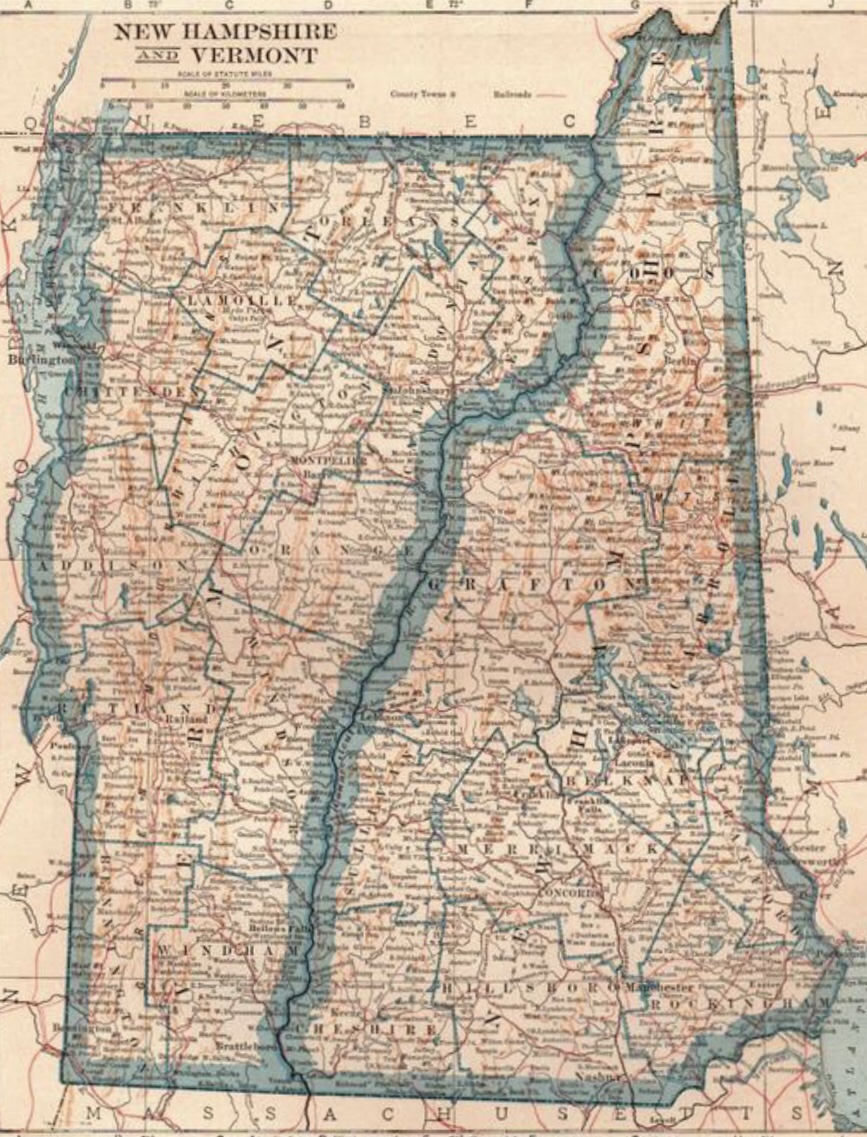
    New Hampshire and Vermont are Yin and Yang.  Almost flipped mirror images of one another, as Frost describes.  The people are similar in so many ways, and different in so many other ways.  Generally, Vermont is a “blue state” while New Hampshire is a “red state”, traditionally voting Republican (much to the chagrin of Vermont and Massachusetts).  New Hampshire has a certain active principle, Live Free or Die vibe going, while Vermont embraces a more receptive, Freedom and Unity vibe.

    The Connecticut River defines the border between the two, as determined by King George III in 1763. Vermont didn’t exist back then, the land was deemed New York’s. But that didn’t last very long; about the time it took for New York to try to collect taxes from the people there. Ethan Allen and the Green Mountain Boys chased the tax collectors right out and Vermont seceded as the American Revolution was ramping up. That’s a very New Hampshire thing to do! And ever since, these two states have been locked in an eternal embrace; interconnected yet independent. White Mountains and Green Mountains, conservative and liberal, two of the smallest states in size and population; wonder twins holding up the northern border and hugging each other for eternity.

  • From Falkirk To Portsmouth

    206 years ago next week, on September 10, 1813, the British brig General Hunter was captured after the Battle of Lake Erie. That battle deserves more attention, which I’ll try to offer on another day. This story is about the journey a pair of cannon took from the banks of the River Carron in Falkirk, Scotland to their current home near the banks of the Piscataqua River in Portsmouth, New Hampshire. The guns are of course inanimate objects, but darn it they’re surely survivors.

    Once a part of the arsenal on the brig Hunter for the British, captured and turned to service for the Americans on the brig USS Firefly, the cannon saw service in the War of 1812, the Second Barbary War of 1815 before being retired from active duty and sold with the Firefly to a wealthy merchant from Portsmouth named John Peirce. The guns were on two of the Peirce merchant ships before finally becoming a family heirloom, donated and placed in their current location more than a century ago. As Portsmouth changed they were moved closer to the building to where they are now.

    I’ve come across the guns a couple of times while walking through Portsmouth. And I’ve done a double-take each time. The ships they were in are long gone, and so are a succession of crew and wealthy owners who once valued the utilitarian efficiency of these weapons. Today they’re no longer lethal, instead standing permanently at attention, muzzles buried in the earth, as tourists, drunkards and businesspeople alike drift past, oblivious to their violent history.

    They flank the entrance to the Portsmouth Athenaeum, itself a curiosity in this modern world. The building is almost as old as the guns, and they guard it like older twin brothers might protect a younger sister. Saved from anonymity by the plaques proclaiming their role in the Battle of Lake Erie. But they’d only part of their story. Imagine all these cannon have witnessed, and the stories they could tell.

  • His Majesty’s Pleasure: The Expulsion of the Acadians

    During the French and Indian War the British looked at Nova Scotia, New Brunswick and Prince Edward Island and saw a threat.  The Acadians, original settlers to this area from France, had been allowed to remain for 40 years after France had conceded this territory after the capture of Port Royal in 1713.  But the Acadians had never pledged an oath to Britain, and the resumption of hostilities in the French and Indian War became the tipping point.  How many in North America suffered because the French and English couldn’t get along?  Too many.

    Beginning on August 10, 1755 the British began rounding up Acadians and expelling them.  Often families were separated, with husbands and wives, mothers and children being sent to different places.  It reminds me of what happened to Japanese Americans in World War II, and what’s happening now on the Mexican border.  The weakness of moral character in people in power causing immense suffering for those who are powerless.  You can have homeland security without being an asshole.

    Henry Wadsworth Longfellow heard about the expulsion of the Acadians from Nathaniel Hawthorne.  There’s a moment when I’d have loved to be a fly on the wall listening in.  Longfellow then wrote a poem called Evangeline that told the plight of a fictional character of the same name trying to reunite with her husband.  The poem brought attention to the expulsion then, and still offers insight into their suffering now.  The Acadians were lured into church to hear at announcement, only to find out that they were prisoners, and their world was being turned upside down.

    “Then came the guard from the ships, and marching proudly among them
    Entered the sacred portal. With load and dissonant clangor
    Echoed the sound of their brazen drums from ceiling and casement, –
    Echoed a moment only, and slowly the ponderous portal
    Closed, and in silence the crowd awaited the will of the soldiers.
    Then uprose their commander, and spake from the steps of the altar,
    Holding aloft in his hands, with its seals, the royal commission.
    “You are convened this day,” he said, “by his majesty’s orders.
    Clement and kind he has been; but how you have answered his kindness,
    Let your own hearts reply! To my natural make and my temper
    Painful the task is I do, which to you I know must be grievous.
    Yet must I bow and obey, and deliver the will of our monarch:
    Namely that all your lands, and dwellings, and cattle of all kinds
    Forfeited be to the crown; and that you yourselves from this province
    Be transported to other lands. God grant you may dwell there
    Ever as faithful subjects, a happy and peaceable people!
    Prisoners now I declare you, for such is his majesty’s pleasure!”
    – Henry Wadsworth Longfellow, Evangeline

    Many of the Acadians would end up in Louisiana, and their descendants are Cajuns.  Others would go to the thirteen colonies.  Some would eventually go back to Nova Scotia, New Brunswick and Prince Edward Island.  Many others died before they reached a destination.  It a dark stain in the history of a beautiful place.  And it offers a lesson we often forget.  The decisions of a few can disrupt the lives of many.