Category: History

  • On Paul Revere’s Capture

    So through the night rode Paul Revere;
    And so through the night went his cry of alarm
    To every Middlesex village and farm,—
    A cry of defiance, and not of fear,
    A voice in the darkness, a knock at the door,
    And a word that shall echo forevermore!
    For, borne on the night-wind of the Past,
    Through all our history, to the last,
    In the hour of darkness and peril and need,
    The people will waken and listen to hear
    The hurrying hoof-beats of that steed,
    And the midnight message of Paul Revere.
    — Henry Wadsworth Longfellow, Paul Revere’s Ride

    Most every schoolchild in America learns the story of Paul Revere, who rode out to warn of the British march on Lexington and Concord on the eve of the American Revolutionary War. What you never hear about is that Revere was captured by the British on his ride between Lexington and Concord, never warning the latter town, but that one of his counterparts on that night escaped capture and completed the job.

    Paul Revere and William Dawes both set out to warn colonists about the British march to Lexington and Concord, taking different routes to Lexington. They reunited in Lexington and set off together to warn the residents of Concord of the British Regulars’ imminent march. During their ride, they came across Dr. Samuel Prescott, who’d been out courting a woman named Lydia Mulliken. That chance encounter would prove fortuitous for the colonists.

    Prescott decided to join Revere and Dawes to help warn the residents of Concord. During their ride, they were stopped by a British patrol, who attempted to take them prisoner. Revere was captured, Dawes was able to flee back towards Boston, and Prescott, who knew the area well, evaded capture and was thus able to complete the ride to Concord, where he warned his fellow colonists.

    “We set off for Concord, and were overtaken by a young gentleman named Prescot, who belonged to Concord, and was going home. When we had got about half way from Lexington to Concord, the other two stopped at a house to awake the men, I kept along. When I had got about 200 yards ahead of them, I saw two officers as before. I called to my company to come up, saying here was two of them, (for I had told them what Mr. Devens told me, and of my being stopped). In an instant I saw four of them, who rode up to me with their pistols in their bands, said ”G—d d—n you, stop. If you go an inch further, you are a dead man.” Immediately Mr. Prescot came up. We attempted to get through them, but they kept before us, and swore if we did not turn in to that pasture, they would blow our brains out, (they had placed themselves opposite to a pair of bars, and had taken the bars down). They forced us in. When we had got in, Mr. Prescot said ”Put on!” He took to the left, I to the right towards a wood at the bottom of the pasture, intending, when I gained that, to jump my horse and run afoot. Just as I reached it, out started six officers, seized my bridle, put their pistols to my breast, ordered me to dismount, which I did. One of them, who appeared to have the command there, and much of a gentleman, asked me where I came from; I told him. He asked what time I left. I told him, he seemed surprised, said ”Sir, may I crave your name?” I answered ”My name is Revere. ”What” said he, ”Paul Revere”? I answered ”Yes.” The others abused much; but he told me not to be afraid, no one should hurt me.” Letter from Paul Revere to Jeremy Belknap, circa 1798

    Longfellow’s poem made Paul Revere rightfully famous, but he did a disservice to Dawes and Prescott. Early on the morning of 19 April 1775, it would take all of them to finish the job. It’s funny that Paul Revere’s own accounting of the night receives less attention than Longfellow’s romanticized tale. But that’s history for you, we remember it as it is told, not always as it was.


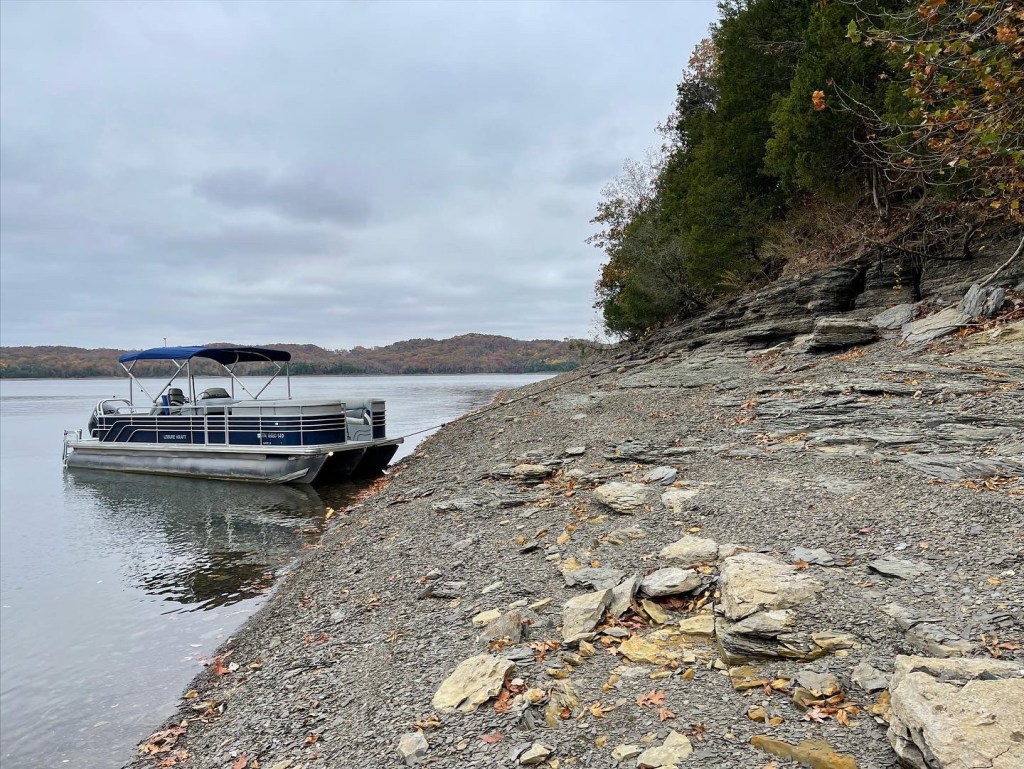
    Site of Revere’s capture with the modern road beyond
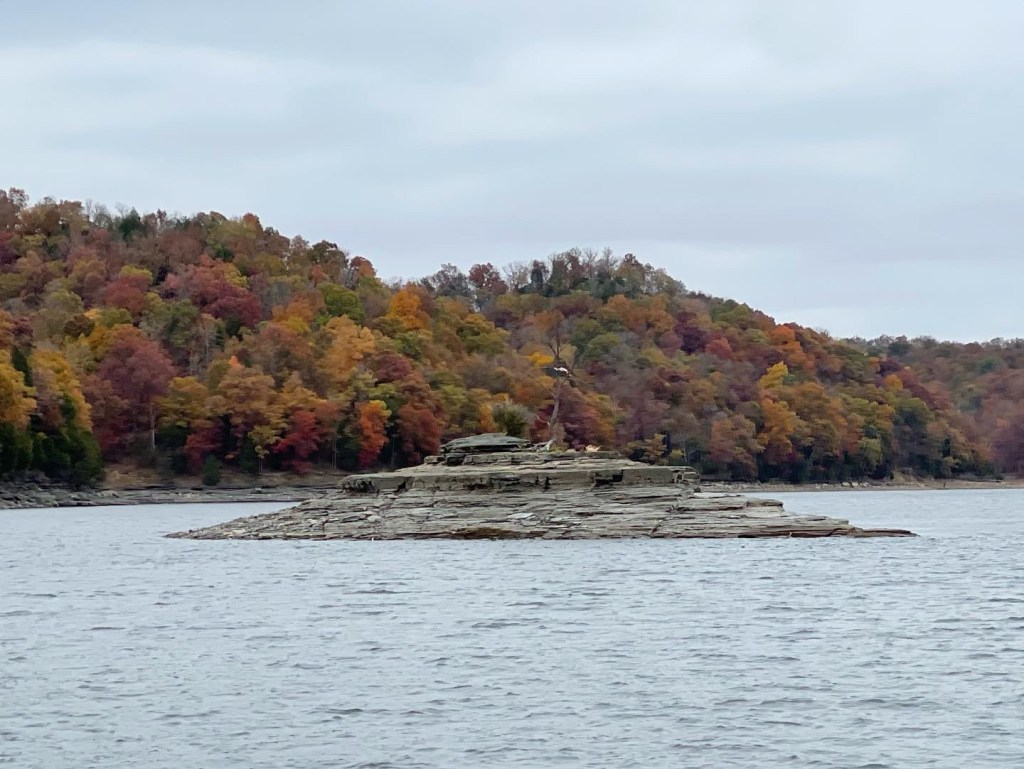
    Autumn foliage along the route
  • The World as It Is

    We see the world as it is, and as we wish it to be. The pendulum swings between chaos and order, and for the most part we manage to keep from annihilating ourselves. But it remains deep in the back of our minds that things could go badly at any moment. Such is humanity that we can’t just enjoy the moment together, we carry on and get in existential bar fights with people we perceive as different from us. We live in a world where identity and the stories we tell ourselves dictate civility, or the lack thereof.

    There’s talk of a self-fulfilling prophecy when the economy slows down a bit. There’s a shared belief that things are going well, or not going well, and it makes people behave a certain way. And yet, aside from a few notable places in the world, things are overall better than they could be. So why don’t we take the long view and appreciate our place in history? Because we live in the moment, and we tend to dwell on the aches and pains of living. Such is the way.

    There ought to be more situational awareness in our lives. Most of the things we carry on about are related to the election cycle and the war in Ukraine and the lingering effects of the pandemic and the supply chain issues it triggered. Maybe sprinkle in some unbalanced would-be autocrats in our worldview to over-season the recipe. Perspective and insight are beautiful things, often pushed aside in favor of the flavor of the day. But life isn’t a pop music chart, we must go deeper.

    Ultimately, the more time we spend outside our own head, and outside the artificial electronic opinion machine spewing white noise at us, the more we might hear our own quiet heartbeat reminding us to take this moment for the miracle it is. If we’re all walking miracles, we ought to have cause for celebration. We just need to clean things up before the party. Does that sound frivolous? Aren’t most of these things we dwell on just so? We are the stories we tell ourselves, for that’s the way of the world. But shouldn’t we craft a better story?

  • A Visit to the Major John André Monument

    “I had taken my station close on the left of Major Andre’s left hand officer; and continued in that station the whole march. The guard marched a short distance when it wheeled to the left, turning a corner of the road, and marched a short distance, when they again wheeled to the left, in order to pass through a fence. Having entered a field, they marched forward a short distance, wheeled to the right, and halted. The ground here was level; a little distance in front was a moderate ascending hill, on the top of which the gallows was erected. In the position where they halted, Major Andre was, for the first time, in view of the gallows. Major Andre here said, ‘Gentlemen, I am disappointed. I expected my request’ (which was to be shot) ‘would have been granted.’ No answer was given, and he continued with his arms locked with those of the two officers.Dawson, Papers Concerning André

    Early one morning, as commuters made their way to work and parents waited for the school bus on street corners throughout town, I made a quick stop to visit the Major John André Monument. André was swept up in the treason of Benedict Arnold and paid the ultimate price when Arnold wouldn’t turn himself in, hung and buried at this spot on 2 October 1780. George Washington himself would lament the death of André, stating that “he was more unfortunate than criminal”.

    The Hudson River Valley was once the headquarters for George Washington. The river was a critical transportation hub, and if the British were to control it they would have cut off New England from the rest of the colonies. Benedict Arnold was once a highly-respected leader in the Continental army and the fight to protect the Hudson River and Lake Champlain from British control. But he was increasingly frustrated with his status, feeling like he wasn’t properly honored and rewarded for his leadership. His wife was also a Tory and desired a better position in society. This made him a prime candidate for recruitment by the British turn against the American Colonies.

    Major John André, a rising star in the British Army, was chosen to meet with Benedict Arnold to formalize the details of engagement and Arnold’s rewards, both financial and status, for turning against the Americans. Arnold and André met on a warship in the Hudson River and again on shore not very far north from where André’s American journey would end. Unfortunately for André, his warship was chased off by cannon and during his overland journey back to British-controlled territory he was captured in enemy territory while disguised as an American. This made him a spy and subject to execution. That execution would happen on a small hill in what is now Tappan, New York.

    “Every attention and respect was paid to Major Andre that it was possible to pay to a man in his situation … every officer and soldier in the army would have lifted both hands for the exchange of Andre for General Arnold. This exchange was offered by General Washington, but refused by General Clinton, the British Commander-in-chief. So the life of a traitor was saved; and Major Andre fell a sacrifice” Dawson, Papers Concerning André

    Major John André was later exhumed from the site and is now buried as a hero at Westminster Abbey. The site of his execution remained unmarked and, like so many historical places, eventually doomed to obscurity. In 1879, a wealthy American named Cyrus W. Field, who laid the first telegraph cable across the Atlantic Ocean, decided to put a monument up honoring Major John André. It makes sense that a man who made his fortune connecting the Old World with the New would seek to honor a dignified officer seen as more unfortunate than criminal. But it would take time for the community to see it the same way. As you might imagine, erecting a monument honoring an enemy soldier associated with the most notorious traitor in American history was unpopular at the time, and there were three attempts to destroy the monument before someone decided to add a plaque honoring George Washington and his army.

    You’d never know the monument was there, in the middle of a small traffic circle on a quiet residential street, if you didn’t seek it out. Such is the nature of the Hudson River Valley today, rooted in history but built for the future. The former encampment and small hill where Major John André met his fate are today simply suburbia in Metro New York. Yet history still whispers here, and reminds us that nation-defining heroism and treachery once played out right here.

  • Two Centuries, One Mile

    “I’ve got a mule and her name is Sal
    Fifteen miles on the Erie Canal
    She’s a good old worker and a good old pal
    Fifteen miles on the Erie Canal” — Erie Canal

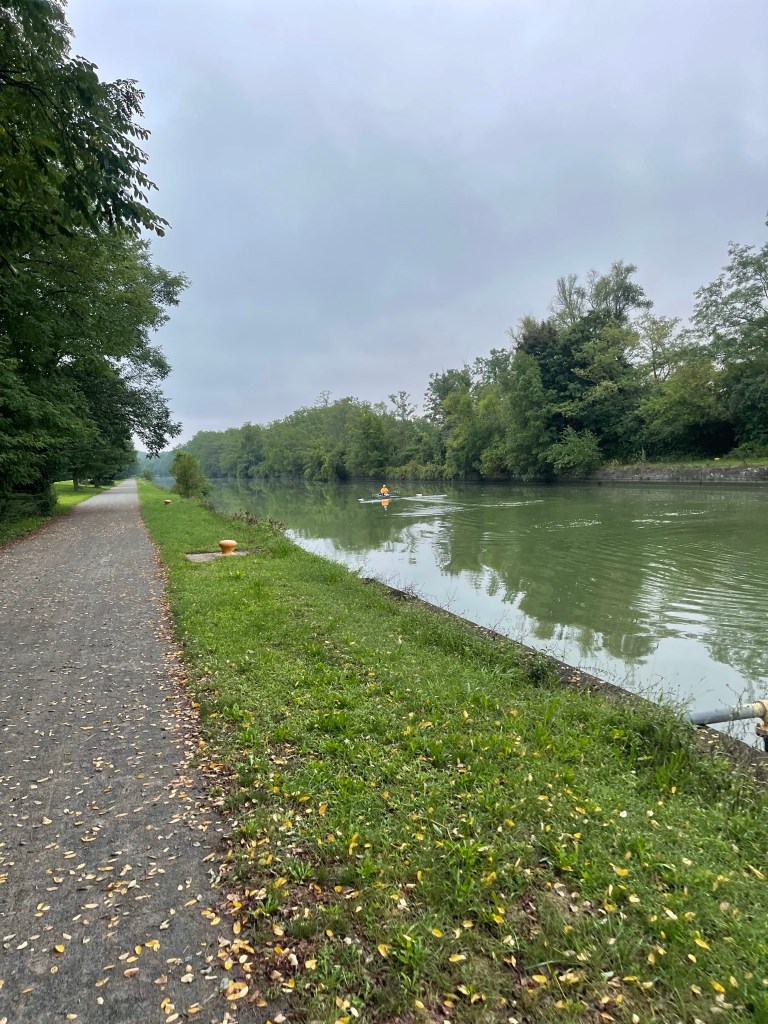
    For the last three days I’ve stacked up miles walking along the Erie Canal (Nearly 15 miles, reminding me of the old Erie Canal song). Roughly a mile of that walk traverses the Great Embankment, completed 200 years ago this year. Back in 1822 building an earthen embankment a mile long and 70 feet high was kind of a big deal, and so was the completion of the big ditch known as the Erie Canal. It made the young United States less dependent on the St. Lawrence Seaway and the whims of Canada and the Great Britain to give them access. The success of the canal made fortunes in places from Buffalo to New York City.

    Nowadays, it’s more of a tourist attraction than an active commercial highway, but you still see a barge or powerboat making its way from there to here. Seeing them is interesting, and reinforces the belief that the Erie Canal isn’t just a big ditch, but a once powerful statement that we’ll make our own way, thank you. When I walk on the path next to the canal I hear the whispers of history and my very brief moment with place. Think of what that mile of canal has seen in two centuries. And this week it hosted me once again.

    On my recent walk the path was filled with bicycles, walkers and runners. I make eye contact with most, give a brief nod of hello and march onward. I’m but a momentary close encounter in their lives, as they are in mine. Someday we’ll all be history ourselves, just a flash of movement in the long life of the long ditch. I wonder if they’ll write about us?

  • Break the Chain

    “For you and your children hold a message: act so that the fruit of hatred, whose traces you have seen here, bears no new seeds, either tomorrow or forever after.” — Primo Levi

    This world offers a full sampling of good and evil. We sip from the fountain we choose to belly up to. It may be perplexing to see so many choose a path contrary to all that we believe to be true, but that doesn’t mean we should join them. We might instead offer a different path, one without hate.

    Despite it all, we each may choose what we perpetuate.

  • The Gloucester Fisherman’s Memorial

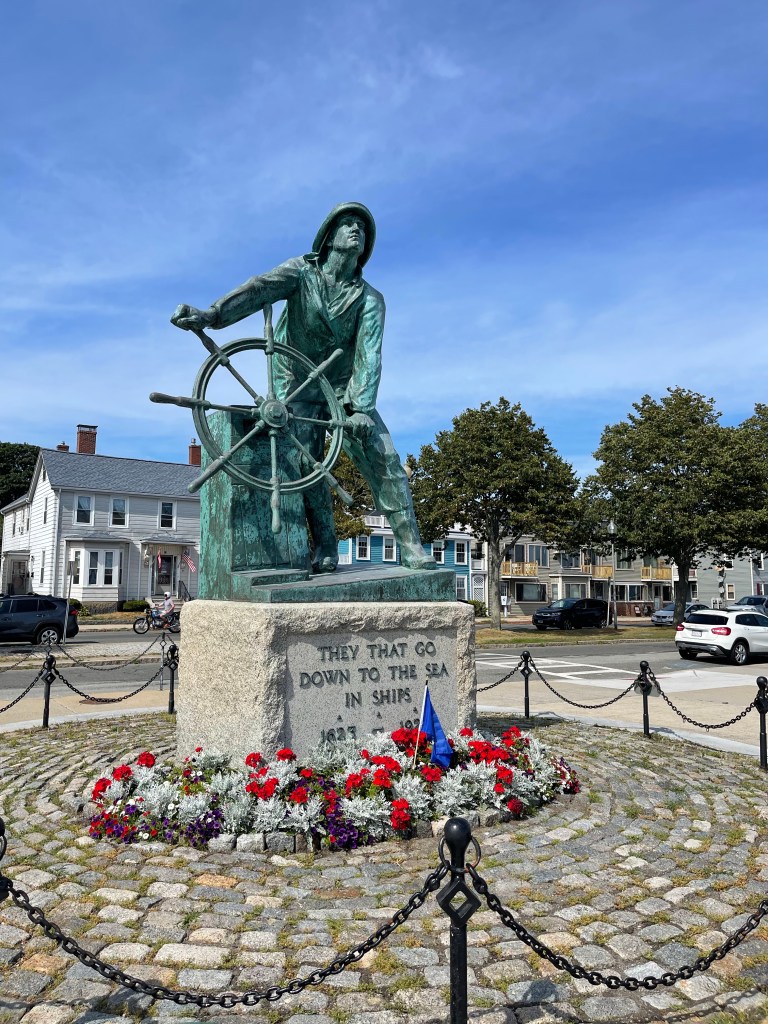
    “These courageous men have been known by names other than fishermen. They were father, husband, brother, son. They were known as the finest kind. Their lives and their loss have touched our community in profound ways. We remain strengthened by their character, inspired by their courage and proud to call them Gloucestermen.” — from the memorial plaque at the Gloucester Fisherman’s Memorial

    Gloucester is a small city that sits near the tip of Cape Ann, in Massachusetts. The city is growing increasingly gentrified, but there’s no doubt it maintains its roots in the fishing industry. And when you think of fishing, how can you not think of the Gloucester fisherman? Generations of men and recently women from the community have made their living from fishing. Many went to sea never to return. The Gloucester Fisherman’s Memorial was built in 1925 to forever memorialize them. A few years short of the 400th anniversary of the founding of Gloucester, and the 100th birthday of the memorial itself, I felt compelled to revisit.

    More than 5300 men who left Gloucester Harbor full of hope are known to have been lost at sea. Swept up in Nor’easters, collisions at sea and all sorts of tragedies, whole ships full of fishermen were lost in the unforgiving North Atlantic. Technology makes it safer to go to sea today than its ever been before, but there are still dangers lurking in the unknown. Names are still added to the memorial plaques, but instead of hundreds of names in a given year like 1879, there might be a couple. The most familiar names in recent years were those lost during the “perfect storm” of 1991.

    You don’t get into commercial fishing to be famous, you go to make a living, hoping to return to those you love when your work is done. The memorial itself is modeled after a man named Captain Clayton Morrissey, who died of an apparent heart attack while at sea, years after the memorial had been erected. There’s tragedy in this too, but doesn’t it feel appropriate, that he should pass away at sea? In a way, it makes his image on the statue ring more true.

  • Glimpsing Infinity

    “If you held a grain of sand up to the sky at arm’s length, that tiny speck is the size of Webb’s view in this image. Imagine — galaxies galore within a grain, including light from galaxies that traveled billions of years to us!” — @NASAWebb

    As the James Webb Space Telescope begins to share images from deep space, doesn’t it feel like we’re glimpsing infinity? We reach deeper into deep space than we’ve ever done, using the most advanced telescope we’ve ever sent into space, and it reveals billions of years of history (if you want to call it that), and yet indicates what we already knew—that it all keeps going further still. That glimpse of infinity reveals how immeasurably small our brief dance in the universe really is.

    So why do so many fixate on misery, pettiness and scarcity? The implications of this vastness indicate our smallness, forcing us to either recoil further back into ourselves or tell ourselves fairy tales that overinflated our place and power in the big scheme of things. Alternatively, we might simply accept and celebrate our small part in the infinite universe. I choose door number three, thank you.

    In a world with so much conflict, wouldn’t it be something if we all paused a moment and looked up at the universe. Our dance is ever so brief, and it doesn’t matter whether you lean left of center or right of it, the whole ball of wax is infinitesimal. We are indeed stardust—minute specs of life in a vast infinity. Isn’t it extraordinary to be alive to see it? To be a part of it?

  • To Rock the Boat or Stay Afloat?

    Rafted up for a fireworks show over a dark pond, I casually watched the heavily overloaded pontoon boat next to the boat I was on tilt precariously to port. Shouts erupted and intoxicated people shifted a bit too far to starboard, more shouting and finally everyone froze in a state of fragile equilibrium. The fireworks were about to happen and damnit if everyone on that boat wasn’t going to see them. We all want to be part of the story—sometimes we come dangerously close to writing a new story in the process.

    The irony of the moment wasn’t lost on me. The fireworks were in celebration of Independence Day, yet here they were so eager to be a part of the group that they nearly overwhelmed the very thing they all wanted to be a part of. A few characters jostling for better position and the danger of capsizing and thus losing everything was apparent to everyone. I don’t know if they even noticed the fireworks had started until well into the show.

    We live in a world where everyone is jostling for a seat at the table. Those who hadn’t traditionally been invited to the show naturally expect their fair share. Those who traditionally had the show to themselves resent the competition for the best seats and buy into stories about scarcity and loss of identity. And Mother Earth rocks dangerously close to capsizing while we all shout at each other.

    Happy Independence Day, America. Let’s be smart and look out for each other. For the world is watching and hoping for the best. Aren’t we too?

  • Understanding the Rhyme

    Wer einmal sich selbst gefunden, der kann nichts auf dieser Welt mehr verlieren. Wer einmal den Menschen in sich begriffen hat, der begreift alle Menschen.” (Once you’ve found yourself, you can’t lose anything in this world. Whoever has understood the human being within himself, understands all human beings.) — Stefan Zweig

    I’d first read about Zweig years ago, for his story is compelling. A popular Austrian writer in his day, who’s popularity and influence reached across the world, he was swept up in the madness boiling over in Germany and Austria in the 1930’s and eventually fled to Brazil. It was there that he and his wife committed suicide in 1942. Just two more casualties of the Nazis. I wonder, had he only held on just a few more years, what he might have understood about humanity then? As it was, his view of the darkness in that moment was apparently too much to take.

    We work to reach our full potential in our lifetime, or we settle for whatever we grow comfortable with along the way. I suppose the question of motivation ought to be examined on this journey. For are we trying to rise above everyone else or reach our own personal peak? Doesn’t darkness lie in the relentless pursuit of the former, while hope lies in our earnest pursuit of the latter?

    I shake my head at some of the people in this world trying to grab for more and more power and influence, upsetting the apple cart and leaving scars on society that will take generations to heal. Zweig saw this in his time, seeing what was lost forever. Tragically, he didn’t hold out long enough for the best in humanity to overcome the worst. Who are we to judge him, for the darkest days eight decades ago were pretty damned dark. Looking at World War II, we like to think we could stand up to fight for decency and fairness like the greatest generation did. Well, we have our opportunity to prove that today, don’t we?

    When we rise up to meet our individual potential, we honor those who built the foundation we started from, and set a new standard for those who make the climb after us. But we can’t forget, in our pursuit of excellence, that foundations can erode quickly when undermined by waves of greed and hate. We are the cornerstones for the future, and must work to shore up the base. And if we understand anything about human nature, it’s that history rhymes.

  • Mastery is a Beacon

    “Besides, isn’t it confoundedly easy to think you’re a great man if you aren’t burdened with the slightest idea that Rembrandt, Beethoven, Dante or Napoleon ever lived?“ — Stefan Zweig, Chess Story

    My mind is still in Vienna as I write this—a city that’s had its fair share of high achievers walk her streets and contribute to humanity’s Great Conversation in their life’s work. Big names roamed those same streets, and you might feel a need to raise your game when you walk with that level of ghosts—I surely did. And shouldn’t we feel this compulsion to close the gap between the masters and where we currently reside?

    The world offers precious few brilliant shining stars. Most of us burn less brilliantly. And yet we burn just the same, and cast our own light on the darkness in the world. We may recognize that we aren’t quite at the level of a master in our field yet still have something to offer anyway. And knowing that there are more brilliant lights in human history, we may choose to stoke our fire—feed it with the fuel necessary to one day burn more brilliantly still.

    What provokes us towards greatness but comparison? We may never reach those levels, few do, but knowing there are heights we haven’t reached yet ought to inspire more. For mastery is a beacon.