Category: Nature

  • Tropical Rewind

    Hey, stop talking, think I can hear the sea.
    And did I tell you the sound of the surf
    Makes strange things happen to me.
    — Del Amitri, Here and Now

    There’s nothing better than an off-season beach, save perhaps an off-season beach in the tropics. Celebrating a quiet beach is best accomplished in the early morning light, when magic happens in the universe, but only witnessed by those who make the pilgrimage. The advantage of a tropical beach is in the warm breezes and even warmer ocean water. An off-season beach in northern climates has all of the beauty, but is served with a frigid sting. Such things matter when you linger in a place by the sea.

    Walking the beach in St. Kitts well before the dancers of the night before ever thought to awaken, I had no souls to keep me company but the sea birds, a stray dog and an inquisitive cat. Warm tropical breezes offered a different experience than the norm for me. It’s an experience you can certainly get used to very quickly. This explains why so many move to the tropics. But we all know that everything loses its magic if you get too used to it. At least that’s what I told myself as I walked back from the beach to face reality once again.

    [Postscript: This post was written but never made it out of international waters. The streak of writing is alive, the streak of posting is subject to interpretation.]

  • My Earth Day Reckoning

    And we died of the future,
    of calling and mission only we could keep,
    leaping into every favorite season;
    sinking into roots, dreams, and books.
    — Li-Young Lee, First World

    “I am losing precious days. I am degenerating into a machine for making money. I am learning nothing in this trivial world of men. I must break away and get out into the mountains to learn the news” — John Muir

    Looking back, it seems quite natural to be locked into this routine of daily obligations—of work and chores and driving from here to there. Things fall apart and must be fixed. We must be fixed too. We are what we repeatedly do, as I repeatedly remind myself. So when is there time for nature and hiking? When is there time for long walks in the woods?

    There is no other time than now. We must go, and see, and take something of it with us for eternity. Not a rock or a leaf or even a flower, but a memory of who we were when we found the truth. Earth is far bigger and more beautiful than we’ll ever fully realize, no matter the frequent flyer miles accumulated. Earth is fragile yet resilient, and will wait an eternity to shrug herself of humanity. It may take a million years, but Earth will fix itself in time. We’re the ones who suffer for our neglect.

    Yet we are a small ripple in this big pond. Whether I recycle or not makes little difference, not when we see the crisis of leadership in the bigger things happening in the world. Nonetheless, we all make a small difference. We might pile on or opt in to the mission of making the planet a better place for our children’s children. Our small daily actions aren’t meant for others to see, they affirm who we tell ourselves we want to be in this world. We’re part of a larger chorus, and our accumulation of voices make a difference even when we can’t see it. A forest is made up of thousands of trees and millions of leaves. There is power in numbers.

    “I would say that there exist a thousand unbreakable links between each of us and everything else, and that our dignity and our chances are one. The farthest star and the mud at our feet are a family; and there is no decency or sense in honoring one thing, or a few things, and then closing the list. The pine tree, the leopard, the Platte River, and ourselves—we are at risk together, or we are on our way to a sustainable world together. We are each other’s destiny.”
    — Mary Oliver, Winter Hours

    Earth Day is a reckoning, a day when we take stock of what we’re doing to the Earth, but also a day when we take stock of what we’re doing with our own brief time on this planet. There are things we say yes to in this world, which means we say no to many other things. In the end, we must choose, what dreams will die with us? What will we stand for? What will we stand up against?

    We all see the changes in the world, but forget we have some agency in the matter. Is this a year of incremental improvement or reckless abandonment of what we believe we ought to be. These are questions for society, surely, but also for each of us in our daily lives. The question is always the same: who are we becoming?

  • The Rising

    Today being Easter and this blog never about religion, per se, but philosophy and nature and the bold act of reaching for something more than what we were yesterday, it seemed appropriate to talk about the rising. Not Jesus, for this I defer to the experts of stories written in the Bible (and only the true believers, not the posers and charlatans). There’s a smugness that punctuates religion on both sides of the conversation, but the true believers and the truly open non-believers find a way to meet in the middle. Whatever you believe, believe me when I say I hope it motivates you to do positive things in this world. We need it more than ever.

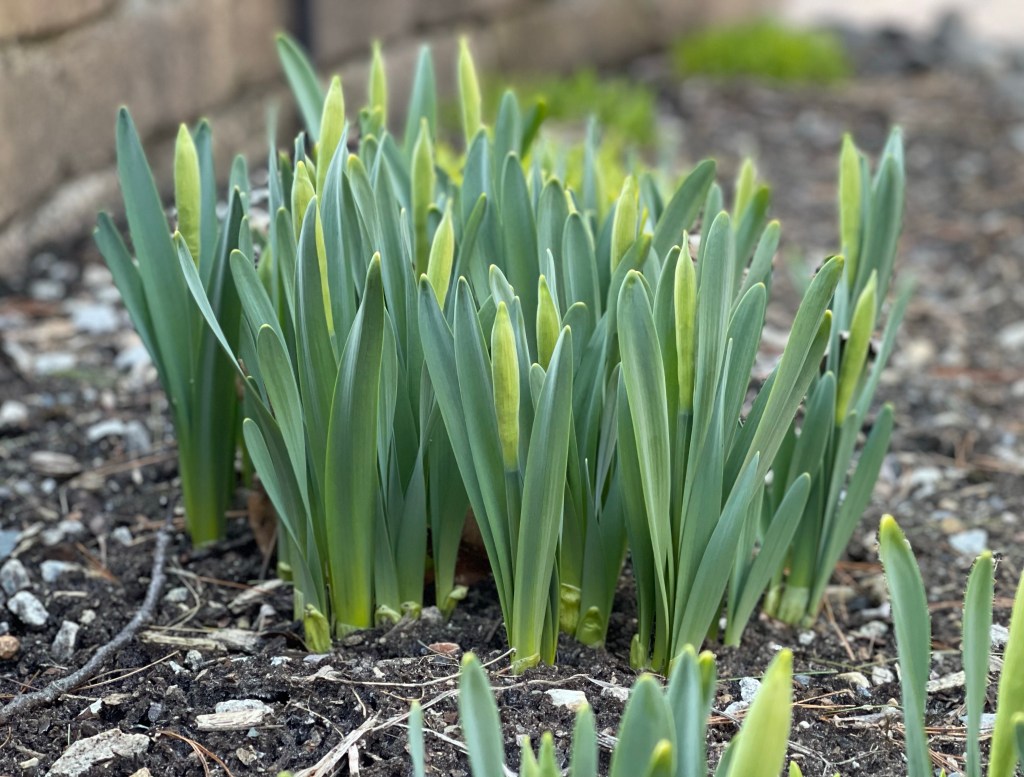
    Anyway, I digress. The rising I’m talking about are the daffodils, for they are rising in earnest to meet their moment even as I write this. Daffodils remain one of my favorite flowers for their simplicity, fragrance, and reliability. Deer and rodents don’t eat them, so they’re especially handy plants for those of us dealing with an abundance of each. Mostly, they’re a sign that spring is coming, often just when we needed it most. Daffodils represent hope and perseverance and resilience. They signal that beauty can rise from even the coldest and darkest of winters.

    Whatever we take from this day, we ought to focus on the ascent to beauty and love that we’re all capable of at our core. We just have to have the courage to rise to meet our moment. For there’s a place for us in this cold and indifferent universe. The evidence is right in front of us.

  • A Visit to Joshua Tree

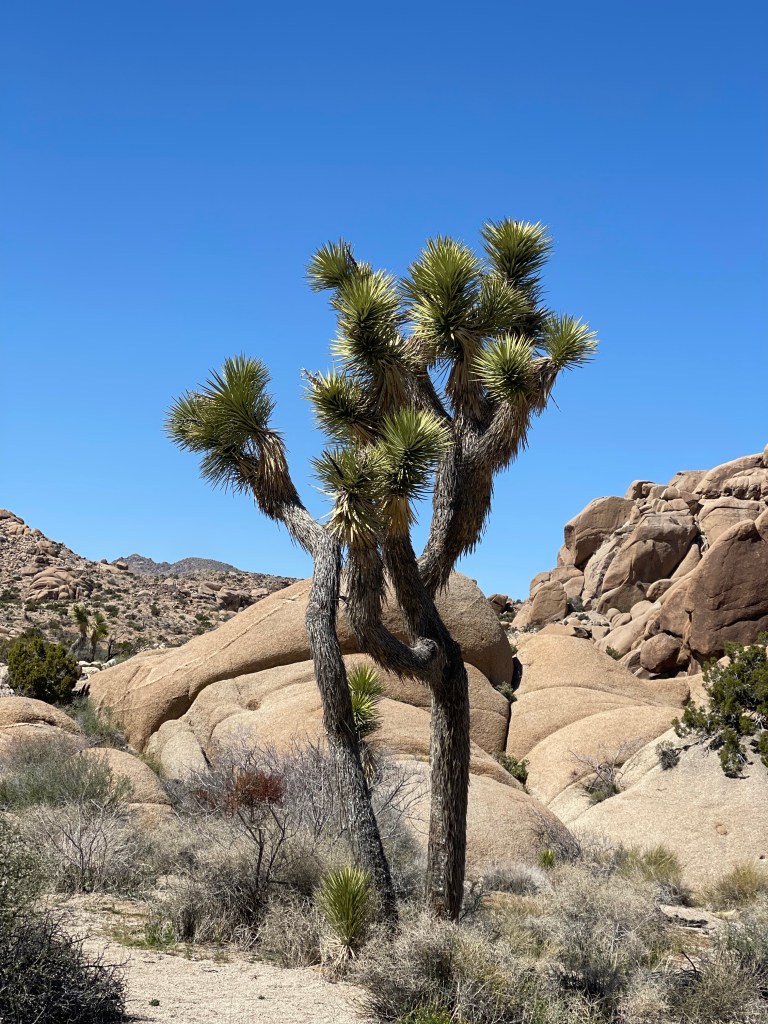
    California’s Joshua Tree National Park is technically a part of the Mojave Desert, but it straddles the Colorado Desert. Where the Mojave is considered a high elevation desert, the Colorado Desert is a low elevation desert. So Joshua Tree is the unique meeting place of the two extremes. It was protected as a national monument in 1936, largely to stop cactus poachers from taking everything, and elevated to a national park in 1994 as part of the Desert Protection Bill. It’s namesake, the Joshua Tree, or Yucca brevifolia, earned its nickname for resembling arms raised in supplication, and became famous when U2 gave the name to their biggest album. U2 put Joshua Tree on my radar, and I’ve felt compelled to visit ever since.

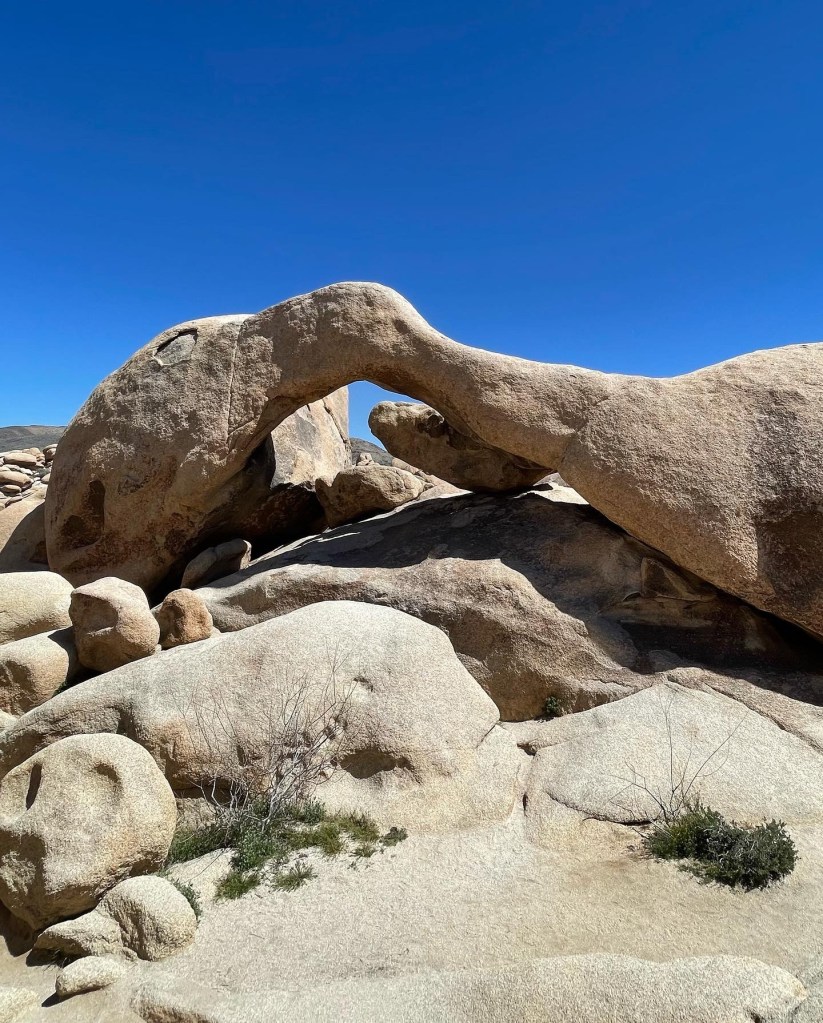
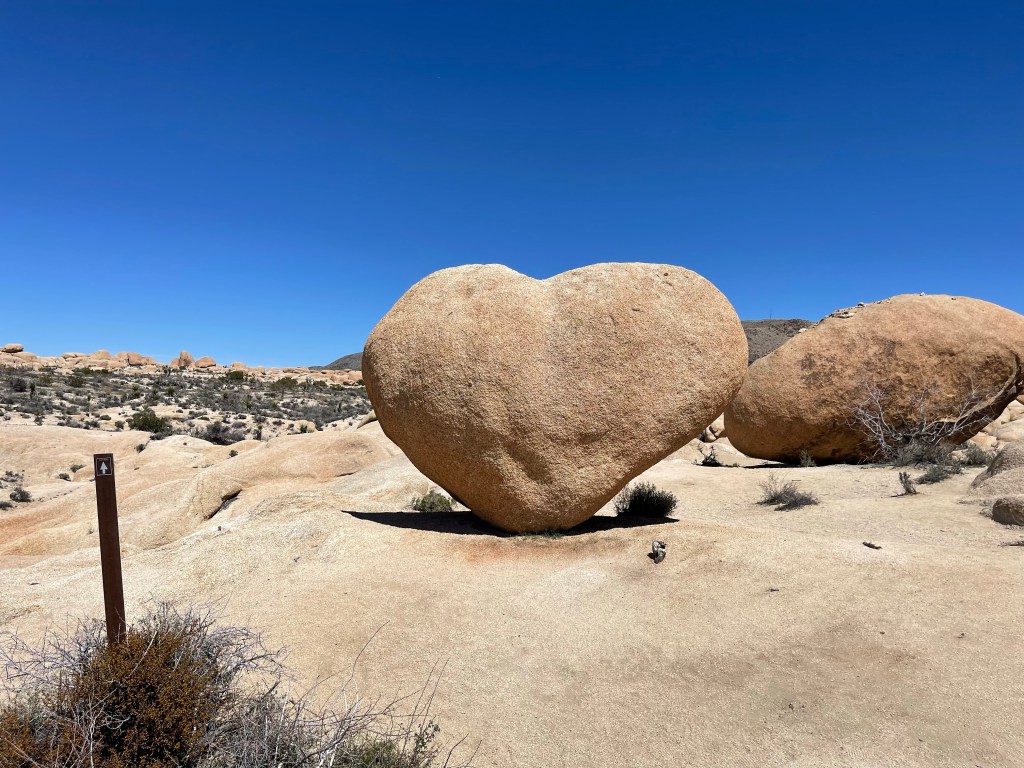
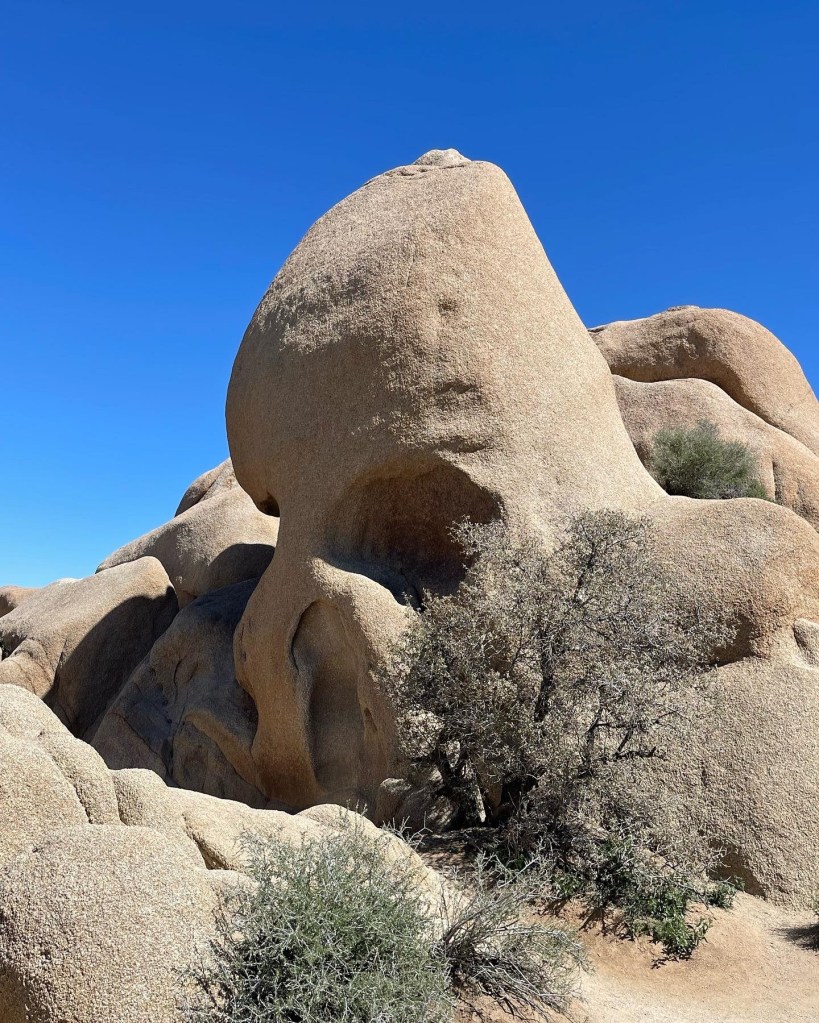
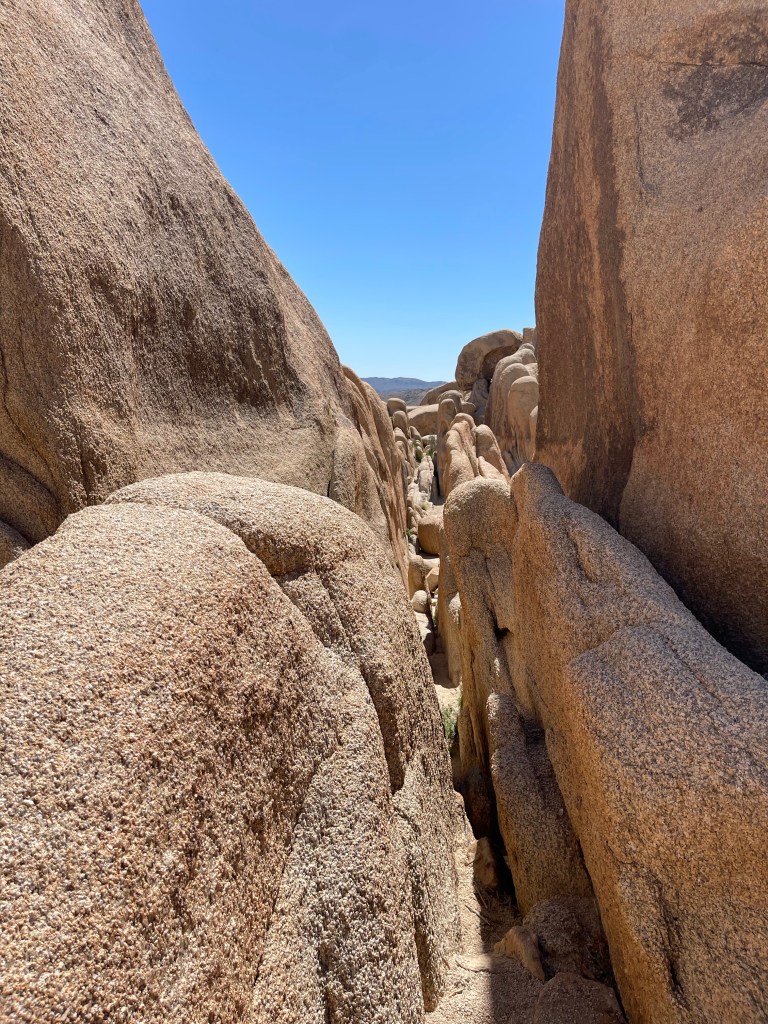
    Joshua Tree is famous for more than just the yuccas dotting the arid landscape. There are massive boulders and rock formations to explore. Three of the most famous of these are Arch Rock, Skull Rock and the once evasive Heart Rock. Fame comes with a price, and each had swarms of tourists descending on them for photographs. I descended on them too, of course, and managed a few pictures without people crawling into view with patience and creative staging. Each picture you see below was the result of waiting out the people taking their version of the same picture. But this is what you get in a place like this. Better to share than to have it owned by a private individual who bars access. National Parks are a treasure for all citizens to enjoy.

    My visit to Joshua Tree National Park was a detour from Las Vegas to Los Angeles. This drive took me through the stark landscape of the Mojave Desert. This is a place where a full tank of gasoline and plenty of water are essential elements of your self-preservation. It’s so very different from the two cities on either end of the journey. You can see no signs of life for miles around you driving through the desert, and the desert is indifferent to your desire to stay alive in it. Come prepared.

    There are several places to camp in Joshua Tree, and some additional motels nearby. There’s even a Starbucks in Twentynine Palms, not ten minutes from one of the entrances to the park. Civilization isn’t far at all from some parts of Joshua Tree, but you’ll feel like you’re on another planet anyway.

    Arch Rock
    Heart Rock
    Joshua Tree (Yucca brevifolia)
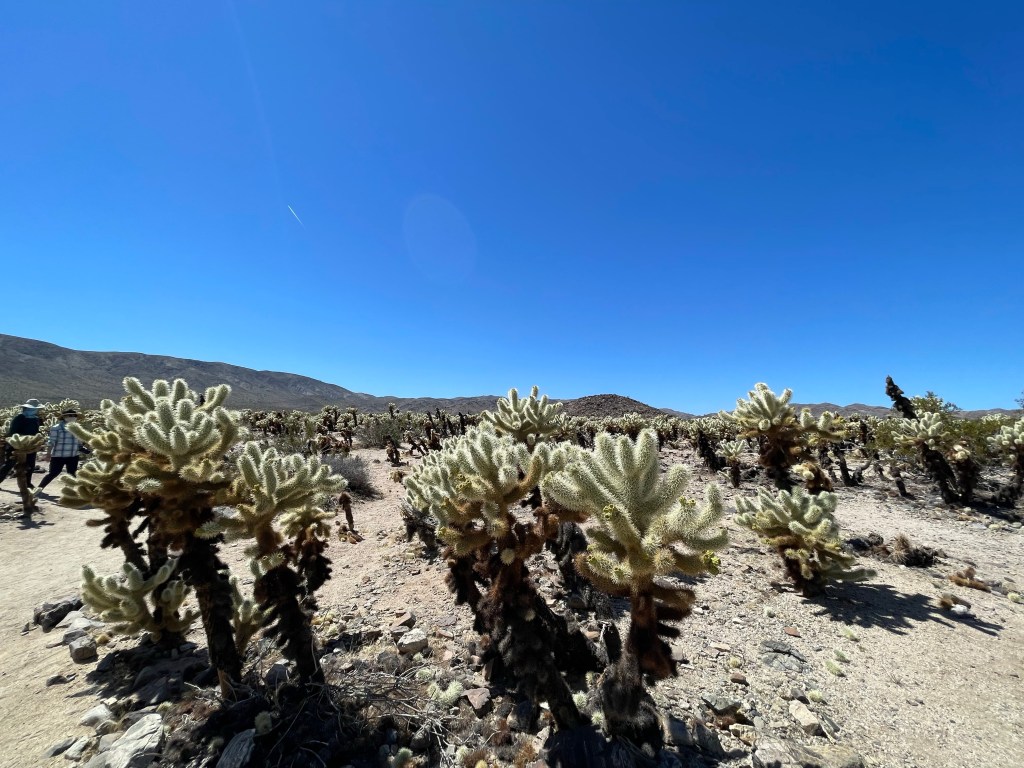
    Cholla Cactus Garden
    Skull Rock
    Rock scrambler’s paradise
  • Insist on Color

    “I don’t trust the answers or the people who give me the answers. I believe in dirt and bone and flowers and fresh pasta and salsa cruda and red wine. I don’t believe in white wine; I insist on color.” ― Charles Bowden (Via Outlawspoetic)

    There are surely shades of gray that warrant discussion, for there’s a place for nuance in this complicated world. But give me color. Give me personality and vibrancy. Give me that jolt that knocks me off my complacency when I encounter something out of the ordinary.

    There’s a reason humans seek out sunsets and the aurora borealis, knock down doors to see Van Gogh or sing about pink houses. We humans crave brightness and a rich color palate. Life is full of enough muted living; give us bold.

    This blog was started as a lens on a particular corner of the world I happen to love. It’s grown as my attention shifted, as I’ve changed. What comes next is anyone’s guess, but expect colorful wherever we go.

    Early Morning Orange
  • The Call of the Wild

    “Deep in the forest a call was sounding, and as often as he heard this call, mysteriously thrilling and luring, he felt compelled to turn his back upon the fire and the beaten earth around it, and to plunge into the forest, and on and on, he knew not where or why; nor did he wonder where or why, the call sounding imperiously, deep in the forest.”
    ― Jack London, The Call of the Wild

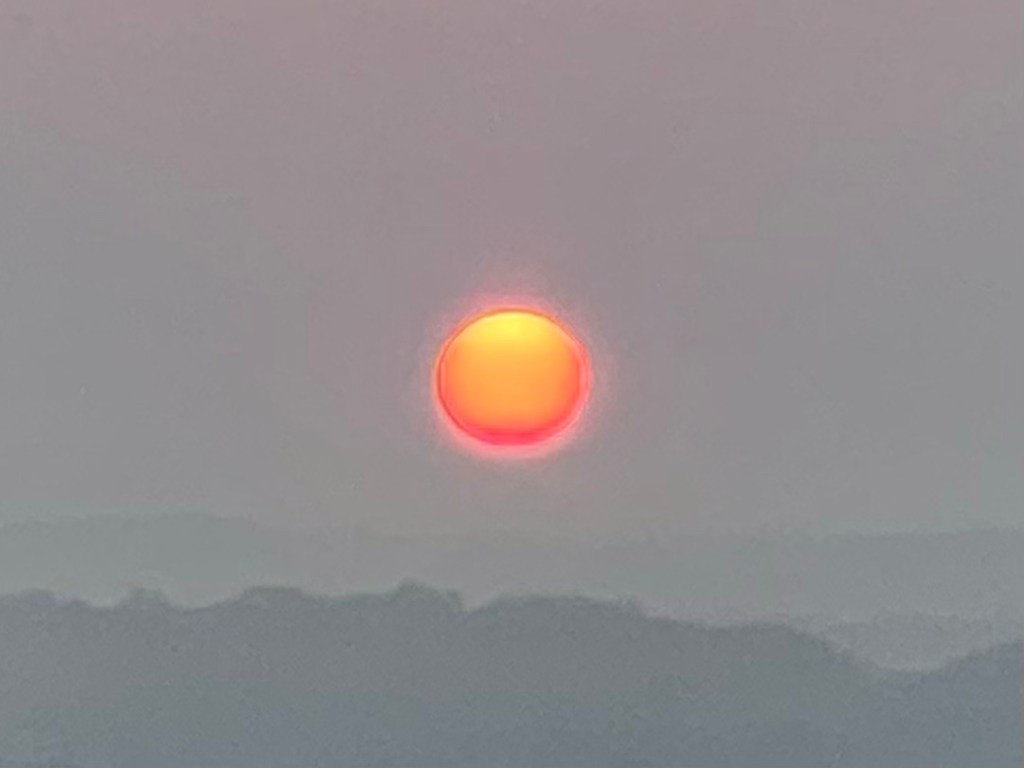
    Finishing my first cup of coffee, I heard the distinctive honk of a skein of geese. Quickly removing myself from the comfort of the moment, I caught the geese circling back around the woods and turn towards a local pond. The rising sun caught them in flight, illuminating their bodies in the red light of dawn. They soon disappeared behind the roofline and the honks faded away as I walked back into the warmth of the nest.

    We know deep down whether we were meant to be wild things or creatures of comfort. The world wants very much for us to seek comfort, to leave those crazy dreams well enough alone and celebrate the nest—to turn back towards the fire. Maybe a little part of us feels this too. So why are we so drawn to wild things? What is it that we seek?

    I believe it’s vitality. Vitality bursts out of us, it isn’t buried in the mundane. It is not another cup of coffee to get through the hour, or a nightcap to wash away the day. To be fully alive we must step out of ourselves and be uncomfortable. Test limits and stretch to new places. To do otherwise is to avoid a full and vibrant life.

    “You cannot find peace by avoiding life.” — Virginia Woolf

    Will we be drawn to the Siren’s call to the rocks or to the call of the wild? One calls us to accept what always was until our end, the other calls us to fly. We ought to ask ourselves, is inertia comfort in disguise, and vitality masked by the judgement of imprudence? We are, each of us, on a hero’s journey, listening for our calling. What call will we turn towards?

  • A Snowball Walk in the Woods

    There are winters when it seem to snow, relentlessly, mercilessly, every day. The types of winters that wiped out half of the pilgrims on the Mayflower. “Hungry? Eat more snow!” kind of winters. This was not that kind of winter in New England. And now that we’re well into March, when the sun is higher and the snow melts quickly, it seems clear that opportunities to celebrate winter are drawing to a close.

    Blame it on seasonal variability or jet streams run askew or climate change, whatever the reason, the opportunities to fly across snow on skis or snowshoes wasn’t quite available locally. None of that quick lunch hour snowshoe hiking presented itself this year in southern New Hampshire. And truthfully, I missed it. When friends invited me to hike up north after a heavy snowfall on Saturday, I leaned in towards it but pivoted back to home. I wanted to savor the local trails instead. It turned out to be a sound decision.

    Driving over to a local town forest, I expected the parking lot to be jammed full of fellow snow lovers. Instead, I found it relatively quiet. Tracks indicated others had set off on snowshoes, while a few chose to post-hole their way through the snow, wrecking the pristine trail. This would prove a problem on the wooded trails, but in the fields I simply flew off on my snowshoes to break my own trail. After all, this was what I missed most this winter—flying atop unbroken snow.

    It proved to be as delightful as I’d hoped it would be, but already the sun was up and working on the snow pack. The trees began dropping snowballs, often with small branches, which dampened my enthusiasm for the wooded trails. The fields were better, and I thumped my way around in earnest, seeking that flying feeling until I was breathless. Stopping for a rest, I looked around and listened. Nothing but snowballs falling in the woods. Not a single human voice, or dog barking, or even a car far off in the distance. Just a clydesdale in snow, appreciating the briefness of the moment. We never know if we might have another opportunity to do something. A winter like this one teaches you to make the most of the moment before it melts away.

    A rare opportunity to fly over snow
  • Little Things

    Elle est retrouvée!
    Quoi? -l’Éternité.
    C’est la mer allée
    Avec le soleil.


    She is found!
    What? -Eternity.
    It’s the sea gone
    With the sun. — Arthur Rimbaud

    Sunsets are routine, often ritualized. Little things, really, repeated daily. I’ve been known for carrying on about such things as the position of the sun relative to where it was in warmer days. Most people, it seems, could care less about where the tilt of the earth is. We are what we focus on.

    “Little things in life, which afford what [Daniel] Kahneman calls “experiences that you think about when you’re having them,” provide a great deal of everyday enjoyment. Because you’re apt to pay more attention to your remembering than your experiencing self, however, it’s all too easy to forget to indulge yourself in these small but important pleasures on a daily basis, thus depriving yourself of much joy.” — Winifred Gallagher, Rapt

    I should think life would be less enjoyable the very moment one forgot to savor the little things. We get used to things that once delighted us, looking for the next big thing to replace that feeling, always chasing. Never really savoring.

    Most writers have an eye for details, and linger in them longer than the average bear, seeking a deeper understanding. There’s pleasure to be derived from digging deeply into what seems trivial. Consider Rimbauld’s twelve words, arranged just so, that draw so much out of what someone else might think of as just another sunset. Poetry itself might be thought a little thing. Ah, but what things they are, sunsets and poems! I think I’ll stick with little things, thank you.

  • A Visit to Black Sand Beach

    When polling the five people I visited Iceland with last week, the consensus pick for most memorable place to visit was Black Sand Beach (Reynisfjar​a). There are plenty of options to choose from aside from that particular location—epic waterfalls, glaciers, volcanoes, geysers, the Blue Lagoon, tectonic plates drifting away from each other, and of course, Reykjavik. Each offers a possible highlight moment on a normal week of living on this planet. But the Black Sand Beach stood out for all of us.

    Why? Because a place like Reynisfjar​a changes you, as travel does, but more viscerally than visiting the tasty Icelandic hot dog stand. It might be the distinct black sand, ground up bits of lava expressing itself vividly against the white salty foam of the crashing waves. It might be the angry seas with their sneaker waves, always threatening to pull a distracted tourist to their doom. Maybe it was the basalt columns rising up from the sand and sea, standing against the ocean in a fight to the end of time. Mostly it was all of those things, combined into a magical place that is indifferent to the hordes of tour buses casting tourists upon the sands. The beach will be here long after we’re gone, but each of us take black sand memories with us.

    Reynisfjar​a
    The white foam against black sand was mesmerizing to watch as the waves receded.
    The famous basalt columns at Reynisfjar​a. You can see them referenced in architecture in Reykjavik. You just might also see a few tourists at this beach, and this time of year, a bit of snow.
  • The Dweller in the Gorge

    A short walk from its more famous waterfall cousin Seljalandsfoss is a hidden waterfall that I found overwhelmingly beautiful. Gljúfrafoss is hidden in a gorge, which you can reach by wading into ankle-deep water. This leads you into a cathedral of falling water and mossy boulders. Gljúfrafoss also goes by another Icelandic name, Gljúfrabúi, which I’m told means “Dweller in the Gorge”, which describes it perfectly.

    Iceland is bearing a massive surge in popularity, and you really see that at the popular tourist spots like Seljalandsfoss, which are overwhelmed with buses and small group vans. I’m one of those visitors too, so who am I to judge? But hidden waterfalls, even the most magical ones, become overrun by the masses. I have mixed feelings about it, while being drawn to these places myself.

    I wanted to shout for the rest of my friends to join me in this misty cathedral, but there were no takers. The thing is, when you meet a place as magical as this head-on, you want the world to experience it as you have. Yet you want to be protective of it too. For a few minutes of relative quiet, as one of the few to wade into the cold waters flowing out of the gorge, I paused in reverence in the cold mist before heading back to join the masses.

    Gljúfrabúi
    A friend captured this image of me inside the gorge
    Ice formations made it even more magical