Category: Exploration

  • Pack Light

    “Travel like Ghandi, with simple clothes, open eyes and an uncluttered mind.” – Rick Steves

    Packing for a trip, or for a hike, informs. It teaches us what we can do without. And it turns out we can do without a lot of things. Add a few layers, a few event-specific bits of fashion if you must, and always (always!) good shoes. Don’t forget your toothbrush. If you have to weigh your suitcase to keep it under the limit you’re doing something wrong. The goal with suitcases and backpacks is the same: maximize the empty space available to you. Simplify.

    The lesson here naturally applies to all things. We ought to live a more simple, uncluttered life. We ought to speak less and listen more. We ought to write with more brevity and fewer clever words we throw around too often (like brevity).

    We carry too much baggage with us. We use too many words. We speak too much. Simplify and open enough space to experience the world. Navigate the world as a poet might do. With lightness and an eye for detail.

  • Horizons

    An old trick, this habit of scanning the horizon in search of a challenging quadrant and wondering: Is this my destiny? A childish trick, for we know if we go far enough we’re bound to return full circle—to the point of departure.. What is it about that horizon? What lies on the other side? Not just ships and land and more of the same old ocean—but what is the magic that calls…and who am I fooling really? — Sterling Hayden, Wanderer

    We each look to the horizon, wondering at our destiny. Some look and feel it too far a journey, and maybe it is. Maybe we aren’t meant to endlessly follow the horizon. Then again, maybe we gaze out at such a distance as a way to stop us from ever going in the first place.

    “A journey of a thousand miles begins with a single step” — Lao Tzu

    Focus too much on the horizon and you’ll surely stumble. Focus too much on the step in front of you and you’ll find yourself going in circles. The answer, of course, is to keep one eye towards the horizon with the other on this next step.

    As Hayden points out, the funny thing about chasing horizons is that you’ll eventually end up going full circle back to where you began. What he doesn’t say is that you’ll be a different person upon your return. Surely you’ll look at where you started in a whole new light.

    We chase all sorts of horizons through travel and writing and learning new things. A quest doesn’t always mean setting sail, but the analogy holds true nonetheless. For when we chase horizons we’re embarking on a journey of transformation. We all ought to chase horizons, for deep down, we know we can’t stay where we’ve been. Not when there’s so much out there for us.

  • How Much Alive

    “It matters not where or how far you travel—the farther commonly the worse—but how much alive you are.” — Henry David Thoreau

    Sitting outside, listening to birdsong in the magic hour before the world shook the cobwebs off, I watched a couple of large birds fluttering tree-to-tree. I wondered at them, thinking perhaps pileated woodpeckers who tend to behave this way, or maybe a couple of young turkeys waking up from their roost. Definitely not hawks on the hunt. Black and white with a bit of duck-like appearance to them, I quickly exhausted my list of possibilities and remained mystified. The binoculars and camera remained safely in the house where they offered the least amount of help in the moment. So I quietly thanked them for their visit and released them from my attention as they worked their way away from my own perch. I may find out yet who my visitors were, but it wasn’t our moment for a proper introduction.

    We aren’t meant to know everything, but we ought to be curious. We all seek answers in this world. We climb to high summits, fly to faraway places, seek solace in the new. Shouldn’t we celebrate the world as it comes to us? Why do we feel compelled to fly across the globe? Because we know it’s out there, and like those birds, once we’re aware of that fact we want to know a bit more about it.

    Thoreau traveled too, he just wasn’t collecting frequent flyer miles or navigating security lines. He sought faraway places relative to his time and place, traveling to Cape Cod and Maine and paddling down the Concord and then up the Merrimack Rivers. He sought what was just out of reach just as we do. Credit the pace of travel if you will, but he didn’t postpone his aliveness for when he arrived at his destination, he encountered it in each moment along the way. Shouldn’t we do the same?

  • Roots and the Road

    “Be good and you’ll be lonesome.” — Mark Twain, Following the Equator: A Journey Around the World

    I’ve had this quote in my mind for a decade or two, floating about in the back of my brain. It sneaks back to the front now and then, mostly as a taunt to be more adventurous. Some may say I don’t need a prompt like that.

    A healthy dose of mischief leads us into all sorts of adventure. A healthy sense of place leads us to a life of meaning. There’s a happy medium somewhere in between. We ought to be a bit adventurous, but ought to have something that grounds us too. How we weigh that out is different for each of us. We’re never really lonesome when we’re running towards something.

    Last weekend Twain’s words drifted back front and center as I walked through a local greenhouse. It comes down to whether to plant tomatoes. If I plant them this year it signals I’m locked in to this place for at least another season. If I forgo the tomatoes, you might say I’m free to roam.

    Life is more complicated than that. We aren’t locked into a life by the crops we plant. But it sure feels like you’re rooting yourself to that plot of land while you’re planting them. That chicken manure sure smells a lot like commitment when you’ve caught the adventure bug.

    Still, I do love a good tomato.

  • To Learn and Grow and Discover

    “There is nothing more notable in Socrates than that he found time, when he was an old man, to learn music and dancing, and thought it time well spent.” ― Michel de Montaigne, The Complete Essays

    We have an opportunity to learn and grow and discover until our very last days. On the other hand, we might consign ourselves to the corner of closed up people waiting to die. What kind of life is that? Life isn’t easy, but why turn off the lights years before last call?

    Lifelong learning is well beyond our formal education. I actively rebelled against a good chunk of that formal education, by some miracle earning both a Bachelor’s and a Master’s degree. Admittedly, I might have gone further along the arc of human potential if I’d just followed that formal education a bit more stringently. Maybe I’d have gone to Oxford or Cambridge or Harvard. But that wasn’t meant to be my arc. Maybe it wasn’t yours either. Each of us runs the race of maximizing our personal potential at our own pace.

    Formal education teaches you rules others want you to live by. Those who master it early enough get a strong lead and a key position in the pack. What some of us realized in navigating that formal education is we didn’t really want to be part of the pack anyway. Sometimes we confuse indifference for incompetence. The first time I tacked Calculus I thought I was incompetent. It turns out I just didn’t care about it enough to try. When I did care enough the experience was wholly different.

    Lifelong learning is a personal quest for understanding, but it ought to sparkle and pop and illuminate for the thrill of it all. For it is a thrill to remove the “un” from aware or familiar. It’s a thrill to master a simple phrase in a foreign language or to try to cook something that seemed outside your skillset before. That excitement can build on itself for the rest of our lives.

    Who says we have to be bored and lonely and used up at the end of our days? We get to reinvent ourselves every day, if we don’t squander the opportunity to learn and grow and discover. There’s enchantment in that moment when we finally realize what we’d been missing all this time. Who says we can’t carry that sense of enchantment to the end of our time? Sounds like a hell of a ride.

  • Seeing the World Wherever You Are

    “The wise man knows that it is better to sit on the banks of a remote mountain stream than to be emperor of the whole world.” ― Zhuang Zhou

    We anticipate what we believe we’ll find in the world, when we get out there to meet it. There’s a level of understanding that comes with experiencing first-hand the grandeur of this planet. We humans have our quietly persistent bucket lists that range from Paris to Machu Picchu to the Grand Canyon to the Appalachian Trail. We hear that siren question us: When will we listen and finally go?

    I may sound like a one-trick pony at times, writing about such things as wanderlust and the urgency of now. But I’m just as content walking in an old forest nearby, walking across landscapes that have changed or stubbornly remained the same with the history of this continent. There is an entire world to see within throwing distance of wherever we are at this moment.

    Restlessness may be the soul telling us we haven’t arrived quite yet. Then again, it may mean that we haven’t seen what is right in front of us yet. To fully savor life we must learn to pause and see the richness of the world wherever we are. That doesn’t mean we’ve arrived where we are meant to go, but we’ll never fully immerse ourselves in this business of living if we are constantly planning our escape.

    That doesn’t mean we ought to wrap ourselves in a blanket of comfortably familiar routine. Life demands that we go out and meet it, comfort be damned. But let’s not rush past every mountain stream on our climb to the pinnacle. If hiking teaches us anything, it’s that the highlight real isn’t always the summit, but what we’ve encountered along the way.

    Life isn’t that highlight real of places we’ve been, but the person we became in each step. The world is out there, but also right here. Waiting for us to see it. Our world is this next step.

  • I Saw Tranquility

    “Deep in the forest there is something sacred that exists without a perceptible function. This is the central core, the navel of the world, and I want to return to that place.” — Hayao Miyazaki

    Last month I walked through a forest with several coworkers on a group hike. One of them commented that the naked trees were spooky and reminded him of The Blair Witch Project. I looked around and saw something completely different. And two days later I doubled down on that place and hiked alone in the dark before dawn with a failing headlamp. The things we do for love.

    So much of the world is what we perceive it to be. I may find tranquility in a stand of trees, someone else sees a buildable lot and the trees themselves as a commodity to haul off to the mill. America was built on such vision. Thankfully there are people who saw the land as something timeless and preserved it. Were we to level every forest where would we ever find ourselves?

    The trees are beginning to leaf out in the Northern Hemisphere, transforming the naked landscape. Soon the forest will hide things that are apparent in colder months. Leaves bring deep shade and mystery to the forest. Often what we see appears distinctly different from one person to another. What the forest is really showing us is not itself, but our own nature. My hiking friend that day saw horror in the naked forest. I saw tranquility.

  • The “What’s Our Fire” Exam

    “Proper examination should ruin the life that you’re currently living. It should cause you to leave relationships. It should cause you to reestablish boundaries with family members and with colleagues. It should cause you to quit your job.” — @naval

    We march through our day-to-day life without serious thought about the big picture. What really matters to us, and are we moving towards that? Sometimes examination tells us we’re on the right track, sometimes we find more smoke than fire. But we ought to sort out what’s going on either way.

    Examination doesn’t invite trouble, it offers a lifeline. We get in the habit of saying things that won’t rock the boat. I’d suggest that the boat ought to be rocked now and then. There’s nothing wrong with a spring cleaning for the soul. Purge all those pent-up resentments and simmering anger and give them air to breath. They’ll either ignite into a bonfire or smother for lack of fuel. But we can’t just live every day ignoring the growing inferno without being burned alive from the inside-out.

    Socrates famously said that “The unexamined life is not worth living”. Are we meant to be a torch or merely kindling for someone else’s dreams? Think of the things that we accept in our life that are frivolous and inconsequential on the surface, and worse, distract us from the things that might be life-changing given the chance. The thing that makes Naval’s statement incendiary is that we may find we’ve just been kindling all along. Isn’t it fair to ask, what is our fire, anyway?

  • Wanting Wild

    “I try to be good but sometimes a person just has to break out and act like the wild and springy thing one used to be. It’s impossible not to remember wild and want it back.” — Mary Oliver, Green, Green is My Sister’s House

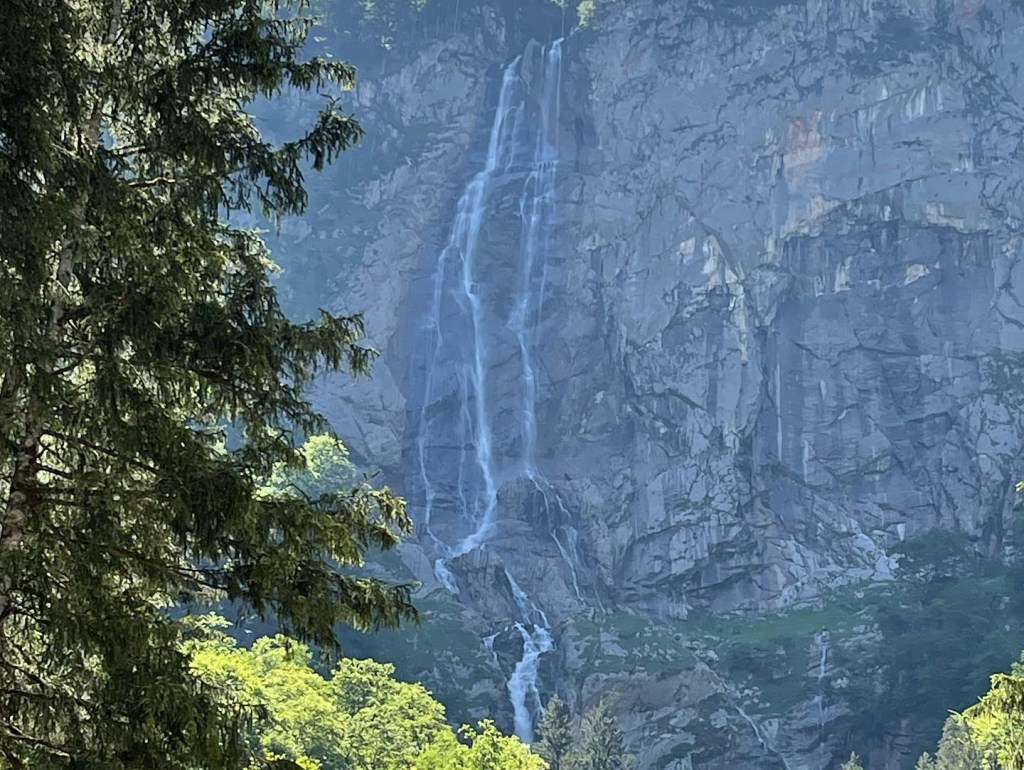
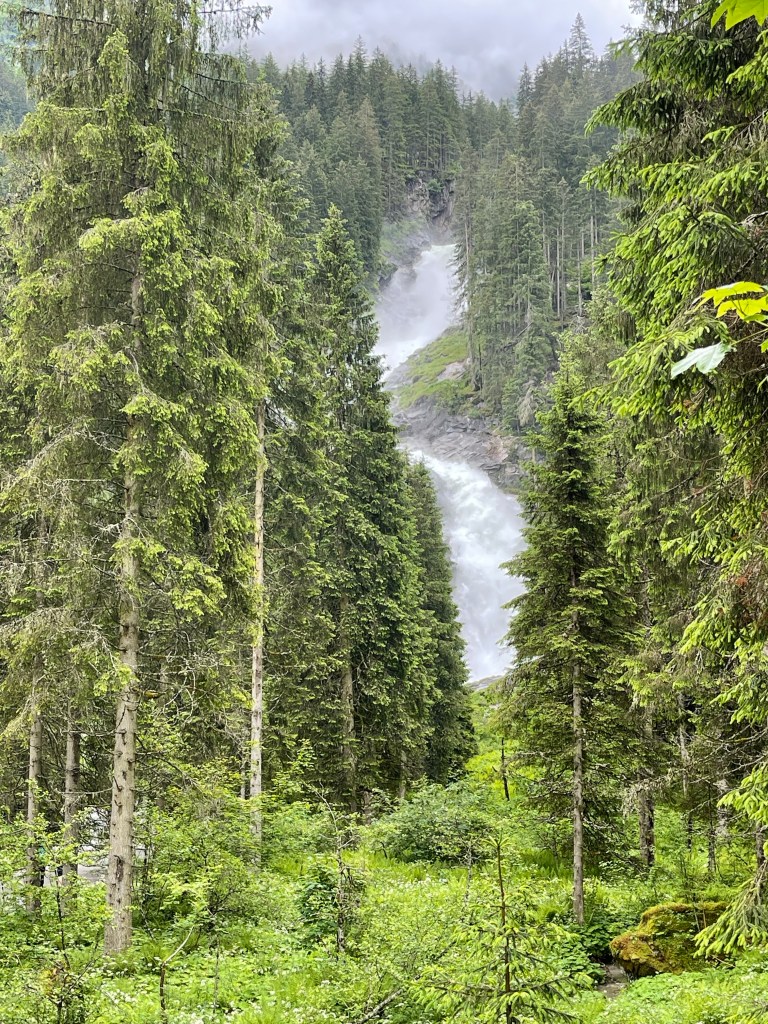
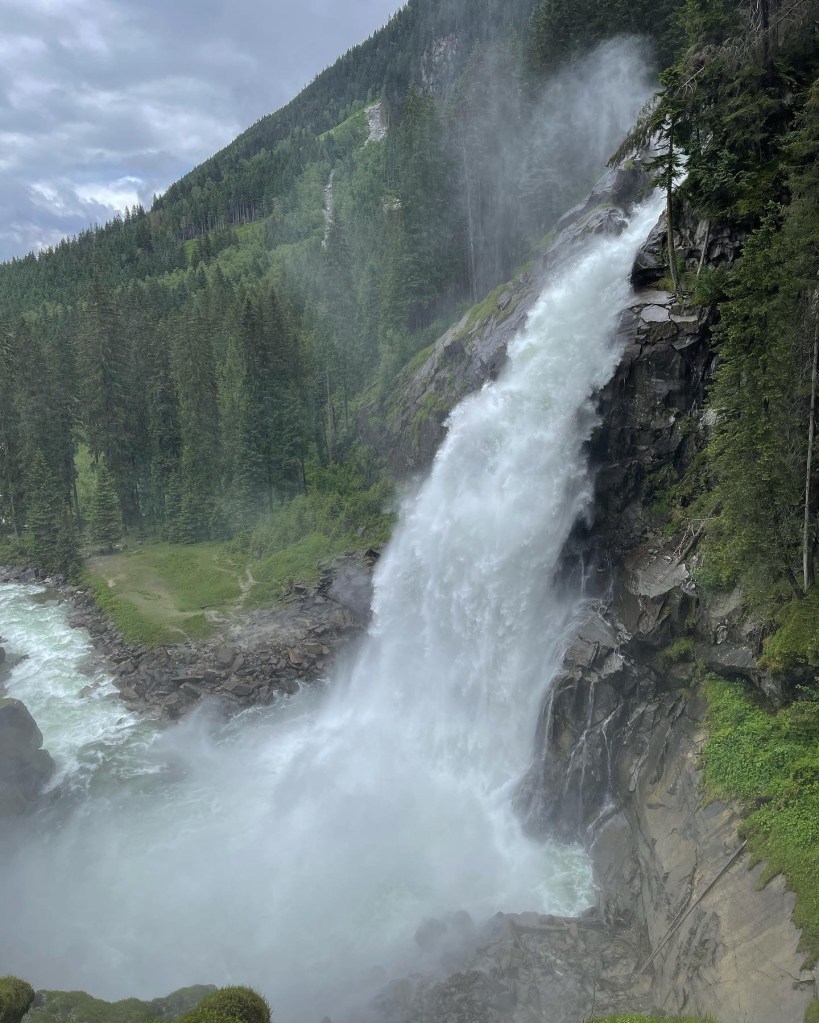
    If we’re lucky, we never really grow up, we just get a bit more creative with our diversions. I used to crave responsibility, now I try to build enough flexibility in my schedule to chase waterfalls. Intense curiosity about the world around us is the key. Life is a quest, after all, adulting be damned. What are we wild things to do but seek adventure where we might find it?

    “In conclusion, it appears that nothing can be more improving to a young naturalist, than a journey in distant countries.” ― Charles Darwin, Voyage of the Beagle

    Adventure is easier when you’re on the road. You see things all the time that stir your soul. It’s much harder when you’re working in an office or sheltered in place at home. If we don’t venture out into the world we’ll never find out what we’ve been missing. Charles Darwin found adventure on the other side of the world, Henry David Thoreau found it a short walk from his bed. Adventure isn’t about how far you go, it’s about getting out of your own shell. What is a shell but a prison of our own making?

    Wild is always stirring about inside of us. We must want it back in our lives enough to seek it. The world will always ask for everything we’ve got. We ought to be the wild thing that rebels against that and turns towards adventure instead.

  • To Feel, and Dream, and Go

    “Books and books and books—some five hundred volumes in all. Books of the sea and books of the land, some of them streaked with salt, collected with love and care over more than twenty-five years.
    Melville, Conrad, London, Stevenson; Gauguin and Loti and Rupert Brooke; Lubbock, Masefield, De Hartog—Slocum and Rockwell Kent; Trelawny and Cook and Bligh; Chapelle and Underhill—Nansen, Frobisher, Villiers and Scott and Louis Becke. Homer, Gerbault, and Tompkins. Hundreds more: all cast in a common mold—blessed with the genius that makes men feel, and dream, and go.
    And a special section of books that deal with the greatest frontier of all—the relationship between men: Marx and Whitman, Thoreau and Henry George, Victor Hugo, Thomas Paine and Jefferson. Lincoln and Emerson, Rousseau, Voltaire and Upton Sinclair, Shaw. Byron, Mark Twain, Roosevelt, Garrison, Jack London again and Shakespeare.”
    Sterling Hayden, Wanderer

    Well, there’s a traveler’s reading list for you. Hayden misses some he ought to have included, Beryl Markham comes to mind, but on the whole he’d built a library of transformation. And so must we. What carries your imagination to new places? What moves you?

    Hayden might have loved Mary Oliver poems. The Summer Day, in which she famously prods us to ask ourselves: “What is it you plan to do with your one wild and precious life?” was published just four years after Hayden passed away, so it’s not one he would have read. But they surely spoke the same language. The feelers, dreams and goers instinctively know when they encounter a kindred spirit.

    And what of us, friend? What are our libraries whispering? Our challenge is to do more than feel and dream. Our challenge is to go. Books stir the imagination and offer a map. It’s up to us to learn what our compass is telling us and chart a course. It’s up to us to weigh anchor and act on our dreams.