Category: Exploration

  • The “What’s Our Fire” Exam

    “Proper examination should ruin the life that you’re currently living. It should cause you to leave relationships. It should cause you to reestablish boundaries with family members and with colleagues. It should cause you to quit your job.” — @naval

    We march through our day-to-day life without serious thought about the big picture. What really matters to us, and are we moving towards that? Sometimes examination tells us we’re on the right track, sometimes we find more smoke than fire. But we ought to sort out what’s going on either way.

    Examination doesn’t invite trouble, it offers a lifeline. We get in the habit of saying things that won’t rock the boat. I’d suggest that the boat ought to be rocked now and then. There’s nothing wrong with a spring cleaning for the soul. Purge all those pent-up resentments and simmering anger and give them air to breath. They’ll either ignite into a bonfire or smother for lack of fuel. But we can’t just live every day ignoring the growing inferno without being burned alive from the inside-out.

    Socrates famously said that “The unexamined life is not worth living”. Are we meant to be a torch or merely kindling for someone else’s dreams? Think of the things that we accept in our life that are frivolous and inconsequential on the surface, and worse, distract us from the things that might be life-changing given the chance. The thing that makes Naval’s statement incendiary is that we may find we’ve just been kindling all along. Isn’t it fair to ask, what is our fire, anyway?

  • Wanting Wild

    “I try to be good but sometimes a person just has to break out and act like the wild and springy thing one used to be. It’s impossible not to remember wild and want it back.” — Mary Oliver, Green, Green is My Sister’s House

    If we’re lucky, we never really grow up, we just get a bit more creative with our diversions. I used to crave responsibility, now I try to build enough flexibility in my schedule to chase waterfalls. Intense curiosity about the world around us is the key. Life is a quest, after all, adulting be damned. What are we wild things to do but seek adventure where we might find it?

    “In conclusion, it appears that nothing can be more improving to a young naturalist, than a journey in distant countries.” ― Charles Darwin, Voyage of the Beagle

    Adventure is easier when you’re on the road. You see things all the time that stir your soul. It’s much harder when you’re working in an office or sheltered in place at home. If we don’t venture out into the world we’ll never find out what we’ve been missing. Charles Darwin found adventure on the other side of the world, Henry David Thoreau found it a short walk from his bed. Adventure isn’t about how far you go, it’s about getting out of your own shell. What is a shell but a prison of our own making?

    Wild is always stirring about inside of us. We must want it back in our lives enough to seek it. The world will always ask for everything we’ve got. We ought to be the wild thing that rebels against that and turns towards adventure instead.

  • To Feel, and Dream, and Go

    “Books and books and books—some five hundred volumes in all. Books of the sea and books of the land, some of them streaked with salt, collected with love and care over more than twenty-five years.
    Melville, Conrad, London, Stevenson; Gauguin and Loti and Rupert Brooke; Lubbock, Masefield, De Hartog—Slocum and Rockwell Kent; Trelawny and Cook and Bligh; Chapelle and Underhill—Nansen, Frobisher, Villiers and Scott and Louis Becke. Homer, Gerbault, and Tompkins. Hundreds more: all cast in a common mold—blessed with the genius that makes men feel, and dream, and go.
    And a special section of books that deal with the greatest frontier of all—the relationship between men: Marx and Whitman, Thoreau and Henry George, Victor Hugo, Thomas Paine and Jefferson. Lincoln and Emerson, Rousseau, Voltaire and Upton Sinclair, Shaw. Byron, Mark Twain, Roosevelt, Garrison, Jack London again and Shakespeare.”
    Sterling Hayden, Wanderer

    Well, there’s a traveler’s reading list for you. Hayden misses some he ought to have included, Beryl Markham comes to mind, but on the whole he’d built a library of transformation. And so must we. What carries your imagination to new places? What moves you?

    Hayden might have loved Mary Oliver poems. The Summer Day, in which she famously prods us to ask ourselves: “What is it you plan to do with your one wild and precious life?” was published just four years after Hayden passed away, so it’s not one he would have read. But they surely spoke the same language. The feelers, dreams and goers instinctively know when they encounter a kindred spirit.

    And what of us, friend? What are our libraries whispering? Our challenge is to do more than feel and dream. Our challenge is to go. Books stir the imagination and offer a map. It’s up to us to learn what our compass is telling us and chart a course. It’s up to us to weigh anchor and act on our dreams.

  • A Commitment to Transformation

    “A person susceptible to “wanderlust” is not so much addicted to movement as committed to transformation.” ― Pico Iyer

    As I write this a cardinal is singing in the window, driving the cat a bit insane, and distracting me with questions: “What are you doing in your nest? Shouldn’t you be flying?”

    “I’m busy leaving breadcrumbs”, I silently answer the cardinal. And indeed I am. For every post is a mark for where I’ve been at any given moment. A public journal of sorts, documenting what I’m reading, where I’m visiting, who I’m learning from, what I’ve stumbled upon that made my jaw drop.

    You can’t document what you haven’t experienced. Imagination is a lovely thing, and brings so much to the world of humans (Refer to da Vinci’s Saper Vedere), but we’re also students on a quest to learn as much as we can about this life we’re doomed to leave too soon. Experiencing requires getting out in the world and finding it, not just living through someone else’s YouTube or InstaGram feed.

    Those different perspectives we encounter are building blocks that in turn carry us somewhere even richer, snowballing experiences into transformation. Who has gone anywhere in this world and returned the same person? And what is the purpose of living but growth?

    The thing about breadcrumbs is they don’t stick around forever. My trail of transformation is a click away from disappearing forever, sort of like us but with bigger data centers. That’s the way of the world, we’re all just fleeting memories in some future person’s mind. But who says we can’t fly in our time? Who says we can’t offer a small ripple felt imperceptibly on a far shore?

  • Consider Life an Adventure

    “An adventure is only an inconvenience rightly considered. An inconvenience is only an adventure wrongly considered.” ― G.K. Chesterton

    Admittedly, I’m tired writing this. Two weeks of travel and burning the candle at both ends and I’m worn out. But that’s why we dance with coffee, isn’t it? To press ahead just a bit further.

    The thing is, we’ve had a couple of years to reset. We all did the best we could under the circumstances. Getting back to whatever this normal is gives us a chance to stretch our imagination more. To find new adventures just around the corner, and to have the gumption to venture much farther. Not to fill our InstaGram feed or gain subscribers, but to shake loose of the cobwebs of the commonplace and experience the world.

    “Rise free from care before the dawn, and seek adventures.” — Henry David Thoreau

    Who ever looks back with pride on a moment when you decided to sleep in instead of dancing with adventure? We ought to consider life an adventure and do more with that notion. We ought to rise and seek more from our days, for we only have so many to work with. We’ve spent time with people on their deathbed who literally can’t go outside to see the stars, who are we to complain about stepping out into the world? Dance with the gift of freedom. Be part of something livelier.

    “Who can guess the luna’s sadness who lives so briefly? Who can guess the impatience of stone longing to be ground down, to be part again of something livelier? Who can imagine in what heaviness the rivers remember their original clarity?
    Strange questions, yet I have spent worthwhile time with them. And I suggest them to you also, that your spirit grow in curiosity, that your life be richer than it is, that you bow to the earth as you feel how it actually is, that we—so clever, and ambitious, and selfish, and unrestrained— are only one design of the moving, the vivacious many.”
    Mary Oliver, The Moth, The Mountains, The Rivers

    We all have our shackles of responsibility and routine. We can bend our days to find adventure while still honoring our core responsibilities. And we should question our routines when they hold our rambunctious spirit in place. Consider, for a moment, that convenience is a shackle disguised as a mindset.

  • A Sunrise Walk on Historic Calf Pasture Beach

    There’s a lot of history lurking in plain sight. Take Calf Pasture Beach in Norwalk, Connecticut. on the surface it’s a pretty municipal beach on Long Island Sound. I suppose that might be enough. But there’s a significant link to the Revolutionary War on this beach. As an eager participant in maximizing the potential of any trip, I’d read about the beach while looking for a good place to watch a sunrise. As a history geek I leapt out of my chair when I learned more about the beach. A sunrise visit became a no-brainer.

    So why the strange name? Calf Pasture Beach was exactly what the name infers. When the first European settlers arrived in 1651, their cattle grazed on the grass just off the beach. Names have a way of sticking, don’t they? But there’s even more history whispering on this beach. On July 10, 1779, British Lieutenant General William Tryon led 2,600 troops on the Revolutionary War raid of Norwalk. They camped right on the peninsula where the beach is located, and the next morning burned most of the town to the ground.

    There’s no sign of British encampments or cows now, just a municipal beach with a fishing pier and bathhouse, a few baseball fields and a large parking lot. The property might have developed into any number of things, from industrial facilities to a housing development. Thankfully it was donated to the city exactly 100 years ago by the Marvin-Taylor family, who had owned the land for generations. That’s a gift that keeps on giving, and I hope Norwalk has something planned for 2022 to commemorate the family.

    All this history lured me to that particular beach for a wonderful sunrise over Long Island Sound. Arriving during magic hour, the sky was lit up in pink, and Sprite Island offered a beautiful contrast with its bare trees. A short walk down the beach brings you to a fishing pier, which offers a different perspective on the sunrise, and a different perspective on the beach itself. This small peninsula feels like it would be a million miles away from the congested I-95 corridor, yet here it is just a few minutes away. It’s funny what you find when you pause to look around a bit. Not every early morning micro-adventure pays off, but this one surely did.

    Sprite Island during the magic hour before sunrise
    Calf Pasture Beach, Norwalk, CT
    Sunrise over Long Island Sound from the Captain William Clark Fishing Pier
  • A Quick Hike Up the Nose

    Let’s get the elephant in the room addressed right off the bat: Anthony’s Nose has an odd name. Here’s one story I came across in Kiddle that describes how it got it:

    “Pierre Van Cortlandt, who owned this mountain, said it was named for a pre-Revolutionary War sea captain, Anthony Hogan. This captain was reputed to have a Cyrano de Bergerac type nose. One of his mates, looking at this mount, as they sailed by it, compared it to that of the captain’s nose. He said that they looked similar in size. This good-natured joke soon spread, and the name Anthony’s Nose stuck to this peak. Washington Irving’s History of New York, a satire, attributes the name to one Antony Van Corlear, who was the trumpeter on Henry Hudson’s ship.”

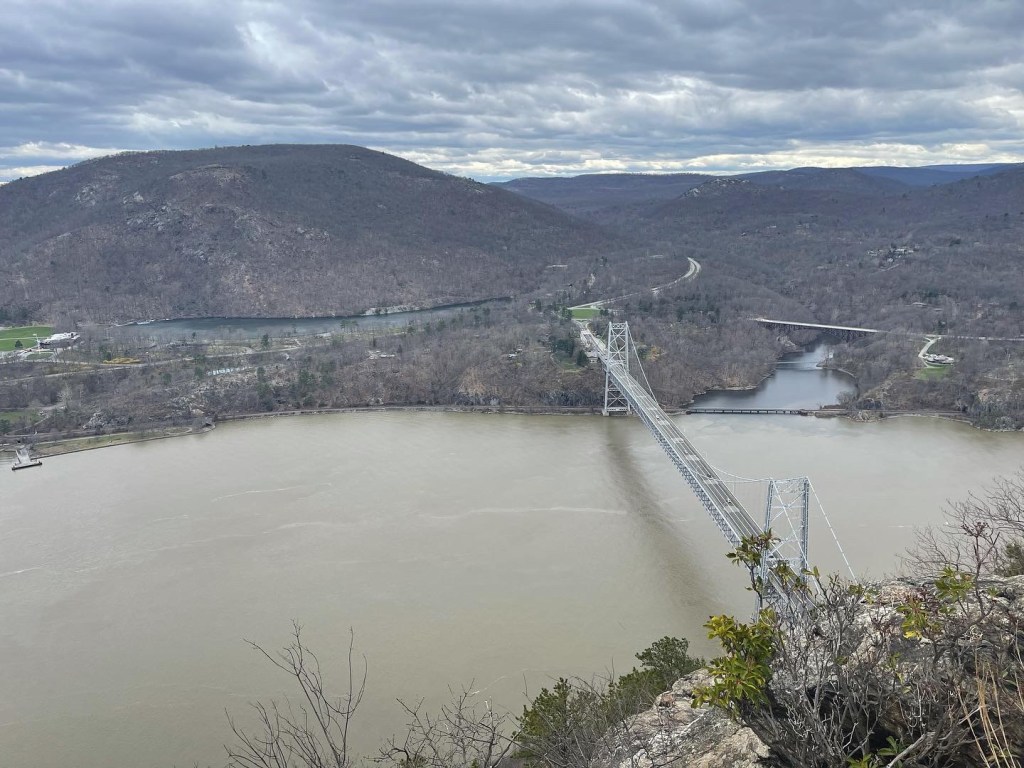
    Whatever the source, it requires that each hiker now forever able to say they went up Anthony’s Nose. How you feel about that is entirely up to you. For me, the motivation was to see a bridge I hadn’t seen in almost 30 years, get a quick hike in to break up a long drive and get a feel for a stretch of the Hudson River from a hill top.

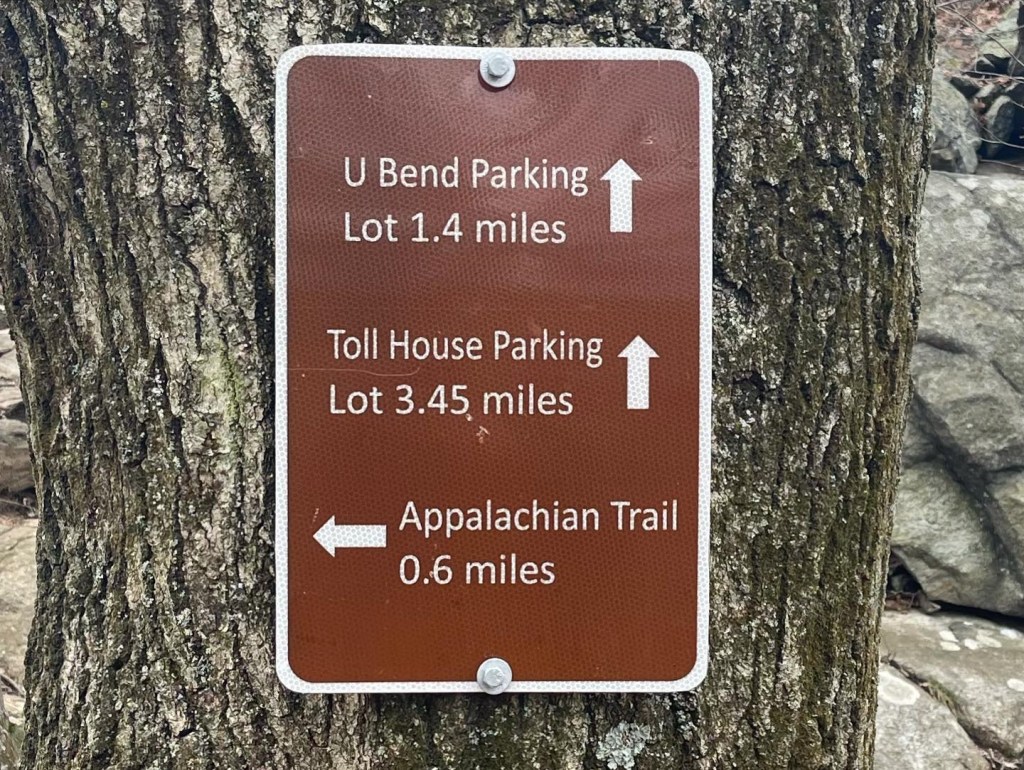
    There are a few routes up Anthony’s Nose (sorry). The most direct route is a steep granite “staircase” that brings you to your destination relatively quickly. This requires street parking on a busy stretch of road. Alternatively, there are a couple of longer routes to the lookout spot, the one I favored followed the white blazes of the Appalachian Trail. The AT crosses the Bear Mountain Bridge over the Hudson River and meanders up through a final stretch of New York before reaching Connecticut. You might expect a stretch of the AT to be lovely hiking. You’d be correct for this stretch.

    There seems to be a lot of confusion about where the trailhead is for Anthony’s Nose. If you’re going to hike straight up the staircase, you begin at a small deck on the side of the road not far from the bridge. If you’re more interested in a 90 minute round trip hike, take the AT route. The trailhead begins on South Mountain Pass Road, which is a rutted stone dust road for a long stretch. If you’ve got a small sedan you might consider driving in from the Blue Mountain Beacon Highway side, which offers a bit more pavement to work with. Driving a truck, I enjoyed the off-road feel of reaching the trailhead after a few hours of highway driving to get there.

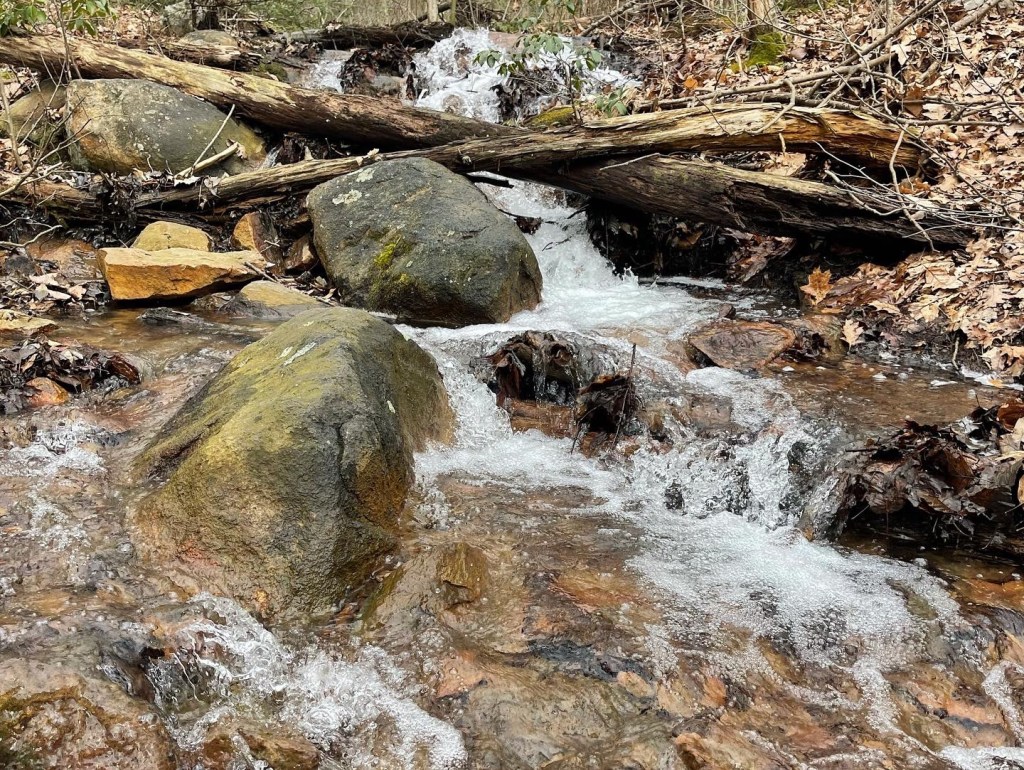
    The key for the trail is to follow the white blazes, which leave an old roadbed a few hundred yards up and begin descending towards a small stream before climbing back along the ridge line. The trail head would benefit from a bit of signage and a map, as one hiker after another asked each other if they were in the right spot. Perhaps a Boy Scout Troop could take it on as a project.

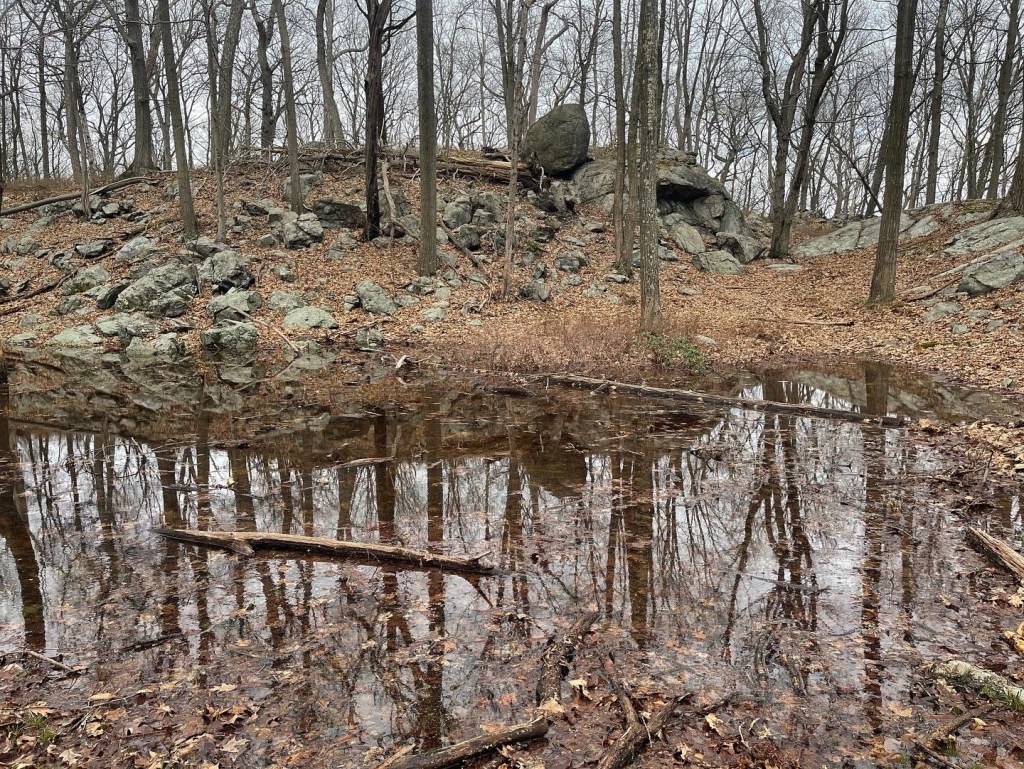
    The hike took 90 minutes round trip. Parts of the trail felt like you were in the middle of the White Mountains, but with glimpses of the Hudson River along the way. There was a bit of traffic buzz in the background, but overall it was a perfect hike to break up a drive from New Hampshire to New Jersey for me, or a short destination hike away from New York City. I’d recommend bringing lunch and soaking up the view.

    Bear Mountain Bridge with it’s namesake rising up behind it
  • Avoiding the Bankruptcy of Life

    “To be truly challenging, a voyage, like a life, must rest on a firm foundation of financial unrest. Otherwise, you are doomed to a routine traverse, the kind known to yachtsmen who play with their boats at sea… “cruising” it is called. Voyaging belongs to seamen, and to the wanderers of the world who cannot, or will not, fit in. If you are contemplating a voyage and you have the means, abandon the venture until your fortunes change. Only then will you know what the sea is all about.
    “I’ve always wanted to sail to the south seas, but I can’t afford it.” What these men can’t afford is not to go. They are enmeshed in the cancerous discipline of “security.” And in the worship of security we fling our lives beneath the wheels of routine – and before we know it our lives are gone.
    What does a man need – really need? A few pounds of food each day, heat and shelter, six feet to lie down in – and some form of working activity that will yield a sense of accomplishment. That’s all – in the material sense, and we know it. But we are brainwashed by our economic system until we end up in a tomb beneath a pyramid of time payments, mortgages, preposterous gadgetry, playthings that divert our attention for the sheer idiocy of the charade.
    The years thunder by, The dreams of youth grow dim where they lie caked in dust on the shelves of patience. Before we know it, the tomb is sealed.
    Where, then, lies the answer? In choice. Which shall it be: bankruptcy of purse or bankruptcy of life? ”
    ― Sterling Hayden, Wanderer

    Hayden chose the opposite of a comfortable routine, breaking from a lucrative Hollywood career and a failed marriage, he took his four kids and sailed to the South Pacific. Some might demonize this act of defiance as irresponsible. For why would someone give up “everything” and let it all ride on one spin of the roulette wheel? The question, really, is about what you’re risking. Status and reputation? Or a steady paycheck to cover the mortgage?

    I know this debate. I have it often with others. Life is full of compromise and the occasional break from the routine. Isn’t it? But should it be all or nothing? Is there a place for measured discipline to live side-by-side with an adventurous spirit? Is there a place for the routine traverse sprinkled with small delights, or must we choose?

    I wander about in graveyards now and then. This isn’t a morbid fascination with death, but a visit with those who once lived. Two of my favorite graveyards are both named Sleepy Hollow. The one in Concord, Massachusetts has some of the great transcendentalist writers in history interred there—Thoreau and Emerson. The one in Sleepy Holly, New York has Washington Irving and a bunch of formerly rich people interred there. Most of the rich people build huge monuments for themselves, most of the creative types have modest headstones. It’s like a shout from the grave: “See? I once mattered!” The thing is, they’re all part of the infinity now. How they lived is gone, but for their legacy. And so it will be for you and me.

    Somewhere between the routine traverse of life and the bold adventure of throwing it all away in favor of a life of challenges lies a happy medium. To be present but to be bold. To make choices that stretch your limits of comfort and bend your routine. To feel the urgency of now, and live while there’s still time, but to do it in a way that keeps you present for those who need you the most. And that’s the trick—isn’t it?

  • What Do We Make Of This Texture?

    “What do I make of all this texture? What does it mean about the kind of world in which I have been set down? The texture of the world, its filigree and scrollwork, means that there is the possibility for beauty here, a beauty inexhaustible in its complexity, which opens to my knock, which answers in me a call I do not remember calling, and which trains me to the wild and extravagant nature of the spirit I seek… The texture of space is a condition of time. Time is the warp and matter the weft of the woven texture of beauty in space, and death is the hurtling shuttle.”
    Annie Dillard, Pilgrim at Tinker Creek

    “Every religion that does not affirm that God is hidden,” said Pascal flatly, “is not true.” What is man, that thou art mindful of him? This is where the great modern religions are so unthinkably radical: the love of God! For we can see that we are as many as the leaves of trees. But it could be that our faithlessness is a cowering cowardice born of our very smallness, a massive failure of imagination. Certainly nature seems to exult in abounding radicality, extremism, anarchy. If we were to judge nature by its common sense or likelihood, we wouldn’t believe the world existed. In nature, improbabilites are the one stock in trade. The whole creation is one lunatic fringe. If creation had been left up to me, I’m sure I wouldn’t have had the imagination or courage to do more than shape a single, reasonably sized atom, smooth as a snowball, and let it go at that. No claims of any and all revelations could be so far-fetched as a single giraffe. The question from agnosticism is, Who turned on the lights? The question from faith is, Whatever for?”Annie Dillard, Pilgrim at Tinker Creek

    At some point a month or two ago I gently put aside Pilgrim at Tinker Creek. It was right around when things got very busy, when bad news began to stack up around me like junk mail, when processing the deeper concepts behind Annie Dillard’s words became a bit more than I wanted to tackle at the moment. Everything has its time.

    Yet the questions remained.

    What do we make of all this texture? Every ridge line traversed, every waterfall’s mist tickling our skin, every deep conversation with another, every swim in a salty bay, and every sunrise glimpsed are but texture to our lives. But then again, so is every mosquito bite. It’s all so damned far-fetched, and yet here we are.

    I have a sister who is firmly in the God camp. I’m more skeptical of the Hallmark version of a loving God moving the world around like so many chess pieces. We both know life isn’t fair and throws you a curveball now and then to keep you on your toes. We just happen to disagree about “who” is winding up to throw it. And yet we peacefully coexist in both the universe and family dinners—we just don’t question each other’s beliefs.

    It’s easy to be outraged by the other side of the coin. They’re tossing around beliefs that just don’t jibe with our world views. Yet we’re the same coin. It’s fair to ask both “Who turned on the lights?” and “Whatever for?” We’re all asking our version of What’s It All About Alfie? Who said that we are ever meant to know the answers?

    Thankfully, we aren’t alone in pondering the imponderables; as with Dillard and Bacharach framing the questions in this post, we may draw on the wisdom of the ages at any time. Philosophy doesn’t answer the questions for you, but it does help you structure those questions better. We only have our short time to dance with the mysteries of the universe, and will never have all the answers.

    And yet… we get so caught up in the “who, what and why” questions that we forget to ask: How do we make the most of our present condition? For the universe only asks us to live in our time. You come to appreciate the tapestry of life a lot more when you learn to weave yourself into it and let the questions fall away.

  • The Late Night Star Run

    “The sky is the daily bread of the eyes.” — Ralph Waldo Emerson

    Last night offered a small chance to see the northern lights as the skies cleared just enough to open up the universe. What are you to do with an opportunity like that but chase after it? With son and daughter as my two co-conspirators we jumped in the truck and drove northward over twisting country roads. Higher elevations, darker skies, reason for hope to witness that elusive sky dance.

    We never did find the northern lights. Instead we found the starry dome, the wind whispering a chilly welcome, and time to catch up with each other in a random field far from home. The sky above didn’t disappoint, even as we recognized that it wasn’t going to show all its cards to our power trio. As the clouds rolled back in, we jumped back in the truck for the drive home. We agreed the chase was worthwhile, if only for the billion stars dancing infinitely above and for locking us in the amber of the moment in revelatory quiet below.

    We don’t just stumble upon revelation, we must seek it out. Having a spirit of adventure mixed with a sense of place may seem contradictory, as if chasing dreams means leaving home. But the spirit that calls is the universe, and it in turn is our place. You see it more clearly when you get away from the ambient light.