A Day at The Met

The first thing you learn when you spend a day at The Metropolitan Museum of Art is that a day is comically not nearly enough time to see everything. A year at The Met might do. And be sure to capitalize that T in “The” because the official name is what it is and details matter. In matters of affectionate familiarity, it’s perfectly fine to simply call it The Met.

Comic or not, I had one random Thursday for a Met marathon. The only thing to do is to get to it—to meander through the maze of exhibits, to see, to linger on art that whispers for you to be with it for a moment, to eavesdrop on tour guides as they drop insight on what seemed randomness a moment before, to gawk at the famous and smile at the packs of teenagers giggling about the lack of fig leaves, and to move relentlessly through as much of the collection as time and mental capacity allows. As with all things, we hope to return again one day and pick up where we left off. Like that expression about the river, we will have changed in the interim, and everything we see will seem different with that new perspective.

Claude Monet, "Bouquet of Sunflowers", 1881
Claude Monet, “Bouquet of Sunflowers”, 1881
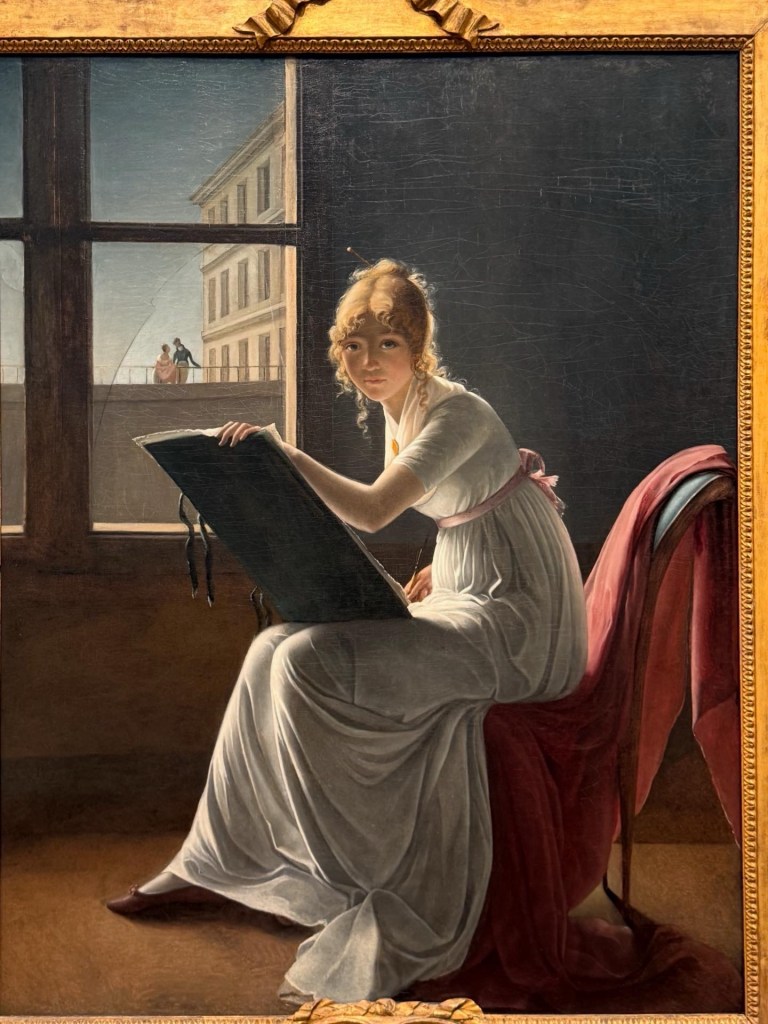
Marie Denise Villers, Marie Joséphine Charlotte du Val d'Ognes (1786-1868), 1801
Marie Denise Villers, Marie Joséphine Charlotte du Val d’Ognes (1786-1868), 1801
Jean-Baptiste Carpeaux, Why Born Enslaved!
Claude Monet, "Bridge over a Pond of Water Lilies", 1899
Claude Monet, “Bridge over a Pond of Water Lilies”, 1899
August Rodin, "Beside the Sea", 1907
August Rodin, “Beside the Sea”, 1907
William Bouguereau, "Breton Brother and Sister", 1871
William Bouguereau, “Breton Brother and Sister”, 1871
Vincent van Gogh, "Wheat Field with Cypresses", 1889
Vincent van Gogh, “Wheat Field with Cypresses”, 1889
Bronze statuette of a satyr with a torch and wineskin
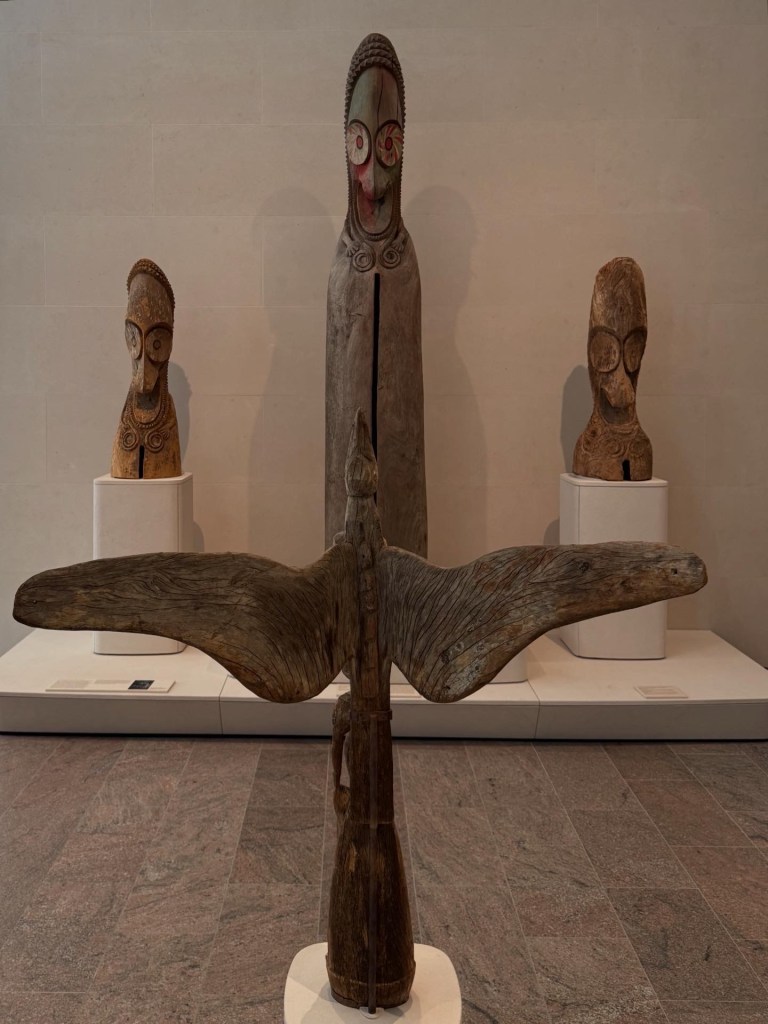
Foreground: Finial for a ceremonial house, Sawos artist; Kaimbiam village, Middle Sepik River, Papua New Guinea
Background: Finials from Ambrym Island artists; Fanla village, Vanuatu
Foreground: Finial for a ceremonial house, Sawos artist; Kaimbiam village, Middle Sepik River, Papua New Guinea
Background: Finials from Ambrym Island artists; Fanla village, Vanuatu
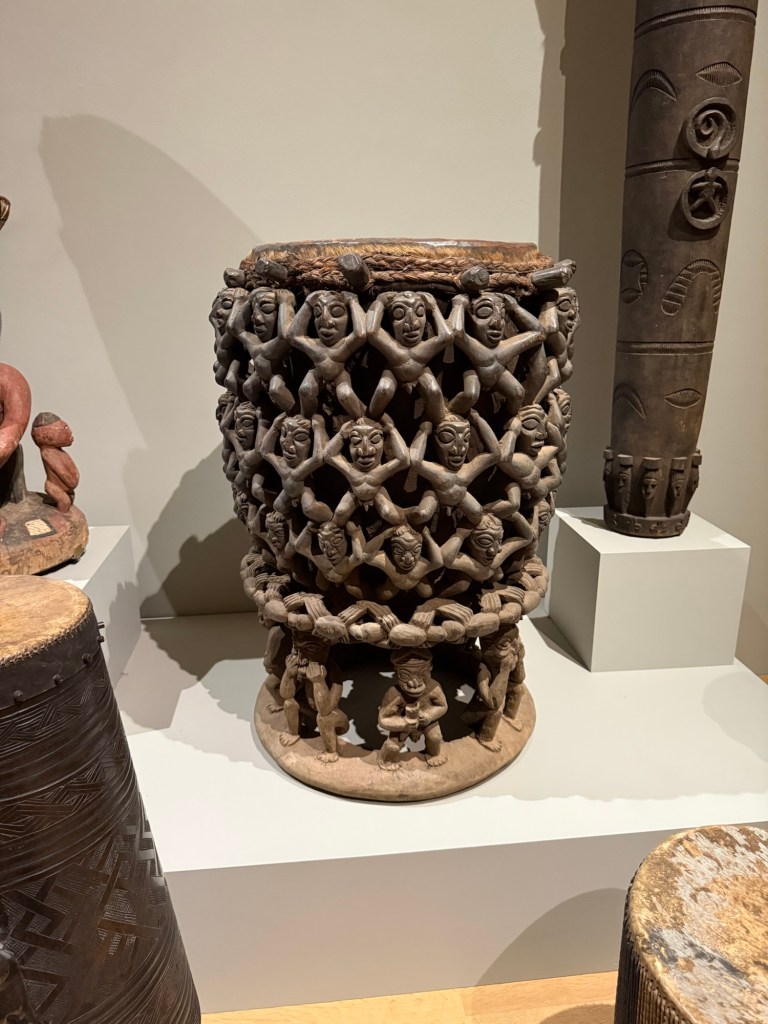
Drum
Possibly Babungo/Vengo people
Cameroon, ca. 1940
Drum
Possibly Babungo/Vengo people
Cameroon, ca. 1940
Arms and Armor Room from above
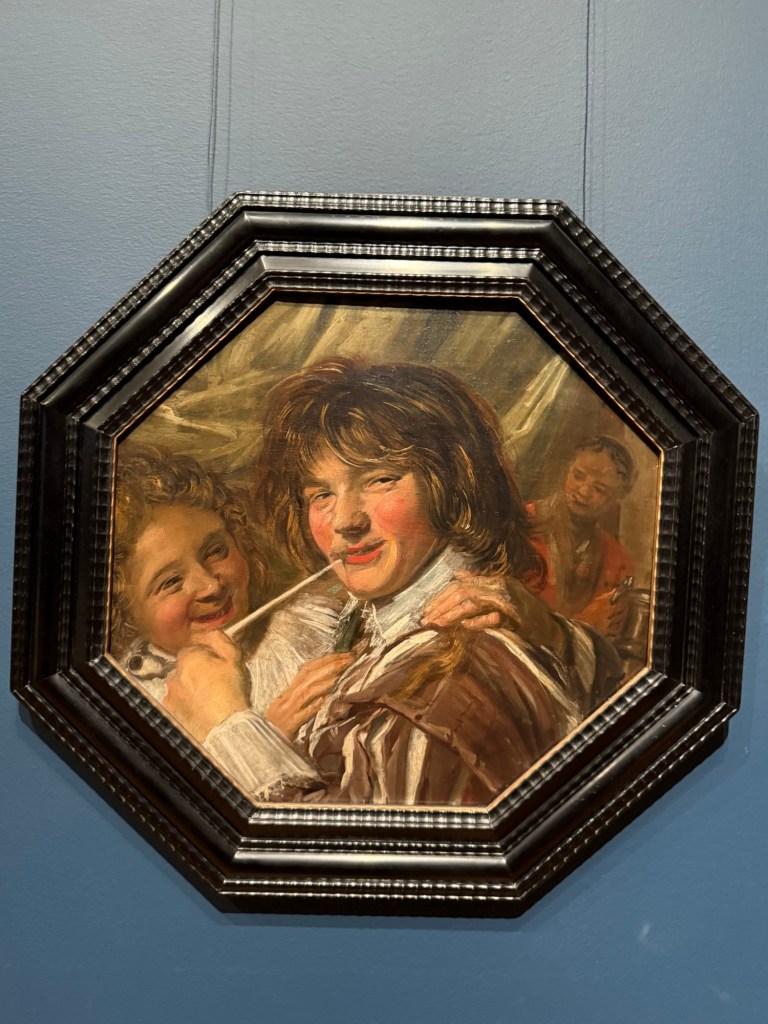
Frans Hals, "The Smoker", ca. 1623-1625
Frans Hals, “The Smoker”, ca. 1623-1625
Pablo Picasso, "The Blind Man's Meal", 1903
Pablo Picasso, “The Blind Man’s Meal”, 1903
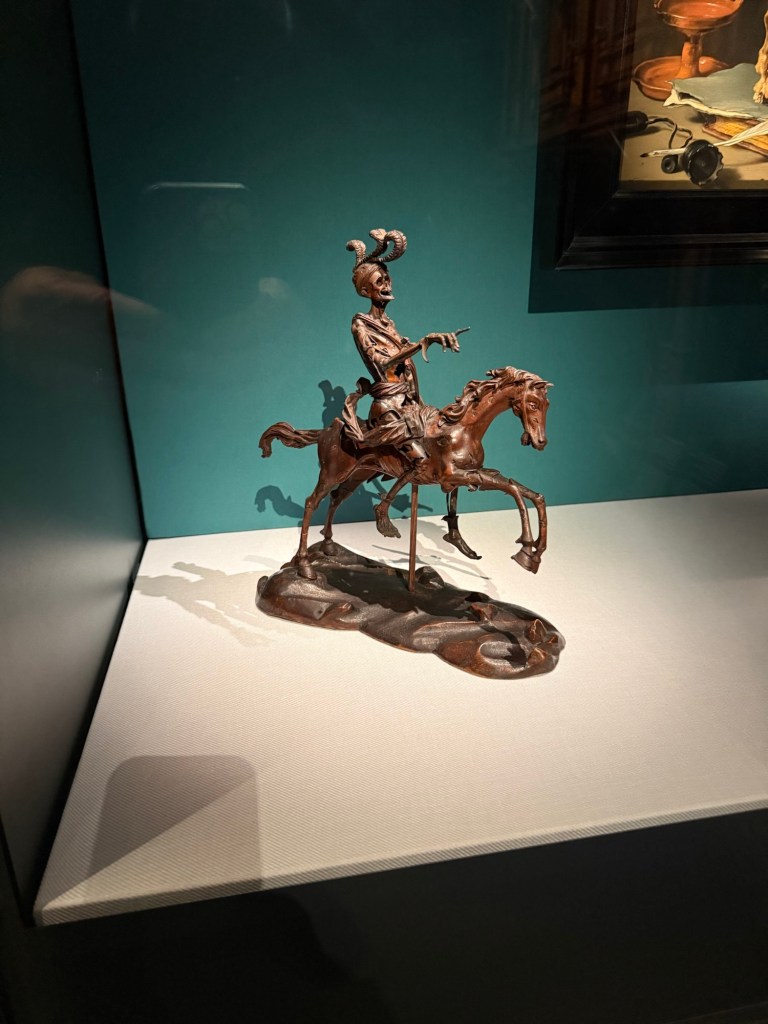
Death
German, mid-17th century
Lindenwood with traces of pigment, spruce base
Death
German, mid-17th century
Lindenwood with traces of pigment, spruce base
Auguste Rodin, "The Burghers of Calais"
Auguste Rodin, “The Burghers of Calais”
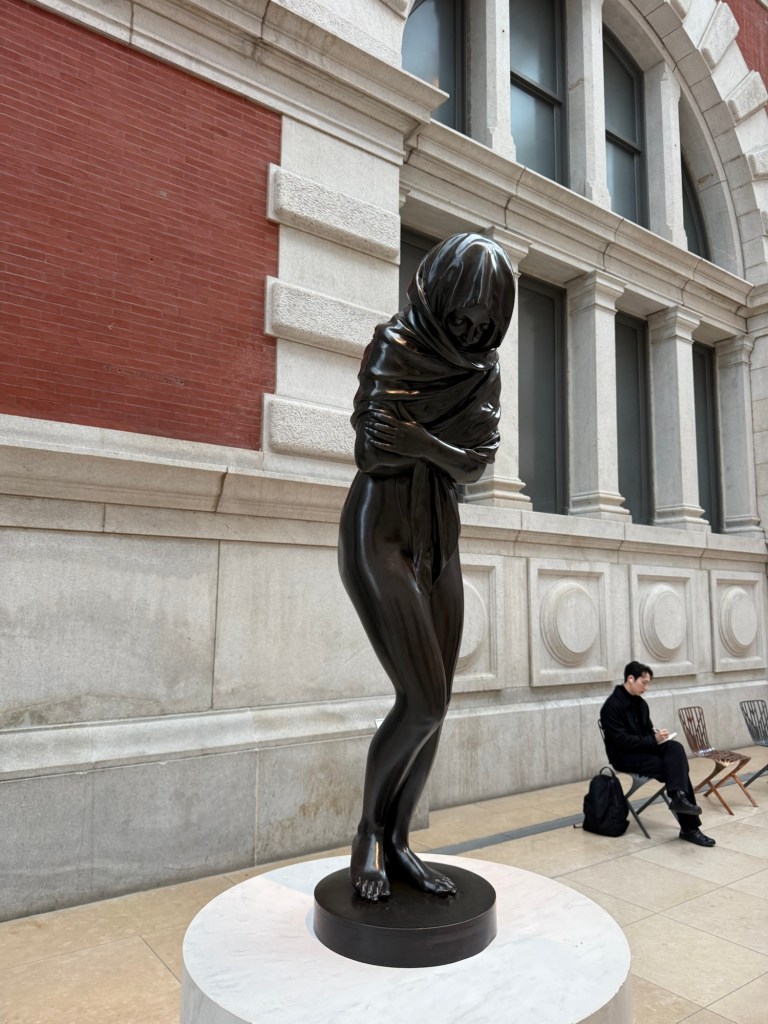
Jean Antoine Houdon, "Winter", 1787
Jean Antoine Houdon, “Winter”, 1787
Fireplace Surround
Attributed to Désiré Muller, ca. 1900
Fireplace Surround
Attributed to Désiré Muller, ca. 1900
Harriet Whitney Frishmuth, "The Vine", 1921 (this cast 1924)
Harriet Whitney Frishmuth, “The Vine”, 1921 (this cast 1924)
Antonio Canova, "Perseus with the Head of Medusa", 1804-6
Antonio Canova, “Perseus with the Head of Medusa”, 1804-6
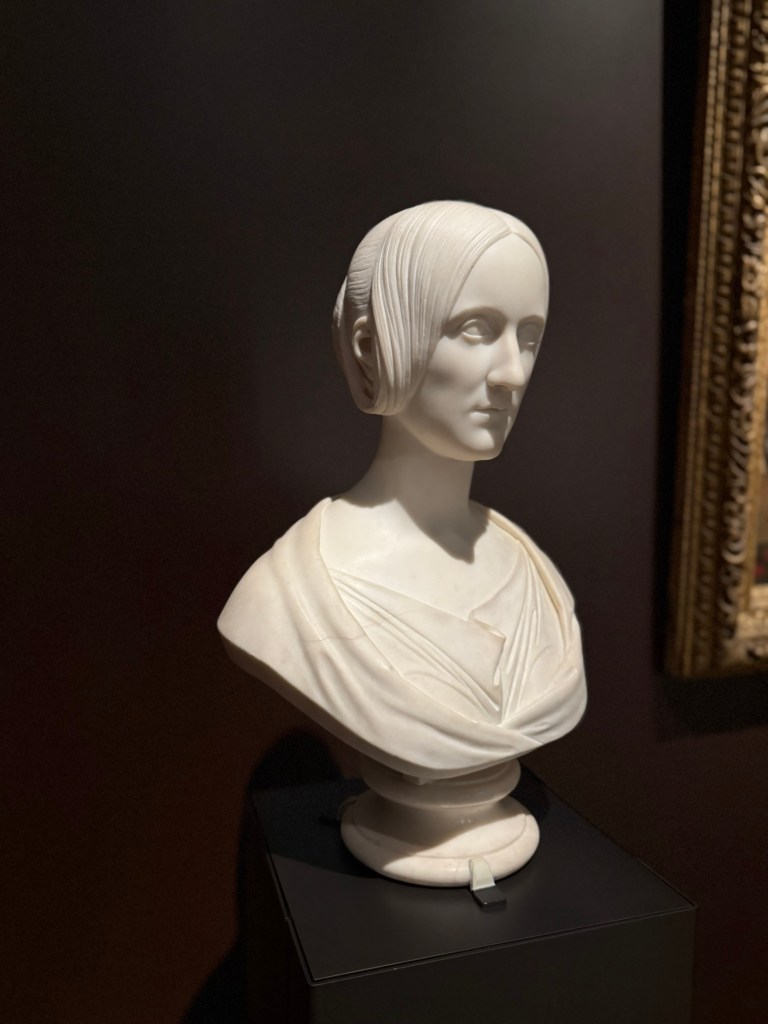
Camillo Pistrucci, "Mary Shelley", 1843
Camillo Pistrucci, “Mary Shelley”, 1843
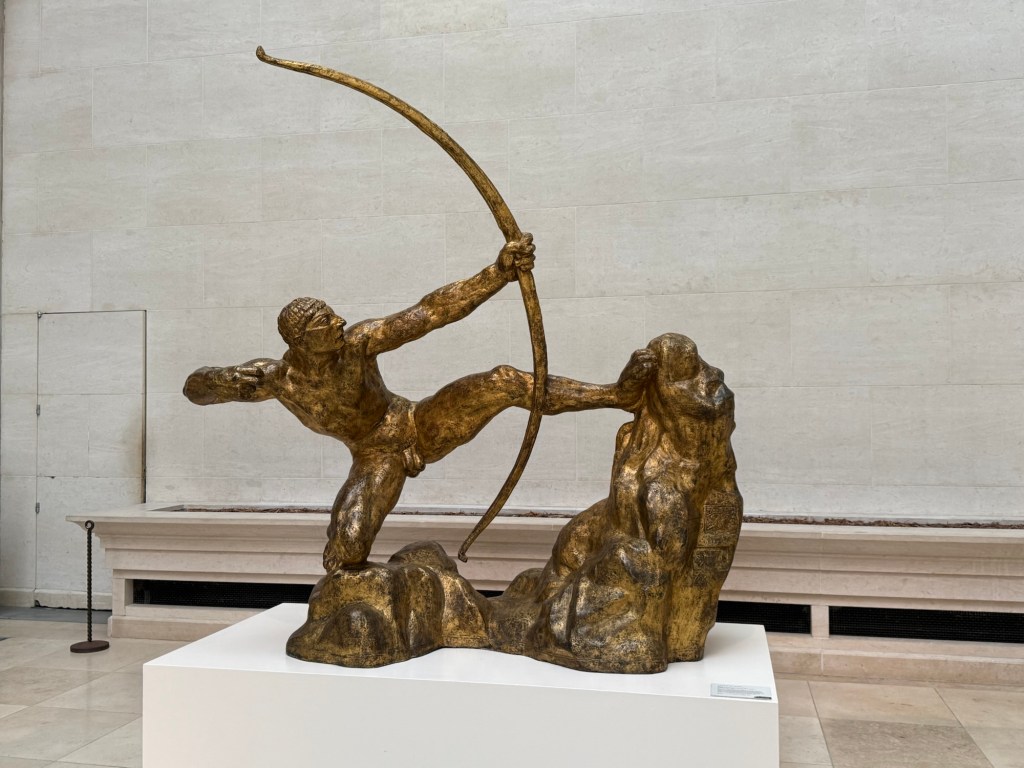
Émile-Antoine Bourdelle, "Herakles the Archer", 1909
Émile-Antoine Bourdelle, “Herakles the Archer”, 1909
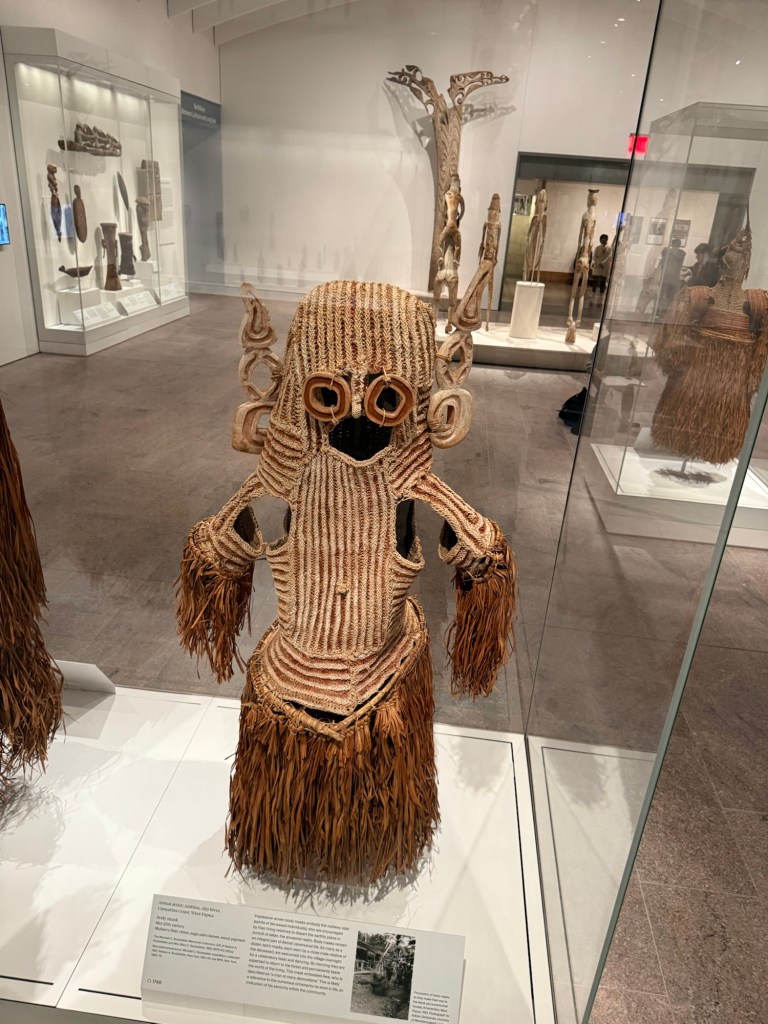
Body Mask
Asmat artist; Ambisu, Ajip River, Casuarina Coast, West Papua
Body Mask
Asmat artist; Ambisu, Ajip River, Casuarina Coast, West Papua
Bronze helmet of the Illyrian type
Greek, late 6th-early 5th century, B.C.
Bronze helmet of the Illyrian type
Greek, late 6th-early 5th century, B.C.
Mechanical Table
Workshop of David Roentgen, ca. 1780-90
Mechanical Table
Workshop of David Roentgen, ca. 1780-90
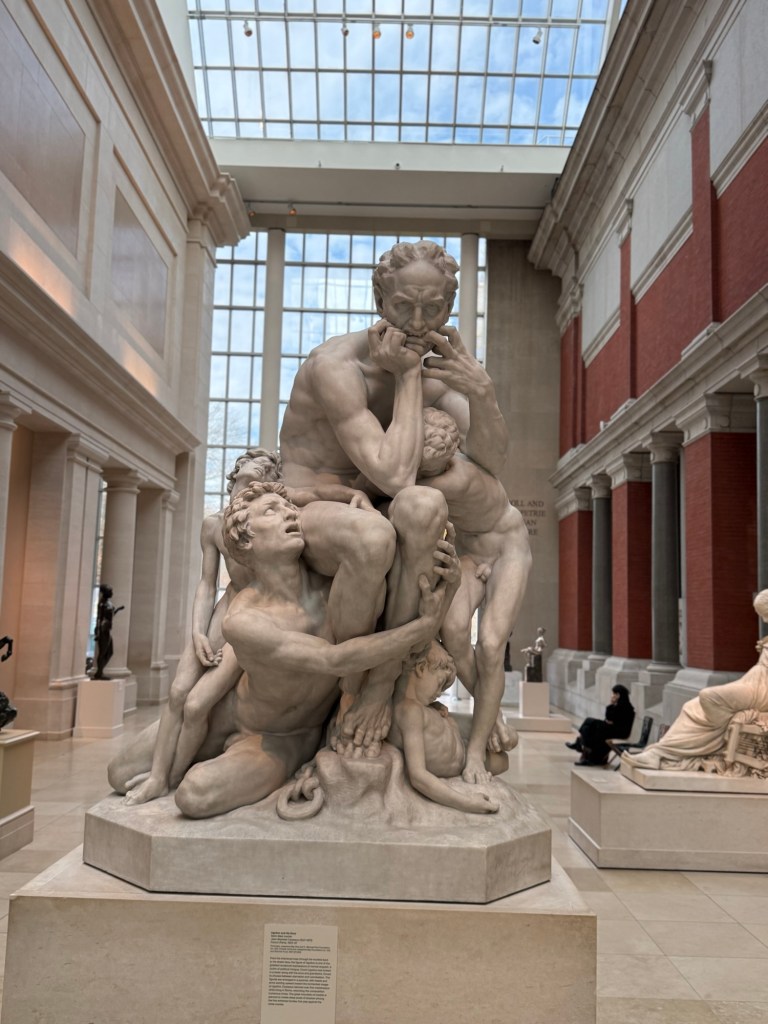
Jean-Basptiste Carpeaux, "Ugolino and His Sons", 1865-67
Jean-Basptiste Carpeaux, “Ugolino and His Sons”, 1865-67
Augustus Saint-Gaudens, "Hiawatha", 1874
Augustus Saint-Gaudens, “Hiawatha”, 1874
Asmat artist, Yamas village, West Papua
Wuramon (spirit canoe)
Asmat artist, Yamas village, West Papua
Wuramon (spirit canoe)
Bronze ornament from a chariot pole
Head of Medusa
Roman, 1st-2nd century A.D.
Bronze ornament from a chariot pole
Head of Medusa
Roman, 1st-2nd century A.D.

Discover more from Alexandersmap

Subscribe to get the latest posts sent to your email.

Comments

Leave a comment