Blog
-
Timelessly Human
“How long are you going to wait before you demand the best for yourself?” – EpictetusEpictetus died 1,884 years ago. And yet there’s so much truth in this quote. Mankind has struggled inwardly with the same things for as long as we’ve been thinking. If I’ve learned anything from history, philosophy, stoicism and religion it’s that we’re all very human. And that’s timeless. -
Storm Warnings and Salacious Distractions
The Northeast is going to get four-to-eight inches of snow this afternoon. This wasn’t the lead story on the national morning shows, but only because there was an update on the budget debate in Washington, DC. We live in a world where six inches of snow becomes a stop the presses! moment. If it weren’t a snowstorm it would be the latest scandalous celebrity affair, or some other salacious distraction.
“Nie mój cyrk, nie moje malpy
Not my circus, not my monkeys.” – Polish ProverbStoic philosophy would dictate a similar approach to this insanity. Ignore the noise, focus on your own priorities. And that’s what I shall do today as “Snowmageddon” approaches. Use the information for appropriate planning, and tune out the rest.
-
Smallpox
Smallpox
During the Revolutionary War more than 130,000 people living in North America died from Smallpox. Of those fighting in the war, about 7000 died in the war, while more than 17,000 died from disease. And smallpox was the biggest killer on the continent.
Variola virus, or smallpox is spread through physical contact, airborne through breathing droplets from an infected person, or through bodily fluids. About 30% of the people who got smallpox died from it. The disease was declared eradicated in 1980.
During the Revolutionary War soldiers would deliberately infect themselves with a small amount of the virus on their skin as a crude form of self-inoculation. They would become sick but nowhere near as sick as others who got the disease through normal transmission. It’s a terrifying gamble to infect yourself with a disease that kills 1/3 of the people who contracted it. There was also significant debate within the colonial army about the wisdom of inoculation. Major General John Thomas threatened his troops in the Northern Army with the death penalty they were found to have inoculated themselves. There’s some tragic irony in Thomas succumbing to smallpox himself within weeks of his order.
Once you had smallpox (and of course, survived) you were immune to it. There was speculation that the British army, who were largely immune to it from dealing with outbreaks at home, deliberately introduced smallpox to the colonies as a form of chemical warfare. As horrific as this sounds, it’s not entirely farfetched. After all, Jeffrey Amherst had done just that to the Native American population approving smallpox-infected blankets being given as gifts to Chief Pontiac and his Ottawa Indians during the French and Indian War just a decade earlier.
George Washington was well aware of the threat posed by smallpox, and increasingly looked to inoculation as a way to save his army from being decimated by the disease:
“In February 1777, while encamped at Morristown, Washington became convinced that only inoculation would prevent the destruction of his Army. Emphasizing the need for secrecy and speed, Washington ordered the inoculation of all troops. Because Virginia forbade inoculation, Washington asked Governor Patrick Henry to support the program, writing that smallpox “is more destructive to an Army in the Natural way, than the Enemy’s Sword.”
In the end, the gamble paid off. Fewer than 1% of the Soldiers died from being inoculated, and the program was so successful in controlling smallpox that he repeated it in the Valley Forge winter of 1778.” – Army Heritage CenterFor people who complain about living in the times we live in, I’d point them straight at smallpox as an example of how much better off we are today than we were years ago. Advancements in healthcare have completely transformed our lives for the better. Longer lifespans for sure, but also a better overall quality of life without the threat of smallpox, polio and other horrific diseases.
-
Pass the Flowing Bowl
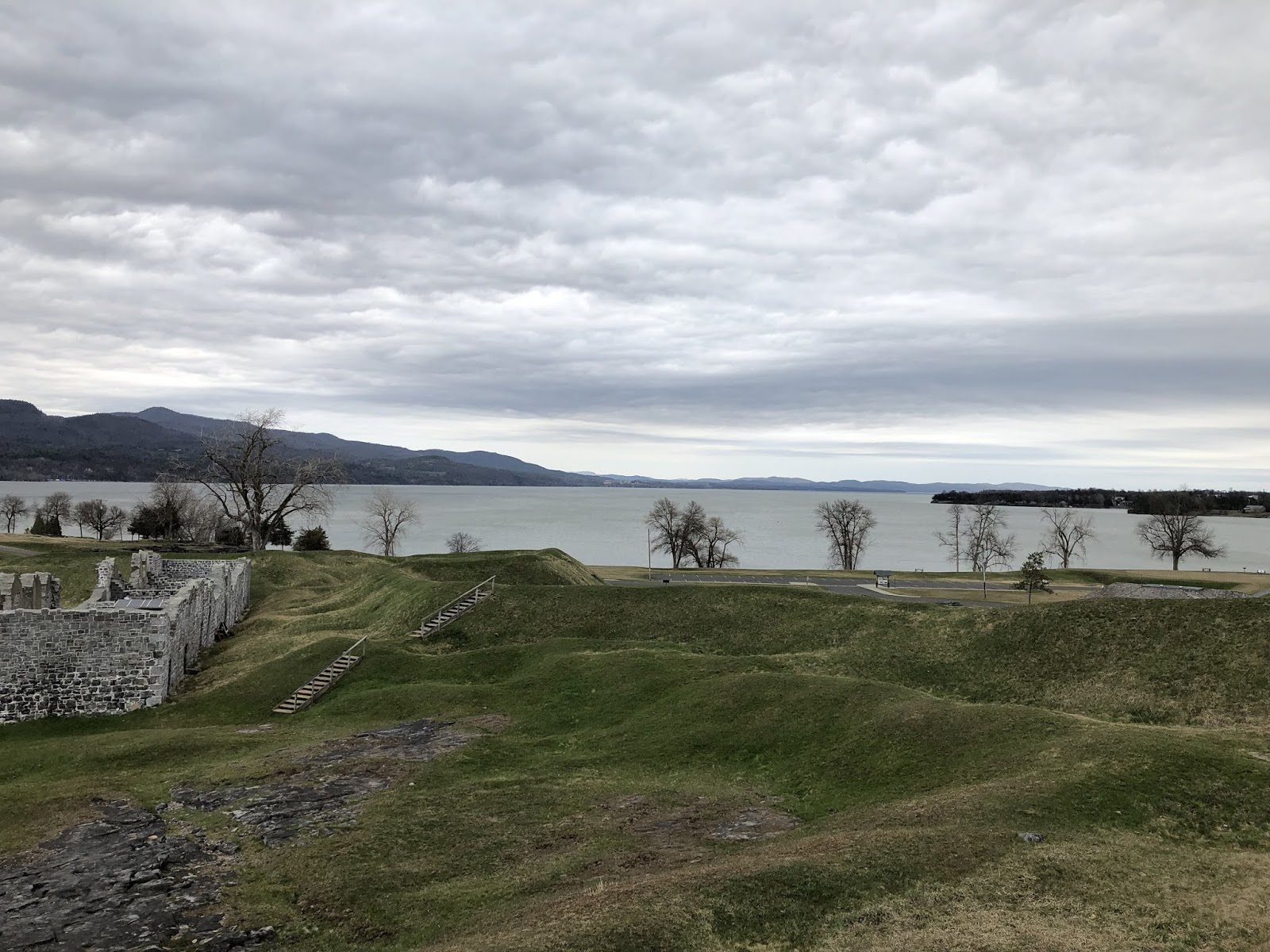
When Ethan Allen and the Green Mountain Boys helped Benedict Arnold seize Fort Ticonderoga, they apparently wanted to celebrate the occasion. In 1775 these two men, who couldn’t be more different, led the attack on the lightly defended fort, winning it without a fight. British soldiers stations there hadn’t heard about Lexington and Concord yet, and had no idea that they might be attacked by people who were supposed to be loyal to the crown. For the Green Mountain Boys, the best way to celebrate was to pass the flowing bowl around. The bowl was usually filled with punch.
The recipe for punch varied from place to place across the globe, but in the American Colonies it called for rum. Punch rivaled ale and flip in popularity, and in some colonies exceeded it. Punch had an added benefit over Flip or ale in that it helped introduce fruits and juices into the diet of colonists, which certainly improved their overall health (rum aside) and fending off scurvy.Wayne Curtis in And a Bottle of Rum referenced a recipe for Planters Punch that was published in The New York Times in 1908 in the form of a ditty:“This recipe I give to thee,
Dear brother in the heat.
Take two of sour (lime let it be)
To one and a half sweet.
Of Old Jamaica pour thee three strong,
And add four parts of weak.
Then mix and drink “I do no wrong –
I know whereof I speak.”Back in my college days, I thought I’d be clever and mix up a batch of punch for a party. Not being an expert in the art of mixology, I was pretty aggressive in my pours, adding several spirits into a bowl and adding Hawaiian Punch or something like it. After celebrating a bit too much with this concoction, the night took a turn for the worse. It was the first and last time I’ve ever made punch.
-
February Sunset
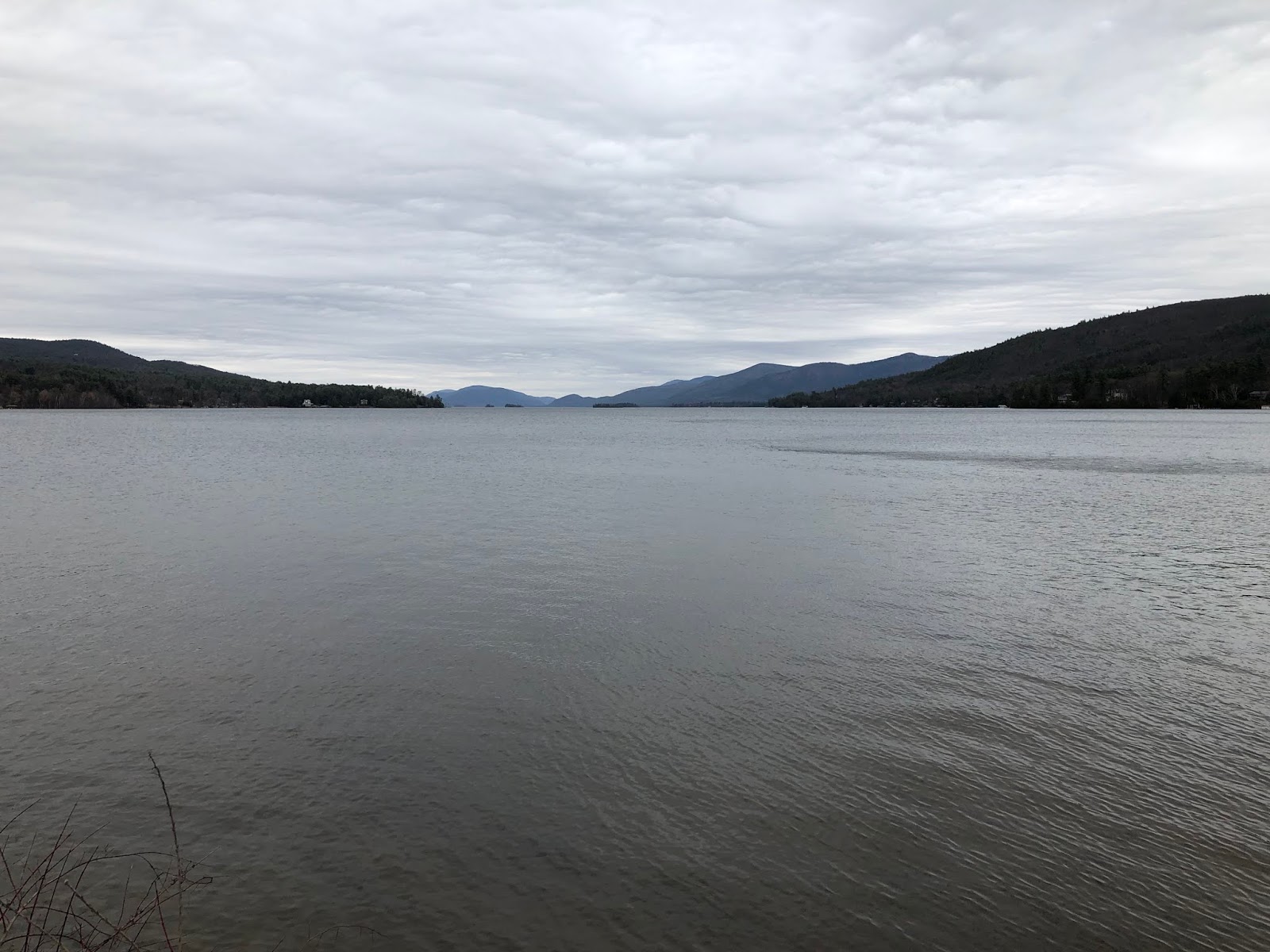
Waiting on February sunsets and dreaming of the road. I’m… tired. Good time to look at some sun dappled water.
You’ve got your passion, you’ve got your pride
But don’t you know that only fools are satisfied?
Dream on, but don’t imagine they’ll all come true
When will you realize, Vienna waits for you? – Billy Joel, Vienna
A bathroom shower project I’m working on isn’t going especially well. Funny how that can set you back so much. Dreaming of travel when so much is right in front of me.
-
Joshua Slocum
Joshua Slocum
On April 24, 1895, Joshua Slocum sailed out of Fairhaven, Massachusetts on his gaff-rigged sloop Spray. He returned to Newport, Rhode Island on June 27, 1898, and documented that incredible solo sail around the globe in his book Sailing Alone Around the World. His trip and the book were worldwide phenomenons, and Slocum was a celebrity on par in the minds of commen men with Presidents and royalty.
Slocum was born in Nova Scotia on the island and grew up on Brier Island, where his grandmother was the official lighthouse keeper. Brier Island, on the eastern edge of the Bay of Fundy, was the site of many shipwrecks over the centuries. I’m sure that childhood molded the man who would become world famous with his trip around the world.
Slocum made a second voyage with Spray up the Erie Canal to Buffalo for the Pan-American Expo in 1901, which is famous for the execution of President McKinley by an anarchist. There’s a fascinating picture on the Wikipedia page for Slocum that shows the Spray moving through one of the locks of the Erie Canal on his voyage west to Buffalo. That would have been an interesting voyage as well.
Slocum, a restless spirit for sure, would try another voyage with the Spray in 1909 exploring the Amazon River. Slocum and the Spray disappeared on that voyage, never to be seen again. Did the Spray sink? Did natives raid the sloop, kill Slocum and dismantle the Spray for use in other ways? Was there a fire onboard? We’ll never know, unless someone unearths the remains of the Spray someday in the mud of the Amazon or while diving off the coast of Brazil.
What remains is one of the great books on adventure travel, some old grainy pictures of the Spray with Slocum sailing her, and a few monuments to the two. I visited one of those monuments in Fairhaven. It’s a quiet little spot with a view of the harbor. A monument behind Slocum’s pays tribute to the last surviving pilgrim, which is notable company, but Slocum’s monument stands closer to the water. I think he’d have liked it.
-
Seeing Legends
I was driving back from a basketball game when I heard Steely Dan’s My Old School played. It occurred to me, not for the first time, that I never did take the opportunity to see them play live before Walter Becker died. I didn’t go see Tom Petty either. Or a hundred other legends that have since passed on.
On the other hand I’ve seen The Eagles before Glenn Frey died. I’ve seen Paul McCartney and Van Morrison and Jimmy Buffett and Bob Seger and James Taylor and BB King…. and I’m glad I did. I’ve seen Tom Brady throw a touchdown pass and Roger Clemens and Pedro Martinez throw a baseball. I’ve seen Larry Bird play on the original parquet.
Momento Mori. There’s a lot to see and do in this world. And someday it won’t be the other guy that’s dying.
-
Foraging in New England
When Roger’s Rangers were hiking through the hostile woods of Vermont trying to evade the French and Native Americans, more than 40 died of starvation. When Benedict Arnold and his troops hiked through the woods of Maine on their way to invade Quebec, starvation was a very real possibility. And yet years before either of these events when Hannah Dustin and others were kidnapped and marched up to Quebec they survived by foraging as their Abenaki kidnappers did. Clearly in foraging in the woods of New England can provide enough caloric intake to survive if you know what to look for. That’s never more critical than in winter when finding any food can be a massive challenge.
Some options for edibles in the woods include Black Birch, wild carrot roots, wild parsnip roots, hog peanut roots, Burdock roots, Jerusalem artichokes, Teaberry leaves, cattail shoots and roots, groundnuts, watercress, duck potatoes, reindeer moss lichen, and several mushroom/fungi like chaga (grows on Birch trees), hen of the woods, chicken of the woods and a few others.
Arnold’s party was able to fish in the Kennebec, Dead and other rivers on their hike north. It’s hard to tell what Roger’s Rangers were acquiring for food, but in the dead of winter, hiking on snowshoes with many people trying to kill you, spending a lot of time foraging, fishing or hunting were unlikely to happen.
I’m not particularly inclined to become a survivalist stockpiling canned goods, or a hunter, a fisherman, or to forage for a hobby. That’s largely because I’m putting my faith in humanity and our supply chain of food that enables me to maintain a fighting weight that’s about 30 pounds heavier than I should be. I hope that doesn’t come back to haunt me, but if we get to that point I may just find a boat, grab some rum and sail off to parts unknown.
-
New Hampshire Grant
New Hampshire Grant
The land that is today Vermont was once claimed by Massachusetts, New York and New Hampshire. The Massachusetts claim originated from a fort established in the Connecticut River Valley in present-day Brattleboro. New York based their claim on original Dutch territorial claims that all the lands west of the Connecticut River to Delaware River were theirs. When the Dutch were ousted from North America New York followed the same general borders, which were validated by King George II.
New Hampshire Governor Benning Wentworth chose to follow his own guidelines, choosing the western border of Massachusetts and going north to Canada and east to the Connecticut River as land he had jurisdiction over, which he then granted to middle class farmers who settled the land. New York was granting the very same land to wealthy landowners and wasn’t particularly pleased by Wentworth’s interpretation of the borders. These wealthy landowners then tried to tax the middle class farmers on “their” land, which led to even more tensions.
The most famous of these middle class farmers was Ethan Allen, who was a natural self-promoter. Allen and other farmers formed the Green Mountain Boys, who organized armed resistance to New York. The escalating confrontations between the New Hampshire Grantees and the New York grantees continued until the beginning of the Revolutionary War forced all parties to focus on a larger problem. Eventually New York gave up and Vermont would become a state. There’s still an independent streak in Vermont and New Hampshire to this day. Perhaps there’s still some lingering annoyance on the part of some wealthy New York family who’s ancestors gave up the fight for lands they were granted.
-
Flip
One of the most popular drinks available in colonial times was a concoction called flip. I first learned about flip from a great book called And a Bottle of Rum, written by Wayne Curtis. This is by far the most interesting book I’ve ever read on the subject, and it’s proven to be a source of endless inspiration in book historical and libation exploration.
“… a tavern keeper started with a large earthenware pitcher or an oversized pewter mug. This would be filled about two-thirds with strong beer, to which was added some sort of sweetener – molasses, loaf sugar, dried pumpkin, or whatever else was at hand. Then came five ounces of rum, neither stirred nor shaken but mixed with a device called a loggerhead – a narrow piece of iron about three feet long with a slightly bulbous head the size of a small onion… plunged red-hot into a beer-rum-and-molasses concoction. The whole mess would foam and hiss and send up a mighty head. This alcoholic porridge was then decanted into smaller flip tumblers…” – Wayne Curtis, And a Bottle of RumLife was hard in colonial times. Taverns provided a respite from the hardness of the world. I suspect I might have spent a fair amount of time in taverns in those times. But I’d like to think I’d have been out exploring the virgin North American forests, rivers and mountains too. Leisure time was hard to come by in those days, but it seems a lot of that time was spent in taverns.The days are short, the weather’s coldBy tavern fires tales are toldSome ask for dram when first come inOthers with flip and bounce begin – Unknown, borrowed from Wayne Curtis, And a Bottle of Rum
I read this book maybe ten years ago, and it stays with me. And of all the drinks Curtis describes, Flip is the one that I’m most fascinated with. I think it’s high time to take the recipe above and make some. That’s a February “project”.