Category: Garden and Home

  • Frogs and Acorns and Autumn Joy

    I’m not going to sugarcoat it, the garden is fading fast.  Sure, there’s crisp fall air to appreciate if you must.  Autumn is my favorite season, and particularly this year I’m excited about an upcoming trip to London and Scotland.  But this year summer ended abruptly with two events changing the backyard paradise I worked all spring for.

    The first affront to summer was having the roof done.  A new roof is a lovely thing indeed, but the damage done to the summer garden was catastrophic.  Some of it was my own doing of course – strategic weed wacker work through the faded bee balm and daisies to carve a path for the inevitable tarps and plywood needed to catch the roof debris.  But alas, a few prized perennials caught errant shingles as well.  The garden will rebound next year, but it may hold a grudge.

    Second, the pool is covered over for winter weeks earlier than normal.  I can hear the condensation drips splashing into the pool now, saying “What happened to the sky?” while frogs circle the perimeter wondering where the trendy amphibious nightclub went.  I expect I’ve ruined a lot of frog dates closing shop so early.  Sorry frogs.  Not seeing the water hurts me too, but not as much as watching acorns ricochet off the deck, bounce across the patio and splash into the pool to serve as beach balls for coy frog daters.  Autumn is called fall for a reason, and we’ve got some serious fall happening.  Something had to give and this year it was pool season.

    So what we’re left with is a few survivors dancing in the garden, faded potted tropicals wondering where they went wrong in life, and the extraordinary Sedum ‘Autumn Joy’ standing proudly amongst the destruction in the garden; a miracle of color in an otherwise sad garden.  Even the roofers seemed to be rooting for it, and I appreciate their protective efforts as so many of her neighbors fell.

    So here we are.  Autumn in New Hampshire.  A bit different this year, but autumn nonetheless. September eases you into it, with apples and pumpkins and outdoor evening fires.  October will bring the foliage and then the leaves grudgingly join the acorns scattered throughout the yard (there’s no walking barefoot at night in September when you have oak trees).  Autumn joy indeed.


  • Sassafras

    Serendipity placed me in front of sassafras twice in almost exactly 24 hours. Yesterday I was with a friend and expert forager who saw it on the edge of the woods. He pointed out each of the three unique leaves of the sassafras tree and pulled out a small root for me to smell.

    Today I visited the Aptucxet Trading Post Museum in Bourne, Massachusetts and what do I see but a sassafras tree! The museum guide pointed out the leaves, scratched the root to have me smell and it was déjà vu all over again.

    The original tea that settlers in North America drank and exported was made from the root of the sassafras tree. Sassafras was used for other things ranging from shipbuilding to toothbrushes, but when you smell it you probably think of root beer. And of course you’d be right; the oil from sassafras root gives flavor and the name to root beer. That was my favorite soft drink growing up. I don’t drink it sugary drinks anymore, but at the moment I’m craving some root beer. Instead, I purchased some sassafras tea from the gift store at the Aptucxet Trading Post Museum and will make a sugar-free sassafras drink. And toast the tree it came from.

  • Great is Today

    If you want to fully feel the urgency of “now” watch a veteran roofing crew begin work on a house. There’s no time to get in touch with their feelings, they pull up, assess and get on with it. Get it done ASAP, and move on to the next house tomorrow.

    It’s the first Tuesday in September, and the first day of school pictures will be snapped all over Massachusetts. New Hampshire went back last week, but really that’s just to get a head start on snow days to come. School begins in earnest this week from kindergarten to college. And so [unofficially] summer ends, Autumn begins, and there’s a heightened sense of the moment.

    I read Leaves of Grass last week. More precisely I finished Leaves of Grass last week. Walt Whitman has some brilliant prose, and some sprinkled liberally throughout this work, but there’s a lot of chewing to get this one down. Lot of Walt getting in touch with his sensuality stuff in there that proved controversial for the time, but this isn’t going to be a post about the work as a whole. Instead, this line jumped out at me:

    Great is today, and beautiful, It is good to live in this age… there never was any better.” – Walt Whitman, Leaves of Grass

    Whitman wrote that sometime between 1850 and 1855, when Leaves of Grass was published. It was before the Civil War and other dark days in Whitman’s life. But there are always dark days, and always vibrant days throughout history. Life is the ebb and flow. Don’t bury your head in the sand when darkness reigns, but don’t ignore the extraordinary gift of now we’ve been given either.

    Look around. Look around. How lucky we are to be alive right now.” – The Schuyler Sisters, Hamilton

    Be alive, right now. That’s all there is. We can’t time travel backwards, and we can’t hit fast-forward.  We all know Aesop’s fable about the ants and the grasshopper, but he wasn’t saying there’s no time for play, he was saying that we need to harvest first, then dance and sing.  So by all means work, and build that nest egg, but don’t lose sight of this magic moment along the way. 

    Do not be concerned with the fruit of your action – just give attention to the action itself. The fruit will come of its own accord.” – Eckhart Tolle, The Power of Now

    I’m weighing that fable as roofers strip the roof over my head and I contemplate Whitman. The irony isn’t lost on me, I’ve been on construction crews and know their world. They don’t stop to smell the roses for very long, but sometimes a moment appears. As I spoke with them before they started I pointed to the ripe grapes they would soon cover over to protect them from debris and told them to help themselves. They savored the sweetness of the grapes with audible pleasure, even as they got on with the work at hand. The fruit came of it’s own accord, then it was time to get back to work.

  • Hummingbirds Squeak under a Waning Moon… and Other Observations

    Cool enough for a fleece this morning. It seems summer is tilting away faster by the day. The white noise buzz of crickets fills in. Other sounds penetrate. Cars in the distance getting an early start. Birds like my old friend the Brown Thrasher announce their presence, if further away than in July.

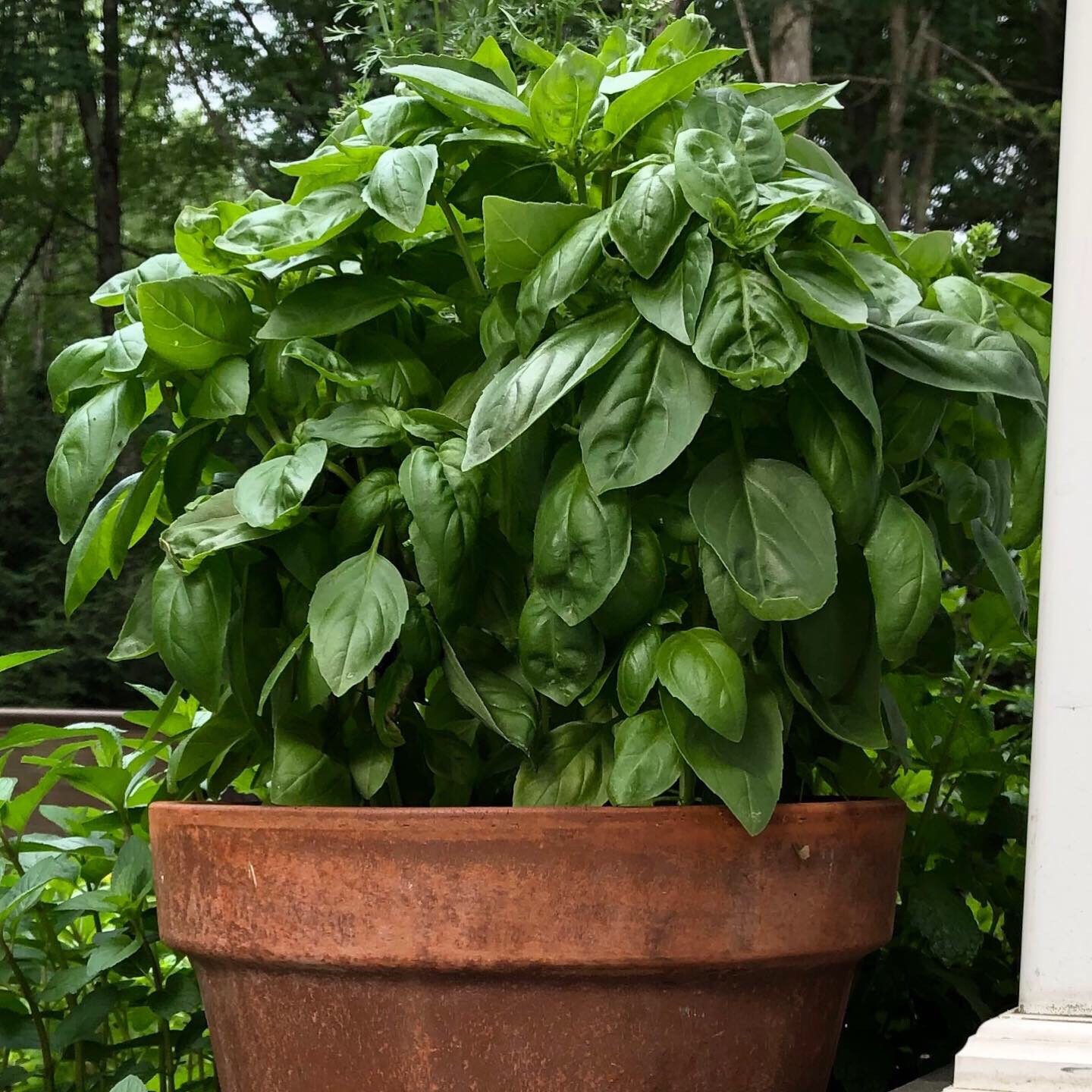
    The mornings are especially active now. The bees and hummingbirds flitter from honeysuckle to basil gone to flower and on to the next. Each have a unique sound; not shockingly bees buzz and hummingbirds, well, their wings hum as they zip by you. I smile when the hummingbirds squeak at each other, a chorus of animated bird banter filling the yard. They largely ignore me as I sip coffee and take in the show. As if to mirror them, the squirrels are jumping tree to tree dropping acorns and hickory nuts that thump to the ground for collection later. Two scratch around my favorite white oak tree on the planet, chasing each other in young squirrel frivolity with their own chirping chorus.

    Looking up, the Waning Crescent moon greets me in a crisp blue sky. This is September blue, always embedded on my mind these last 18 years, a reference point anyone around here that day will understand. A reference point from New England to New Jersey. That day remembered in random moments like this, then gently put aside. There’s a collective joy about September in New England, with an undercurrent of sadness for the summer fading away and change in the air. But it’s still August, even if it feels like we’ve crossed. Seasons come and go, and it feels time for summer to move along too.

    Back on earth, there are a few more tomatoes to harvest, a thriving and ironic grape harvest after my public shaming in the spring, fading flowers and herbs to contend with. Like the squirrels I’ve got to get my act together and do some work to prepare for the cooler days and changes ahead. My fingers are cold from sitting outside a layer short of comfortable. Time to move. So much to do and it stirs a restlessness inside of me. But first another coffee.

  • Groundhog Day

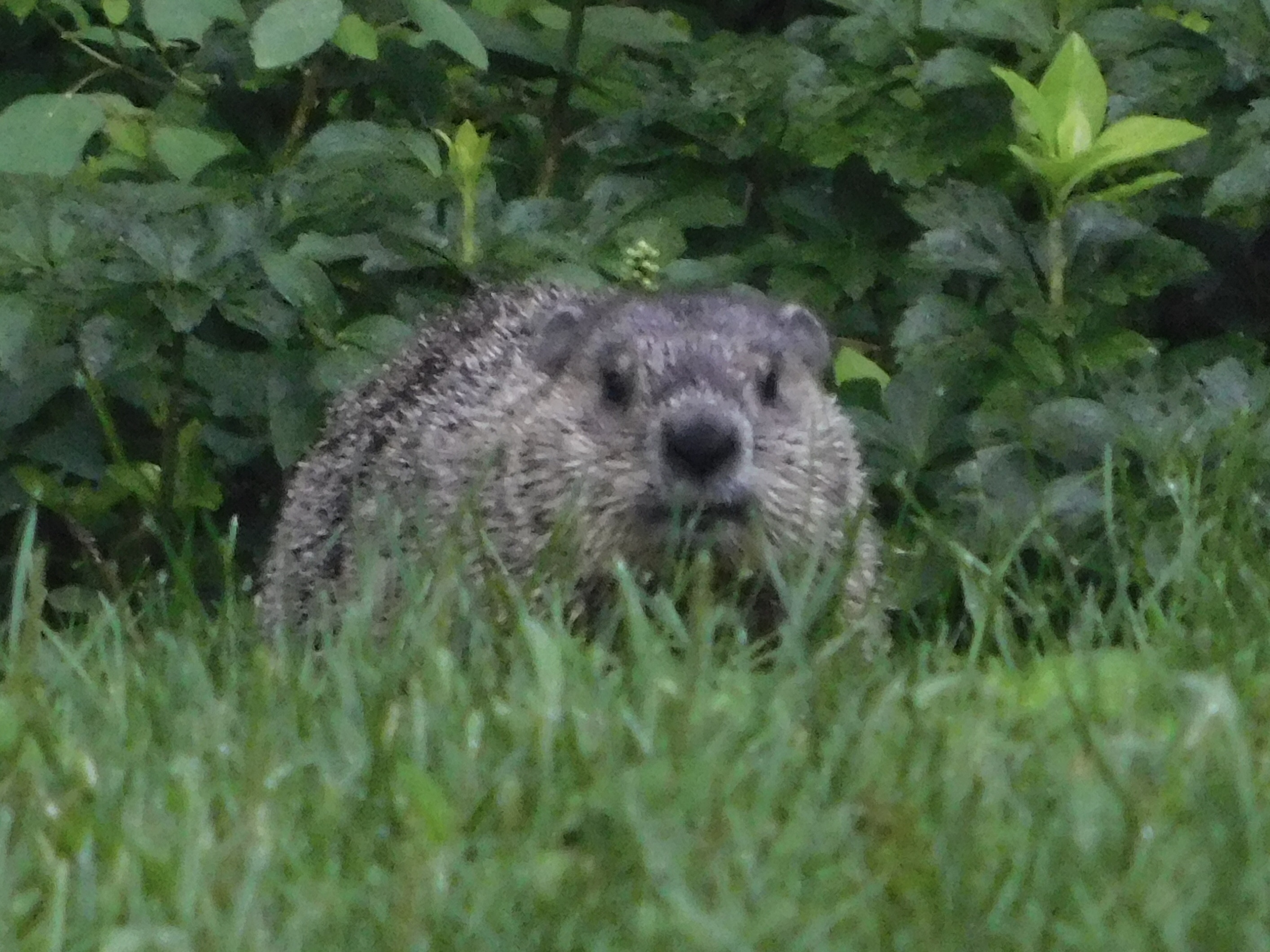
    The signs were there.  Half-eaten tomatoes still hanging from the vines.  I knew you were back.  Still, I was optimistic there might be a few left for me.  Alas, after being away for a week almost all of my tomatoes were wiped out.  All that remains are the cherry tomatoes, which apparently you aren’t interested in, and a few small beefsteak tomatoes too high for you to reach.  And this morning you didn’t even try to hide your face, but looked right at me as if to say “What are you gonna do about it?”  Yeah, I know that look buddy.  At least your chipmunk friend looked a little afraid as he skittered off with a cherry tomato, dropped it in horror when he saw me, then timidly ran back and picked it up before running away.  Not you.  You just stand there, as if waiting for me to plant more tomatoes for you.

    This is my version of Groundhog Day.  Plant tomatoes, leave them unfenced for aesthetic reasons.  Lose most of the crop to mocking mammals.  Repeat.  It’s what I get for sticking vegetables in a flower garden and leaving them to fate.  I swear I’ll learn from this next spring.  Next year will be different.

  • Karma’s Gonna Get You

    This morning I was inspecting the grapes, which seem to be thriving this year, when I felt  a familiar stinging sensation on my hand.  Looking down quickly I saw the reason, I’d grabbed the fence right at the spot where a hornet had built a nest in the cavity made by the U-shaped metal top rail.  And there was the hornet flying about still annoyed with me.

    Wasps and hornets offer value to the garden, hunting pests that would otherwise damage your plants.  But they also tend to build nests in places inconvenient to humans trying to live in the same space.  I’ve seen a couple of other hornet nests in the fence but this one was a surprise for me.  Unfortunately it’s right next to the gate to the backyard and a safety concern, so I’ll have to spray this one.  I don’t mind coexisting with hornets but not when they endanger my family and guests.  They aren’t my favorite neighbors but they are a sign of a healthy ecosystem.  In a year when the bee population seems to be lower in my garden, I’ll take any positive I can find.

    That said, I view this entire incident as karma, as last night I finally got around to destroying a nest of yellow jackets in my grill.  They built a nest the size of a Nerf football right behind the propane tank.  That would qualify as unacceptable risk for me and anyone else that uses the grill or opens the cabinet door for the grill brush.  Nope, they had to go.  And karma came in the form of a sting this morning.  As I type this the sting still throbs a bit to remind me that it’s best to look carefully before grabbing hold of anything.  Another lesson from the garden…

  • Tigers and Time Travel

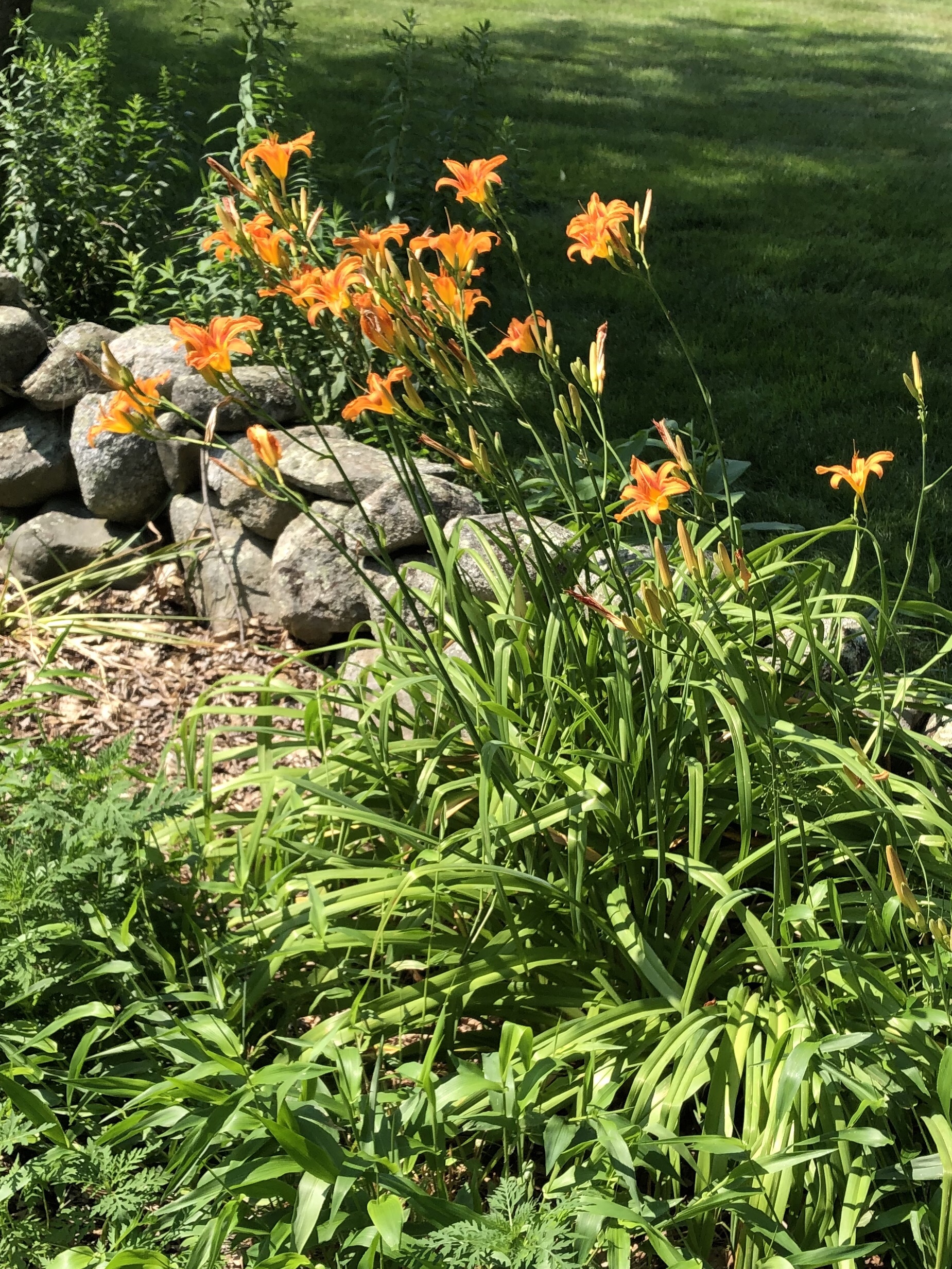
    This is the time of year when the orange time machines announce they’re back. Along old stone walls, foundations of farmhouses and in places random today but logical once upon a time. The tiger lilies are back.

    The land whispers to us of those who came before us. Tiger lilies were planted generations ago, divided and planted again at the next generation’s homes, and so on. Tiger lilies came out of China in the middle of the 18th century, made their way to England in the early 19th century and then to the United States. Tiger lilies are entirely edible, from the bulbs that supposedly taste like potatoes to the flowers. But most people plant them as ornamentals.

    Tiger lilies are a common sight in New England’s summer. On a 3 1/2 mile walk around the block I passed maybe a hundred of them. Time machines of orange and green, whispering the names of generations of people long gone who brought them to this place.

  • Playing Favorites

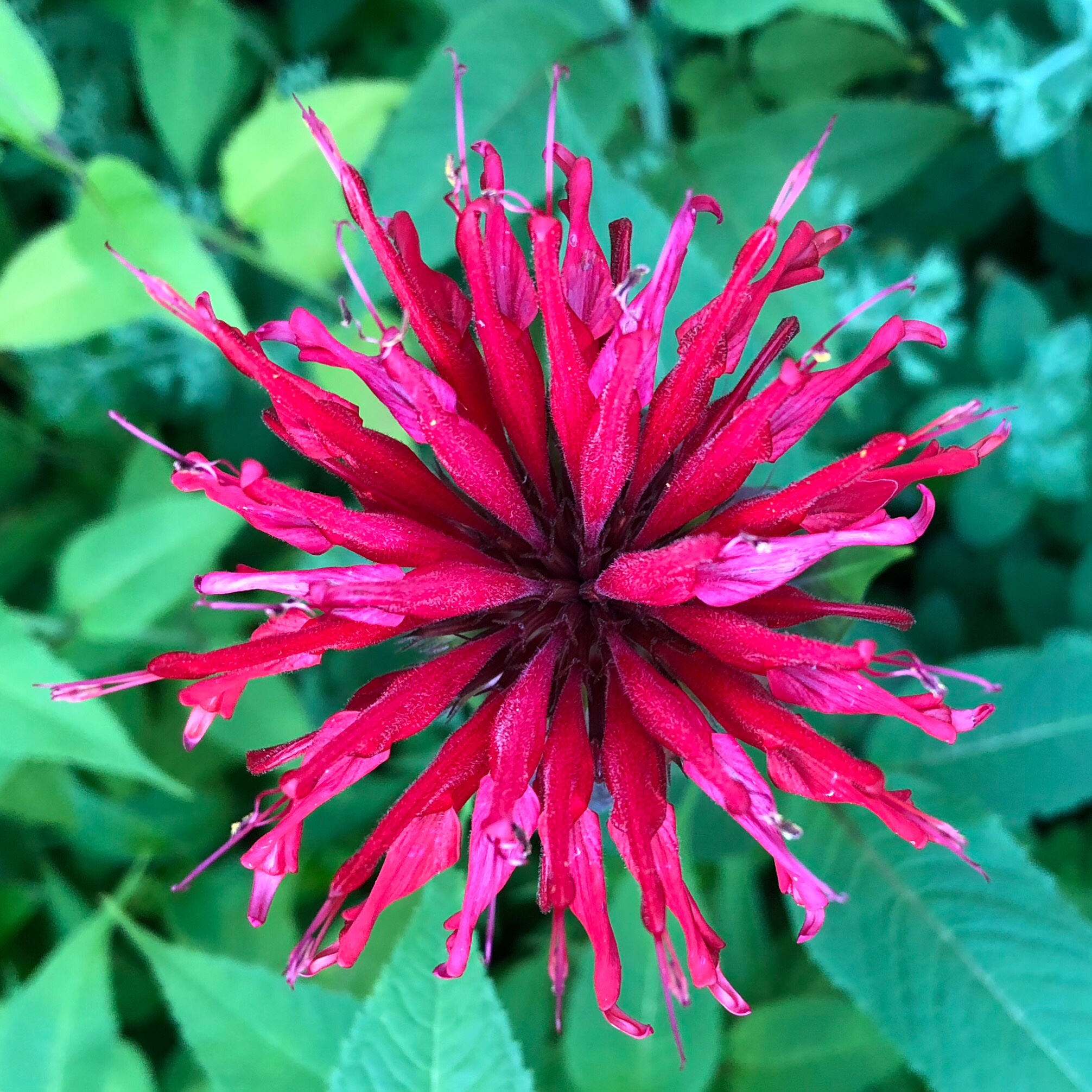
    This is the time of year when taking the long view pays off. Perennials offer stability to the garden, have an excellent return on investment compared to annuals, and in their time put on a show of their own. And with the heat of summer New England gardens explode upward like a 4th of July fireworks display. And like the large comets that wow the crowd there’s one standout above the rest. Like a Scottish Highlander, it displays unruly red tops, toughness of spirit, wild tendencies and tight-knit roots that keep the clan together. Monarda, better known as bee balm, takes the stage.

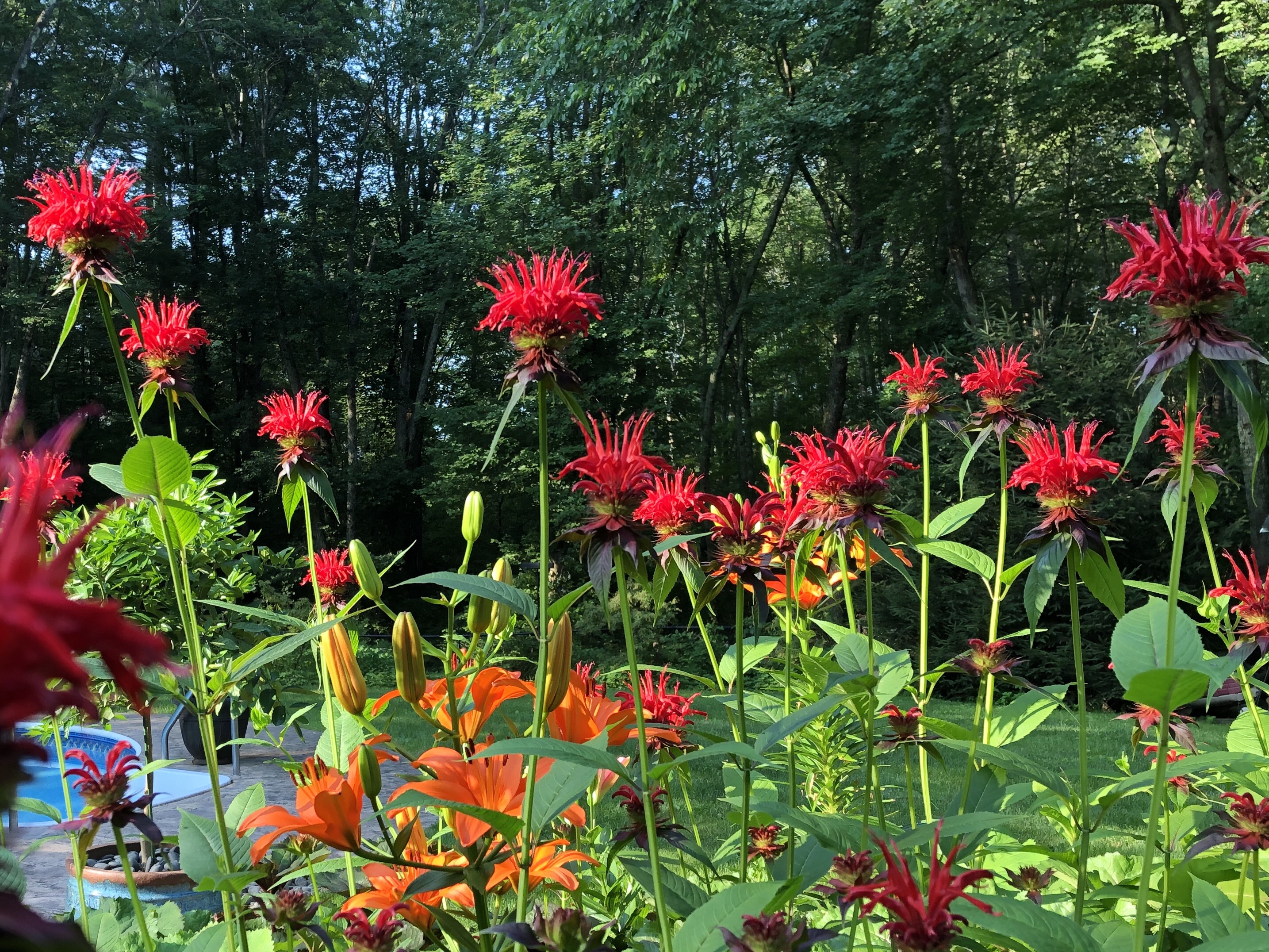
    The lilies and day lilies look spectacular and hold their own in the garden. The daisies offer a vibrant splash of white and yellow. The annuals are filling in admirably. But bee balm steals the show. Masses of brilliant red explosions hover over the garden, commanding attention for weeks. And boy do they get attention. The hummingbirds are all over them. Butterflies are drawn to the yard. And guests unfamiliar with these marvels ask about them more than any other flower in the garden.

    It’s appropriate that they burst on the scene on the 4th of July week. I can think of no other combination that would match the pyrotechnics so well as bee balm and lilies. Out of respect the dahlias, purple coneflower, balloon flowers and others hold off their own performance to let these two tango above the green masses. I know we aren’t supposed to play favorites, but I can’t help myself; Bee Balm is the one. There’s nothing else like it in the garden.

  • It’s Not a Miracle

    Entertaining guests yesterday I had the question and answer exchange every gardener has:

    Question: “What’s your secret for growing such a beautiful garden?”

    Answer: “Miracle Grow.”

    This of course is completely inaccurate. The real answer takes more time than a cocktail conversation allows.The person asking knows the answer as much as I do. Is Miracle Grow a good gardening hack?  You bet.  Does it accurately reflect what gets you to a beautiful garden.  Not at all.  But in the Q & A session at a party small talk should be kept small.  Follow-up questions indicate a real commitment to learning more than “use liquid fertilizer” and those who dive deeper are rewarded with deeper answers.  Which begins with “You grind away for years having success and epic failures, incremental improvements and adjustments along the way. You learn what works and keep doing that, learn what doesn’t and change how you do that.”  And if they want more then the details come along.  Gardening is a long climb towards a level of mastery that I’ll never reach. But I’m better for having made the climb than someone who hasn’t. At gardening anyway.

    Robert Greene writes brilliantly of mastery in his book of the same name. He describes the phase of developing skills that move you to mastery as the Ideal Apprenticeship. I know with conviction that I’m no master gardener; I’m somewhere in the next phase after apprenticeship, which Greene calls Creative-Active. With recreational gardening I’m not sure there’s a mastery stage in my future. I don’t aspire to be a horticulturist or botanist or landscape architect. Being a knowledgeable enthusiast is enough for me with gardening.

    And what of other interests? Career and family, of course, and the other pursuits of history, travel, writing and the like? Does being a generalist dilute each pursuit? No question. Does it mean pursuing more than one interest isn’t beneficial? That depends on what you think your best life should be. Personally I’ll take Jack-of-all-trades, thank you. But that doesn’t mean you can’t strive to be your best in each of those “trades”.

    We live in a time and place where pursuing fancies like an ornamental garden or casually researching the best London pub crawl route for an October visit while poolside on an iPhone (guilty) are available options. I’m well aware that the settler who first cleared and farmed the land I’m on never debated whether to move the dahlias from one side of the garden to the other to give the variegated impatiens room to grow. Mastery for that settler meant nurturing crops to a successful harvest, hunting or fishing for that night’s dinner, and generally staying alive in an unforgiving environment.  Mastery in recreational gardening isn’t a life or death matter for me. It’s like making your bed in the morning; It’s not going to change the world in any meaningful way, plenty of people get along just fine not doing it, but it elevates my day a notch higher for having done it well. And isn’t that enough?

  • The Daily Buzz

    I keep the news at arms length most days, but I’m generally aware of what’s going on in the world.  One headline that’s hard to miss is the distinct threat to the bee population as commercial bees are on the decline due to constantly movement from farm to farm, disease and pesticides take a toll on them.  Add in the threat to native bees as development swallows up wildflowers and we find ourselves in a precarious place.  No bees, no flower pollination.  No pollination no food.  I know I’m simplifying it, but in general that’s the problem we’re facing.

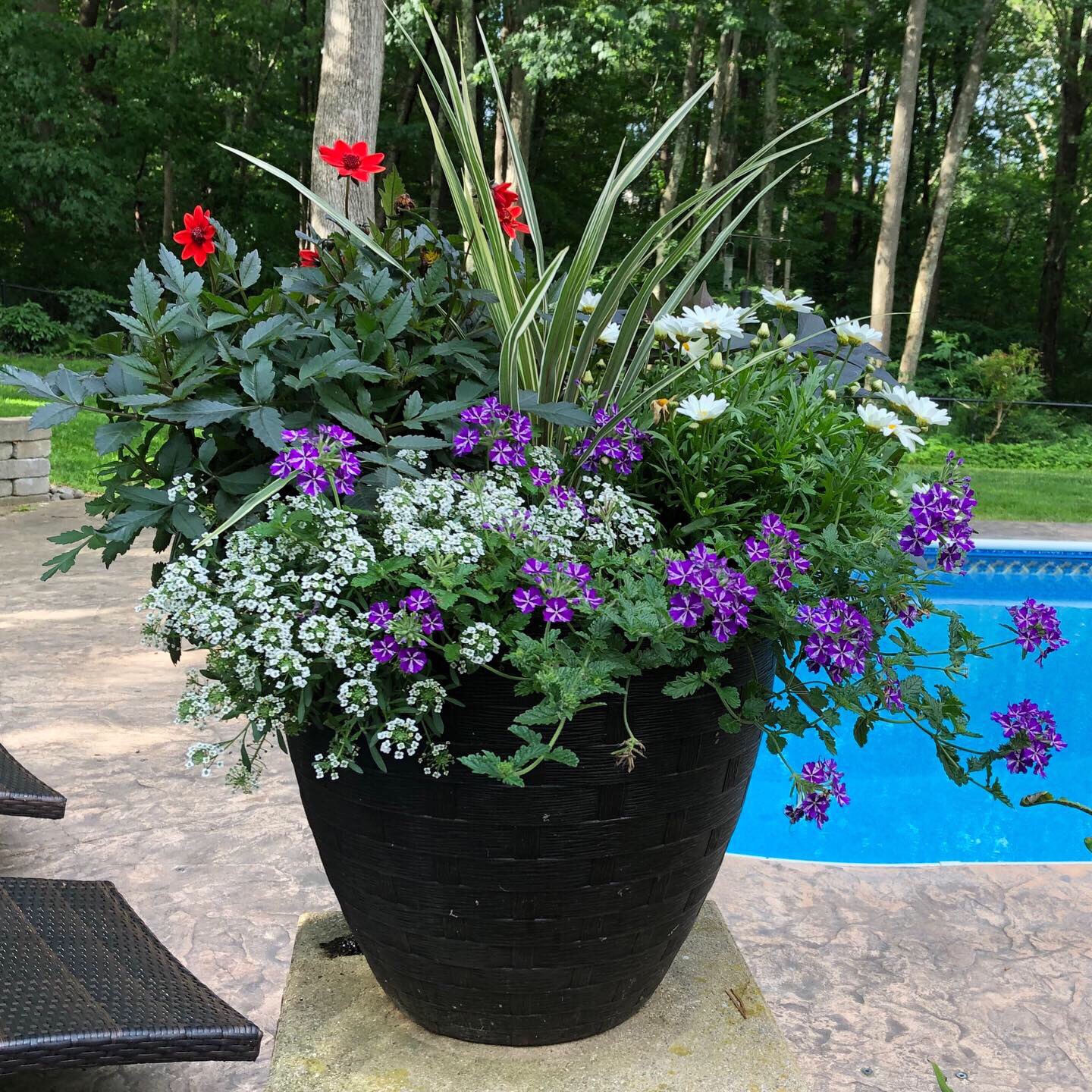
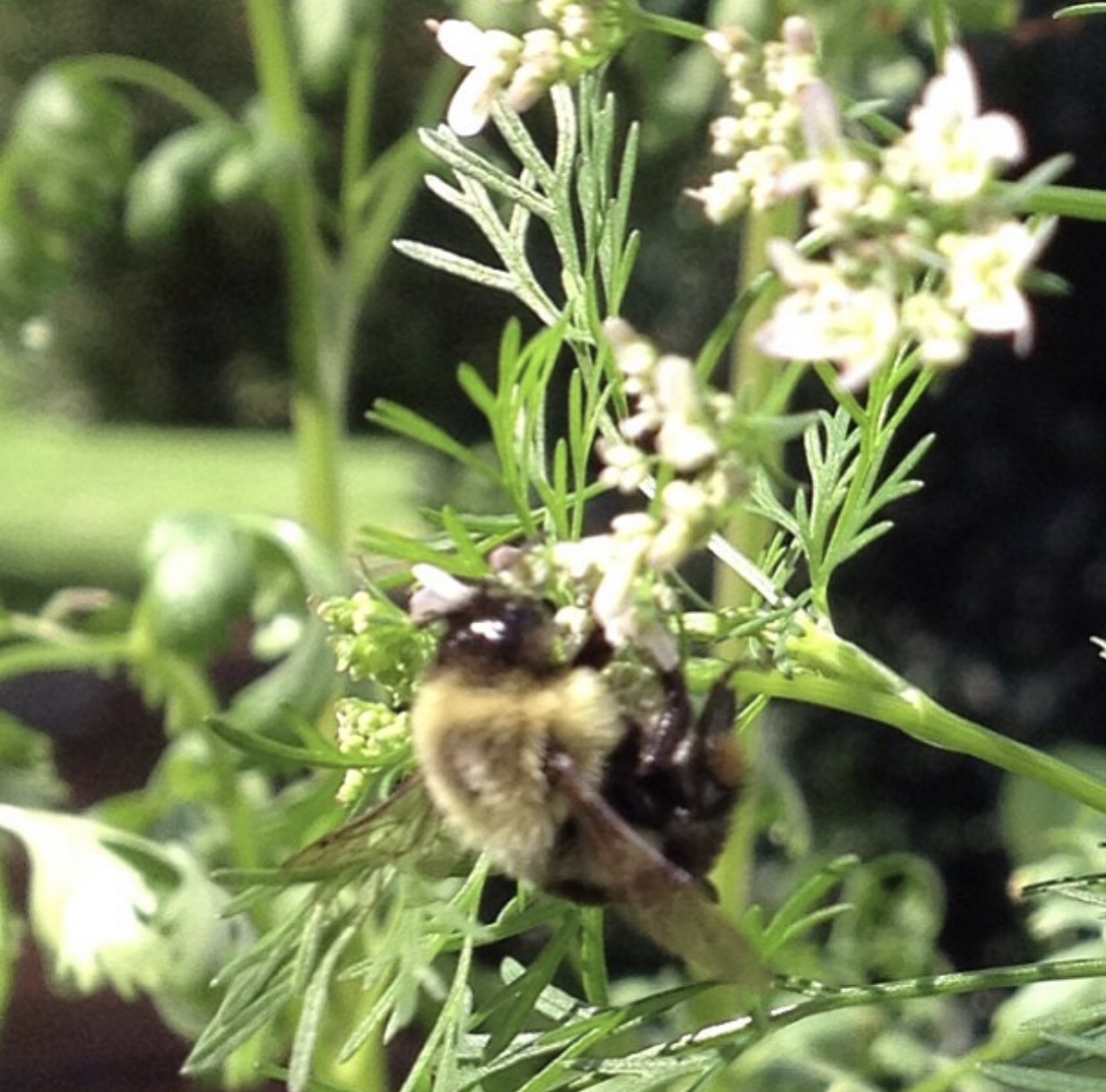
    I have friends who post constantly about bees on social media.  I prefer to plant instead.  If the bee population is suffering, I’m offering up my yard as a sanctuary garden.  I don’t use pesticides as a rule, preferring traps for Japanese Beetles and leaving most of the plants to fend for themselves.  And so this morning, as I sipped my coffee and watch the sweat bees dancing along on the Sweet Alyssum I cast my vote for the New Hampshire bee population.  The butterflies and hummingbirds don’t seem to mind either.  And I’ve made a similar bee and butterfly sanctuary down on the Cape, where the Pocasset garden, a standout well before I got involved, has recently been supplemented with bee balm, Purple Coneflower, and cilantro.

    I’m no expert on bees, but I’m trying to learn a bit more about them.  What I’m sure about is that they could use a little help from people in the form of more flowers, and maybe a little less asphalt and concrete.  It’s not uncommon to see more wildflowers seeded and left to grow on the sides and median strip of highways.  Generally more awareness creates better ecosystems for all of us.  As with everything though, it starts at home.